Simple, slow, old-fashioned.
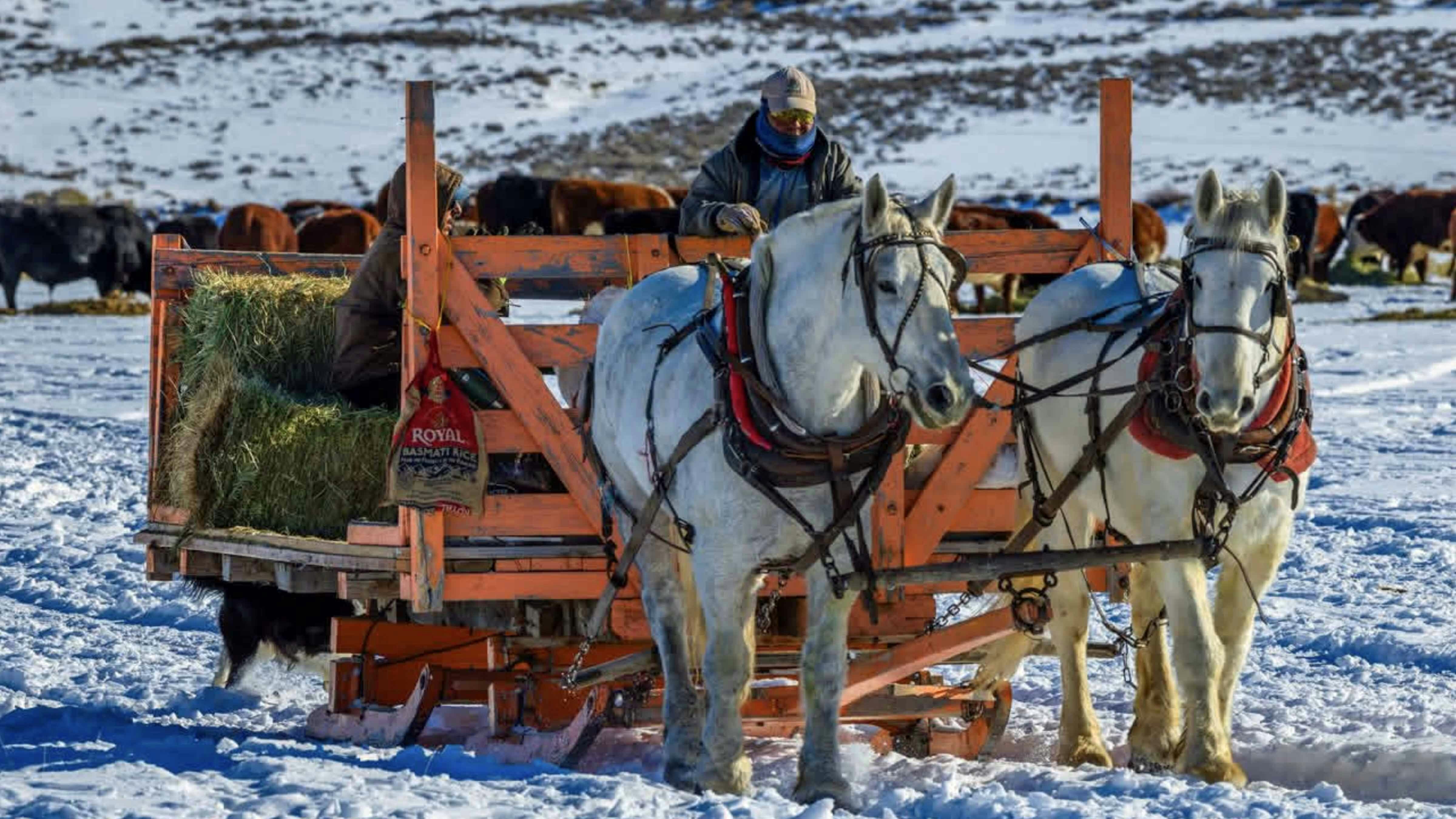
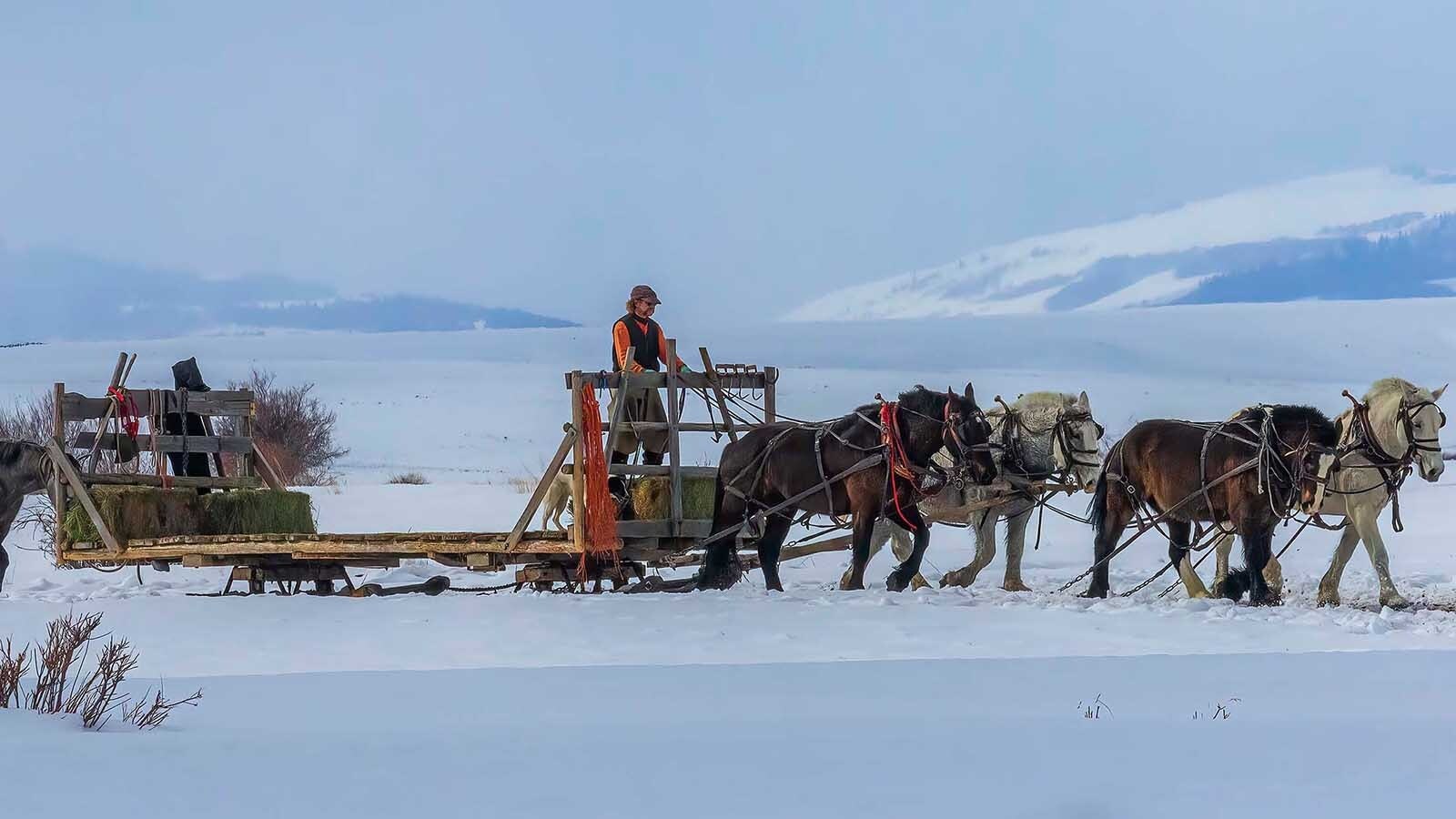
When it comes to feeding livestock on a remote homestead deep into winter, some Wyoming ranchers choose to stick to the traditional way of doing things — with a team of workhorses and a sleigh loaded with hay.
That’s just what a ranch hand was doing on Pete Arambel’s sheep ranch south of Pinedale earlier this winter when photographer Dave Bell captured the cold and snowy moment.
Bell’s photos have a historic, step-back-in-time feeling to them, representing a simple and cost-effective way to feed livestock when deep snow might threaten the function of higher-tech machinery.
As Arambel told Bell the day he took the photo, "I don't have to worry about whether the engine will start each day."
Practicing Ranchers
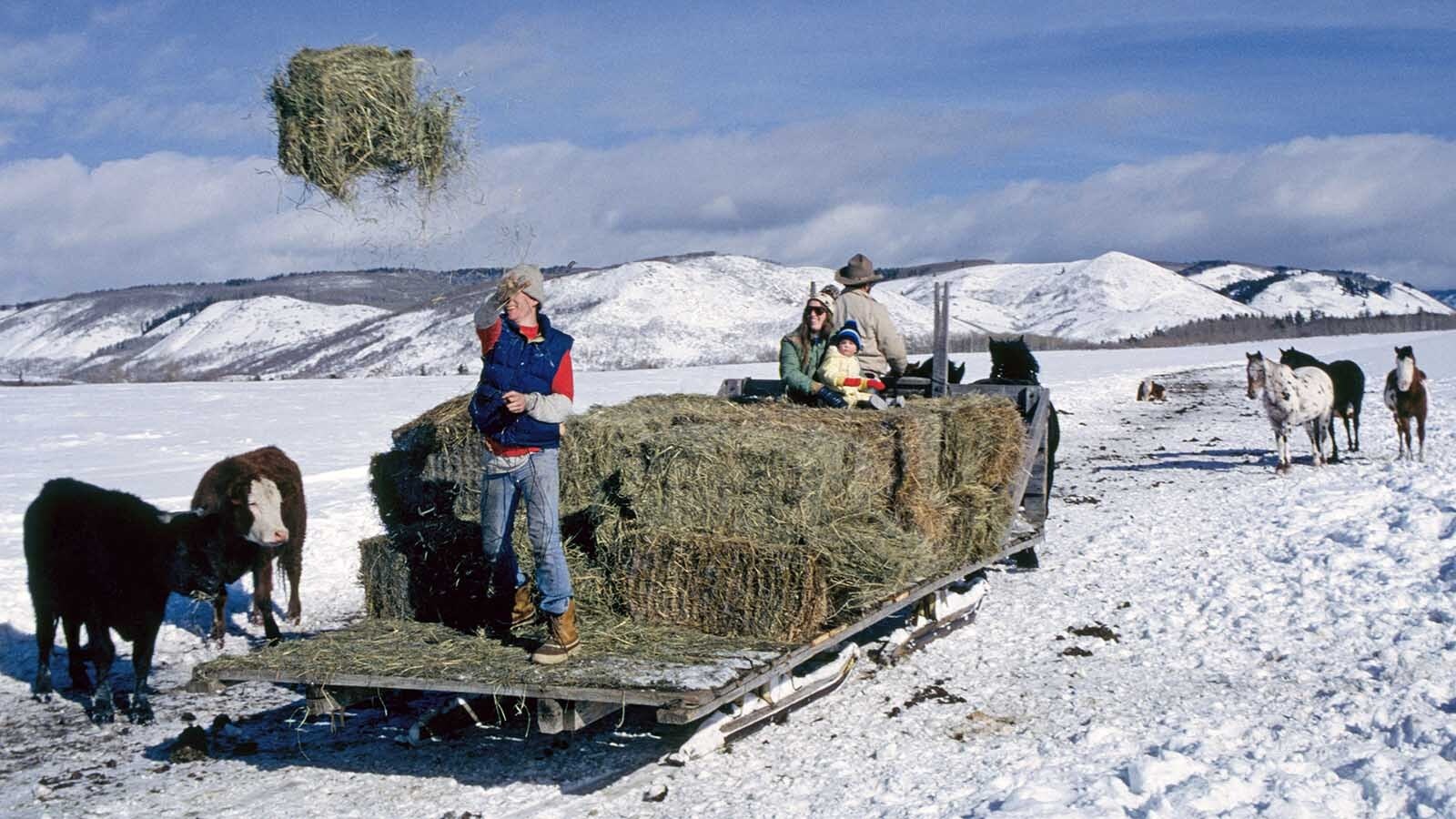
Feeding livestock in the winter with a team of horses, like most things ranchers do day in and day out, is practical.
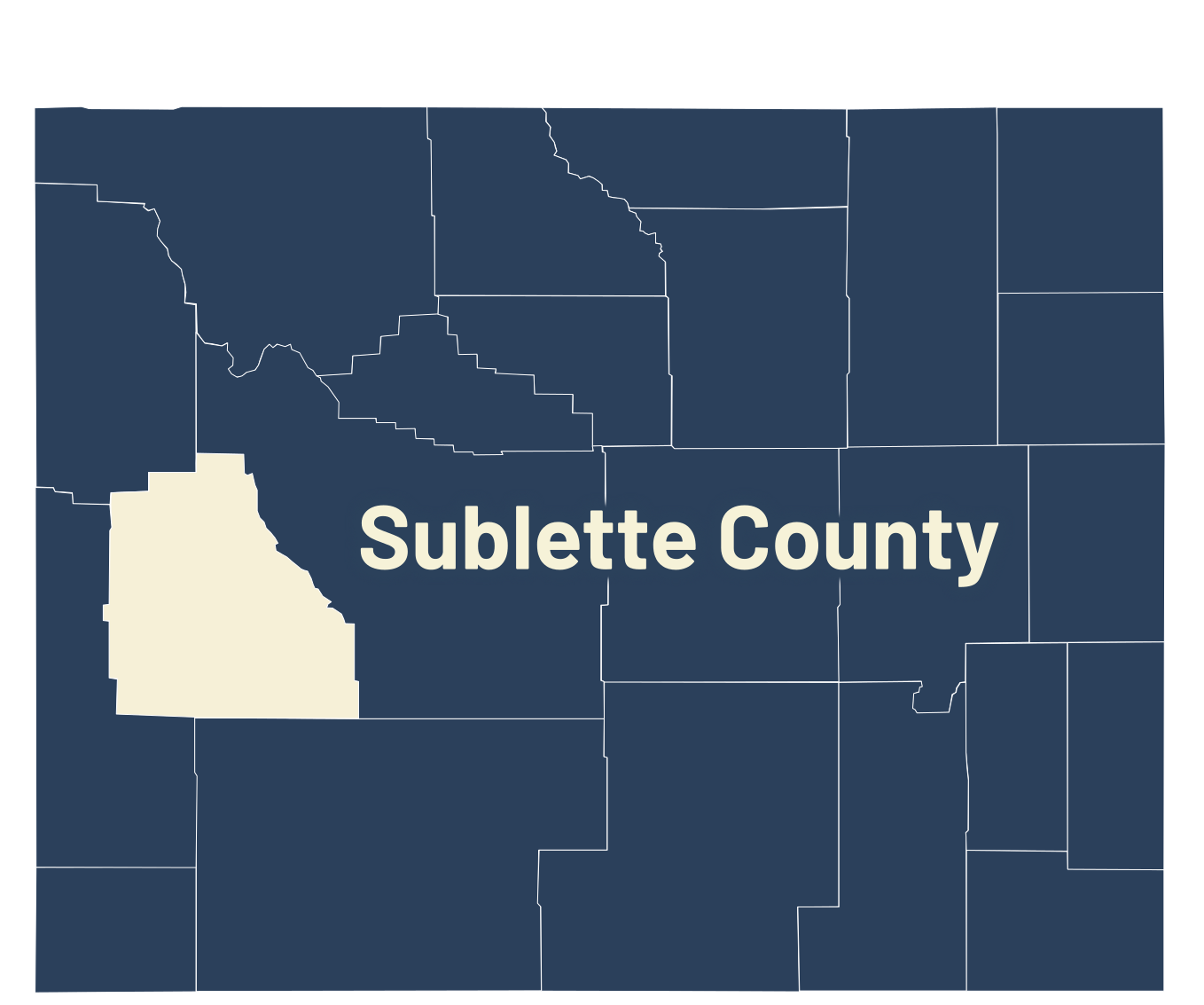
Even as tractors are more powerful and efficient, and mechanized bale feeders make feeding easier, Sublette County ranchers like Kevin Campbell and Michael Klaren continue their winter livestock feeding with horse teams.
It’s easier than learning to operate an expensive new tractor, and far less costly, they say. What’s more, for these ranchers, it’s downright traditional.
Campbell represents the third generation of Campbells on the western Wyoming property. His grandfather homesteaded there in 1913.
“I’ve been (ranching) all my life,” Campbell said. “Never did anything different.”
His winter feeding operation begins each morning after coffee when he tracks down the workhorses.
“You gotta catch the horses, and you hook them up to the sleigh,” Campbell said, describing the daily operation that takes place on his Bondurant cattle ranch.
After catching and hitching the horses, Campbell loads loose hay onto the sleigh, scattering it for the cattle as the team passes by.
Klaren grew up haying for local ranchers. Now he cares for 250 mother cows on leased land in Daniel.
Lennie Campbell, Kevin Campbell’s brother, has been Klaren’s best friend since childhood.
With the winter livestock feeding practice, Klaren said he gets to work with horses (saddle or work) about 300 days out of the year.
“Most people can’t say that in today’s world,” Klaren said, adding, “I’m not a huge fan of machinery.”
Deep Snow No Match
The old-fashioned feeding practice is valuable in the rural high country where the snow often gets deep in the winter.
In Daniel, average snowfall is about 65 inches. Farther north in Bondurant, average snowfall is twice that.
“Some years the snow gets very deep,” Campbell said.
It’s hard to cut through deep snow with motorized vehicles, Campbell said. Some equipment is made to do it, but that’s expensive.
“It’s tough for those mid-sized tractors to get around,” Campbell said. “The big ones can, but they cost a lot.”
The workhorses, however, cut right through the deep snow.
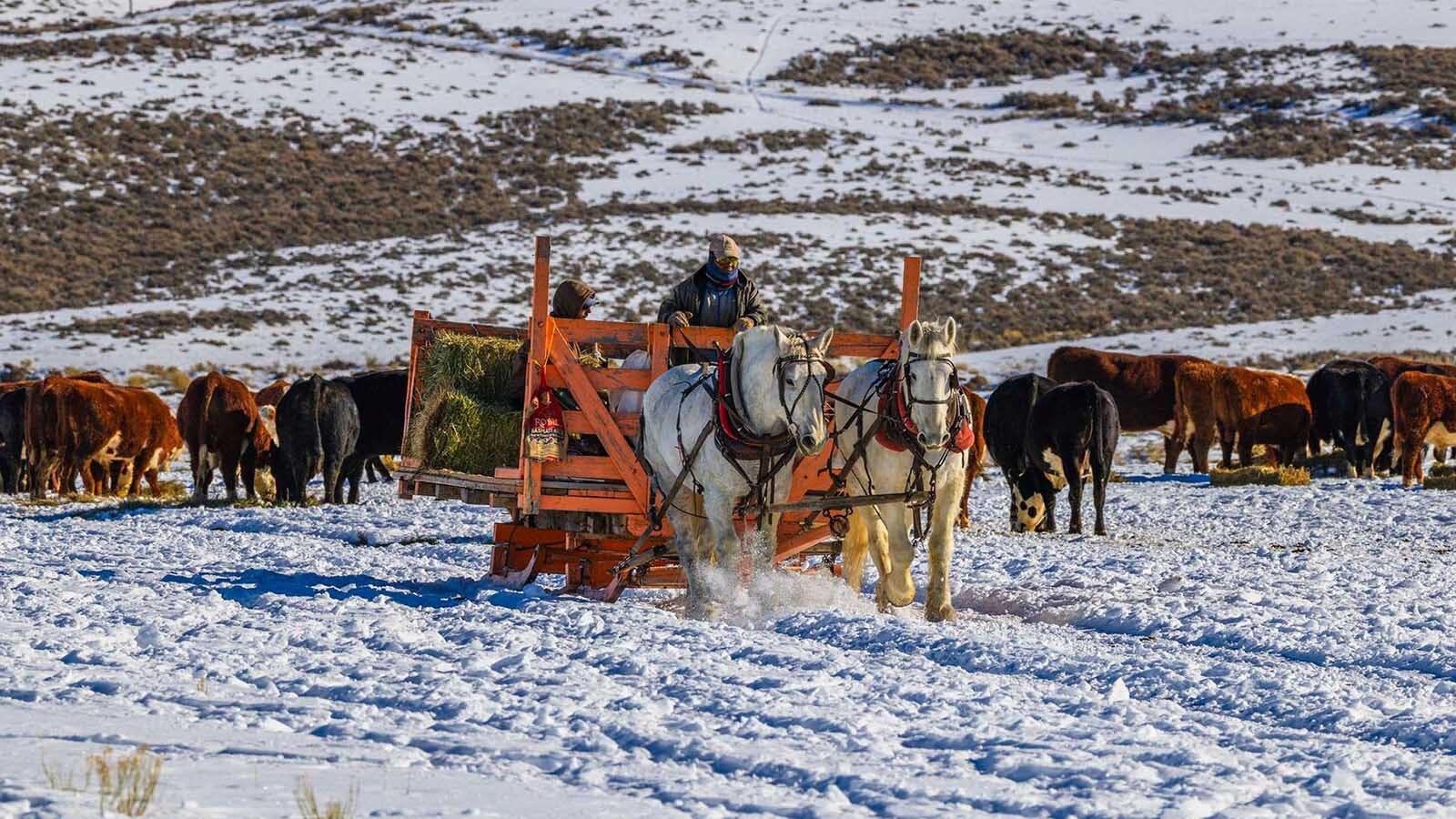
The traditional practice of feeding livestock in winter from a horse-drawn sleigh seems labor-intensive and less efficient than using modern technology. Some Wyoming ranchers do it anyway — a nod to old-time Western ranching. (Courtesy Dave Bell, Wyoming Mountain Photography) 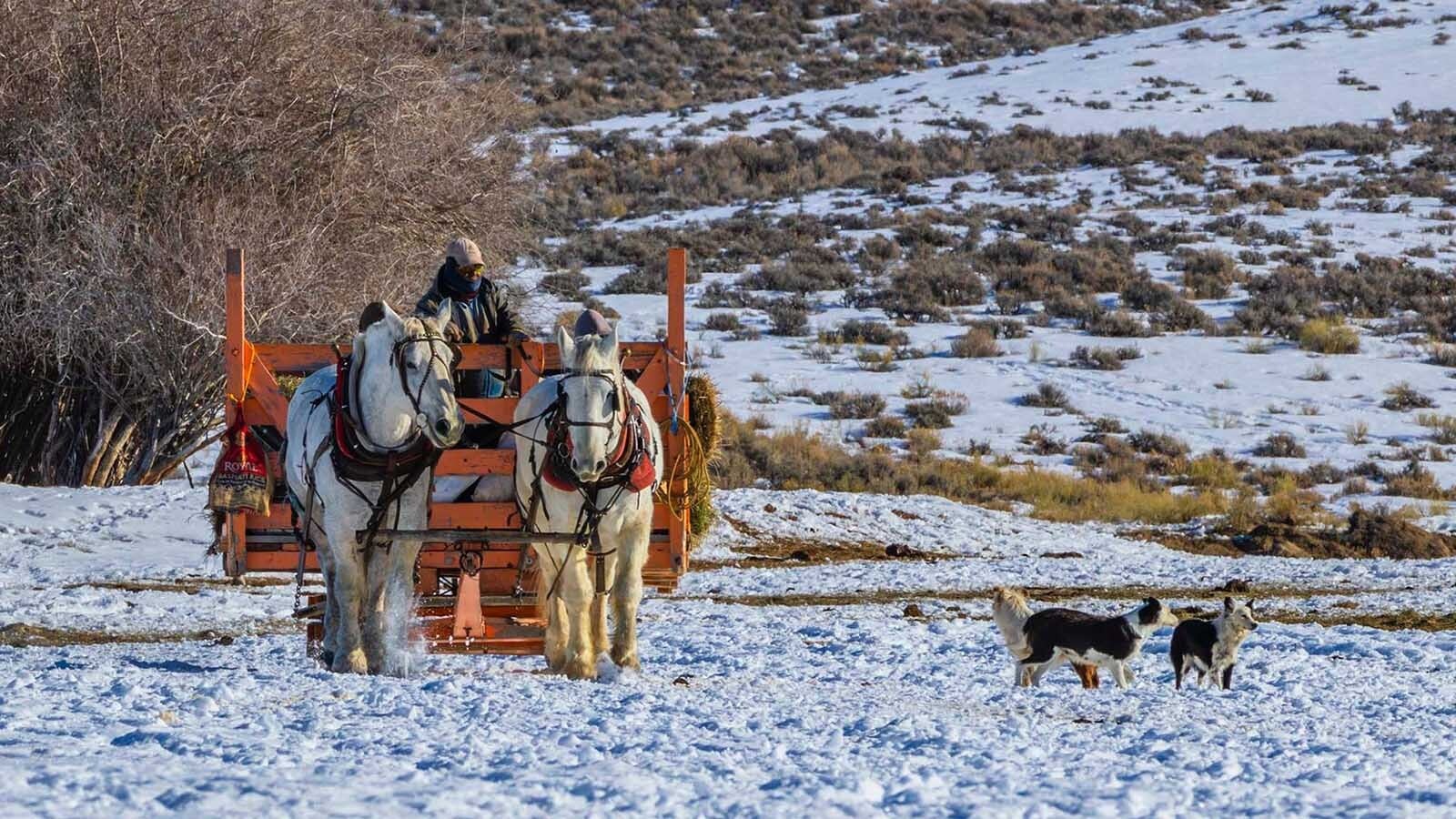
The traditional practice of feeding livestock in winter from a horse-drawn sleigh seems labor-intensive and less efficient than using modern technology. Some Wyoming ranchers do it anyway — a nod to old-time Western ranching. (Courtesy Dave Bell, Wyoming Mountain Photography) 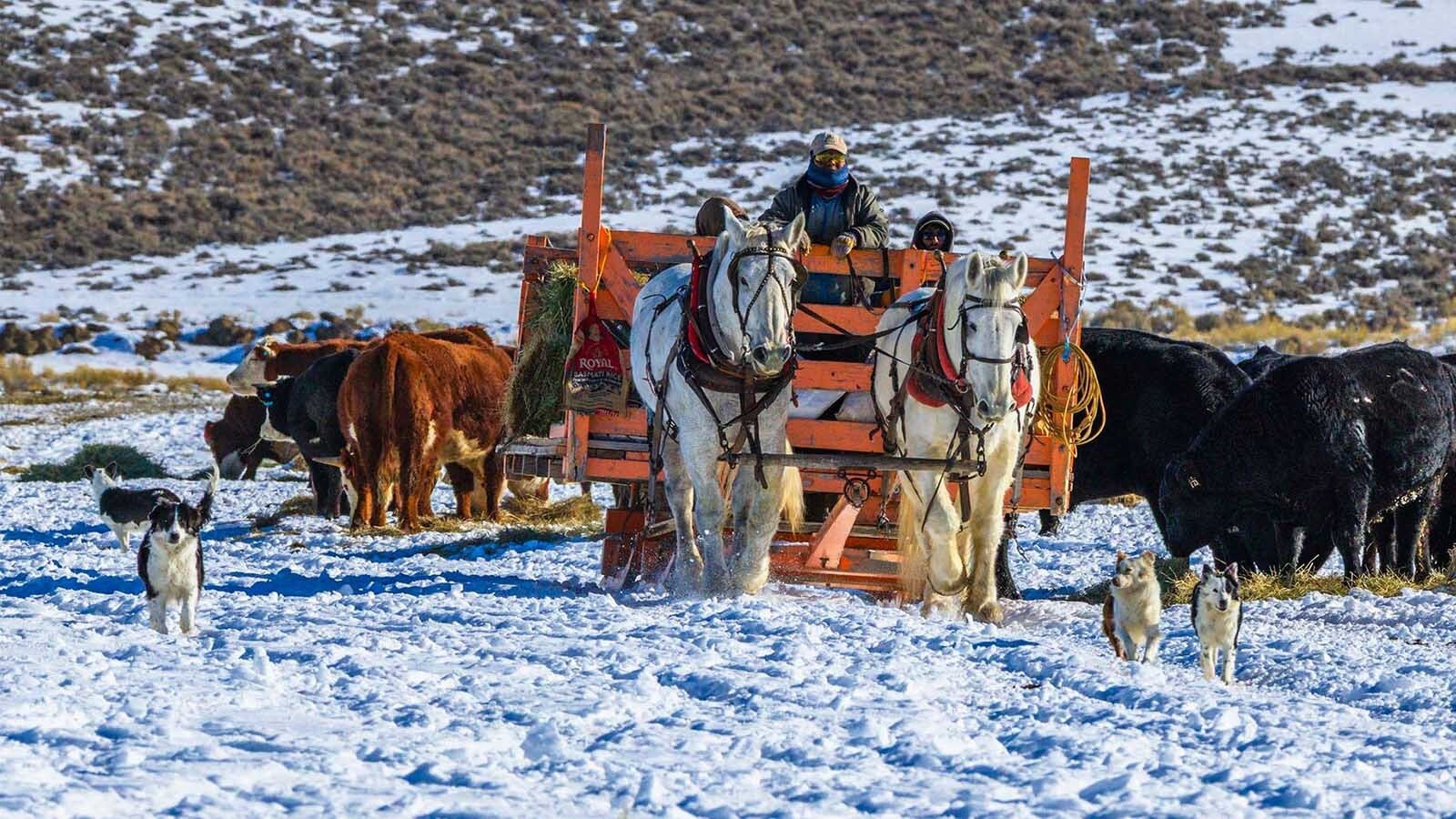
The traditional practice of feeding livestock in winter from a horse-drawn sleigh seems labor-intensive and less efficient than using modern technology. Some Wyoming ranchers do it anyway — a nod to old-time Western ranching. (Courtesy Dave Bell, Wyoming Mountain Photography)
The Drawbacks
Feeding with a horse team has some drawbacks.
For one thing, it’s a slow process. Horses walk about 2.5 to 3 mph. A tractor also can steer faster than a team of horses.
A typical feeding cycle on Campbell’s ranch might take three to four hours. On stormy days and deep-snow days, it takes longer, Campbell said.
Prior to having his son come on board full-time, Klaren spent six to seven hours per day feeding his cattle, rounding out a 5-mile circle.
Now the feeding takes about half that because he and his son divide the work.
On the land Klaren leases, the workhorses first get harnessed for feeding around Christmastime most years. They pull the feeding sleigh every day until around the middle of May.
Most years, Klaren’s workhorses get used more days out of the year than his saddle horses.
This year is different.
That’s because by mid-February, it’s hardly felt like winter in Sublette County. There’s been little or no snow now.
Klaren and his son have been feeding their cattle from a trailer hooked to a little Toyota pickup.
They stack big, round hay bales onto the trailer. While one drives the pickup, the other walks the trailer with a pitchfork and kicks the hay off the wagon and onto the ground where the cattle are.
“It’s real easy getting around this year,” he said.
Still, Klaren is optimistic that winter will eventually show up.
“We can’t really call it a winter yet,” he said. “But winters can go well into March. We will use (our workhorses), we just haven’t yet.”
Ranching An Expensive Endeavor
Winter feeding with horse teams is one way ranchers can stay viable in an industry that continues to grow more expensive.
“Everyone says you can’t get started in ranching as a young man because of the huge cash outlay, and they were not lying,” said Klaren.
Land prices remain high in Sublette County.
The only way Klaren has been able to ranch over the years is by leasing land.
The money he has invested in his current feeding operation likely amounts to less than $10,000, he said. New equipment, including a bale feeder and tractor, easily cost five times as much.
The expense is not something Klaren said he can justify with just 250 cows. That’s why feeding his livestock in the winter via horse-drawn sleigh is a “no-brainer,” he said.
Everyone Does It Differently
Campbell stressed that every winter feeding operation is different, and that there is no one way to feed livestock when the snow is deep.
“Everyone does things a little differently,” he said. “Part of it is out of necessity, and part of it is what the person likes to do.”
A big reason why Campbell sticks with his horse team to feed cattle in winter: “We want to do it that way,” he said.
Kate Meadows can be reached at kate@cowboystatedaily.com.