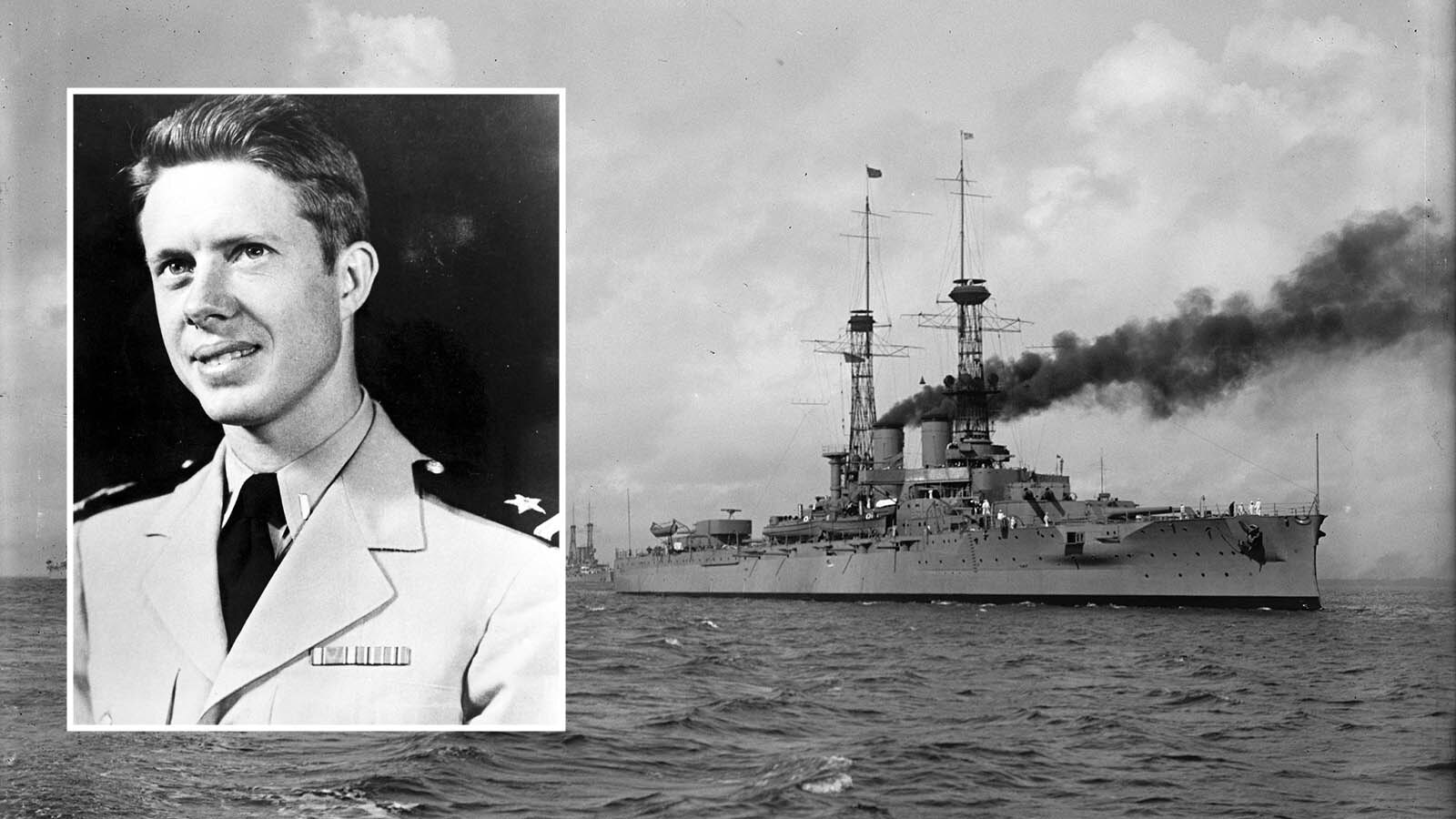
In 1946, Ensign Jimmy Carter stepped onto the USS Wyoming, a battleship nicknamed “the Chesapeake Raider,” while it was docked off the coast of Virginia.
The future president’s career of service and leadership started as part of the final crew aboard what was once the U.S. Navy’s most advanced warship.
Carter’s service on the USS Wyoming is a brief but compelling final chapter for the Wyoming-class battleship, which had served many purposes since her commission into the U.S. Navy in 1912. One could argue it was one of the most significant ships in the history of the modern U.S. Navy.
Even though by the time it was put to work in World War II the Wyoming was an aging battleship, it became a workhorse for America’s maritime efforts in the war.
“The USS Wyoming fired more ammunition than any other Navy ship during World War II,” said Samuel Cox, a retired U.S. Navy rear admiral and director of the Naval History and Heritage Command. “Japanese planes were shot down by gunners that were probably trained on the Wyoming.”
Carter died Dec. 29, 2024, at the age of 100.
Last Choice
A young Ensign Carter wasn’t pleased about his assignment to the USS Wyoming. The ship was far past its prime when the future president stepped onto its deck.
At the time, graduates of the U.S. Naval Academy in Annapolis, Maryland, were required to serve two years on a surface ship before applying to transfer to either aviation or submarine duty. Rather than applying for and receiving their assignments, graduates drew numbers and were placed accordingly.
Cox described Jimmy Carter as “smart from the get-go,” graduating 59th of 820 sailors in the Naval Academy’s Class of 1946. He wasn’t happy the number he drew.
“He drew a very high number, which meant that he pretty much had the last choice of where to go,” he said. “You’d want to go on a first-line destroyer or a cruiser. Going on an ancient battleship wouldn't have been anybody’s first choice.”
According to Cox, the 35-year-old USS Wyoming was in “bad shape " by 1946. The battleship was old, undermanned and considered “technically unsafe” due to leaks and failing machinery.
The assignment also isolated Carter from his wife.
“Carter didn’t see much of Rosalynn that year,” Cox said. “He was not particularly happy during his time on board. The ship was in very poor condition.”
This was a far cry from the glorious beginnings of the USS Wyoming. The dilapidated ship Carter served on started as one of the world’s most advanced battleships, along with its sister ship the USS Arkansas.
Briefly The Best
When the USS Wyoming launched May 25, 1911, it was the lead ship of the U.S. Navy's Wyoming-class dreadnought battleships. It was the third ship in the U.S. Navy to be named USS Wyoming (although it was only the second to be named in honor of the state of Wyoming).
Fittingly, the 562-foot-long battleship ran on coal power, and had a main battery of 12 guns that were more than 50 feet long, a top speed of 20.5 knots, and a range of 8,000 nautical miles. The USS Wyoming and the Arkansas were the most modern battleships built by the U.S. Navy up to that point.
The Navy commissioned the USS Wyoming on Sept. 25, 1912, but its first wartime deployment came five years later.
In 1917, the Wyoming and Arkansas sailed to Britain to join the Sixth Battle Squadron of the British Grand Fleet, patrolling and escorting convoys through the North Sea at the end of World War I.
“The British asked us to send our newest coal-fired battleships,” Cox said. “The U.S. Navy had newer battleships fueled by oil by then, but Britain had lots of coal and not much oil. So, the Wyoming and the Arkansas would have been the newest coal-fired battleships.”
Cox said technology had evolved fast during the five years between the USS Wyoming’s commission and her first wartime assignment. Despite its usefulness, the ship had long since ceased to be “state-of-the-art.”
After the war, the USS Wyoming served in the Atlantic and Pacific fleets throughout the 1920s. When the United States, United Kingdom, France, Italy and Japan adopted the London Naval Treaty of 1930, the battleship was converted to a training ship.
“She underwent a series of modernizations after World War I, but was basically demilitarized after 1930,” Cox said. “Several of her main batteries were removed, and she was primarily used as a training vessel during the 1930s. Then World War II broke out.”
Troop Trainer
In November 1941, the USS Wyoming was converted from a training ship to a gunnery ship. While the ship was far from modern by that time, it served an essential purpose during World War II.
By 1941, the deck of the USS Wyoming was crowded with anti-aircraft guns. While she never left the U.S. coast and operated in Chesapeake Bay for the duration of the war, around 35,000 new Navy gunners trained on the ship before deploying to the Pacific Theatre.
“As a result of that training, the USS Wyoming fired more ammunition than any other U.S. Navy ship during the war,” Cox said.
Cox said that most of the U.S. Navy gunners who shot down Japanese planes in the later years of the war got their training on the Wyoming. Throughout the war, the old battleship was continuously updated with the latest technology to ensure its sailors could adapt to the ever-changing tactics and strategies in the Pacific Theatre.
“The idea was to take lessons from the kamikaze attacks off of Okinawa at the end of the war to develop new equipment, tactics and techniques to counter air attacks in the future,” he said. “There was a lot of new electronic equipment on that ship by the war's end.”
While it provided invaluable training to U.S. sailors during World War II, the USS Wyoming wouldn’t last long past its finest hour. However, its last service gave important experience to an important man in American history.
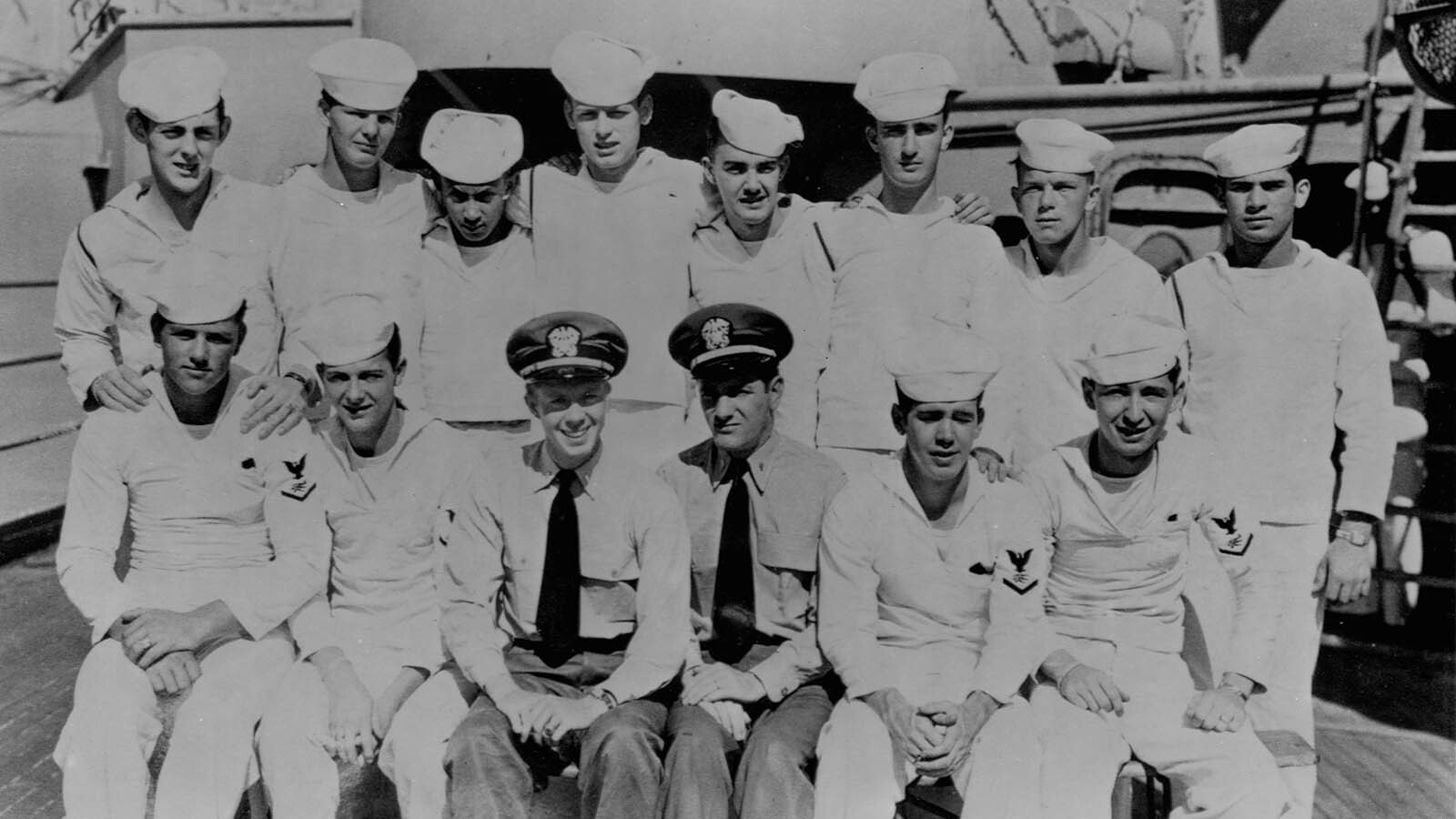
Future US President Jimmy Carter, below third from left, poses with sailors aboard USS Wyoming. (Getty Images) 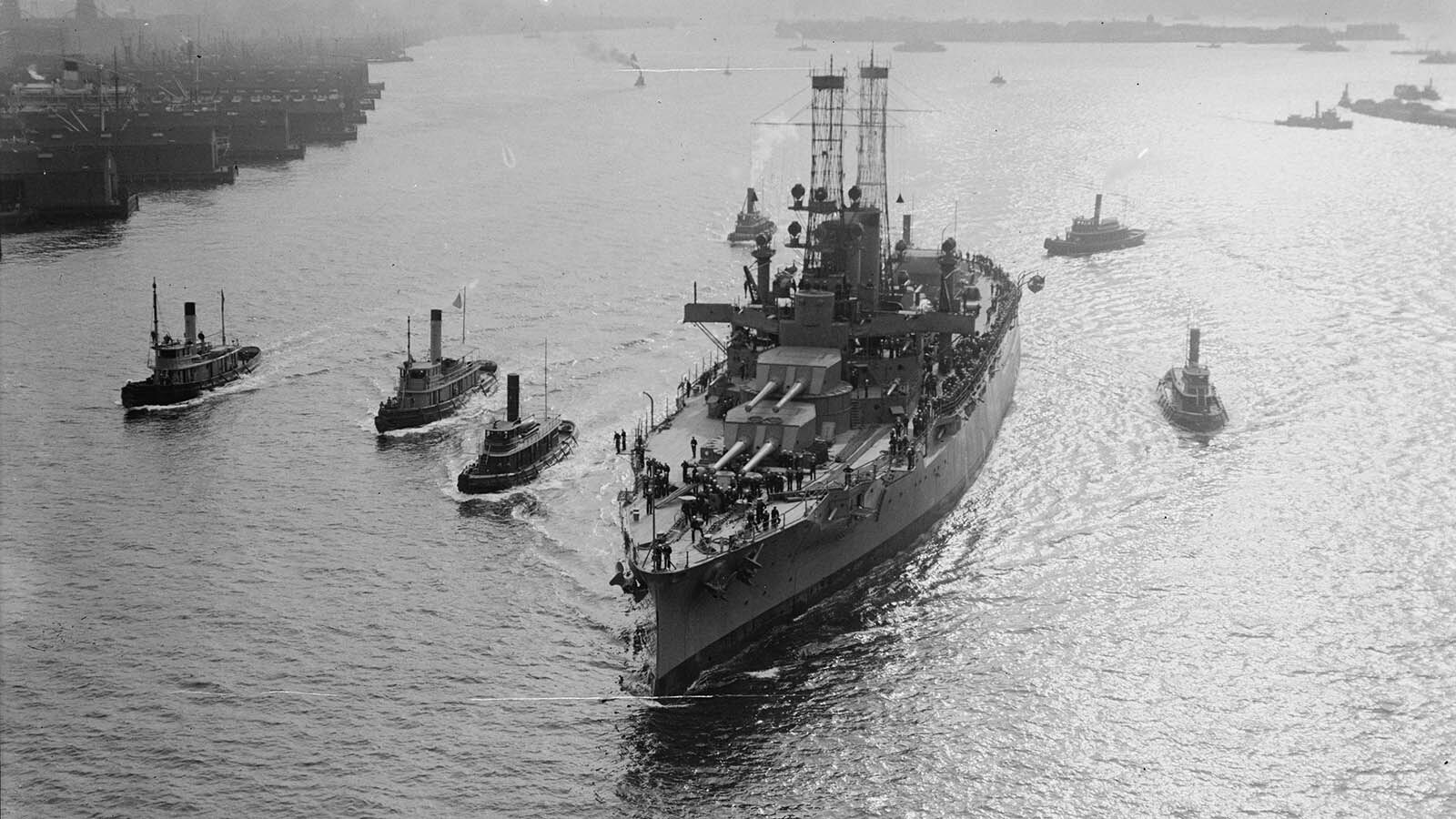
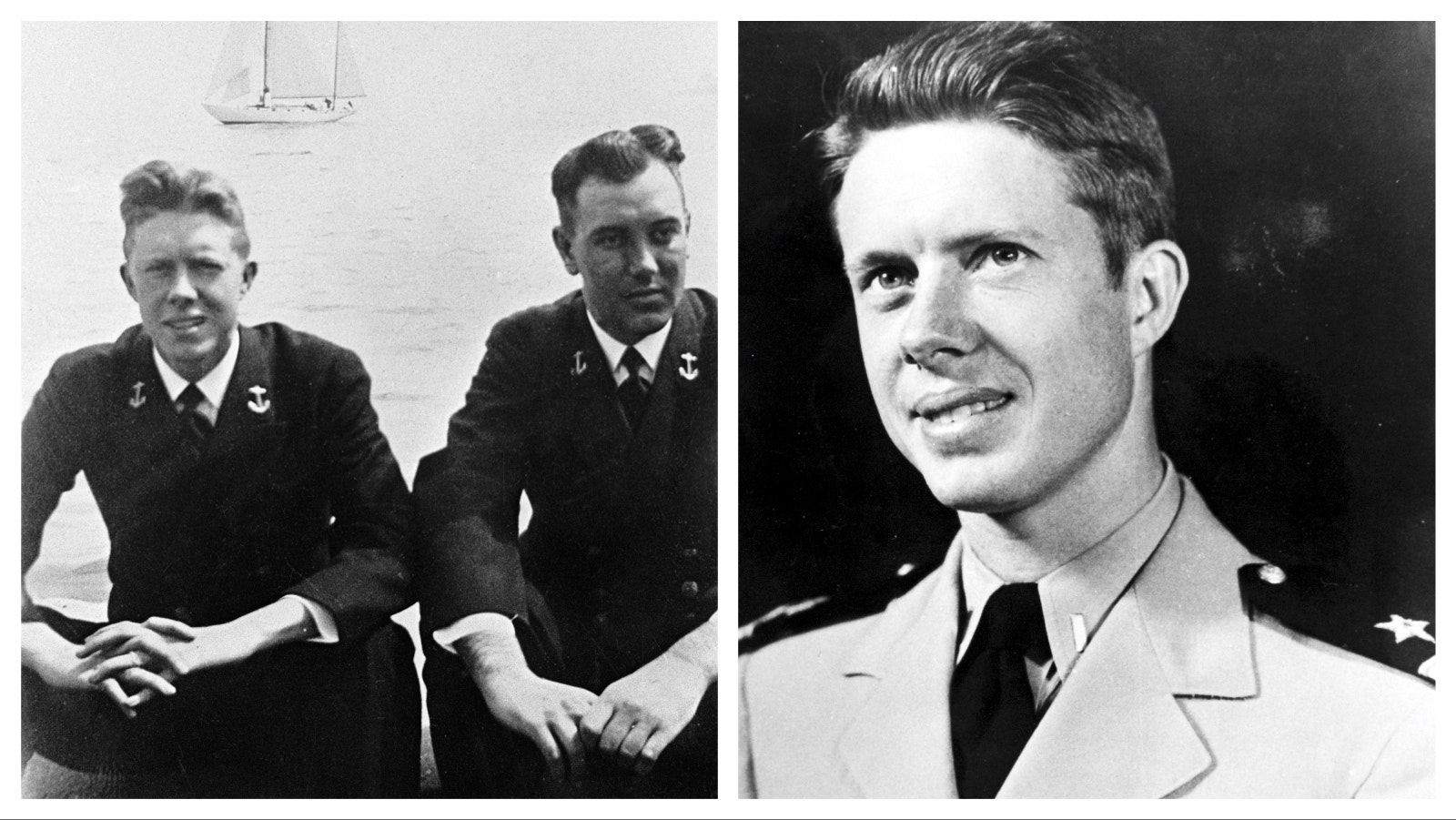
Left, Future US President Jimmy Carter (left) and a fellow cadet at the US Naval Academy, Annapolis. Right, Ensign James Earl "Jimmy" Carter. (Getty Images) 
United States Navy Battleship USS Wyoming at sea in an undated photo. (Photo by Arkivi, Getty Images) 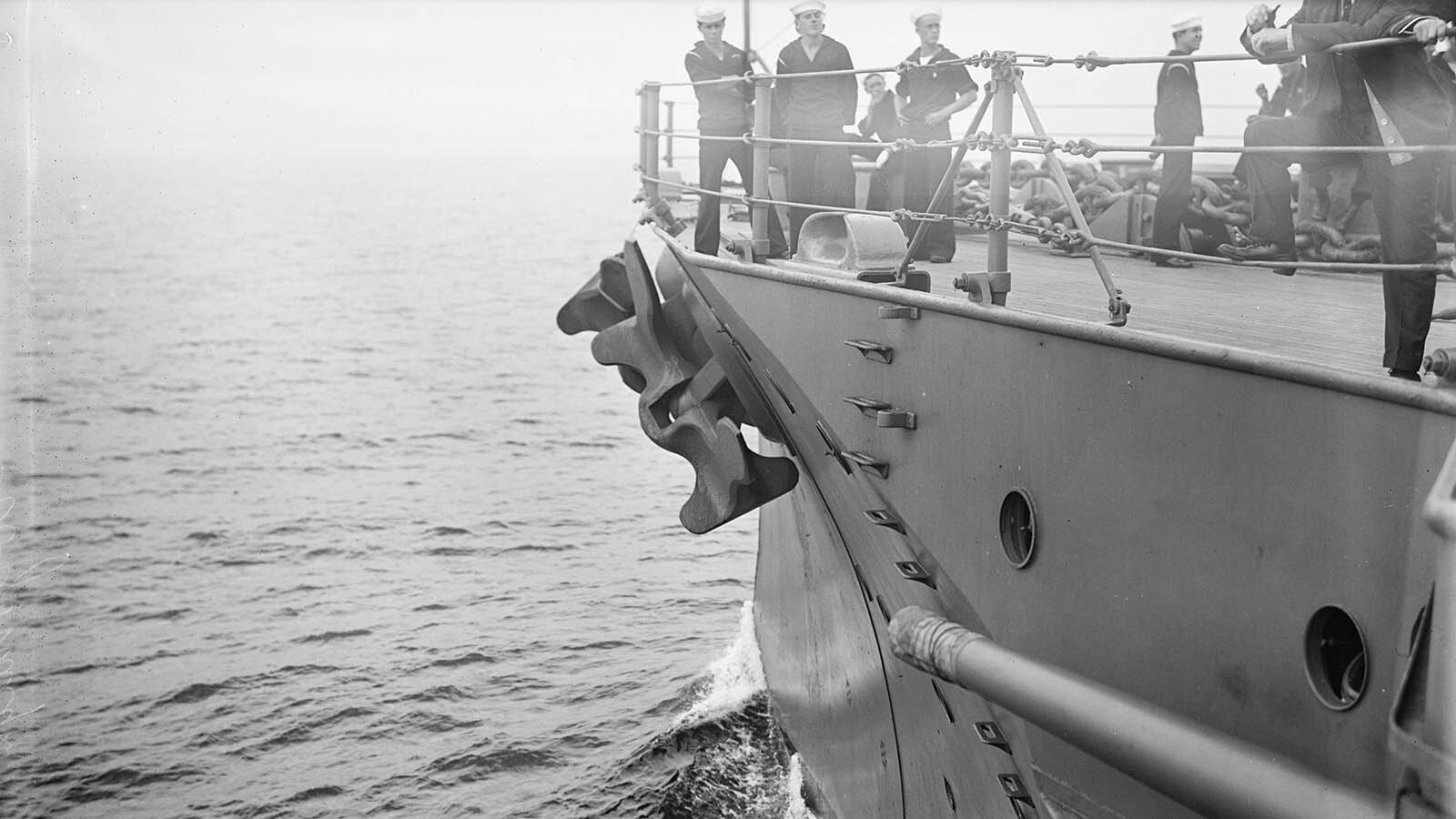
Target practice aboard the USS Wyoming in 1913. (Heritage Images via Getty Images) 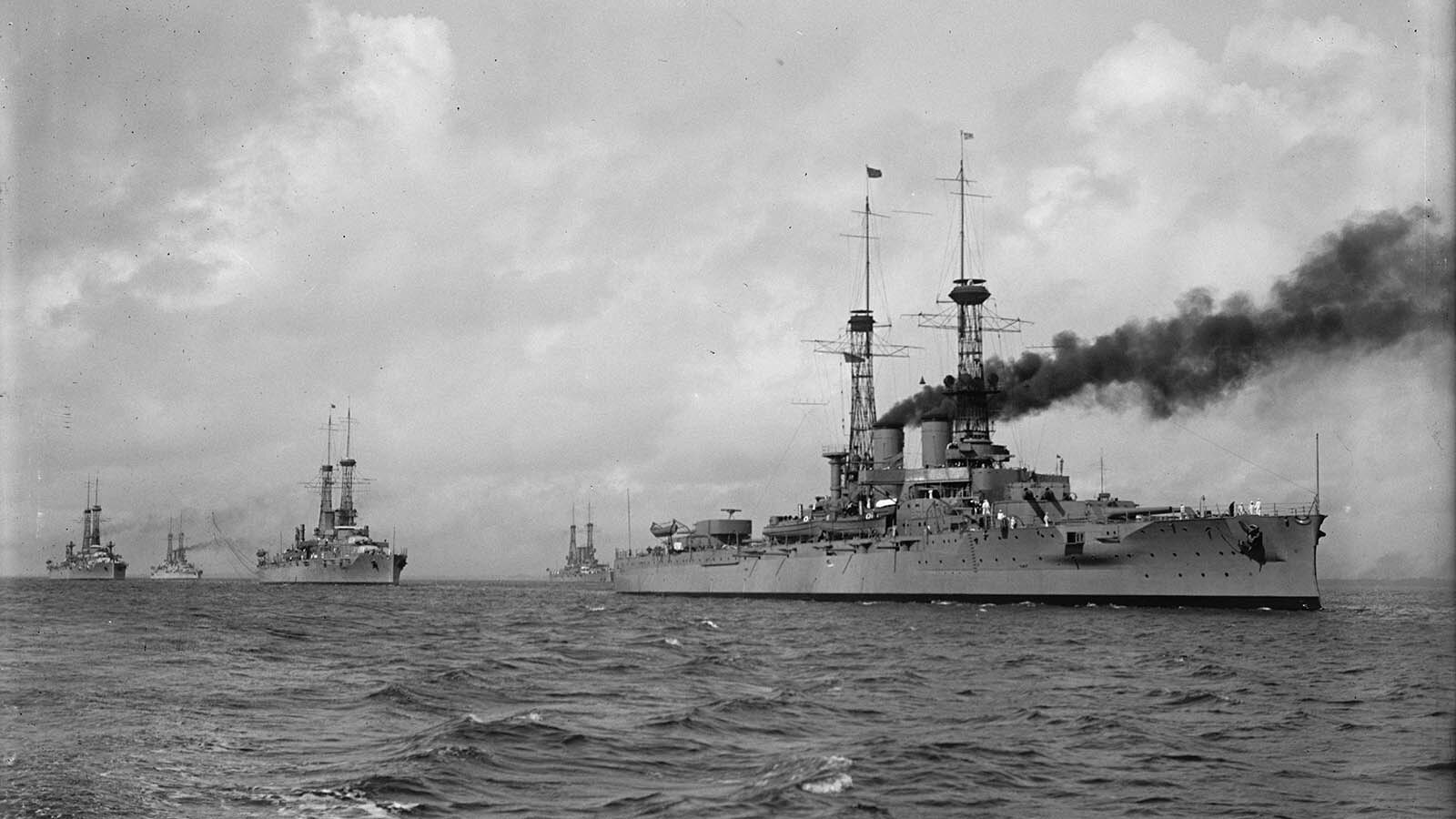
USS Wyoming leading battleships in Hampton Roads, Virginia, in 1917. The dreadnought USS Wyoming leading what is likely Battleship Division 9 on its way to England, where the ships became part of the British Grand Fleet during World War I. (Heritage Images via Getty Images)
The Silver Lining
While Ensign Carter wasn’t happy during his time on the USS Wyoming, the unexpected benefit was the advanced technology onboard the outdated battleship.
The technically minded Carter found an opportunity to learn how to use and repair the latest technology developed during the war.
“He lucked out in the sense that he went to a ship that no one would have chosen to go to, only to discover that it had all the new toys onboard,” Cox said. “The USS Wyoming had the latest radios and radar equipment, and he learned how to use it all.”
Carter spent a year onboard the USS Wyoming repairing electronic equipment, conducting photographic analysis, and assessing the performance of radar guns, gyroscopic compasses, and navigation equipment. The training would serve him well for the rest of his time in the Navy.
“When he applied to go to submarines, he had some pretty useful skills on his resume,” he said. “Once he got into submarines, he was already very technically able with additional grounding he got while on the USS Wyoming.”
Carter served under Navy Capt. Hyman Rickover at the beginning of the U.S. nuclear submarine program. He referred to it as one of the most influential experiences of his life, exposing him to the enormous dangers and potential of nuclear power, which would be reflected in his one-term as President.
Technical Service
Jimmy Carter’s active duty in the U.S. Navy ended in 1953. He served in the inactive Navy Reserve until 1961, leaving with the rank of lieutenant and several medals, including the Submarine Warfare Insignia, also known as the “dolphin badge.”
The USS Wyoming had a less distinguished end.
The once state-of-the-art battleship was decommissioned in August 1947, stricken from the U.S. Navy Registry in September, and scrapped by the end of the year.
There’s no denying that the USS Wyoming holds an important place in the history of the U.S. Navy, helping to train thousands of servicemen vital to the United States’ war effort during World War II.
Cox believes the ship served a significant role in the life and outlook of Jimmy Carter. While his time on the USS Wyoming was short, it was a formative experience for a future president.
“Carter was not particularly happy during his time on board the USS Wyoming, but he found the work interesting,” he said. “Serving on an ancient battleship wasn’t his first choice, but all the new electronic gear made it valuable for him. He was a technical guy and did technically oriented service on the USS Wyoming.”
Andrew Rossi can be reached at arossi@cowboystatedaily.com.