Wyoming cowboy Dallin Cooper rattled off a list of culinary queasiness he was exposed to while living in China for a summer: “I ate scorpion. I ate fish eyes. I ate chicken feet.”
That was only the beginning of eye-opening cultural clashes that mark the many differences between East and West. It was a learning experience Cooper has built his life’s work on.
In many ways, the distinctions in culture are striking, especially for someone from Riverton — the biggest town in Wyoming for 100 miles in any direction with a population of a mere 10,000.
“There were that many people living in my apartment complex in Harbin,” Cooper said about the Chinese city of 6 million residents.
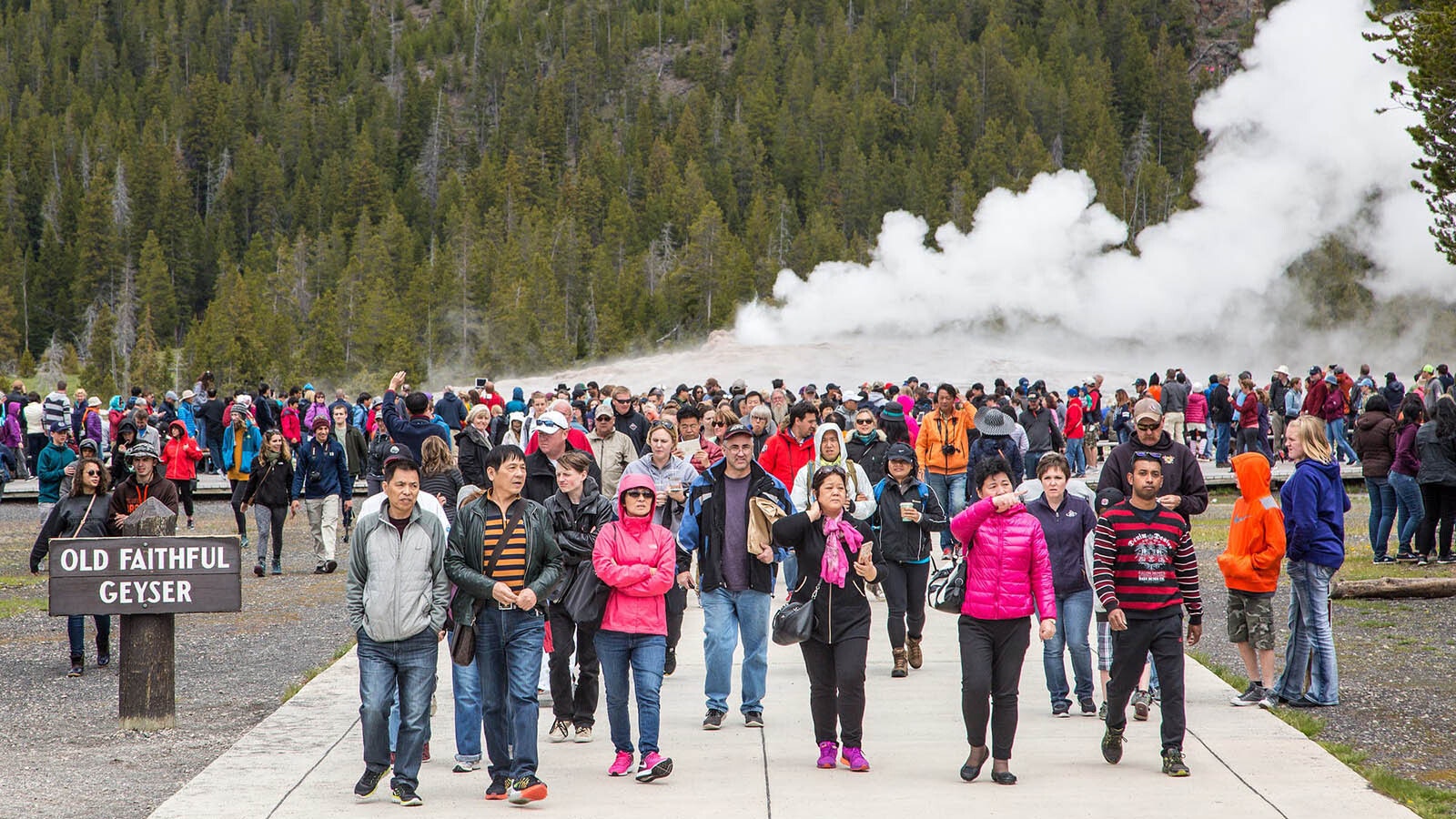
Like everyone else, Cooper would shake his head and laugh at the seemingly naïve behavior of Chinese tourists in Yellowstone National Park.
Bizarre bathroom etiquette saw visitors from the Far East literally destroying toilets. And viral videos of Asian tourists getting way too close to wildlife are as commonplace as packaged fortune cookies with kung pao chicken takeout.
Then Cooper stepped into a restroom in China, took one look at the commode, and everything changed.
“I had heard the complaints and seen the signs in Yellowstone and Grand Teton explaining how to use a toilet. The old me saw that and thought, ‘What idiots, they need a sign to tell them how to go to the bathroom?’” Cooper remembered. “Then I got to China and saw my first public toilet there and I had so many logistical questions.
“I honestly thought, ‘I wish I had a sign telling me how to use this toilet. That would be real handy right now.’”
Until he got his passport stamped, the Fremont County sheepherder lived a fairly sheltered life. He found he simply lacked empathy.
Born in Riverton and growing up in nearby tiny Midvale, Cooper received few life lessons that did not involve pickup trucks or sheep.
“This was truly a transformational experience in my life. It was a huge shift in my mindset. I had made all these assumptions about people who were different from me,” Cooper told Cowboy State Daily. “Suddenly, I realized they weren’t stupid and they weren’t crazy. They just had a different experience. That really hit me hard and stuck with me.”
The 29-year-old father of two is now one of a handful of highly-sought motivational speakers in Wyoming. He’s also authored one book with another on the way and pumps out frequent podcasts and YouTube segments all dealing with closing that gap between perception and problems.
“I’ve really made it my life’s work now to understand better why we make the assumptions we make, and how we can fix those when they clash with reality,” Cooper said.
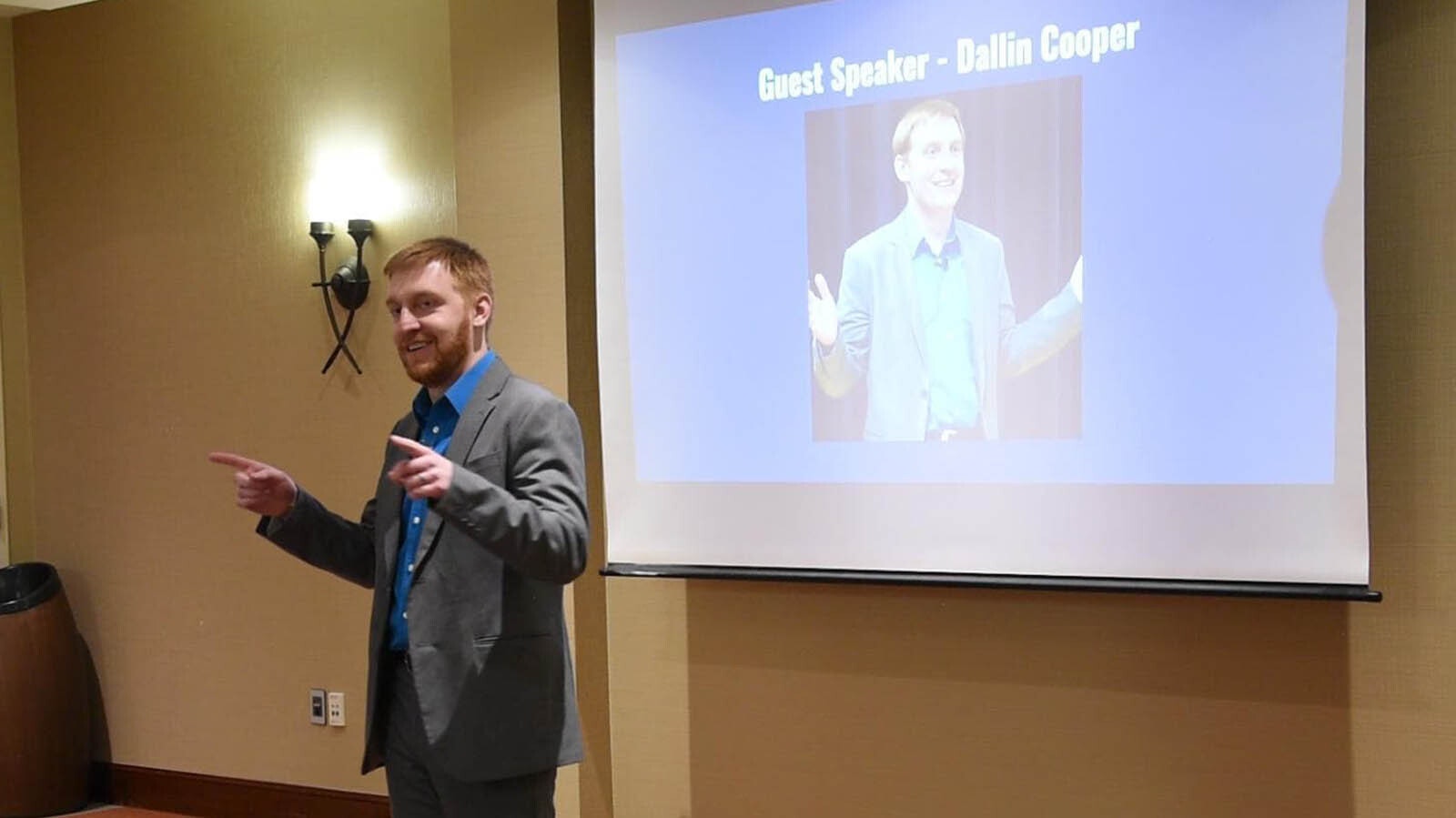
Dallin Cooper grew up in Riverton, Wyoming, and spent time living in China. He's now a popular motivational speaker around the Cowboy State. (Courtesy Photo) 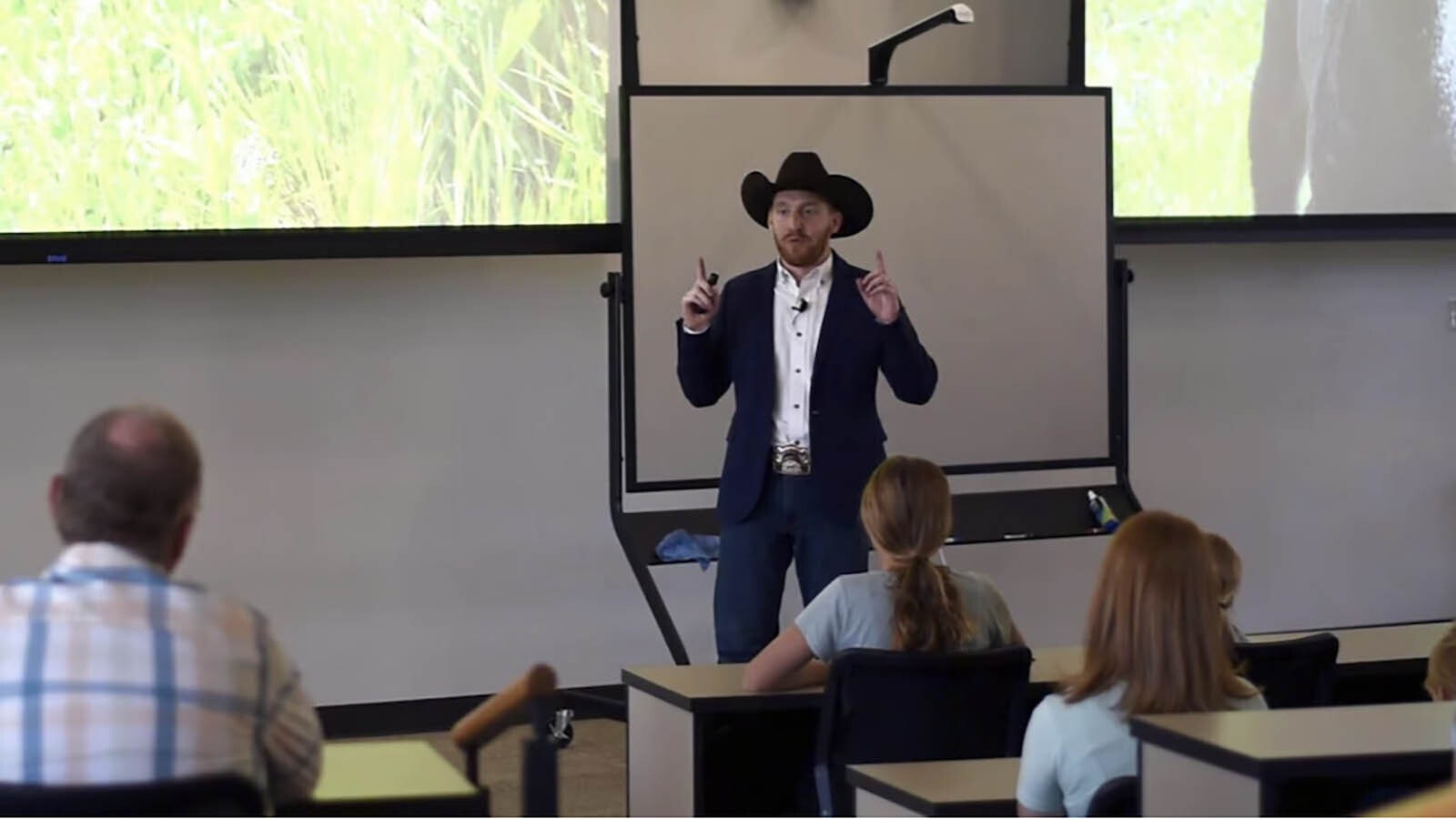
Dallin Cooper delivers an anti-bullying message at a Wyoming school. (Courtesy Photo) 
Dallin Cooper said living in China was quite a culture shock, and he learned that what some consider bad behavior by Chinese tourists at Yellowstone National Park is just the visitors not knowing what they don't know. (Courtesy Photo) 
Dallin Cooper (Courtesy Photo)
An Innocent Abroad
The phrase “as far as the East is from the West” is first used in the Old Testament book of Psalms. It’s an indication of vastness, of a gap that is nearly immeasurable.
When Cooper first set cowboy boots down within the Emperor’s Great Wall he began to understand just how immense that culture gap is. And it begins with a language barrier.
“I got there and was so out of my depth. It wasn’t until the end of my three months there that I really felt like I was pretty functional,” Cooper said. “Humor, for instance, is so hard.
“As someone who has always considered myself fairly funny, I enjoy a casual rapport with people and it was very challenging to experience feeling socially awkward all the time.”
He would quickly learn that kind of casual humor doesn’t always translate the way he intended.
“I would try to make jokes in English and then translate them into Chinese, and that doesn’t translate. You have to be able to think in the language well enough to make a joke that works in their language,” Cooper assured. “I remember the first time I made a joke that legitimately made my peers in China laugh. I thought, ‘Now, I have arrived.’”
Cooper had studied Mandarin Chinese at the University of Wyoming for a two solid years while pursuing a minor in Chinese to compliment his dual major in management and marketing. He said he is somewhat fluent in Spanish and has always loved linguistics.
When he travelled to China in May 2017 as part of a 15-credit study abroad program for UW, Cooper quickly found out the limitations of his textbook study of Mandarin.
“Look, you can’t learn the language without also learning the culture and history. There is no frame of reference that the American mind has for the historic scope of China,” Cooper said.
“In the U.S., we trace American history to things like the 200-year-old Liberty Bell. Then you go to Europe and see this cathedral that is 1,800 years old, built just after Jesus was born,” he said. “And then there’s China.
“China has been China for thousands and thousands of years. When Europe was feuding tribes, China was still China. Europe just makes America look like a tiny baby. And China makes Europe look like a tiny baby. It’s that kind of scale.”
Written Word
China’s immensely deep history factors heavily into its written language. Most people know the language consists not of letters arranged into words, but pictorial symbols or characters that represent entire words themselves.
As Cooper quickly found out in his studies, there is no frame of reference when encountering an unknown symbol. There’s no way to “sound it out” based on letters and rules of pronunciation.
“You either recognize the word or you don't. In Chinese, if I don’t know what sound a character makes, I don’t know how to say it or what it means. That’s it,” Cooper said. “Reading Chinese is a function of memorization. How many characters do you have memorized? By the time you get to three or four thousand, you are functional in reading Chinese.”
And the symbolic words are steeped in history.
Coining a new word in Mandarin is almost unheard of. For instance, the Chinese word for “computer” is the words “electric” and “brain” put together. A computer is an electric brain.
In this way, a cellphone is referred to as a “hand machine.” An airplane is a “flying machine.”
Direct translation to English, however, is often clunky. For instance, in Chinese, the word for “dried” translates most directly to “f****ed.” It would account for some foreign shoppers’ trepidation at the dried goods store in Beijing.

A visit to Yellowstone National Park is a bucket-list item for Chinese tourists visiting the United States for the first time. Many don't know about Wyoming, but they know Yellowstone. (Getty Images) 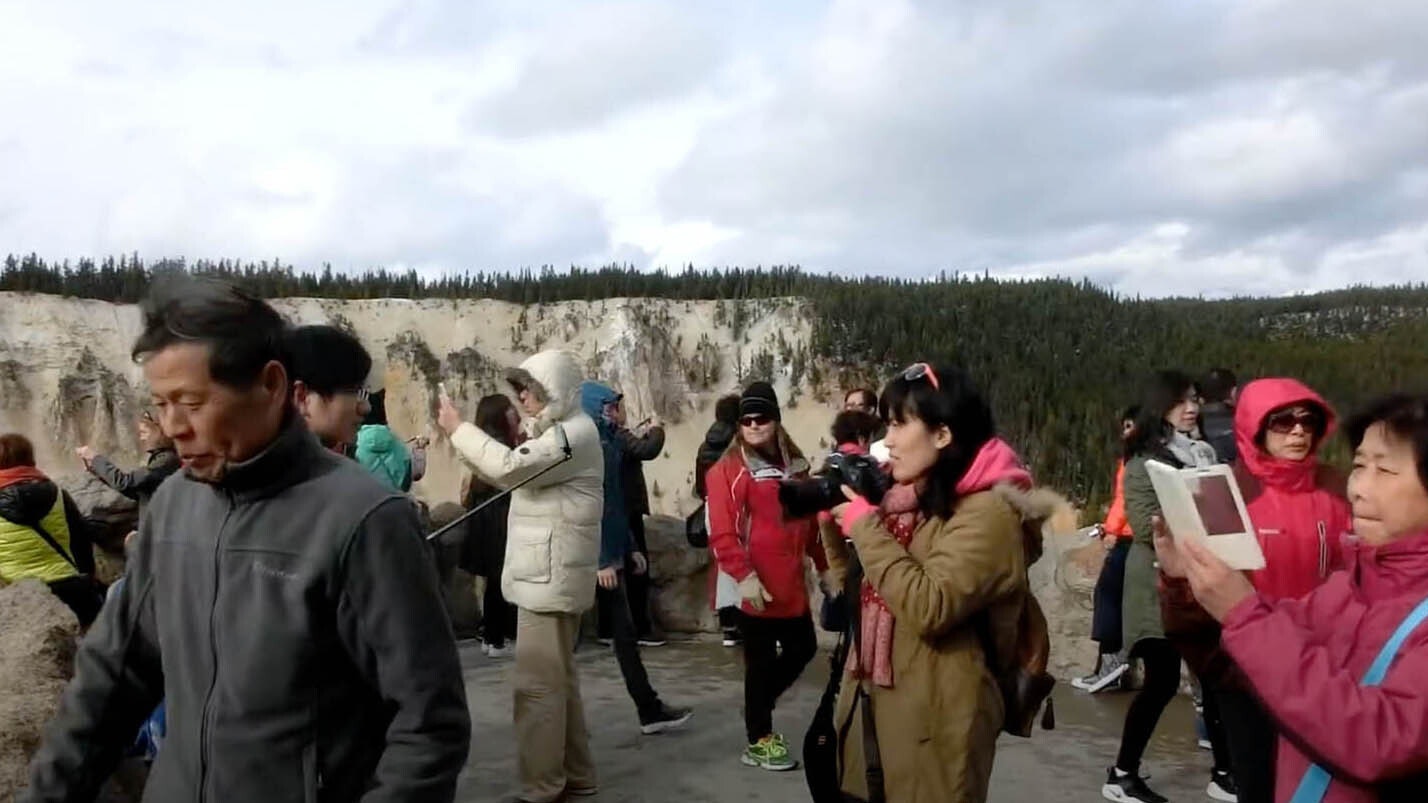
A group of Chinese tourists at an overlook at Yellowstone National Park. 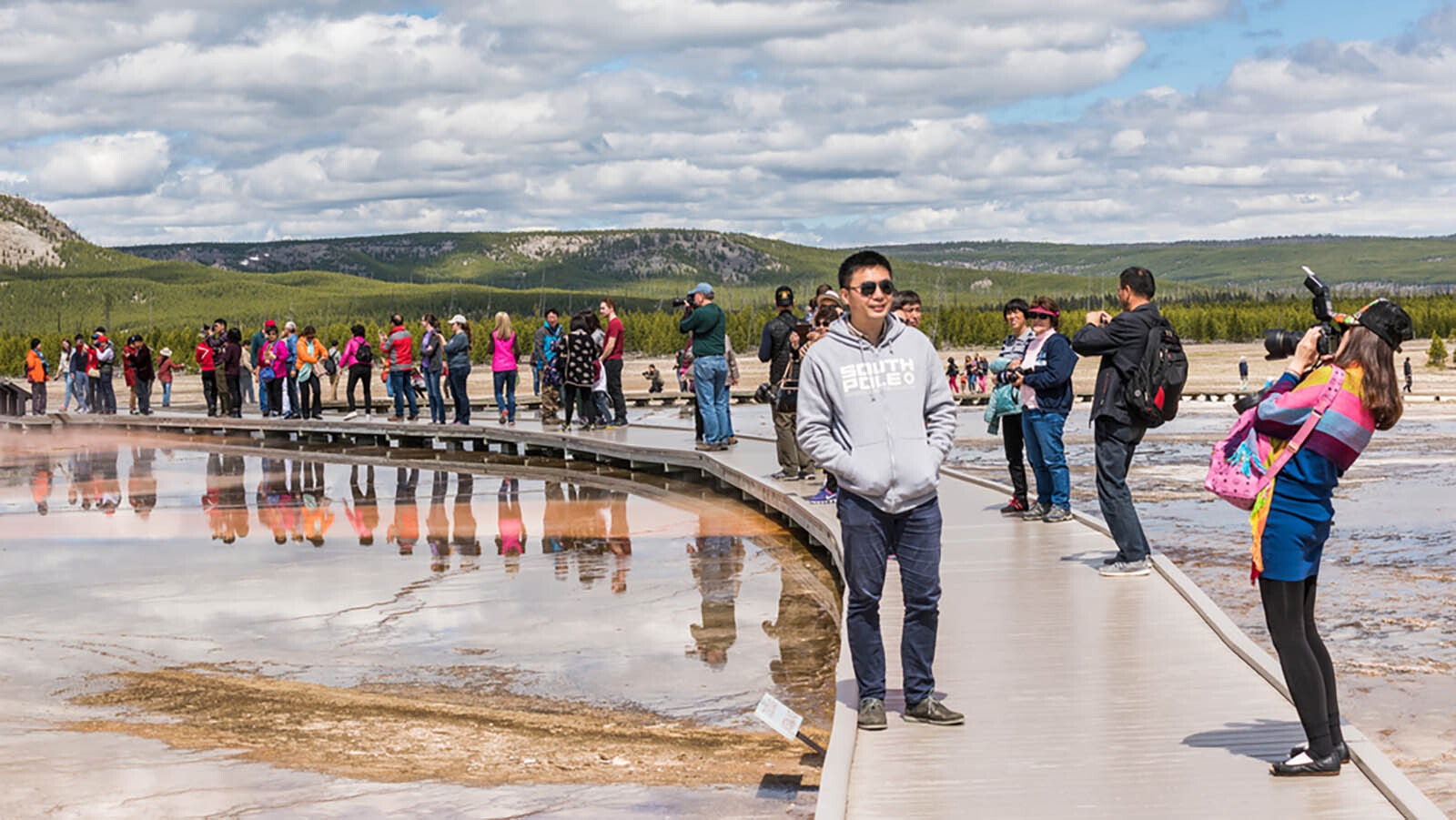
A visit to Yellowstone National Park is a bucket-list item for Chinese tourists visiting the United States for the first time. Many don't know about Wyoming, but they know Yellowstone. (National Park Service File Photo)
Talking The Talk
The phrase “it’s all Chinese to me” — a synonym to “it’s all Greek to me” — has come to mean a language that sounds like gibberish to the ear. Mandarin can be intimidating when heard by most English-speaking Americans, and rightfully so. It is decidedly not one of the romance languages.
“There are elements of Chinese that are harder, for sure. But, structurally, it is very simplistic,” said Cooper, who now is conversational in both Mandarin and Spanish.
Latin-based Spanish follows predictable rules and one can be functional in the language fairly quickly, Cooper says. But nuances like gender assignation and subjunctive tense make the language anything but straightforward the more one is immersed in it.
Conversely, Chinese languages like Mandarin or Cantonese can seem daunting at first, but a deeper dive finds comfort in their simplicity.
“There’s no gender, for starters. No feminine or masculine. No ‘a’ or ‘o’ ending to worry about like in Spanish. Even the word for ‘he’ and ‘she’ is pronounced exactly the same,” Cooper said. “Also, there is no plural. The is no tense [in the verbs]. You say, ‘I will verb, I did verb, or I verb.’ It is very straightforward grammatically and structurally.”
So, Mandarin is easy, right?
“What makes it so difficult for Western people is that the language is tonal. That just breaks people’s brains,” Cooper said.
He shared an example of the word “ma.” Depending on how drawn out the word is spoken, or whether it is pronounced with a rising inflection, can completely change the meaning of the same word.
“In Chinese, when inflection changes, the literal meaning of words changes. That really trips up English speakers,” Cooper said.
“For instance, here in America, if I am going to ask you a question, I raise my voice at the end of the sentence. What are you doing? I use a rising inflection to indicate I am asking a question,” Cooper illustrates. “Do that in Chinese and you change the word you are saying. But we are so used to doing that. We don’t grow up in the U.S. thinking tonally.”
Culture Shock
Language isn’t the easiest place to spot weird contrasts between Beijing and Buffalo. Put a Wyomingite in China, or vice-versa, and both stand out like a sore thumb.
“China is pretty homogenous. You don’t have a ton of diversity. In a country of 1.4 billion, it is a rare occasion to see someone who isn’t ethnically 100% Chinese,” Cooper said. “I'm 5-foot-10, comparatively tall over there. And ginger-haired. Like, really, really pale and vibrantly redheaded. That made me an insane oddity in China. Blonde hair or curly hair are also very rare.”
As a result, Cooper was constantly confronted in the street. People wanted their photos taken with him all the time.
Cooper said he understood the fascination with someone who looked different, but what really struck him was how open the Chinese people were for living in a country under strict government control about what its citizens are allowed to be exposed to.
“When you think about it, there is a lot of political correctness in the U.S. in many ways. To just walk up to someone because they look different than you and ask for a picture with them would be considered fairly rude,” Cooper said. “But the Chinese think nothing of asking you blunt questions like, ‘How much do you weigh?’ or ‘How much do you make?’
“And for them to want a picture of me just because I looked different, I took as a compliment. I’m not particularly special in Wyoming, but in China I am the coolest, most interesting guy.”
Cooper also was exposed to foods that were very foreign to him. Underground food markets featuring delicacies like skinned iguana and giant beetles were commonplace.
“I had fish eyes (they were phenomenal). Fried scorpion, little skewers of those were well-seasoned, crunchy and tasty,” Cooper said. “Chicken feet, however, were not my favorite. It felt like a lot of [chewing] work just to have boiled skin.”

Yellowstone Faux Pas
When asked where he was from, Cooper would say Wyoming and the response was always the same.
“Miami?”
No one knew where or what Wyoming was. Cooper’s go-to reference point was then Yellowstone.
That, everyone knew.
“They always knew Yellowstone. That worked every time,” he said. “To go to America and see Yellowstone; that’s a bucket list item for many.”
When Cooper left for the Far East, Chinese tourism was beginning to boom in the U.S. Tour buses flooded national parks like Yellowstone and Grand Teton like never before. With the increase in visitation came friction, evidenced most notably in restroom etiquette and wildlife conflict.
In 2015, a dozen of the 42 vault toilet seats in Grand Teton were broken. In addition, used toilet paper was often left discarded on many restroom floors instead of being flushed or dropped into the toilet bowl.
It took a while, but park authorities finally figured out what was happening when they began finding shoe prints on toilet seats.
Chinese tourists, for the most part, were responsible. They do their business squatting, so they’d stand on the seats to squat and break them. Also, sewer systems in China are not equipped to handle bulk like toilet paper so the Chinese are averse to flushing TP.
“Even as I left for China in 2017, I heard the news and saw the signs in the restrooms and thought to myself, ‘How can you be so ignorant that you do not know how to use a toilet? These foreigners, they just don't get it,’” Cooper remembered.
“Until the script was flipped. The first time I walked into a Chinese bathroom I was really hoping I could get some step-by-step instructions in English and perhaps a diagram or two,” he said. “All of the sudden, I was there and I was confronted with the fact that I was now in the same position. I didn’t know how to use their toilets and I was messing up their plumbing. I was the one doing it wrong.”
Public toilets in China are usually sunk into the ground rather than the typical raised throne of most other countries. To perform a No. 2, one hovers over the bowl, squatting. Similar toilets exist in Italy where the locals refer to them as “virtual skiers” for the posture users must assume to use them correctly.
“I used plenty of Chinese toilets, but I never got good at it. It’s a serious thigh workout,” Cooper assured.
“Chinese toilets are designed so you never touch them with any part of your body. You even use a foot pedal to flush,” he said. “Also, there is a little basket in China where you are supposed to throw your used toilet paper. In fact, public bathrooms in China don’t even have toilet paper. You have to carry it around with you.”
The first time Cooper used a restroom in China, he absentmindedly flushed his TP and realized he might have made life difficult for a public sanitation worker somewhere “down the line.” Not unlike the damage to porcelain the Chinese were doing in America.
“One thing I think is so interesting is, from their viewpoint, we are just downright barbarians,” Cooper said. “Keep in mind, in China you can't go to Google or Facebook to learn about how Westerners do things. Those websites are blocked. Their view of America is based solely on what their government wants it to be.
“The uninformed Chinese are thinking: ‘You touch a toilet? You sit on a toilet seat? That’s so gross. That’s disgusting.’”

Tourons And Their Bison Selfies
Then there’s the reputation tourists from the Far East have about being ignorant of proper wildlife protocol.
“We all know the big complaint about Chinese is they are so reckless with wildlife. I get it,” Cooper said. “I have multiple pictures of people in China petting deer and various wildlife in local parks there.
“It’s normal to encounter friendly animals you can touch because, in China, if animals were truly dangerous they would be locked behind bars and you would not be able to get to them.”
Cooper said Chinese citizens are used to a level of protection — from gun violence and possession of firearms, for instance — that could be construed as creating a naivety outside their native land.
Things just don't get that “Western” in the East.
“If all the animals you’ve ever seen in a park are nice and you are encouraged to pet them, and if you don’t have an amazing grasp of English, you see the big fluffy cow in Yellowstone and you think clearly it’s sweet,” Cooper explained. “Its right by the road. It likes people. It wants a pet.
“In China, they aren’t going to let you do something that reckless. From their perspective that is irresponsible and cruel to let people endanger themselves in that way.”
Park officials in Yellowstone have ratcheted up a public awareness campaign regarding wildlife encounters that includes foreign languages and easy-to-grasp illustrations.
Emperor Of Empathy
Dallin Cooper has built upon his transformational experience in China, expounded it into a passionate calling. The sought-after public speaker shares a universal message to thousands of people across the country every year to be mindful about how we judge one another.
“China was a huge shift in my mindset. I had made all these assumptions about people who were different from me,” Cooper said. “And then I realized they weren’t stupid, and they weren’t crazy. They just had a different experience. That really hit me hard and stuck with me. It’s been my life’s work since then.”
Cooper advocates that people should travel internationally whenever they can. Americans, as a whole, are not particularly cognizant or even tolerant of other cultures.
“Just consider the language aspect alone. Almost everywhere is more multilingual than the U.S.,” he said. “Most people in Europe, for example, speak three languages functionally or fluently, and that’s considered the baseline norm.”
Global, cultural differences — even disparities with the United States — are often the basis for misunderstanding.
“China is a massive country just like the U.S. You go from northern to southern China and you are suddenly speaking different versions of Chinese, the same way even if you grew up in Wyoming and travel to, say, Louisiana. The dialect, the accents,” Cooper said. “If you have learned proper [British] English as a second language and you come to the U.S. and go to the Deep South, the language is going to be vastly foreign to you.”
But it’s not only travel that might prove enlightening, Cooper said.
“We experience insightful things like this every day, and you don’t have to travel across the world to see them. You see it within our own ever-divisive country and you even see it, for example, in your own family,” Cooper said. “One of the first things I found out after getting married is you think, going in, ‘We have so much in common.’ Then you start living together and these moments will come up when I think: ‘I love you, honey, but you are nuts. Sometimes I think I don’t know you at all.’”
Much of Cooper’s advice involves active listening as the first step toward more informed and effective communication. Take it from a world traveler.
“If you want to look smart, talk,” he said. “If you want to be smart, listen.”
Jake Nichols can be reached at: Jake@CowboyStateDaily.com
Jake Nichols can be reached at jake@cowboystatedaily.com.