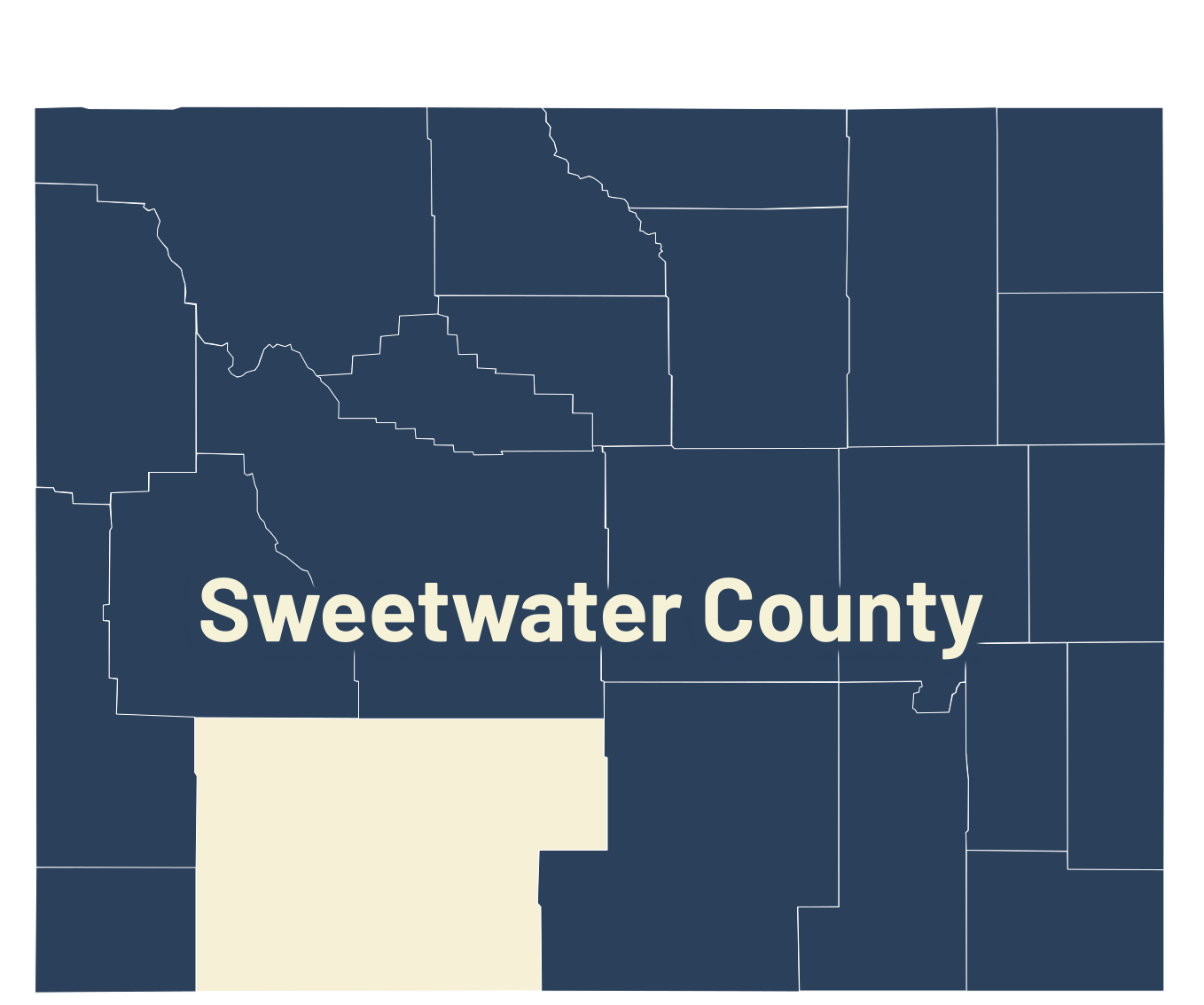
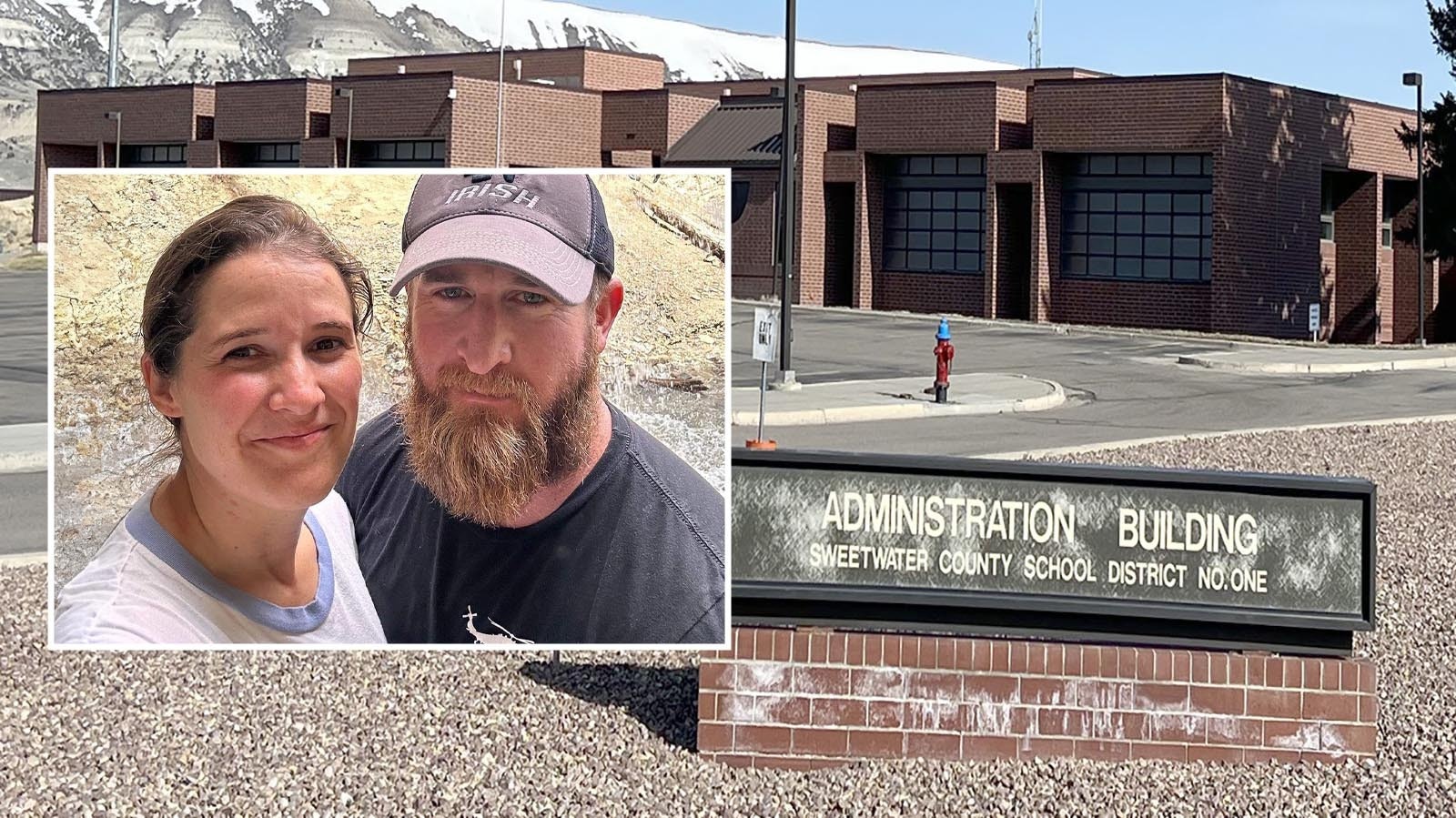
A Rock Springs school district and the parents who say it hid their daughter’s gender transition from them both have six days to tell a federal appeals court what a new U.S. Supreme Court decision means to their case.
Sean and Ashley Willey filed a legal challenge in 2023 against Sweetwater County School District No. 1, saying the district required Ashley Willey — a teacher in the district — to use transgender names and pronouns against her faith.
The district also kept the Willey’s daughter’s gender transition secret from them, according to their lawsuit.
The school district, conversely, has said it was merely trying to honor the federal requirements of the Biden administration and that the district, acting as a public entity, did not actively or deceptively conceal the student’s gender transition from her parents.
After sorting through the case evidence, U.S. District Court Judge Scott Skavdahl, of Wyoming, learned that one teacher had been emailing the student and encouraging her toward LGBTQ education.
But that teacher acted against a district policy, so the lawsuit against the district over its policies couldn’t hinge on that teacher’s behavior, Skavdahl ruled.
In April 2025 Skavdahl dismissed the case because Ashley Willey, to what the judge can conclude, had failed to show she was ever forced to call a student by transgender names against the dictates of her faith.
He also said he didn’t find evidence of the school district actively lying to the Willeys about the girl’s transition.
Skavdahl wrote that he declined to stretch Americans’ parental rights so far as to create a new constitutional duty for school districts to tell parents about such changes.
That would open a “Pandora’s box” of affirmative duties tied to a constitutional right, wrote Skavdahl at the time.
The Curveball
The U.S. Supreme Court may have thrown a curveball at the Rock Springs case as it now sits before a three-judge panel of the 10th Circuit Court of Appeals.
The 10th Circuit, based in Denver, is one level higher than Skavdahl’s court and one level below the U.S. Supreme Court. It covers federal cases for Wyoming, Oklahoma, Kansas, New Mexico, Colorado, and Utah.
“What is the precedential value of Mirabelli v Bonta…?” asked the three-judge panel, comprised of 10th Circuit Judges Nancy Moritz, Richard Federico and Utah-based District Court Judge Ann Marie McIff Allen, who is hearing this case by designation.
The panel was referring to the U.S. Supreme Court decision that says schools can’t mislead parents about their kids’ efforts to gender transition.
On March 10, the three judges announced they were acting on their own whim to ask the Willeys’ attorneys and the school district’s attorneys to brief them on whether the Mirabelli case matters to their own and why.
The deadline for that is next Monday.
The Mirabelli ruling sprang March 2 from the U.S. Supreme Court’s emergency docket, and revived a lower court’s block on California state and school rules barring teachers from telling parents about students’ gender transitions.
Meaning, the high court has barred California schools from “misleading” parents about their children’s gender presentation at school and their social transitioning efforts.
The ruling also requires the schools to follow parents’ directions regarding students’ names and pronouns.
That directive will remain in place at least during what remains of that appeal, but the U.S. Supreme Court declined to end the case altogether by saying whether those rules are unconstitutional.
The two cases are not identical to each other.
For example, Skavdahl had voiced concern about whether a parent’s right to the care, custody and control of her children creates an affirmative duty for school districts to alert parents to certain things, and he feared opening a Pandora’s box by starting to announce new constitutional duties from the bench.
At least some of the California school administrators, on the other hand, continued to withhold information about a student’s transition even after parents asked for information about it, so the high court upheld an injunction forbidding the school from “misleading” parents — which is a ban, not an affirmative duty.
Eric Hevenor, attorney for Sweetwater County School District No. 1, did not immediately respond to a voicemail request for comment.
The Willeys’ attorney, Ernie Trakas,said he believes the U.S. Supreme Court's opinion "directly aligns with the facts and issues in Ashley Willey’s case."
"The Court squarely affirmed the constitutional right of parents to serve as the primary decision-makers concerning their children’s health, well-being, and upbringing — the very right Mrs. Willey says was violated when the school district secretly transitioned her daughter without her knowledge or consent," wrote Trakas in a Tuesday email. "The Court also made clear that its ruling in (2025 case) Mahmoud v. Taylor is not limited to curricular matters. Instead, Mahmoud applies to any withholding of information from parents about a child’s assertion of an alternate gender identity. That principle directly supports Mrs. Willey’s claim that the district’s secret transition violated her right to the free exercise of religion."
The Ghost Of Scalia
The 14th Amendment to the U.S. Constitution protects people’s “due process” rights and blocks state governments from infringing other federal rights.
The U.S. Supreme Court has since recognized “substantive due process,” or rights not specifically enumerated in the text.
It’s a controversial topic, one the late U.S. Supreme Court Justice Antonin Scalia derided as an unfaithful reading of the text. In a 2008 speech on President Abraham Lincoln, Scalia pointed to the doctrine’s origin in the 1857 case of Dred Scott v Sandford, a now-infamous case that conferred a fundamental property right to hold slaves regardless of some states’ status as “free” states.
“I do not believe in that doctrine, and it is good to know that it has such questionable parentage,” said Scalia of substantive due process.
One of the rights the court has found in substantive due process is the right of parental autonomy over one’s children.
A three-justice concurring opinion on the Mirabelli case acknowledged the controversy.
“Judges typically interpret express constitutional rights, such as the freedom of speech or religion,” says the concurrence. "But substantive due process asks us to find unexpressed rights in a constitutional provision that guarantees only ‘process’ before a person is deprived of life, liberty or property.
“When rights are unstated, how do judges know what they are? The obvious risk is that judges will use their own values as a guide, thereby jeopardizing the People’s right to self-governance.”
The 1973 case of Roe v Wade drew a federal right to abortion access from substantive due process.
The high court overturned that right in 2022, noting that abortion is not “deeply rooted in this Nation’s history and tradition.”
So, wrote the concurring justices, that’s the “demanding test” for finding those unwritten rights: “They must be ‘deeply rooted in this Nation’s history and tradition,’ and ‘implicit in the concept of ordered liberty.’”
It’s “likely” the parents challenging California’s don’t-tell-parents policies will win their case on arguments for both the parental rights, and their religious rights, the court concluded.
Justice Elena Kagan in her dissent cast the majority’s conclusion as inconsistent with its recent, more limited attitude toward substantive due process rights.
“Anyone remotely familiar with recent debates in constitutional law will understand … substantive due process has not been of late in the good graces of this Court — and especially of the members of today’s majority,” wrote Kagan.
She quoted from a Justice Clarence Thomas partial concurrence from 2010 in which he called substantive due process a “particularly dangerous” “legal fiction” that “invites judges” to “roa(m) at large in the constitutional field guided only by their personal views.”
She pointed to a Justice Neil Gorsuch partial concurrence of 2018 in which Gorsuch criticized “judicial misuse of the so-called ‘substantive component’ of due process to dictate policy on matters that belonged to the people to decide.”
The People Decided
Wyoming law promises the parental right courts have long found in the 14th Amendment.
The Legislature also updated the law in 2024, one year after the Willeys’ case exploded into the news cycle, so that school districts have to inform parents of students’ major health changes.
That law change doesn’t help the Willeys, who trace the alleged harms to their daughter to about 2021 and 2022.
Clair McFarland can be reached at clair@cowboystatedaily.com.