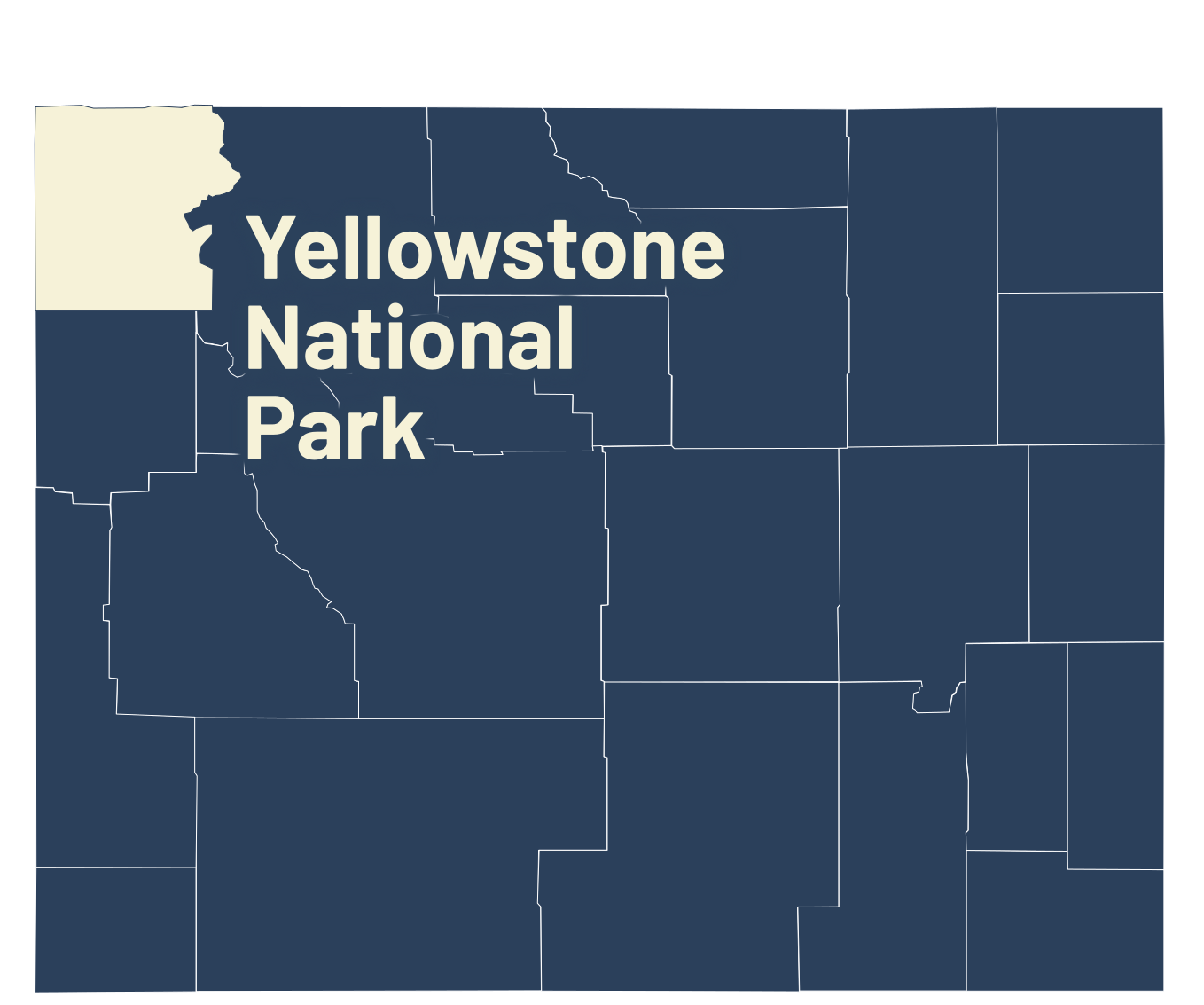
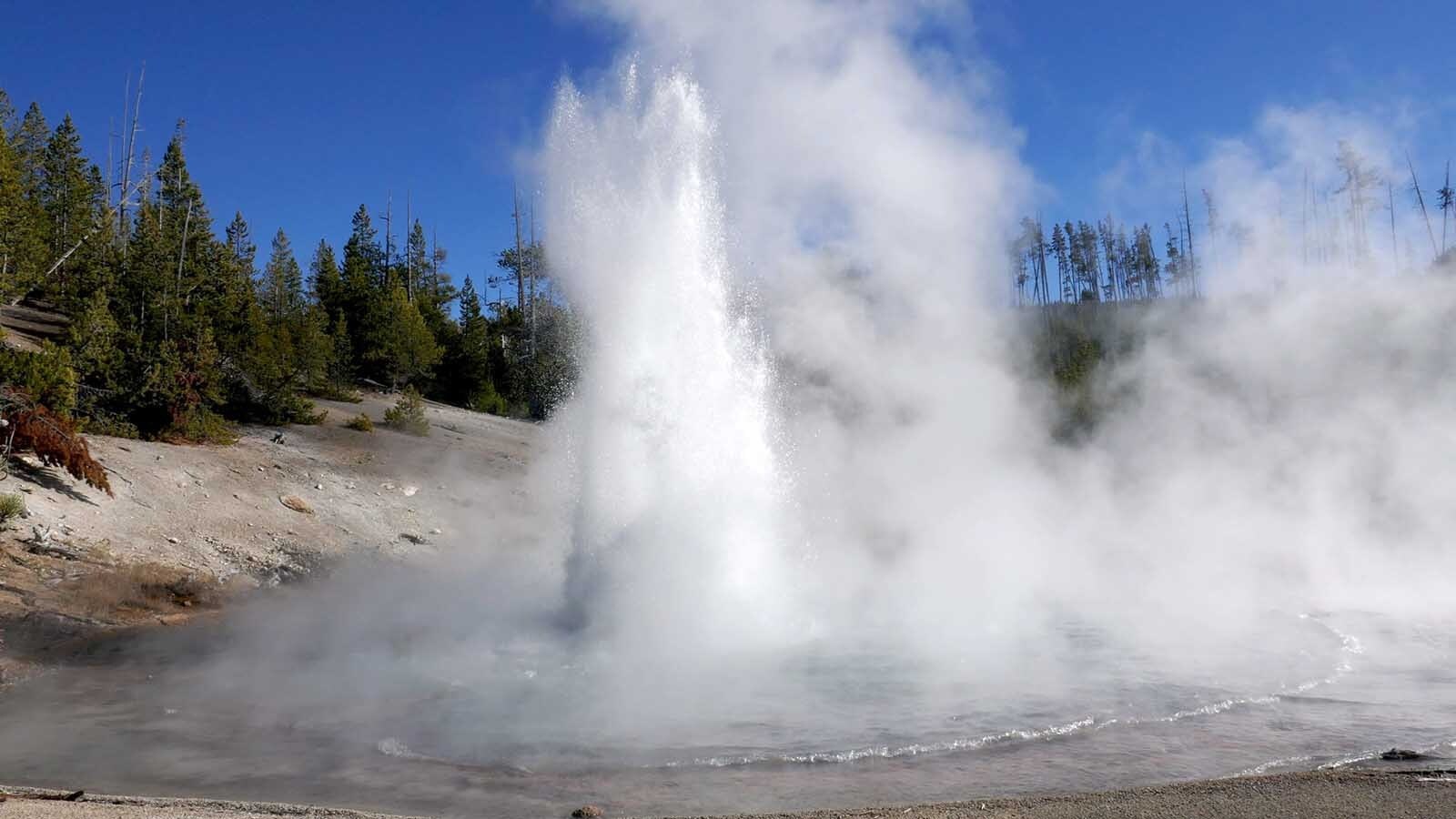
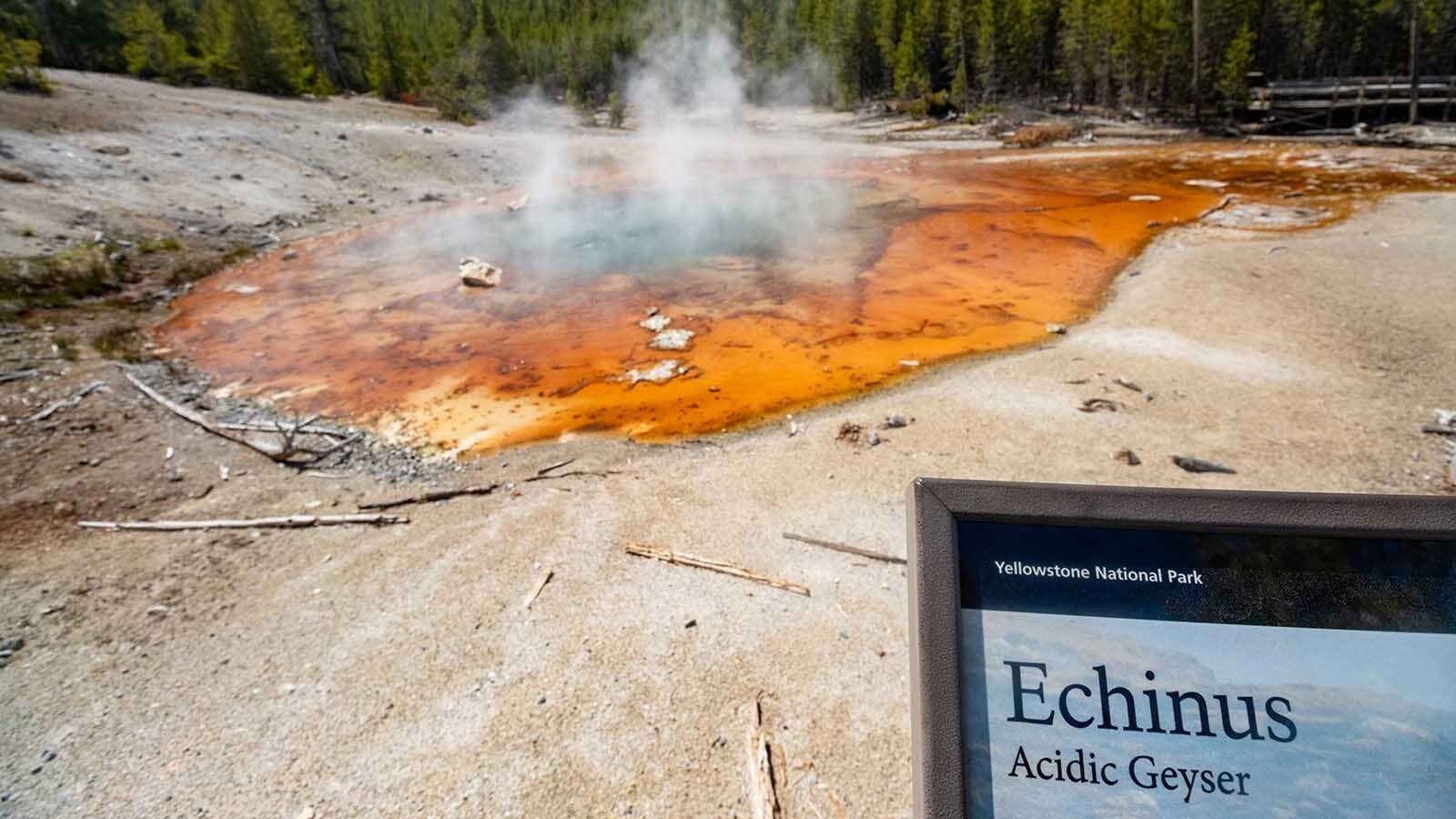
The world’s largest acidic geyser, Echinus Geyser, suddenly burst back to life in Yellowstone National Park for the first time in five years on Feb. 6, erupting 60 times in 18 days.
Now, it’s dormant again. Or maybe it’s not.
Echinus Geyser is one of the most unique geysers in the world and was once one of Yellowstone's best attractions. While it’s quieted down in the last three decades, its 18-day reawakening shows that there’s plenty going on under the surface.
“We haven’t seen a true eruption since Feb. 24, but we’ve seen spikes in temperature and its water level in the last week,” said Mike Poland, scientist-in-charge of the Yellowstone Volcano Observatory. “It’s unknown whether or not it’ll come back.”
Norris’ Best Performer
Echinus Geyser, named in 1878 by mineralogist A.C. Peale, was one of the premier attractions in the Norris Geyser Basin since Yellowstone’s inception.
Historian Lee H. Whittlesey, author of “Yellowstone Place Names,” called Echinus “the star performer” of Norris in the 1970s and 1980s, with only 23 to 91 minutes between its 80-foot-tall eruptions.
Then, something changed. Eruptions became erratic in the 1990s, happening every one to four hours, then all but stopped in the early 2000s.
“It was consistent enough that it became a very popular destination,” Poland said. “That’s why you find all that seating around Echinus. It makes you scratch your head today, because Echinus doesn't erupt that often, but it used to be very consistent."
Echinus’ latest pattern of behavior seems to be entering brief periods of frequent eruptions. The last of these periods occurred in November/December 2017, when the geyser erupted every few hours for several weeks.
When Echinus suddenly reawakened on Feb. 6, it had been five years and 51 days since its last eruption on Dec. 17, 2020. It has since erupted 60 times over 18 days, with intervals of two to 12 hours between eruptions.
If there is an explanation for this change in behavior over the years, Poland doesn’t know it. Nor does he know what caused Echinus to erupt again.
“This is how so many Yellowstone features behave,” he said. “They'll be active for a while, and then they won't or they'll change behaviors, and there's no obvious sign of why that happens.”
Poland speculated that anything from heat flow or localized seismicity could have contributed to the reawakening of Echinus. The most likely explanation, however, is a change in the geyser’s subterranean plumbing system that’s “rather subtle,” and too subtle to be identified.
“It is almost certainly caused by some changes in the plumbing system,” he said. “We just can't see them.”
Acid Geyser?
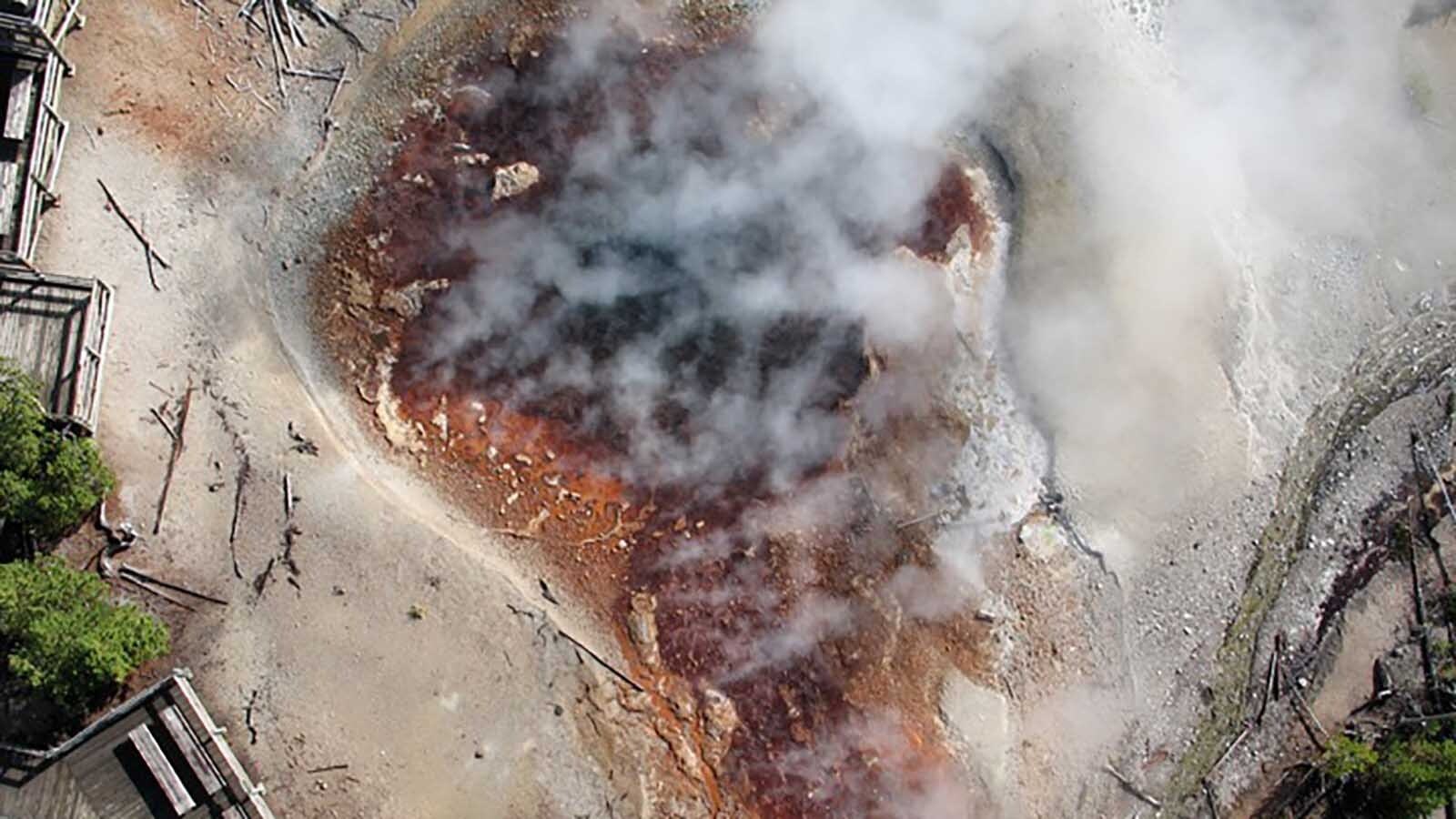
Echinus Geyser also gets a lot of attention for being the world’s largest known acidic geyser. Poland said that’s true and somewhat rare, given that it’s counterintuitive for an acidic geyser to be so long-lived.
“When acidic geysers do exist, they don't last very long, because the acid eats the rock and breaks down the conduits,” he said. “Echinus is special because the acidic properties are not too concentrated, so it's not eating a huge amount of rock.”
Poland explained that Echinus most likely derives its acidity from a mixture of sources, such as acidic steam and neutral water, at or just beneath the surface. That means no highly concentrated acidic water is moving through the geyser’s plumbing, which reduces the amount of rock being dissolved.
“That could explain why Echinus is a more long-lived feature, at least as far as we know,” he said. “We don't know how long it has been there, but certainly it's been there for 150 years or so.”
The term “acid geyser” can conjure some vivid and horrifying images, but that’s far from the reality at Echinus. While it is acidic, and the world’s largest acidic geyser, Echinus has the same dangerous acidity as vinegar or orange juice.
Poland categorized Echinus as “an acidic oddity.” Prolonged exposure can cause rocks to crumble and turn into clay, but brief exposure to its water would cause nothing more than skin irritation.
“It’s a common misconception that all the geysers in Yellowstone are acidic, and it will burn you like it's alien blood,” he said. “The acid itself is not concentrated enough to burn people or animals. The temperature does that.”
That’s what happened to the unfortunate bison that died after falling into Grand Prismatic Spring last summer. Many people thought it was burned by acid, but it was actually scalded to death by the pool’s 160-degree water.
Norris Doesn’t Bore Us
The last few years have been eventful in the Norris Geyser Basin. A new baby blue thermal feature appeared after a small hydrothermal explosion, and the Valentine Geyser briefly reawakened after 21 years of dormancy.
Steamboat Geyser, the tallest active geyser in the world, had its most recent major eruption on Feb. 27. After several years of multiple eruptions, it appears to be slowly entering a period of less frequent activity, which it’s prone to do.
Echinus Geyser hasn’t had a documented eruption since Feb. 24, but it still has been somewhat active since its unexpected reawakening. Poland said it’s currently in one of its two “modes of change.”
“Over the last decade or so, Echinus will have surges where the water level in the pool rises and then falls, and more water comes out of the pool and down the runoff channel,” he said. “We see a moderate spike in temperature when this happens.”
When Echinus erupts in the second mode, it ejects a much higher volume of water at a much higher temperature. That’s a “true eruption,” but Poland said the surges they keep seeing are signs that the geyser could still be active.
Echinus might be done for another decade. It could be active all summer. There’s no way of knowing.
“These geysers are fundamentally unpredictable,” he said. “That’s one of the things that keeps people coming back to Yellowstone, and what makes it so endlessly interesting.”
The Norris Geyser Basin is the hottest thermal basin in Yellowstone, which keeps it in a constant state of change. Poland described it as a spot “with a lot of mysteries that will probably remain mysteries,” leaving plenty to discover and explore.
“Norris is endlessly interesting,” he said. “Every time you walk around there, it feels like there's something new, like Echinus deciding to turn on in February. It might mostly turn off again, or it might have a lot in store for us this summer. I think that's part of the magic of Yellowstone.”
Contact Andrew Rossi at andrew@cowboystatedaily.com
Andrew Rossi can be reached at arossi@cowboystatedaily.com.