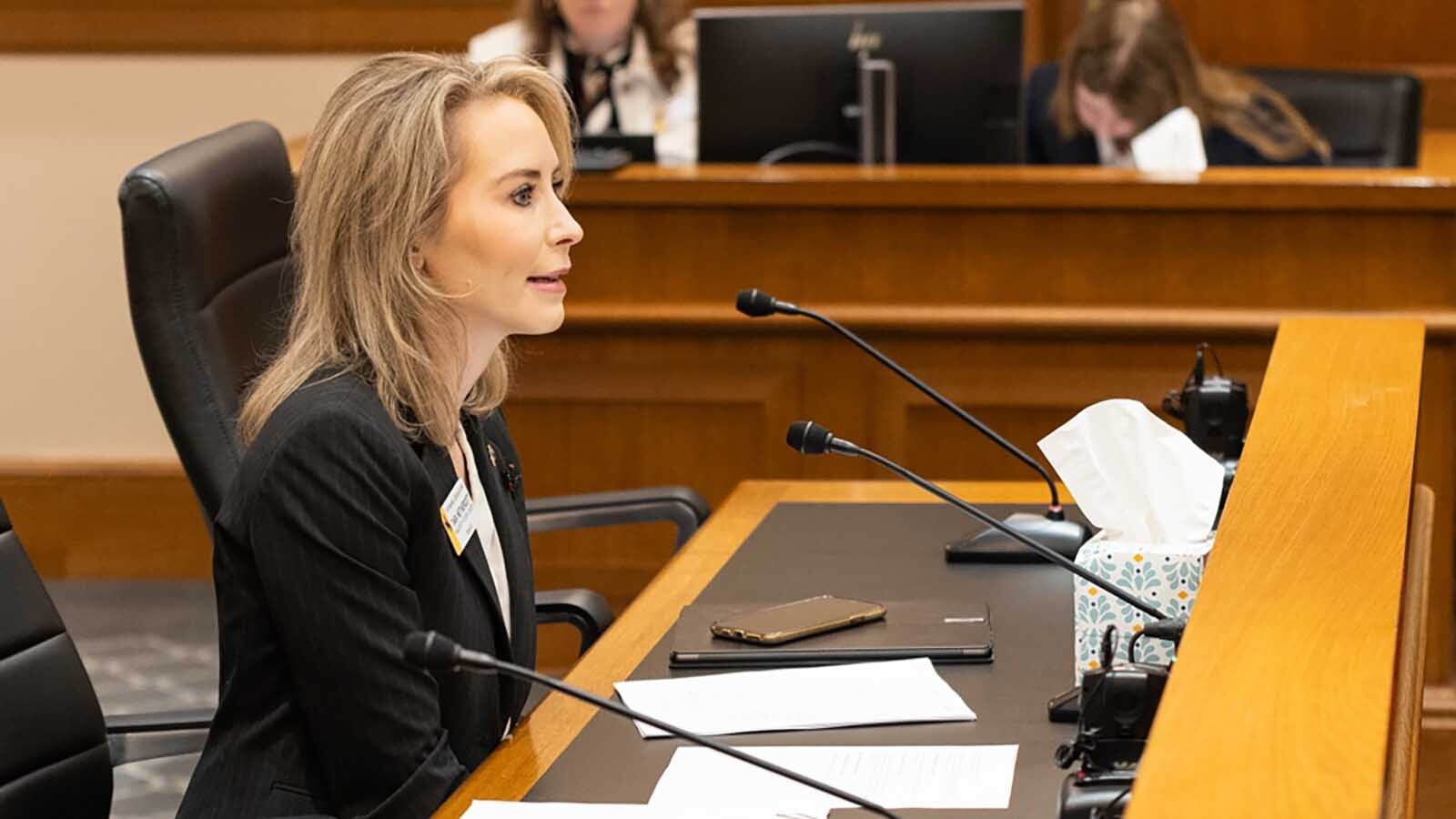
Wyoming’s legislative House Judiciary Committee on Monday killed a bill that would have promised whistleblowers a portion of civil court penalties against people who cheat the government out of money.
Some members of the committee said they only voted Senate File 92 down because it needs more work, and they want to perfect it so it will pass in 2027.
One opponent of the bill, Cary Silverman, who appeared via virtual link to testify against it called it a “bounty” system.
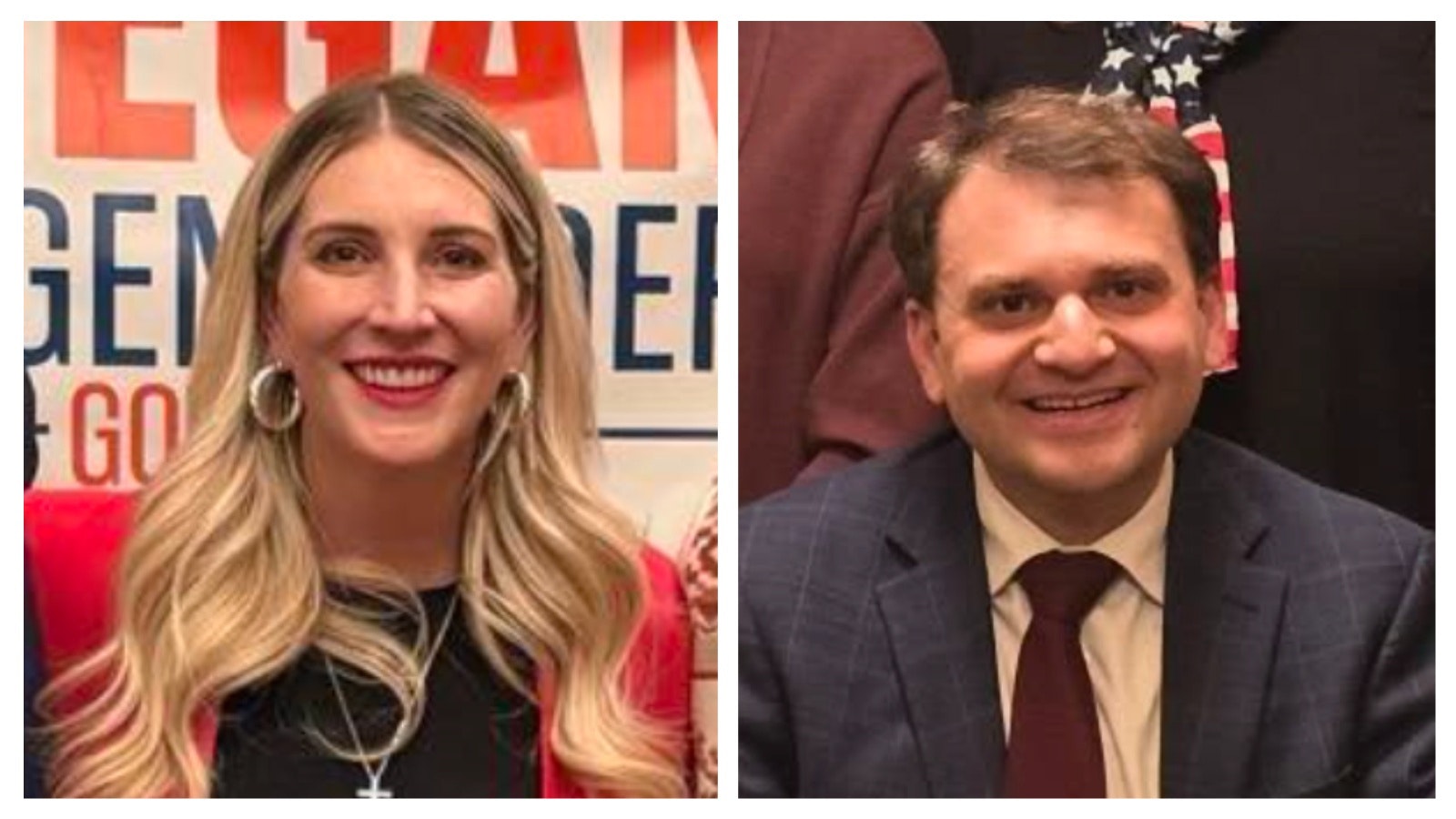
The bill’s sponsor, Sen. Tara Nethercott, R-Cheyenne, said it’s a good mechanism to air fraud that may be polluting big, government-paid contracts. She said reports of widespread fraud in Minnesota prompted her to bring it.
‘Love The Concept’
Rep. Ken Chestek, D-Laramie, loved the bill so much he voted to kill it.
“I love the concept of this bill. I think we need to have this bill,” he said. “I want to do it right, and I think there’s a lot of work to be done, to make sure we get it right.”
Monday was the last day to advance bills from their final vetting committees. That meant the committee couldn’t simply meet again later in the week to advance the bill, Chestek noted.
“I don’t think I can do (the needed amendments) sitting here at the table,” he added.
Ultimately, he moved to table the bill, “which I know will kill it for the session.”
Chestek’s motion prevailed on a 5-3 vote. Along with Chestek’s “aye,” the motion to table won ayes from Republican Reps. Marlene Brady (Green River), Laurie Bratten (Sheridan), Lee Filer (Cheyenne) and Joe Webb (Lyman).
Those voting against Chestek’s motion were Republican Reps. Jayme Lien (Casper), Daniel Singh (Cheyenne) and Committee Chair Art Washut, R-Casper.
Rep. Tom Kelly, R-Sheridan, was marked excused from the vote. He’s missed the session due to what he’s described as a severe back injury.
Nethercott emphasized that she doesn’t know of any specific cases of hidden government fraud in Wyoming.
But she said the incentive structure of her bill could force some into the open.
“Because if you don’t think some of this type of conduct hasn’t occurred — in the types of appropriations that this state spends and puts out — I think we are maybe a bit naïve to what could be occurring,” said Nethercott. “And so it may be our lack of familiarity with that type of conduct that creates the dis-concern.
"But it doesn’t mean it’s not present and doesn’t exist, and that this remedy shouldn’t move forward.”
In her earlier testimony she described a hypothetical situation in which an employee within a company learns that the company is defrauding Wyoming’s government.
Armed with information the state can’t uncover on its own, the employee would be incentivized to initiate the civil fraud action because of the bill’s promise that the employee would gain from it. And the employee would benefit from the whistleblower protections the bill promises, Nethercott said.
‘Bounty’
Cary Silverman, a registered Wyoming lobbyist speaking for the American Tort Reform Association, opposed the bill.
“Our greatest concern is the provision that deputizes private individuals to step into the shoes of the state, and bring their own actions,” said Silverman.
The bill would allow the whistleblower to pursue her own civil action on the state’s behalf, even if, and after, the Wyoming Attorney General or other relevant prosecutor declined to take over the case.
But, Nethercott later countered, that person would be risking her own money and attorney fees to do so, which would disincentivize her if she lacked valid reasons.
Silverman said the bill has a “bounty” component.
“Aren’t we against fraud?” he said. “Yes, but you have to take into consideration the broad conduct that’s covered by this bill. The extraordinary threat of liability that it presents, and the fact that the bill hands law enforcement power over to private individuals and lawyers.”
He said the bill casts too broad a net in terms of how intentional the fraudster is. He derided the potential liability as “extraordinary,” since the fraudster would have to pay back triple the amount for which he cheated the government.
“These penalties could potentially add up to hundreds of millions of dollars … (plus) unpredictable, per-violation civil penalties,” Silverman continued.
Because of that, he added, a business would shy away from defending itself and settle the case “regardless of the merits” in light of the “extraordinary risk” it faces.
Don’t Appreciate That
Nethercott said that in her 16 years practicing law, she’d never heard of the American Tort Reform Association. She also didn’t hear from Silverman before Monday, she said.
“Don’t appreciate, if they are representing lawyers, the way they disparage lawyers and (indicate) that they may do something falsely,” said Nethercott.
“Any allegation the bill ‘deputizes’ any individual for wanting to seek redress for what would be fraud against the government, I think, is a gross mischaracterization,” she continued.
The bill requires the whistleblower to notify the attorney general privately. It gives the attorney general or state prosecutor the chance to take action or to decline prosecution.
It penalizes parties who bring cases “frivolously or vexatiously,” she added.
Into The Print
The bill would have created an entire act in Wyoming law called the False Claims Act.
Other states plus the federal government have similar laws, Nethercott noted.
It targets anyone who:
- knowingly presents or causes to be presented a false or fraudulent claim for payment or approval,
- who advances false records or statements “material” to that end;
- who knowingly pays the state less than it’s owed;
- who delivers a false receipt or document, with the intent to defraud the state;
- who knowingly buys public property from a state employee who in turn was not allowed to transfer that property;
- who knowingly uses or makes a false record or statement that diminishes one’s obligation to pay the state money that it’s owed;
- who conspires to do the fraudulent deeds in the act;
- who is a beneficiary of the fraud described in the act, learns about the fraud and fails to disclose it;
- or who’s a beneficiary of an inadvertent overpayment by the state and “knowingly” fails to repay that overpayment.
At the same time, the bill extends an invitation for “original source” of yet-unknown evidence of fraud that can lead to a resolution of that fraud in civil court to approach the attorney general with that evidence.
The money won in civil court would repay the cheated agency, feed a state account for future cases, and reimburse the original source, Nethercott said.
The original source, or whistleblower, would receive 15%-25% of the fraudster’s penalty, at the court’s discretion and depending on how helpful the whistleblower’s evidence was.
In the bill’s vision, the whistleblower also “shall” receive, from the fraudster, compensation for reasonable expenses, plus reasonable attorney fees and costs.
The bill would promise remedies to make the whistleblower “whole” if he or she faces termination or other penalties for raising the issue.
The act doesn’t apply to worker’s compensation claims, the payment of sales and use taxes under Wyoming’s Title 39, transfers to the department of insurance, the Wyoming Medicaid program, federal welfare benefits, disputes about state employee compensation, 911 emergency taxes, state universal service fund contributions under Titel 37 of Wyoming law, state message relay service fees under Title 16, and local franchise fee payments under Title 15.
In many of those carveouts, Nethercott noted, other areas of law already account for instances of fraud.
The act would have a three-year statute of limitations, or time limit, for bringing claims.
Clair McFarland can be reached at clair@cowboystatedaily.com.