Big game animals raised in captivity, crammed full of artificial antler-growth supplements and then gunned down in fenced-in enclosures can’t be entered into the official hunting trophy record books, the Boone and Crockett Club reminded hunters.
Considered the gold standard for hunting trophies, the Boone and Crockett (B&C) record books are open only to animals that were hunted and taken according to the organization’s fair chase standards, B&C said in a statement this past week.
“To maintain the integrity of this (record book) dataset, the Club remains steadfast in its requirement that only native, wild, and free-ranging big game are eligible for entry,” B&C stated.
The press release wasn’t issued to address a specific surge in people trying to fudge the rules, Mike Opitz, vice president of the B&C’s big game records committee, told Cowboy State Daily.
“It’s a reminder of our standards and who we are. It’s just clarifying what our fair chase standards, and our eligibility standards are,” he said.
High-Fence Hunting Not A Thing In Wyoming
A prominent Wyoming hunter told Cowboy State Daily that there is a growing problem with some pushing the boundaries of fair chase hunting “right up to the edge” in hopes of bagging the next eye-popping monster buck or bull.
“I think the gray area is getting larger” when it comes to trophy big game hunting, said Eastman, who represents the third generation of the famous outdoor multimedia family.
Wyoming doesn’t have any “high-fence” elk hunting ranchers, but there are some in Utah and Idaho, Eastman said.
High-fence refers to properties that are fenced in such a manner that the elk raised or turned loose there can’t get out.
In one instance there’s a mountain with a high fence all the way around it, he said.
“It looks like natural habitat, for photos and video,” Eastman said.
Bull elk there are raised in feed lots, then set loose in the mountain enclosure for hunters, he said.
“Those bulls might be like, ‘They let us out here, this is nifty,’ then they get their asses blown off,” he said.
Protecting The Science
Opitz said B&C’s intent isn’t to wag a finger at hunters who choose to pay for high-fence ranch hunts.
“We’re not judging hunters’ decisions on what they do. They can do what they want.
But the club’s position on what can be officially entered into their record books is inflexible, he said.
The B&C record books aren’t just there for hunters' bragging rights. State wildlife agencies, biologists and others mine the books for data, Opitz said.
“We want to absolutely protect the integrity of the science, of the database,” he said.
Record-book trophies represent “Mother Nature at work,” and can help researchers track trends in the condition of wildlife habitat, he said.
A record-book entry “is not just a testament to the animal, it’s a testament to the habitat,” he said.
B&C stated that “animals raised in captivity, transplanted, and/or released solely for the purpose of a commercial shooting operation are ineligible for entry into the records book. This policy also applies to animals that have escaped from commercial shooting operations or high fence facilities.”
500-Inch Bull Elk Aren’t Legit
The B&C method for measuring and scoring hunting trophies is rigorous and complex.
For example, measuring elk antlers starts with a mandatory drying period of 60 days after the bull is killed.
Antlers start losing internal moisture after the animals are killed, and that will cause the antlers to shrink.
Measurements taken before the drying period are considered a “green score,” which isn’t eligible for record book entry.
Elk are scored by taking measurements in several places along the main beams and points of the antlers, for length and girth.
The spread, or distance between the main antler branches is also measured.
The numbers are then crunched to come up with a total, in inches. Deductions might be taken for anomalies, such as asymmetry in antler structure.
That results in a final gross score (without deductions), and net score (with deductions).
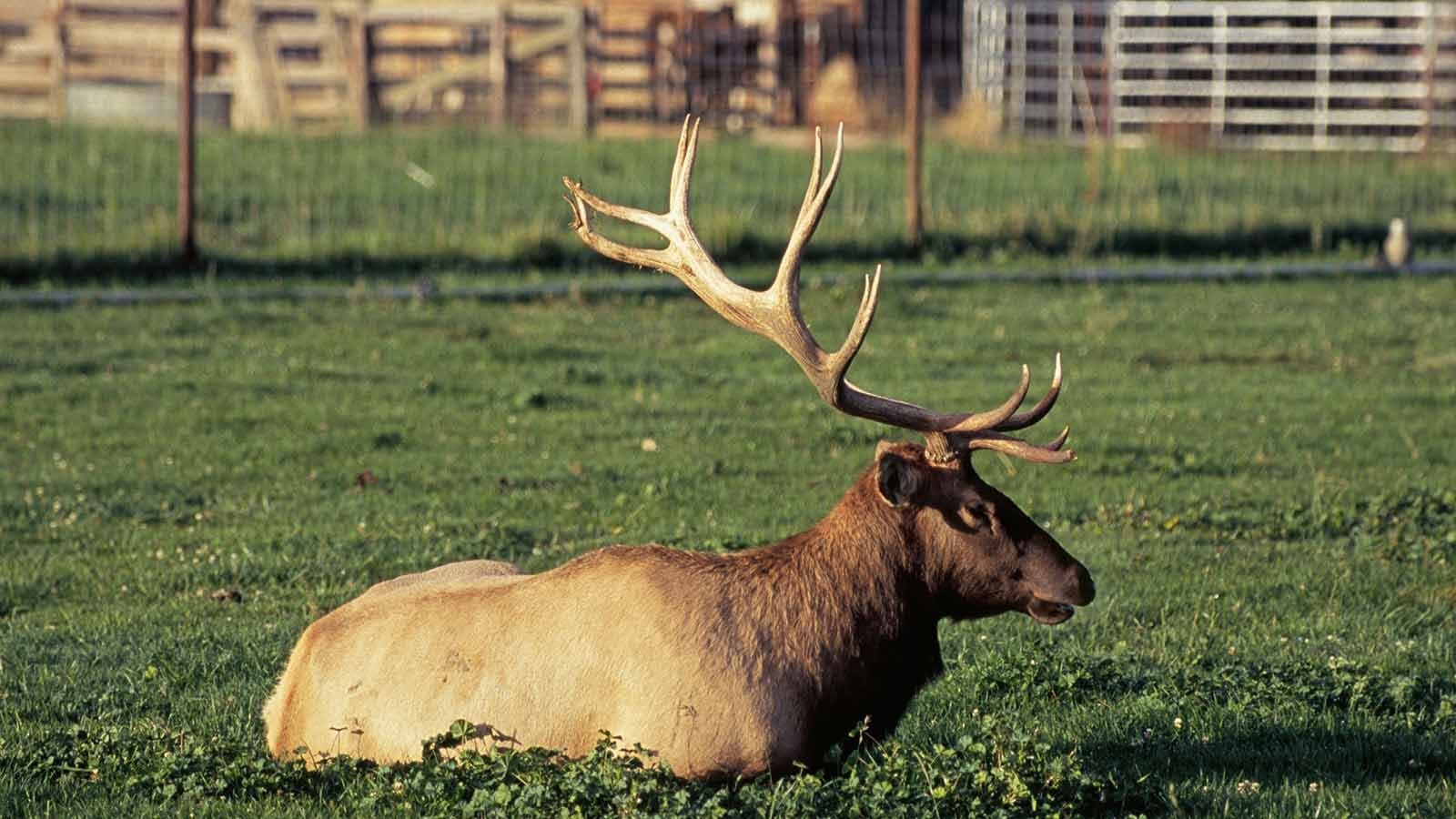
There are two broad classes, “typical,” or elk with essentially normal, antlers; and atypical, for elk with unusual antlers, such as those with knobs or drop tines, (antler points facing downward).
Moreover, there are three recognized sub-species of elk in North America, and each has its own record class. Those include Rocky Mountain elk (which is what Wyoming has) Tule elk and Roosevelt elk.
The standing all-time B&C world record for a typical Rocky Mountain elk is 442-4/8 inches, from a bull killed in Arizona in 1958.
Sometimes “500-inch” elk appear in social media posts, Eastman said.
Those are almost certainly high-fence ranch elk, he said.
“To get an elk over 500 inches, you’ve got to feed them supplements. Nature has probably produced fewer than a half-dozen 500-inch elk,” he said.
Mixed DNA
While White-tailed deer in Wyoming are all-natural, in other parts of the country, it’s common for them to be raised in captivity, feed supplements or otherwise pumped up, Eastman said.
On some deer ranches, mule deer DNA is mixed into the captive white-tail deer herd, to promote bigger antlers, he said.
Some high-fence elk ranches also mix European Red Deer DNA into the elk, to promote accelerated or unusual antler growth, he said.
The race to see who can produce the most freakishly huge antlers can end miserably for animals, Eastman said.
There have been instances of captive animals’ antlers getting so huge and heavy, “they end up cracking the animal’s skull,” he said.
Mark Heinz can be reached at mark@cowboystatedaily.com.