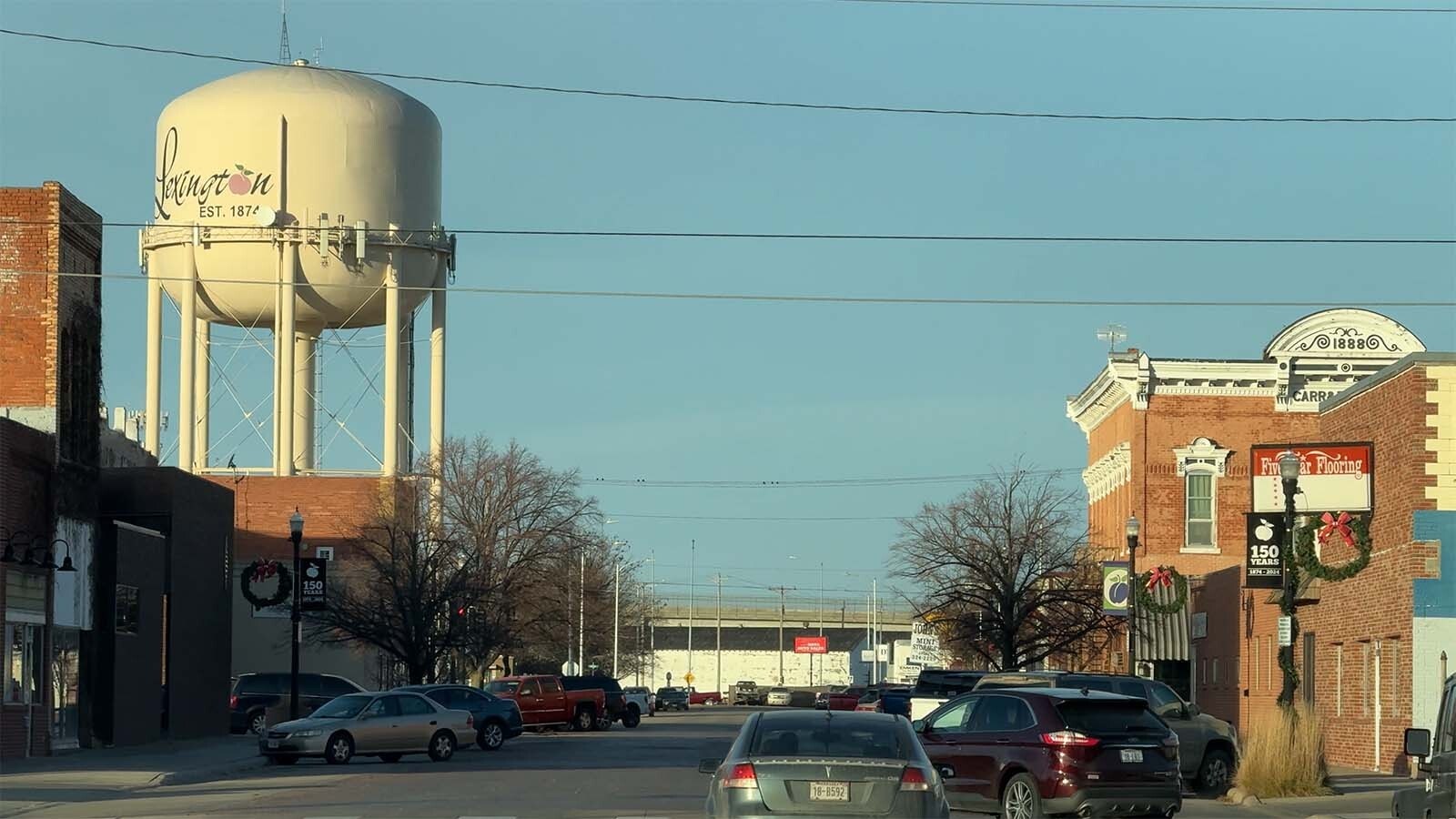
LEXINGTON, Neb. — Many around this rural Midwest cow town seem to be going through the motions, handling day-to-day tasks with faraway looks that add an emotional heaviness to the air around them.
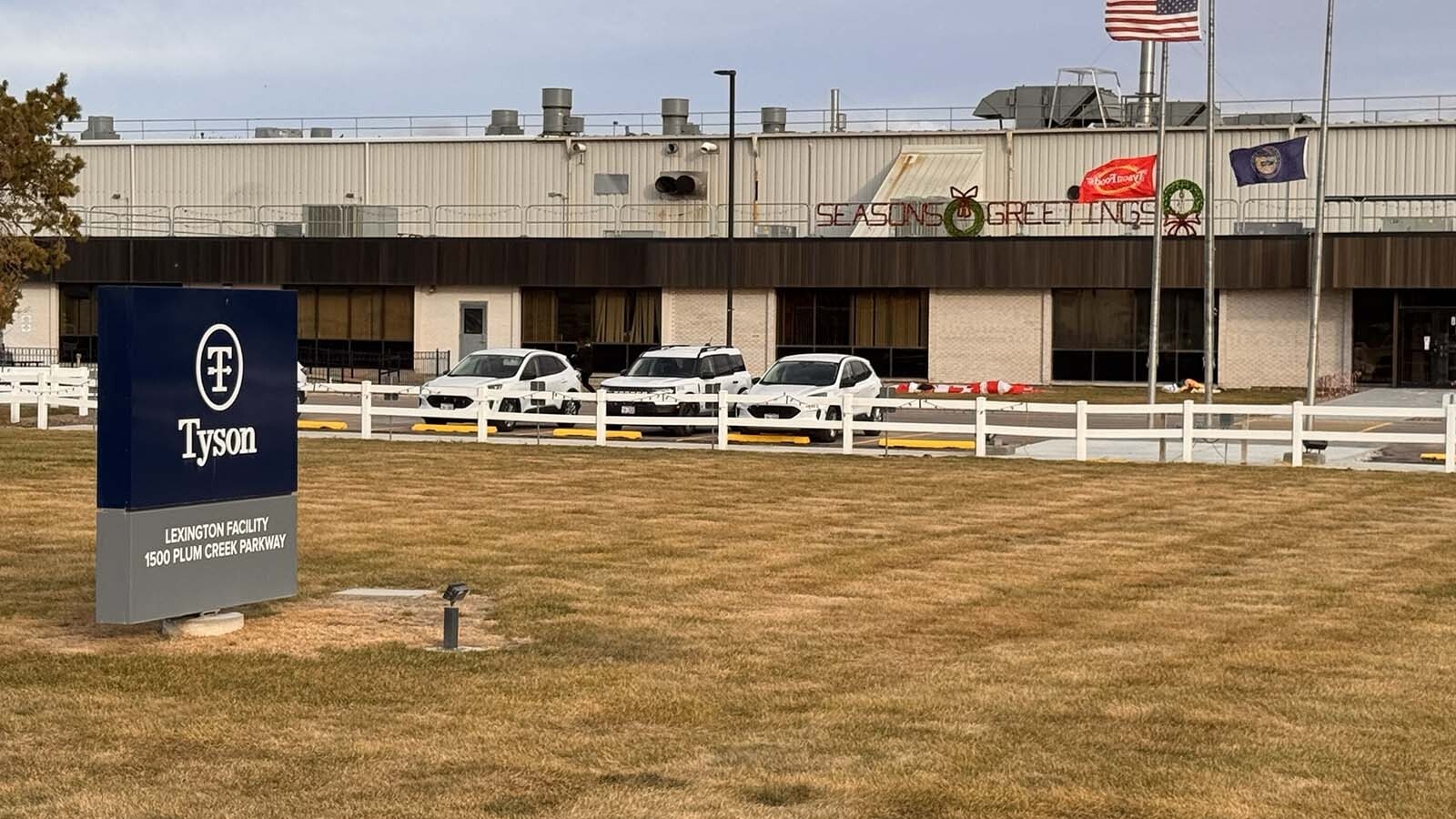
That’s been the case for the last month, since Tyson Foods abruptly and without any heads-up announced the Jan. 20 closing of the town’s huge beef processing plant.
About 3,200 people work at the plant, which physically, emotionally, and economically is the heart of Lexington. It’s a heart many locals say has been broken from a corporate boardroom 600 miles away in Springdale, Arkansas.
“Yeah, we’re mad, we’re sad, and we’re just numb,” said Vicky Martinez, who works at her family’s Mexican restaurant across the road from the Tyson plant.
“I think most of the town realizes how much it depends on the plant, directly and indirectly,” she told Cowboy State Daily during a visit this past week. “Everybody feels it. People are just really sad.”
For 35 years, the beef plant has been by far the largest employer and economic driver of Lexington.
It opened in 1990 when Iowa Beef Packers (IBP) bought the former Sperry-New Holland farm equipment plant, which shut down in 1985.
Tyson took over when the company acquired IBP in 2001. Then it expanded, making it one of the largest beef-producing plants in the United States.
It can produce up to 5,000 head of cattle a day, or about 5% of the overall U.S. production.
The move to close up shop not only impacts the 3,200 people who work at the plant, but it also threatens to uproot about a third of Lexington’s overall population of nearly 11,000 as families search for new jobs.
It’s also started what many around town are calling the “trickle-down effect.” The local company that cleans the plant, for example, has already announced a layoff of 140 workers.
But that’s underselling the impact, community leaders say, calling it more of a “tidal wave effect” that threatens to wipe out businesses and industries.
Two of those critical to Lexington are the hospital and the school district.
Mad As Hell
Health care in rural areas like Wyoming and Nebraska has been in a nosedive over the last decade as providers can’t keep their doors open to serve small populations.
More than 100 rural hospitals have been shuttered over the last decade in the U.S., according to the Boston University School of Public Health.
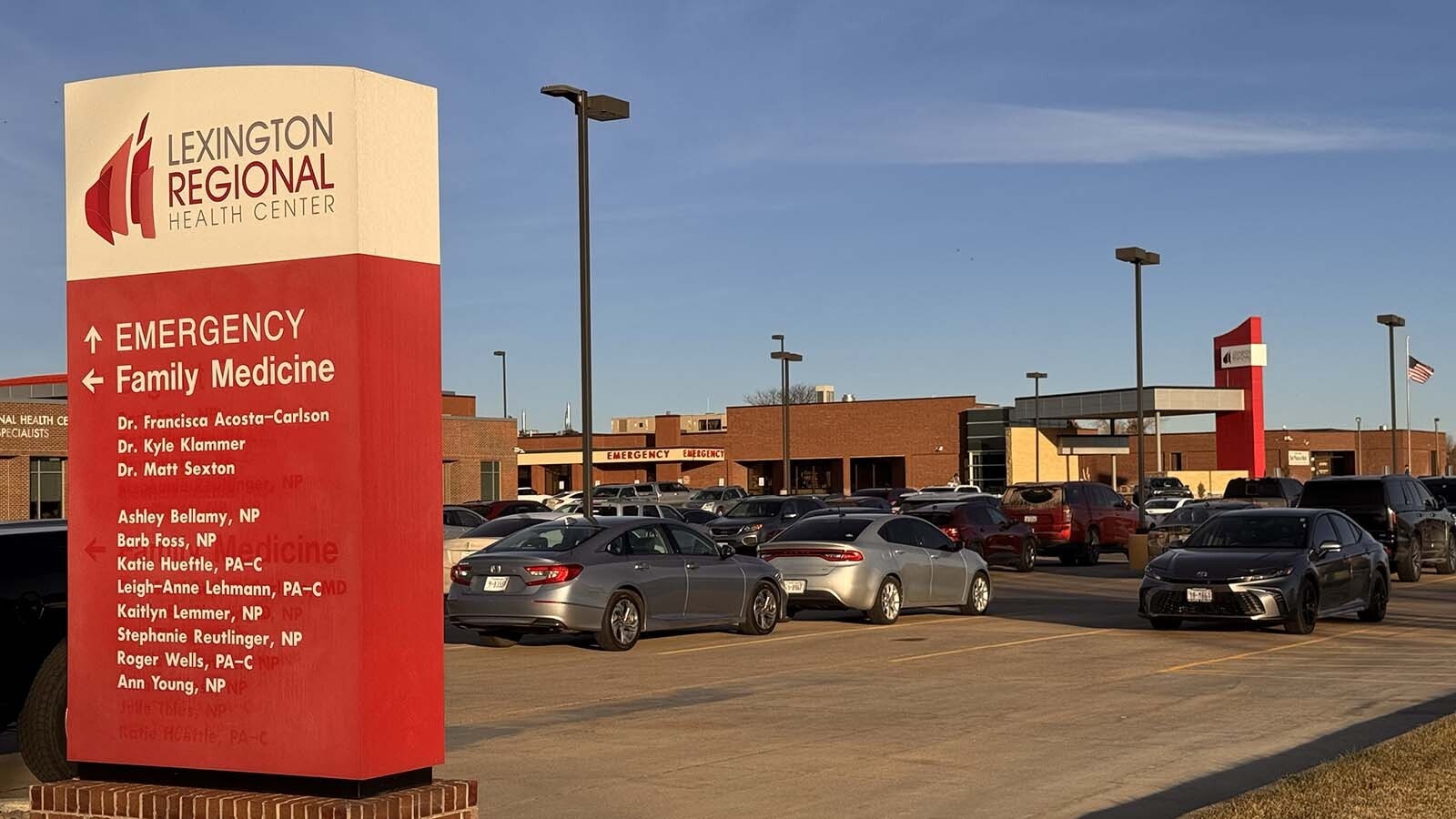
Lexington Regional Health Center now is at risk of becoming another casualty caught up in the wave of rural health care deserts.
In a scathing letter to Tyson CEO Donnie King, Board Chairman John Tyson and the company’s board of directors, Lexington Regional Health Center CEO Jason Douglas pulls no punches in telling Tyson what it’s doing to the community.
“I’m watching what this means for health care access in our community,” he wrote. “When thousands of people lose employer-sponsored insurance simultaneously, the ripple effect hits our emergency department, our clinics, and our beds.”
The Tyson workers now know they won’t have jobs after Jan. 20, but those employed by the hospital and school district have an axe hanging over their necks.
With a huge drop in patients and people to care for, doctors and nurses may be next in line for Lexington layoffs. Whether they’ll wait and see how the chips fall or start looking for new jobs right away isn’t known.
What is known is that the Tyson decision has turned a small town on its ear, and many like Douglas are pretty dang mad about it.
“We built our schools, housing, and health care system around the assumption that you would be here,” he wrote. “And when the corporate math changed — when beef margins tightened and certain tax advantages ran their course — you made a spreadsheet decision … and 3,200 families in Lexington, Nebraska, became nothing more than a line item.”
Douglas didn’t respond to multiple requests for an interview while Cowboy State Daily was in Lexington, but his nearly 2,000-word letter to Tyson leaves no room for doubt about his feelings on the announcement.
“The decisions you make in a boardroom in Arkansas have consequences that cascade through every aspect of life here,” he wrote. “I’m watching what this does to a community’s sense of self — the dawning realization that 35 years of loyalty, of showing up, of giving everything to your production line, wasn’t enough to earn even the courtesy of decent timing.”
He goes on to point out how bad that timing was, coming a week before Thanksgiving and just before Christmas.
“You had a choice about how to do this,” Douglas wrote. “You chose the Friday before Thanksgiving. You decided to give people less than 60 days (notice). You chose shareholder value over human dignity.”

What About The Schools?
As the local health care system is in wait-and-see mode about the true impact of the Tyson plant closure, the same is happening with the 500 people who work for Lexington Public Schools.
“We estimate somewhere around 50% of our kids have one or both parents that work at Tyson,” Superintendent Dr. John Hakonson told Cowboy State Daily.
When the announcement came down, it also sparked a wave of speculation about how many teachers and other support personnel will have to be cut as families move away for new jobs.
Worst-case scenario is about half the district’s 3,200 students (which mirrors the Tyson employment numbers), while best-case is perhaps a few hundred, which would put the district back to levels seen about a decade ago.
“The plant’s been here for 35 years, so yeah, it’s multigenerational with its impact,” Hakonson said. “We have grandparents that are in some of the houses, so I think there’s a pull to try and stay here.”
The school district began its holiday break Friday, which means the immediate impact of Tyson’s pending closure will start to show in a couple of weeks.
How many students don’t return is what the superintendent calls “the million-dollar question,” but his gut says most will come back.
“We asked (parents) to please let us know they plan on relocating over Christmas break so that we can check their kids out, make sure that we sent the student records to the right place,” he said. “We’ve had very few parents respond.
“I’m not going to be shocked if we don’t have very many that will leave over Christmas, because the plant doesn’t close until Jan. 20.”
After that, those workers who stick around to the end will be eligible for unemployment benefits, which will keep them in their homes longer, he said.
Some Breathing Room
There’s also the pull of families wanting their kids to finish out the school year in their familiar classrooms and graduate with their high school class if they’re seniors.
“It wouldn’t surprise us if maybe parents will take that option (of unemployment) and try to stay here until they absolutely have no income and then have to leave to do something else,” Hakonson said. “It’s normal right now, it’s very normal because families haven’t left.”
As to the same uncertainty felt by health care workers, teachers and the school district have a little more breathing room, Hakonson said.
Schools in Nebraska are funded by student enrollment and a state payout per pupil.
The student count to fund the 2026-27 school year was done in October, which means Lexington schools will be funded at current levels at least through the next school year.
“We don’t expect a big fall-off in our funding for next year, 2026-27 isn’t what we’re worried about,” he said. “I hope that we don’t have to lay people off through reduction in force, though. I hope that we can absorb most of the excess staffing we might have through attrition.”
That doesn’t mean all the district’s teachers will hang in until the end. If they see more stable, long-term opportunities, they may take them.
“I think teachers and other employees are worried about, ‘Am I going to have a job?’” Hakonson said. “And we’re just telling people, let’s just take it a day at a time and see how many people leave.
“We could lose, you know, a few hundred kids and be back to where we were not that many years ago. But losing half the (student) population? That would be a different problem.”
So Unfair
Tyson singled out a tight beef market as one of the reasons for closing the Lexington plant, so Douglas tried to appeal to the company’s bottom line in ways a corporation could appreciate.
“I know that CEO King received $22.8 million in total compensation last year — a 73% increase from the year before,” he wrote, citing numbers from Tyson’s required filings with the Securities and Exchange Commission. “I know that Chairman Tyson received $18.4 million, including nearly $3 million for personal use of the company jet.”
He said the 525-to-1 pay ratio between the CEO and average frontline Tyson worker is out of whack and that closing the gap may be a better human option than closing the plant.
“So, when you talk about closing this plant out of necessity, what you’re really saying is that you chose shareholder returns and executive compensation over the community that helped make those profits possible for 35 years,” Douglas wrote.
Instead, the thousands of immigrant families that have settled in Lexington over the decades to work at the plant seeking the American dream are now living an American nightmare, he said.
“Many are immigrants who came to this country legally, following every rule, because they believed in what America promised: opportunity through hard work,” Douglas wrote. “They didn’t come here for handouts, they came for the chance to work.
“And work they did — in conditions most Americans couldn’t handle for wages that required careful budgeting, building lives one paycheck at a time.”
‘Deserved Better From You’
Now Douglas said he sees families around town trying to explain to their kids why Christmas this year won’t be the same or why they have to move.
“I’m watching people wrestle with impossible choices,” he wrote. “Do we stay in the community we’ve built hoping something else comes along? Do we uproot our children from the only schools they’ve known and chase your ‘relocation benefits’ to a plant hundreds of miles away?
“Do we leave America altogether and return to countries that are no longer home?”
That anger and frustration laced throughout Douglas’ letter — and expressed by residents all around the town — are pointed at Tyson corporate, not local management, said Hakonson.
“I don’t think that the people who work at Tyson here, any of them, including local management, knew this was coming until that day,” he said. “It came as a shock to everybody.”
However the plant closure shakes out for the hospital and school district, the heads of both those entities agree on how Douglas ends his passionate plea to Tyson officials: Lexington “deserved better from you.”
Greg Johnson can be reached at greg@cowboystatedaily.com.