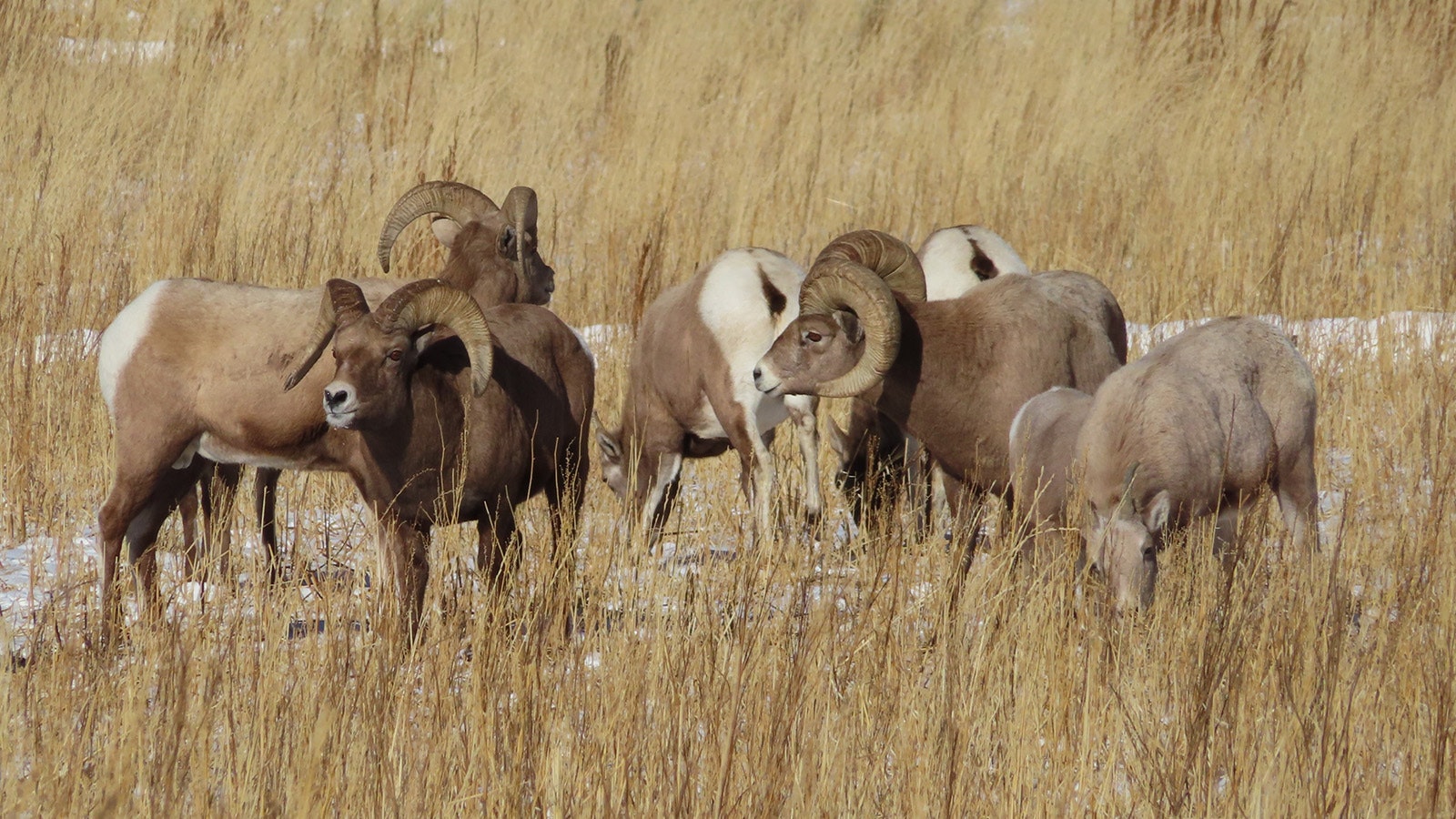
The Whiskey Mountain bighorn sheep herd is one of Wyoming’s wildlife treasures, but it’s nothing compared to what it used to be.
The herd peaked at around 2,500 sheep in the 1980s, and now numbers about 750. Wildlife managers say a decades-long bacterial pneumonia epidemic is primarily to blame.
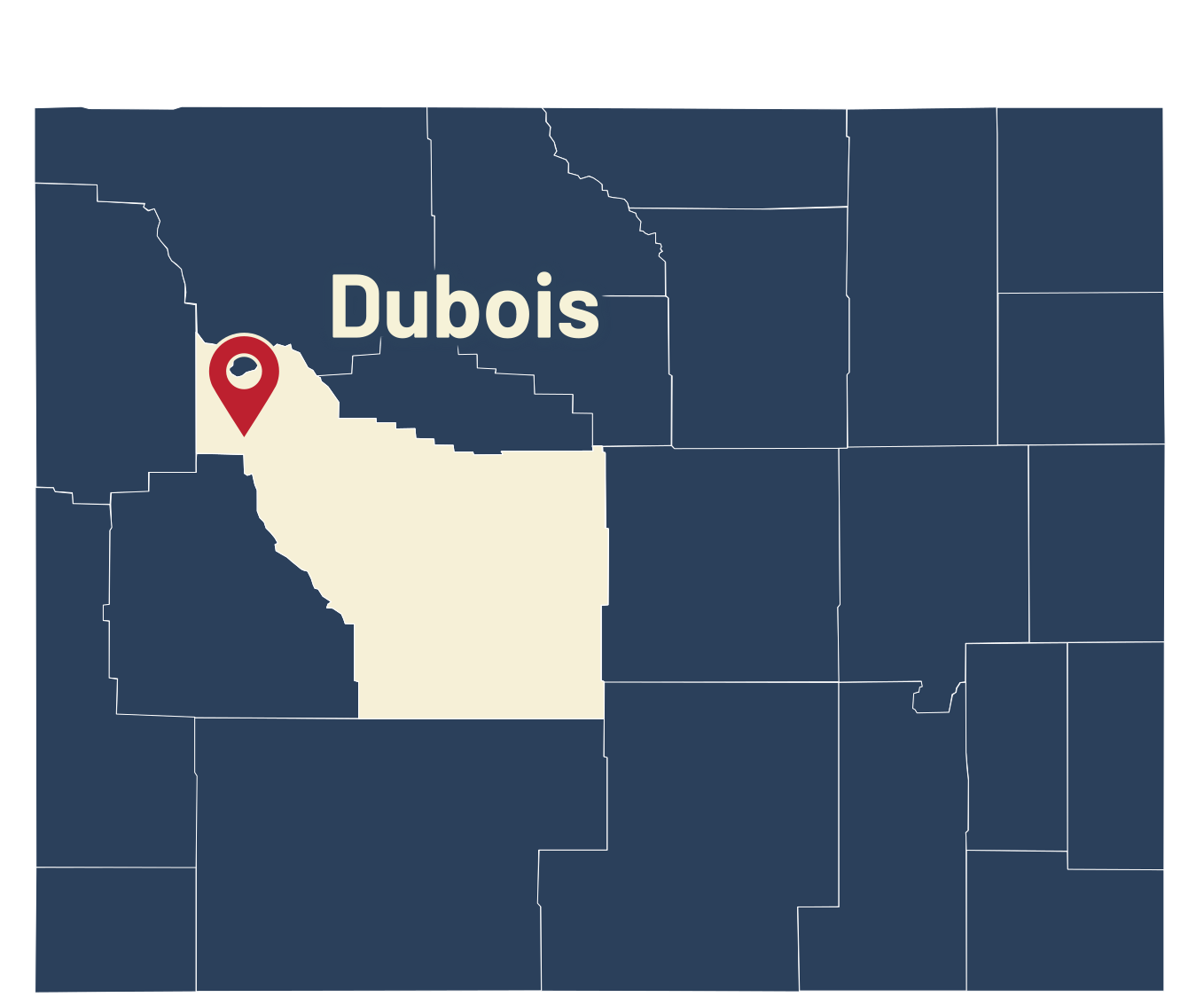
Wildlife artist Gary Keimig was born and raised near Casper and moved to Dubois “on New Year’s Eve, 1978, 1979,” he told Cowboy State Daily.
He was immediately enthralled with the Whiskey Mountain bighorns and has watched them ever since.
He said their ordeal began during the terrible winter of 1984-1985.
At one point, the temperature in Dubois dropped down to an unprecedented -55.
“It seemed to really take a lot out of them (the bighorn sheep). I remember right after that, things really started going downhill, and they never recovered from it,” Keimig said.
‘Ramland’ Ain’t What It Used To Be
The Whiskey Mountain herd’s territory includes a coveted spot near Dubois that fans call Ramland.
It’s a place where bighorn rams congregate and during the rut, or mating season, engage in brutal head-butting contests.
Keimig said the head-butting is one of his favorite things to watch and listen to.
The sound of the rams’ horns colliding is “like taking a big hammer to an anvil. It’s a pretty good crash, and you can hear it from some distance away,” he said.
“This is the prime time for watching that. From now, into December,” Keimig added.
He can recall a time when he could always count on seeing bighorns in several of his favorite viewing spots around the area.
Sadly, that’s no longer the case.
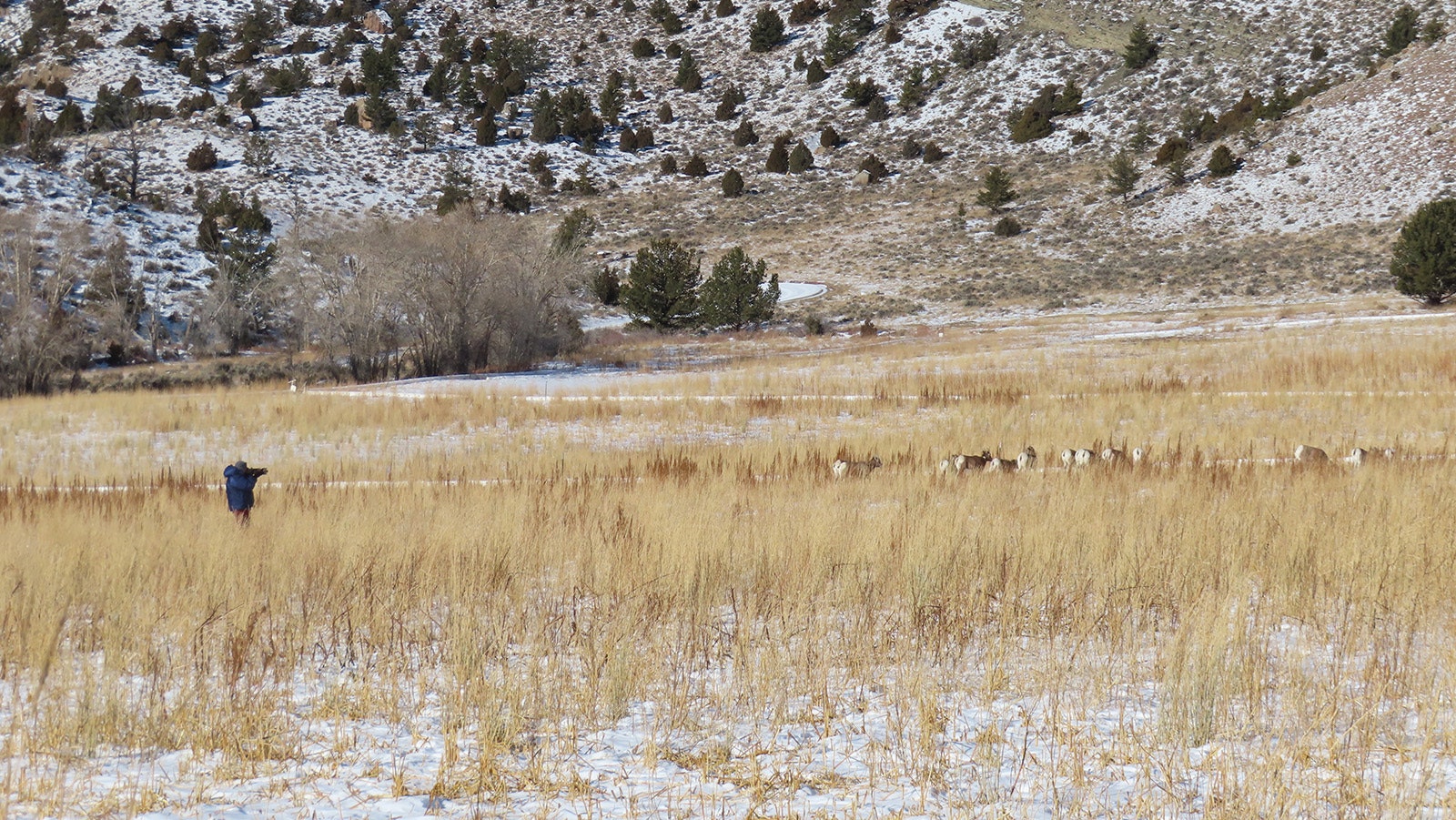
“I was up there last week, and I didn’t see any sheep, which doesn’t surprise me anymore,” he said.
Nowadays, it might take several trips to a prime spot to actually see sheep, he added.
Remembering Bam-Bam
The Whiskey Mountain herd also has a tenuous connection to another bighorn herd, in the Sinks Canyon area near Lander.
“We’ve got sheep scattered here and there between Dubois and Lander,” Keimig said.
The Sinks Canyon herd has also been greatly diminished by pneumonia outbreaks.
Back when both Dubois and Sinks Canyon herds were in their heyday, Keimig liked visiting the Sinks Canyon bighorns.
One ram in particular, Bam-Bam made quite a name for himself in the late 2000s.
He loved people, and getting peanut butter as a treat. But he got his name for his habit for ramming into vehicles.
Bam-Bam died of natural causes in 2013.
Keimig said he remembers Bam-Bam well, although the rowdy ram never head-butted any of his vehicles.
“I guess he just didn’t want to pick on me,” he said.
‘Just An Amazing Animal’
Although he’s saddened by the Whiskey Mountain bighorns’ decline, Keimig said he’ll never tire of watching the sheep, or including images of sheep in his artwork.
“When they’re sky-lined up on a rock or something like that, they just make the perfect model for art,” he said.
“They’re just an amazing animal,” he added.
And he loves introducing newcomers to bighorn sheep.
“Sometimes when people see bighorns for the first time, they’re amazed that they’re not as big as they imagined they would be,” he said.
Keimig wonders if the herd will ever see more glory days.
The Whiskey Mountain herd used to be one of the largest and most robust in the West, Wyoming Wild Sheep Foundation Executive Director Katie Cheesbrough previously told State Daily.
Bighorns captured from the herd were transplanted in several locations to seed new bighorn populations, she said.
That isn’t possible so long as the pneumonia infection persists and the herd’s numbers remain low, Keimig said.
The good news is, the herd’s numbers are holding steady.
“The population is at a kind of status quo; it’s just kind of going along. I hope it will improve someday,” he said.
Moose Down, Elk Up
Moose also used to be common near Dubois, and even in town, he said.
“I used to have them in my yard,” Keimig said.
Their numbers have also plunged, and also likely because of disease, he said.
The moose are susceptible to heartworm disease, he said. And ticks also take a toll on them.
Wildlife officials say ticks can be brutal on moose, sometimes piling on to a single moose by the tens of thousands.
On the other hand, elk around Dubois are thriving, as they are across Wyoming and the West, Keimig noted.
“There’s a lot of elk around here now. It seems like there’s been quite the population increase,” he said.
Mark Heinz can be reached at mark@cowboystatedaily.com.