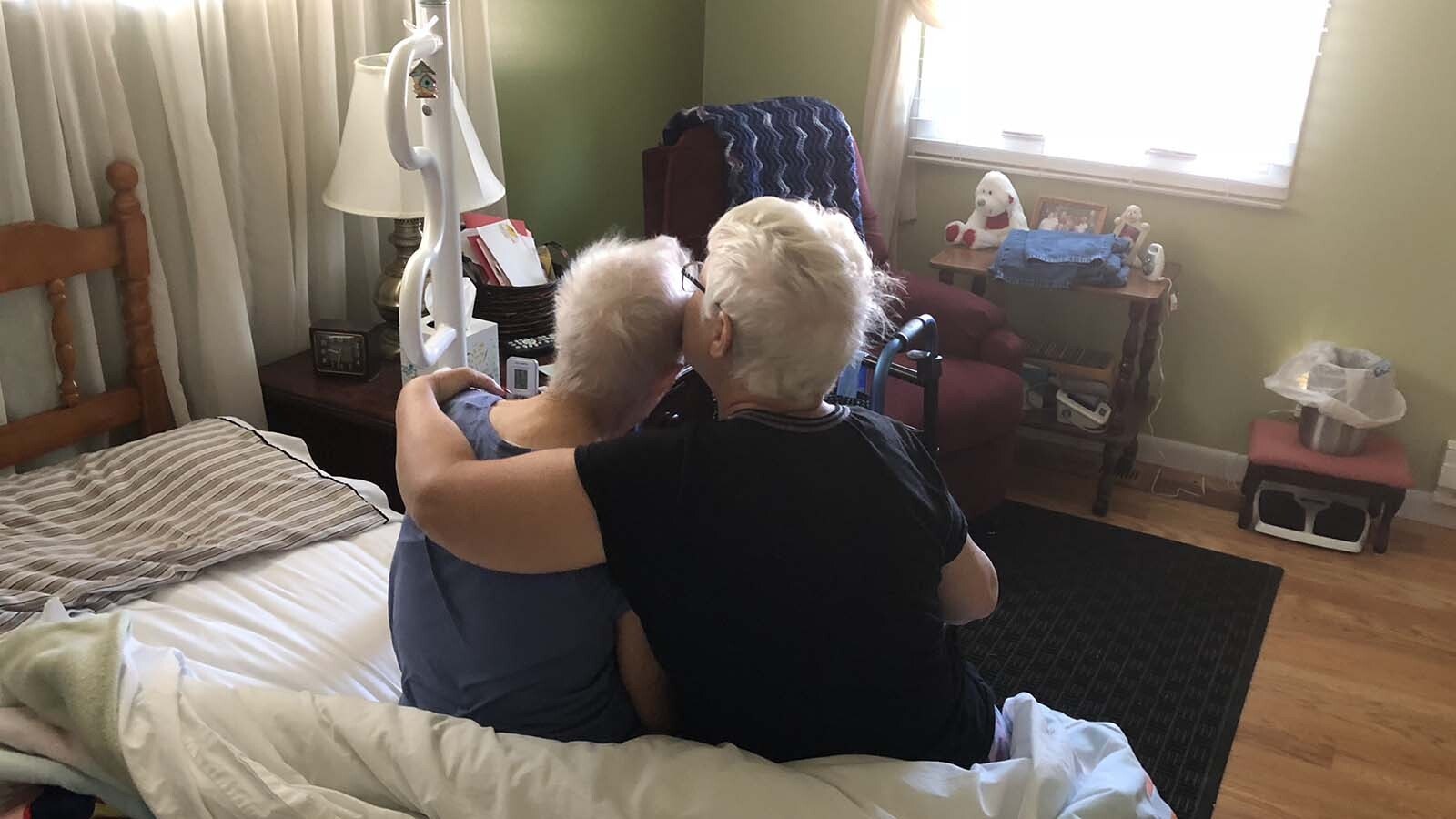
Sometimes when Melissa Watson’s dad, Joel Swearingen of Cody, is meeting someone new, he’ll forget who his daughter is and tell them, "This is my wife, Melissa."
Watson, who moved back home to Cody a few years ago, doesn’t let that get to her.
Her father is in the beginning stages of dementia, and she knows that, over time, his condition is only going to worsen.
She also understands that mistaking her for his wife does make a certain kind of sense in the world of a man who can no longer remember things like the numbers on a clock face.
“Who’s the woman that takes care of you?” Watson said. “In my dad’s generation, that would have been your wife.”
Now the person who takes care of him is Watson.
A mother of two children, Watson is sandwiched between responsibilities. She’s the 24/7 parent of two children, and now the 24/7 caregiver for her father.
Nothing makes it easy, though it is easier since Watson was able to convince her dad to move in with her and her family a couple of years ago. He’d had a couple of falls at his home and didn’t even remember that he’d fallen.
“You’d say, ‘How did you get hurt?’ And he’d say, ‘Oh I don’t know, that’s been there forever,'" she said.
But the wounds hadn’t been there forever at all. There were no signs of injuries just days before.
“It became very clear he had dementia, and probably shouldn’t be living alone,” Watson said. “Even though that was his wish. He wanted to just live in his house until he died.”
Watson is one of more than and estimated 100,000 adults in Wyoming who have become caregivers for at least one aging parent, according to AARP Wyoming. Many times that happens while also working jobs and raising their own kids.
Smart Shopping
Convincing Watson’s dad to move in with her took a bit of smart thinking.
The Watsons took him on a shopping trip to look at houses that might accommodate their family of four plus one.
“Once he saw the possibility that if he lived with us, he would have not only his own bedroom and bathroom, but a space where he could put his television and stuff, I think it started to feel like to him this might work better,” Watson said. “I think he still had enough awareness to realize he needed help, but he didn’t really want to ask for it.”
The new, larger home meant having a new and larger mortgage. Working out the finances for that wasn’t easy. Ultimately, Swearingen decided to sell his home to help pay for his daughter’s mortgage. He also contributes financially to the household’s expenses.
So far, Swearingen doesn’t require round-the-clock care, and he’s still able to be somewhat independent. But there are limits to that.
“I don’t practice law right now, because I couldn’t be away from the house for eight hours a day,” Watson said. “That would be impossible. If I’m gone more than maybe four or five hours, my dad’s calling and saying, ‘Nobody’s here. Nobody’s here. I’m here all alone.’”
Watson helps her dad with his feet at night. She keeps tabs on his daily medications. She makes sure he’s getting three square meals a day.
She helps him with the washing machine if he can’t remember how it works. She’s in charge of keeping his finances straight. And she’s on alert all the time.
Just in case her dad slips out the door to unexpectedly go wandering the neighborhood.
She knows that one day, sooner than she’d like, she’s going to have to put alarms on all the doors.
“It’s hardly any different than when our kids were little,” she said. “It’s like I have three kids now. I have my two kids and my dad.”
The Caregiver Sandwich
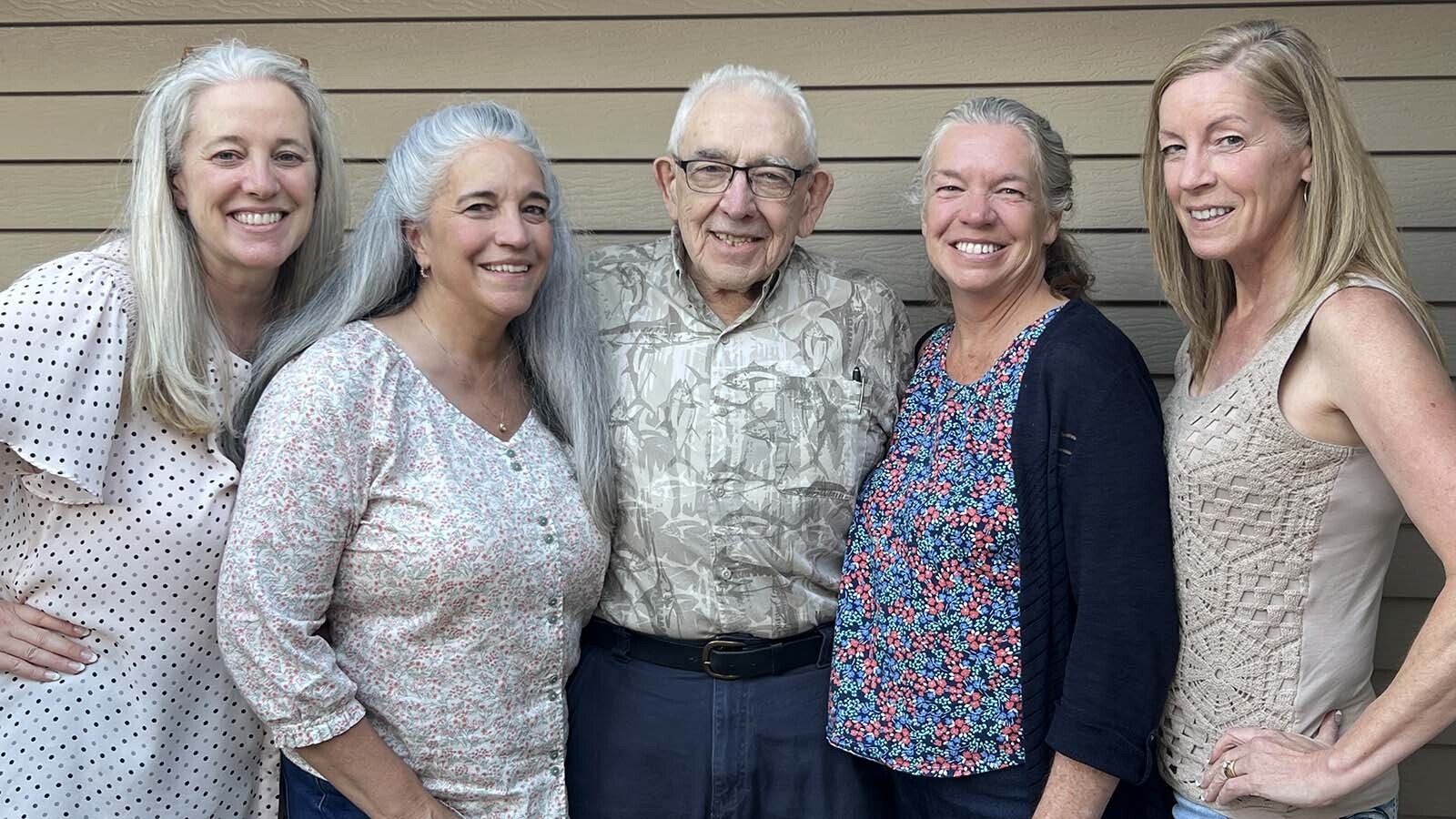
Watson is one of the 106,000 Wyomingites, or about 23% of adults, who find themselves in a caregiver sandwich, according to AARP Wyoming. The layers of this sandwich come with time pressures and financial stress for most, as well as emotional strain and logistical overload.
“When a loved one needs help, family members, friends and neighbors step up, that’s what we do,” AARP Wyoming State Director Sam Shumway said. “But, too often, caregivers carry this responsibility alone, often putting finances, health and jobs at risk. As our state population ages, the demand for care will only grow.”
Shumway estimates the value of unpaid care in Wyoming totals $54 million now. That’s only going to grow in the future with a new wave of aging adults just ahead on the horizon.
According to the U.S. Census Bureau, there are 76.4 million Baby Boomers. By 2031, the youngest of them will be at least 67 — ready to retire if they wish with full social security benefits.
By 2030, all baby boomers will be older than 65, representing an estimated one out of every five residents. This incoming tidal wave will have profound implications for not just the nation’s healthcare system, but society as a whole.
The number of middle-aged people juggling the usual stress of jobs and financial worries that come with raising children alongside caring for an aging parent are also going to just keep growing as more and more Boomers age. Some of them will take on debt and use up savings, jeopardizing their own retirements down the line. Others may be forced to leave the workforce early, giving them less ability to reach retirement goals.
That reality has AARP Wyoming urging state policymakers at every level to consider how they can help older adults to age in place, as well as help the caregivers sandwiched between their parents and their children’s needs.
At the federal level, AARP is also advocating for tax credits for working caregivers of up to $5,000 to help them defray some of the expenses that jeopardize their retirements, as well as expanding allowed uses of flexible spending and health savings accounts.
It’s Better To Overshare
Often times, the need for more care comes up completely unexpectedly. That’s the way it was for Susan Bigelow of Sheridan.
“My very independent mother suddenly needed to have someone with her,” Bigelow said. “And I had to navigate that.”
Her mom’s symptoms looked a lot like dementia when she came to live with Bigelow. Later, those proved to be part of an undiagnosed medical condition that went away once the condition was treated.
But in the meantime, Bigelow’s mom was unable to help her daughter figure out even the most basic of information.
“She didn’t know why she was here, so she clearly couldn’t answer questions about now, ‘What is your health insurance? And what is this and what is that?’” Bigelow said. “So I would have to go to her apartment and find all the paperwork I could find and go through her wallet and figure those things out.”
Fortunately for Bigelow, her mother wasn’t a hoarder and had a minimalist mindset.
“I didn’t have to go through a lot,” Bigelow said. “She had a small apartment, so it didn’t take me more than an hour or two to find all the paperwork in her whole apartment. But then I had to piece things together.”
That’s changed her own thinking on what she shares with her own children.
“I have two adult children and they have spouses,” she said. “And I have three adult stepchildren and they have spouses. Many of them are getting close to retirement age.
"So I’ve put together the information I think they need, and I over share with them, because I want them to be prepared to care for me if the need arises.”
Bigelow had an understanding boss at the time, who allowed her to do some work from home so she could juggle all the responsibilities.
But she still ended up taking early retirement to care for her mother.
That care ultimately overlapped with care for her own husband, who had a health condition that began to escalate not long after Bigelow’s mother came to live with them.
Caregiver Model Developed In Sheridan
Stella Montano has been a caregiver and offers workshops for people who are caring for a family member in Sheridan.
The biggest issue she sees is that most people have no idea what kind of resources are out there to help them . And they have little to no time to figure it out themselves.
“Sometimes caregivers don’t even realize they’re caregivers,” she said. “They’re just the husband, just the wife, just the adult child with an obligation of taking care of the parents, because they did it for you.”
When Montano’s mother was diagnosed with dementia, she faced a steep learning curve. That’s given her a passion for helping others who suddenly become caregivers to navigate the available resources.
“I am very much about how we can get resources to caregivers, whether it’s affordable meals, or it’s transportation,” she said. “We in Sheridan are very fortunate to have a lot of different options for the senior population, but they don’t always know what’s out there.”
Montano’s programs began as a church ministry but have since expanded into a community-wide ministry, thanks to a grant from AARP.
The program Montano started so impressed AARP, in fact, that the organization took it first statewide and then national.
“There’s a DIY kit now that AARP offers to any state that wants to support caregivers,” Montano said. “So, we do a lot of partnering with organizations like the VA, like we have one assisted living in Sheridan and I do like a coffee for caregivers.”
That brings everyone together to talk about the issues they face, brainstorm ideas, and hear from experts as well as other caregivers.
“I call it a CommuniTEA,” Montano said. “And we have something for them every month to just give them a break and show support.”
A Labor of Love
Breaks are an important, often-overlooked aspect, Montano said. Too many caregivers burn themselves out trying to do or be too much, to the detriment of their own health.
It’s easy to get sucked into that, Watson agreed.
“It takes a conscious effort on our part to do self-care and to set time apart for ourselves,” she said. “Because otherwise, it’s really like being a new parent. It’s like having a newborn. You get sucked into it and then you’re a year in and you’re like, ‘We haven’t been on a date in a year.'”
It’s been a labor of love, Watson said, but a labor, nonetheless.
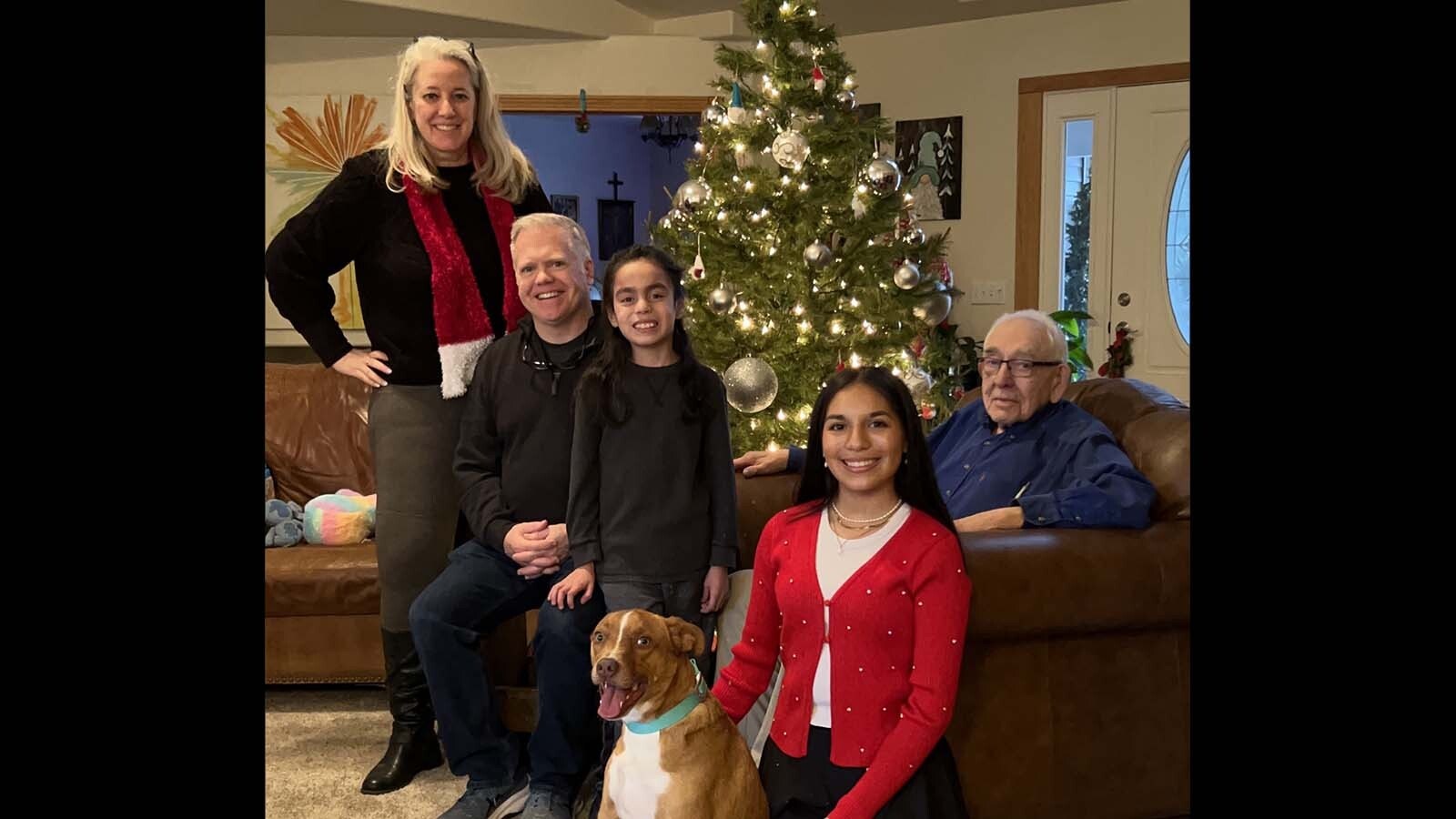
“We consider him in everything that we do,” Watson said. “If we’re going somewhere, he goes with us. Or, like when we went on vacation this summer, I arranged for two of my sisters to come up and stay with him while we were gone.”
The two sisters split the time up, so it would fit their own schedules. At the end of it they told Watson, “I don’t know what he’s paying to contribute to your house, but you guys should get a raise. He’s a lot of work.”
Watson agrees, but wouldn’t have it any other way, either.
“I think it’s good for my kids to see what it looks like to be charitable to your community and then to be charitable to your family,” she said. “That’s what we’re doing with my dad. We want our kids to understand my parents did that for us and what it is to help people who are less fortunate than you.
“You get nothing in return, but that’s not why you do it,” she continued. “You do it because it’s the right thing. Because when we help other people, it actually gives us this internal boost. It’s not like an actual payback of cash.
"It’s a payback of what it means to be a human and be a participant in the human race.”
Renée Jean can be reached at renee@cowboystatedaily.com.