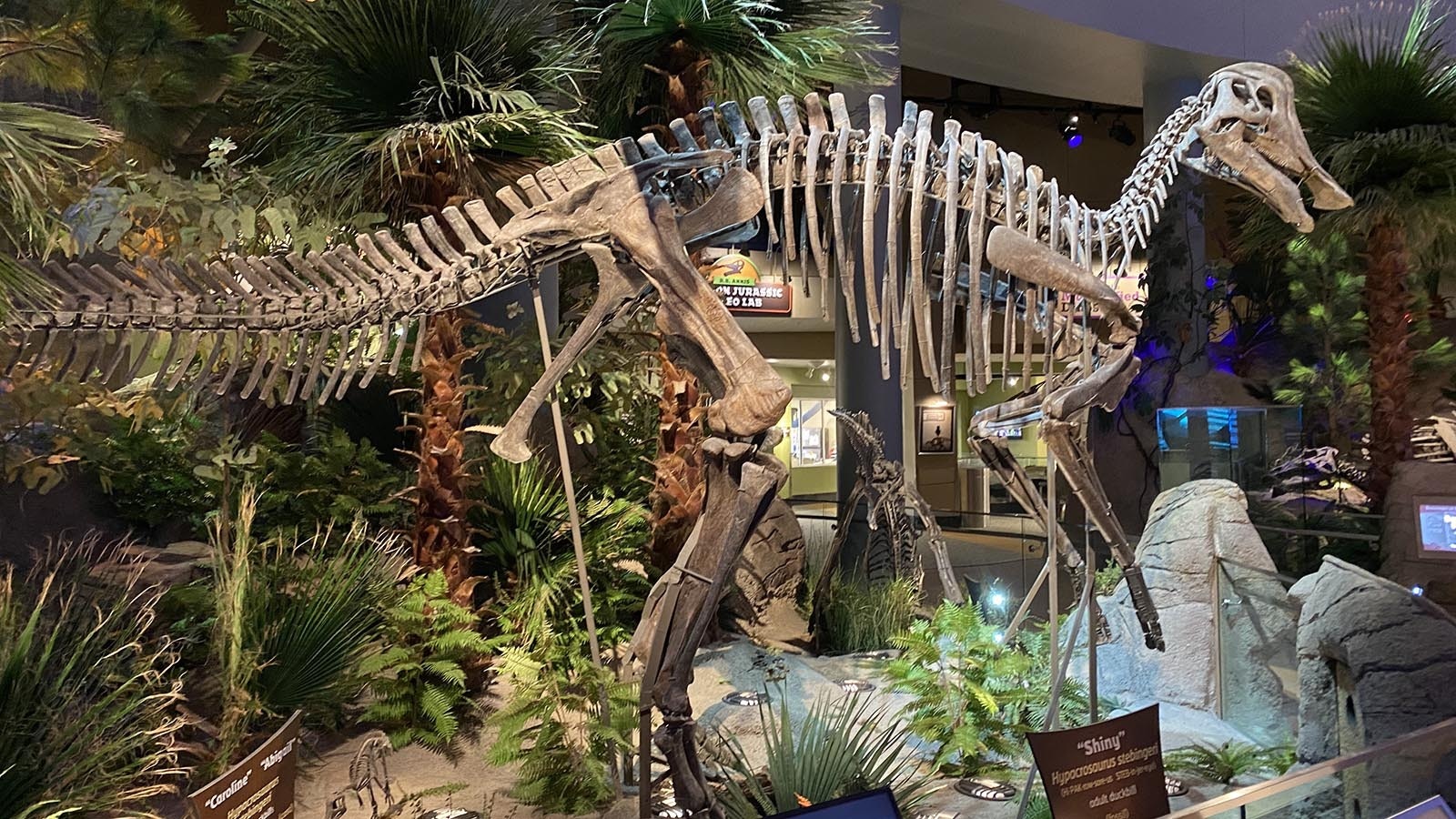
Have paleontologists found a way to tell the gender of a dinosaur? Based on some sexual kinks, preserved in their fossilized bones for over 66 million years, it’s a distinct possibility
New research published by a team of international paleontologists makes the case that a pattern of similar skeletal clues indicate they’ve found the remains of female hadrosaurs. The clues were hundreds of tail vertebrae, broken in the same way in several specimens of several different species.
It seems that while male dinosaurs got some tail, they might have broken some tails.
“We imply that they're mating injuries, which would imply that all the ones that bear those injuries should be female,” said Denver Fowler, curator of the Dickinson Museum Center in North Dakota and one of the contributors to the new research. “It makes the most sense.”
Getting Tail, Breaking Tail
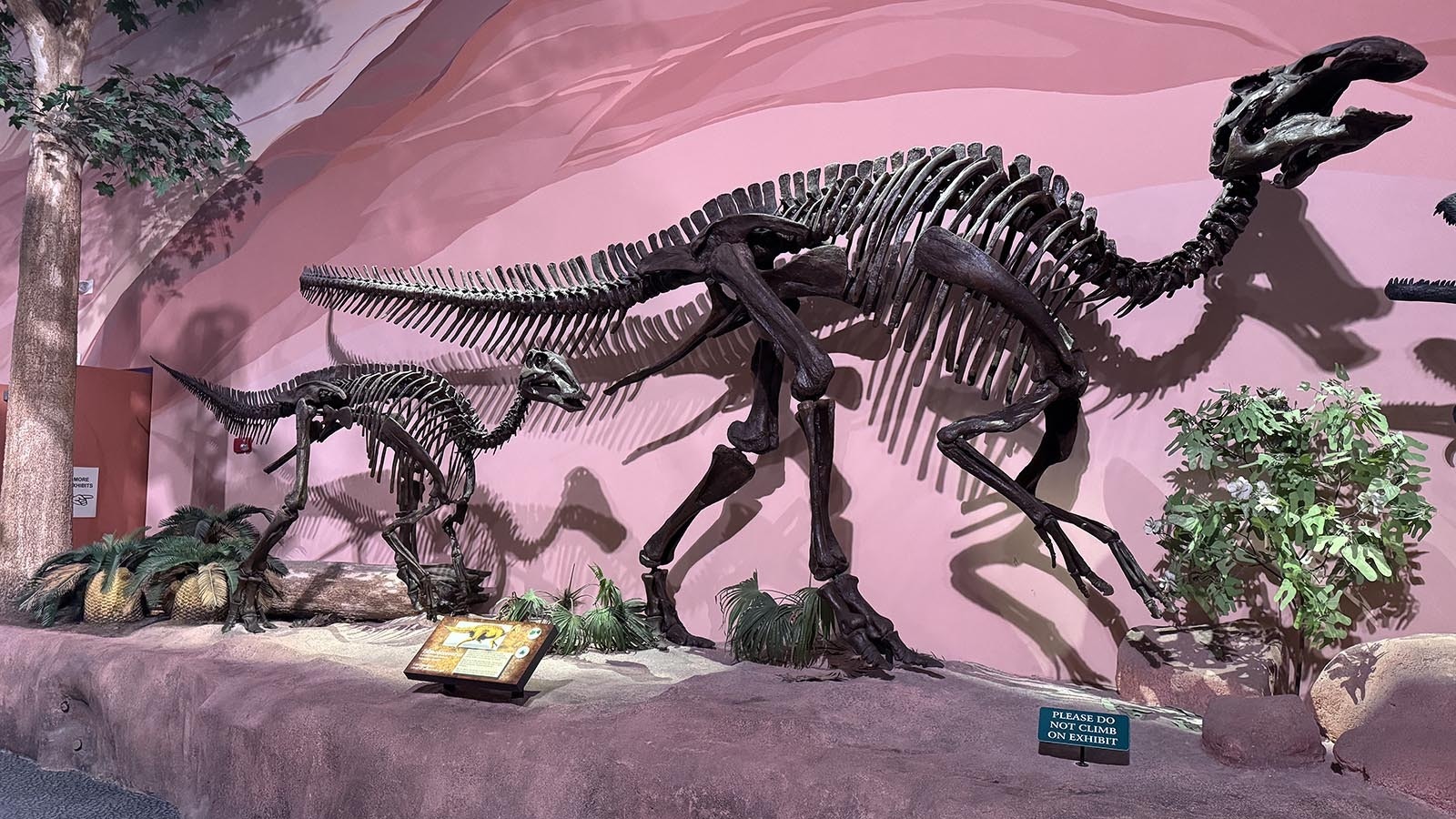
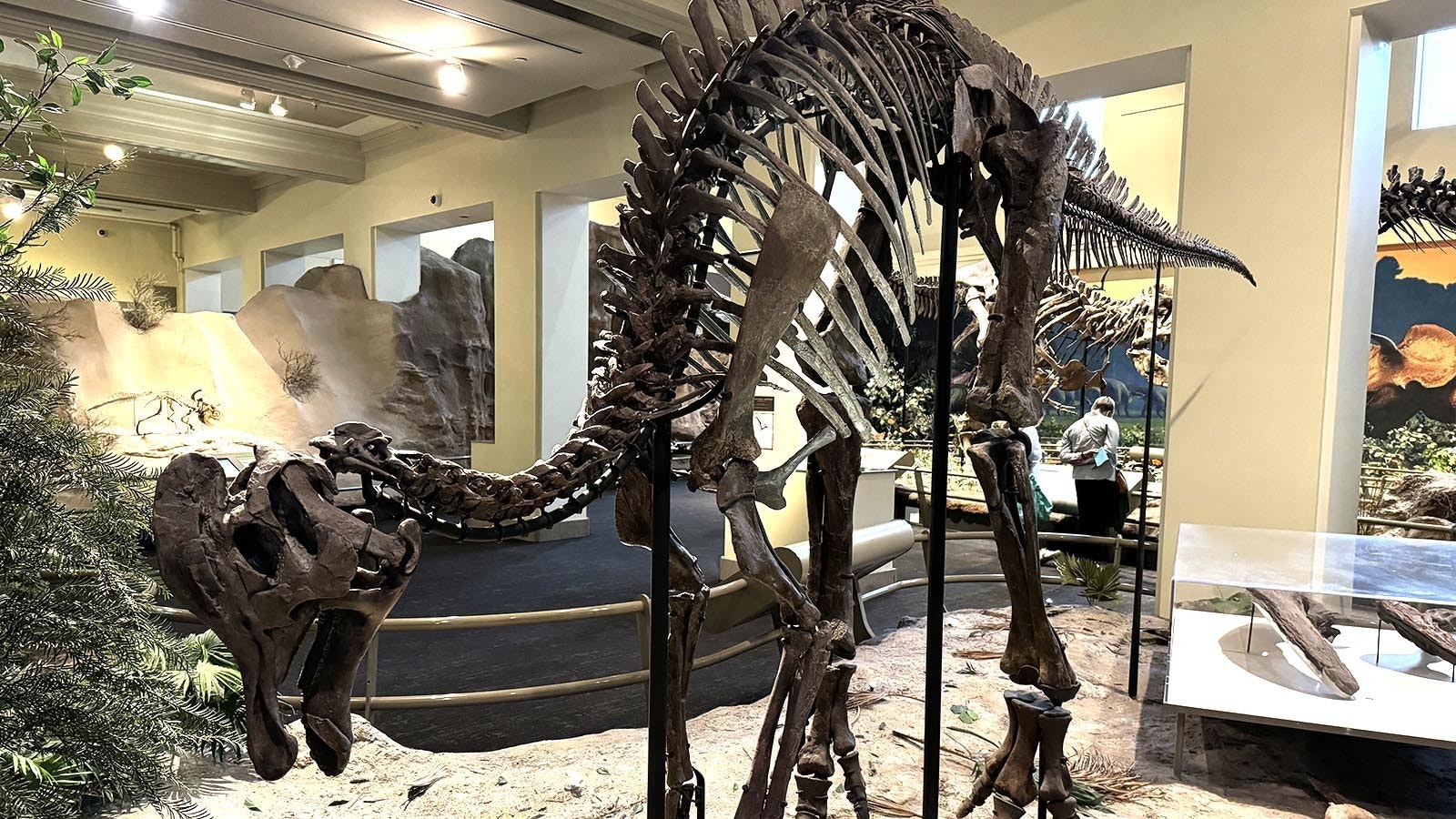
Fowler and his colleagues examined the tail vertebrae from several different species of hadrosaurs, including Edmontosaurus, from North America and Asia. All of their tails were broken in the same way, and roughly in the same places.
“It’s beyond a species and genus level,” Fowler said. “There's something about the hadrosaur body plan that makes them all susceptible to these kinds of tail injuries, and they're unusual injuries.”
“Unusual” in the sense that they came from above, rather than from the side. The broken bones are all neural spines, which are tall, thin bones that sit straight up on the top of dinosaurs’ tail vertebrae.
After examining these broken neural spines, the researchers determined they were the result of “impact from above.” Since the pattern is so consistent among multiple species in the same family of dinosaurs, Fowler said that rules out random events.
“How else could that have happened? Could a tree or rock have fallen on their tails? That's hard to explain all the way down the tail, unless they had a habit of flipping themselves upside down and crashing on the tips of these spines,” he said.
The pattern of the injuries is consistent with the kind of behavior paleontologists would expect when multi-ton hadrosaurs went through the motions of making more hadrosaurs. The conclusion presented by these paleontologists is that the tails were, mostly likely, broken during “aggressive mating behaviors.”
“The most severe injuries that we see are at the base of the tail, but we also see them over the hips and down the tail, as well,” Fowler said. “That could correspond to injuries caused by a mounting male.”
If the bones were broken by males, the tails must have been attached to females, right? Fowler said there isn’t a conclusive answer, but the science makes sense.
“It's not so much that we’ve determined the sex of the dinosaur,” he said. “It's more of an independent test, we imply that they're mating injuries, and that would imply that all the ones that bear those injuries should be female.”
Pulling Up The Dinosaur Skirts?
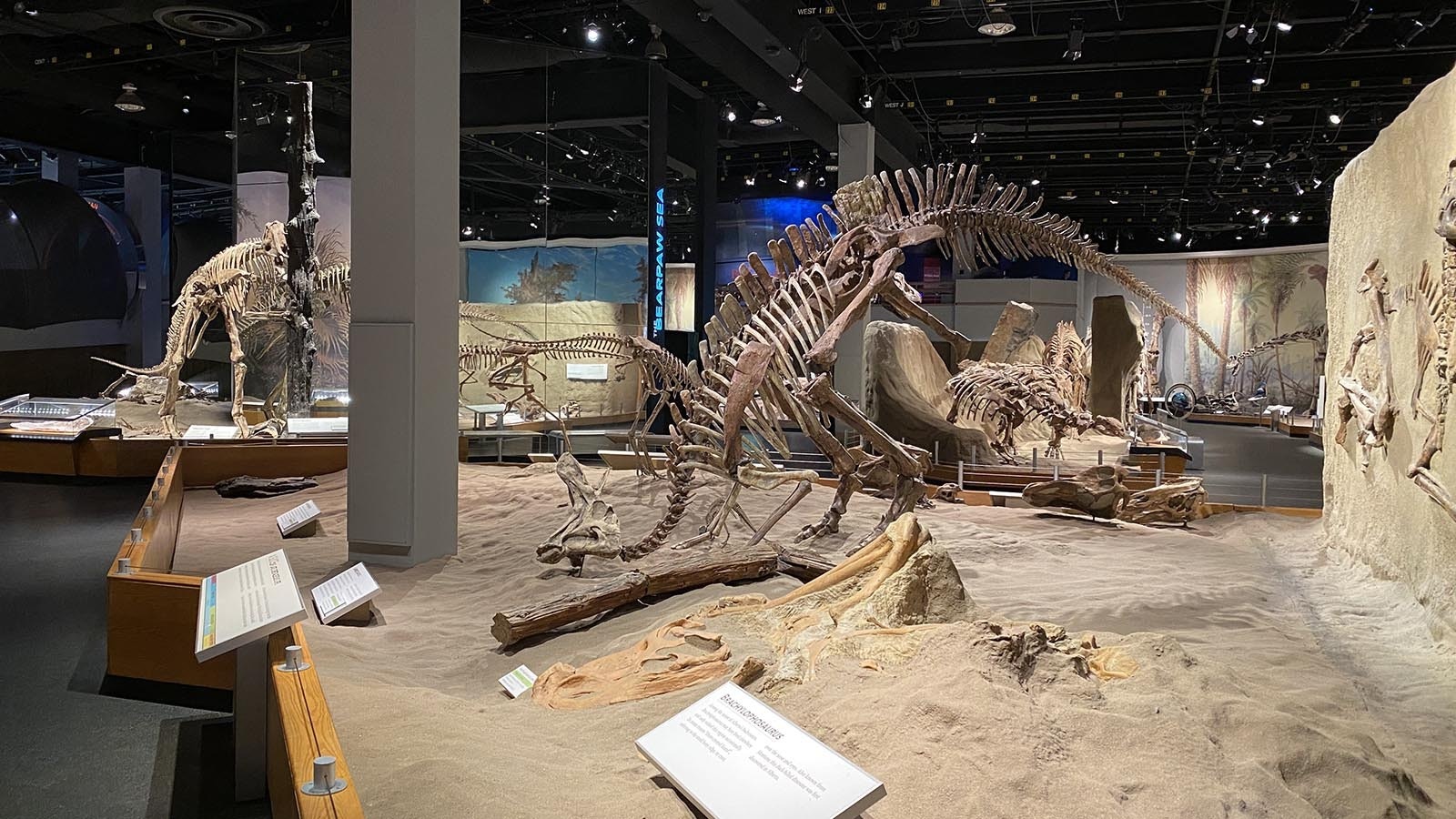
There is no universally accepted way to determine a dinosaur's gender. While males and females probably looked distinctly different when they were alive, the differentiation would have been predominantly in soft structures, like feathers or crests, that typically don’t survive the fossilization process.
Mary Schweitzer, a paleontologist with the Department of Biological Sciences at North Carolina State University, the one person who’s ever identified the gender of a dinosaur. In 2005, she found that a Tyrannosaurus specimen found in Montana was a pregnant female based on a distinct bony tissue preserved inside its bones.
Schweitzer is one of the leading experts on bone histology, the process of taking thin slices of fossils and examining them under a microscope. This method can be used to learn anything from a dinosaur's age to the cause of an injury or disease.
“I was interested in how organisms could transition from ectothermy (the basal state) to endothermy,” Schweitzer told Cowboy State Daily. “Virtually every system in the body has to change to accommodate higher body temperatures. That was the first I heard of medullary bone.”
Medullary bone is a distinct type of bony tissue only found in the long bones of female birds. It’s an adaptation to help them cope with the extraordinarily high calcium demand of egg-laying.
“Birds have very thin bones and an incredibly high calcium demand during lay,” Schweitzer said. “It’s about the same as a human female if she were pregnant and nursing, per day, for 18 months. To meet this demand, birds (and only birds) lay down medullary bone.”
Schweitzer described medullary bone as “highly vascular, rather disorganized, and estrogen dependent.” That gives it a distinct histological and chemical structure utterly unlike any other bone.
“Crocodiles and alligators, the closest living relative of birds, don’t make it,” she said. “Male birds don’t make it, and females not in lay don’t make it. Medullary bone has a function, directly associated with egg laying. If a dinosaur had it, it should indicate a female in lay if it had the same chemical and histological signals, which we were able to show.”
When Schweitzer sliced up and examined the interior of the Tyrannosaurus femur, she saw the distinct histological structure of medullary bone. That, she said, demonstrated this particular T.rex was pregnant when it died.
This T.rex remains the only dinosaur ever found that has been conclusively determined to be male or female. It's not as easy as one would think.
Only In The Magic Moment
Schweitzer’s medullary-based discovery was something of a "sexual revolution" in paleontology. However, it was only possible because that particular T.rex died at the perfect moment.
“Medullary bone is ephemeral,” she said. “In modern birds, it only lasts one to two weeks and then is resorbed. It only exists during the lay period.”
Fowler said conclusively identifying medullary bone in dinosaur fossils is still “a little bit controversial” for some paleontologists. He’s open to the possibilities of peering into the long bones of the broken-tailed hadrosaurs to see if they find any, but there’s no guarantee they will.
“The presence of medullary bone would be conclusively indicative of a female dinosaur, but the lack of medullary bone doesn't mean you've got a male,” he said. “It could be a female that wasn’t about to lay eggs.”
Furthermore, hadrosaurs aren’t as closely related to modern birds as T.rex and other meat-eating theropods. Schweitzer isn’t aware of anyone conclusively identified medullary bone in a non-avian dinosaur like the hadrosaurs Fowler and his team examined.
“Linking tail pathologies in hadrosaurs to medullary bone may not be possible if they don’t lay down true medullary bone,” she said. “It could be used to demonstrate ‘femaleness’ in animals not in lay, but this hasn’t been done yet either.”
Not even the positively identified T.rex thigh has contributed to a sexual revolution in paleontology. While the medullary bone inside determined it was a female, the rest of the specimen didn’t give any conclusive clues to differentiate a male T.rex from a female T.rex.
Medullary bone is the only way to positively ascribe a gender to a dinosaur. However, that vital clue is only available if a pregnant female dinosaur died within the brief period when it was pregnant and laying eggs, and that might not be universal to all dinosaurs.
“In other words, it’s complicated,” Schweitzer said.
Great Bone Structure
Fowler hopes this new research on broken hadrosaur tails will inspire other paleontologists to take up the torch and see if they can find conclusive clues to determine the gender of dinosaurs. Finding medullary bone would be a great clue, but there might be others.
“If we looked at these skeletons, and they all had robust bones, we could say that all the injured specimens were from the robust morph, which would be supportive of there being a male-female separation of robusticity. That wouldn’t be conclusive, but it’s another little piece of supporting evidence.”
Robusticity has been used to make some claims about dinosaurs, specifically T.rex. Since some T.rex specimens have thicker, stockier bones than others, it’s been suggested that robust bones indicate anything from a different sex to a different species, although most paleontologists dispute both claims.
Fowler said some of the mostly complete tails were attached to mostly complete hadrosaur skeletons. If the broken tails are assumed to belong to a female hadrosaur, the rest of the skeleton might have distinct features that could broaden the ability to determine male from female (at least in hadrosaurs).
"If we just keep our eyes open, we could find particular clues and patterns," Fowler said. "Whether it’s tooth marks, muscle scars, injuries, or the way they’re preserved. As more people become more aware of the sorts of clues to look for, I think we'll find and find out more.”
Schweitzer expressed her doubts that the pattern of pathologies, fossilized broken bones, in these hadrosaur tails would even be enough of a starting point for a wide-reaching dinosaur gender study.
“That would be ideal, but I don’t think it would be robust,” she said. “If you are using tail structures, how do you distinguish these features from taphonomic processes or other injuries with confidence? I don’t think that other features that have been proposed can be linked to sex to the exclusion of other explanations.”
Rough Sex?
Nobody involved in the new study is suggesting they’ve found a definitive gendering method for dinosaurs. Fowler described it as “different bits of evidence” that could build the foundation for breakthrough discoveries.
“It's not like doing a DNA test,” he said. “We would imply that these injured tails came from female hadrosaurs, but it’s not an independent indicator. It needs supporting studies to go with it. I'm hopeful that someone will take the lead on this, but it’d be a big undertaking.”
For Fowler, the new study presents a rare glimpse into paleobiology. He’s more interested in learning how dinosaurs lived, rather than finding new species, and he believes these tails tell a tale on how hadrosaurs lived and reproduced.
However, Fowler recognizes there’s a “the salacious side” to this story.
Many people and publications have joked that these fossils have given paleontologists an intimate look into the “rough sex” of hadrosaurs, but Fowler doesn’t see it as anything different from what can be observed in the modern day.
“I grew up in a dairy area, and there are reasons why cattle ranchers do artificial insemination,” he said. “Cows, bison, and hadrosaurs are all really big animals, and just by being big, they can injure each other. It's not necessarily that these mating events are horrible and aggressive, Hadrosaurs were massive animals, and the weight of a massive animal, even when it’s being careful, can cause injuries while mating."
Andrew Rossi can be reached at arossi@cowboystatedaily.com.