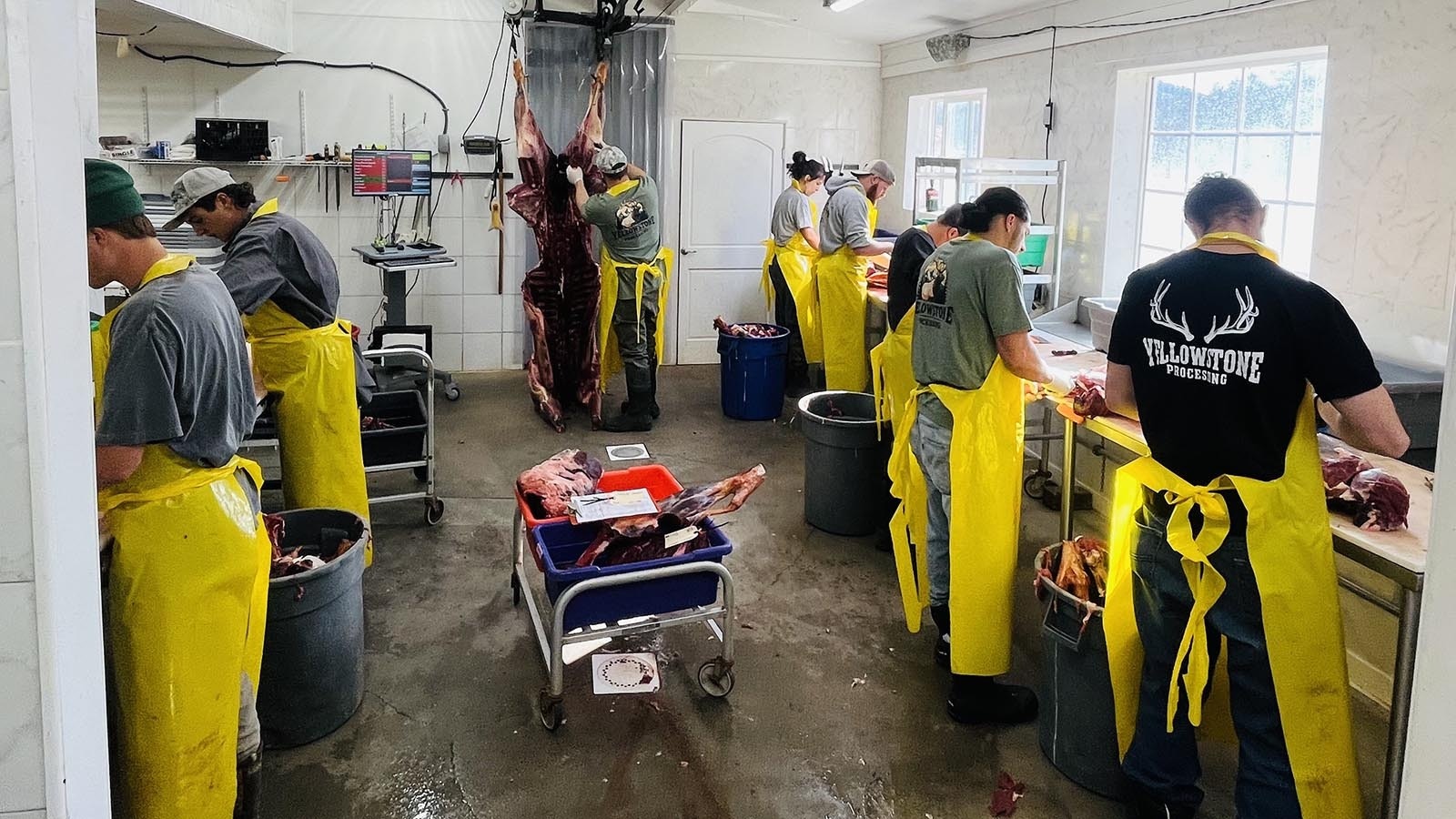
Professionally processing wild game meat this time of year isn’t for the faint of heart. Expect long, hard days as hunters’ kills roll in, some butchers told Cowboy State Daily.
“It’s a grind. It’s early morning, late nights, sometimes going six or seven days a week,” said Nick Schmidt, a butcher at Wapiti Valley Meats in Wapiti.
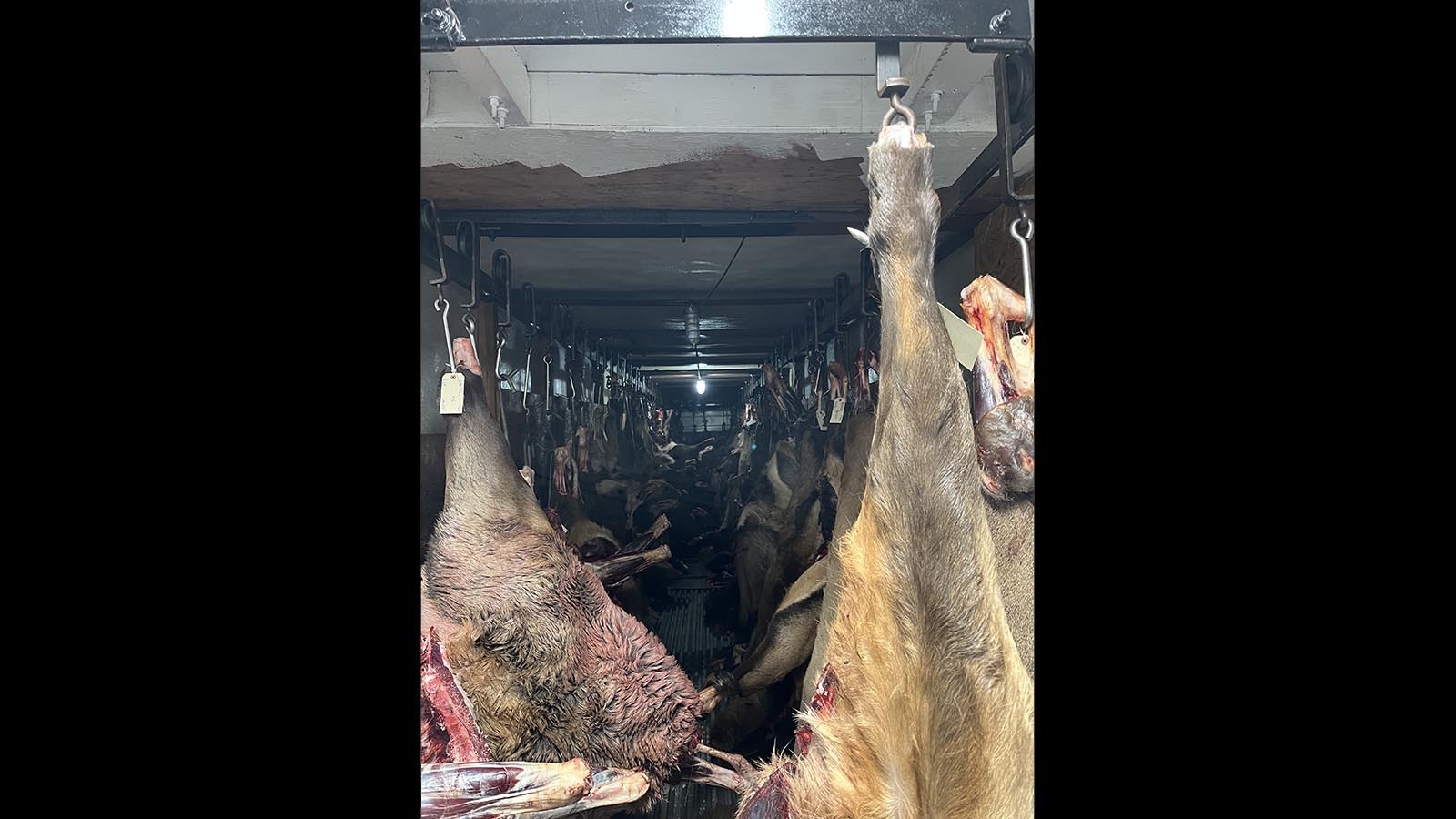
Cody Lightfoot, the owner of Yellowstone Game Processing in Bozeman, Montana, said his business has the capacity to handle about 200 to 300 game carcasses at a time.
“We’ve been full since the Tuesday after the hunting season opener, and we have people on our waiting list,” he said.
Despite the hard work, Peyton Koehler, the owner of Wild Country Processing in Gillette, said that making hunters happy makes him happy.
“It’s not a glorious job, but you have people who appreciate you doing it,” he said.
Looking Like A Good Year For Hunters
If the number of animals coming through the door is any indication, hunters are doing well this year, the butchers said.
Koehler said he’s seeing “more elk than anything. A ton of elk.”
For that, he credits the Wyoming Game and Fish Department’s Type 8 elk tag program, now in its second season.
That program aims to reduce the elk population in parts of Wyoming where herds have ballooned well past Game and Fish Objective Numbers.
It allows hunters to purchase unlimited cow elk tags, but the catch is, nearly all the tags are good only on private land.
While getting permission to hunt on private land can be tough, apparently quite a few hunters are succeeding, Koehler said, just judging by the numbers of elk carcasses he’s processing.
His business charges a flat $350 to process a cow elk carcass, which typically yields about 120 pounds of meat.
Venison Galore
Koehler said that his deer processing numbers are down, compared to previous year.
He said that might be because an outbreak of blue tongue disease put a huge dent in the region’s white-tailed deer population.
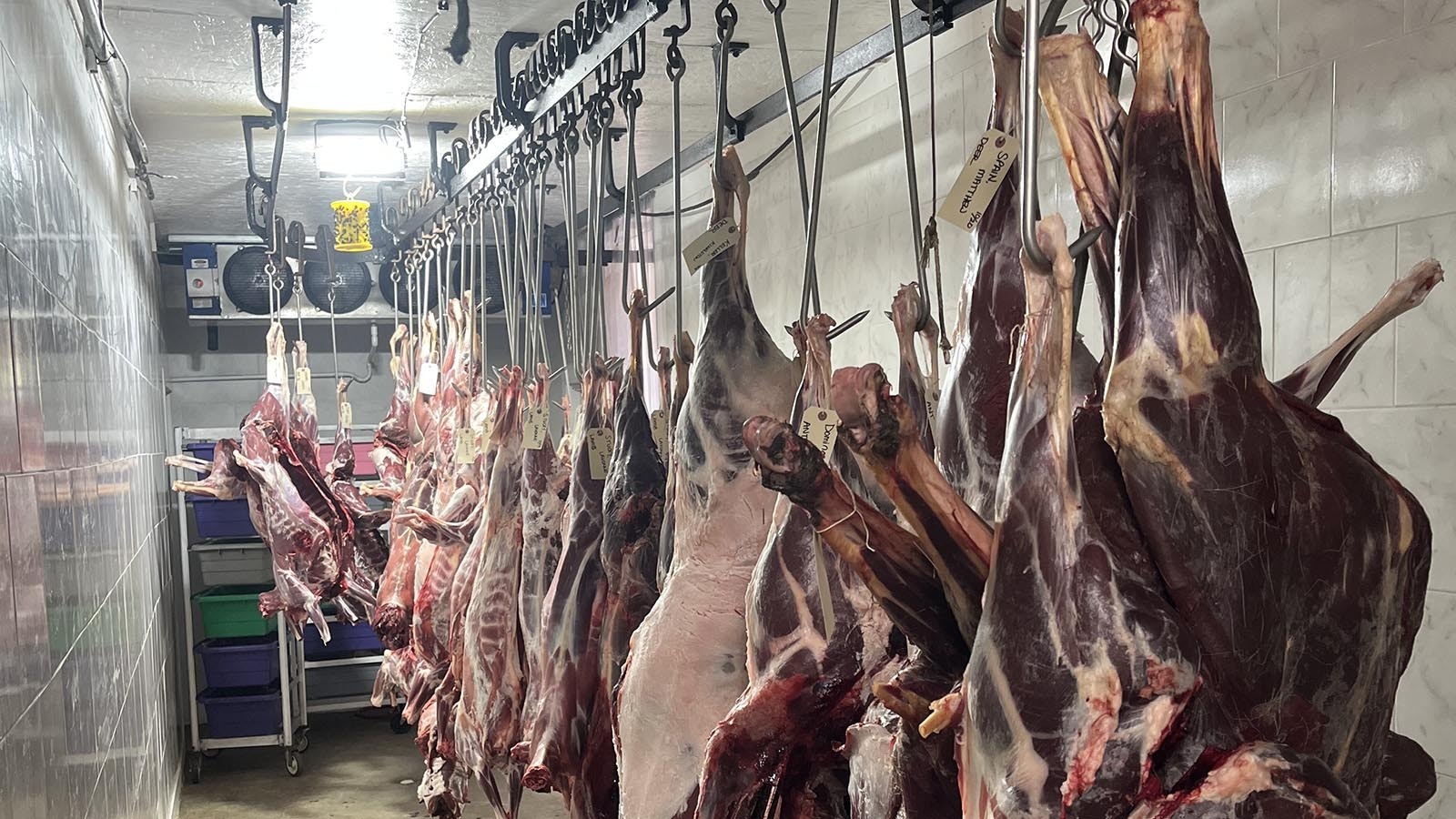
The deer, elk and antelope carcasses hunters bring in look good, with lots of fat on them, Koehler said.
Schmidt said the carcasses he’s seeing look healthy, though they have a little less fat than usual. He’s not sure why that is.
While elk numbers seem steady, he said the number of mule deer coming in for butchering is “way up” this year.
That’s likely because Game and Fish extended deer hunting seasons in the region this year.
Lightfoot said his elk numbers are slightly down. It’s been unusually warm in southwest Montana this year.
“There isn’t any snow. The elk are bunched up high on private land, and they’re not coming down to look for food,” he said.
“Some hunters are still finding them; it’s been a little rough for the average Joe,” he added.
Meat Preservation Tips
Speed is the key to processing big game animals in bulk.
Koehler said he can carve up an elk carcass in about 45 minutes. Grinding up the burger and packaging all the meat takes another two hours or so.
He added that to avoid losing meat, hunters should be mindful of where they shoot animals.
A shot directly through the shoulders will ruin a considerable amount of meat, he said.
And when shots go really bad and hit in the hindquarters, it can be a disaster, he added.
When the bullet hits a leg bone “it explodes like a grenade” and sends a burst of bone shrapnel through the entire quarter, Koehler said.
Lightfoot said hunters should be mindful of how they prepare their animals in the field when the weather is warm.
He recommends making sure the windpipe is fully removed.
“The windpipe is full of stomach acid and bacteria that can ruin the meat,” he said.
When the weather is warm, elk and other big game should be cut into quarters in the field, rather than leaving the carcass whole, he said.
Quarters cool off much more quickly than whole carcasses, lessening the chances of meat spoiling before hunters can get it to the butcher shop, Lightfoot said.
A Niche Business
The number of butchers who will process wild game seems to be shrinking.
“I’m one of the very few wild game processers left in this area," Schmidt said.
However, it’s gratifying to be part of a family-owned business. And the service is vital to many hunters, he added.
“A lot of people have the time to go hunt, but they don’t have the time to do their own meat processing,” Schmidt said.
Lightfoot said it can be difficult to find employees to butcher wild game, because the work is strictly seasonal.
Koehler agreed that the seasonal nature of the work isn’t for everybody, but “customer satisfaction” makes it worthwhile.
“I get a lot of satisfaction when customers are happy,” he said.
Mark Heinz can be reached at mark@cowboystatedaily.com.