Wyoming ranchers and meat processors could gain a new revenue stream if a bill allowing limited interstate and online sales of state-inspected beef passes.
The bill, called the Direct Interstate Retail Exemption for Certain Transactions (DIRECT) Act, was reintroduced to the U.S. Senate by Sen. Roger Marshall, R-Kansas, earlier this month and has been referred to the Committee on Agriculture, Nutrition, and Forestry.
Wyoming state Sen. Ogden Driskill, R-Devils Tower, praised the bill’s reintroduction in the Senate, telling Cowboy State Daily that it would open markets to small-scale Wyoming ranchers.
“For ranchers who want to do any sort of direct marketing, this is the best thing that can happen to them,” he said.
Mark Eisele, a Cheyenne-area rancher and former president of the National Cattleman’s Beef Association, also supports the bill’s passage.
“The DIRECT Act would give consumers a lot more options to buy local beef,” he said.
Dennis Sun, a fourth-generation Wyoming rancher, added that the bill would also bring more opportunities for meat processing and packaging within the state.
What It Does
The DIRECT Act was first introduced to the U.S. Senate in May 2023, but it stalled in Congress until it resurfaced this month.
It calls for amending the Federal Meat Inspection Act and Poultry Products Inspection Act to allow the sale of certain state-inspected meat and poultry products across state lines.
The bill would allow any retail store, restaurant, or similar retail-type business to sell state-inspected beef over the internet direct to customers.
“Normal retail quantities” defined in the act amount to no more than 300 pounds of beef, 100 pounds of pork, or 27.5 pounds of lamb.
That means small producers could sell their meat online if it meets state inspection standards rather than federal.
‘Open Up A Lot Of Opportunity’
Expanding direct-to-consumer marketing options for small producers is something the Wyoming Stockgrowers Association has been striving toward for years, said executive vice president Jim Magagna.
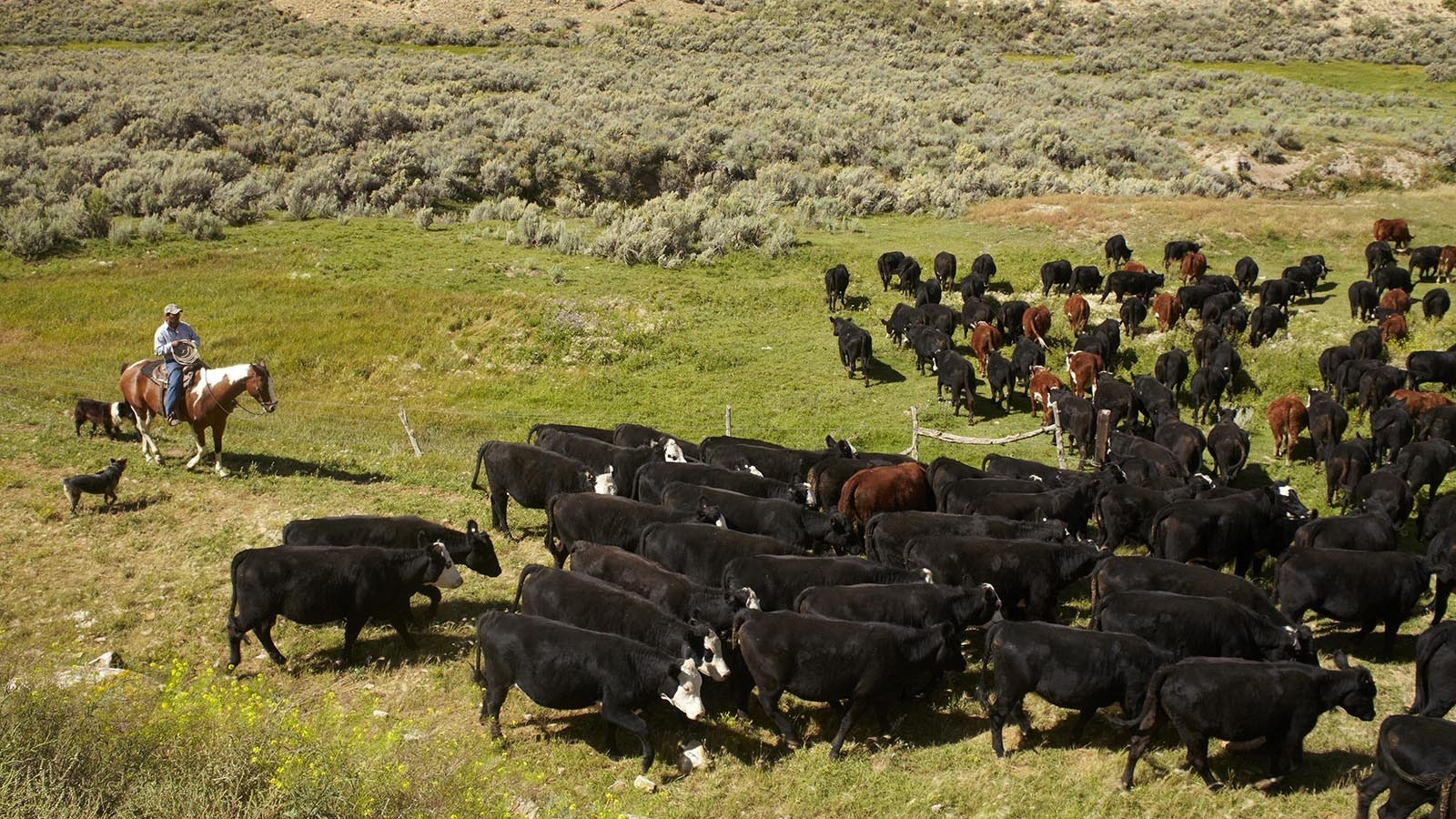
“I think it would open up a lot of opportunity, particularly for Wyoming because we produce more beef here than we can consume,” Magagna said.
According to the National Agricultural Statistics Service (NASS), an agency that operates under the U.S. Department of Agriculture, Wyoming was home to 651,000 beef cows as of Jan. 1, 2025, giving Wyoming a ratio of 1.1 beef cows to every resident.
Sun questions why small producers shouldn’t be able to sell state-inspected meat.
“Omaha Steaks does it,” he said. “Why can’t we?”
Driskill, who was instrumental in opening farmers markets in Wyoming, said the potential sellers’ inability to offer red meat was always a problem.
“The USDA would not budge on it,” he said. “I know people that sell 50-60 head of beef a year that have to jump through loopholes.”
The DIRECT Act would eliminate some of those loopholes.
Still Controlled
Most important, Eisele said, the bill will protect food safety by ensuring there is a paper trail documenting all inspections.
The control over food inspections has been largely a question of oversight and how the quality compares if inspections move from the federal to state level.
That question “is not all bad because food safety is a big deal,” Eisele said.
Now, Driskill sells beef from his Campstool Ranch to the KOA he owns near Devils Tower and the nearby Diamond Bar Saloon, keeping his beef footprint well within a 5-mile radius of home.
“If I could make the exact same money and sell to a consumer who knows it came from my ranch, all the better,” he said.
Magagna said he sees no reason for the bill not to pass, because state inspectors must meet the same inspection requirements as federal inspectors.
Driskill agreed, saying state inspections would be “just as safe as USDA” inspections.
Besides, he added, consumers could still buy USDA-inspected beef if they want to.
The DIRECT Act “doesn’t get around any inspection,” Driskill said. “It moves [the inspection] from the federal to the state level.”
The bill would benefit consumers who want to know where their beef comes from and who want to help their proverbial neighbor.
Eisele said he sees the bill as a win-win. E-commerce is growing, as are consumers’ desires to know the origin of the food they eat.
Since knowing where your food comes from “has grown so much in popularity and consumers like buying beef this way, I think everybody wins,” he said.
Added Driskill: “There’s nothing better than to go to a restaurant and have a steak that came off a ranch 2 miles away.”
Kate Meadows can be reached at kate@cowboystatedaily.com.