Wyoming wants to offer state-funded catastrophic health insurance to residents that would kick in to cover rare and devastating events like being hit by a bus or attacked by a bear.
Dubbed “BearCare,” the plan is part of a sweeping application that the Wyoming Department of Health submitted to the Centers for Medicare and Medicaid Services (CMS) earlier this month as part of a rural health transformation program funded by President Trump’s One Big Beautiful Bill budget legislation.
State health officials say the need for BearCare came out of an online survey and 11 town hall meetings across the state.
More than 1,300 Wyoming residents responded to an online survey addressing the health care priorities of rural communities.
“We got a lot of comments from all over the board,” said Miranda Hinkle, who works in the Wyoming Health Department’s Office of Privacy, Security and Contracts and helped to set up the town hall meetings.
“The comments that stood out the most were about [health care] accessibility, and affordability plays a pretty pinnacle role in that,” she said.
BearCare isn’t a replacement or another option for routine health care insurance and would only kick in if something catastrophic happens.
Not Likely, But What If?
While bear attacks are exceedingly rare, the cost of medical care from such attacks can be high.
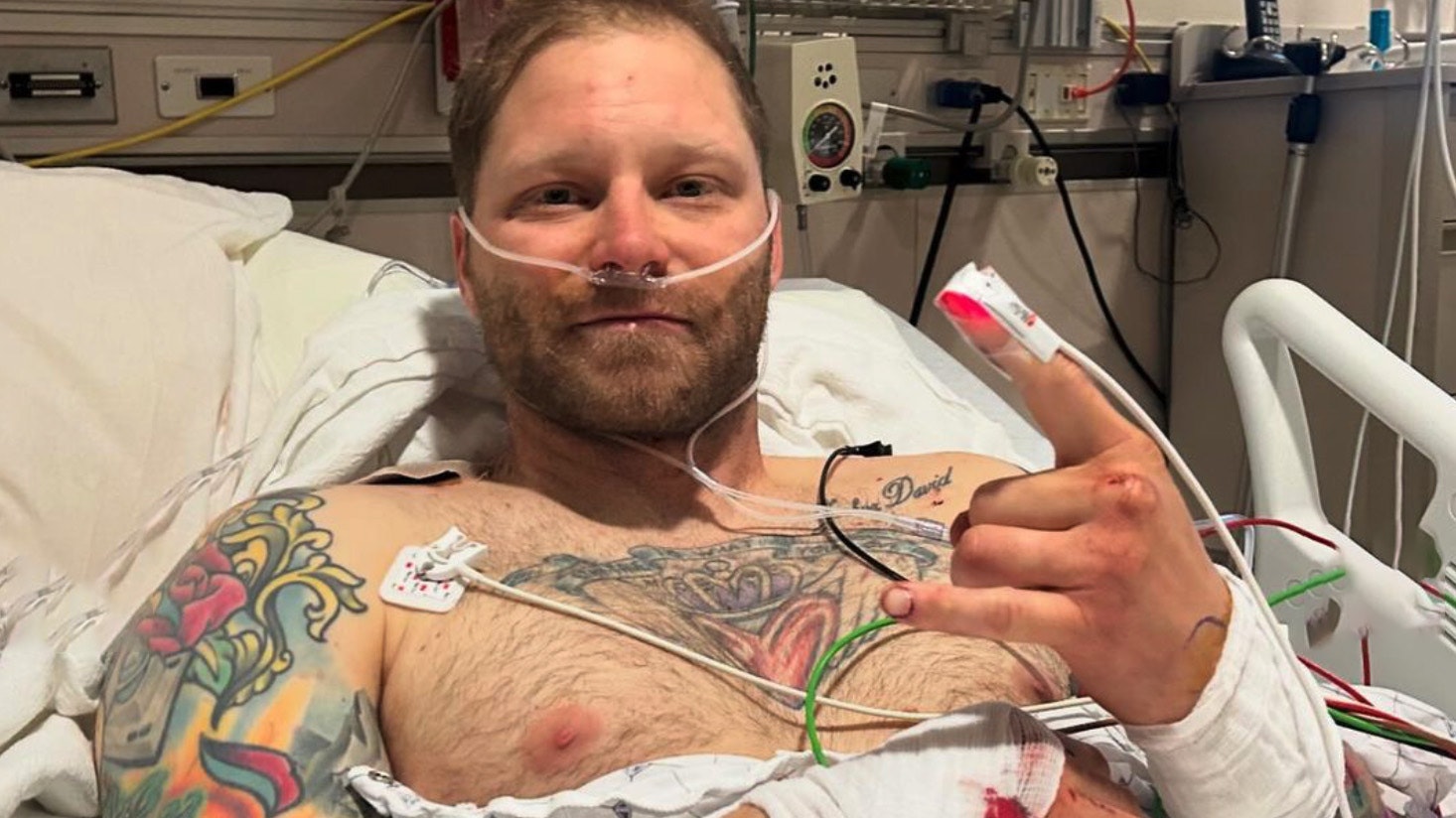
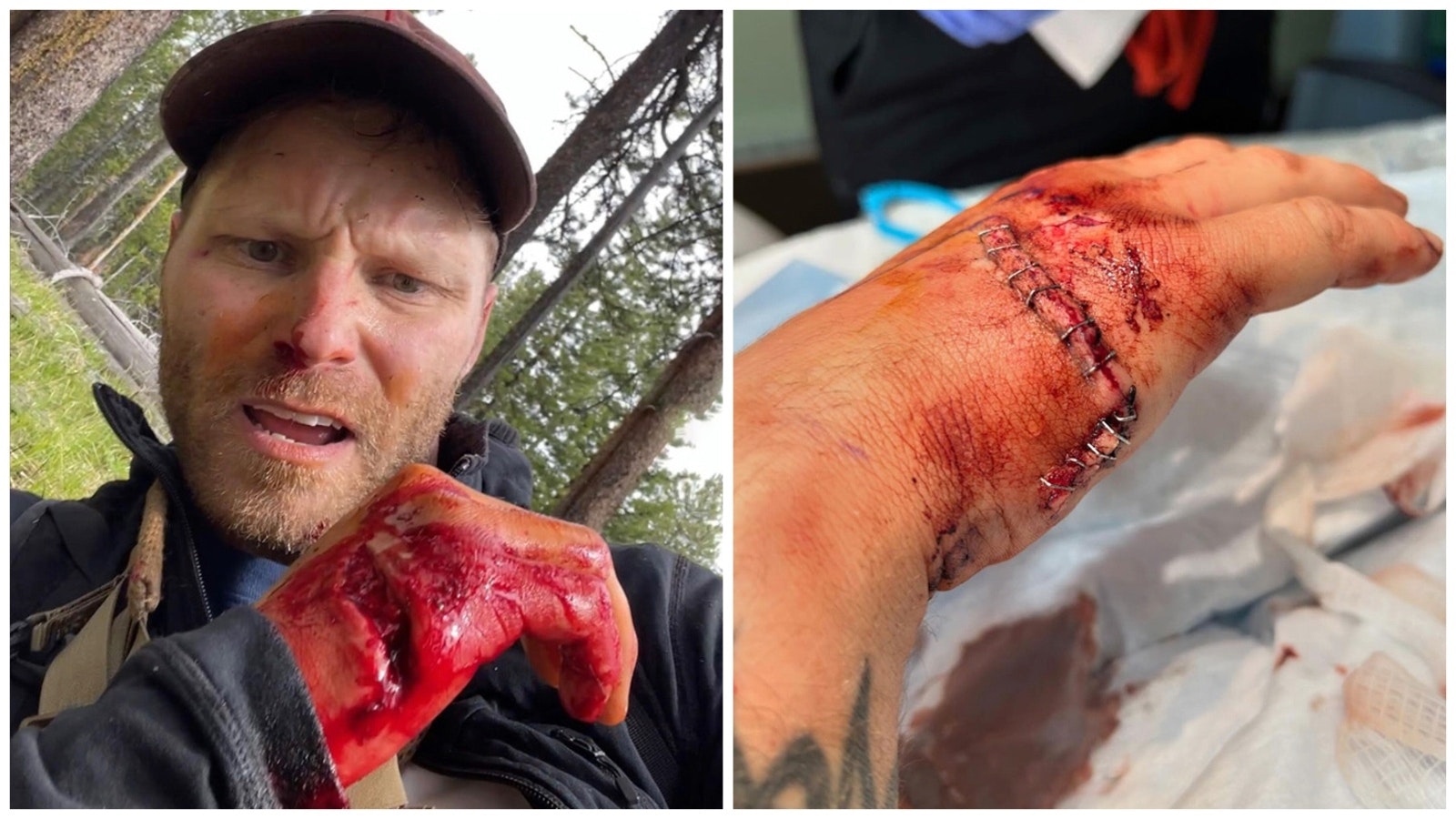
Shayne Patrick Burke of Massachusetts survived a grizzly bear attack while hiking in Grand Teton National Park in 2024.
The bear bit into his can of bear spray in what Burke told Cowboy State Daily at the time was the most violent attack of his life.
The bear bit Burke deep in the shoulder, tore at his thigh, stepped on his back and slammed him against the ground repeatedly.
He was flown by emergency helicopter to an ambulance and sent to St. John’s Medical Center in Jackson for immediate surgery.
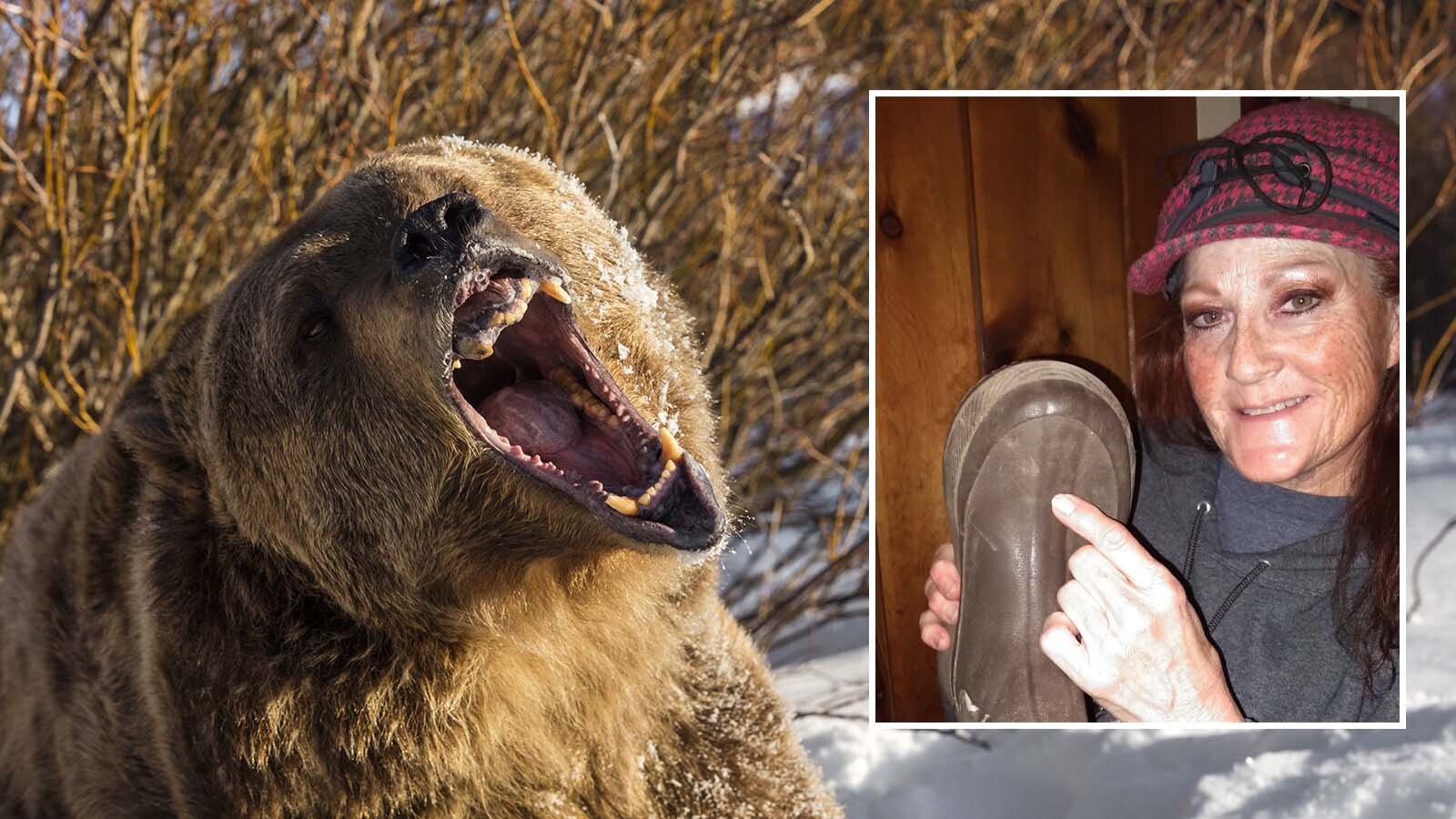
Last month, Thermopolis resident Celia Easton was elk hunting in familiar territory when she was charged by a sow grizzly.
“I knew a bear had been around there,” Easton told Cowboy State Daily after the encounter. “It had never been a problem.”
It had rained the night before, and Easton pulled on her heavy “muck chore” boots to protect against the cold and wet.
“As I worked my way slowly … it was super quiet,” she said. “I thought that was just because of the rain. But it was one of those ... it’s too quiet.”
By the time she saw the mama grizzly charging, there was no time to shoot.
“I had three seconds to prepare for impact,” Easton said.
Easton used the skills she learned in law enforcement to protect her face and stuck her feet into the bear’s face.
The bear grabbed Easton’s right foot and clamped down on Easton’s big toe. She started to drag Easton — but since Easton was wearing those clunky chore boots, the boot popped right off.
The grizzly, startled, ran away. Easton never saw her again.
“The whole thing from start to finish was like 12 seconds,” Easton said.
Easton still has a dark purple mark under her big toe and a persistent knot on her toe joint, but she never sought medical treatment.
However, the story could have had an entirely different ending had she been wearing a different pair of boots.
“That’s just unheard of,” Easton said. “If a bear actually makes contact with you, you’re going to the ER.”
Easton is one of just two known bear attacks in Wyoming in 2025.
The other, reported by Cowboy State Daily, happened near Yellowstone Lake in September when a 29-year-old hiker encountered a bear on the Turbid Lake Trail.
The hiker was able to walk with National Park Service medics to a waiting ambulance.
Not Only Bears
But “catastrophic insurance” really is for unlikely, unforeseeable emergencies.
According to worldanimalfoundation.org, humans have a 0.02% chance of being attacked by a bear.
The proposed insurance program would cover “necessary medical services in an episode of care beginning with an emergency anchor event,” according to the application.
Creating a major public medical plan for people squeezed by rising health insurance premiums is one way the Wyoming Department of Health would put its portion of the Rural Health Transformation Program’s $50 billion to use.
Money for the program will be distributed equally among all states whose applications are approved.
What constitutes an “emergency anchor event” isn’t clearly laid out in the “BearCare” plan, but the application names “being attacked by a bear” as a specific example of what would be covered.
“That’s the joke,” said Franz Fuchs, deputy director of the Wyoming Department of Health.
He added that the term, “BearCare” is a pun derived from a song in the 1967 animated Disney film “The Jungle Book” titled “The Bare Necessities.”
“The devil’s in the details of what counts as an emergency,” Fuchs said. “Is it foreseeable? That’s the litmus test.”
The insurance plan would be geared toward generally healthy people, Fuchs said, adding that, “We’re trying to offer an alternative to the ACA (Affordable Care Act) plan without subsidies.”
According to the application, “BearCare” would offer individuals and small employers an “affordable benefit plan that is closer in spirit to auto insurance: it covers collisions but won’t pay for oil changes.”
Hospitals Have Concerns
Hospital directors met with Wyoming Department of Health Director Stefan Johansson and Fuchs for seven hours as the health department prepared its application, said Eric Boley, president of the Wyoming Hospital Association.
The hospital association is concerned that half of the 46,000 Wyomingites receiving tax premium credits through the Affordable Care Act could drop their health insurance if the tax credits go away, therefore increasing hospitals’ burdens to continue to provide care while shouldering more cost.
“We’ve always been concerned about tax premium credits not being extended,” Boley said. “If CMS [Centers for Medicare and Medicaid Services] approves this ‘catastrophic care’ program and we don’t see the tax credits extended, it will help our hospitals stay solvent.”
Fuchs said he expects there will be some back-and-forth on the application between the state health department and CMS between now and the end of the year.
Ultimately, however, “We think we have something that CMS would be interested in,” Fuchs said.
Applications for the Rural Health Transformation Program will be approved by Dec. 31.
Kate Meadows can be reached at kate@cowboystatedaily.com.