Nationwide, the horse racing industry has been in a steady decline. But that’s not what’s happening in Wyoming. The Cowboy State is on an equal-but-opposite trajectory, growing like never before.
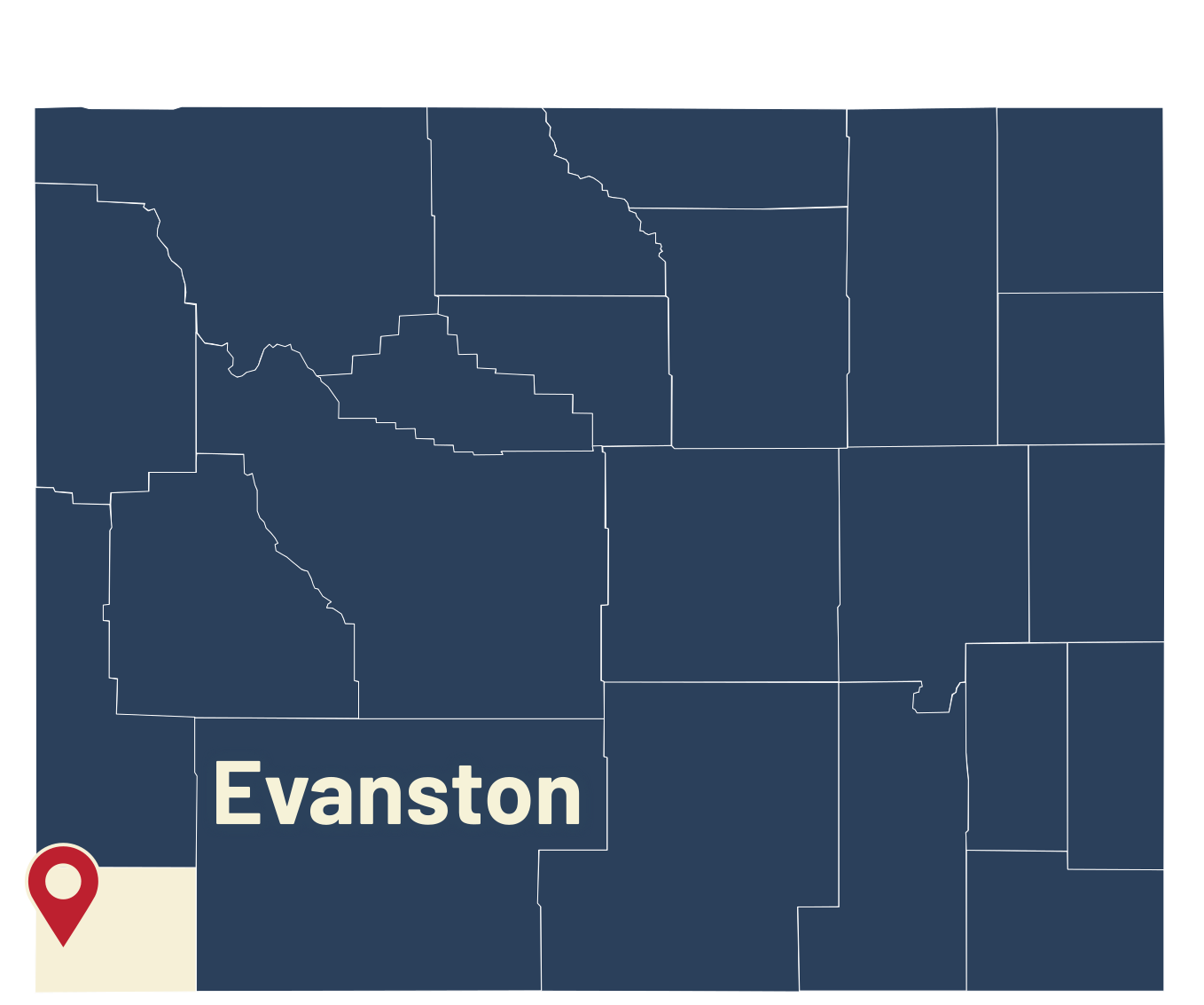
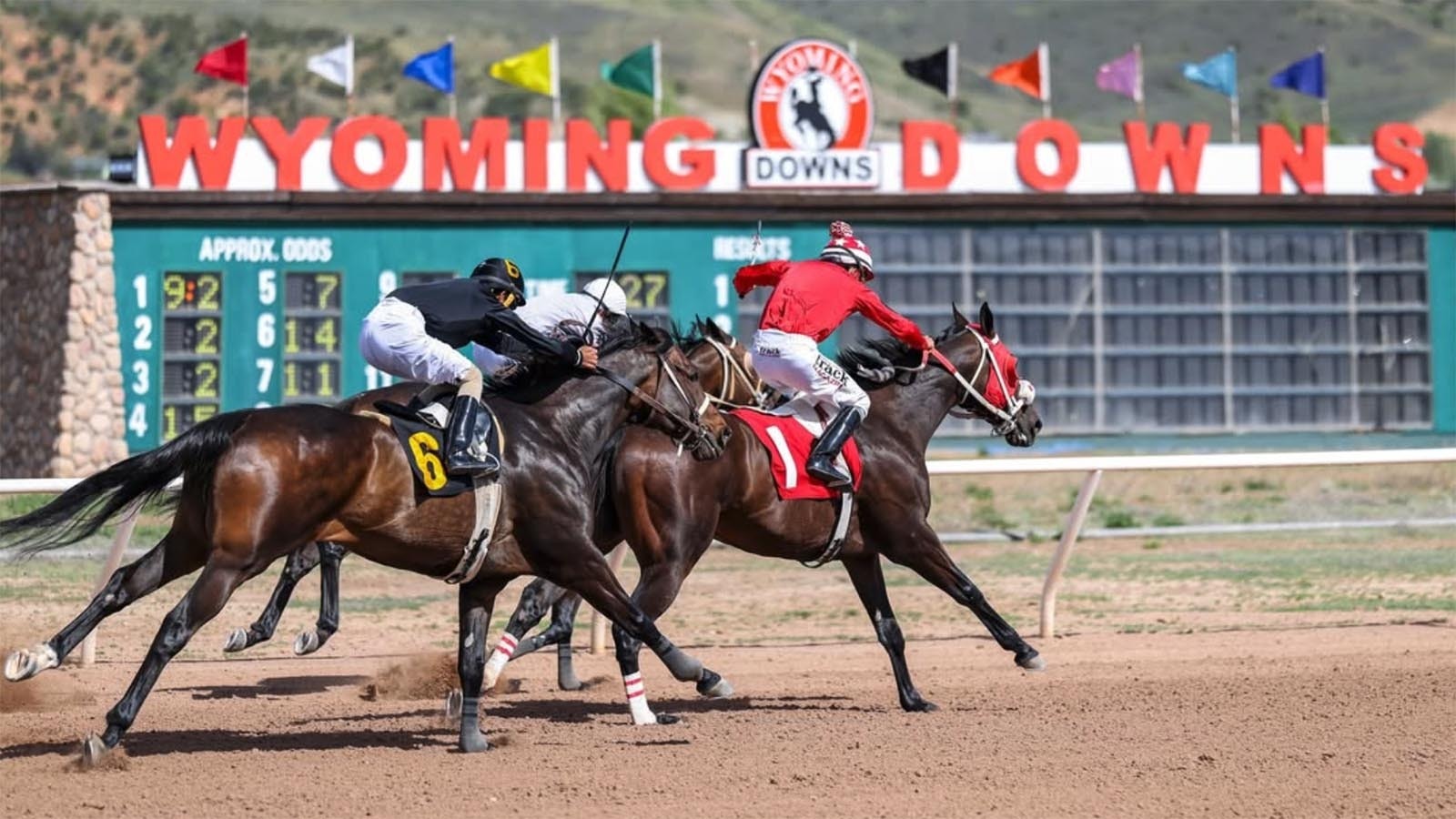
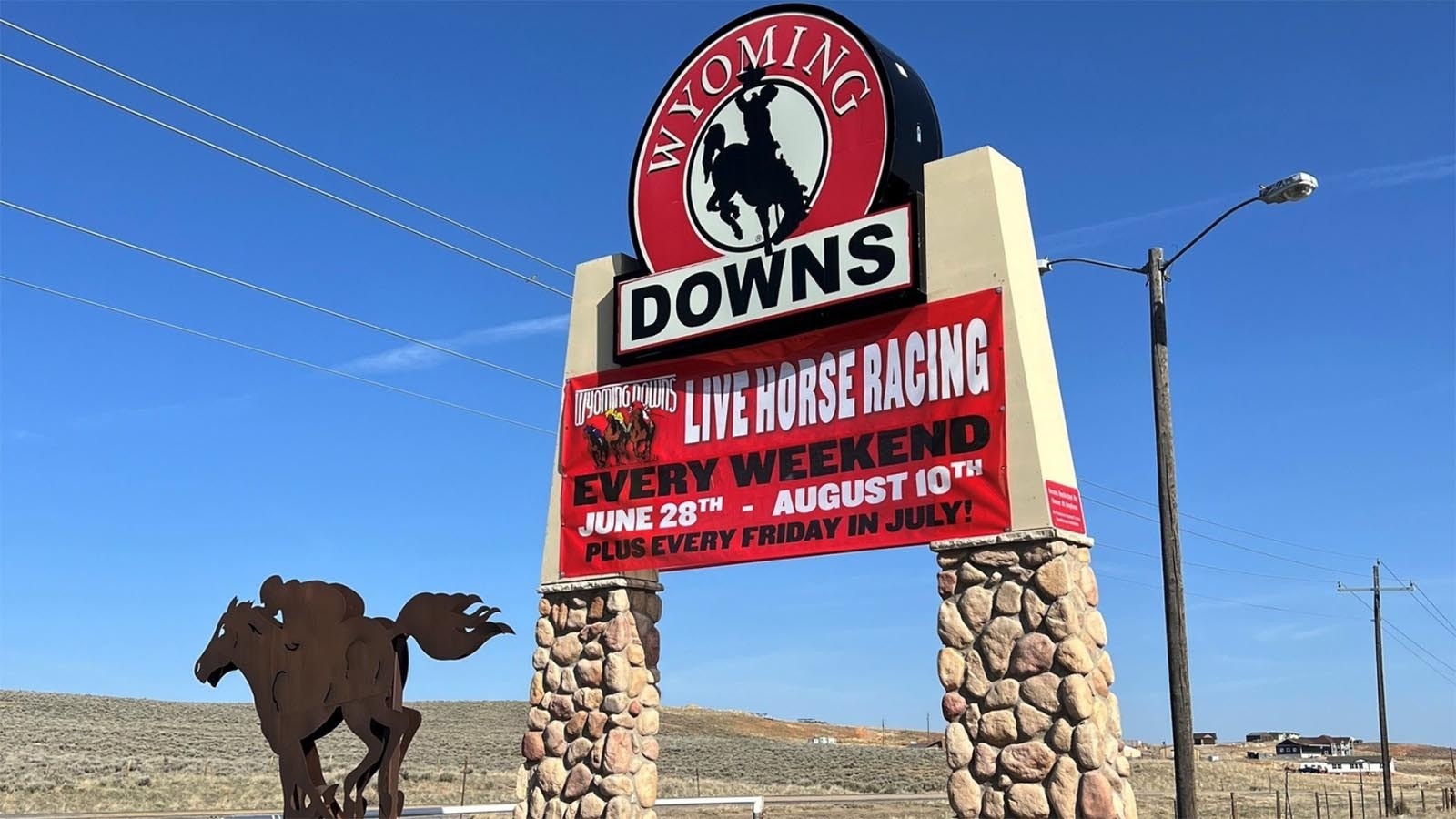
For example, the newly merged joint venture between Wyoming Downs and 307 Horse Racing nearly doubled attendance at their Evanston track this year to 1,700 people per day on average.
Kyle Ridgway, who is president of both entities, told Cowboy State Daily that between 85% and 90% of that attendance was not Wyoming spectators. They came from Utah.
That’s the new model for gaming facilities, Ridgway said.
Situate them on a border with an eye toward attracting customers from neighbors like Colorado and Nebraska that either don’t allow or don’t have such facilities.
A 307 Horse Racing facility just outside of Torrington in Goshen County is another example of this dynamic. It is pulling 60% of its customers from Scottsbluff, Nebraska, and bringing a huge windfall to Goshen County.
Goshen County’s 2024 gaming revenues were $340,904, according to state figures from the Wyoming Gaming Commission. For 2025, Goshen is on track to reap an estimated $554,077.
“(Goshen County) has been able to put the tax revenue from that aside and then use it as matching money for infrastructure grants,” Ridgway said. “It’s been a huge boon to them to get county roads fixed.”
Evanston and Uinta County, meanwhile, each gained $551,831 in 2024, and are on track to gain an estimated $585,535 in 2025.
Statewide, the combined payday from Wyoming Downs and 307 Horse Racing is more than $30 million, and that’s just one of the entities operating live horse racing and the Historic Horse Racing terminals that support it, in Wyoming.
Inside Wyoming’s Newest Racing Powerhouse
The merger of the two companies has boosted their negotiating power, as well as increased the level of access to national experts who can help them grow in Wyoming.
For now, all their moves have been thoughtful and strategic.
Terry Bison Ranch’s facility, for example, is moving to a new location right behind existing fireworks stands off Interstate 25 near the Colorado border, where the company hopes for better traffic.
In Sheridan, they closed Wyoming Downs and opened a new facility called Lucky 7 instead.
Two other properties have recently been closed for remodeling, one in Green River and the other in Gillette. And an underperforming facility in Thermopolis that wasn’t profitable was closed altogether.
State figures show the facility brought about $30,000 in tax revenue in 2024, almost three times less than the next lowest in Buffalo, owned by Wyoming Downs.
“Over the next three to five years, we intend to continue remodeling properties and make them quality offerings,” Ridgway said. “While also investing as much as we can at the track in Evanston to add more barns, add more race days, add more to purses, and keep attracting people from Utah, to make that track part of the national circuit going forward.”
Skill Games In Grocery Stores
Plans like these, however, are about to run headlong into a raft of bills aimed at more oversight of Wyoming’s growing historic horse racing and Cowboy Skill gaming industry, amid complaints by some that the Cowboy State is starting to look too much like Montana.
The complaints involve both historic horse racing (HHR) terminals and Cowboy Skill games. Both utilize terminals that remind users of casino slot machines, though the two are not in any way related entities.
HHR terminals are how the horse racing industry collects the money needed to offer huge purses to attract the best race horses and jockeys to the state.
Cowboy Skill games, meanwhile, are billed as what the name suggests. They are skills-based amusement games for adult-oriented businesses like bars, which can help those business add to their bottom lines and stay afloat.
Skill games, though, have unexpectedly popped up in some grocery stores, contrary to legislative intent.
Riverton Mayor Tim Hancock was among those testifying about that during an October hearing with the Select Committee on Gaming.
“I live and work in Riverton and tend to shop at our local Smith’s grocery store,” he said. “I was very surprised to see a sign outside that said, ‘Gaming now available.’ I was more surprised to walk in and then see that we have games there available, and they’re just right when you walk in.”
The entrance of the grocery store is definitely not an age-restricted location, he added.
That’s completely contrary to legislative intent, State Sen. John Kolb said during the hearing.
“Can you tell us the history about how we got here?” Kolb asked Wyoming Gaming Commission Director Nicholas Larramendy. “I’m curious to know why we’re allowing this when, specifically, I was here when this legislation was passed, and the last iteration (about) allowing these machines in say, truck stops.
"How did that turn into grocery stores? Can you tell me the logic, could you inform the public and the task force here on how we got to where we’re at today and the reasons why?”
Larramendy indicated his office had worked with their attorneys when they received a skill games application from a grocery store. The attorneys determined that, even though that use was clearly not legislators’ intent, the commission had very limited power to deny the permit.
“In the statute for skill games, specifically, the commission is very limited (in) reasons for denial,” Larramendy said. “If they check the boxes and they don’t have criminal histories and they meet the definition of a liquor-licensed establishment, the commission shall issue them a license.”
No Hearburn With Moratorium
Larramendy added that the commission wouldn’t have any “heartburn” when it comes to the three-year moratorium the Select Committee on Gaming was considering.
Jonathan Downing, who represents Cowboy Skill Games and Pace-O-Matic, also testified that skill games at grocery stores wasn’t something they had envisioned either.
“We don’t like that idea in terms of where grocery stores are located,” he told lawmakers. “It’s not a place where you should have skill games.”
Cowboy Skill Games are not located in grocery stores. Other skill-based amusement games are in those locations but not skill games associated with Cowboy Skill nor Pace-O-Matic.
But, Downing added, a moratorium could have unintended side effects. The last time, it prevented transfers between businesses, which was problematic for the industry.
Downing added the company is happy to work with the committee on solutions, whether through a rule change or legislation to narrow which businesses are eligible for Cowboy Skill games.
Moratorium Would Crush State’s Newest Racetrack
A moratorium would be crushing for Cowboy Racing, its representative and a former legislator, Affie Ellis, told the Select Committee.
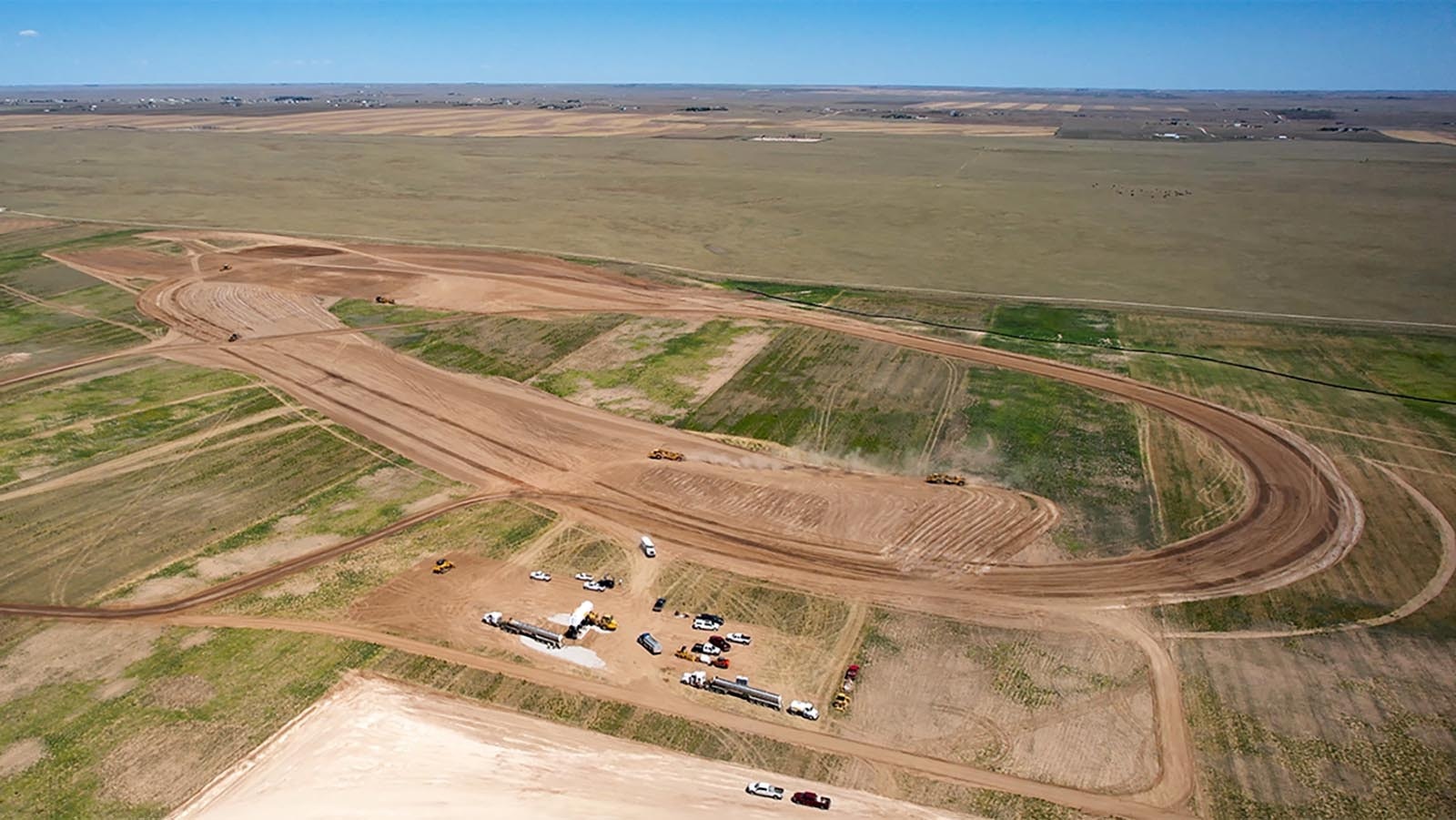
The operator built Wyoming’s first full-length, 1-mile track, but had to delay its opening date because it couldn’t get connected to power in time.
Because of that delay, the company has not yet perfected its application. It has also pledged not to turn any gaming terminals on until it can guarantee 16 days of racing.
The proposed moratorium would go into effect April 1. That would likely cut the fledgling track off from the revenue stream it needs to open and get off the ground.
“I know these numbers are subject to change,” Ellis said. “But Wyoming Downs has been approved for some 1,800 machines, 307 Horse Racing has been approved for about 1,300 machines.
"As you know, they have a joint venture. Together that’s about 3,000 machines combined for that operator.”
Wyoming Horse Racing, meanwhile, has about 2,800 machines, Ellis said.
“Cowboy Racing has applied for 282, literally 1/10th the amount of machines that the other operators currently have been permitted for,” Ellis said. “A moratorium really just disproportionately affects us as an operator.
"Cowboy Racing built Thunder Plains track in reliance on the ability to have a revenue source to pay for its investment.”
Edwards Development President Bill Edwards, who is Cowboy Racing’s business partner, said a moratorium also would not support continued growth of horse racing in Wyoming.
“A moratorium at this point would seek to destroy the original intent of the legislation, which is to support horse racing,” he said. “That’s what we’re building out east.
"And I think this committee realized that a moratorium would halt that progress and squander that opportunity for the state. So respectfully, I encourage you not to support a moratorium.”
Cheyenne Had Little Say In 10 Gaming Facilities
Local control is another issue the Select Committee on Gaming has been considering.
Cheyenne Mayor Patrick Collins was among city officials who testified about the need for that.
“To me, local control is really important,” Collins said. “In Laramie County, we have 10 approved HHR licensees. Seven that are in operation and three that are pending, as you all know.
"And it bothers me that my local governing body had no say in putting those into our community or where they’re going in our community.”
A local process, where proposed facilities are advertised and public hearings are held, would give cities the ability to look out for their constituents’ concerns, Collins said.
“We’ve been left out of that,” he said. “We have had a couple providers come and ask for letters of recommendation to the Gaming Commission, which we provided where they made sense. But there have been a couple that have come that we didn’t know were there.”
Until that is, a sign popped up indicating that a gaming facility was there.
That’s problematic on many levels, Collins said.
The city would like to be able to ensure these types of facilities aren’t going near schools, daycares, or churches, for one. But it’s also important from the standpoint of serving constituents, as well as making sure complaints have an appropriate venue.
Zoning A Clumsy Tool
The ongoing management of such facilities is also important, Collins said, particularly in cases where questionable behavior is ongoing.
“We had a local establishment with a retail liquor license,” Collins said. “The owner’s son was a general manager, and he had a habit of bringing underage girls into his bar, giving them alcohol, and taking advantage of them.”
Because the city had a say over the liquor license, Collins said he and the police were able to meet with the individuals to talk about the allegations and to explain that their liquor license was a privilege that could be revoked if the situation continued.
“From that discussion to now, a decade later, no problems,” Collins said. “He got the message, and it worked. But if we didn’t have the hammer of being able to revoke his liquor license, I’m not sure his behavior would have changed.”
That’s just one example of times, Collins added, where the city’s ability to pull a liquor license helped the city to negotiate better behavior.
“To me, that’s a really important part of this,” Collins said. “We’re bringing these facilities into our communities, and you’re not letting the community have the ability to control … or protect ourselves from someone who chooses not to be a good actor.”
Zoning, Collins added, is a clumsy tool for the job, one that doesn’t typically allow for much nuance.
Like the HHR facility on Pershing Boulevard, which Collins said is the “gold medal” standard for what he considers a great place.
“It has a bowling alley and an arcade,” he said. “It has a restaurant, and it has a gaming facility. To me, it’s a really additive thing to our community.”
But it’s also close to a school and a church.
“In a zoning situation we probably wouldn’t have let it go there,” Collins said. “But it’s on Pershing Boulevard and there’s a strip mall about a block away that blocks it from those areas. I think we would probably look at that with local control and say that is a good place to put it.”
But if it was strictly decided by zoning, the city wouldn’t have had that flexibility.
“I would rather have the ability to sit down with them and try to find the right place,” Collins said. “Rather than just eliminating most places because we’re fearful of what could happen.”
Renée Jean can be reached at renee@cowboystatedaily.com.