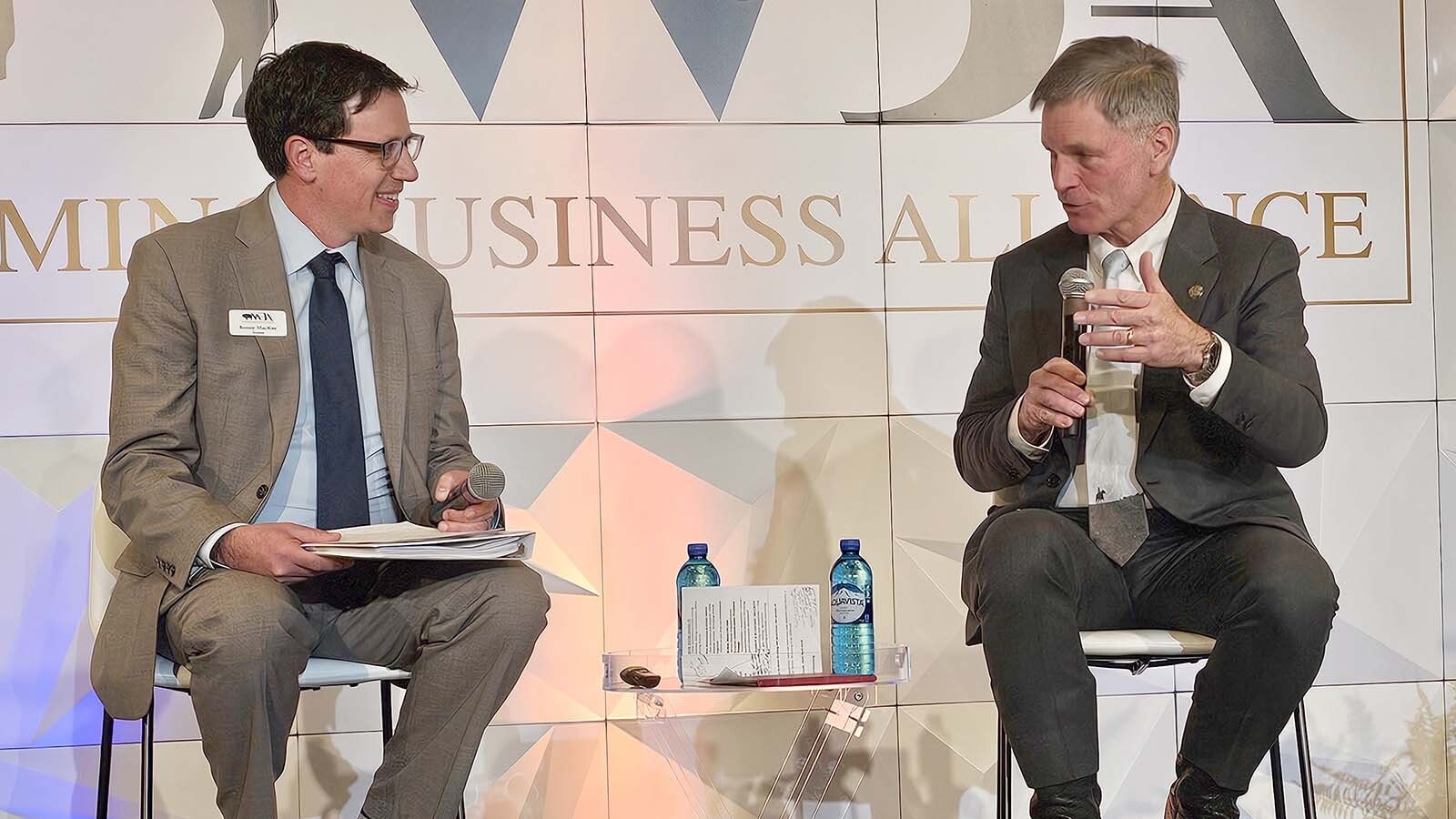
University of Wyoming economist Scott Beaulier found himself in the middle of a real-world economic lesson when he was buying a $9 bag of Frito Lay chips recently.
“OK, $8.99 for a Frito Lay bag of potato chips, a family bag,” he said. “I’ve got a big family, and I have to feed a whole bunch of kids. But $8.99 for chips and mostly air in that bag, OK?
"And they’re reducing the number of chips, and they are putting more air in the bag, so there’s quality deflation, too, along with price inflation.”
It was an example, Beaulier said, of something most anyone in Wyoming has experienced on more than one occasion of late. Inflation may have “cooled” to a more acceptable 3% per year on official tally sheets, but prices still feel awfully high to consumer wallets.
“We’re stuck at prices that are driving us all nuts,” he said. “And this is something that will probably continue in the year ahead.”
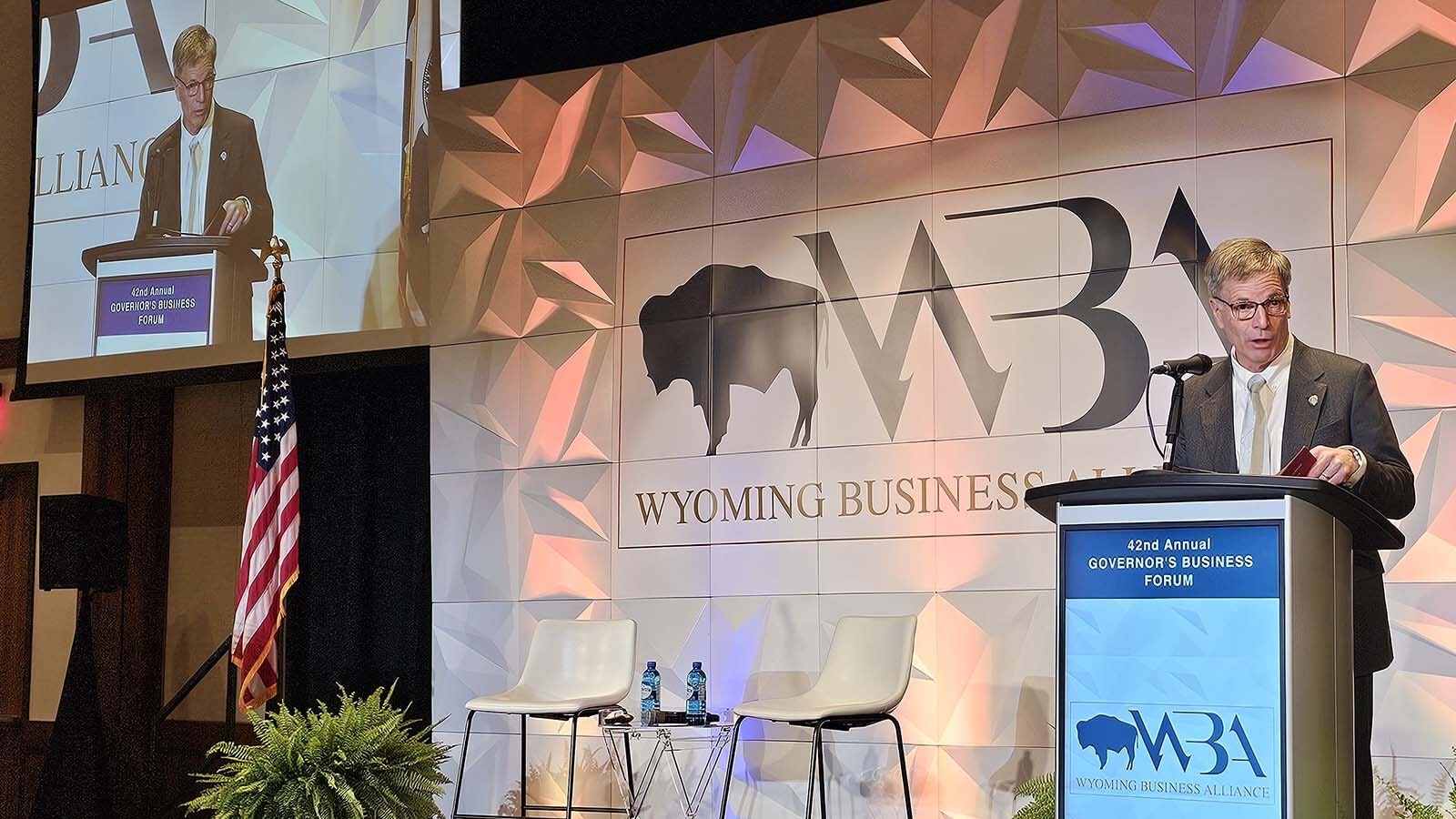
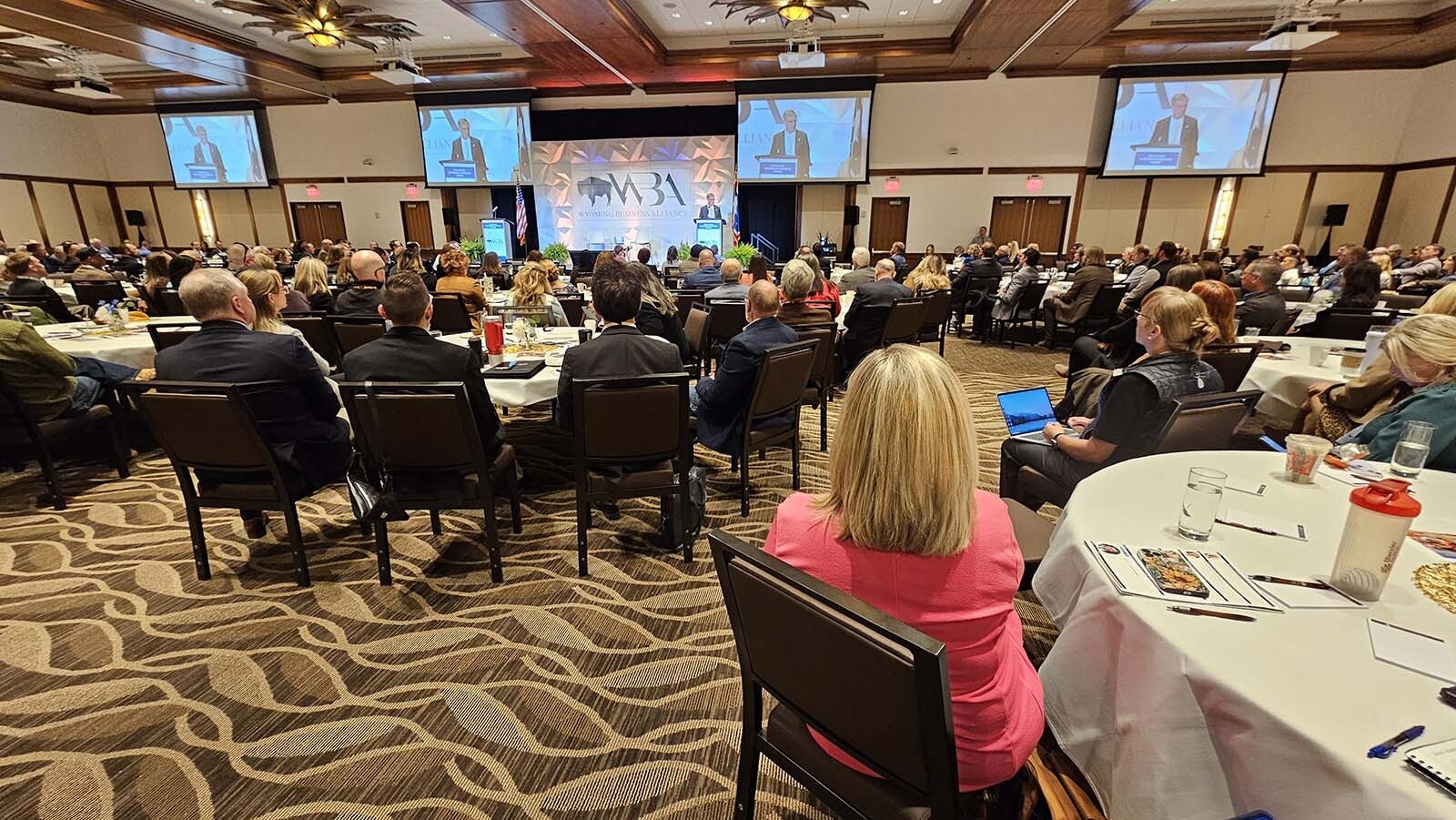
The insight was one of several issues Beaulier said would continue to challenge the Cowboy State in the year ahead during the Wyoming Business Alliance Annual Governor’s Conference.
“Housing stock and affordability remain really big issues,” he said. “A little bit of good news is that there’s been some relief in recent months,” he said. “Listing times until sale of homes is ticking up a little bit. So, houses are sitting on the market a little bit longer.”
That could signal the market nearing a peak for prices — though for $400,000 homes and less, not quite yet.
“(That’s) really, really hot still,” he said. “If you’re trying to find a $700K home, there might actually be some available,” he said. “The housing stock is a little more abundant.”
Rental vacancies, meanwhile, are projected to tick upward in 2026, Beaulier added, but workforce shortages con341s, can you find us people? Can we just please have more people here? Because we’re dying. We can’t staff our restaurants, staff our businesses.”
That’s turned Wyoming into the “Statue of Liberty state,” Beaulier said.
“Please come, your poor and your wicked, because we need you desperately,” he said, joking. “We would (take) anyone.”
Wyoming’s population continues to decline in all but one category, those 45 and older.
“Those with bachelor’s degrees are leaving the state at about a 50-50 rate,” Beaulier said. “And that’s not just UW graduates. We’re talking anyone with a bachelor’s degree is probably 50% likely to not be here in the near future.”
A Budget Of Essentials
Beaulier’s rundown of all things economic set the stage for Gov. Mark Gordon’s own rundown of his economic vision for 2026 in Wyoming, the last year of his term in office, which he said will be a “budget of essentials.”
Government is there for just that, Gordon said. The essentials are the things that the people can’t easily do themselves.
“We’re going to focus on workforce development programs,” he said. “We’re going to focus on providing competitive pay for state employees, business-ready communities, low taxes, streamlining permits, a trained workforce, economic development targeting good-paying jobs, and I always say that follows with good careers. Careers make people stay.”
Wyoming’s energy resources, meanwhile, have given the Cowboy State the keys to its future, if the state can just figure out how to serve the needs of power-hungry data centers while still protecting its ratepayers.
That’s not going to be an easy task, Gordon acknowledged, but conversations have already begun that will create “a new framework that allows us to balance demand against energy production” in a way that the governor said will be transparent, protect rate payers and promote economic development.
The Future Can’t Be Won By Staying The Same
The task is doable, Gordon said. But it won’t happen by trying to turn the clocks back, or sticking with the same old, same old. It’s going to require courage, and it’s going to require change.
“There’s this sort of notion about nostalgia and budgeting,” Gordon said. “Let’s go back to some point in time, arbitrarily, and see how that goes. It’s a nice thought, but it’s a difficult one, because … the price of groceries has changed pretty dramatically over the last couple of years, and actually the last decade or so.”
Inflation, Gordon said, is running about 3.5% in Wyoming right now. But wages and expectations are changing as well, dynamics that have no thought of turning back.
Asked by someone in the audience if Wyoming would ever get back to something that looks more like 2019, Gordon said, “Sure, but why is 2019 so special? What we really should be focusing on is how do we make sure Wyoming has as efficient and lean a government as we can possibly have and still meet the essential needs of the people and businesses of Wyoming?”
Wyoming has hit a crossroads, Gordon said. One where the choices it makes today will define its economy for decades of tomorrows to come.
“It’s important that we put that in context about, OK, what are the things that are going to help Wyoming move forward, help diversify its economy?” Gordon said. “Diversification means more stability. What are the things that we should do to make sure that our kids get the best education that they can?”
The Club Of No
Part of what Gordon said the state is fighting right now is what he calls “Club No."
“There’s this sort of element of Club No that, no matter who began it, I’m against it,” he said. “This is problematic. It’s sort of drifting over into, and I want to be a little bit sensitive about this, but the conversation that you hear in a lot of places around the state now is about private property.”
One person, for example, will say that he doesn’t like what’s happening over on a neighbor’s property, while that neighbor will say, ‘Well, this is my land, I should have the opportunity to do this.”
“You also hear, ‘Well, I don’t want the state to be too big. I’m worried about the people who are moving here,” he said. “They’re all coming from wherever it may be, but they’re going to bring their values, and they aren’t our values."
Gordon wasn’t the only one to talk about such sentiments. Jonah Bank’s Mike Williams, in a letter written to his past, 25-year-old self, unpacked similar thoughts, saying it’s an idea that has to be rebutted.
“Let me play out a scenario of growth for dramatic flair,” he said. “Let’s say that growth multiplies the population of every town in Wyoming by two times. That seems pretty unlikely, so let’s just use that as a very extreme case.”
For Lusk, that would mean becoming the size of Bar Nunn, Williams said, while Newcastle becomes the size of Powell.
“Torrington rivals the current size of Evanston,” Williams said. “I don’t know about you, but Bar Nunn, Powell, and Evanston do not feel like metropolitan areas.”
Even for towns like Casper and Cheyenne, doubling them would just make them similar in size to Billings, Montana, or Fargo, North Dakota.
“So, our extreme case is that we become a state with two communities of about 100,000 people and a bunch of towns with less than 10,000,” he said. “I don’t know about you but that still sounds like a Wyoming I know. Perhaps fear of change is worse than changing."
When Steady Is Sexy
On Main Street, Beaulier said businesses are plying their trade to customers with some of the lowest consumer confidence ratios in history.
“There’s a lot of angst and worry out there,” Beaulier said. “And this isn’t like playing politics, like I really am nonpartisan. There’s just a lot of concerns about where America is headed right now and wage growth and the economy is looking like it’s cooling some as well.”
It’s not all bad news, though, Beaulier added. The energy sector in Wyoming has been remarkably resilient in the face of what would have been, in years past, killing blows.
“That’s one thing that’s different in our state now compared to just about any other period,” he said. “The hits that we’re taking in energy over the last decade in any other time in Wyoming history would be crippling. Yet, this cycle, we’re basically staying steady. And so steady is actually sexy for Wyoming. We’re holding in there on GDP.”
Unemployment has ticked up slightly, Beaulier said, but diversity is working to help the state become more resilient.
“We’re actually more diversified than we’ve been in a long time,” Beaulier said. “And it’s just thanks to a lot of other activity and leisure and hospitality, educational services and retail trade as well.”
One troubling trend, however, is the growing number of people who are no longer participating in the job market.
“This is in part because people are getting old and they’re not wanting to participate because they’re like 70,” he said. “There’s also just kind of a disenchantment with, I can’t find good work, and when you stop looking for work, you no longer get counted in the labor force.”
In the latter case, Beaulier said what generally happens is people leave not only the labor force, but the state they are in.
Innovation, Not Regulation
Those are challenges Gordon hopes to take on by talking less about regulation and more about innovation. A strong economy with better-paying jobs will help keep people in the Cowboy State, he believes, and address many of the challenges the state faces.
“I am so thrilled with what this region is able to produce,” Gordon said. “Not only in terms of raw materials, in terms of our natural resources and the beauty that we have, the citizenship that is here, but those values that we spoke about yesterday that are alive and well in the West.”
The Wyoming Business Alliance Annual Governor’s Conference has long been a place where good people and good ideas come together, Gordon added.
“You heard yesterday, we talked a lot about the potential for this region to equal anybody in the world, in fact, lead the world in our ability to deliver amazing amounts of energy, whether it be coal, oil, gas, whether it be uranium, nuclear — we have it all,” he said. “Because of what we’ve been able to do with the oil and gas industry, there’s an amazing potential for geothermal.”
These factors mean that Wyoming is well positioned to attract new manufacturing opportunities to the state, like carbon capture components and cell phone glass, in addition to data centers.
“Wyoming can do it all,” Gordon said. “We can do it in a way, we’ll work on making sure the costs are down, that ratepayers can deal with that.”
Wyoming will also focus on doing these things in ways that safeguard natural resources.
“Wyoming has done a better job of managing the development of our natural resources in a way which respects that wonderful landscape, the wildlife, the environment,” Gordon said. “We do need to protect what we love... But I think we need to understand that the world is evolving and changing.”
Wyoming Has Its Own Super Abundance
Rather than a scarcity mindset, what Gordon wants to embrace is abundance, or, as Utah Gov. Spencer Cox put it in his talk on Wednesday, superabundance.
The capacity of individuals in Wyoming is limitless, Gordon added. They are “only constrained by fear, acceptance of the way things are, a lack of confidence or a belief that it can’t be done.”
“Wyoming has never suffered from those fears,” he continued. “So, while we think about what a beautiful place this is and how great it is to live here, those are things we can cherish and grow.”
Embracing the future is the best way to wrestle with it and win.
“So much of this conference has really been about the opportunities that lay before us,” Gordon said. “And how we grasp and how important it is that we understand this particular time in our development.”
The state could choose to look back longingly at what once was, Gordon suggested.
“Or we can do what Wyoming has always done and just say, ‘Man, I think it’s going to be tough. I think there could be some really hard winters ahead of us,’” Gordon said. “But there’s some glorious springs ahead.”
Renée Jean can be reached at renee@cowboystatedaily.com.