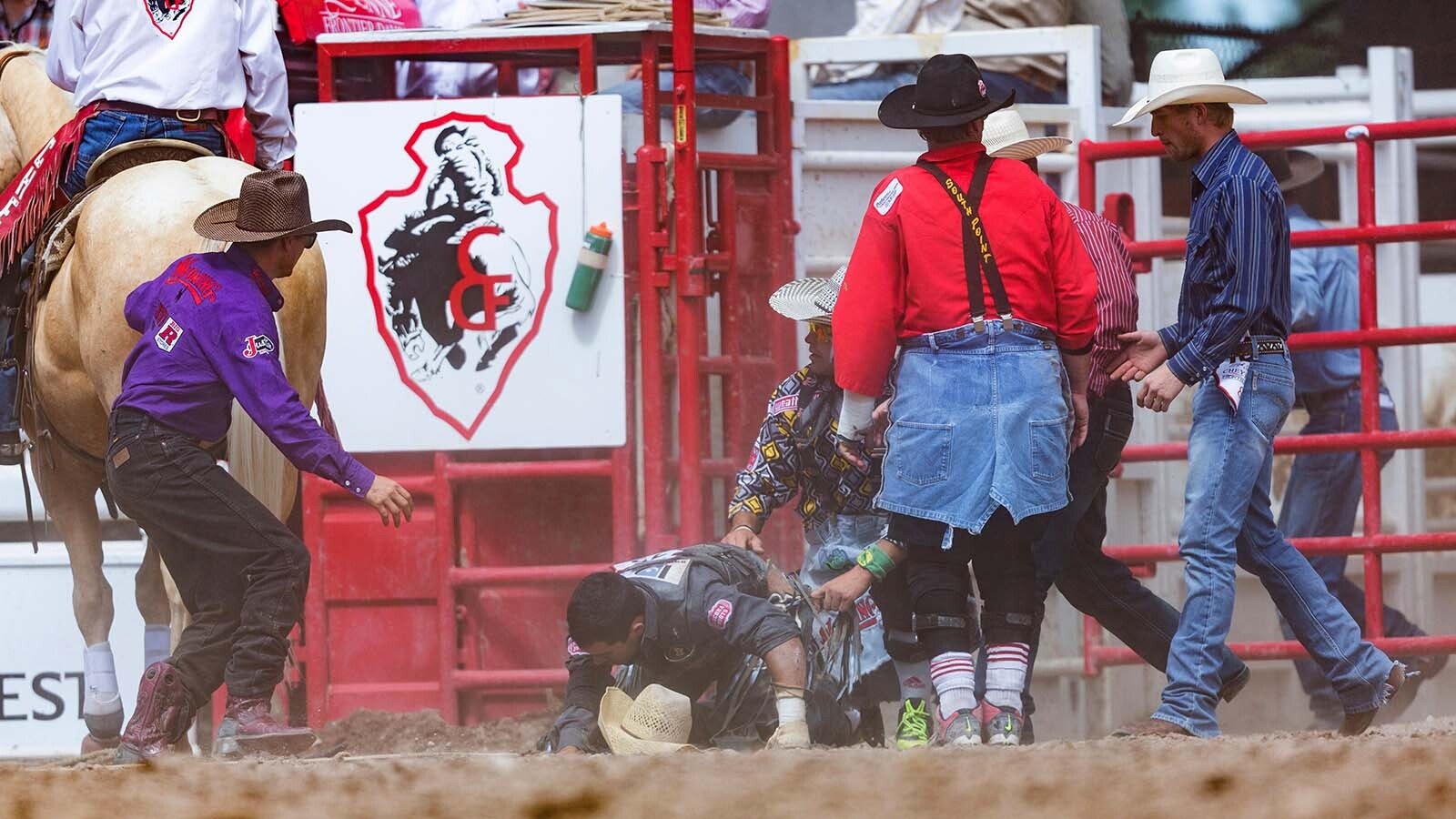
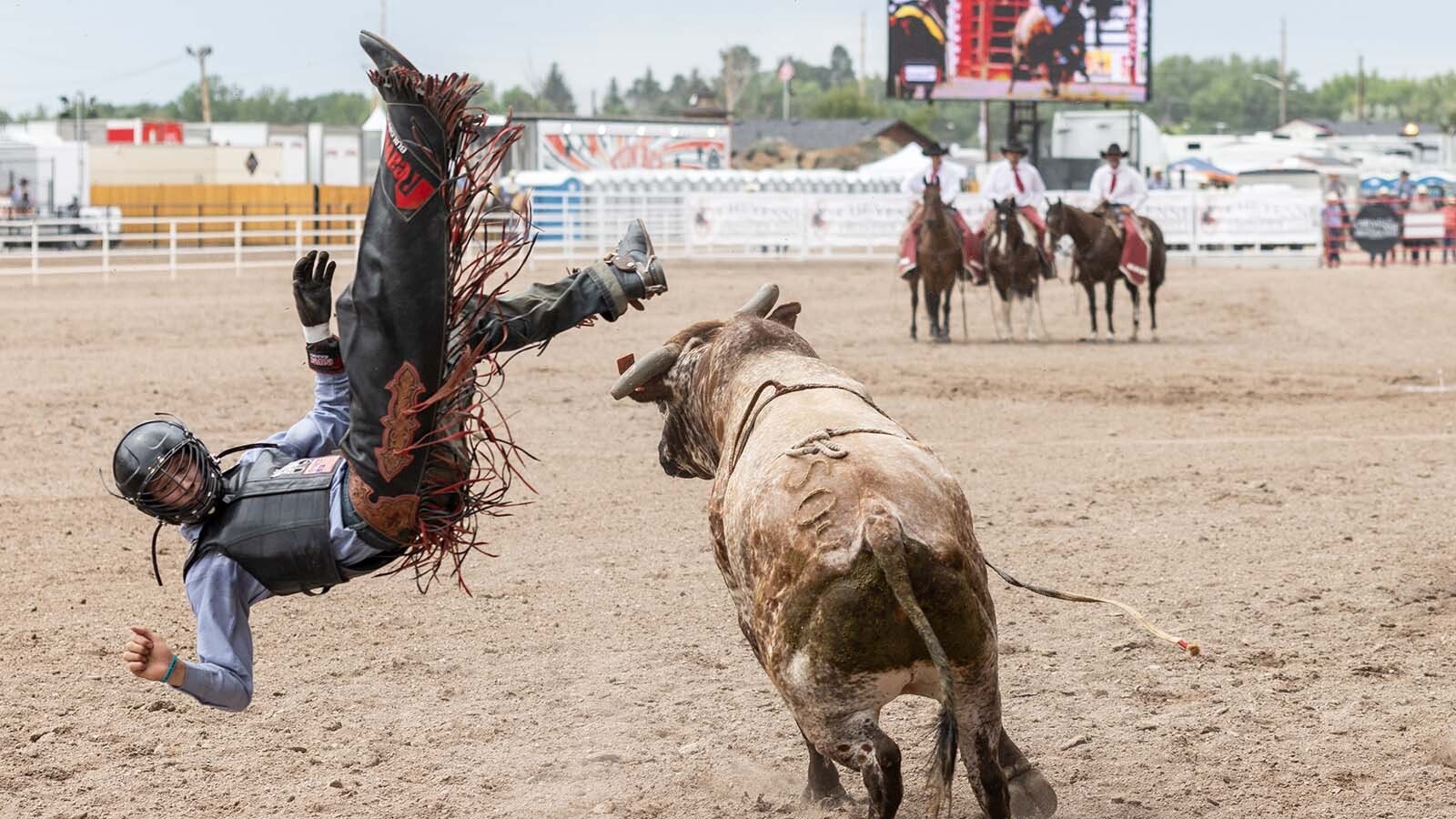
CHEYENNE — Concussions, lacerations, fractures, dislocations and dehydration are just a few of the hazards Wyoming’s top rodeo cowboys face each time they step into the arena.
Such specialized injuries demand specialized knowledge of how to treat them, which is where the work of the University of Wyoming’s Cheyenne Family Medicine Residency Program proved its value this summer at Cheyenne Frontier Days.
A bucking horse kicked pro rodeo staffer Dylan Terro in the chest as he opened its gate at Cheyenne Frontier Days, the nationally famous 10-day rodeo marathon. The kick stopped Terro’s heart.
James Eggert, associate program director with UW’s residency program, and his team converged and performed CPR until an ambulance arrived.
The emergency response ready to spring into action and expertise saved Terro’s life, Eggert said.
Eggert trains doctors in “Wild West life-saving skills,” which helps them treat common — and not-so-common — rodeo injuries, and even prevent deaths, he said.
The tragic death of bull rider Lane Frost at Cheyenne Frontier Days in 1989 put a focus on rodeo safety and medicine. That was evident this summer when rodeo medical personnel saved the life of a CFD crew member who took a kick to the chest from a horse. Rodeo medicine has gone through an evolution over the last 35 years. (Getty Images) 
The tragic death of bull rider Lane Frost at Cheyenne Frontier Days in 1989 put a focus on rodeo safety and medicine. That was evident this summer when rodeo medical personnel saved the life of a CFD crew member who took a kick to the chest from a horse. Rodeo medicine has gone through an evolution over the last 35 years. (42pix via Alamy) 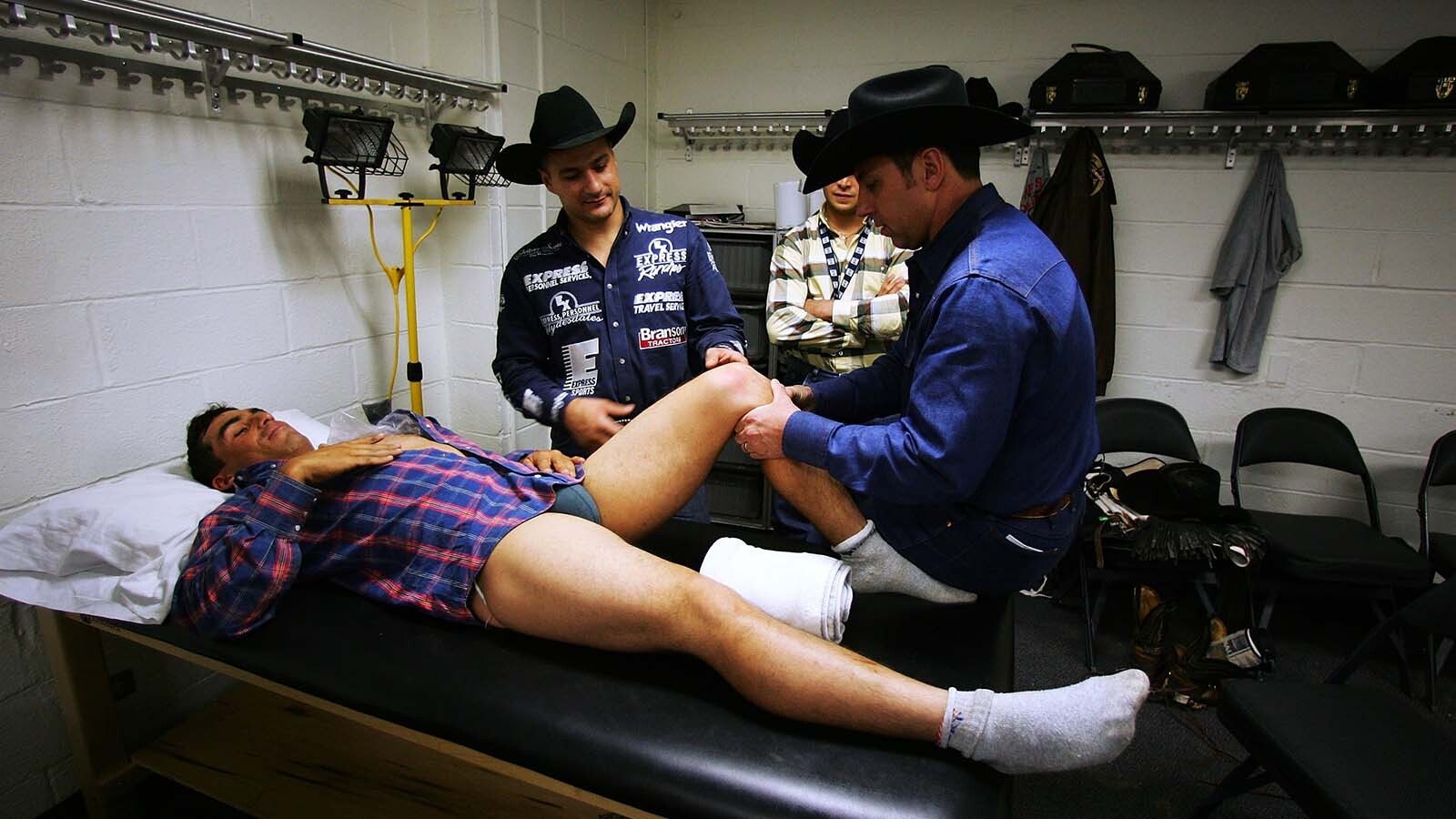
The tragic death of bull rider Lane Frost at Cheyenne Frontier Days in 1989 put a focus on rodeo safety and medicine. That was evident this summer when rodeo medical personnel saved the life of a CFD crew member who took a kick to the chest from a horse. Rodeo medicine has gone through an evolution over the last 35 years. (Getty Images)
NFL Adjacent
Eggert told Cowboy State Daily he views the evolution of rodeo medicine as having parallels to the work of many sports medicine specialists who work with NFL players.
Rodeo and NFL medics both deal with huge animals crashing into each other and people, and have to coordinate operations among several groups to a high degree of speed and accuracy to prevent serious injuries.
The only difference is that the playing field in rodeo isn’t exactly level, Eggert said.
“Most of these guys in football are against other players about the same size and weight,” he said. “Where rodeo is unique is that the injuries are being caused by animal athletes that are 10 times their body weight and significantly stronger.”
He specifically acknowledged the January 2023 incident in which Buffalo Bills safety Damar Hamlin suffered cardiac arrest during a game against the Cincinnati Bengals, as an example of high-level medical team coordination. Because medical staff workers acted quickly, Hamlin lived and continues to play football today.
Eggert said he strives for similar efficiency from those involved in his program.
“What we do is try to structure training around getting them to the hospital quickly and to get them to the care that they need quickly,” he said. “We've been working on coordinating between law enforcement, EMS, the hospital, ER receiving team, and then our providers that are in the arena during the event.”
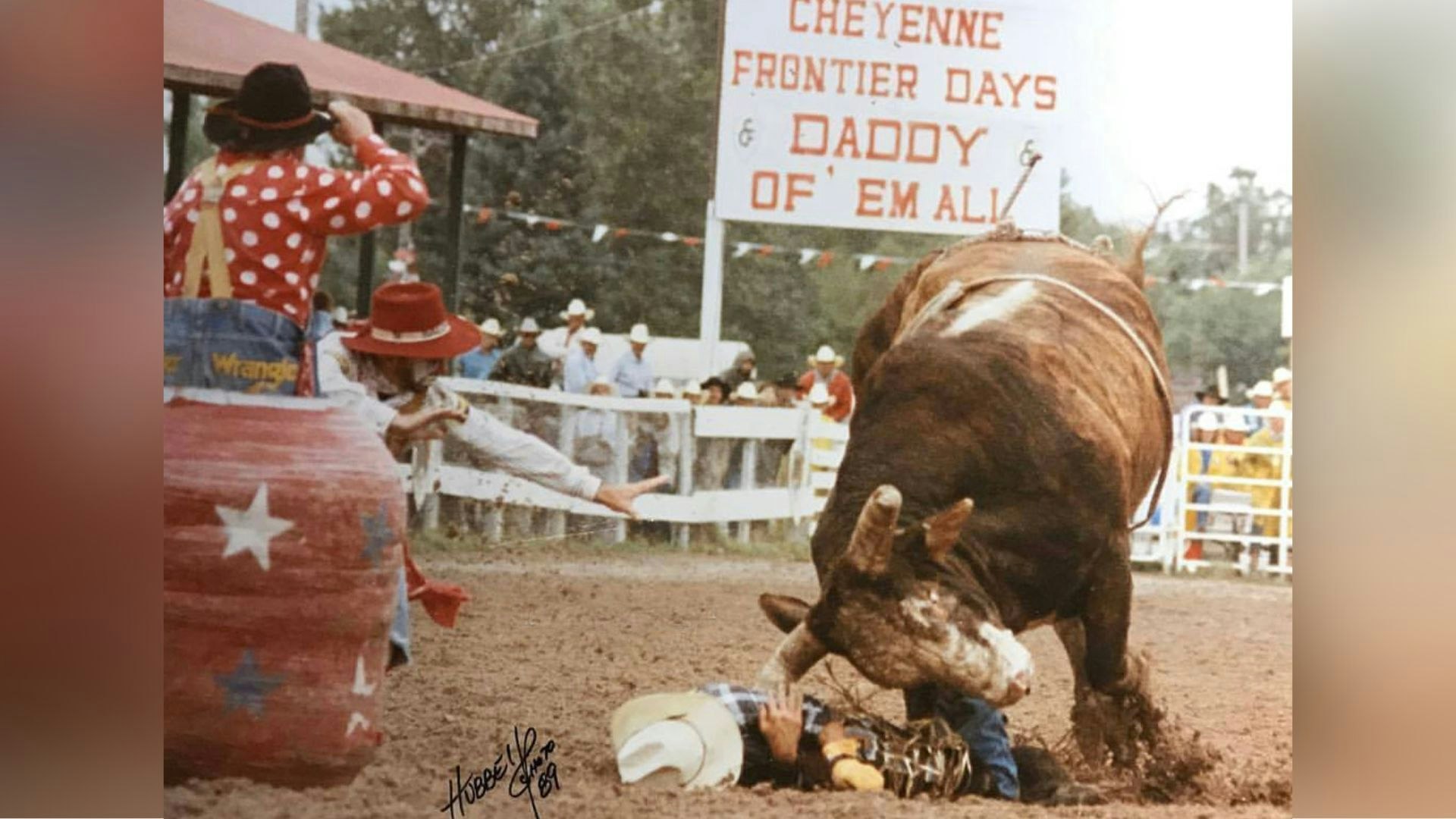
Lane Frost at 1989 Cheyenne Frontier Days when bull Takin' Care of Business struck him after the ride. He was pronounced dead at a local hospital. (Courtesy, Lane Frost Brand) 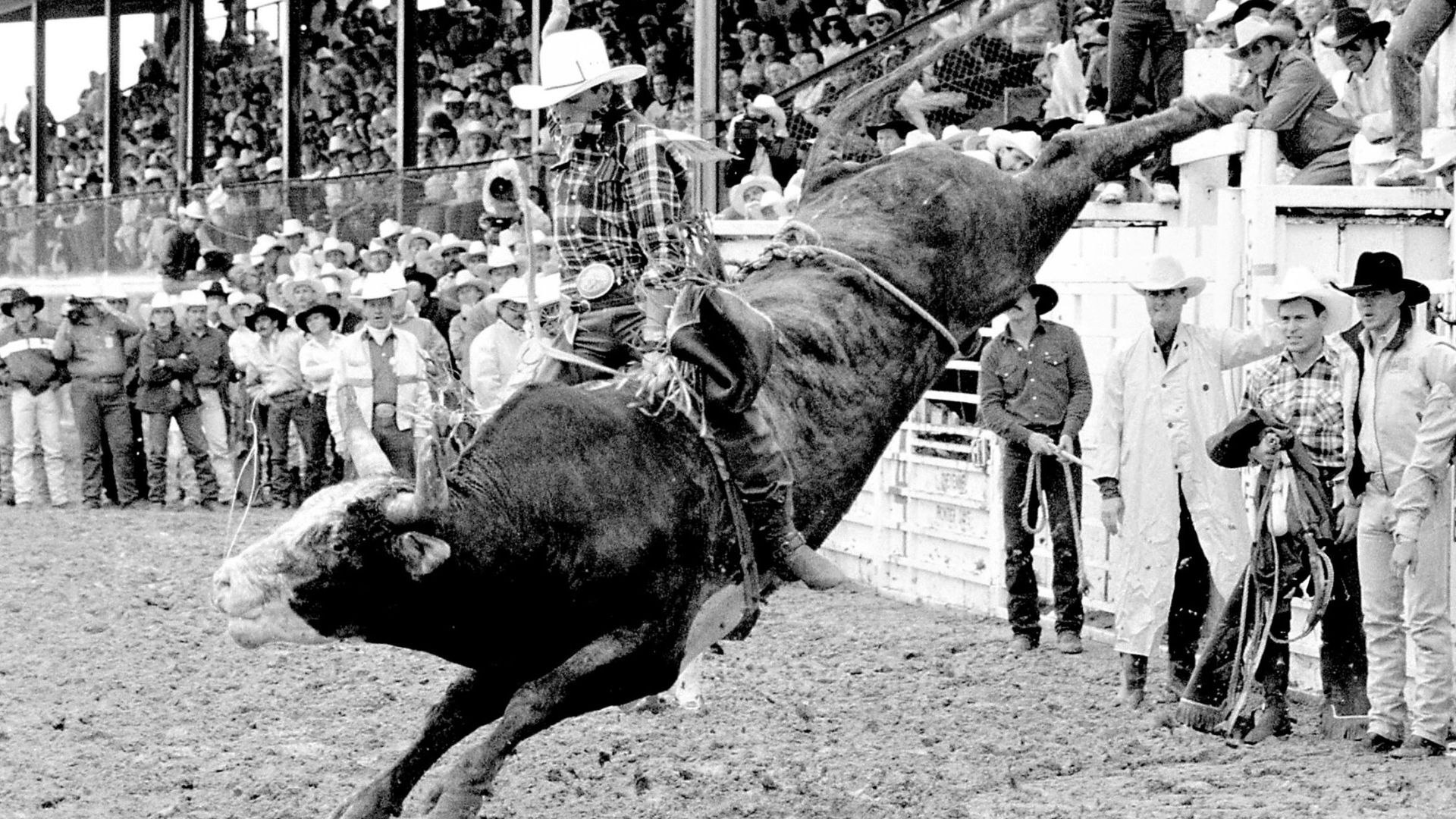
Randy Wagner was shooting that day in 1989 at the Cheyenne Frontier Days Rodeo when Lane Frost made what would be his last bull ride. (Courtesy Photo) 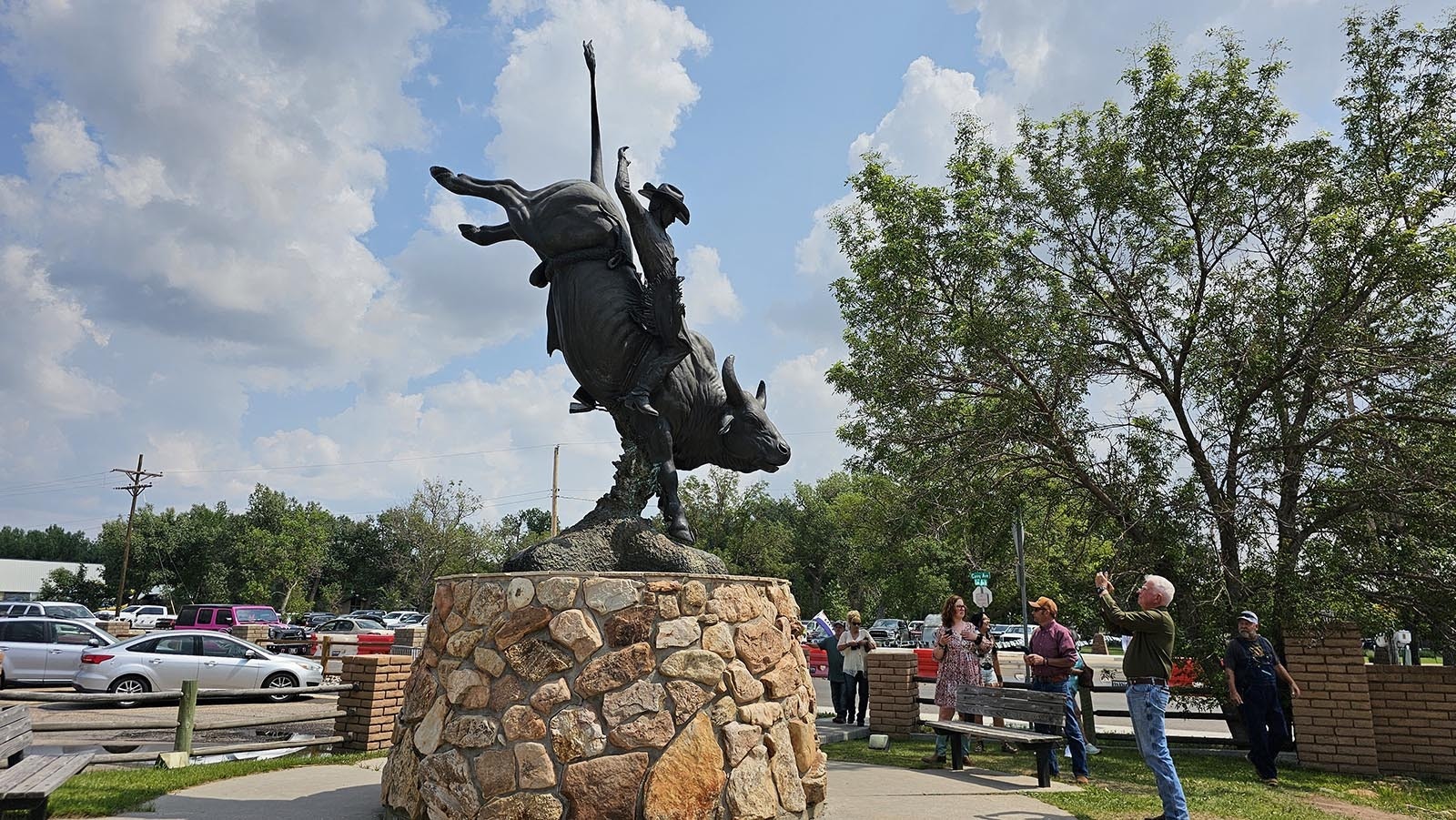
The statue of Lane Frost perpetually riding a bull at Cheyenne Frontier Days Old West Museum is a favorite spot for tourist selfies and snapshots. (Renee Jean, Cowboy State Daily)
Lane Frost
Furthering the NFL analogy, Eggert compared Hamlin to Lane Frost, the legendary bull rider who died July 30, 1989, at Cheyenne Frontier Days after being horned by a bull.
Eggert said both Frost's tragic death and Terro's injury 36 years apart showcase some of the medical advancements that have helped doctors save others from similar injuries.
As for Terro’s kick to the chest, such blunt force trauma injuries usually have a less than 1% survival rate, but doctors were on the scene scene and saved him using techniques taught in Eggert’s residency.
Just 13 minutes elapsed between the time of the incident and Terro’s arrival at Cheyenne Regional Medical Center, during which time Eggert’s team provided CPR.
Terro went on to make a full recovery and even plans to be at next year’s CFD, Eggert said.
Frost wasn't so fortunate.
Frost had ridden a bull named Takin’ Care of Business, scoring an 85. But he had a poor dismount that put him in front of the bull, which stepped on his chaps and hooked the young cowboy with a horn to the ribs.
After the blow, Frost rose from the arena dirt, took a few steps and motioned to the sidelines that he was hurt before he collapsed face down.
Critical Access
Eggert said the incident is one reason why many graduates of his residency program have become so valuable in the medical workforce.
Many of his graduates go on to work in critical access hospitals across Wyoming, which serve a wide rural patient base and receive a special designation given their importance in the community.
Wyoming’s small towns are especially in need of the students’ expertise, he said.
“My director Dr. Norby had said that ‘the University of Wyoming's logo or motto is to create more cowboys, and then our program's goal is to create more doctors to take care of those cowboys,’” Eggert said.
“We've had graduates go to Torrington and to Wheatland and to Worland, and we are putting providers in these small towns who then take care of our cowboys who rodeo at these smaller rodeos in these small towns," he said.
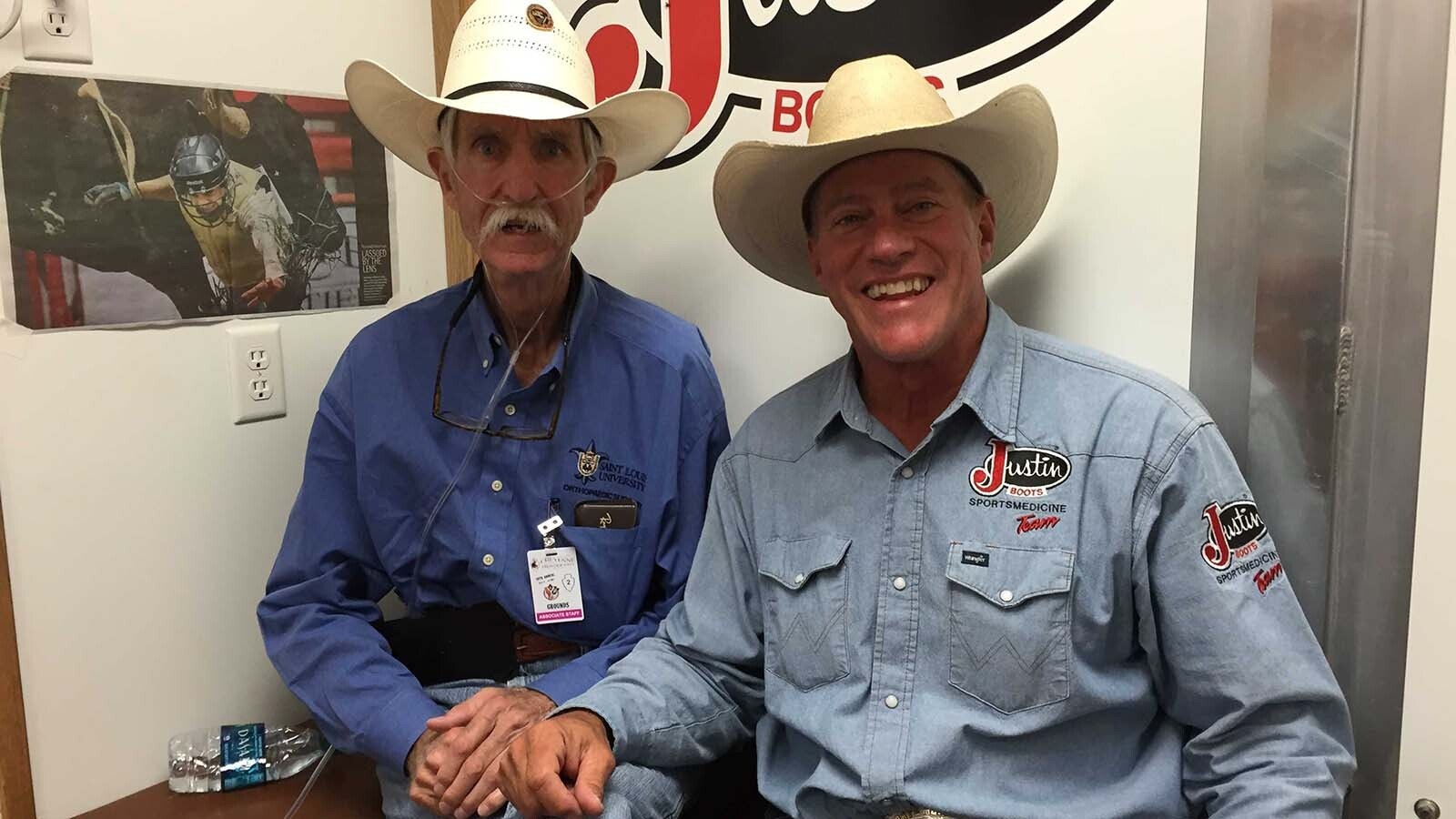
Skip Ross and Dr. David Kieffer, left, in the Justin Sportsmedicine trailer. Kieffer started Premiere Bone and Joint Centers and has helped advance rodeo medicne in Wyoming. (Courtesy Skip Ross) 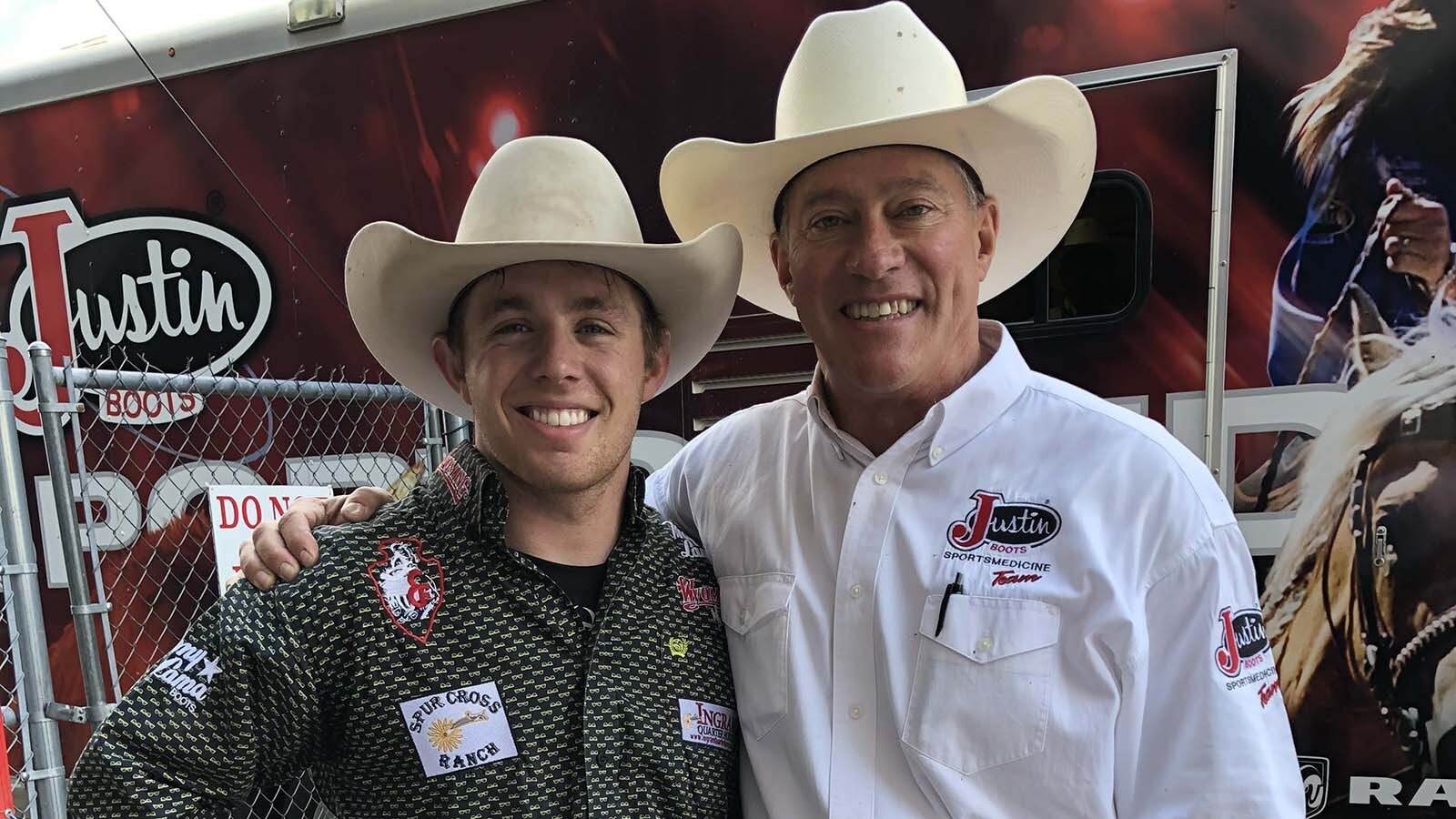
Skip Ross and Brody Cress (Courtesy Skip Ross) 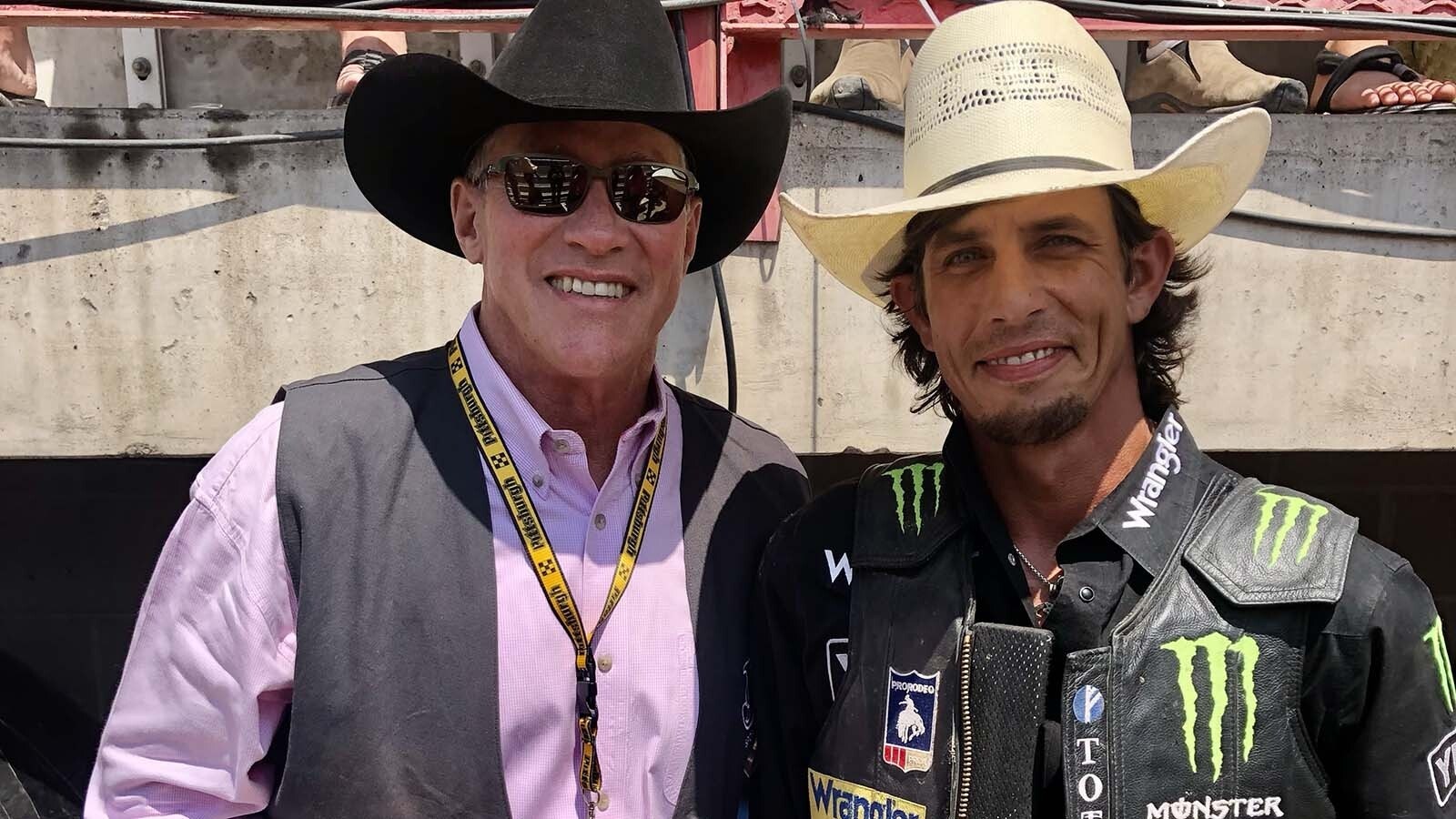
Skip Ross, left, with former champion bull rider J.B. Maundy. (Courtesy Skip Ross)
‘Get Back Out There'
Brody Cress is a world champion saddle bronc rider who has competed at several major events, including Cheyenne Frontier Days.
Cress told Cowboy State Daily that the worst injury he had ever experienced came in 2018 when he jumped off a horse and landed on one leg, which “exploded” his fibula, tibia, and ankle.
"I had to get reconstructive surgery done, where now I have three plates and, like, 25 screws in that ankle,” he said. “So, been pretty blessed to not have anything too crazy, other than my ankle."
While Cress said rodeo cowboys get similar on-site medical treatment as NFL players, the decision-making process between the two sports varies widely.
While NFL players are paid no matter their performance and are managed so as to protect a team’s investment, rodeo cowboys only get paid when they win or perform well.
Cress said this forces rodeo doctors to approach medical decisions with the intention of preserving a cowboy’s livelihood.
“Our doctors are opposite, that it's like, ‘All right, you got to get back out there, you got to compete, you got to do what you need to do,’” Cress said. “'This is what we have to do to get you there.’
“So, they are comparable, but completely different in that aspect."
Over his career, rodeo medicine has advanced far beyond the “rub some dirt on it” mentality of old. Cress said he works with doctors on everything from preparing for rodeos to recovering from them.
"On the recovery side of things, too, taking it past just icing, you can do compression, do all of the electromagnetic therapy stuff like that that they have in the trailers for us,” he said. “Whether it's red-light therapy, more cold therapy with cold plunges and stuff like that, there's just so many more options."
Cress said he largely receives rodeo medicine for free thanks to the generosity of event organizers. This benefit makes taking a tough tumble a whole lot easier, he said.
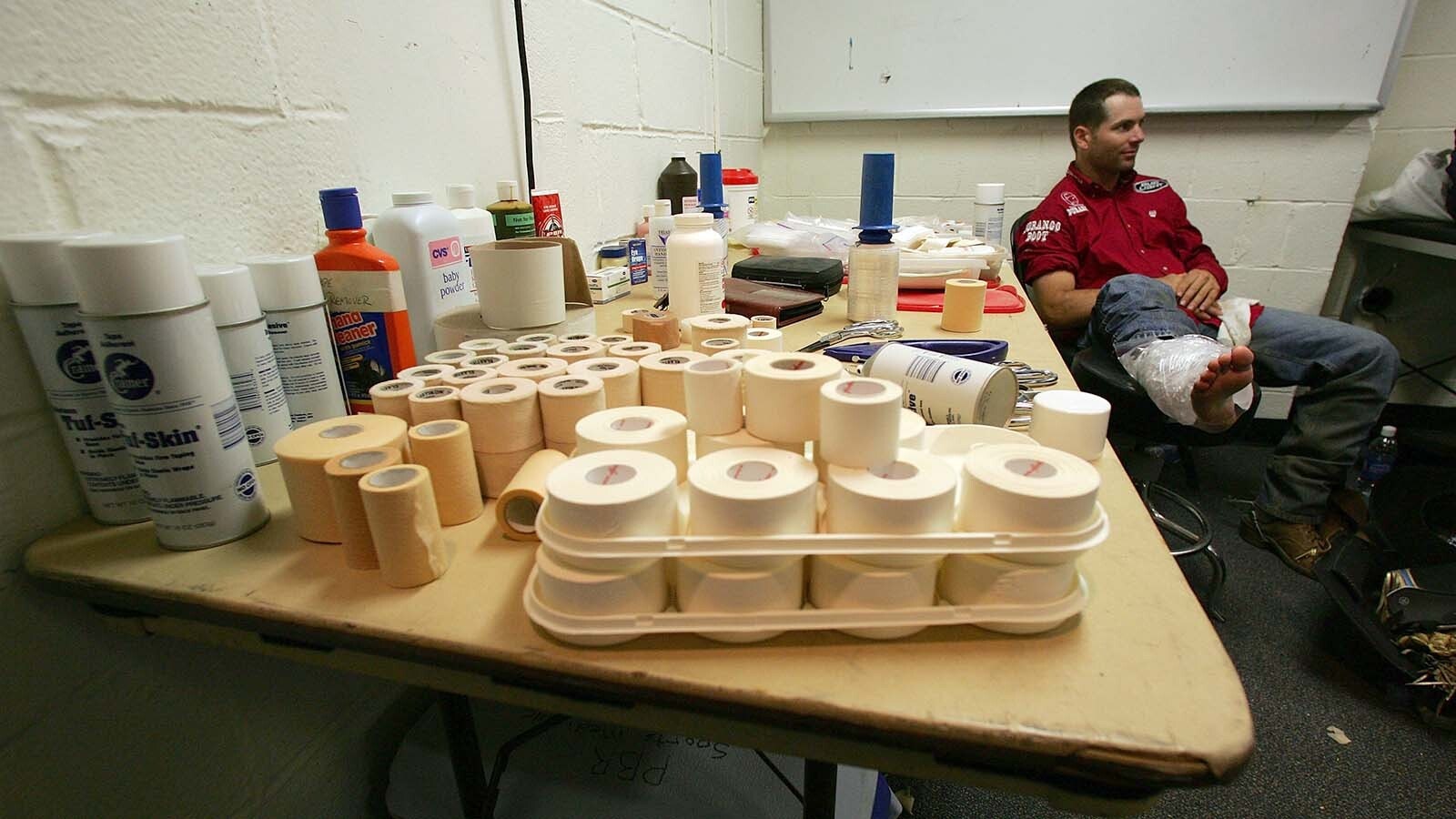
"I think the main thing is just how thankful we are,” he said. "I mean, we get free tape, free ice, as much free stuff as they can give us when they're working on us, and everything we get from Sports Med and that's absolutely huge.
"I tape my ankles every single time I'm getting on a bucking horse and my traveling partner, he's got a bad knee where it has to get taped every time he's getting on a bucking horse."
Medical Advancements
Mike McCrimmon has filmed Wyoming rodeo events, including Cheyenne Frontier Days, since the 1980s. He said the advancements he’s observed in rodeo medicine have "changed dramatically" over the years as rodeo riders have aged.
“Back then when Lane Frost was riding, there wasn’t a lot of protection involved,” he said. “Nobody wore vests, and no helmets."
“Now those guys are older, they’re in their 60s, 70s, they’re all busted up,” McCrimmon added. “Nowadays, these guys work out all the time."
McCrimmon said he has seen more rodeo cowboys use stretching and bodyweight exercises to loosen up before an event, which didn’t used to be the norm.
He said rodeo cowboys today have segmented workout programs and care routines that let them lead a “totally different life” compared to those in Frost’s day.
These changes have allowed cowboys to have longer and more successful careers, McCrimmon said.
Skip Ross started as Cheyenne Frontier Days medical director in 1986.
He was the first medical responder to attend to Frost on the day he was struck by the bull, but was unable to save his life becuause of the severity of Frost's injury.
The blow from the bull had broken Frost's ribs, which tore into his heart.
Still visibly moved by recalling the events of that fateful day, Ross now quietly says he knows the injury was something “you couldn’t fix.”
But he tried for 90 minutes before reluctantly agreeing with other members of the medical team that Frost was gone.
Ross told Cowboy State Daily he has seen significant advancements in rodeo medicine in the years since Frost’s death, which have helped he and other doctors save many more rodeo cowboys.
“I told them for years it needs to run different because it’s just kind of we had some EMTs and a dirt room,” he said of Cheyenne Frontier Days’ previous medical arrangement. "Now it’s so much more advanced.”
As an “eternal optimist,” Ross said he believes Frost may have even survived his injuries had rodeo medicine in the late 1980s had progressed to the point it has reached today.
Ross was also on duty when Terro was kicked and said he was not optimistic about his prognosis. He described the ensuing medical effort that saved his life as a “perfect storm” of collaboration between all medical workers involved.
“When he left the arena … I was pretty sure he was dead when he left,” Ross said. “I mean, it’s amazing. It was a miracle.”
Safety precautions in bull riding have also advanced since Frost’s death, with many riders now wearing protective vests to prevent serious horning injuries.
Ross also acknowledged high school-level events require all competitors to wear helmets, which can develop into a habit if they continue to compete in adult events.
Rodeo cowboys have also gotten a lot tougher through training and rehabilitation regiments, Ross said. Often, they don’t need anything more from him than some tape.
“Mostly, football players, basketball players, people in a running sport have to work for more than eight seconds, you couldn't do it with these injuries,” he said. “But for eight seconds, we do a lot of tape and they'll keep going.”
Contact Jackson Walker at jackson@cowboystatedaily.com
Jackson Walker can be reached at walker@cowboystatedaily.com.