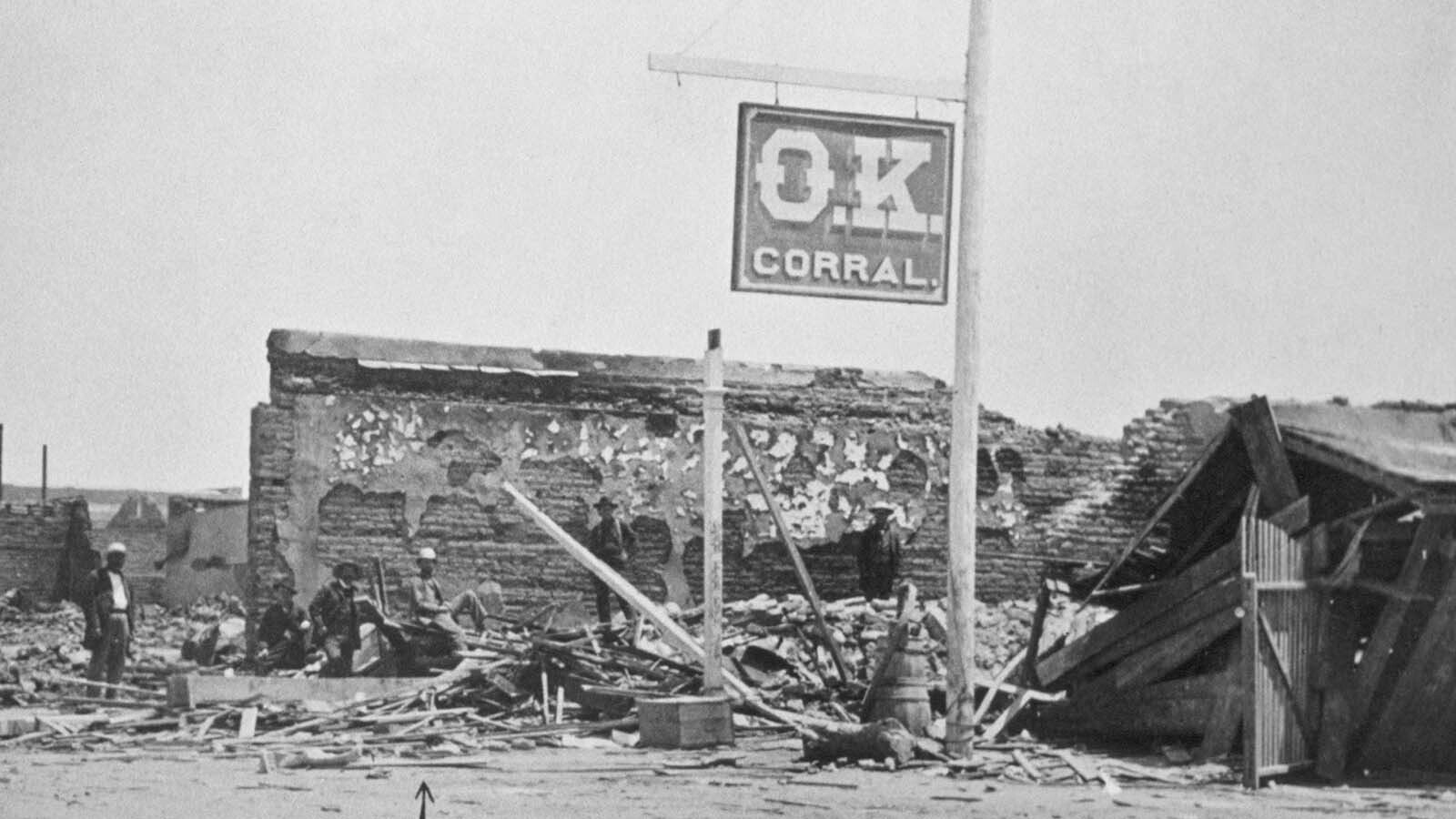
A legendary figure of the West, Wyatt Earp is best-known for the two-year span of his life when he was a lawman in Tombstone, Arizona, which is also where the infamous gunfight at the O.K. Corral happened.
That gunfight lasted about 30 seconds, but it has reverberated across history. The stories that sprang up around it are an immortal archetype of the West and a symbol of frontier conflict.
That famous gunfight though wasn’t the lawman’s first. His first has been shrouded by a veil of history up until now.
The Illinois towns of Beardstown and Peoria have laid their own claims to Earp’s first gunfight. But the honor actually belongs to Orin, Wyoming, according to the research of historian Janelle Molony, who is a descendant of Sarah Jane Rousseau.
Wyatt Earp passed through Orin at the age of 16, serving as a guard for the wagon train carrying Rousseau to California, according to Rousseau’s diary. It was there, about 50 miles above Fort Laramie, that the wagon train was attacked by Indians.
“My family is one of the people in the wagon trains,” Molony told Cowboy State Daily. “And so, when I was doing the Oregon Trail research for the Platte River raids, I’m looking at these trail diaries, and I’ve got the trail diary with the Wyatt Earp family. They are the wagon masters for Sarah Jane Rousseau, who I’m related to.”
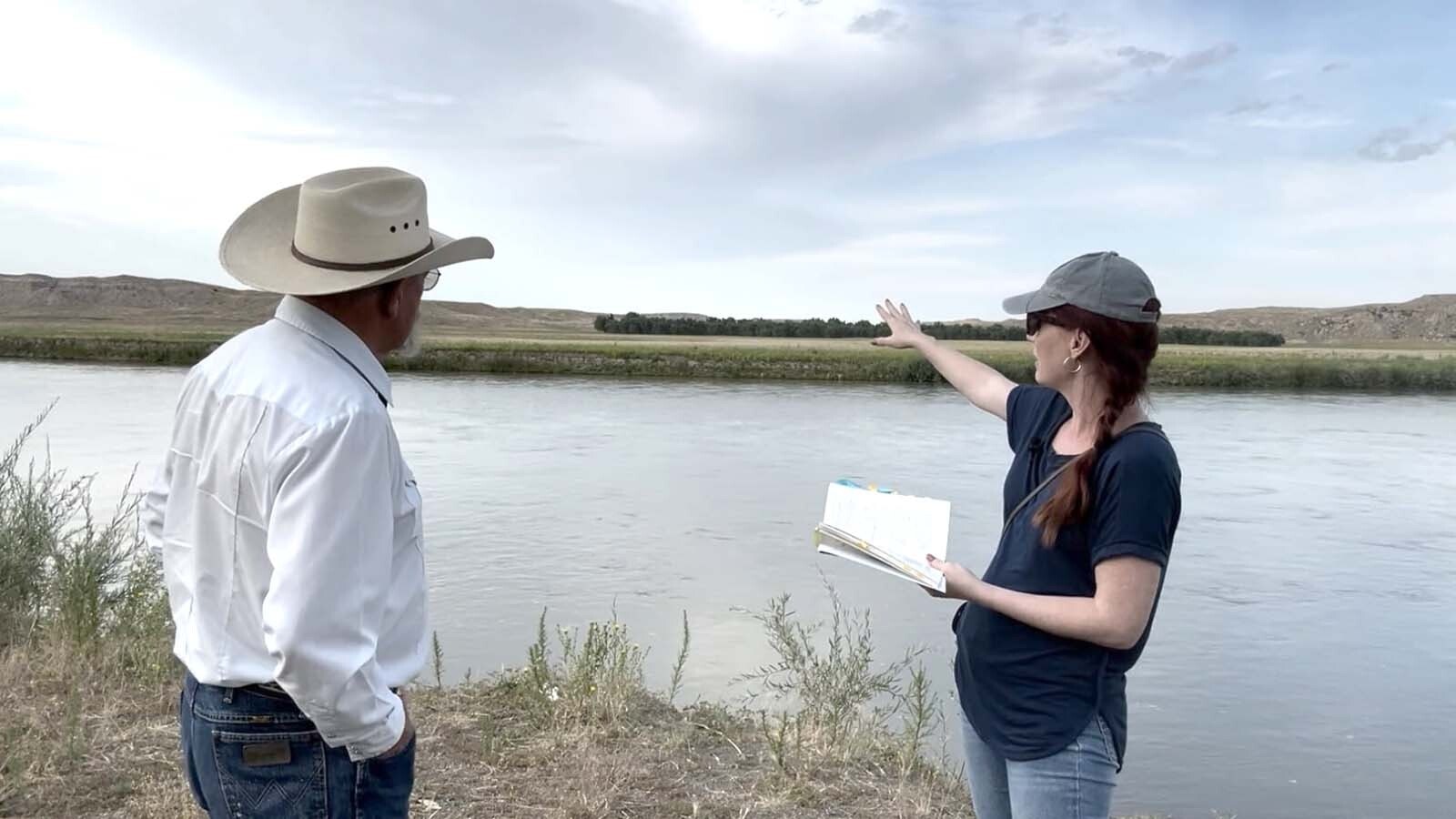
Janelle Molony and rancher Larry Cundall map out Sarah Rousseau's journey near Orin, Wyoming. (Courtesy Photo) 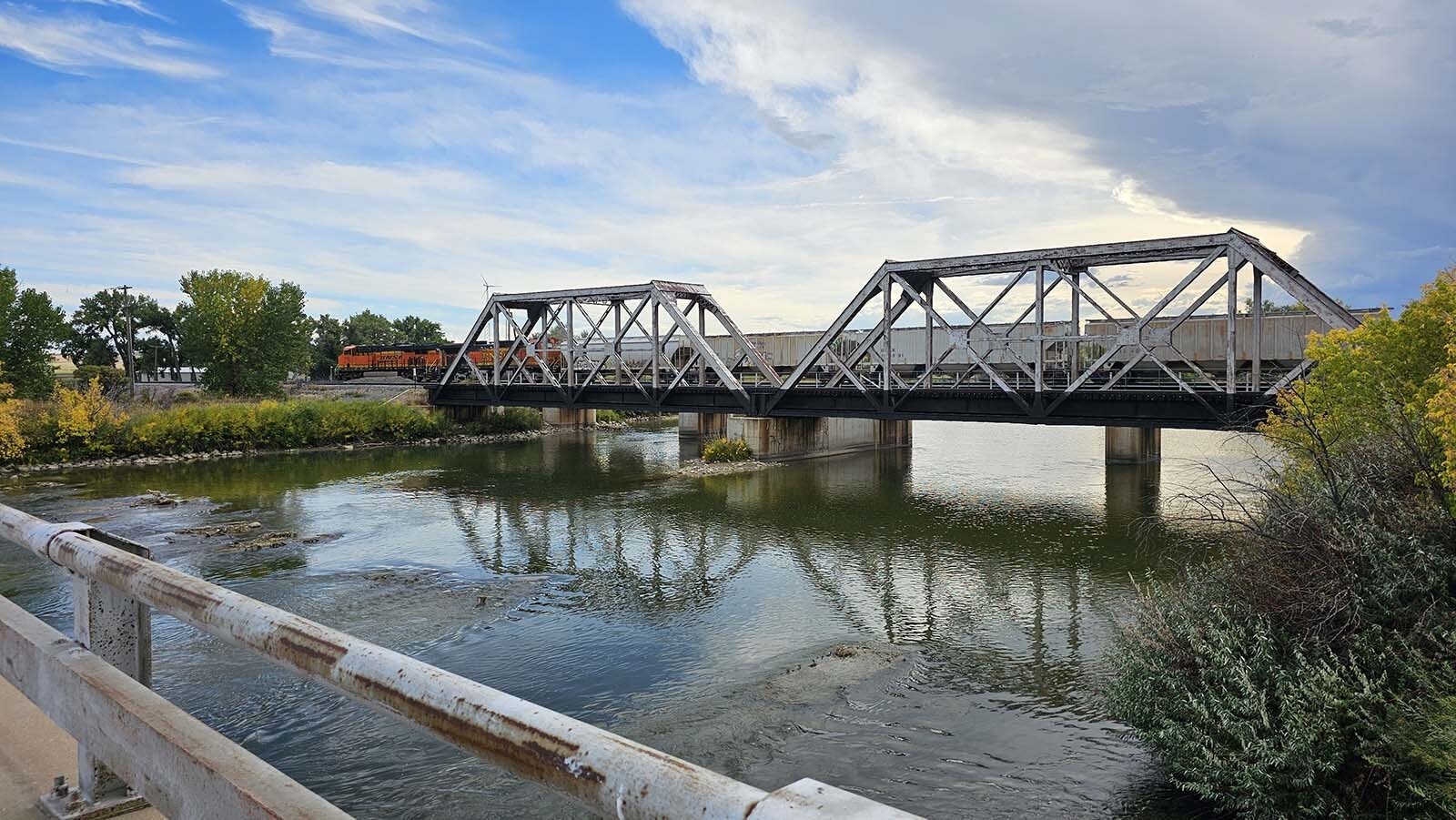
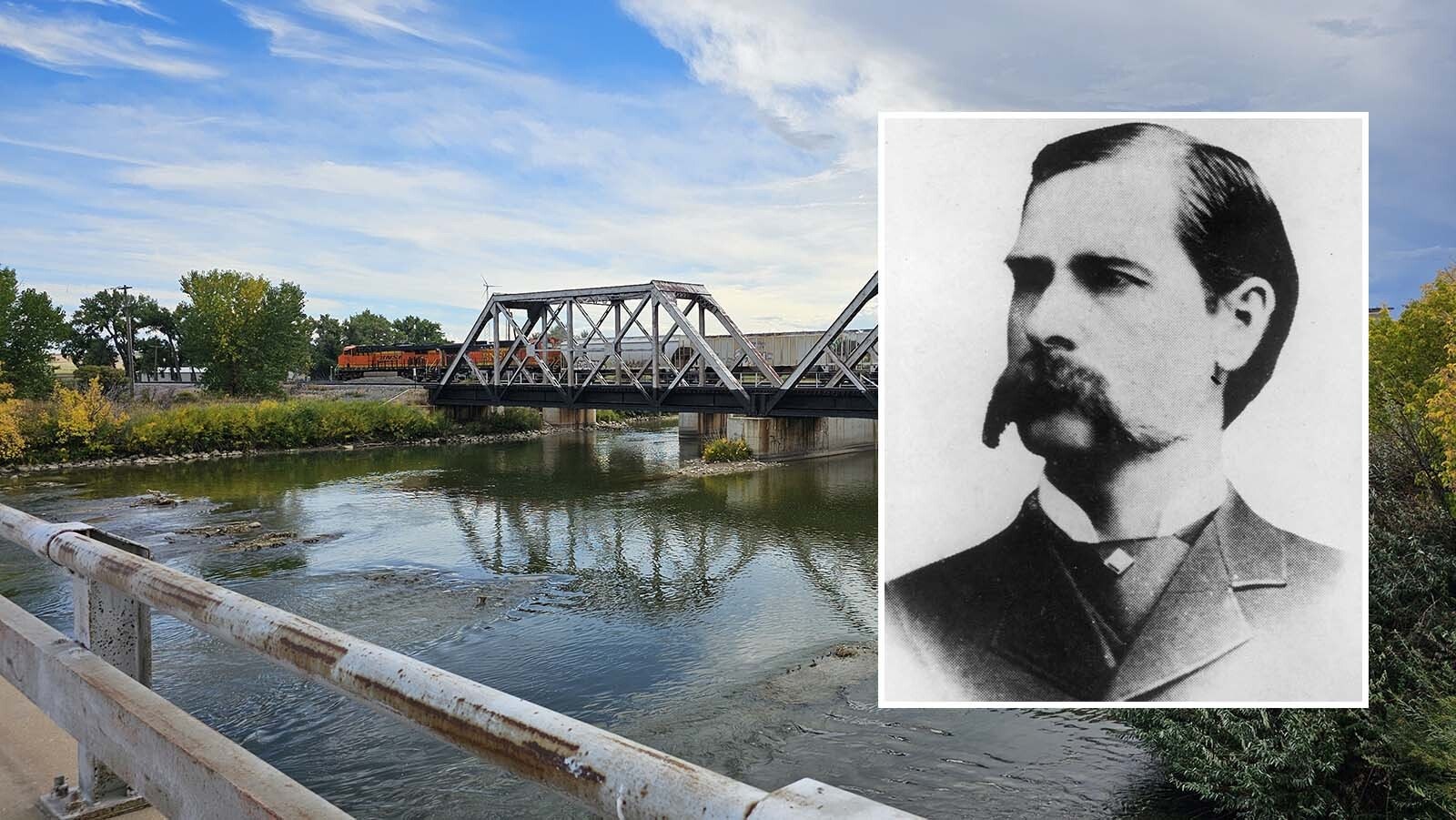
The North Platte River in Orin, Wyoming, in the vicinity of where a wagon train guarded by Wyatt Earp and his family passed through on their way to San Bernardino, California. The wagon train was attacked by Indians here, making this the location of the 16-year-old Earp's first gunfight. (Renee Jean, Cowboy State Daily) 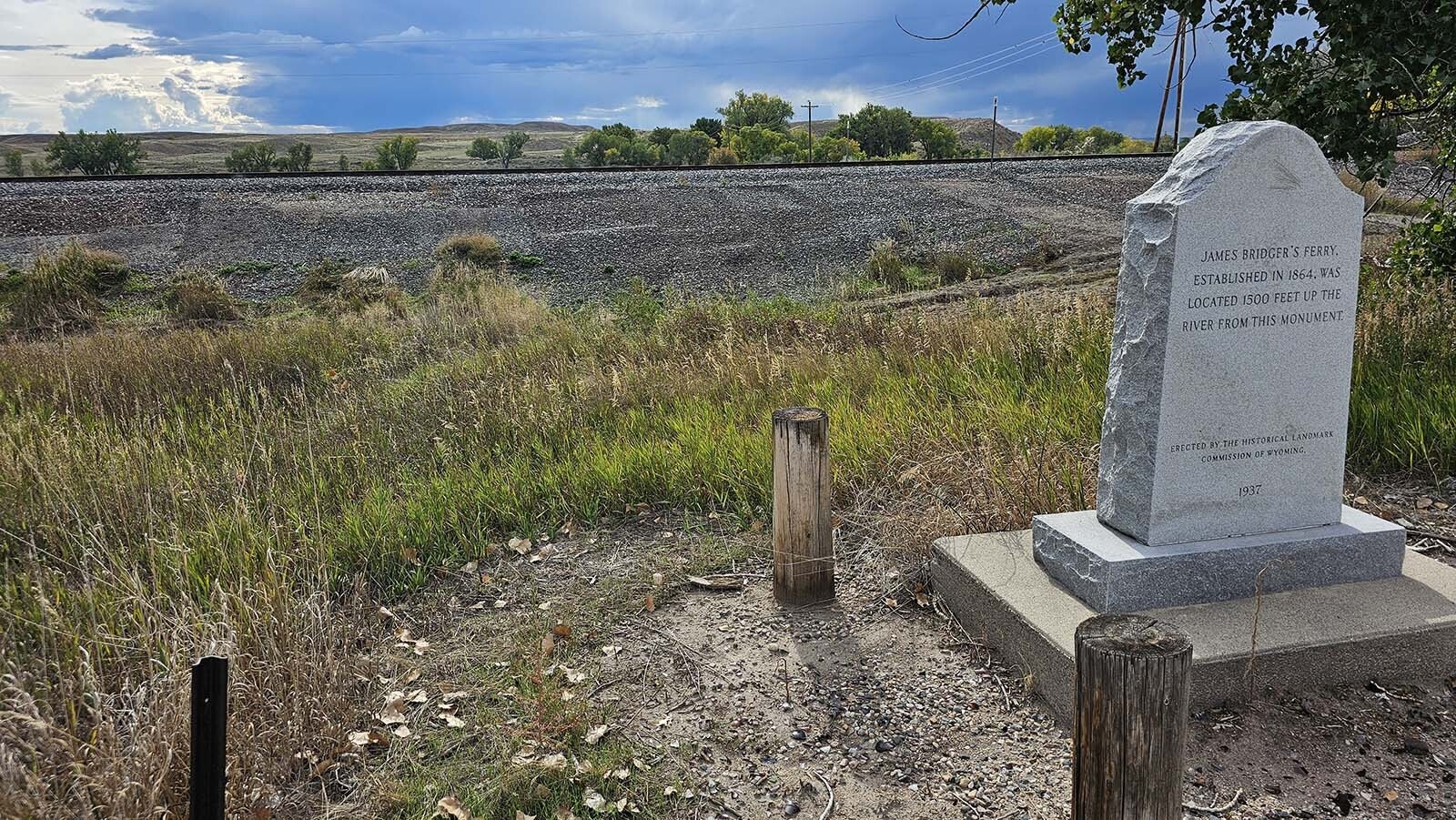
This area, in Orin, Wyoming, is near the location of Wyatt Earp's first gunfight. Just 16 at the time, Earp was helping his family guard a wagon train that was attacked by American Indians near Jim Bridger's ferry. (Renee Jean, Cowboy State Daily)
The Western Cure
Sarah Jane Rousseau was headed west to California to escape bitter cold Iowa winters, which her doctors had warned were bad for her rheumatoid arthritis. The disease had all but crippled Rousseau, putting her in a wheelchair.
To occupy her time, one of the things Rousseau did was to write in a journal nearly every day, detailing the entire westward journey from her vantage point. She wrote about everything. The incredible beauty of the rivers, the incredible power of thunderstorms over the prairie, and all the interesting people her wagon train met along the way.
That has made Rousseau’s diary a fascinating record of America’s westward expansion. It’s something that fell into Molony’slap, thanks to family heritage, and once Molony started reading the diary, she was hooked. She knew she had to do more with it.
“Not only do we have the Earp family, but they’re meeting Brigham Young on the trail,” Molony said. “They’re befriending multiple Indian chiefs, being invited into their camps. These are historical breakthroughs. And they’re in these fights with the Indians, which they survive, twice. Just incredible things are happening, so I said, ‘I’ve got to look into this.’”
Molony’s work with Rousseau’s diary led to the book, “Emigrant Tales of the Platte River Raids,” which draws on historical documents and diaries to tell the tale of nearly 70 families who went west in 1864.
These families faced a significant challenge. Northern Plains Indians in the Idaho Territory, which then included Wyoming, were on the warpath to cease all emigrant travel on the Bozeman, Oregon, and Overland Trails.
Don’t Throw The Baby Out With the Bathwater
It was during her research that Molony uncovered Rousseau’s account of an Indian raid whose details happened to match a discredited historian’s account of a young, 16-year-old Wyatt Earp taking his first aim at another human being.
Stuart Lake interviewed and exchanged letters with Wyatt Earp before the famous lawman died in 1929. Lake’s biography came out the following year in 1930.
“I doubt he ever walked the trail, and he obviously didn’t have source documents like the trail diary,” Molony said. “And the way he describes what happened doesn’t really add up in a lot of places.”
Lake’s biography also suffers from the fact that the author later admitted he had invented some of Wyatt’s quotations. That has caused most historians to completely reject the entire work.
“(Lake) is dead now, but his entire reputation is ruined,” Molony said. “And so, what happened is people threw out the baby with the bath water. They threw out everything, saying it’s all possibly, probably, fiction.”
But as Molony read through Rousseau’s diary, she realized it was actually corroborating certain details of the story Lake had claimed Wyatt told him.
“As I’m reading the diary, they’re being attacked, and everything happening on this certain day in a certain place,” Molony said. “And the details are like, Sarah says they’re like 48 miles, and Nick Earp writes a letter and he says he’s 50 miles from Fort Laramie, and Wyatt Earp says he remembers it as maybe 30 miles. So, they’re all kind of close.”
Molony has, as part of her research, road-tripped her ancestors’ entire wagon train journey, mapping out exactly where Rousseau is at each point of the diary. She’s also worked with rancher Larry Cundall who grew up on a ranch in that very area and knows every hill and every dale of that land like the back of his hand.
“We tromped up and down from Chimney Rock to Independence Rock,” Cundall said. "And I know a lot of the ranchers who own land there, so I got permission to go and look at some of that stuff, and I think it helped her see what was happening.”
Molony said Cundall’s help was invaluable for seeing what her ancestors were describing in their diaries and letters.
“So, I know from Sarah’s diary exactly where they were,” Molony said. “You can follow her mileage, and I’ve done it forwards and backwards. Her mileage is spot on. And then you can read Nick Earp’s letter. And those two source documents — eyewitness accounts from the day and a few months after — are complementary. They do not contradict each other at all.”

Map courtesy of Janelle Molony showing where Wyatt Earps wagon train was attacked on its way ot California near Orin Wyoming. 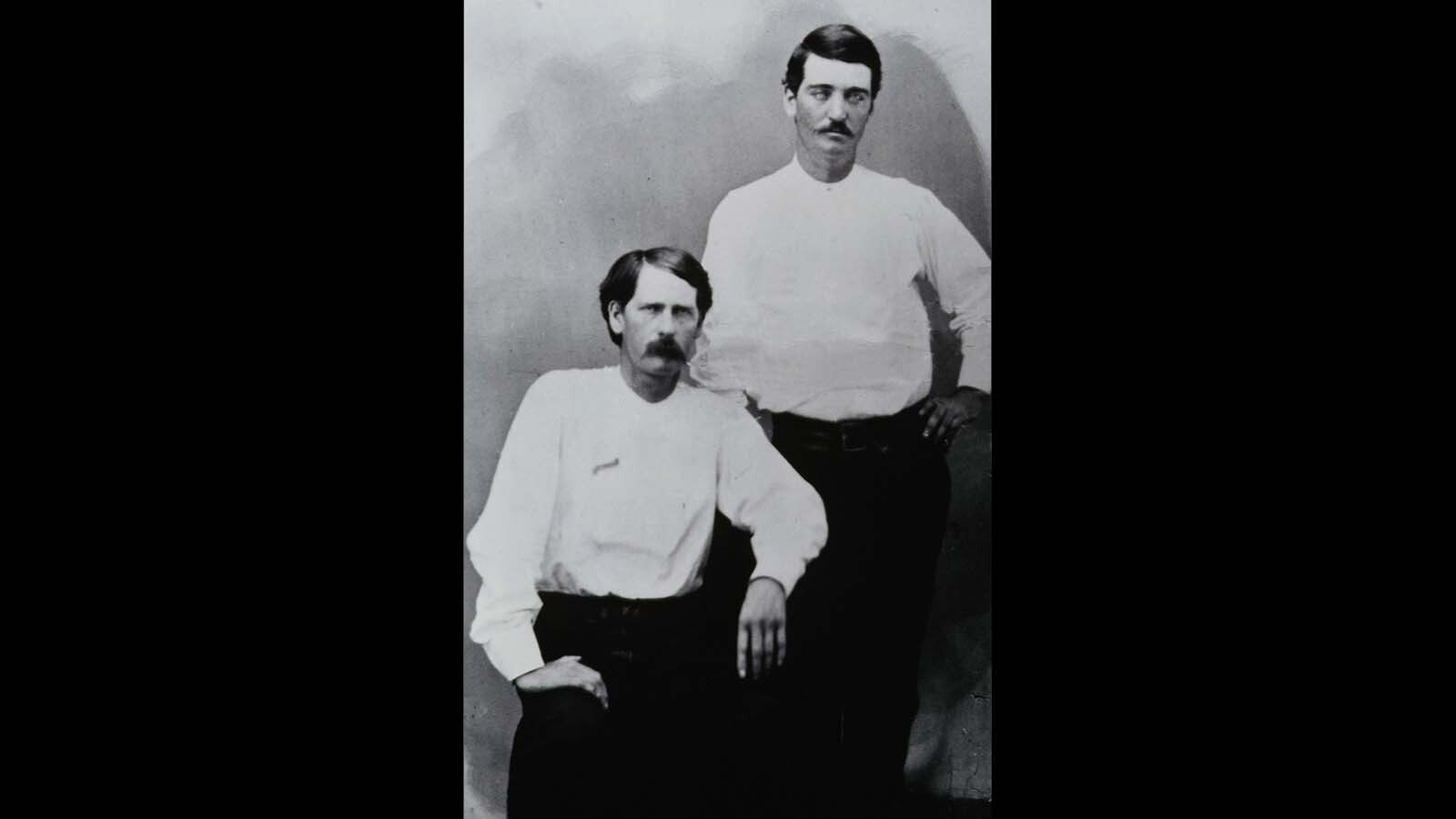
Wyatt Earp, left, pictured with Bat Masterson in Dodge City, Kansas, in 1867 where they were both deputy sheriffs. (Getty Images)
A Vulnerable Situation
Nicholas Earp’s letter was sent to James Capley after Rousseau’s wagon train arrived in San Bernardino, California.
Capley’s son had joined the wagon train and found a place on the Earps’ ranch in California.
Nicholas wrote to let Capley know his son had made it to California, as well as to share some of the things that had happened along the way and promise to continue looking out for Capley’s son.
In his letter, Nicholas Earp places Wyatt Earp on guard duty with his brother Morgan and four other men. In Lake’s discredited account, that guard duty puts Wyatt Earp up on a hill, looking down on the camp.
Molony has been to the area and says there are two hills that could possibly fit Lake’s description, but it’s impossible to tell now for sure which one it might be.
Nicholas goes on to say in his letter that the wagon train had been told stories of this or that Indian “depradation,” but these had always been before or behind the party.
“The crowd began to think it was all falce,” Nicholas wrote in the letter. “And they had bin before pretty mutch all the way or at least some of them a little slack in doing their duty when in camp in garding the stock.”
About 50 miles above Laramie, the wagon train made camp along the banks of a river or creek, and because the grass was too sparse on the wagon train’s side, Nicholas gave the order to send the livestock across the river. But some of the livestock refused to cross, and some of the owners, not believing in these “falce” tales of Indian depredations, preferred to keep their animals close and weren’t worried about dividing their forces.
Thus, the livestock were split into two groups — a situation that proved as vulnerable as Nicholas had feared.
‘Indians! To Arms!’
In Lake’s account, Wyatt says a band of about 12 armed Indian warriors rode stealthily up the creek, intending to steal some horses.
That account also includes a rather colorful story where Lake says Wyatt trained his gun on a man who the 16-year-old had taken for an Indian chief and was preparing to shoot at him to kill.
One of the fellow guards cautioned against that, however, pointing out that they were outnumbered and would be quickly overtaken. So, instead, Lake says Wyatt fired a shot into the air to warn the camp that Indians were approaching.
Nicholas Earp in his letter, however, tells it a bit differently.
He writes, “I looked behind me and about 400 yards off I saw a squad of men on horseback galloping toward us. I sprang to my feet and sang out, ‘Indians! To arms boys!’ We all rushed to the wagons, got our guns and ran to meet the red skins, who, by this time, was amongst the horses that were on our side of the river, hooping and yelling. We met them and began to shoot at them.”
In Rousseau’s account, meanwhile, she tells how every man who could carry a gun was involved in the ensuing actions, and that both bullets and men went every which way.
“The Indians made a rush by on the Bluffs, our men firing on them as they passed,” she wrote. “Oh, what an exciting time, the bullets flying in every direction and horses running as hard as they could.
“I was left alone in the carriage, the rest of them all helping. It is impossible to describe my feelings at such a time and place in this situation. I was helpless.”
The Immigrants Strike First
Molony believes the tribe may have seen all the horse thieving it was doing during the North Platte raids as justice. That’s because they had been complaining — to no avail — about slaughtered, but uneaten, unused bison, left to stink and rot under the sweltering sun on the prairie. The tribes depended on the bison, and to see this creature that was so sacred and necessary to them slaughtered and left to rot, while their children might be facing a winter without enough food, was infuriating.
“Basically, John Bozeman and Rafael Gallegos, when they carved the Bozeman trail and violated the treaty of Fort Laramie, went up in July of ‘64 and shot 100 buffalo, leaving them to die, to rot in the grass,” Maloney explained. “And so, I think one of the chiefs, later, was meeting with the President and he was crying and said, ‘Your people just left them there and like to not even use them. Don’t eat them, not use them, nothing.’ And so, it was a spiritual, economic, and financial desecration — a massacre if you will.”
Molony said that led to several raids in that timeframe where American Indians were focused primarily on stealing settlers’ horses.
“I believe their goal was restitution, not revenge, because they went specifically after horses that could be resold or skinned and eaten,” Molony said. “That is an economic restitution. And in every single encounter, the first, not necessarily bullet fired, because sometimes it’s hand to hand combat, too, is always the white people. The immigrants strike first.”
That’s true in Rousseau’s account as well, Molony said.
“The Plains Indians come into the camp as quietly as possible, to steal horses and ride off with them with the least amount of interaction with the campers as possible,” Molony said. “So that’s the M.O. that they came in with, and that is exactly what happens in this case.”
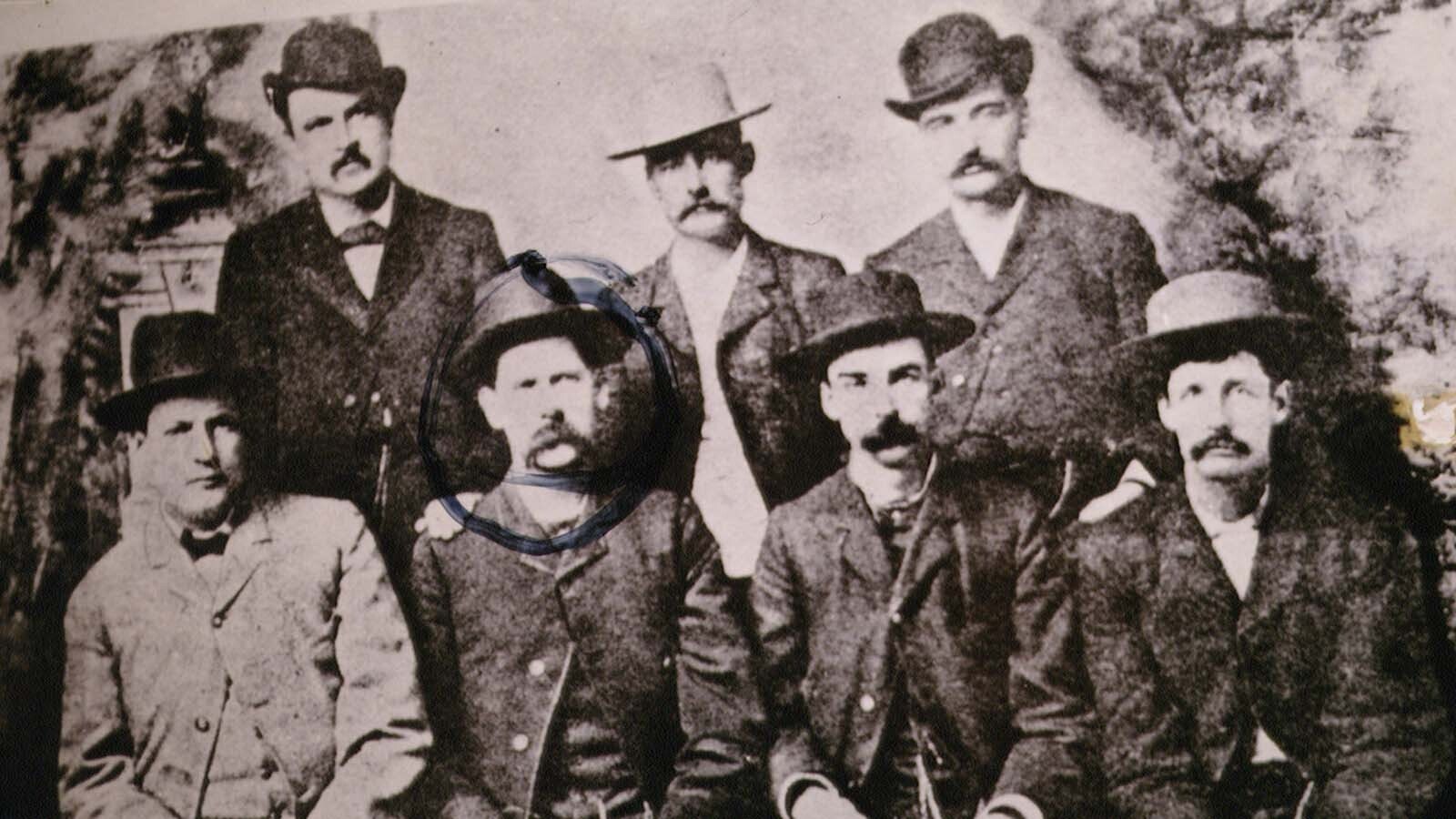
She Knew Him Back When
Rousseau’s account doesn’t offer many details about Wyatt Earp during the 1864 wagon train ride, even though he was there.
“She’s in her late 40s, and he’s a 16-year-old boy,” Rousseau said. “And they had been, the families had been, together in Iowa for 18 years. They go to the same Methodist church … And so, she’s known Wyatt since he was 1 year old or something like that. So why would he end up in her diary that she writes for herself? No one writes about their neighbor’s kid. That’s weird, right?”
At that time, Rousseau also had no idea Earp was going to become a famous gunslinger and lawman of the West. She had no reason to focus on Earp at the time. She writes of him in the collective sense, however, when she talks about what the men of the camp were doing.
“She says, ‘All the men got their guns and went after (the Indians,’” Rousseau said. “And I think that includes him. He was a guard on the wagon train, and he also would hunt and provide food.”
Molony has heard other wagon train families recount stories about Wyatt on the trail, such as the time, according to the Curtis family, that he shot a buffalo that fed 100 people.
“I listen to that and go, ‘Yeah, yeah, yeah, whatever,’” Molony said, chuckling a little bit. “More Wyatt stuff. But I don’t know what her research was. I don’t know what documents are in that family. But so, I mean, all the descendants, except for one family because they all died, all the descendants from this wagon train, now three generations, we talk and we compare stories.”
The Curtis family also describes Wyatt as an “outrider” which is a guard for the wagon train who would ride ahead or behind or to the side of the main body, alert for danger.
“And so, when the Plains Indians came in, the records say that bullets were flying in every direction,” Molony said. “So, there’s a, that’s a gunfight.”
Wyatt Earp’s first gunfight, which happened near Bridger’s crossing, in present-day Orin, Wyoming.
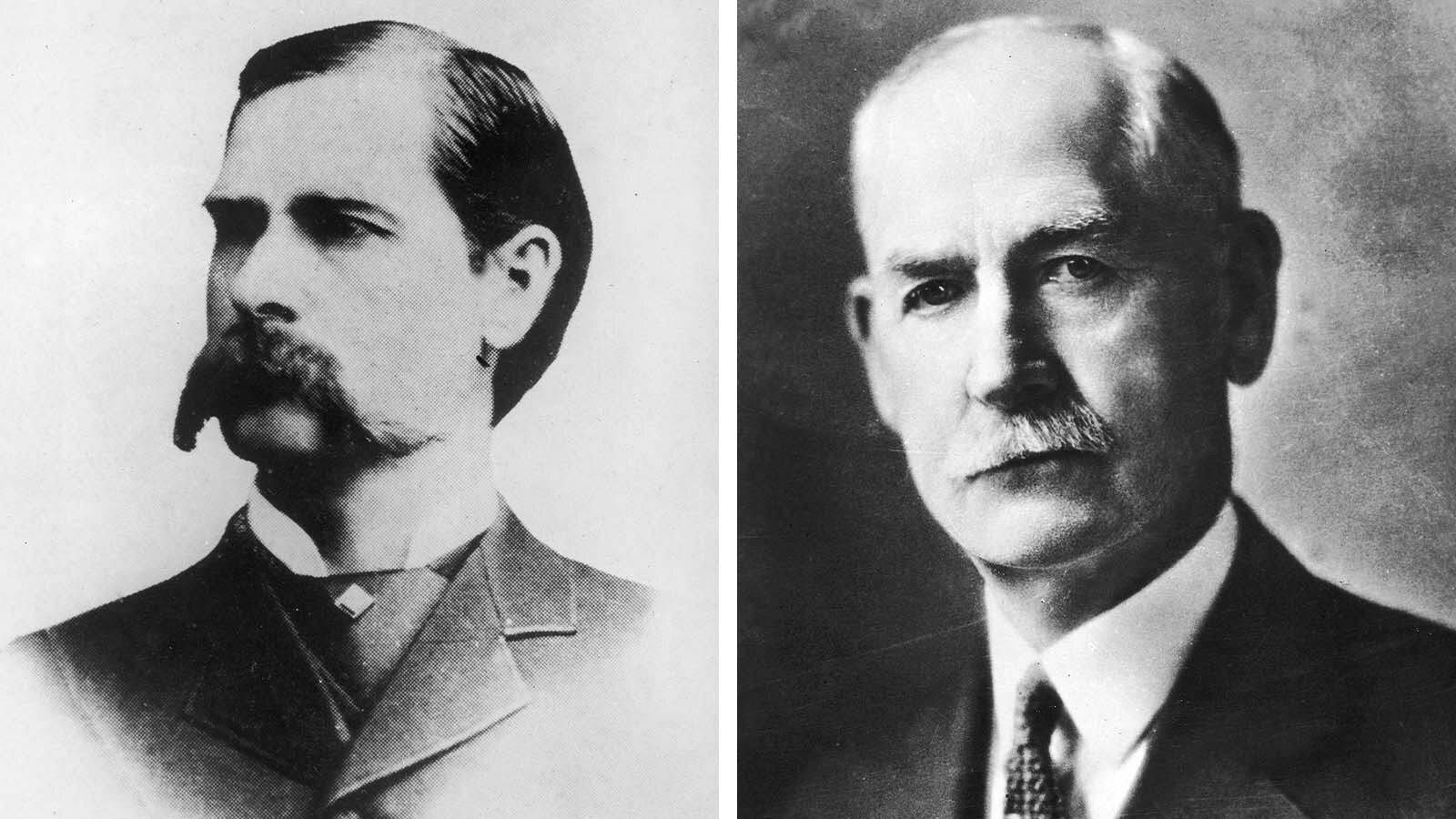
A New Avenue For Earp Research
Molony said she decided to publish her research as just another look at the historical record, and because it’s a pretty cool story.
“He’s a literal legend,” Molony said. “So why not contribute something to this degree? This is really exciting. And it basically dropped in my lap as a relative of these immigrants, so why wouldn’t I be the one to tell it?”
Kylie McCormick, a prominent Wyoming historian, helped Molony as she worked to verify this new part of Earp’s growing Wyoming legend, which includes a period of time when he worked for the Union Pacific Railroad in Cheyenne around 1869. During his Cheyenne, Wyoming timeframe, he also did a lot of gambling and organized boxing matches, including a fight between professional boxer named Mike Donovan and John Shanssey. But no one in the present day had realized, until Molony’s research, that a few years before, he’d also been in his first gun battle.
“For me, as a historian, what I find so interesting about all this is that when we’re talking about (historical figures like) Wyatt Earp, there are so many stories about them that are uncorroborated,” she said. “They’re difficult to prove and it’s really hard to tell fact from fiction. But she’s finding this information in first-hand accounts. Diaries are some of the best sources you can have as a historian, because it’s a day-to-day record, and they aren’t writing it for anybody but themselves.”
Further corroboration with the letter from Nicholas Earp and from a second diary has helped to flesh out the bones of Lake’s story that are still good, McCormick said, and help illuminate new information about Wyatt Earp’s time in Wyoming.
“She’s made a great point to me,” McCormick said. “That you shouldn’t throw out the baby with the bathwater. Just because (Lake) made up some of the things in the biography doesn’t mean he made up everything. So, we should go through that very carefully and see if there’s any other evidence to corroborate the stories that are there.
“And, in this instance, the first gunfight that Wyatt had, happened to be on the trail in Wyoming,” McCormick said. “She found corroborating evidence, and that is just really cool.”
Renée Jean can be reached at renee@cowboystatedaily.com.