When Powell resident Michael Moore ventured up the South Fork of the Shoshone River, east of Cody, he was looking for elk. Fall’s the best time of year to catch them acting up.
“Every year, there's always a bunch of elk on the J Bar 9 Ranch, right off the highway,” Moore told Cowboy State Daily. “I always like to look at the elk when they're in the rut.”
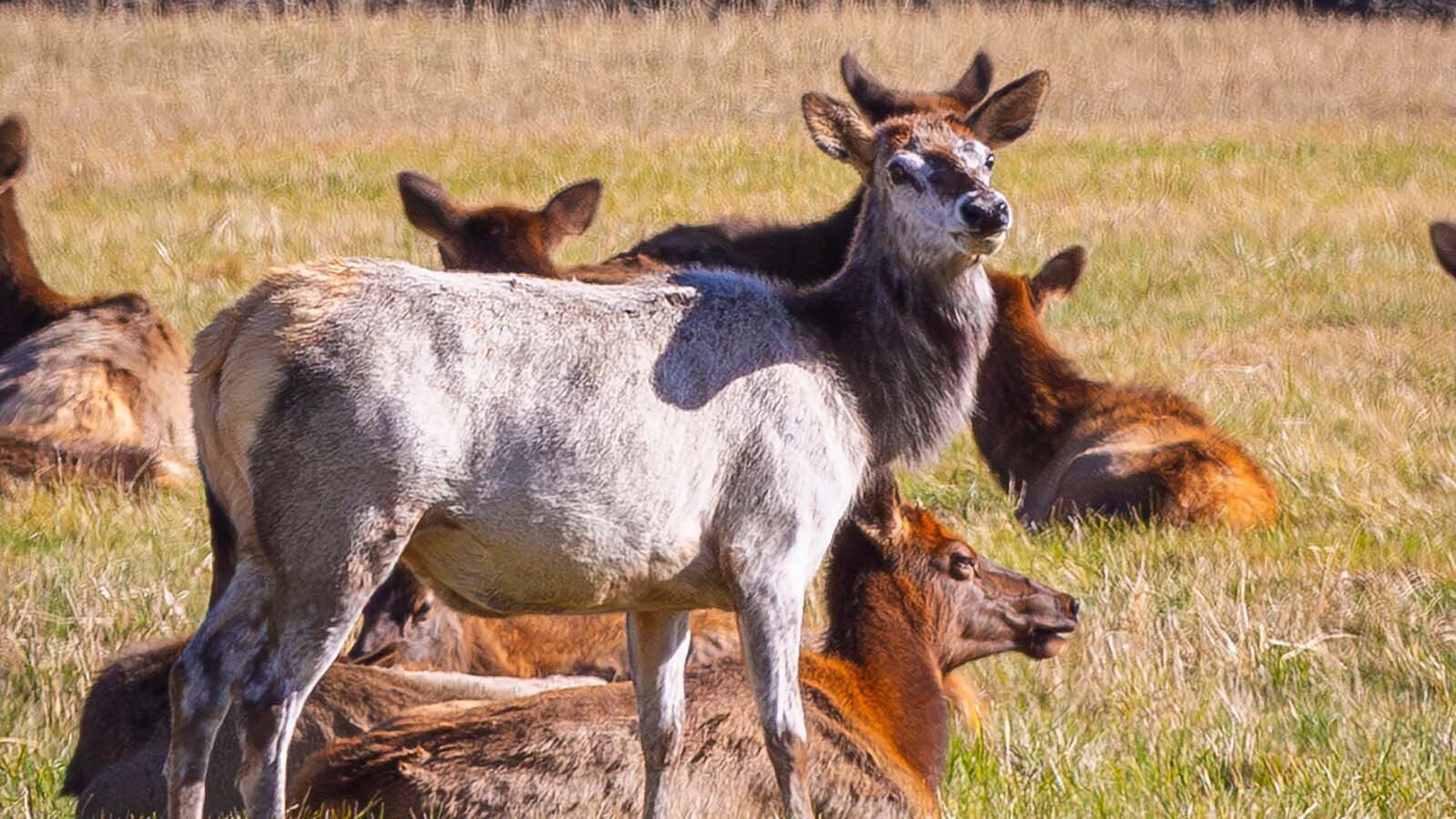
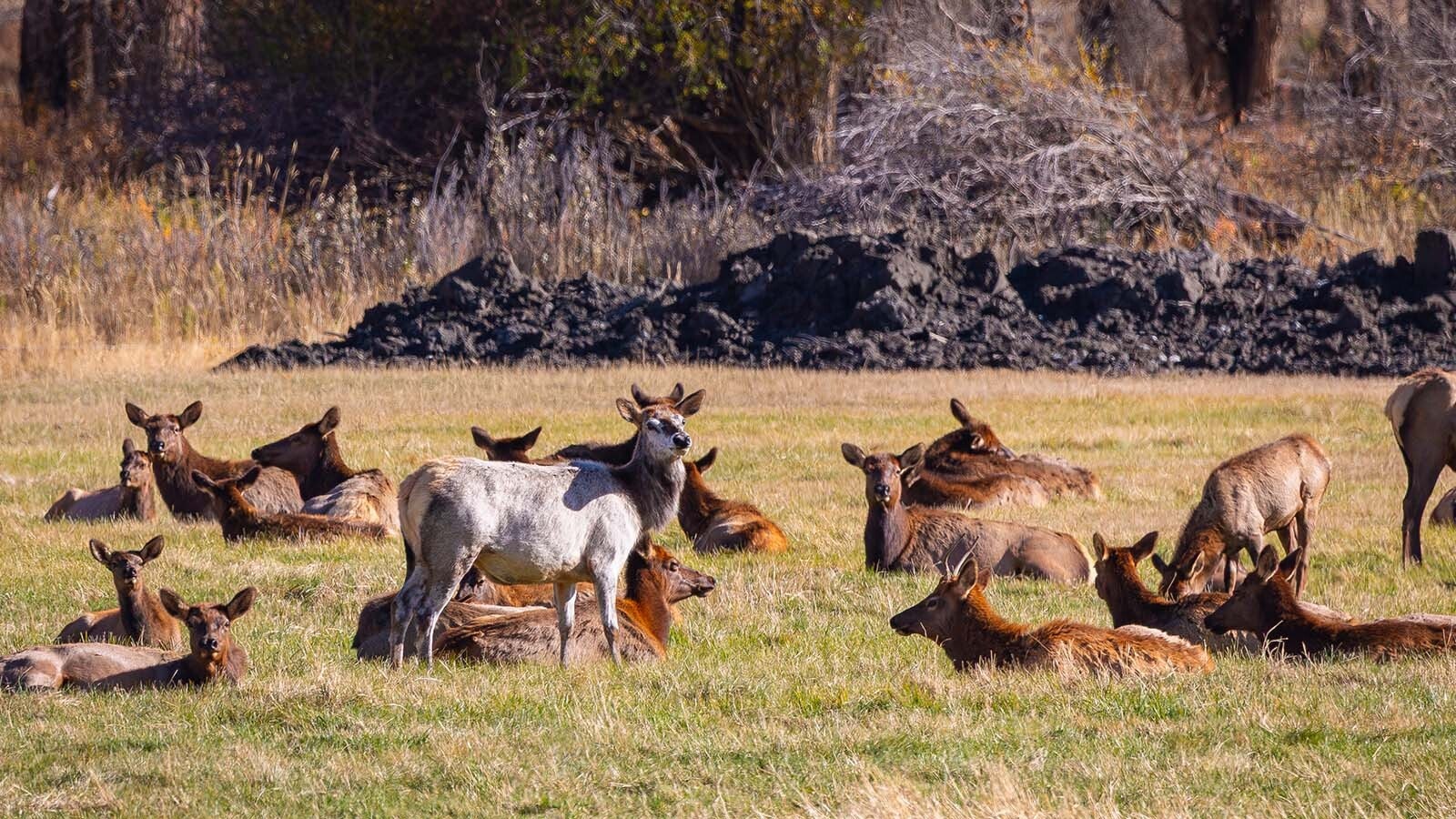
Moore found a herd of elk right where he expected them to be, but they weren’t doing much of anything. That’s when he noticed “the one elk that stood out.”
“It was far above the others,” he said. “I took a look at it, got it closer with my zoom lens, and saw that it was one of those piebald elk.”
Instead of the usual brown, this cow elk’s entire body was covered in white hair. Moore had seen pictures of piebald elk, but in his many years of hunting and wildlife photography, he’d never encountered one in the wild.
“It was definitely worth the drive,” he said.
Standing Out In A Crowd
Piebaldism is the result of a genetic recessive trait, a lack of melanin in the skin and hair of animals, that rarely manifests in nature. Both parents of an animal must have the same recessive trait to produce a piebald offspring, which has blotches of white covering its body.
When a piebald elk was spotted in Estes Park, Colorado, earlier this year, Colorado Parks and Wildlife said the trait only appears in “1 out of every 100,000 elk.”
Karie Decker, director of Wildlife and Habitat for the Rocky Mountain Elk Foundation, can verify that statistic, but there’s no denying that piebald elk are a rare sight.
“We generally say it's less than 1% of the population,” she said. “It's hard to pin down because a lot of fawns that are born with this condition don't live very long, so you don't actually see them in the wild.”
Decker said there haven’t been any studies specifically on piebald elk, except for the fact that both parents must have the same recessive gene for the trait to manifest in their offspring. One out of two isn’t good enough, and a piebald parent isn’t guaranteed to produce a matching calf.
“It's possible for a piebald doe to produce completely normal-looking calves,” she said. “It’s just a mix of white and brown hair and skin, but it depends on how the female’s gene shows up and combines with the male gene.”
Piebald Problems
Piebald elk could be more common than biologists realize, but evidence suggests that most elk calves born with the recessive gene don’t survive to adulthood. Decker said being piebald can come with a host of genetic issues that can cripple or kill a calf not long after its birth.
“There are other physical traits that piebald deer, elk, and other animals can experience,” she said. “A lot of calves have skeletal deformities, which can be fairly mild or fairly severe, that don't allow them to live very long. The coloration isn’t causing the deformities, but the group of recessive genes that cause them can come along with (piebaldism).”
A skeletal deformity, especially in the long bones of the legs, can be a death sentence for a calf before it’s born. They’ll usually die of natural causes or be more easily picked off by a predator shortly after birth.
Seeing a piebald elk in adulthood means it was born without any skeletal deformities, or it’s managed to thrive despite any genetic setbacks. According to Moore, the piebald elk he spotted was young, healthy, and thriving in the Greater Yellowstone Ecosystem.
“I've heard older cow elk can get grayed up, but I’ve never seen one,” he said. “People who’ve seen my pictures have said this one was actually a pretty young cow, and she seemed to be doing just fine.”
Even Decker hasn’t seen a piebald elk in the wild. When someone with the Rocky Mountain Elk Foundation hasn’t seen one, you know it’s special.
“It’s definitely rare,” she said. “It’s nothing, something that we’re going to see in the landscape often.”
White Meat?
Assuming this piebald elk survives the winter, she could go on to produce healthy calves. Some of them could even be piebald, but only if she finds and mates with a bull elk carrying that specific recessive gene.
A piebald cow elk is rare enough, but nearly all of those spotted have been cows. A piebald bull could be the Holy Grail of elk for lucky photographers and hunters, if there are any out there.
Since piebaldism affects the skin and hair of animals, could it also affect their meat? Would a piebald elk taste differently from a normal elk?
“I don't suspect it would,” Decker said. “The genetic mutation is primarily focused on the skin and hair, so I can't imagine that it would affect the meat, but I can’t say I’ve ever eaten a piebald elk.”
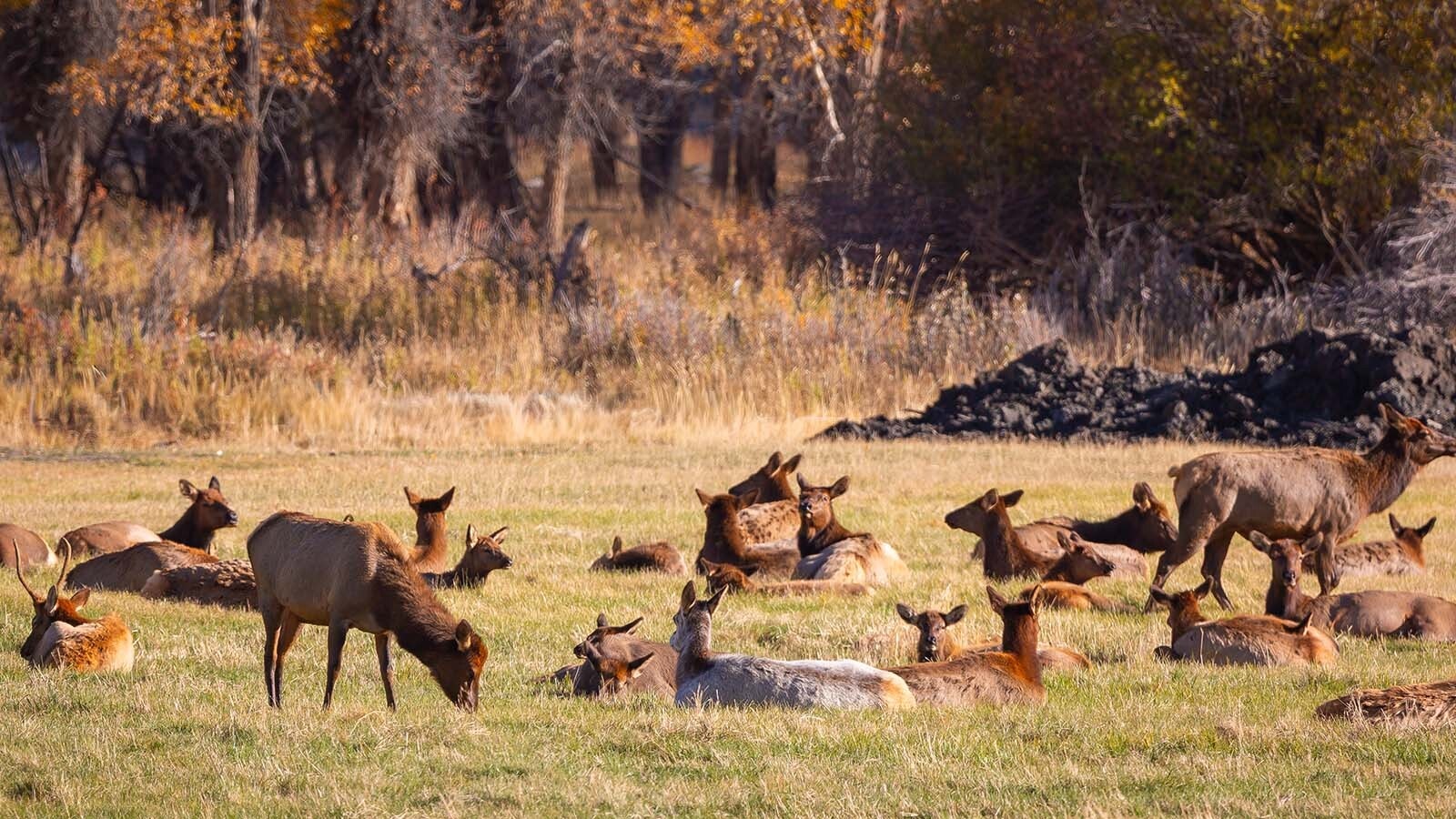
Moore got a few shots of the piebald elk before it lay down in a less-than-optimal position for photography. He didn’t get the fall rut he was hoping for that day, but a 1-in-100,000 elk wasn’t a bad consolation prize.
“There's nothing quite like getting up there when the bulls are acting pretty aggressive and you can hear them bugling,” he said. “I got a few photos of the piebald elk before she lay down with her back to me. Not a lot of great photos, but still worth seeing.”
Andrew Rossi can be reached at arossi@cowboystatedaily.com.