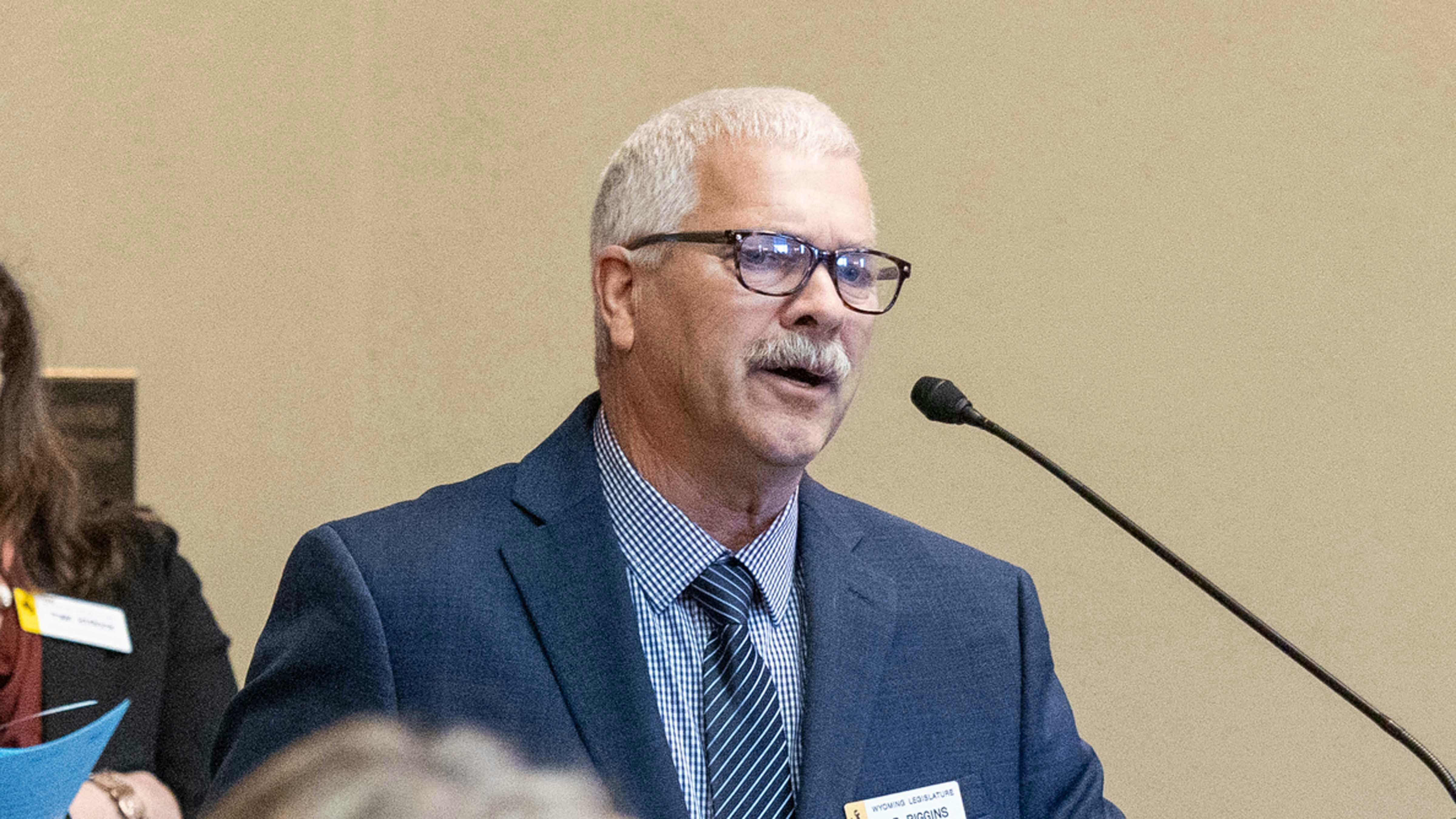
On May 9th, I had the privilege to testify before the Joint Corporations Committee as Mayor of Pinedale and a Board member of WAM, raising concerns about efforts to silence the voice of statewide associations.
During my testimony, I drew upon my experience in two West African nations – one a military dictatorship, the other transitioning from Marxism to democracy. I saw firsthand what happens when governments silence dissent and concentrate power.
That has shaped how I view governance to this day: local officials must be equipped, dissent must be allowed, and the people must remain in charge.
Here in Wyoming, we are watching a quiet erosion of those values. Legislators who preach liberty are now undermining the most American institution we have – our local governments.
Silencing the Voice of Local Leaders
Some legislators want to suppress the collective voice of 99 municipalities – embodying 70% of our state – advocated by the Wyoming Association of Municipalities (WAM).
WAM is not an outside interest group. It is a non-partisan, nonprofit association governed by a board made up of Wyoming mayors and councilmembers elected by their peers. WAM's advocacy positions come through a grassroots-driven process involving towns, regions, and a board vote.
WAM provides training, legal compliance tools, and shared resources. Yet WAM and every other statewide association – county commissioners, sheriffs, clerks – are under fire.
Rep. Marlene Brady claimed, “They use our dime to go and lobby against every one of the bills the people put forward.” [WyoFile, May 9, 2025] But we represent the same people. The laws they’re pushing often harm the very communities we serve – neighbors, voters, taxpayers. When we speak up, it’s not against ‘the people’; it’s on behalf of them.
For one, that’s not true, WAM supports many bills. For another, disagreement isn’t abuse – it’s democracy. Every group dissents at times, and a rational dialogue is what makes our unique republic work. Finally, the people I represent don’t like some of the bills Rep. Brady and her friends are putting forward.
Strangely, Rep. Rachel Rodriguez-Williams defended the Freedom Caucus’s own coordination, stating, “When a group of conservative lawmakers stands up, says ‘we’re organized,’ and seeks to advance a conservative agenda – the left cries foul.” [Cowboy State Daily, March 2025]
Apparently, being organized is fine for the Freedom Caucus – but a sin when towns do it together?
Removing Our Right to Set Safety Policies
The problem with bills like HB 172 (repealing local authority to eliminate gun-free zones) is that they reflect Legislature’s mistrust of local government. Let’s be clear – this is not about guns, this is about constitutional governance versus centralization.
HB 172 strips local governments of the authority to determine their own safety policies – particularly their ability to designate gun-free zones (or not) at public meetings and facilities.
Rep. Jeremy Haroldson defended the Legislature’s decision to strip towns of the right to make their own safety decisions saying: “The best protection in contentious public meetings is to have people carrying firearms in attendance.” [Cowboy State Daily, Jan. 23, 2025]
The belief that armed audiences – and possibly armed councils – is the best way to peacefully govern seems wrong to me. But if the Legislature genuinely believes this policy improves safety and civic engagement, why haven’t they implemented it for themselves?
Why do legislative chambers still operate under Capitol security protocols, rather than allowing conceal carry? At heart, this is about central government distrusting the ability of local officials to make good decisions.
Yet the people who elected them also elected us – and they can more easily attend and speak at a town council meeting than a legislative session and interim committee hearing.
This is where the Constitution demands we ask a deeper question: Why do we have the right to bear arms?
The Second Amendment wasn’t for hunting or self-defense – it was forged as a check against tyranny, especially the kind that would strip local communities of their right to govern themselves. Local self-governance is not secondary to our freedoms, it’s the very reason for defending them.
Weaponizing Transparency
New public records laws would shorten deadlines, require state approval for extensions, and impose civil penalties. On paper, this sounds like reform. In practice, it’s a trap, especially for small towns and state agencies. These changes increase our vulnerability to bad-faith actors (in and out of state) and lawsuits.
Instead of equipping local government, they weaponize the process. Imagine multiple complicated record requests arriving at once – limited staff can quickly become buried. Yes, the penalties fall on the town, but in certain cases, staff may bear personal legal risk. Many requests are simple, but others may take far more than three days to fulfill. This isn’t transparency, it’s entrapment.
Undermining Home Rule
Freedom Caucus members claim to support the Constitution while dismantling the very structures that help towns comply with it. America began in “town hall meetings,” a label and expression today which stands for freedom of expression and self-rule.
That right of local self-governance – enshrined in Article 13 of Wyoming’s Constitution – should be recognized as even more fundamental than the right to bear arms. Why? Because the Second Amendment exists to protect local self-rule against centralized overreach.
The right to bear arms wasn’t for hunting or settling fights – it was to protect the central proposition of American democracy: that power begins in towns and villages, not distant capitals.
Wyoming’s Constitution guarantees that municipalities may govern their own affairs and says this right is to be “liberally construed.”
Yet this session, we saw bills that sought to ban our memberships, override our ordinances and zoning with one-size fits all mandates, and second-guess our public votes. As WAM has noted in public testimony, these actions violate both the spirit and letter of home rule.
If the U.S. Congress treated states the way our Legislature is treating Wyoming towns, we’d see outrage. As Thomas Jefferson famously said, “The government closest to the people serves the people best.” Yet Rep. Lee Filer argued, “We [state representatives] are local control,” implying that he and his colleagues in Cheyenne know more about a community than its own mayor or council. [KHOL, Jan. 28, 2025]
Defense of Local Government
As Napoleon said, “The art of government is not to let me grow weak.” That’s centralization in a nutshell. It’s what we’re seeing in Cheyenne today. The Freedom Caucus doesn’t wear uniforms, but they are using government muscle to silence the municipal voice.
True conservatism begins with trust – trust in neighbors, in communities, and in the ability of people to govern themselves. Our towns handle the roads, water systems, emergency services, and daily governance that make this state run. These aren’t slogans; they are daily, gritty responsibilities.
We don’t need saving from WAM – we need the freedom to decide for ourselves. If you don’t trust towns to govern, you don’t trust the people who live in them.
The erosion of home rule doesn’t just harm towns, it hollows out the very foundation of a free republic. Let’s restore the principle that built both America and Wyoming: the best government is the one closest to home.
Matt Murdock is the Mayor of Pinedale, Wyoming, first elected to the Town Council in 2013 and as Mayor in 2018 and 2022. He serves on the WAM Legislative Leadership Committee and Board of Directors.