In what could foreshadow fireworks during the Wyoming Legislature’s 2026 session, tempers flared Wednesday during a debate in a legislative committee over whether ranchers and farmers should be able to sell their landowner hunting tags.
On one side of the debate, Agriculture, State and Public Lands and Cultural Resources Committee Chairman Sen. Tim French, R-Powell, and others said that letting agricultural landowners put their hunting tags up for sale could provide much-needed income.
It can even allow them to stay in business and continue to provide forage and habitat for wildlife on their land.
Conversely, the Wyoming Wildlife Federation and other hunting advocate groups seem dead-set against allowing tag sales, claiming it would amount to monetizing Wyoming’s wildlife.
“A transferable (landowner) tag is just not a place where I’m going to be able to move the sporting community at all,” Wildlife Federation spokeswoman Jess Johnson said.
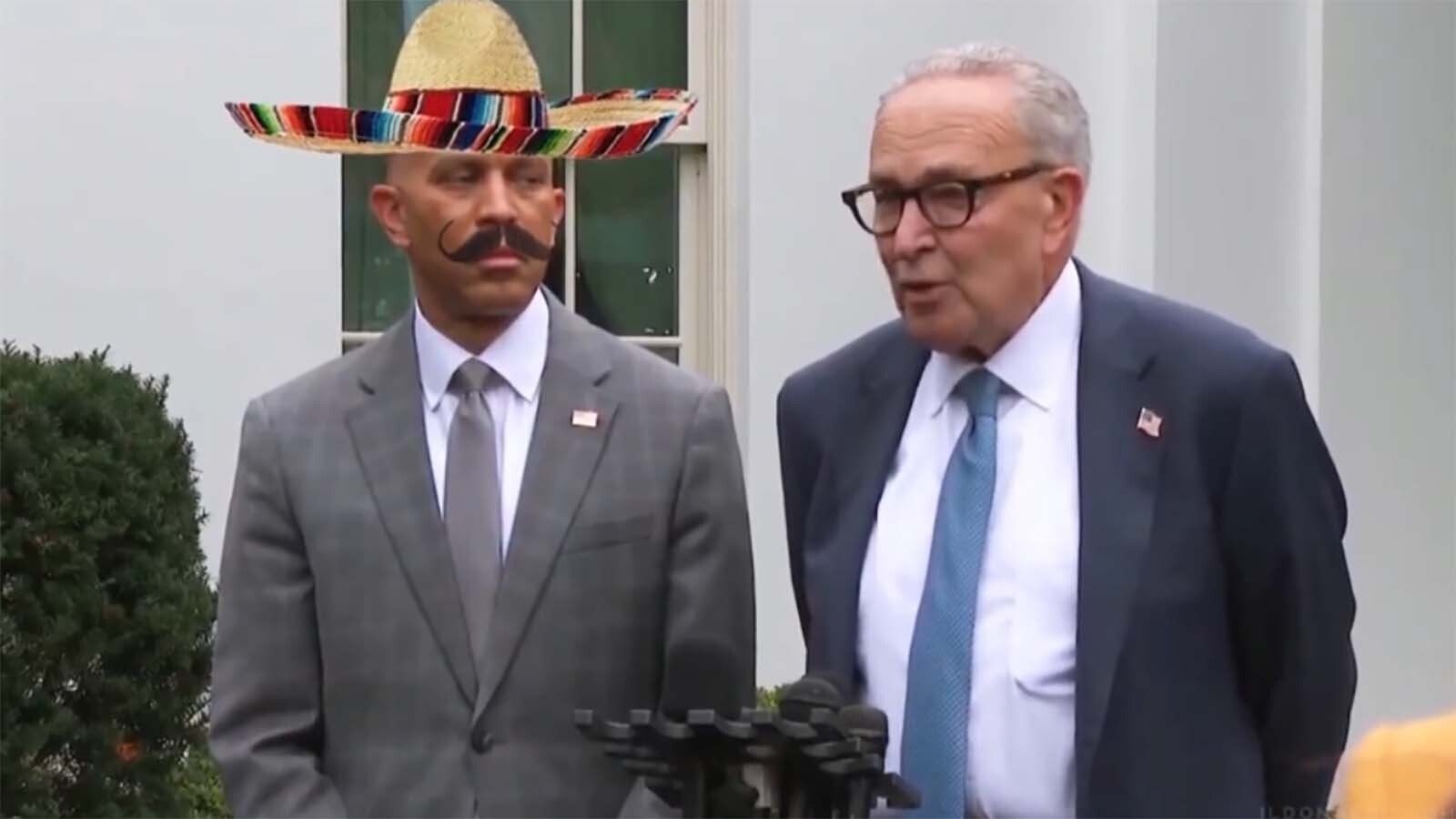
At one point, French cut off Johnson as she was speaking before the joint committee.
“Let me finish in just a minute,” Johnson began.
“No, let me finish. Let’s go there,” French replied.
Program Origin
The Wyoming Game and Fish Department’s landowner hunting tag program began in 1949. The program is intended to reward landowners for providing forage, water and habitat for wildlife.
It allows qualifying landowners to acquire tags for deer, elk, antelope or turkey, without having to enter public draws for those tags.
Under current regulations, landowners may give their tags to immediate family members, but they may not put them up for sale.
Other special hunting tags, the Wyoming commissioner tags and governor’s tags, may be auctioned off, with the proceeds going back to wildlife conservation, or toward non-profit Wyoming charity organizations.
Those tags regularly fetch prices of $20,000 or more.
Some have argued that it’s an unfair double standard, that the commissioner and governor’s tags may be raffled or auctioned off, but landowner tags cannot be sold.
Clashing Opinions
French clashed with Johnson and Sabrina King, spokeswoman for the Wyoming Chapter of Backcountry Hunters and Anglers.
Johnson appeared in person at the committee meeting in Powell, while King testified over Zoom.
Johnson sat with Alison Crane, executive director of the Wyoming Wool Growers. The two said they represented an effort to forge an alliance between hunters and agricultural landowners.
Johnson said that hunters and landowners can agree on nearly everything, but whether landowner tags should be sold represents some of the “2%” of remaining sticking points.
She said “let me finish” in reference to possible solutions.
Cutting her off, French said, “It sounds like you’re willing to talk to the landowners on your terms, not on our terms. I say, we’ll have the conversation on our terms, does that work for you?”
When Johnson asked him to clarify whether he meant on landowners’ terms or legislators’ terms, French replied, “landowner terms,” before continuing.
“I’m saying maybe the landowners don’t want to go there, they want you to come over to the landowners’ point of view for discussion, are you willing to do that?”
The exchange cooled off, and Johnson mentioned that the Wyoming Wildlife Federation could provide landowners access to of resources for compensation.
That includes organizations willing to help ranchers recoup losses for such things as forage eaten by wildlife and damage to ranch property, without requiring public access in return, she said.
During her testimony, King reiterated the message that hunters won’t budge in opposing landowner tags going up for sale.
“It does not track that because ranching is a difficult industry that a landowner should be able to sell the public’s wildlife for a private profit,” she said.
King said it’s important to acknowledge what agriculture does for Wyoming’s wildlife, and to find ways to compensate ranchers and farmers, but selling landowner tags isn’t an option from her perspective.
French again mentioned that being able to sell tags could make all the difference for some landowners.
“Landowners get tags now, if they qualify. Why wouldn’t you support those landowners being able to stay in business by being able to sell those tags?” he asked King.
King said there are other ways to support ranchers, and opening up landowner tag sales would push the public even further out of already-shrinking opportunities.
“I think we need to stop,” French replied. “Obviously you do not support the landowners being able to stay in business,” he said.
“That not an accurate reflection of my comments,” King said in response.
Conflict Of Interests On Ag Committee?
There was also a terse exchange between French and committee member Karlee Provenza, D-Laramie, regarding which legislative committee the topic belongs to.
A bill that would have allowed landowners to market their hunting tags failed during the Legislature’s 2025 session.
The decision whether a similar committee bill will go before the 2026 session doesn’t rest with the Agricultural Committee.
Instead, the Legislature’s Management Council sent landowner tags to the joint Travel, Recreation, Wildlife and Cultural Resources Committee (TRW) of which Provenza is also a member.
TRW last week heard testimony regarding whether landowners should be able to sell their tags, but took no action on the matter.
French said he was disappointed that the council “yanked it from Ag” and sent it to TRW.
“Because we’re talking landowner tags. Who are the landowners? The big percentage are ag people. I think that the Management Council is wrong, and I will never support it being anywhere other than Ag,” he said.
Provenza pushed back on that idea, noting that several members of the Agriculture committee own large properties.
“This issue has been continuous today in part because there’s a lot of personal ties to this issue. There’s a lot of financial ties to this issue,” she said.
Roughly half of the Agriculture committee potentially is “going to be able to sell landowner tags for tens of thousands of dollars,” she said.
French disagreed in his response to Provenza.
It didn’t matter if half the committee owns land. We’re the Ag committee and the animals are on an ag land, generally, so it (a potential bill) belongs here. And there’s a little bit of a subtle implication. that maybe we’re trying to pad our own pockets somehow, I really don’t care for,” he said.
Provenza responded that TRW was the right choice, because it oversees wildlife. And according to Wyoming statute, wildlife is state property and a public trust.
“The people of Wyoming, again, are the people who are the stewards, are the people who own the wildlife of Wyoming. So that’s why I believe the management council was right in sending it to that committee and not the landowners of ag,” she said.
French stuck to his position.
Management council was completely wrong. It’s an ag subject,” he said. “I’ll fight them to the end. I’ll bring it up and I’ll be adamant about it,” he said.
Has Program Run Its Course?
Some testified in favor of selling landowner tags.
Wyoming Jim Magagna, executive vice president Wyoming Stock Growers Association, said he was open to the idea.
Brett Moline, spokesman for the Wyoming Farm Bureau Federation, said the federation’s members have long been in favor of transferable landowner tags.
Curt Bales, a ranch manager from the Cody area, said that selling tags could being some much-needed secondary income to the ranch.
The ranch he manages frequently loses about $600,000 in potential yearly revenue, from wildlife gobbling forage that could have gone to cattle, he said.
Rep Mike Schmid R-La Barge suggested that trying to fix the landowner tag system might not be the answer, because circumstances have changed so drastically since it was launched in 1949.
It might be better to try finding another way to acknowledge and reward Wyoming landowners for all the do for the state’s wildlife, he said.
“I’m almost of the opinion that this program has run its course,” Schmid said.
Mark Heinz can be reached at mark@cowboystatedaily.com.