Anyone planning a summer stop along the shores of the Great Salt Lake will probably notice the immeasurably huge swarms of flies blanketing the landscape near the shore.
It’s brine fly season again.
It’s the time of year when brine flies are birthing, breeding, and dying in sufficiently salty waters along the coastline of the Great Salt Lake and other bodies of water in Utah and Wyoming.
Many people might find them repulsive, but they’re a critical resource in a unique and diminishing ecosystem.
“When things warm up, it's a trigger for them to start hatching,” said Bonnie Baxter, a professor of biology and director of the Great Salt Lake Institute at Westminster University in Salt Lake City, Utah. “Brine flies have a bad reputation they don’t deserve. They’re completely harmless and really awesome.”
Bold And Briny
“Brine fly” is a blanket term used for more than 2,000 species of flies in the insect family Ephydridae. Their short but meaningful lives revolve around the wetlands, marshes, hot springs and alkaline pools where they’re born, raised and die.
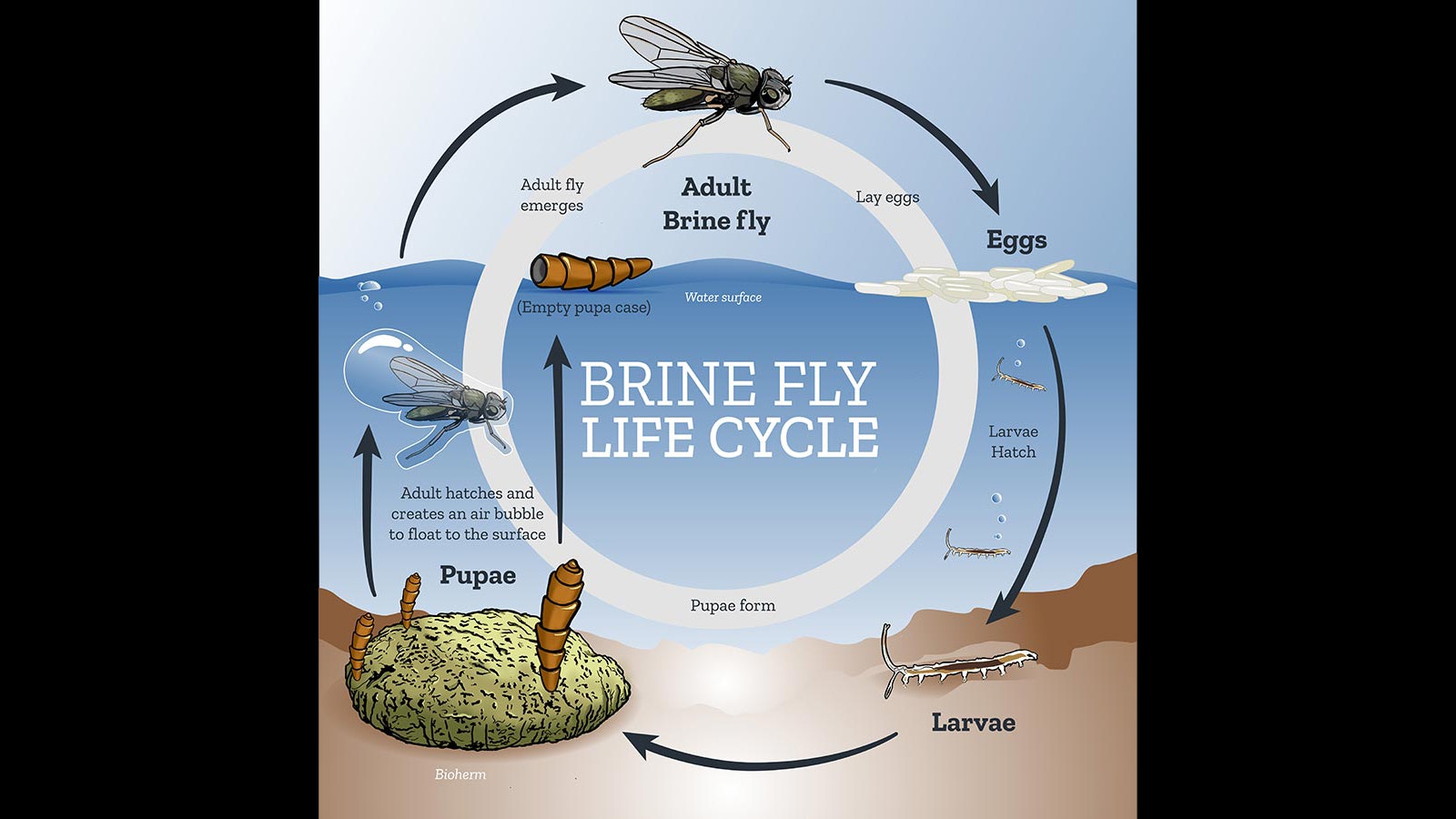
Two species of brine fly live in the Great Salt Lake, but more than 99% of the flies belong to one species: Ephydra cinerea. Baxter compared the Great Salt Lake’s brine flies to butterflies, which undergo a similar life cycle.
“Everyone knows the life cycle of a butterfly: egg, caterpillar, cocoon, butterfly,” she said. “Brine flies do the same thing under salty water. They spend nine months of their lives as a caterpillar or a cocoon living in the hypersaline water, and when the fly emerges from its cocoon in a little air bubble at the bottom of the lake.”
The average lifespan of a brine fly is only three days. In that time, they have to breed and lay eggs that will spend the coldest months of the year safe in the salty water, waiting to emerge in warmer temperatures.
“They hatch and float on little rafts of salt on the water or just stay on top with the surface tension,” Baxter said. “If the winds blow them inland, which it does, they'll just be loaded on the shore. It’s like the murmuration of birds and fish – billions of brine flies, all facing the same wind direction.”
Blame The No-See-Ums
Brine flies typically emerge in late May and early June, when it’s consistently warm enough for them to exist above the water. They’re completely harmless, but Baxter says they’ve inherited a guilt by association from another aquatic insect.
“They hatch around the same time as the no-see-ums,” she said, referencing the infamous sand flies or biting midges. “If you go out on the lake in May, these biting midges are everywhere.”
Biting midges are biters and blood suckers. Brine flies subsist mainly on cyanobacteria, algae, and other microscopic organisms, making them harmless and uninterested in humans.
Furthermore, brine flies are “polite” by insect standards. They’re known to avoid the footfalls of humans by making pathways in their billion-strong swarms.
Baxter said brine flies spend most of their adult lives within a foot of the water’s surface. They don’t rise to the occasion like the dreaded biting midges.
“If you watch them long enough, brine flies are always on the ground or close to the ground,” she said. “As you walk along the shore, they kick up in these swarms around your feet. It’s one of the coolest things about them.”
Bird Buffet And Shrimp Lobbyists
While brine flies feed and breed on brine, they’re an immensely valuable food source for other animals. Baxter said she didn’t understand the enormity of their impact until she started researching their place in the food chain.
“I didn't pay attention to them until I studied the microbial mats they eat,” she said. “So I started investigating who eats the flies. I worked with the state bird people and the National Audubon Society, and they pulled together a report.”
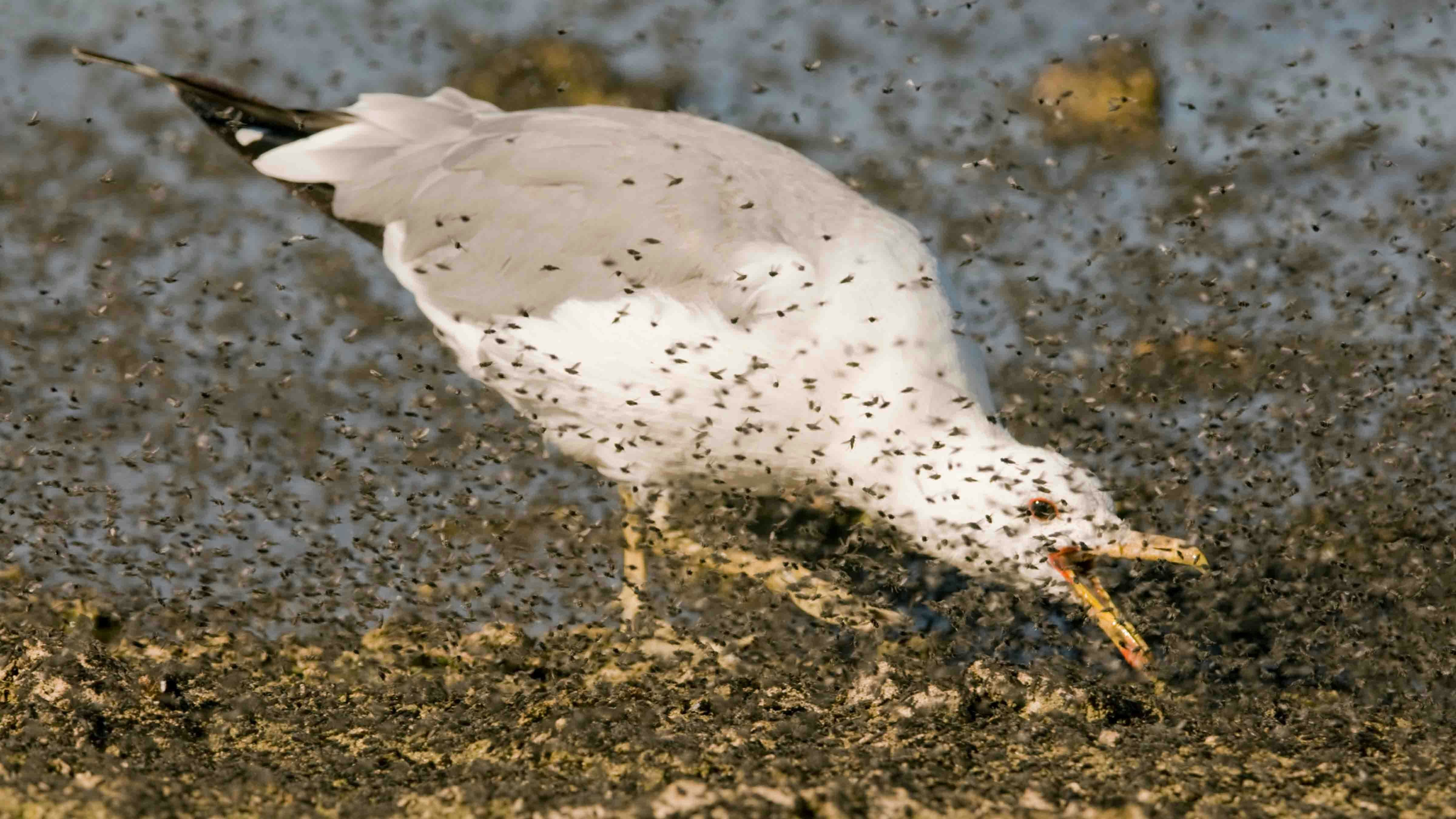
Dozens of bird species swoop their beaks into the Great Salt Lake to grab brine flies by the mouthful. Baxter said gulls in particular make the most of this summer buffet.
“They’ll run through the swarms of flies with their mouths open and ingest as many flies as pop into their mouths,” she said. “It’s like Chuck-A-Rama.”
Another bird, the Wilson’s phalarope, gathers in great numbers to feed on the brine flies. Baxter said as much as 90% of this bird’s population depends on the brine flies for survival.
“They’ve had to leave other habitats in Oregon and Nevada as saline lakes disappear,” she said. “Their population depends on the Great Salt Lake, and there’s a concern that phalaropes will decline because of how much they depend on these flies.”
Brine flies are so crucial that Baxter said another denizen of the Great Salt Lake has partially co-opted their success.
Brine shrimp are seen as one of the most important food sources in the lake, but the flies are probably filling more bellies than the shrimp.
“Brine shrimp get all the credit because they have an industry behind them,” she said. “They’re sold all over the world for aquaculture. They literally have a lobbyist in the Utah State House. Brine flies have nobody like that, so I decided to become their advocate.”
It’s good that brine flies have an advocate in Baxter. They need the help.
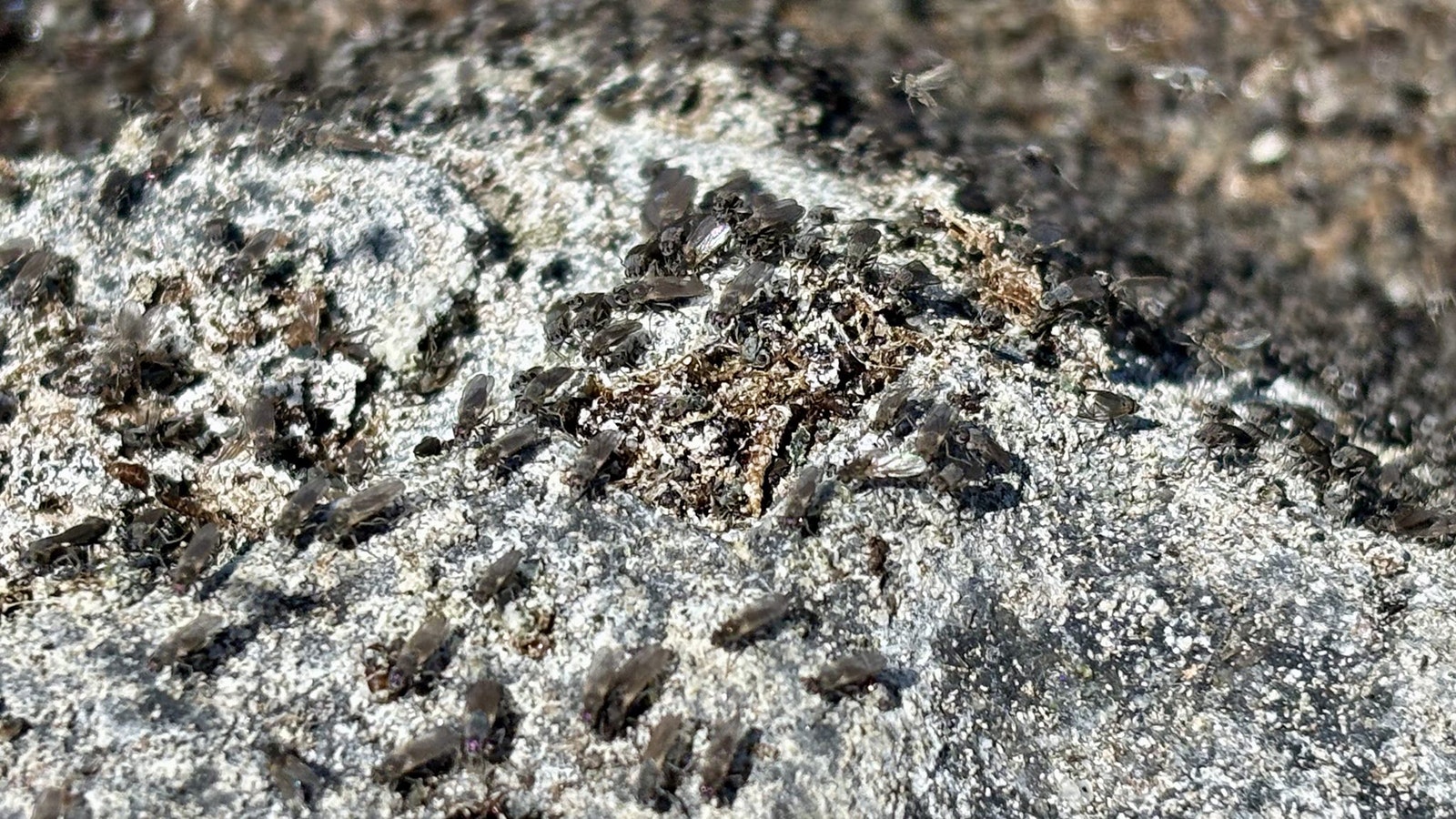
A swarm of brine flies at the Great Salt Lake State Park in Utah. Brine flies hatch once the weather gets warm enough, and spend the summer breeding and dying in the saline water during their short three-day lives as adults. (Great Salt Lake State Park) 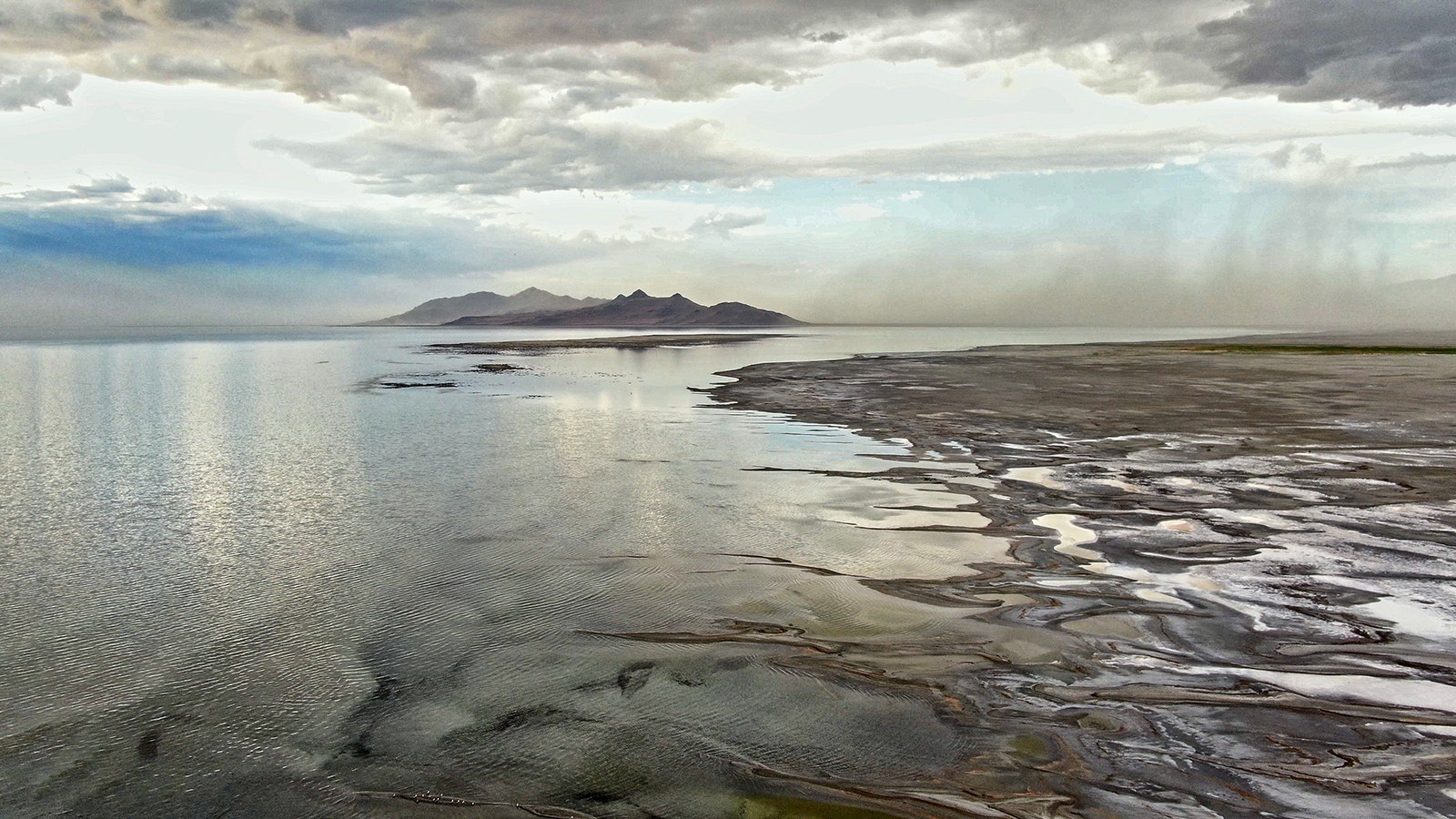
The Great Salt Lake in Utah. (Getty Images) 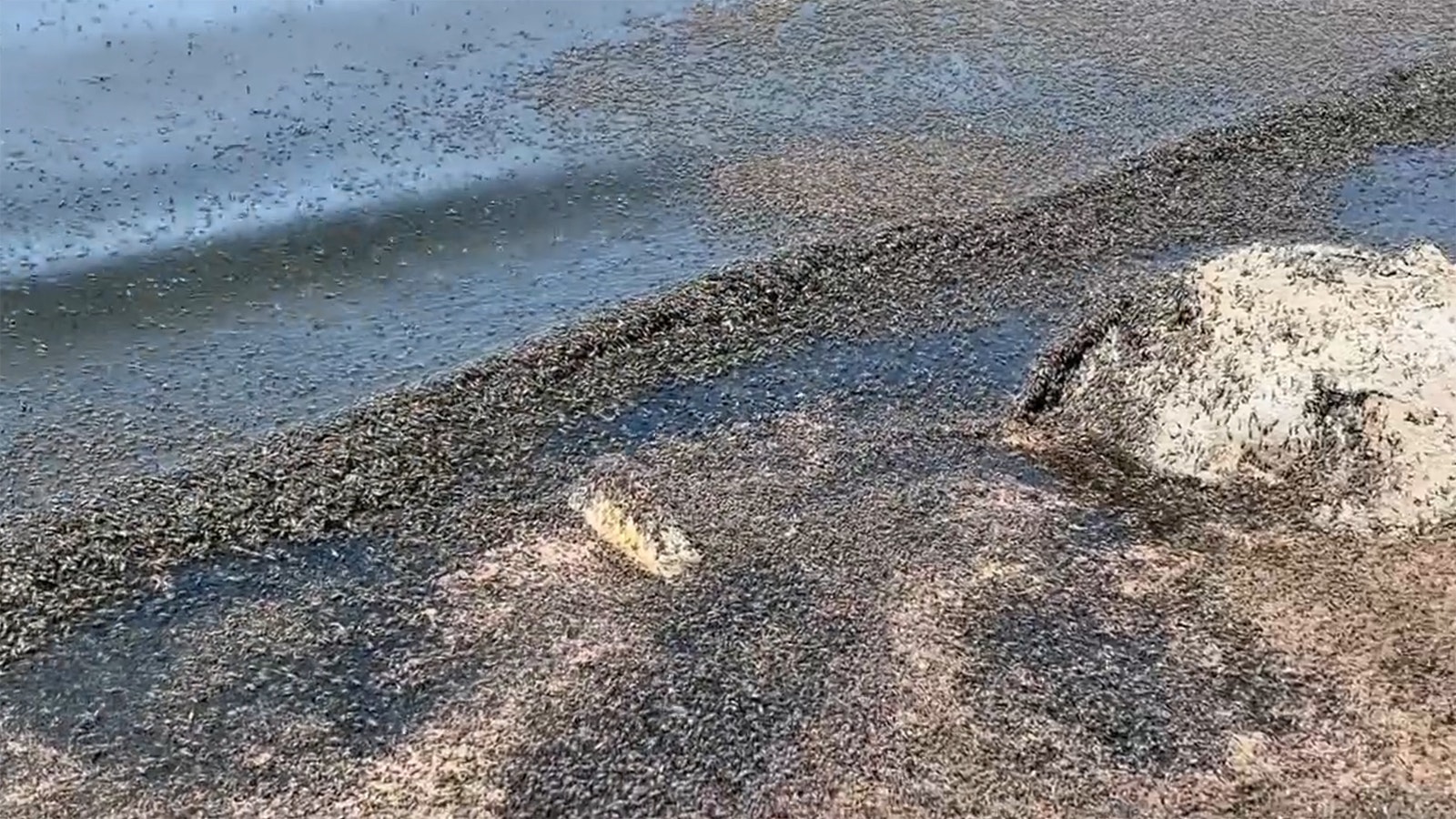
A swarm of brine flies at the Great Salt Lake State Park in Utah. Brine flies hatch once the weather gets warm enough, and spend the summer breeding and dying in the saline water during their short three-day lives as adults. (Great Salt Lake State Park) 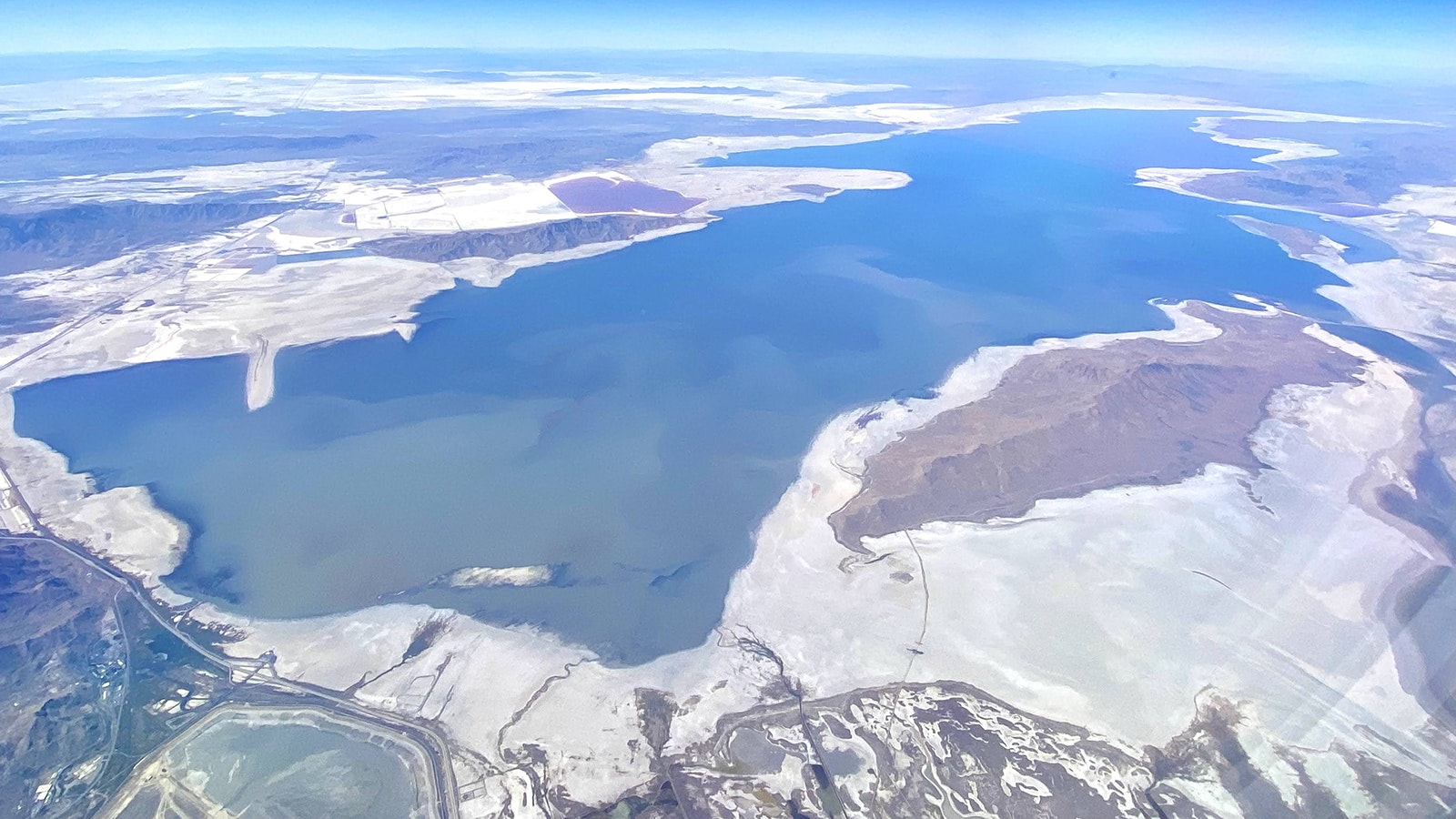
The Great Salt Lake in Utah. (Getty Images)
Shrinking And Too Salty
Brine flies are specifically adapted to live in saline waters. Baxter said they have special organs that remove excess salt from their bodies so they can stay happy and healthy in the Great Salt Lake.
“What I know from 30 years of staring at salty life is that things that live in salt water are highly adapted to those environments,” she said. “Brine flies have evolved to live in places with high salt. They have special pumps in their cells that pump out excess sodium and accumulate things like sugars inside them to balance living in the higher salt.”
Nevertheless, brine flies have a limit to how much salt they can tolerate. And even if they can stand more salt, their food supply cannot survive in water that exceeds 20% salinity.
Water levels on the Great Salt Lake have fluctuated for the last decade, reaching historically low levels in 2022. Less water means more salinity, which means fewer brine flies.
“We had a dearth of brine flies in 2022,” Baxter said. “The salinity got so high that the brine flies couldn't live on the bottom of the lake, the things they eat weren't doing well, and they were losing habitat.”
If the Great Salt Lake contracts enough, the water could become so salty that the brine flies won’t be able to find food or shelter. The ecological impacts of losing brine flies would be devastating.
“Loss of habitat is a big concern for brine flies,” Baxter said. “They're feeding more birds than brine shrimp, and they’re an amazing food source.”
Tiger Beetle Brunch
Utah has many more brine flies than Wyoming, but that doesn’t mean the Cowboy State is devoid of them.
There are three species of brine fly in Yellowstone National Park, including Ephydra thermophila, which is specifically adapted to life in acidic hot springs.
Brine flies are also an important food source in Yellowstone. The apex predator among invertebrates is the wetsalts tiger beetle, which has evolved to thrive in the hostile environment of thermal features and cannot be found anywhere else in the park.
Wetsalts tiger beetles regularly chase down adult and larval brine flies.
A study published by scientists at Montana State University and the University of Nebraska determined that the internal body temperature of Yellowstone’s tiger beetles is lower than that of other populations, giving them increased heat resistance that allows them to live around hot springs.
Brine flies in Yellowstone are also extremophiles, meaning they have adaptations to endure the extreme conditions where they’ve made their home. Ephydra thermophila can tolerate the acidic water of hot springs, while the other species of brine flies in the park thrive in different environments that don’t overlap.
Saving The Right Salinity
Baxter said she and her colleagues at the Great Salt Lake Institute and other Utah agencies are taking steps to ensure the survival of brine flies. One of their conservation successes was altering a bridge that split the lake asunder.
“A railroad causeway built in 1960 segments the northern portion of a lake off from the rest of it,” she said. “When they did this, the water got too salty, so it had no brine flies.”
In 2016, a breach was built into the causeway, allowing water to flow between the previously separated segments. This reduced the salinity of the water, giving brine flies more habitat to occupy.
“Water levels are low right now, but the water isn’t as salty,” Baxter said. “Brine flies like it salty, but not too salty.”
While Baxter and her colleagues work on developing conservation solutions for the Great Salt Lake, she hopes visitors and residents understand that brine flies are not dangerous or repulsive.
They might be dominating beaches by the billions during the summer, but they’re harmless to humans and essential to life on the lake.
“When people see the brine flies, they're like, ‘Oh, all these flies are eating me,’ but they don't bite at all,” she said. “I think they’re fun to watch. The way they move together, millions of flies moving in the same direction, is the coolest thing. When it gets cold again, they’ll hang out and overwinter underwater. That’s their cycle.”
Contact Andrew Rossi at arossi@cowboystatedaily.com
Andrew Rossi can be reached at arossi@cowboystatedaily.com.