Some of Wyoming’s most accomplished mountain climbers are split on whether using xenon gas to quickly acclimatize to high altitudes is the future of mountaineering or a performance-enhancing drug for the ultra-wealthy.
The debate is reaching a fever pitch in the mountaineering community with British mountaineers summiting Mount Everest in four days last week. To accomplish this feat, they carried a secret weapon: xenon gas.
Xenon, when inhaled, allegedly activates a molecule that helps humans acclimate to low-oxygen environments. The British team touted xenon as the future of mountaineering, Everest or elsewhere, because it makes these intense physical feats more survivable.
The reaction to this development has exploded in positive and negative ways. Wyoming mountaineers who’ve climbed Everest have strong opinions and differing perspectives.
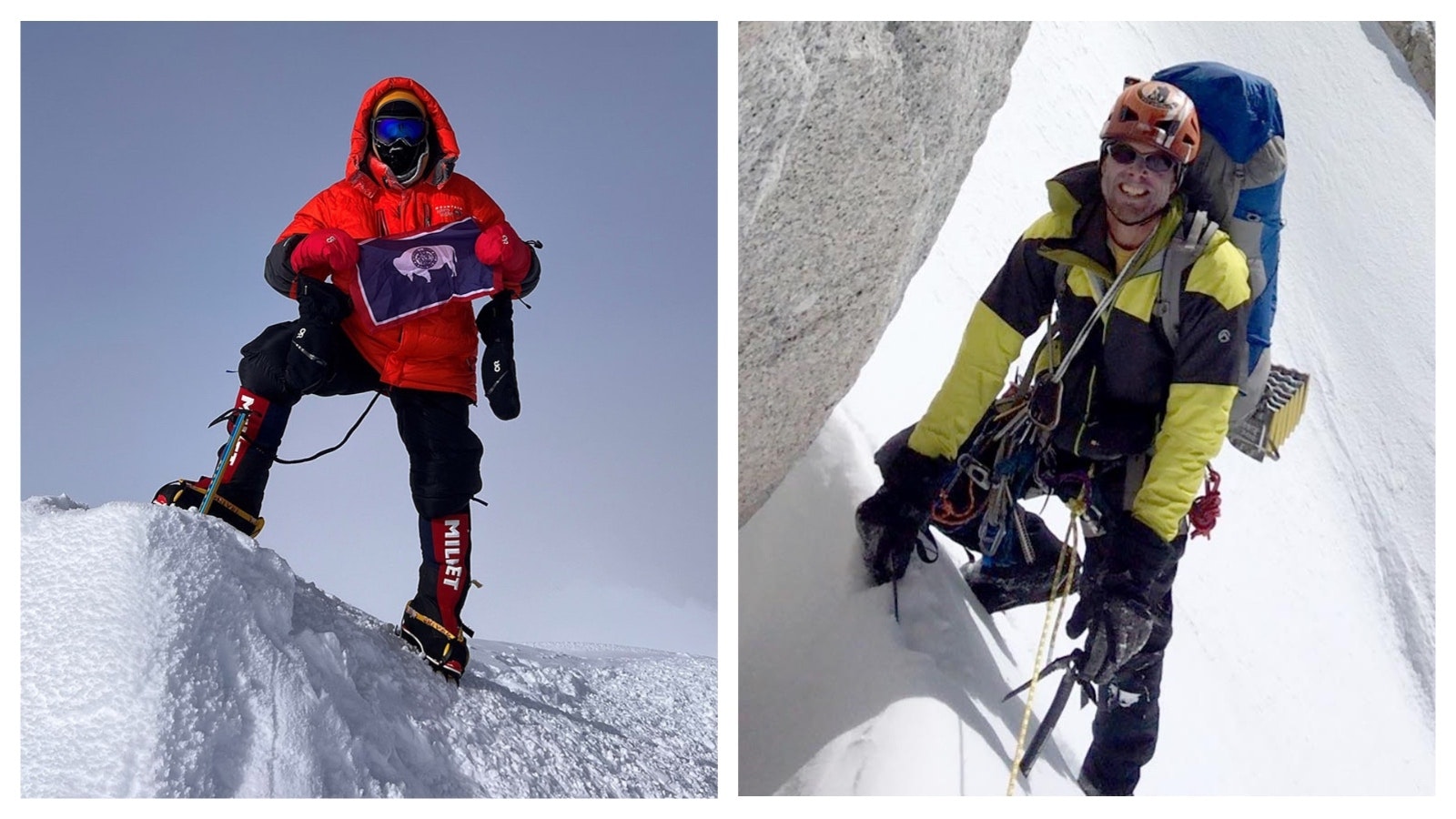
“It’s pathetic,” said Mark Jenkins, a Laramie-based mountaineer who climbed Everest in 1986 and 2012. “Using xenon is like blood-doping. It’s straight-up cheating. And it almost seems pointless. If you show up and take xenon to climb Everest, hell, just take a helicopter.”
A Performance-Enhancing Drug
Jenkins, a foreign correspondent for National Geographic, is an experienced mountaineer and something of a purist when it comes to his chosen sport.
He attempted to establish a new route up the north face of Mount Everest without oxygen in 1986, but didn’t quite reach the summit. When he did reach the summit during his 2012 climb, he used oxygen while taking the “standard” southeast ridge in Nepal.
Summiting Everest without oxygen is rarely done, but Jenkins believes it's what separates true mountaineers from "trophy hunters" and untrained amateurs who just want the prestige of claiming they climbed the tallest mountain on Earth.
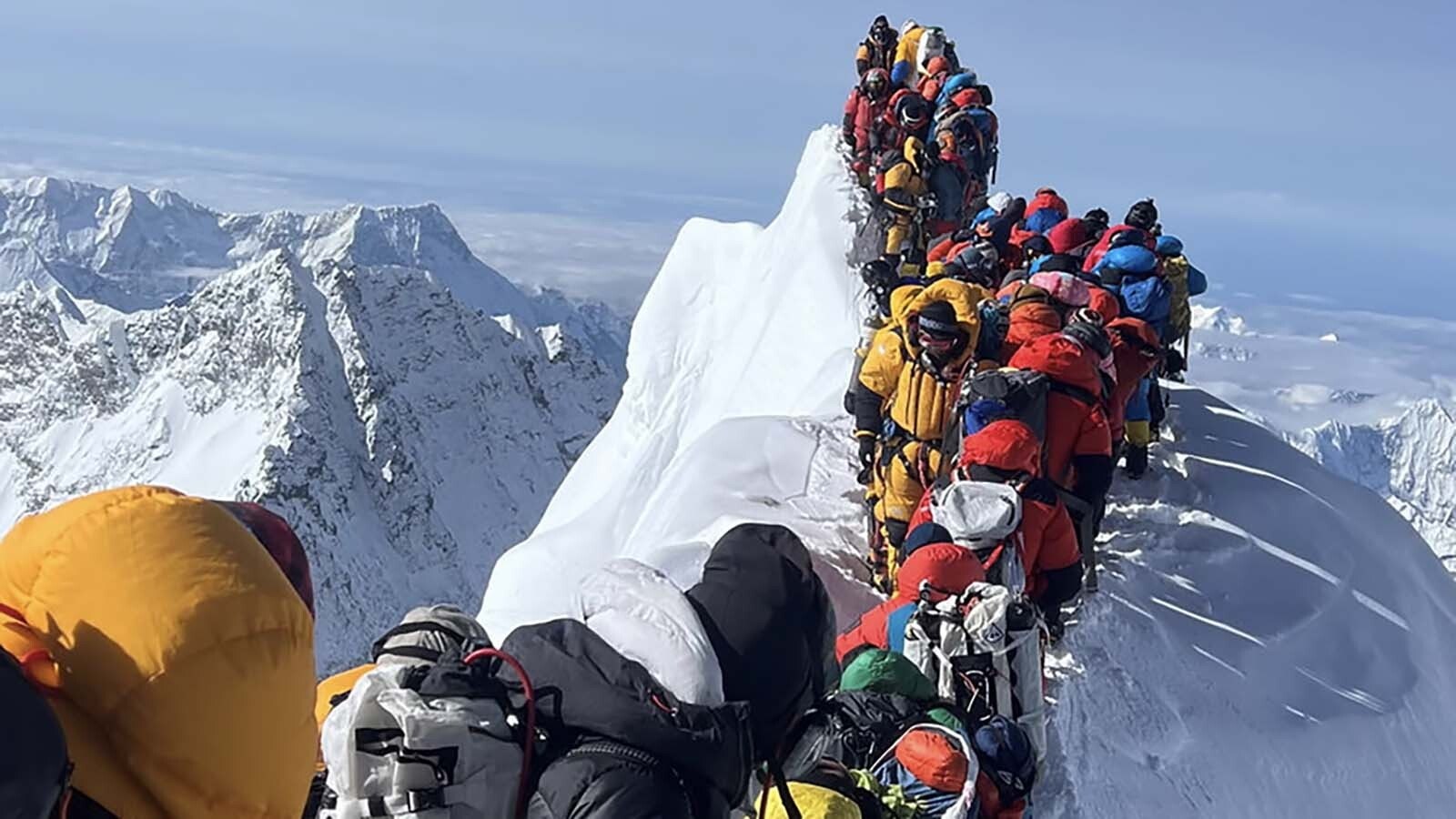
“Only about 200 people have climbed Everest without oxygen, and the other 12,000 have been sucking on a hose the whole way up with their sherpa carrying their oxygen,” he said. “If you removed oxygen from Everest, it would still be a mountaineer’s mountain, because then only those who are fit enough and acclimatize well could climb it.”
As someone who’s already opposed to using oxygen to climb Mount Everest, Jenkins sees the use of xenon as heresy. He called it a “performance-enhancing drug” that has no place among serious mountaineers.
“Humans are often so lame that they just take the easiest way out,” he said. “Well, that's not what mountaineering is about. It's not about the easy way. The point is to be challenged. And if you're going to remove the challenge and the effort, you're not a mountaineer."
Hundreds of mountaineers and entities like the Nepalese government share Jenkins’s opinion. Himal Gautam, the director of Nepal’s tourism department, told The New York Times that using xenon gas is “against climbing ethics” and it would impact tourism by turning the weeks-long excursion on Mount Everest into speed races that could reduce the employment of the essential Sherpas that accompany international climbers.
But that’s Everest, according to Jenkins. For him, summiting the tallest mountain in the world isn’t a triumph of human endurance and tenacity anymore.
“I wouldn't call what people are doing on Everest ‘standard mountaineering’ — that's just Everest,” he said. "Most of the people who climb it don't make any decisions. They don’t make any of the hard calls. They don't put up any of the ropes, they don't read any pitches. It's not mountaineering.”
Lost In The Spectacle
Dr. Joe McGinley, a Casper orthopedist and experienced mountaineer, wants to summit Mount Everest to complete the prestigious “Seven Peaks on Seven Continents” by climbing the tallest peak on each continent. He’s been rebuffed on previous attempts, but he’s determined to reach the summit of Everest soon.
McGinley said he’s been corresponding with Lukas Furtenbach, the owner of the Austria-based company Furtenbach Adventures. He organized and trained the British mountaineers for their xexon experiment on Mount Everest.
The team had been training extensively for their Everest expedition and used traditional methods to achieve their goal. McGinley believes the team could have completed their ambitious venture without xenon, but highlighting xenon was “a good marketing opportunity.”
“I spoke to Lukas about this directly, asking about the background and the theory on xenon,” he said. “I think a lot of what I’ve seen is misleading. It's not just the xenon gas. They still did all the other things required to do a rapid ascent.”
McGinley, who’s done rapid ascents of Mount Denali and Mount Aconcagua in Argentina, said the key to a successful record-breaking ascent is hypoxic tents, also known as altitude tents. These sealed tents simulate low-oxygen, high-altitude environments, forcing the body to adapt by producing more red blood cells and hemoglobin to compensate.
According to McGinley, the British team did “an immense amount of training” for this expedition for over a year, using hypoxic tents and wearing masks with reduced oxygen to prepare themselves for Everest’s harsh environment. Adding xenon to the mix was “a safety feature” and part of the spectacle.
“They wanted to do London to London in seven days,” he said. “Seven days from when they left the airport in London to when they returned with a climb up and down Mount Everest in between. They pulled it off, and everybody’s doing really well. Lukas just added xenon.”
Safer And Shorter
The debate over xenon is fierce, but McGinley is convinced of its benefits. From his medical perspective, he believes xenon will lead to safer summits of Everest and other mountains.
“My whole medical practice and everything else is based on innovation and trying new things,” he said. “The theory behind xenon is that it provides a protective effect to the lungs and brain. It’s a relatively safe treatment, so there's not much downside to it.”
McGinley quantified the British team’s xenon climb as “a positive outcome from first exposure.” Their accomplishment has laid the groundwork for xenon to enter the toolkit of mountaineers and the industries supporting them.
And if xenon makes it quicker to summit mountains like Everest, all the better. McGinley said speed is vital on mountaineering excursions, as it reduces the risk of serious health complications.
“If these teams are getting up the mountain quicker with less-adverse outcomes, that's great,” he said. “If we reduce the risks of pulmonary edema, cerebral edema, and altitude sickness, we're saving lives. We're keeping people healthy.”
McGinley said xenon could be an innovation on the same level as hypoxic tents were 20 years ago. It’s the latest innovation in technology, so it was going to be controversial regardless, but it’s another safety feature that can make mountaineering safer.
“I think it's beneficial,” he said. “I think it adds a layer of safety and reduces the risk of death and injury. I'm not sure why people wouldn't want to embrace that.”
Inevitability
In the publicity of the successful summit, Furtenbach announced that his company will offer two-week round-trip excursions of Mount Everest using xenon gas starting in 2026.
Earlier this year, the International Alpinism Association released a statement saying, “There is no evidence that breathing in xenon improves performance in the mountains, and inappropriate use can be dangerous.”
Now that xenon as a mountaineering tool has been thrust into the international spotlight, the discourse is more intense than ever. Jenkins and McGinley are on opposite sides of the debate, but their conclusion is the same.
“We're going to see more and more people doing it,” McGinley said. “It’s just a matter of fact. There's no way to prevent it.”
McGinley sees the potential value of xenon as a life-preserving tool for novice and expert mountaineers. No matter what someone thinks of Mount Everest, the allure of climbing the world’s tallest mountain will never go away.
“There are no shortcuts in mountain climbing,” he said. “Even with xenon, you still have to climb that mountain, and that’s not an easy task to accomplish. People are going to climb the mountain no matter what. If you can make it safer. I think that's a great thing for everyone.”
Respect
McGinley likened xenon to back-up cameras, a once-revolutionary accessory that’s become standard in most vehicles. Jenkins likened xenon to using an e-bike in a bicycle race.
Jenkins scornfully agreed that xenon will become more common in mountaineering, especially on Mount Everest. It’s another sign of how Everest has "lost its respect" in the 21st Century.
“Everest is not the hardest mountain in the world,” he said. “It's not the most remote mountain in the world. It's not the most beautiful mountain in the world. The only thing it is is the highest, and the only reason it's hard to climb is because you don't have enough oxygen. If you use oxygen to summit Everest, you're just a person who has enough money to have someone else drag your ass up to the mountain. And xenon is even worse."
Jenkins doesn’t see summitting Everest as an accomplishment in 2025. He called it “a travesty.”
“It's all about money,” he said. “It's about money for the outfitters, money for Nepal, money for the Sherpas, money for the guides. It’s simply a trophy for the wealthy. (Everest) used to be a noble mountain, and now it's a travesty.”
On Wednesday, Jenkins was in the Snowy Mountains with ice axes, training for a trip to Ecuador. He’ll be establishing new climbing routes on Mount Chimborazo, the nation’s highest summit, without oxygen.
Jenkins is aware that mountaineering is an unregulated sport, although xenon has been on the World Anti-Doping Agency’s Prohibited List of banned substances since 2014. Nevertheless, he lamented xenon as the latest injustice in “the continued degradation of mountains.”
“Mountaineering is a game, but it’s a mortal game — f*** up, and you die,” he said. “People used to respect Everest. You’d climb 20, 30, 40 mountains before you got to Everest. Not anymore. People who’ve never put on crampons or used an ice ax are summitting Everest. There’s no respect for Everest anymore.”
Andrew Rossi can be reached at arossi@cowboystatedaily.com.