Yellowstone National Park has never published an official guide on how visitors can safely navigate a traffic jam caused by bison. That’s why wildlife photographer Max Waugh published his own.
The right way to deal with bison jams is a contentious issue among Yellowstone visitors. Many people frown upon proactive measures, but others prefer not to wait for hours while the bison aimlessly wander or wait on the two-lane roads.
Waugh’s pictorial guide to bison jams hasn’t been endorsed by the National Park Service, as it’s based on his personal opinions and experiences. Nevertheless, it’s one of the only resources for anyone caught in traffic trepidation when bison brush past their vehicles.
“I’m not one of the people who have had their vehicle touched by a bison,” Waugh told Cowboy State Daily. “I’m not an official authority, but I know many people in Yellowstone have the best intentions but are unsure of how to deal with these situations. Maybe this helps shed a little bit of light on a better way to do things.”
Move It!
Waugh is based in Seattle, Washington, but has been coming to Yellowstone to take photos and lead tours for the last 25 years. He owns a piece of property outside the Northeast Entrance, so he can rightfully consider himself a part-time resident in the Greater Yellowstone Ecosystem. ‘
Waugh has the utmost respect for Yellowstone’s wildlife and their habitat. He also gets impatient with the park’s interminable bison jams.
“A lot of people aren’t quite sure how they should go about dealing with bison in the road, especially if they’re in the park for the first time,” he said. “They’re intimidated by the prospect of sharing the road with these creatures. So, you get bison jams that last several hours on a 20-mile stretch of the Grand Loop Road. That’s a little frustrating.”
Yellowstone is a haven for wildlife and an important thoroughfare for tourists and residents of the gateway communities. Bison are unmoved by human concerns, which was a source of concern for Waugh.
“A lot of people are content letting the wildlife do their thing, but there are locals trying to get through the park,” he said. “There are often emergencies that happen on these roads. Most people say, ‘This is their place,’ while not acknowledging that there are human concerns as well.”
That inspired Waugh to create a bison jam guide on his website.
“If I put this on the internet, it would educate people before their first visit to the park,” he said. “That was the primary goal.”
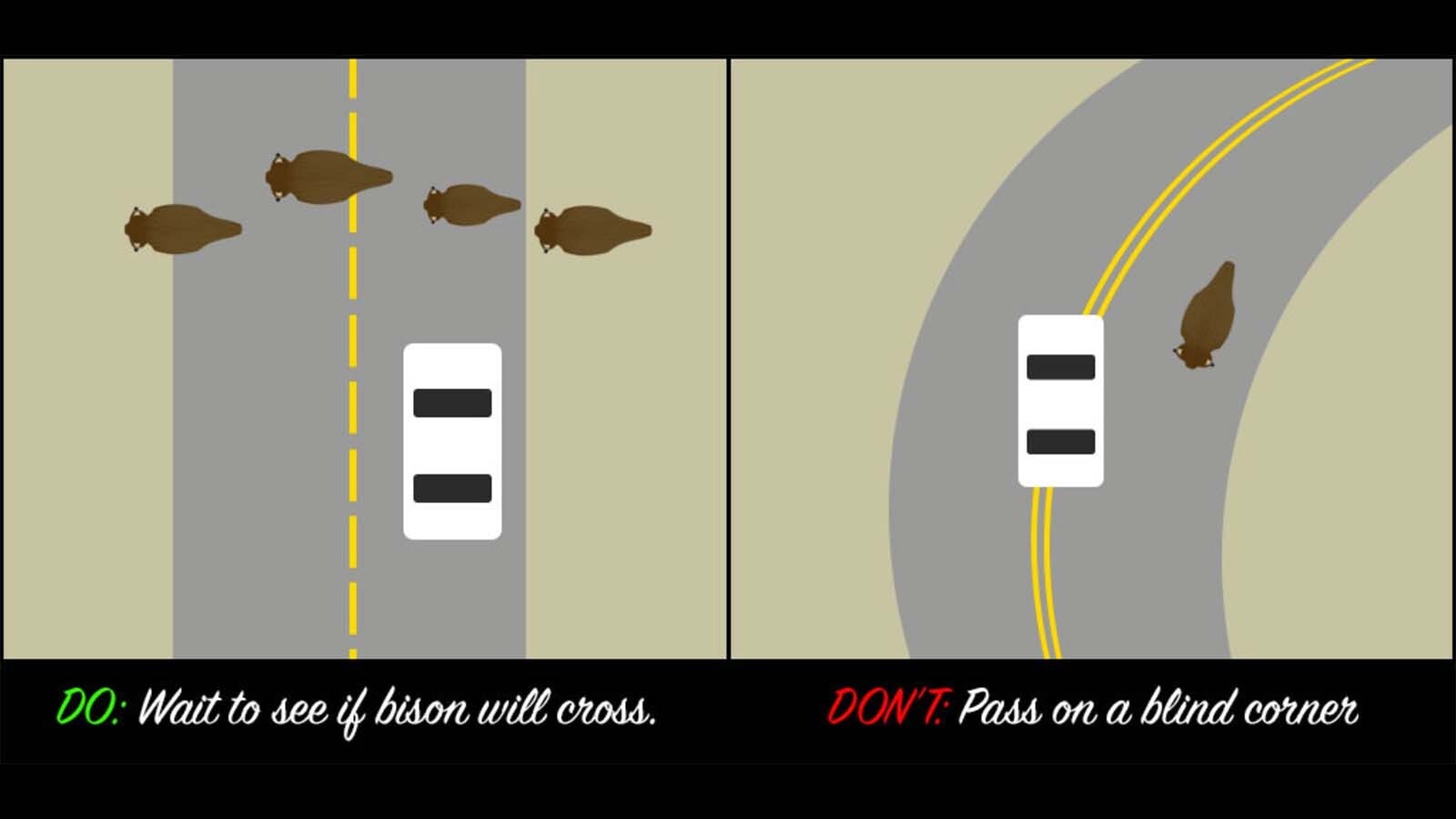
Yellowstone National Park has never published a "how-to" guide for navigating bison jams on roads throughout the park. So, wildlife photographer Max Waugh published his own to keep traffic moving while respecting bison and their habitat. (Courtesy Max Waugh, maxwaugh.com) 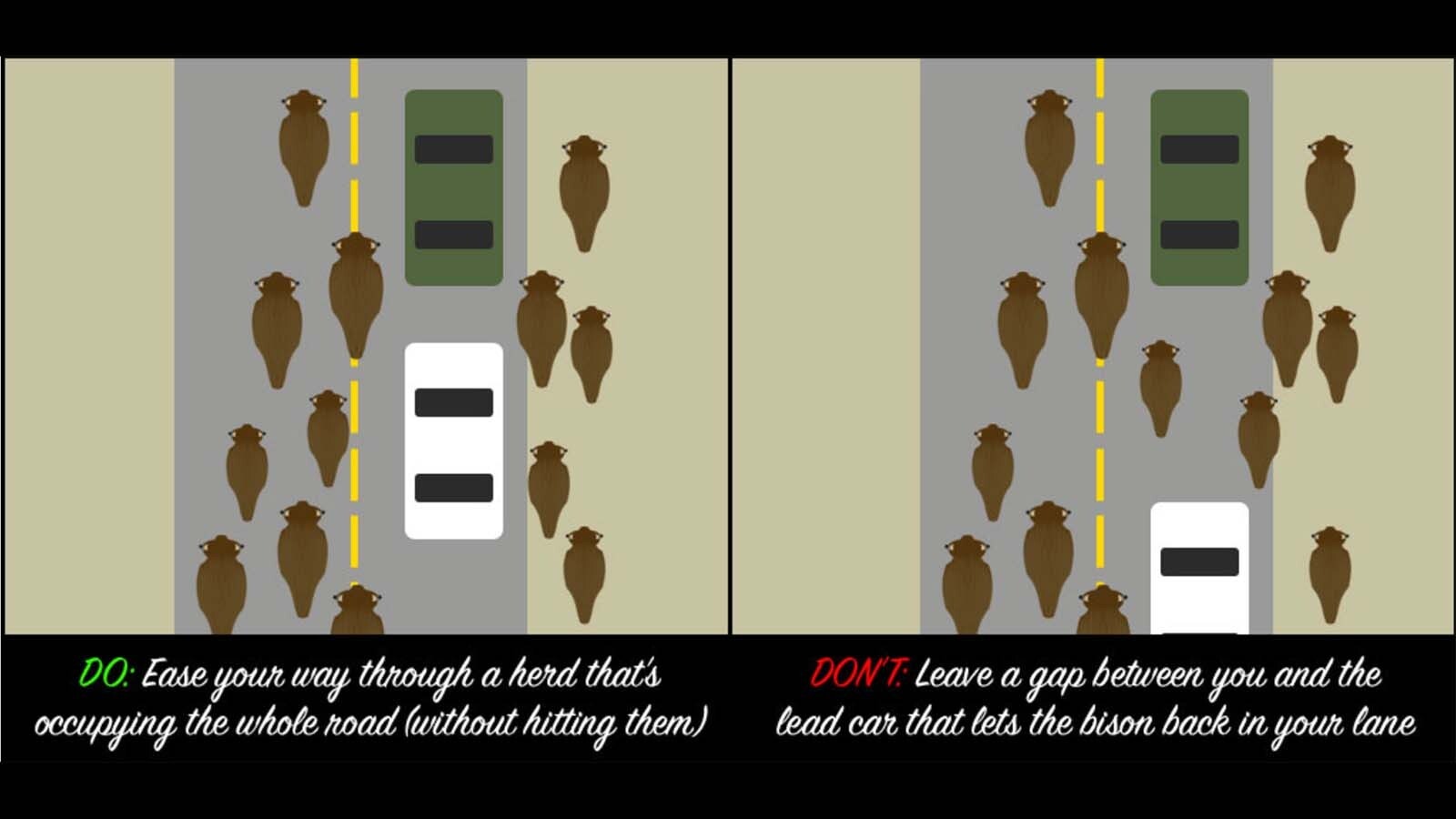
Yellowstone National Park has never published a "how-to" guide for navigating bison jams on roads throughout the park. So, wildlife photographer Max Waugh published his own to keep traffic moving while respecting bison and their habitat. (Courtesy Max Waugh, maxwaugh.com) 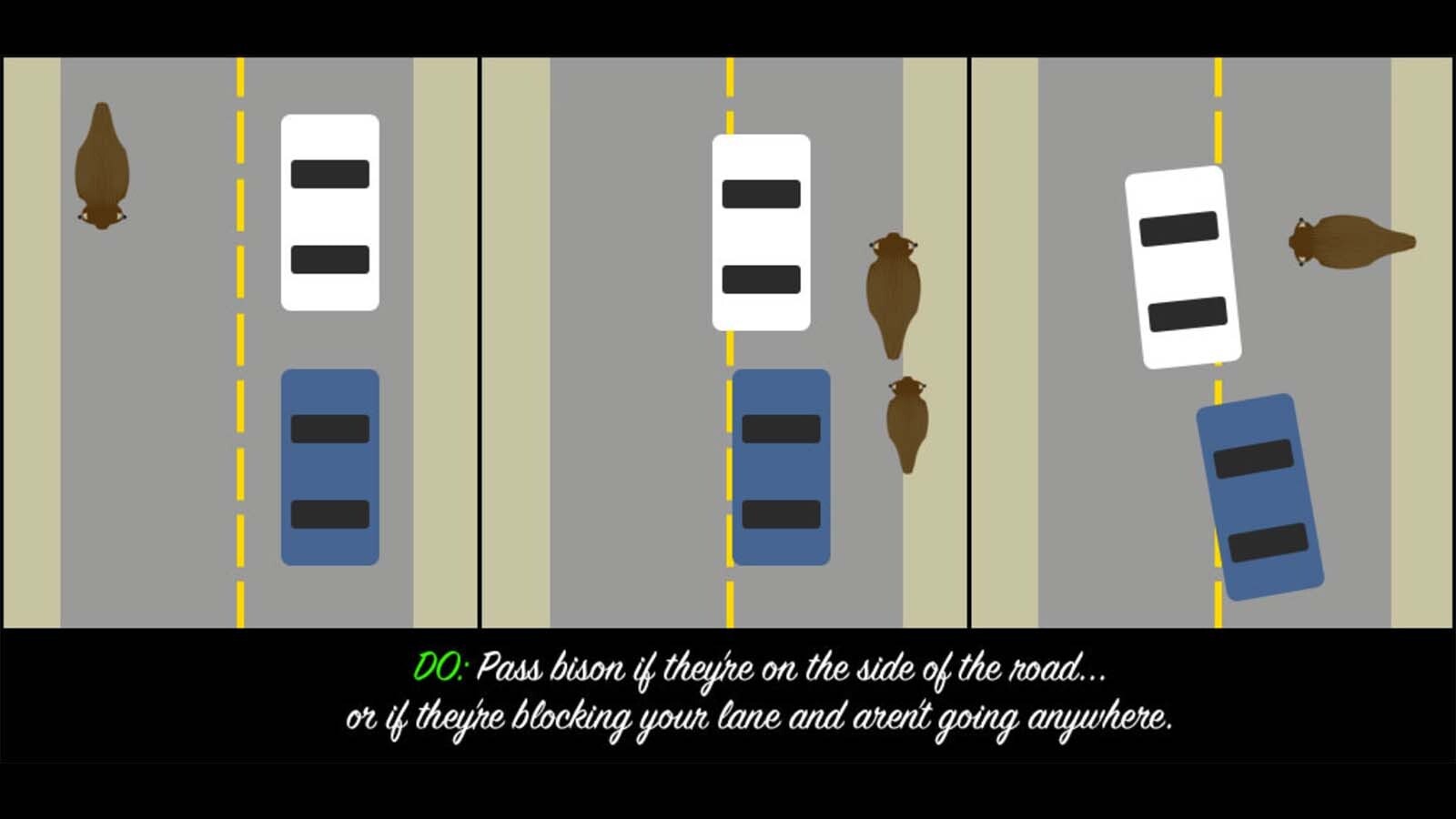
Yellowstone National Park has never published a "how-to" guide for navigating bison jams on roads throughout the park. So, wildlife photographer Max Waugh published his own to keep traffic moving while respecting bison and their habitat. (Courtesy Max Waugh, maxwaugh.com) 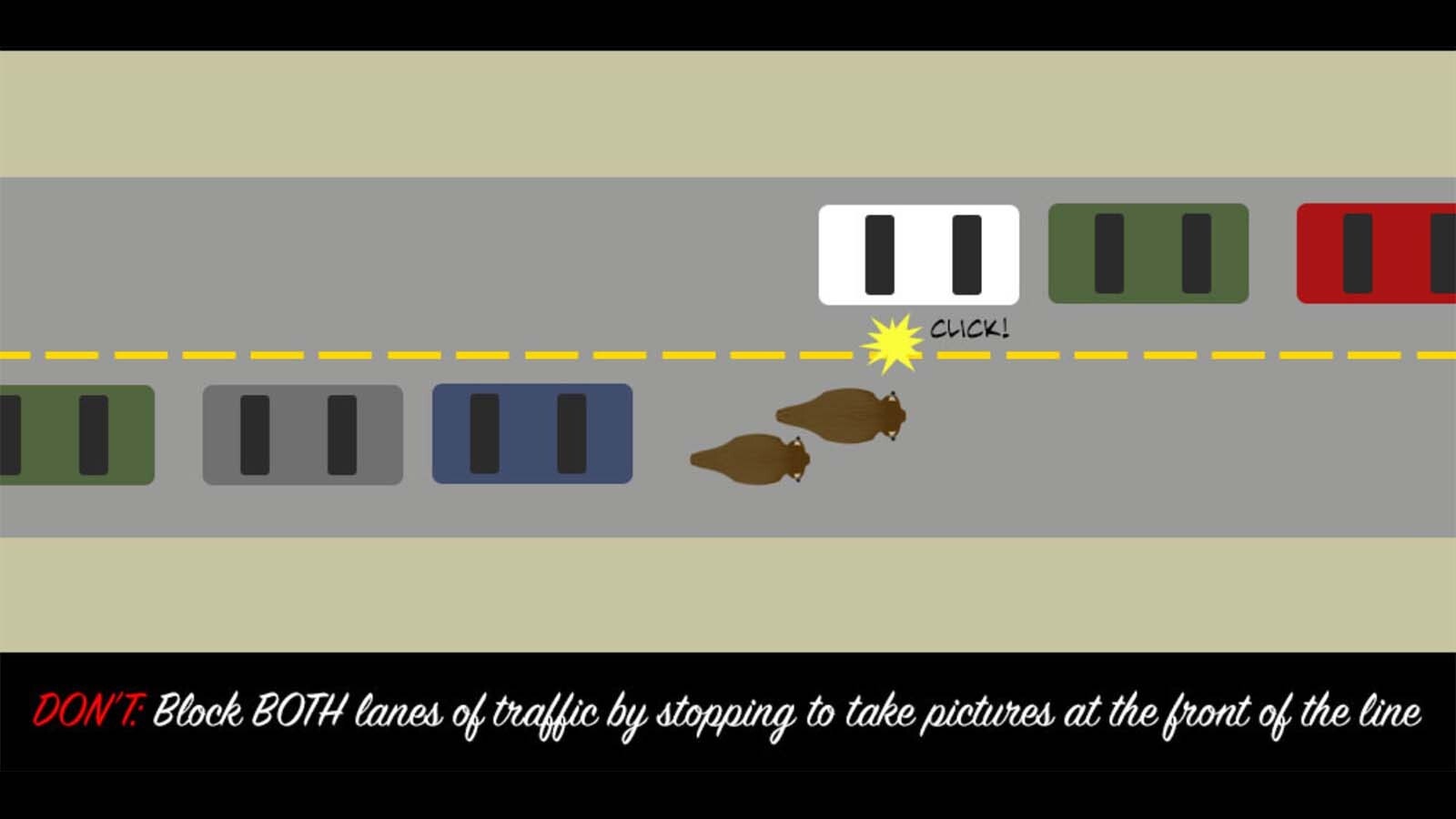
Yellowstone National Park has never published a "how-to" guide for navigating bison jams on roads throughout the park. So, wildlife photographer Max Waugh published his own to keep traffic moving while respecting bison and their habitat. (Courtesy Max Waugh, maxwaugh.com)
Mind The Gaps
Waugh’s bison jam guide is more than a blog post. It includes photos and diagrams that Yellowstone visitors can follow when they encounter bison on or near the road.
“If this happens to you, congratulations! You’re about to endure one of the tourist experiences that makes Yellowstone so unique: the Bison Jam,” Waugh wrote.
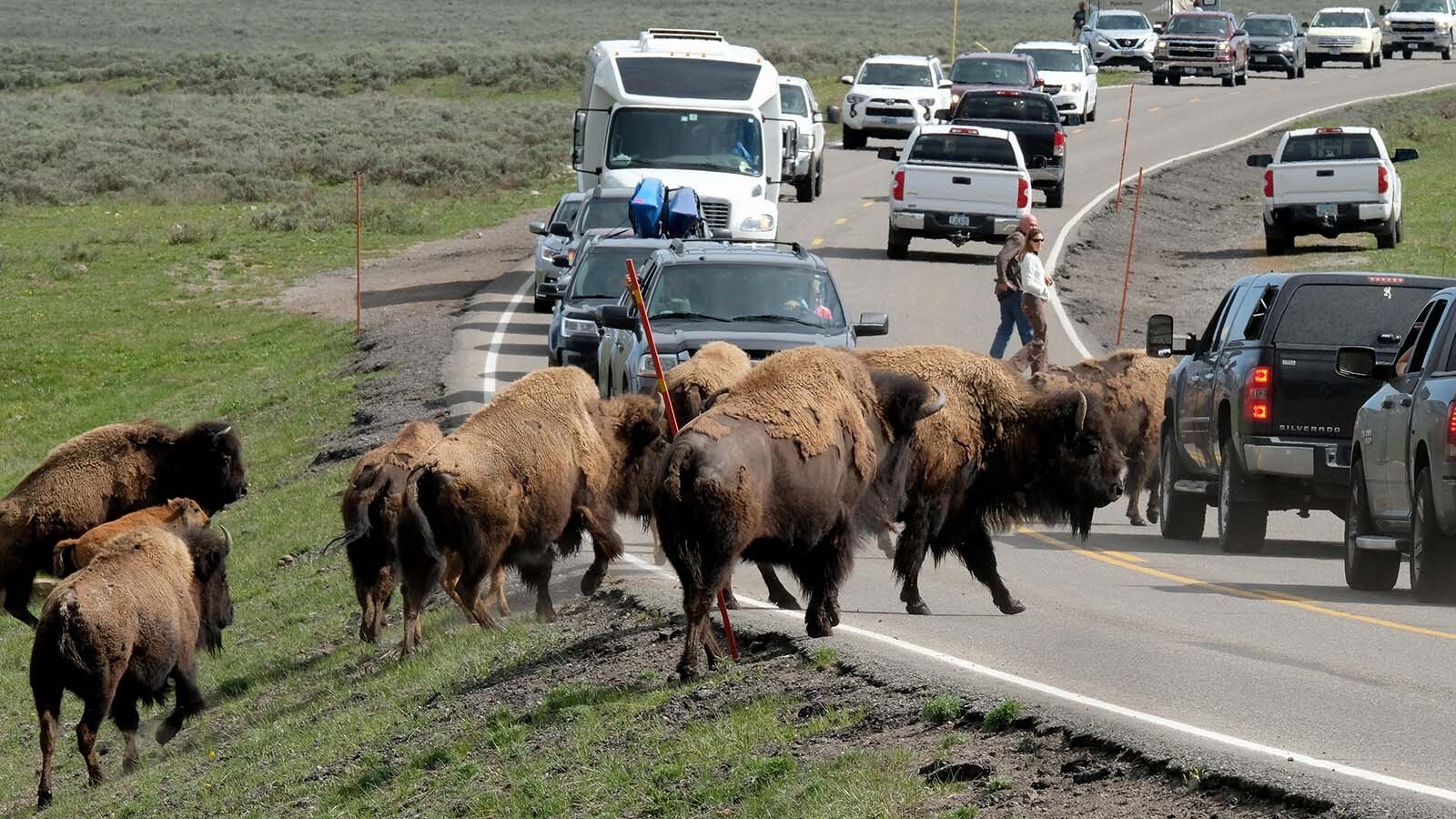
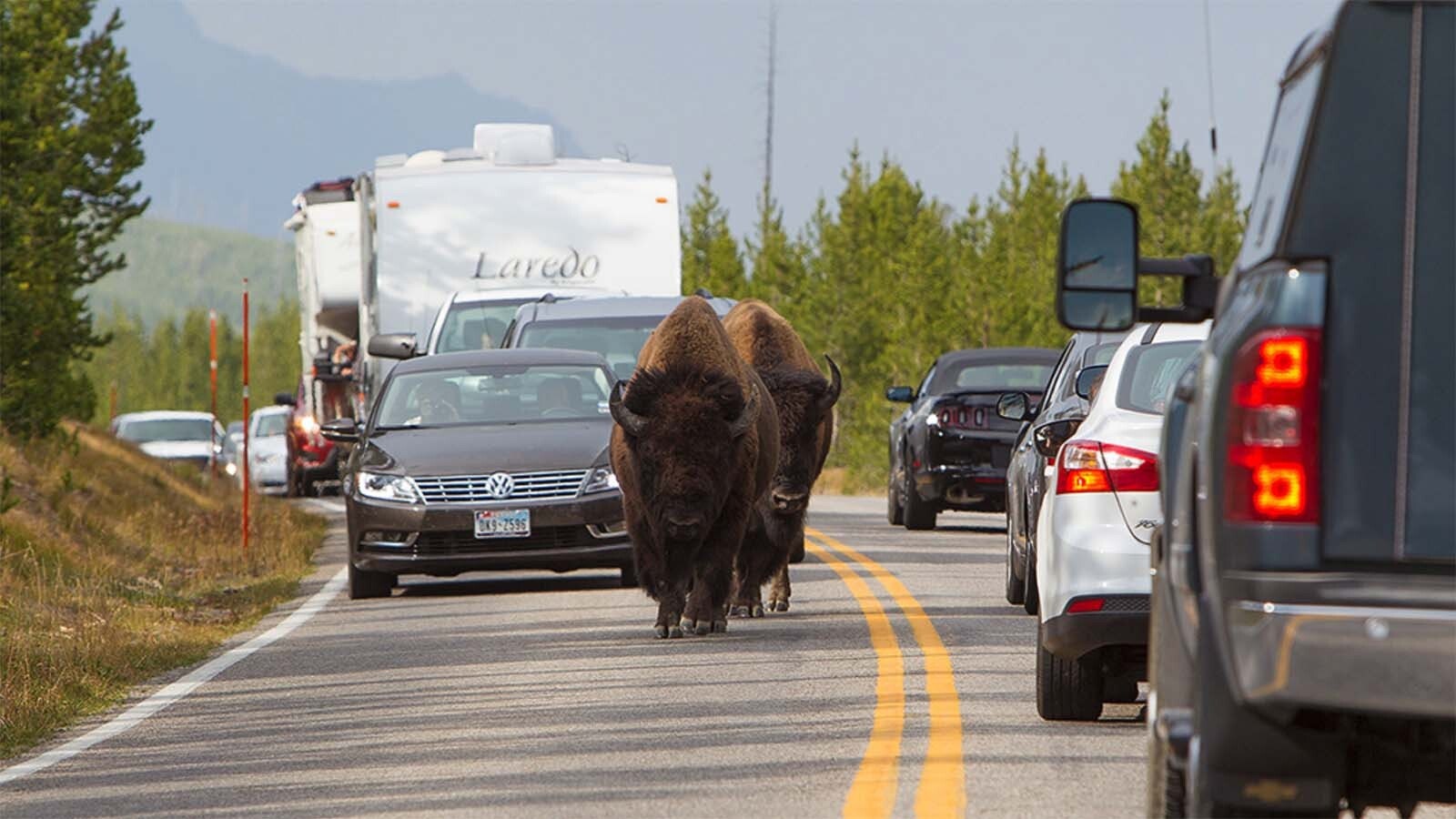
One of the images is Waugh’s “Tiananmen Square” photo: a bison defiantly blocking a line of vehicles inching behind it as it strolls along the road. Waugh recognizes that bison jams are part of “the Yellowstone experience,” but that doesn’t mean everyone shares that sentiment.
“People are rightfully sensitive about the wildlife and their needs, but I know people who were in a jam that lasted six hours,” he said. “Many folks can’t kick back for hours and ‘soak in nature’ at 5 mph.”
Waugh’s guide is his version of “bison jam etiquette” based on his opinions and experiences. He offers suggestions from both sides of the road on how to keep traffic moving, whether you’re blocked by bison or caught in the herd.
One of his tips is to “avoid gaps” when caught in a bison jam. If caught in a herd, you should respectfully treat yourself as part of the herd.
“If there’s a herd of bison in the road, my philosophy is that I've got to stick close enough to this herd, so we don't have more bison piling in front of me,” he said. “If you leave these gaps, more and more bison are going to crowd in and suddenly slow everything down.”
If you’re not in front of the herd, Waugh believes the best course of action is to safely tailgate the vehicle in front of you. Where there are gaps, there will be bison.
“You want to stay pretty close to the next vehicle, so you don't have more animals coming between you,” he said. “That doesn't mean driving so close that you're nudging bumpers with each other, and it doesn't mean driving so close that you're touching the animal.”
Dos And Don’ts
Waugh’s guide has a lot of handy dos and don’ts when it comes to bison jams. “Do” pass bison if they’re on the side of the road or in your lane and not going anywhere, and “Don’t” block both lanes of traffic to get a picture of a bison jam in the opposite lane.
Some of Waugh’s suggestions have drawn scrutiny, but that’s to be expected. The final section of his guide is entitled “Ignore the Dirty Looks.”
“We've had epithets and expletives yelled at us for how we’ve dealt with bison jams,” he said. “They’re upset because they think we’re being dangerous, even though we're driving well below the speed limit and not touching the animals.”
Waugh said he avoids Yellowstone during the summertime, when traffic is thickest and bison jams are most frequent. Nevertheless, he’s used to dealing with “tourist issues” and isn’t fazed when others object to his methods of getting out of a jam.
But that’s better than other methods that Waugh has seen people use to get out of a bison jam. Patience is key to his guide, especially since belligerently barking at bison tends not to work.
“I don't honk my horn at them,” he said. “I don't beat the side of my vehicle to get them to move. These are things that the National Park Service doesn’t want you doing either. I think we can respect the animals while still finding a way to work with them.”
Waugh said the response to his bison jam guide has been “pretty positive” since he published it. His goal isn’t to infringe on the Yellowstone experience but to make others aware that bison don’t own the road.
“People can take my suggestions with a grain of salt,” he said. “I’m sensitive to the fact that these are my opinions, and I’m just a visitor, too. They can take or leave the advice. But I think a lot of people who are in the park more than I am handle things in a similar fashion.”
Yellowstone National Park has never published a "how-to" guide for navigating bison jams on roads throughout the park. So, wildlife photographer Max Waugh published his own to keep traffic moving while respecting bison and their habitat. (Courtesy Max Waugh, maxwaugh.com) 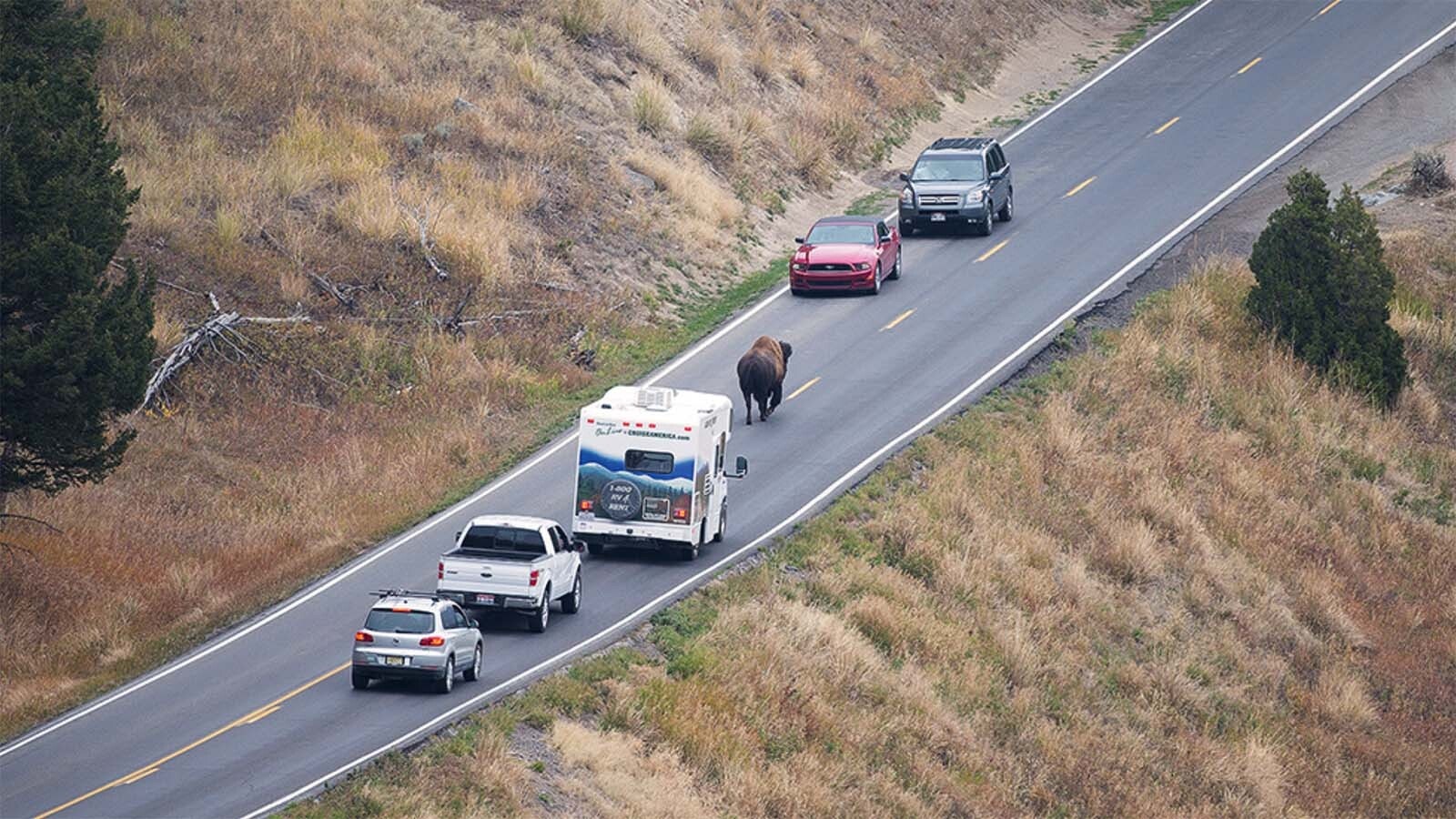
Yellowstone National Park has never published a "how-to" guide for navigating bison jams on roads throughout the park. So, wildlife photographer Max Waugh published his own to keep traffic moving while respecting bison and their habitat. (Courtesy Max Waugh, maxwaugh.com)
Federal Feedback
Neither Yellowstone nor the National Park Service has published an official guide to bison jams, and Waugh doesn’t think they ever will.
“I’m not sure they want to put themselves in a position where they're advising people how to drive,” he said. “There are probably traffic ordinances or laws about this sort of thing, but they don’t want to get into any of that in an official capacity.”
Waugh doesn’t want his guide to encourage behaviors that Yellowstone rangers wouldn’t approve of. That’s why he’s “picked the brains” of rangers to get feedback on his guide and how he can improve it.
“The indication I’ve received from the rangers was that what I’ve said is kosher,” he said. “I want to make sure that I'm not misinforming or putting people in danger, but every indication I’ve received is that they’d say things along the same lines. I don't consider it an official endorsement or anything like that, but it makes me a little more comfortable having that information out there.”
Waugh isn’t expecting an official endorsement of his bison jam guide, but he hasn’t been told to remove it, either. His guide has been circulating on social media since he published it, so he keeps it up as a potential resource for future Yellowstone visitors.
As Yellowstone’s annual attendance grows, the inevitability of bison jams increases. Waugh doesn’t expect his guide to solve the problem, but it can help keep traffic flowing and serve as a reference for anyone unsure of what to do when tailgating a bison herd.
“We’re trying to make the whole experience more efficient and free up the roads for emergencies,” he said. “That’s the underrated aspect of the whole thing.”
Contact Andrew Rossi at arossi@cowboystatedaily.com
Andrew Rossi can be reached at arossi@cowboystatedaily.com.