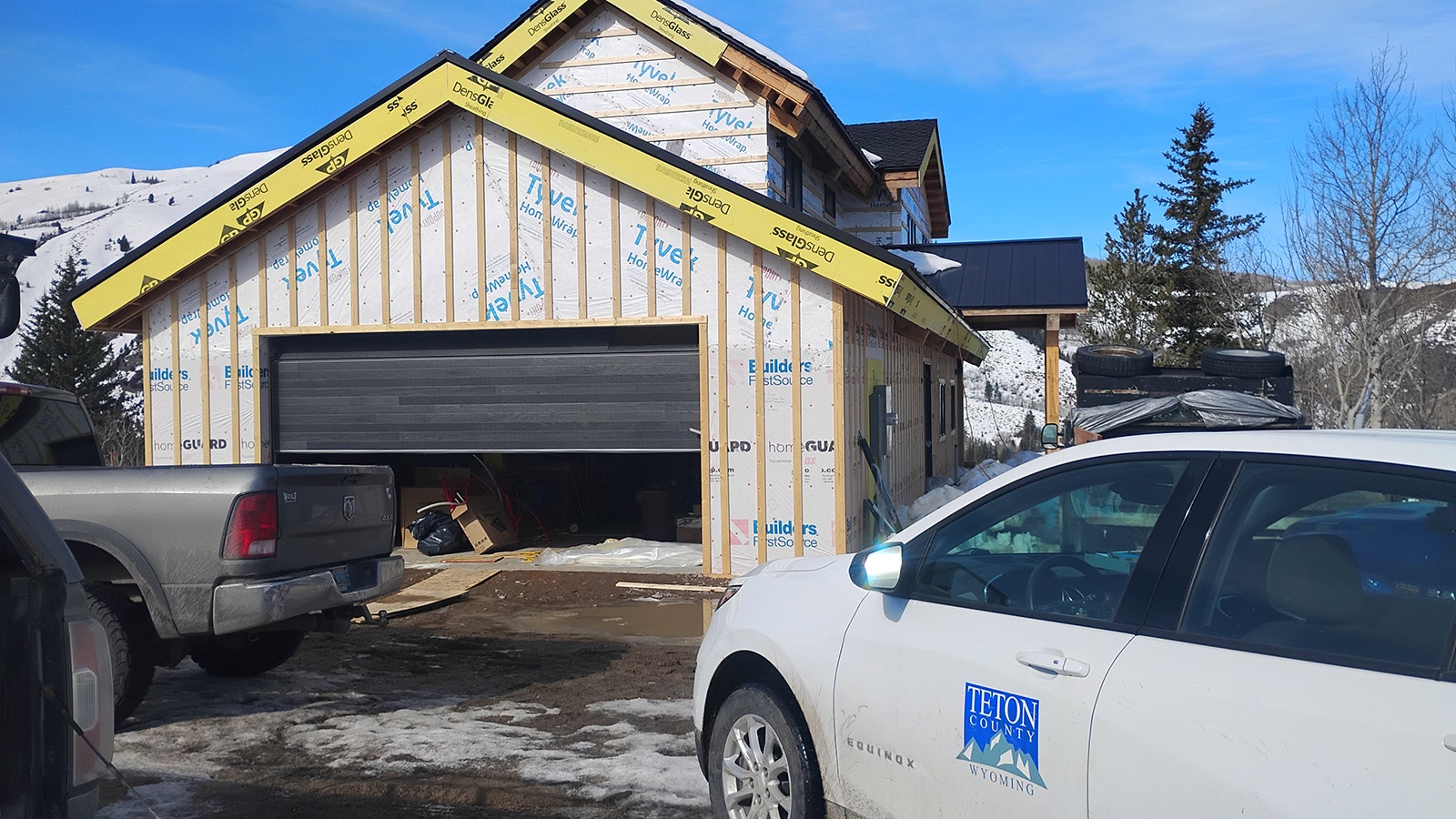
A couple who paid a $24,325 fee to Teton County government to build a home on property they already owned is suing, saying the county extorts fees from homeowners in a way that violates the U.S. Constitution’s ban on government “takings” without compensation.
Vernon "Trey" and Shelby Scharp filed their civil lawsuit complaint Wednesday in the U.S. District Court for Wyoming against the Teton County Commission.
The couple seeks a favorable interpretation of the law, a halt to Teton County’s exaction of “affordable workforce housing” fees, and monetary relief from what it calls the county’s “extortionate” land development regulations.
In The Crosshairs
The lawsuit takes aim at the county’s 600-plus-page land use regulations that dictate how, where and what people can build, as well as the fees or additional building projects people are required to undertake.
According to the county’s methodology, it charges people homebuilding fees often amounting to tens of thousands of dollars — or requires them to build additional price-capped homes themselves — to help house the low-income workers their existence will theoretically demand.
The logic goes that if a person moves to Teton County and builds a home, he’ll need teachers for his kids, waiters for his nights out and other workers, but those workers can’t afford to live in the state’s richest county.
In Teton County's capital city of Jackson, the average home price hit $8.6 million last year.
But in the case of the Scharps’ project, the county's logic doesn’t fit, their lawsuit claims.
In 2021, they were already living on their own land near Hoback Junction in Teton County in a small cabin when they applied to build a larger home to accommodate their family, says the complaint. And before that, they’d lived in rental housing in the county for “many years.”
The couple started making plans to build a bigger home on their property to accommodate themselves and their adolescent daughter. They planned to rent their existing cabin to some of the valley’s many workers, the complaint says.
The property is 5 acres in size, so the family could have built multiple additional dwelling units and parking space to help fund the construction of its new home, but the county regulations wouldn’t allow it because the area was zoned only for one single-family residence, the complaint says.
The family was able to apply for a special “accessory residential unit” permit to rent out the cabin and work toward building their own, larger home, however.
But when they applied for the accessory residential unit permit in 2022, a Teton County official told them that the cabin was too big to be an accessory residential unit.
In other words, the Scharps were penalized for trying to provide “too much rental housing” in a county that hinges many of its housing regulations on its dire need for workforce housing, the lawsuit says.
The official suggested the Scharps fill their basement with gravel to make it smaller to conform to the permit.
The family found a workaround: The Teton County Historic Preservation Board determined the building was historically significant and therefore qualified for the floor area maximum that had kept them from permitting it (or could have required them to fill its basement with gravel) earlier.
Next
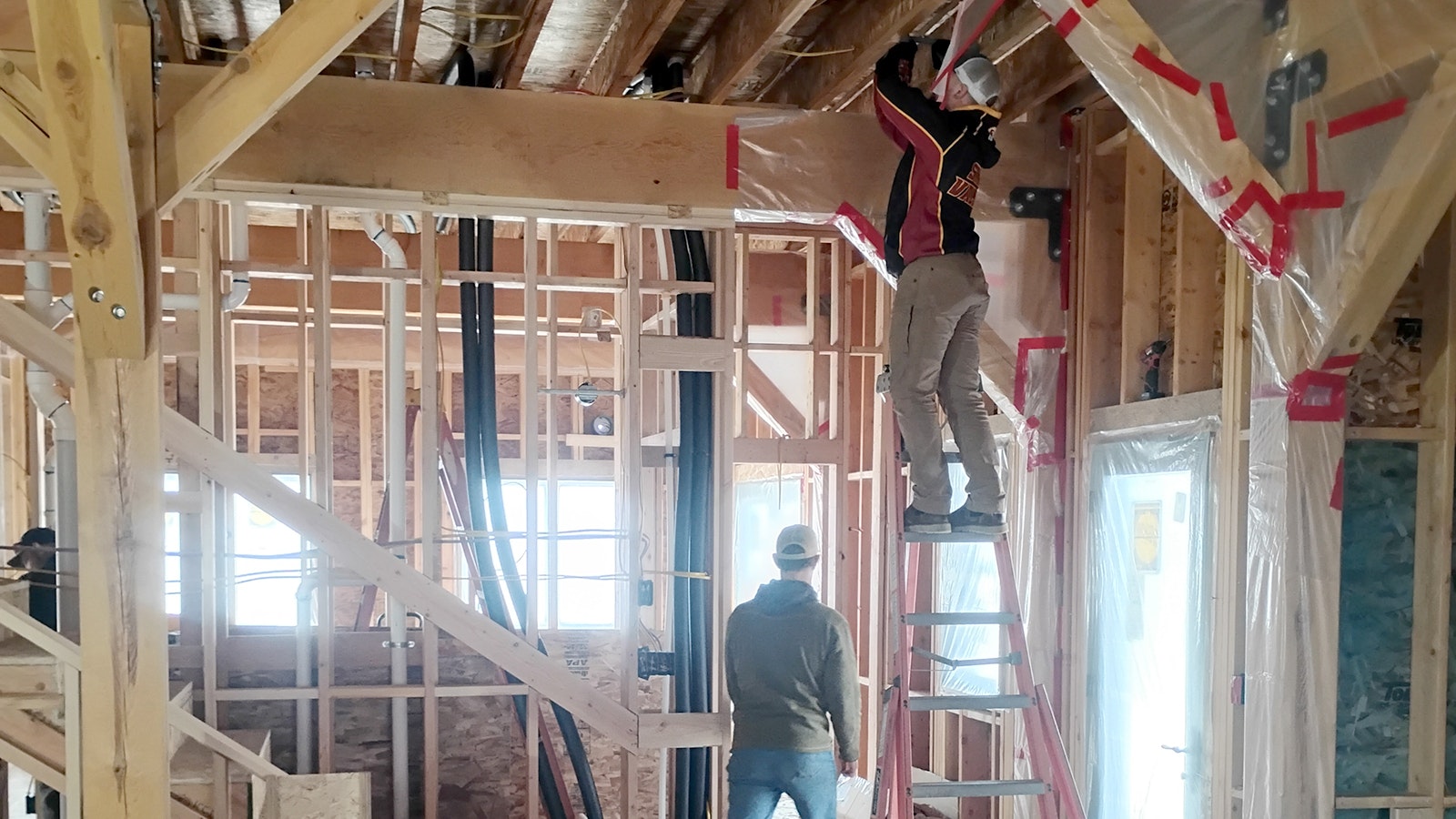
The Scharps initially planned to build a roughly 2,700-square-foot home with a shallow crawl space, but they kept increasing that size as they navigated the county’s building regulations. For example, they chose to make the most of an earthquake-proofing requirement to excavate additional area and pour perimeter footings by adding a basement.
They thought they could rent the basement out to recoup some of their costs, but the zoning rule forbids multi-family dwellings in that area, the complaint says.
“Once again,” the complaint says, “the Scharps’ home building plans threatened to provide too much affordable rental housing.”
Twenty-Four Grand
Finally, the Scharps settled on plans for a 3,776-square-foot home and applied for a building permit in 2022.
“Teton County demanded the Scharps pay a $24,325.05 affordable workforce housing fee pursuant to its Land Development Regulations,” the complaint says.
To limit their already heightened costs, the Scharps have acted as their own general contractors on the project and have digested “thousands of pages of regulations relevant to building a home in Teton County,” among other, numerous chores, says the complaint.
Their home is still under construction, and the couple hopes to move into their new home by Thanksgiving, the document says.
Yeah, But
Wyoming law gives Teton County the authority to set its land use regulations.
But those are limited by case law surrounding the Fifth Amendment’s promise that no property shall be “taken” from people without just compensation.
Specifically, past cases demand that homebuilding fees are related both in nature and breadth to the impact the homebuilder is going to have on his community; and that the fee is essentially connected to and roughly proportionate to those impacts.
The U.S. Supreme Court galvanized those requirements last April.
The Scharps were already living and working in Teton County. They’d looked for ways to provide more rental space to people to offset their own costs. And the addition of their newly-constructed home could put downward pressure on the Teton County housing market, the complaint argues.
Yet they had to pay $24,325 toward what the county’s general rules system calls their worsening of the workforce housing shortage.
The disconnect between the Scharps’ reality and the county’s theories makes this fee unconstitutional, the complaint alleges.
Teton County Civil Deputy Attorney Keith Gingery countered these claims in a Thursday email to Cowboy State Daily. He said the county hasn’t yet been served with the complaint, but that the Scharps’ attorney sent a courtesy copy Wednesday.
“We are currently reviewing their complaint and will respond through the court process,” wrote Gingery.
But, he added, “Teton County strongly stands by our most recent affordable housing nexus study completed in 2023. The county’s adoption of affordable housing mitigation fees is fully compliant with all constitutional provisions requiring an essential nexus and proportionality.”
The Ask
The complaint asks the court to issue a judgment that the county’s Land Use Regulations in this area are unconstitutional under the Takings Clause “both facially and as applied to the Scharp residence.”
That means this lawsuit attempts to defend everyone, not just the Scharps, from what it calls unconstitutional homebuilding fees in Teton County. It asserts the theory that those regulations are unconstitutional in any situation.
The lawsuit also asks for a judgment that the Scharps suffered a violation of civil rights.
It requests money damages, for the court to prohibit Teton County from enforcing those rules against other builders, compensation for attorney’s fees and expert fees, lawsuit costs, and “any other relief the Court deems just and proper under the circumstances.”
The Scharps’ attorneys are David J. Deerson and Brian Hodges of Pacific Legal Foundation, and Austin W. Waisanen, a Cody-based attorney also working for Pacific Legal Foundation.
Clair McFarland can be reached at clair@cowboystatedaily.com.