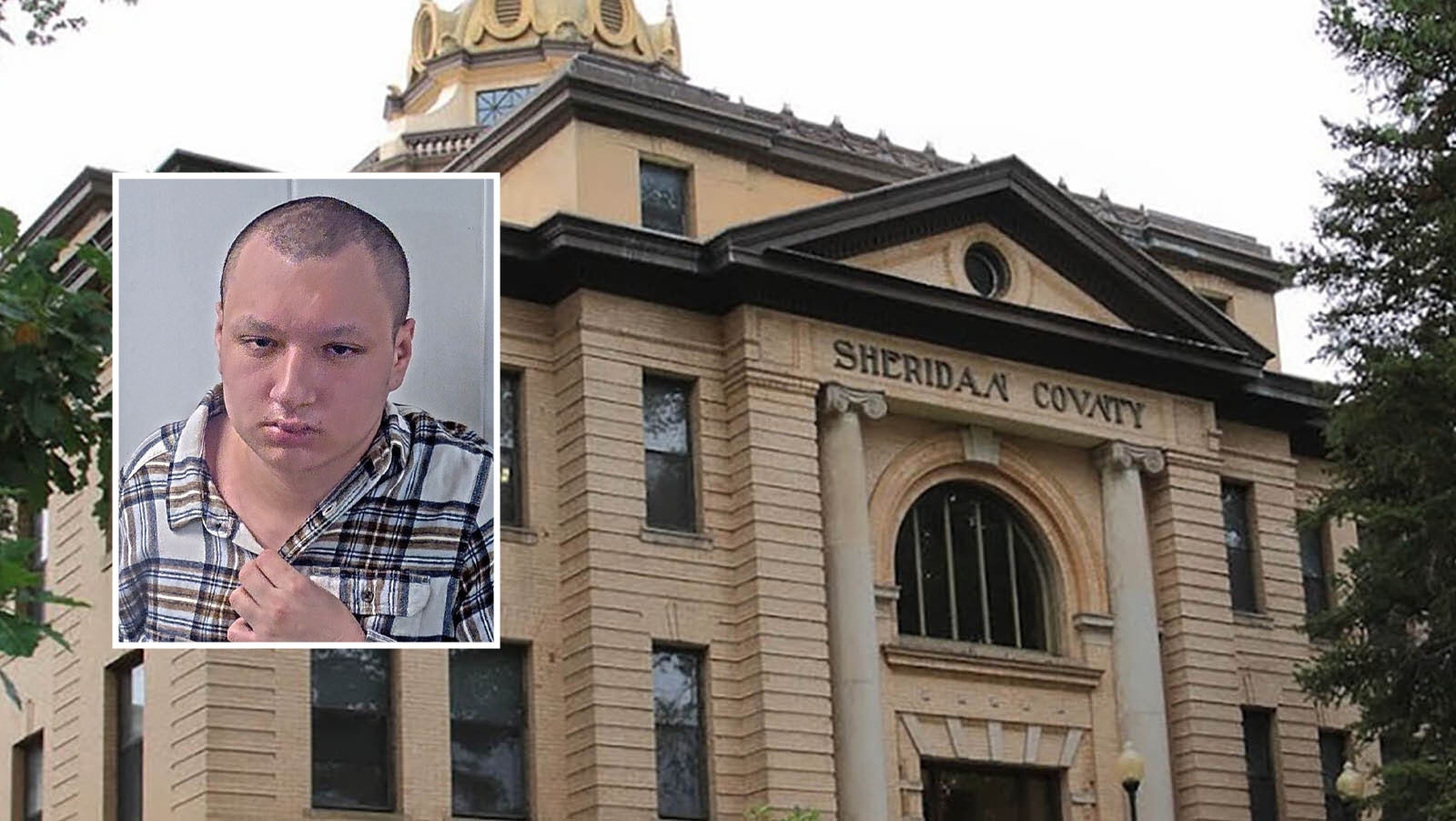
A psychologist in the case of a man accused of murdering his mother, concluded that Israel Melvin was not fit to stand trial. A judge in the case dismissed the evaluator, saying he did not follow instructions.
A Wyoming judge on Monday disqualified the mental health examiner for a Sheridan man accused of bludgeoning his mother to death in her home last January.
Israel Melvin, 23, faces one count of second-degree murder in Sheridan County District Court on claims he bludgeoned his mother to death and left her body under gasoline-soaked blankets last January – before Sheridan police found him in a cloud of marijuana in a fast-food restaurant’s bathroom.
The case has been fraught with concerns for Melvin’s competency to participate in court, and it now hinges on whether he was too mentally ill when police said he murdered his mother to comprehend his actions or understand legal consequences.
Circuit Court Judge Jefferson Boone Coombs last autumn deemed Melvin mentally fit to be prosecuted, after Melvin’s defense counsel, State Public Defender Brandon Booth, didn’t object to an evaluator’s finding that the man was well enough to stand trial.
Melvin then pleaded “not guilty by reason of mental illness” in the district court.
District Court Judge Darci Phillips ordered an evaluation of Melvin’s likely mental state at the time of the crime. When Booth asked for a second evaluation by a doctor of Melvin’s choosing – forensic psychologist Dr. Max Wachtel – Phillips issued another order telling Wachtel to investigate that same topic: Melvin’s mental state at the time of the crime.
Wachtel, rather, sent Booth and Sheridan County Deputy Attorney Christopher LaRosa concerns that Melvin might not be well enough for court, after all.
That sent the prosecutor and public defender into a clash about due process and the rule of law.
LaRosa wrote Phillips in an April 28 filing, asking her to strike Wachtel’s evaluation (which is not public) from the record and disqualify the evaluator from the case.
Booth countered May 9, saying doing so could discourage future evaluators from expressing concerns about defendants’ real and relevant mental health obstacles.
Melvin’s public defender said he was also working with the evaluator to get the ordered analysis done, but that the evaluator was burdened by a concern about Melvin’s “ability to recall and relate factual information” while he tried to assess him.
Wachtel declined to comment on Wednesday, saying it would not be appropriate to speak publicly on the ongoing case.
Prosecutor’s Ask
LaRosa’s filing says Wachtel disobeyed Phillips’ order by opining on whether Melvin was well enough to go to court rather than assessing Melvin’s mental state at the time of the crime.
“Wachtel decided to answer a question not asked and forensically assess a legal issue already ruled on,” wrote LaRosa.
District Court judges have a duty to address concerns about a defendant’s fitness for court throughout a case, but if the issue is already decided it takes a new presentation of “probable cause” by one of the case parties to re-litigate the issue, LaRosa argued via quotes and points from earlier Wyoming cases. “He not only did not limit himself to the … issue to be addressed or acknowledge that professional limits exist, he refused to address that issue, with substantial evidence available on the issue.”
LaRosa pointed to an evidence file he’d sent to Wachtel, which included a foreboding statement in which Melvin is alleged to have discussed his mother’s “coming death” with a fellow jail inmate weeks before she died.
Woah, Now
Booth countered in his response that Wachtel tried to do what the judge ordered but couldn’t get around concerns for Melvin’s imminent mental health status during that process.
“(I) can understand why the State’s attorney has made the request to strike and disqualify,” wrote Booth. “In fact, in conversations with Dr. Wachtel since the filing of his… evaluation, he has expressed how much struggle he had with electing to do so.”
But Wachtel felt he had an obligation to frame the report the way he did, despite the “wrench” it could throw into the process, Booth added.
LaRosa had conceded that it was not improper for a designated examiner to report concerns about a defendant’s imminent mental health.
Booth expounded on this, saying he filed his conclusions in a case filing, which was appropriate protocol.
Booth tried to help Wachtel, making a separate trip in late March to the Wyoming State Hospital, where Melvin is staying, to discuss how to resolve issues like “differences between (Melvin’s) inability to participate or (his) unwillingness to participate” in the evaluation, the defender wrote.
Booth worried in his filing that if Phillips were to punish Wachtel for his nonconforming report, it would stifle mental health evaluators’ concerns in other cases and erode due process for defendants.
He also worried that exchanging Melvin’s second evaluator for another person would erase the progress he’d made in trusting Wachtel and divulging potentially “embarrassing” details about himself.
Phillips’ order, given May 19 after an in-person hearing to which Cowboy State Daily was not granted remote access, doesn’t unpack the arguments but grants LaRosa’s request to strike Wachtel’s report and remove him from the case.
Clair McFarland can be reached at clair@cowboystatedaily.com.