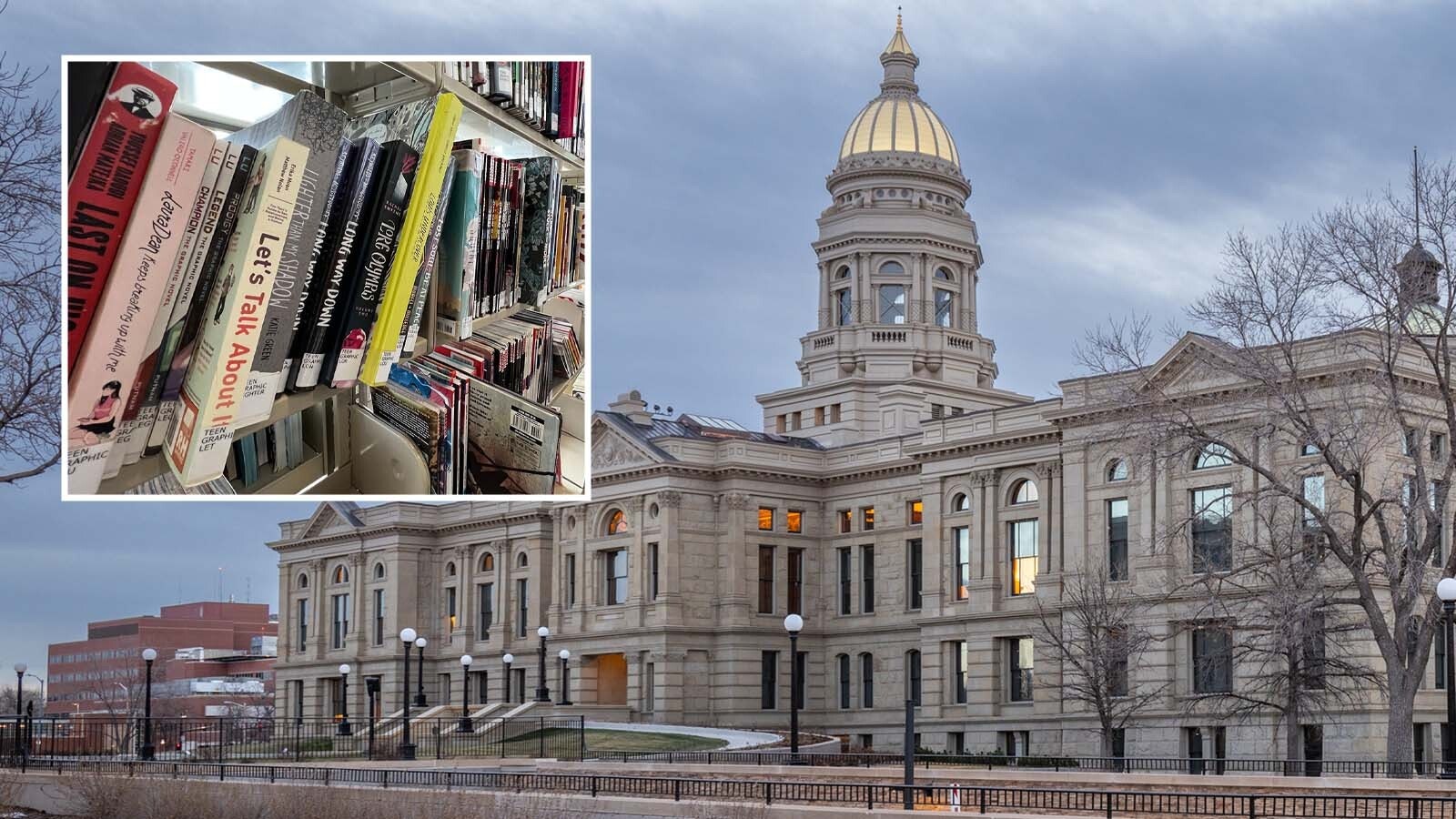
The Wyoming legislative committee that oversees court and criminal laws agreed Tuesday to draft a bill targeting sexually explicit materials in public and school libraries, specifically the children’s sections.
The draft motion by Rep. Jayme Lien, R-Casper, followed heated testimony from the Wyoming Library Association, Wyoming Education Association, a library board member, a concerned parent, a former librarian, and others.
It also marks a pivot from the draft legislation the committee considered earlier this year, which would have exposed librarians and school teachers to the criminal obscenity charges from which they’re currently exempt — if it had passed. But it failed during the legislative session.
Lien asked the committee’s staffers to draft a bill targeting sexually explicit materials placed in children’s sections of public and school libraries by defining “sexually explicit” and opening responsible parties to civil lawsuits — without the protection of the state’s sovereign immunity.
The committee approved that motion.
Not Up To Me
Detractors urged the committee against repealing obscenity charging exemptions for schoolteachers and librarians.
They also urged the committee to avoid crafting state laws around the issue altogether, saying the U.S. Supreme Court definition of obscenity known as the “Miller test” is already echoed in Wyoming law, and local communities have safeguards in place to address parents’ concerns in schools and libraries.
What’s too obscene for libraries “is a local decision that needs to be made at the community level, with the parents, the community members, the educators and the students within that community,” said Tate Mullen, government relations director of the Wyoming Education Association. He was responding to a question about whether a specific male sexual reaction should be featured in library books.
“My opinion of that is irrelevant,” he said.
Mullen noted that libraries have book-challenge procedures in place. The schools system invites public input in curriculum planning. And school and library boards are subject to local popular control.
The Miller test by which juries can convict a person (though not a schoolteacher or librarian acting within his or her duties) is also based on community standards.
‘Obviously Not Working’
A visiting legislator who is not on this committee, Rep. Ann Lucas, R-Cheyenne, handed members some books.
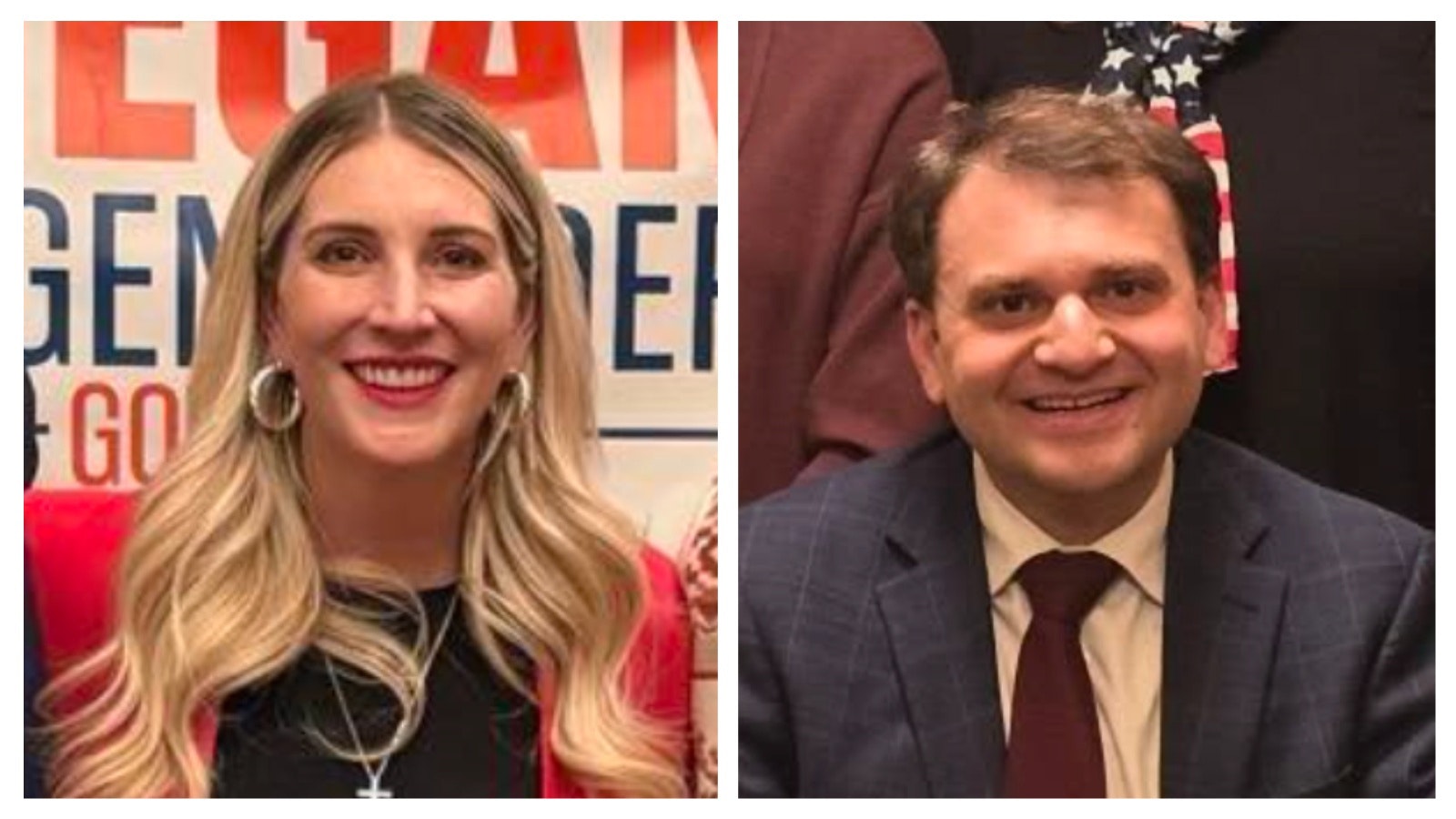
They also reviewed images from “Gender Queer” by Maia Kobabe, which is in multiple Wyoming public libraries and some schools.
The book tells of a gender nonconforming person and that person’s sexual exploits. It includes a scene depicting two females in a sex act with a toy nearly indistinguishable from male genitalia, and graphic language describing the sex act.
For Committee Co-Chair Jared Olsen, R-Cheyenne, that was too much.
“This idea of local control I support, but local control is obviously not working if these books are in our libraries,” said Olsen. “I’m sorry, but I don’t think there’s a single person on this dais up here who would look at this book ‘Gender Queer,’ the images in it, and not say it’s pornography.”
Olsen said he’s beyond questioning whether it belongs in a children’s section, but questions “whether it belongs in a publicly-funded library in the state of Wyoming, period.”
Still, said Olsen, the committee should take special care when considering penalties in this bill.
Sen. Gary Crum, R-Laramie, said the bill should be constitutionally airtight so that it survives.
Oh, Libby
Rep. Daniel Singh, R-Cheyenne proposed a bill draft to target the state’s digital library systems, like Libby, to protect minors from the erotica that is available on that application.
The committee ran into a roadblock, wondering if a law passed earlier this year requiring pornography sites to obtain age verification for Wyoming users to exclude minors would affect that legislation.
Singh later withdrew his draft motion when the committee decided instead to research that issue over the months ahead of the Feb. 9, 2026, lawmaking session.
So There Is A Line
Olsen had an exchange with Zach Cook, who said he’d served in the Laramie County Public Library System.
Cook noted that parents can review their children’s library checkout history. He said the onus for monitoring what kids read should fall on their own parents, and the government shouldn’t be making calls to limit content.
Olsen asked if it would be appropriate for the library to have a “Hustler” magazine on display.
Cook said it wouldn’t.
“So there is a standard where government does decide, at some point, what to display and what not to display in our libraries?” asked Olsen, who added, “Have you read ‘Gender Queer’?”
Cook said he hadn’t but challenged whether Olsen had read the entire book and not just the “naughty bits.”
Because, Cook added, the Miller test for obscenity allows a work’s social, literary, artistic, political or scientific merit when “taken as a whole” save it from being deemed obscene.
The Pit Falls
Wyoming criminalizes the promotion of anything the community of that jurisdiction would say appeals to the “prurient” interest, depicts sexual conduct in a patently offensive way and lacks literary, artistic, political or scientific value.
The state’s obscenity law mostly echoes the definition of obscenity the U.S. Supreme Court gave in its 1973 case California v. Miller.
In that one, a pornography vendor mass-mailed an advertising brochure showing sexual activity, after which a family called the police on him. The vendor was convicted, but the high court overturned his conviction by issuing a broader definition of obscenity than the state of California had used to prosecute the man.
In Wyoming, people who promote obscenity to adults face a misdemeanor punishable by up to one year in jail and $1,000 in fines. People who promote the material to a minor also face a misdemeanor and up to one year in jail, but also a potential $6,000 in fines.
Police and judges acting within their duties are exempt from prosecution. So are librarians, teachers and museum workers acting within their duties.
The committee’s research staffer noted prior to the discussion that where state laws exceed the “Miller” definition, courts tend to strike them down.
Clair McFarland can be reached at clair@cowboystatedaily.com.