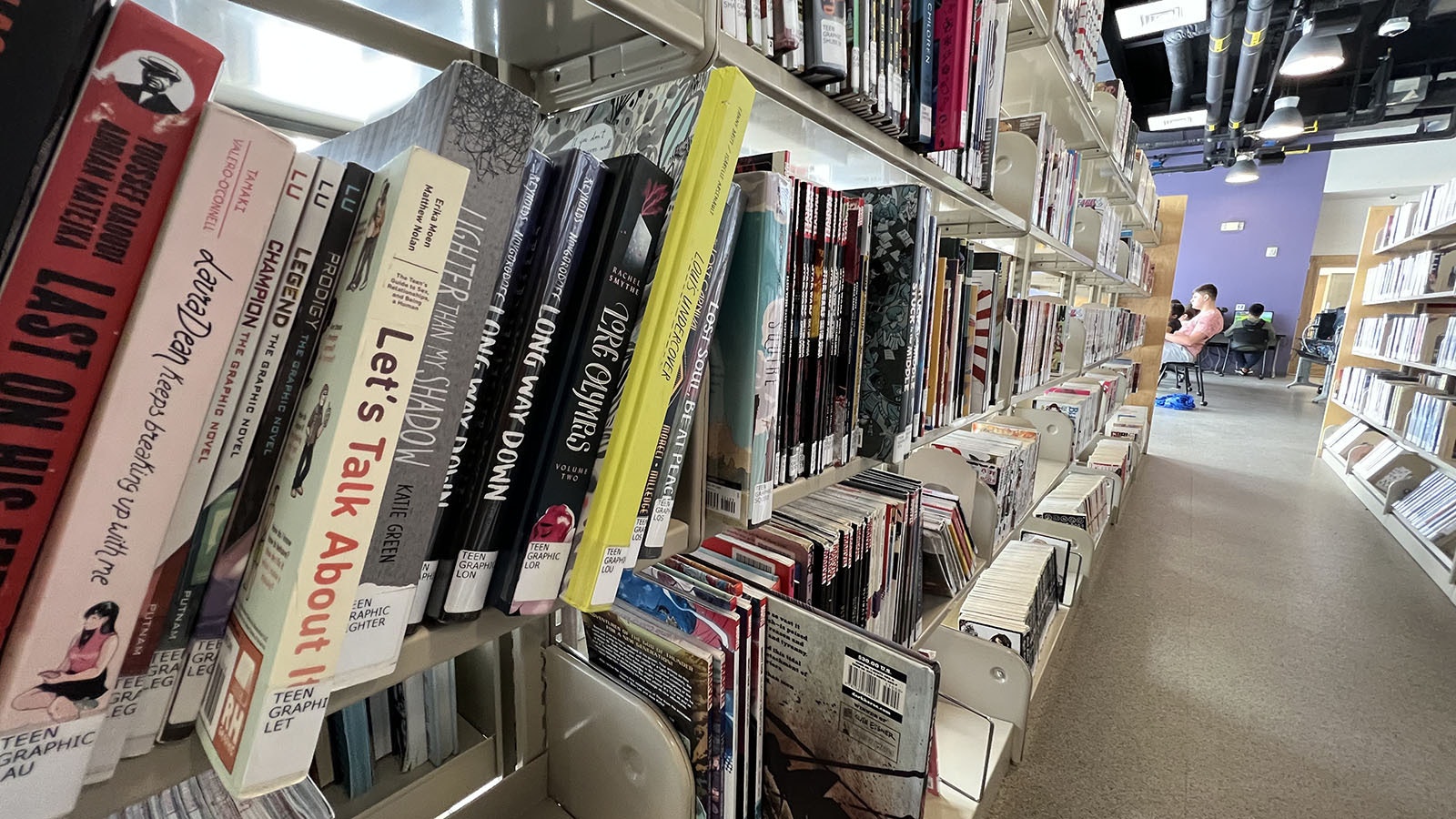
For the majority of Wyoming’s legislative Judiciary Committee, revising the state’s obscenity laws was such a high priority for this year’s bill-drafting season, the committee’s co-chair couldn’t remember which priority placed second after it.
The Joint Judiciary Committee is scheduled to take up the obscenity topic for the months-long “interim” period between winter lawmaking sessions, starting May 20 at Eastern Wyoming College in Torrington.
That’s after the majority of members pegged it as their No. 1 priority among more than 20 potential topics, Committee Co-Chair Art Washut, R-Casper, told Cowboy State Daily on Tuesday.
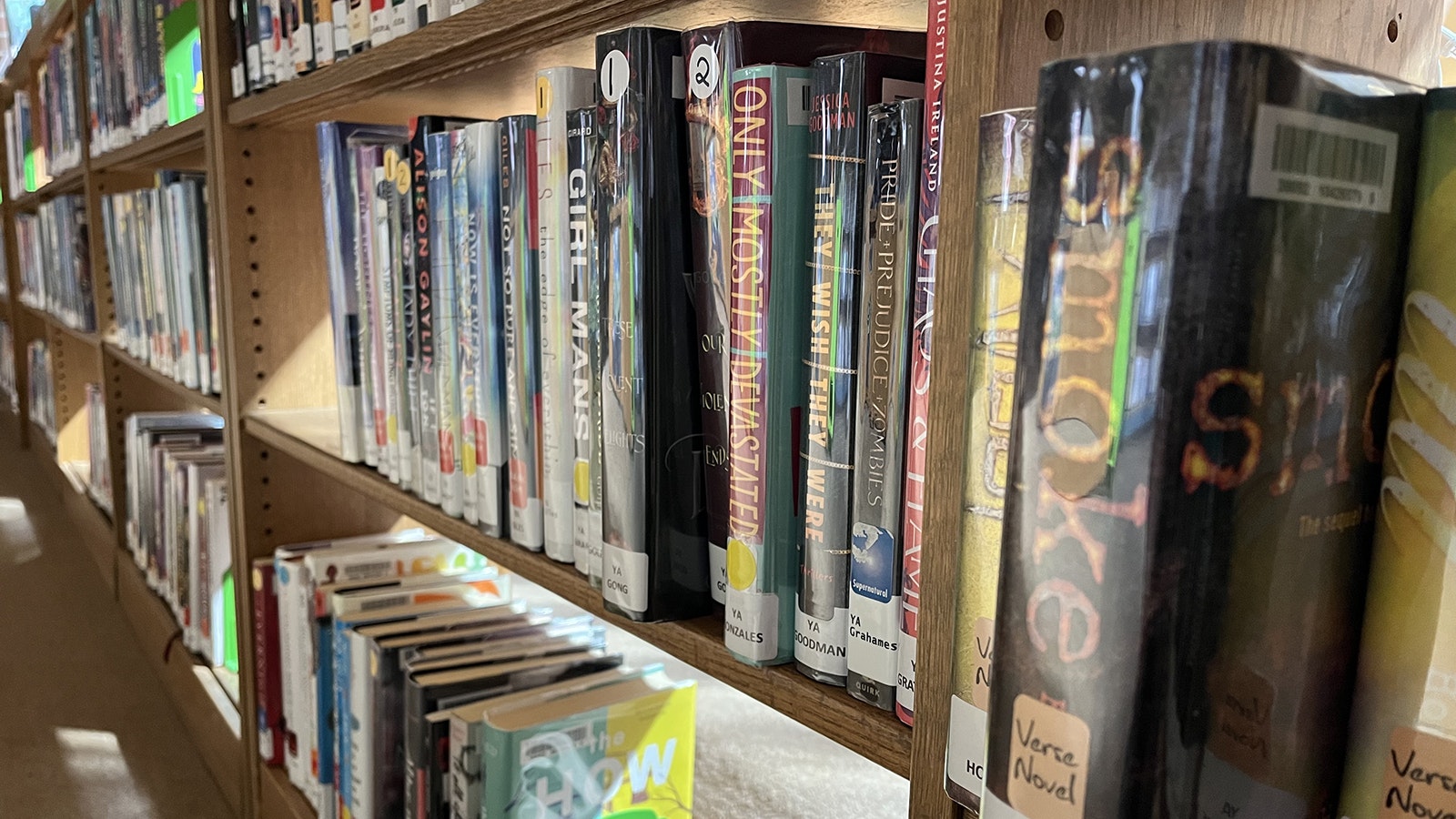
The move follows years of controversy in multiple counties, over sexually graphic books being made available to kids in both school and public library systems.
“(It) still has a lot of interest and concern,” said Washut. “This one, by far and away, had the most legislators — most members of the committee — interested in discussing it.”
Wyoming law criminalizes the possession of child pornography. It takes a broader approach to the “promoting” or dissemination of sexually graphic materials beyond child pornography, criminalizing the promotion of anything the community of that jurisdiction would say appeals to the “prurient” interest, depicts sexual conduct in a patently offensive way and lacks literary, artistic, political or scientific value.
That language is in line with the definition of obscenity the U.S. Supreme Court gave in its 1973 case California v. Miller. In that one, a pornography vendor mass-mailed an advertising brochure showing sexual activity — after which a family called the police on him. The vendor was convicted, but the high court overturned his conviction by issuing a broader definition of obscenity than the state of California had used to prosecute him.
In Wyoming, people who promote obscenity to adults face a misdemeanor punishable by up to one year in jail and $1,000 in fines. People who promote the material to a minor also face a misdemeanor and up to one year in jail, but also a potential $6,000 in fines.
Police and judges acting within their duties are exempt from prosecution.
So are teachers, professors, museum workers — and librarians.
Whoa, Now
Washut emphasized a need to legislate with care.
He said the ideal solution will still honor local control, or on-the-ground discretionary calls by local library and school boards but may bring some boundaries to those entities.
As for whether he wants to repeal the exemption protecting librarians altogether, Washut was leery of that option.
“(Let’s say) my kid comes home from the library with material that’s clearly harmful to minors,” said Washut. “I call the sheriff, tell them what happened and say, ‘Go get them.’ Who does the sheriff go get?”
In a library system, it’s difficult to tell who is responsible for providing a particular piece of obscenity, and whether that person realized the obscenity was in the material in the first place, said Washut.
The legislature could counteract those issues by making the head librarian review every page of every book in the library – but that may be unrealistic, Washut indicated.
But in either case, Washut says the committee will review laws affecting the selection of books in libraries and schools – not the open market.
In other words, he said, the intention isn’t to ban books.
“So the materials, even though they may not be permitted to be distributed in a school library, would still be available,” he said. “You can still go online and order a copy.”
The trouble with considering obscenity law reform, said Washut, is that people approach lawmakers with hardline stances: the library lobby opposes the project, while some parents, conversely, embrace even problematic legislation in the name of change.
Washut hopes people can work together better this time around. And that “people with different points of view come to the table saying, ‘If we’re going to have a statute on this, let’s at least make the statute workable,’” he said.
Committee Co-Chair Jared Olsen, R-Cheyenne, did not return a Cowboy State Daily request for comment by publication time.
What Are We Even Doing?
To the committee’s lone Democrat, the whole venture is a dubious exercise.
Rep. Ken Chestek, D-Laramie, is also a retired University of Wyoming law professor. He voiced apprehension in his Tuesday interview about any possibility of exceeding the Miller test with a new obscenity law under different definitions and possibly running afoul of the First Amendment’s free speech protections.
“To me it’s the least important topic we have (on the interim agenda),” said Chestek. “I think librarians do good work. I think local control is important. And I really hate this whole topic.”
Chestek said handing the issue to the state government pits families against one another and strips from parents the responsibility to monitor what their kids are reading – while placing added burdens on librarians.
“We don’t have a problem with this in Wyoming,” said Chestek. For one thing, he said, he’s more eager to revise Wyoming’s probate code, which he cast as outdated.
All the other topics the judiciary committee is considering this year are “legitimate,” added Chestek. “But this one’s a complete distraction that’s going to keep us from doing real work,” he said.
If Only
Rep. Tom Kelly, R-Sheridan, has some libertarian leanings and concerns about poorly written legislation, according to his many public statements on this topic.
Parents have approached him about sexually graphic books in Sheridan libraries, he said, and that’s given him concern.
“They weren’t pulling this stuff out of thin air,” he said. “(They weren’t) getting riled up for the fun of it.”
Like Washut, however, Kelly said it’s important to “thread the needle,” with legislation that won’t run afoul of the Constitution, but will protect kids.
As for repealing the exemptions for librarians and teachers, Kelly said he’d take a look at it but could only pursue such a change in a way that wouldn’t unleash “punitive or accusatory” campaigns against sincere public servants.
For years, library leaders in multiple Wyoming communities resisted book removal and policy revision efforts.
Kelly said that resistance has driven this issue into the bigger power domain of state law.
“If the local districts were working with parents, this would not have to be addressed as a state issue,” he said.
On the other hand, some local boards have made notable policy changes in an effort to accommodate concerned parents and community members.
Third Rodeo, At Least
Obscenity reforms are a recurring goal for Wyoming legislators.
Some legislators in 2023 tried repealing the exemptions protecting librarians, educators and museum workers – opening them up to criminal cases and jail time. But the House Revenue Committee and Senate Education Committee killed both bills that year, calling them authoritarian.
Some detractors at the time said controversies around sexually graphic books in public and school libraries should be resolved at the local level: by school and library boards.
That method didn’t run smoothly in Campbell County, where some locals accused the library director of purveying pornography; some public officials galvanized to discourage some sexualized and LGBTQ content in the library system – and the library board ultimately fired the library director.
The director has since sued the county, library board members and a local family comprising her fiercest critics.
A handful of legislators tried again to repeal the exemption in 2024, but the House didn’t consider that bill for introduction.
In 2025, the Judiciary Committee heard a bill that would have repealed the exemption. It also would have created a new category that went beyond the definition the Miller court set – to criminalize a laundry list of materials deemed harmful to kids.
And it would have criminalized showing lewd performances, such as sexualized dances, to kids.
Even some lawmakers who have criticized Wyoming librarians’ book choices called the bill out as problematic and poorly-written.
Kelly was among those, calling the bill “sweeping and almost vindictive.”
But That’s The Problem
As now written, Wyoming’s law against promoting obscenity surfaces in court when prosecutors find that an adult has shown pornography to a child. For example, it’s been charged recently against an uncle who showed pornography to a child, during a larger grooming campaign.
Though there’s an exemption for librarians acting within their duties, there’s no exemption keeping prosecutors from charging parents under that crime.
A controversial book in many Wyoming libraries, “This Book is Gay,” gives instructions on how to perform a “handie,” or manual sex.
To criminalize the dissemination of that book to kids, lawmakers may have to add a new and broader definition of harmful materials. And to keep the book available on the public market, they may have to exempt retailers and parents from prosecution under such a law.
These are some of the many curveballs in grappling with obscenity revisions, said Washut.
“We don’t want the unintended to get caught up (in the law),” he said. “You’ve got to get those definitions right.”
Wyoming Library Association
Wyoming Library Association President Lindsey Travis has been outspoken about this issue. She wrote in a May 9 opionion piece that the bill lawmakers proposed - and rejected - in early 2025 infringed individual liberties, local control and "the Wyoming way." And she urged Wyoming to resist a reincarnation of that bill.
Ahead of next week's meeting, Travis told Cowboy State Daily that her group was not officially "invited" to testify. She later clarified it's planning to speak during the public comment section of the meeting.
"We are always willing to sit at the table and respectfully communicate and offer perspective on obscenity laws and their impact on libraries, but we do need to be invited," she wrote in a Tuesday email. "At this point, the Joint Judiciary Committee has not formally asked the Wyoming Library Association to participate in a discussion of this issue."
Obscenity law is a wide topic, and WLA hopes to learn what direction the committee is taking before determining next best steps, she said, adding that the WLA draws a hardline stance about the prosecution exemption for librarians.
"WLA is more than happy to sit down with legislators to provide education about library governance, policies and parental rights," she wrote. "We are, however, unwilling to compromise on legislation that allows library professionals to be prosecuted simply for doing their jobs."
Clair McFarland can be reached at clair@cowboystatedaily.com.