A Colorado-based federal judge has denied several female collegiate athletes, including three from the University of Wyoming, the opportunity to appeal his transgender pronoun usage rule — and his involvement with the case — to a higher court.
That’s because U.S. District Court Judge S. Kato Crews hasn’t required the women suing the Mountain West Conference to use female pronouns for a transgender San Jose State University volleyball player around whom the lawsuit revolves.
Eleven current and former collegiate athletes and one SJSU volleyball coach on Nov. 13 sued the Mountain West Conference, and SJSU and its umbrella organization in the federal U.S. District Court for Colorado.
The women are accusing those entities of violating the law with their inclusion of transgender volleyball player Blaire Fleming in women’s volleyball competitions last autumn.
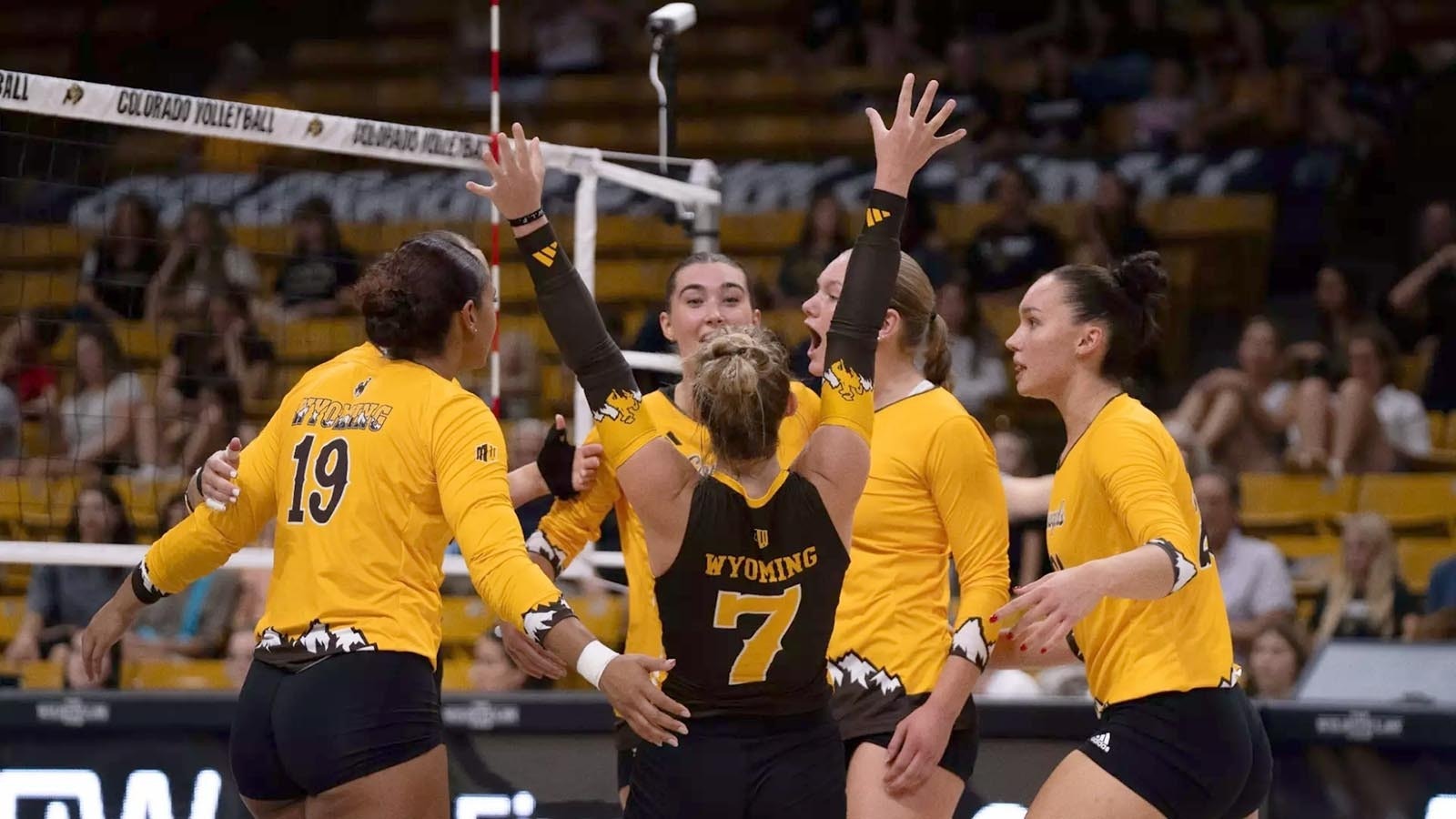
The University of Wyoming volleyball team forfeited two of its games against San Jose State University after it became known Felming is transgender.
Crews maintains a rule requiring the use of “preferred” pronouns for transgender people referenced in his court.
The women argued in March that Crews should recuse himself from the case, saying the rule shows that Crews has pre-judged the case and its question of whether a transgender volleyball player is a woman under the law.
When Crews declined to recuse himself, the women asked permission to appeal, mid-case, to the 10th Circuit Court of Appeals.
But, Crews counters in his Thursday order denying the appeal request, he has waived the pronoun usage rule for the plaintiffs and let them use whatever pronouns they want for Fleming throughout this case.
“Rather than operating under the purported ‘stigmas’ and ‘specters,’ the Court encourages Plaintiffs to take ‘yes’ for an answer,” wrote the judge. “Countless times now, the Court has told Plaintiffs they may use whatever pronouns they choose in these proceedings. They’ve done so from the start. They’ve done so without sanction or admonishment from the Court.”
Crews continued: “On this record, any purported ‘stigmas’ are self-inflicted, and any purported ‘specters’ are mere apparitions.”
The case will now proceed in the district court where it was filed.
The Legal Stuff
Before reaching his conclusion, Crews had to weigh three factors the law prescribes for mid-case appeals. Those are:
• Whether the order the women want to appeal involves a controlling question of law.
• Whether it reveals substantial ground for difference of opinion.
• Whether appealing mid-case would advance the ultimate conclusion of the lawsuit.
Crews determined that the women’s argument fails the first two criteria and so there’s no need to evaluate whether it meets the third.
A court’s local rule isn’t a fundamental, “controlling question of law,” especially since he’s waived that rule for the women, Crews wrote.
The supposed difference of opinion is actually a mere decorum rule that doesn’t’ signal pre-judgment, he added, addressing the second criterion.