Yellowstone, one of the largest active volcanoes on the planet, is impotent.
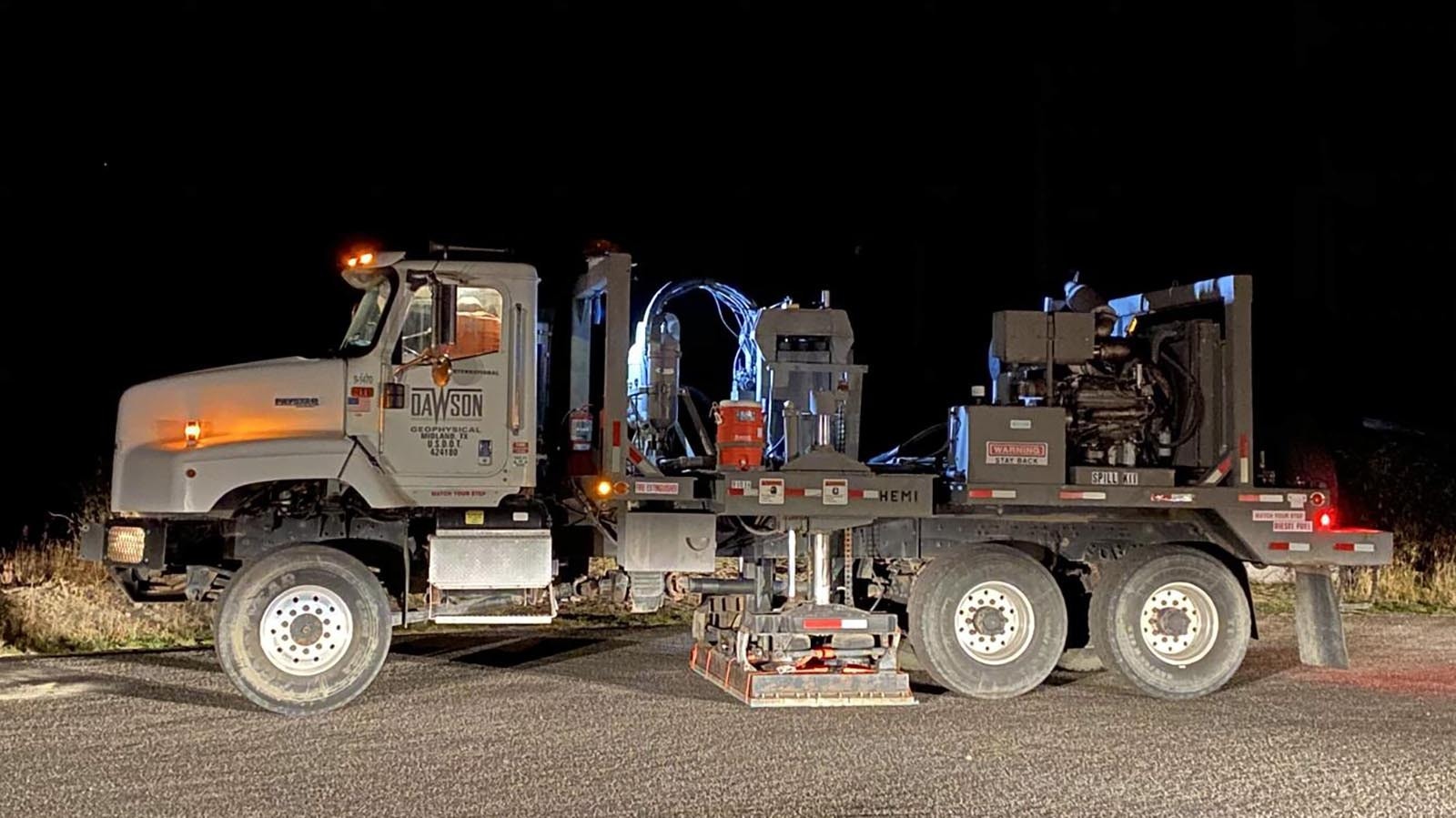
Skeptics need to look no further than the data collected by the 53,000-pound vibrator truck that spent two months assessing its eruptive potential.
The latest research on Yellowstone’s magma chamber analyzed data collected by a “vibroseis truck.”
It’s a sophisticated machine that revealed what’s hidden miles underground by vibrating a massive metal plate at the right frequency.
Mike Poland, scientist-in-charge of the Yellowstone Volcano Observatory, said the 2020 vibroseis truck study provided a wealth of intriguing information on Yellowstone’s supervolcano.
However, its conclusion is the same as that reached by several previous studies of the vast magma chamber that makes Yellowstone such a dynamic landscape.
“It’s confirming things we’ve been pretty confident about for a while,” he told Cowboy State Daily. “The conditions to generate a volcanic eruption just aren't there.”
Good Vibrations
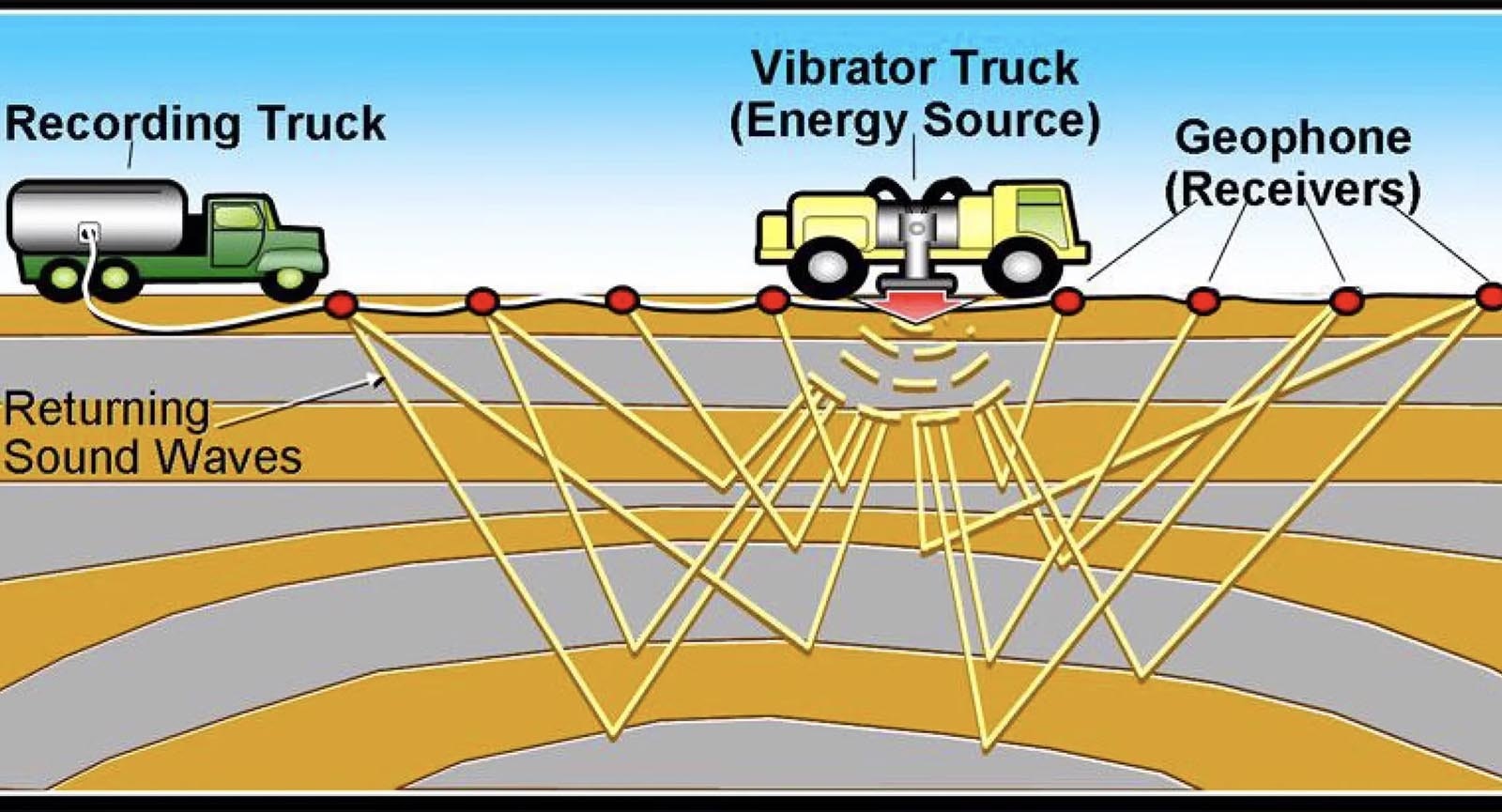
Vibroseis is a process in which artificially generated force waves can be used to map subsurface earth structure.
When those waves are sent into the ground, they “echo” off pockets of solids, liquids, and gases in ways that can be interpreted to determine their size, location and composition.
The most efficient way to conduct vibroseis studies is using “vibrator trucks.” These trucks have massive metal plates on their undersides that are pressed directly against the ground.
They use hydraulic systems to generate waves of low-frequency seismic energy to find oil, gas, rare-earth minerals, or anything else being sought.
“It's not punching the ground like a jackhammer,” Poland said. “The plate makes contact with the ground and generates energy tuned to a frequency that we know will do a nice job bouncing off things in the subsurface.”
In 2020, a team of seismologists from the University of Utah and the University of New Mexico drove a vibrator truck along the Grand Loop Road in Yellowstone.
Their goal was to learn more about the massive magma chamber that makes Yellowstone such a dynamic geological wonderland.
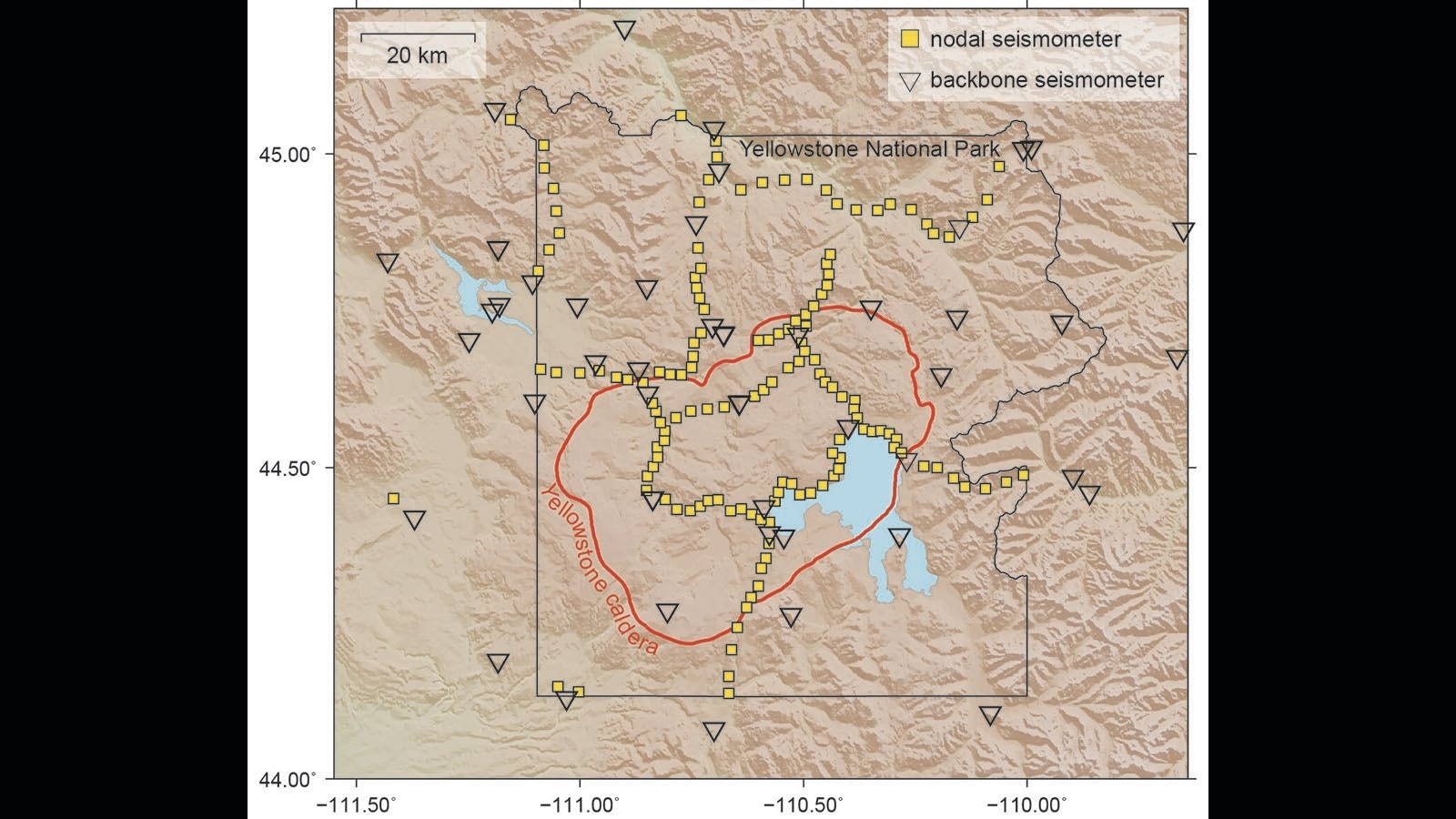
“There were 600 seismometers deployed as part of this experiment,” Poland said. “The low-frequency vibrations from the truck were sent into the earth, hit the top of the magma chamber, and bounced off the top of the magma chamber.
“That was recorded by the network of seismometers deployed for the specific purpose of measuring that energy.”
The massive truck stopped at every paved pullout in the park, set its plate down, vibrated, and moved on.
The study was conducted between August and September 2020 using 650 autonomous seismic sensors installed along the roads and trails to pick up the vibrations.
The vibrator truck didn't generate earthquakes. It jostled the grounded metal plate at a specific frequency that the sensors and seismographs could detect, allowing the scientists to conduct a controlled experiment and interpret the data accordingly.
"There are a lot of earthquakes in Yellowstone, and we can record all of them, Poland said. "But when you control the seismic source and the energy frequency, you have much more ability to design an experiment that will target an area of interest, like the top of the Yellowstone magma chamber. That's the advantage of the artificial nature of using the vibroseis truck to generate the energy."
A Vast Flat Top
The consensus is that Yellowstone’s massive magma chamber is mostly solid. The new study affirmed this consensus while discovering previously unknown information about what's happened underneath the surface.
Poland said the 2020 vibroseis study had two major takeaways. First, it found the flat top of the magma chamber, and its makeup is more complicated than previously believed.
Previous subterranean studies of Yellowstone confirmed the depth of the magma chamber, over two miles under the surface. However, they couldn’t determine where the boundary between the molten magma and hard rock was situated.
Poland said this goal of the 2020 study was “very well achieved.” The top of the magma chamber has been mapped in a way that hasn’t been possible before.
“The data show that there's a very, very distinct top of the magma chamber,” he said. “It’s an amazing flat, and there’s not a lot of variability at the top of the chamber. It’s a very sharp boundary.”
Soda Can Solution
The other goal of the study was to determine the composition of Yellowstone’s magma chamber. Previous studies have concluded that while there is still some molten magma down there, between 75-80% of the chamber was solid.
Poland said the latest study assumed they’d find a mixture of “molten material and crystals” at the top of the chamber. However, the information they collected suggested something else.
“The reflection off the top of the magma chamber could not be explained simply by molten material and crystals,” he said. “We thought of the magma chamber as being mostly composed of solid particles with some melt, but that can't describe the characteristics of the reflected seismic waves.”
The reflected waves revealed a layer at the top of the magma layer that acts like a cap or lid. It’s a mixture of solid crystals, molten magma, and volcanic gases.
The research team described it as a “volatile-rich layer” filled with bubbles of magmatic gases. The most dangerous volcanoes, like Mount St. Helens and Vesuvius, erupt when magmatic gases can’t escape the magma, and the energy of the pent-up gases eventually leads to an eruption.
Fortunately, the volatile-rich layer at the top of Yellowstone’s magma chamber actively prevents a volatile eruption. Poland said the magmatic gases collecting there can easily escape.
“At that depth, the pressure is low enough that the gas can come out of solution,” he said. “The gas rises to the top of the chamber because it’s more buoyant, and it’s pretty efficiently removed from that layer so that it rises and is emitted at the surface.”
Poland compared it to opening a soda can so that the carbonation fizzles to the top and is gradually released, as opposed to the continuous buildup of pressure that can lead to an explosion when the gas has nowhere to go.
“In one sense, it confirms some things we already knew: the magma chamber beneath Yellowstone is mostly solid,” he said. “In another sense, it shows there is a little bit of gas that's accumulated at the top of the chamber, but it's not that much at all. That's a sign that pressure is not accumulating, which is a new, reassuring result.”
Solid State
The new study is exciting but it has reached the same conclusion as several previous studies of Yellowstone’s current volcanic status. Poland said it should be reassuring that so many studies are giving scientists the same answer.
“Every bit of evidence we have has pointed to a magma chamber that's mostly solid and not really accumulating pressure,” he said. “That (conclusion) is becoming more and more robust, and this is another data point supporting that model.”
The nature of Yellowstone’s magma chamber could change in the future, but all the current evidence indicates a low eruptive potential. There isn’t much molten magma churning inside, and most of the magmatic gases are rising to the surface.
If that were to change, it could increase the likelihood of a Yellowstone eruption. However, Poland and most other scientists aren’t anticipating that change anytime soon.
“We monitor Yellowstone to be ready if anything changes,” Poland said, “but we know that the conditions to generate a volcanic eruption just aren’t there right now.”
No Trigger Warning
If Yellowstone isn’t going to erupt on its own, could something trigger an eruption?
Poland gets this question a lot, and he noted that the new study's methods prompted an uptick in inquiries.
“When this experiment was first done, we had people saying, ‘Oh, my God, you're going to trigger the volcano to erupt?’ No, it doesn't work that way,” he said.
The vibrator truck that cruised through Yellowstone was generating seismic energy, but not the kind that creates the flurries of small earthquakes constantly detected in Yellowstone.
Vibroseis is commonplace and widespread in the fossil fuel industry without creating any crises.
“This kind of machine is very common around the world,” Poland said. “The scientists basically rented this one from a geophysical company to do the work. A similar experiment looked at Kīlauea a few years ago.”
Anyone who wants to experience Yellowstone’s magmatic gases can visit Mud Volcano. The study found that escaped volcanic gases are more prevalent in the Mud Volcano area than in most other thermal basins.
Nevertheless, the conclusion from this research adds to decades of informed consensus in the volcanological community. Yellowstone remains as dynamic as ever, but that’s despite being an active volcano, not because of it.
“To have a volcanic eruption, you need to have a supply of eruptible melt and pressure to get that melt to the surface,” he said. “We have neither in the Yellowstone region, so there’s no concern about an eruption.”
Contact Andrew Rossi at arossi@cowboystatedaily.com
Andrew Rossi can be reached at arossi@cowboystatedaily.com.