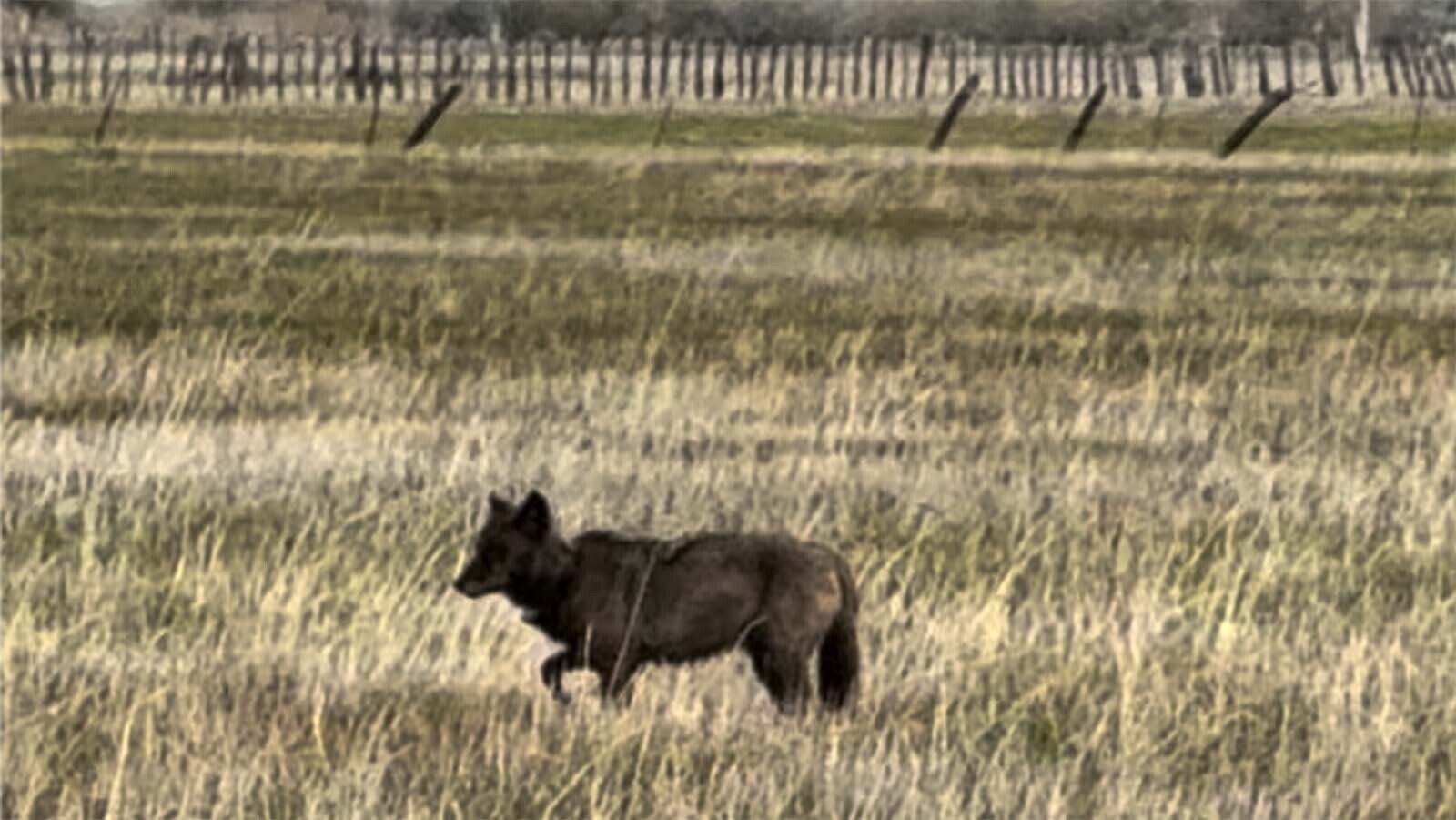
Locals say that wolves in Sierra County, California, have been wreaking havoc there for nearly a month – including attacking cattle on an almost daily basis, and leaving a bloody mess on one home’s front stoop after killing an elk there.
In a statement released Monday, the county sheriff’s office claimed that the Sierra Valley has been “under siege” by wolves for 28 days.
Paul Roen, a county supervisor there, said that locals’ frustration is starting to boil over. Wolves are a protected species in California and essentially can’t be touched.
“We’ve played by the rules here, and it’s done nothing but bite us,” he told Cowboy State Daily.
He and other local officials are declaring a state of emergency in Sierra County and hope to get surrounding counties onboard.
Because of all the trouble he’s seen in his home county, Roen encouraged Wyomingites to keep supporting this state’s wolf management.
“That’s why I’m encouraging you guys in Wyoming to not even waver,” on wolf policy, he said.
Wolves Return To California
California once had robust populations of wolves and grizzly bears.
But starting with the California gold rush of 1849, settlers pushed both species out, frequently killing them on sight.
Wolves and grizzlies were both gone from California by the early 20th Century.
There’s been occasional talk of reintroducing grizzlies to California, but skeptics say that isn’t a realistic goal.
Wolves returned on their own, first crossing over the state line from Oregon in 2011.
California now has “at least 50, and possibly more” wolves, including seven established packs, California Department of Fish and Wildlife (CDFW) Spokesman Peter Tira told Cowboy State Daily.
Two wolves in particular seem to be causing most of the trouble in Sierra County, Roen said.
The Sierra Valley is a major gathering point for cattle from around the region, he said.
Sierra County is in northeast California, and the east side of the county butts up against the Nevada state line.
The two wolves are thought to have come from another valley, about 15 miles to the north, Roen said.
Last fall, some ranchers with grazing permits in that valley brought their cattle to the Sierra Valley, Roen said.
“Those wolves followed them down and they’ve been here ever since,” he said.
There might be as many as five wolves in the general vicinity, he said.

The front stoop of a house in Sierra County, California, was covered in elk blood after wolves reportedly killed an elk there early Monday morning. (Courtesy Paul Roen) 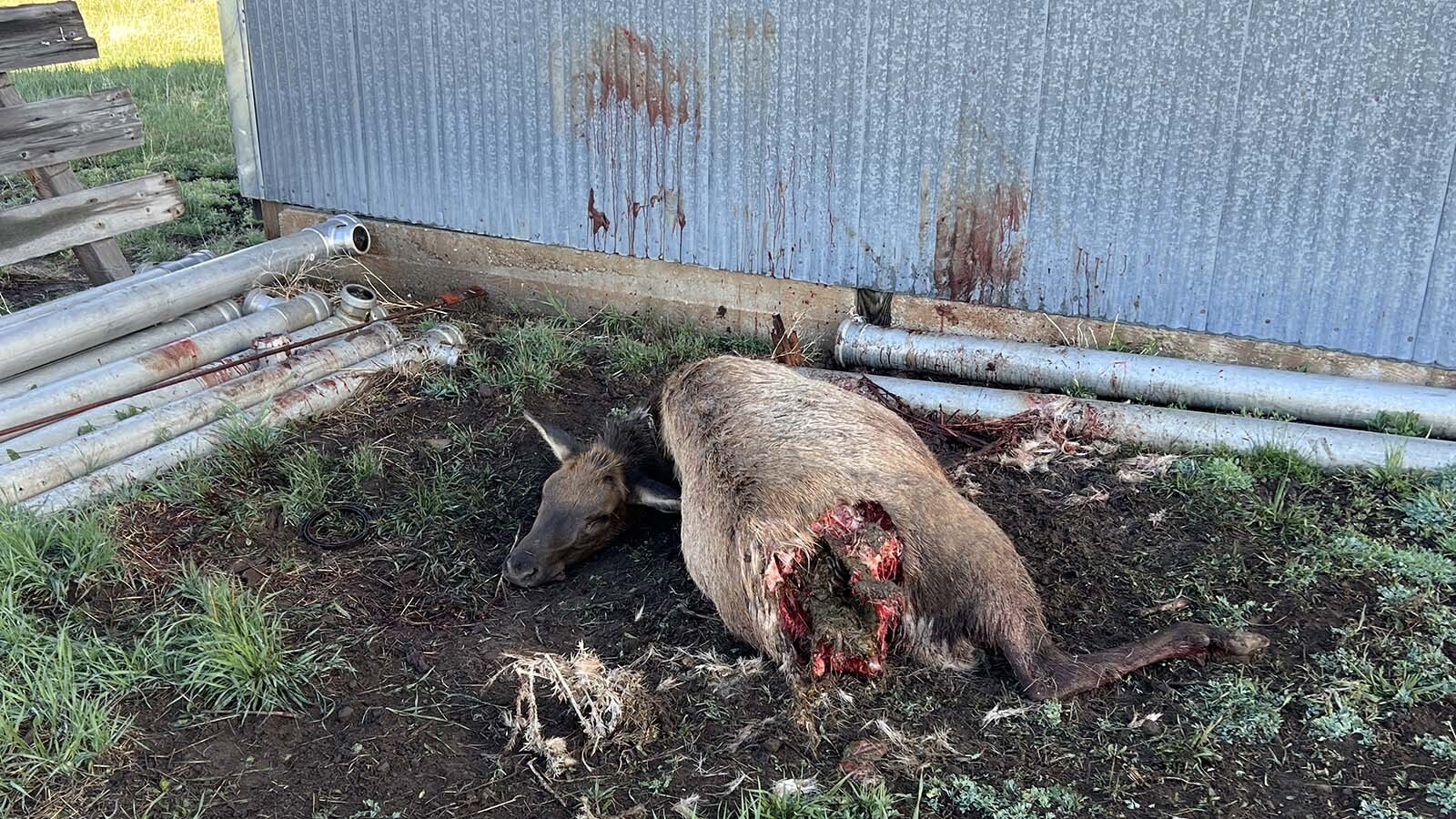
Wolves in Sierra County, California have reportedly been chasing prey into settled areas and killing animals in people’s yards. (Courtesy Paul Roen)
‘It Scared The Hell Out Of Him’
The wolves don’t seem to fear humans, he added.
They frequently hang out along the roadsides and “stare” at people, Roen said.
He added that when he was recently doing an interview with a local television station, the wolves appeared amid cattle, right in the camera shot.
For about the past two weeks there have been reports of the wolves attacking cattle practically every day, Roen said.
And with spring cattle drives set to start, that means things could get ugly, he said.
“Pretty soon, there’s going to be 20,000 cows in this valley,” he said.
The wolves have also chased natural prey like deer and elk right into people’s yards, Roen said.
At about 12:30 a.m. on Monday, wolves reportedly chased an elk onto the front stoop of a house and attacked it there, leaving a bloody mess on the concrete.
“There was an 18-year-old kid in the house when that happened, and it scared the hell out of him,” Roen said.
What Can Be Done?
Tira said that wolves’ return to California has sparked mixed reactions.
Many Californians are thrilled to see wolves return, but ranchers and other people in rural communities aren’t happy about it, he said.
CDFW game wardens and biologists are in “constant communication” with people in rural communities, he said.
For now, at least, the options for dealing with wolf attacks on cattle are limited. In California, wolves are classified as an endangered species under both federal and state law, he said. So, killing them is essentially off the table.
Roen said that he and other locals would at least like to see the two worst-offending wolves trapped and relocated.
“I’m not saying they have to kill them, I’m saying they need to get them out of here,” he said.
Tira said that under current policy, it’s not clear whether the wolves could be trapped.
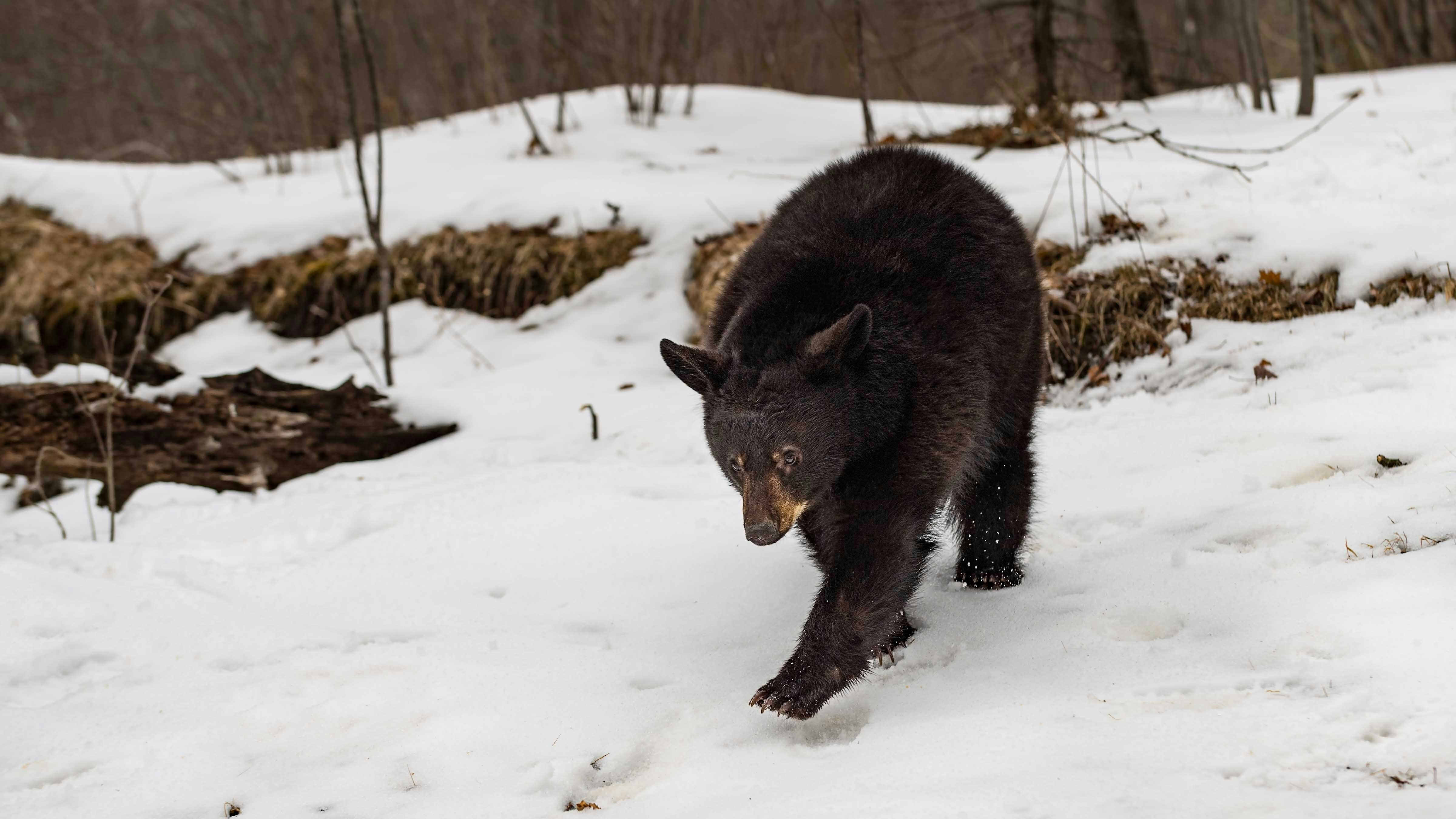
Moreover, CDFW hasn’t had much luck with trapping and relocating problem animals, such as black bears.
“We’ve had black bears travel up to 200 miles” only to end up right back where they were trapped, he said. And wolves are also known to wander hundreds of miles.
California’s wolf policy is under review and some changes could be forthcoming, Tira said. That might include more options for hazing wolves away from cattle and settled areas.
California has a compensation fund for ranchers, which previously helped pay for such things as range riders and non-lethal deterrents for wolves.
Currently, funds allow only for direct compensation for livestock killed by wolves, Tira said.
In the long run, ranchers hope California will allow wolves to be killed when they attack cattle, Roen said.
“We’ve got to have some lethal control options. If not for the ranchers themselves, then for the local government or the sheriffs,” he said.
‘We’re Going To Fight’
Tira said CDFW is trying to find solutions that will work for everyone, and that includes hosting town hall meetings in rural communities affected by wolves.
Roen said residents in his county and the surrounding area are getting fed up and feel as though the state isn’t supporting them.
He and other county representatives plan in-person meetings with the chief of CDFW and other high-ranking state officials.
“The frustration levels have reached the point where it’s unacceptable,” Roen said.
“We’re going to fight. We’re going to see where it goes,” he added.
Contact Mark Heinz at mark@cowboystatedaily.com
Mark Heinz can be reached at mark@cowboystatedaily.com.