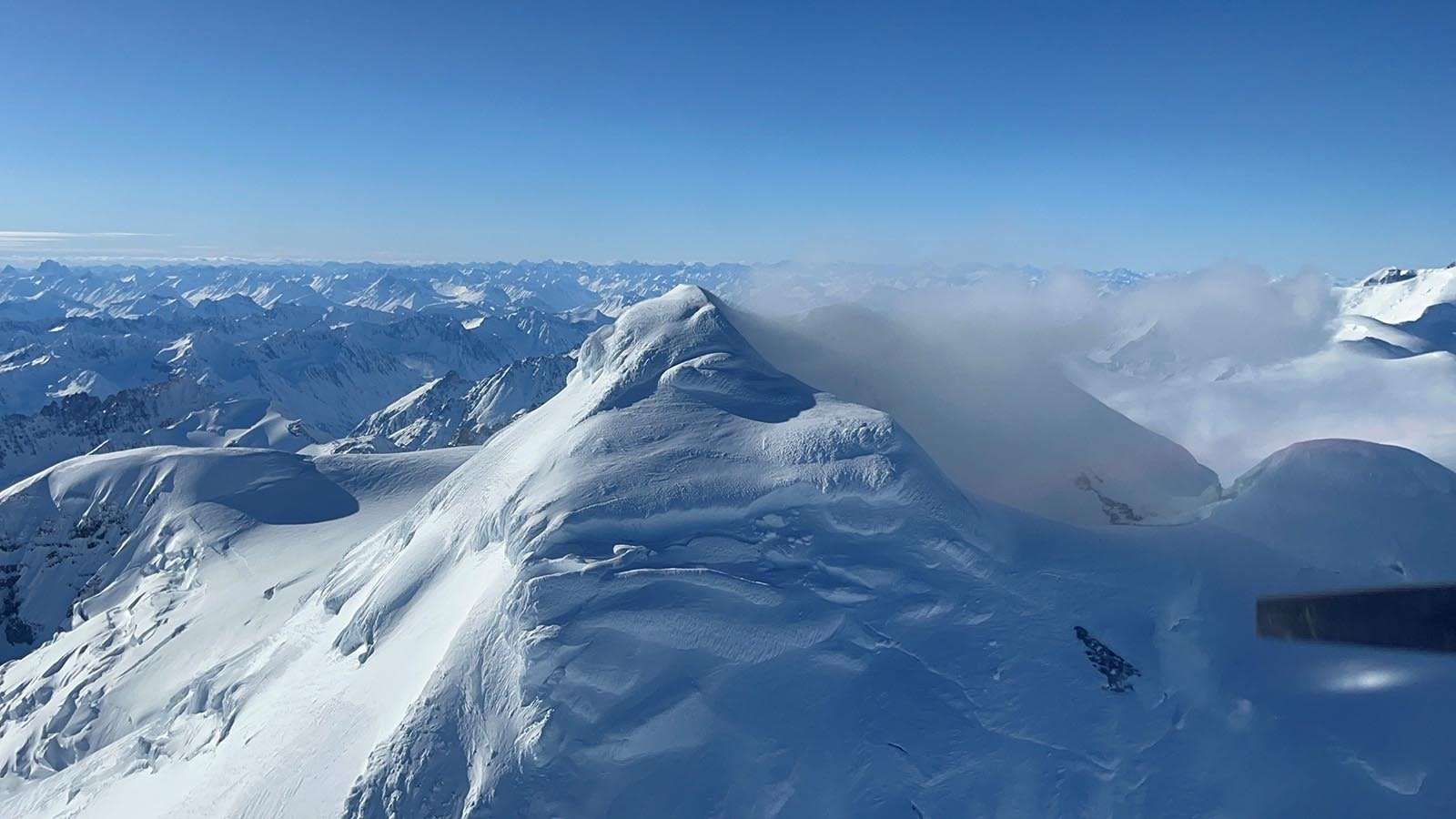
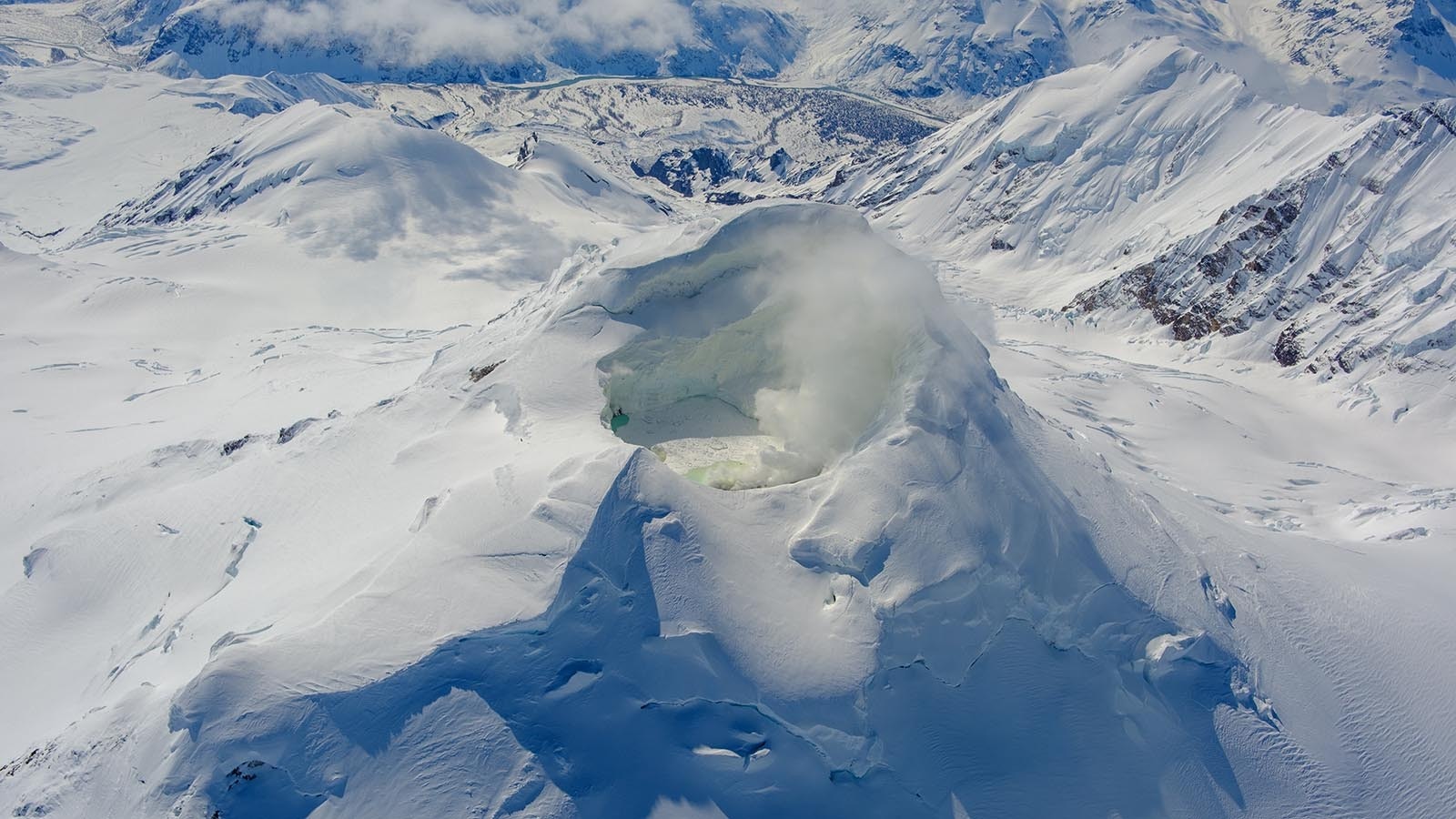
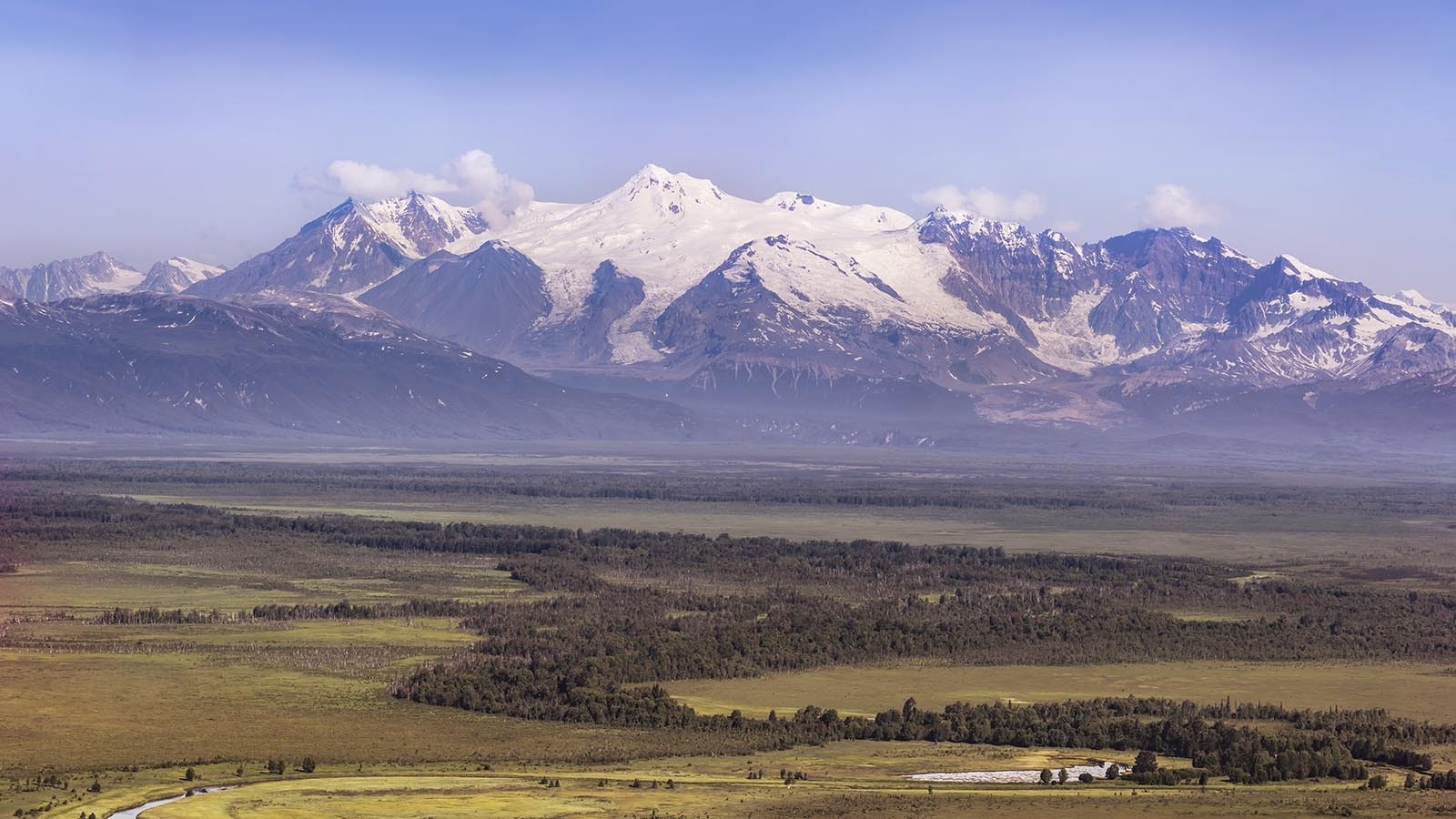
The Alaska Volcano Observatory is closely monitoring the activity being spurred by volcanic processes underneath Mount Spurr, an active stratovolcano only 78 miles away from Anchorage.
A flurry of ongoing earthquakes has kept the volcano’s Current Volcano Alert Level at Yellow, the "Advisory" level, since October 2024.
“Unrest continues at Mount Spurr, with ongoing earthquake activity,” reads a Friday update posted by the Alaska Volcano Observatory. “Seismicity remains elevated with frequent small volcanic earthquakes detected beneath the volcano over the past day.”
Eruptions of similar volcanoes have caused international chaos, which is why scientists are keeping close tabs on Mount Spurr’s activity. Nothing can prevent its eruption, but there should be enough warning to proactively plan for what’s to come.
“Last week, based on a decline in seismicity and deformation, we said that the likelihood of an eruption in the coming weeks to months had declined since mid-March,” said Matthew Haney, scientist-in-charge of the Alaska Volcano Observatory. “Our mid-March assessment was that an eruption scenario of size similar to the last eruption in 1992 was more likely than a non-eruption in the coming weeks to months.”
From Wyoming With Love
Mount Spurr last erupted in 1992 and sent its ash thousands of miles, including in the upper atmosphere over Wyoming, although it didn’t result in ashfall. Another eruption could do the same, which could impact air travel.
Yellowstone is the only active volcano in Wyoming, and its last major eruption occurred over 600,000 years ago. While that eruption was probably among the most cataclysmic events of the last million years, several studies have affirmed that its current and future threat is minimal.
“A volcanic eruption of Yellowstone doesn't appear to be something that's going to happen anytime soon,” said Mike Poland, scientist-in-charge of the Yellowstone Volcano Observatory. “There’s not a lot of molten magma in a liquid form that’s eruptible, and there are no eruptive vents in the part of the volcanic system where it’s located.”
Hydrothermal explosions, like the one observed at Black Diamond Pool in Biscuit Basin last year, are the real dangers lurking underground in Yellowstone. Several other explosions have been documented since the placid pool blew itself up on July 23, which means the thermal basin will probably remain closed for the 2025 summer season.
The explosion was caused by the incredible energy created by the rapid transition of water to steam, within 100 feet of the surface. It was utterly detached from any of the volcanic activity located miles below.
Poland and other scientists at the Yellowstone Volcano Observatory are trying to determine if it’s possible to detect hydrothermal explosions before they happen. They have installed new equipment at Biscuit Basin to see what they can learn in the aftermath of the explosions at Black Diamond Pool.
There's a lot to learn from the ongoing activity under Yellowstone. Its volcanic innards are still somewhat active, but it won’t be blowing its top — or doing much of anything — anytime soon.
Mount Spurr is over 2,000 miles from Yellowstone, yet it poses a bigger threat to Wyomingites than Yellowstone.
“Ash from the 1992 Spurr eruption went over the Lower 48 as an ash cloud in the upper atmosphere, but it did not result in ashfall in the Lower 48,” Haney said. “If a similar eruption occurred as a result of the current unrest, such an ash cloud could go over the lower 48 and affect air travel if the winds were directed toward the Lower 48.”
Even if Mount Spurr explosively erupted tomorrow, it'd be over and done long before it could severely impact the Cowboy State, which says a lot about the current threat posed by the supervolcano in our neighborhood.
“The more we understand Yellowstone, the more we can understand similar systems, and vice versa,” Poland said. “Yellowstone remains a wonderful example of similar volcanic systems around the world. When we understand more about Yellowstone through studies like this, we can apply that to other volcanoes worldwide.”
Studying Shallowness
Mount Spurr is the highest peak at the eastern edge of the Aleutian Arc, the string of volcanic islands that stretches into the Pacific Ocean from the southwest corner of Alaska. The entire expanse is an actively volcanic region with frequent earthquakes and eruptions.
Poland hesitated to say that an eruption of Mount Spurr was “imminent.” While the ongoing activity needs to be monitored, it doesn’t suggest any immediate threat.
“Saying ‘imminent’ might imply that it's about to erupt at any moment,” he said. “Spurr is definitely showing signs of increased activity, but the assessment of the Alaska Volcano Observatory is that there's a roughly equal likelihood of it erupting or going back to sleep. That's the challenge with these sorts of volcanoes.”
Much of what's being observed at Mount Spurr is shallow magmatic activity, meaning it’s subterranean but near the surface. Magma has yet to breach the surface (when it becomes lava), but an increasing amount of it is gathering within a mile of the surface under the volcano.
For comparison, even if the bulk of Yellowstone’s magma chamber is solid, there is some fluid magma churning in its depths. However, it’s over three miles deep - too far from the surface, but an encouraging sign for anyone in fear of a supervolcanic eruption in northwest Wyoming.
Magma within a mile of breaching Mount Spurr has spurred some concern, but the verdict’s still out on what it’ll do from there. According to Poland, a lot can happen in the mile between the magma and the mountain.
“Magma can get quite close to the surface and stall,” he said. “The chances of an eruption are much higher now than they were a few years ago, when there wasn't any magmatic activity at shallow levels. But we don’t know if the growing amount of shallow magma will have the oomph it needs to get to the surface and erupt.”
Skyfall
If Mount Spurr erupts, its magma wouldn’t be of much concern. The primary threat presented by Mount Spurr would come from volcanic ash.
“The last eruption was in 1992,” said Haney. “There were three explosions on June 27, Aug. 18, and Sept. 16-17. The Aug. 18 explosion occurred when winds were directed toward Anchorage and resulted in an eighth of an inch of ashfall in Anchorage, which closed the Anchorage International Airport for 20 hours.”
A column of ash from Mount Spurr rose over 65,000 feet into the atmosphere. It reached the Beaufort Sea on Alaska’s northern coast over 625 miles away, before being blown south and dissipating over Canada.
Volcanic ash can be hazardous to human health, but it’s particularly lethal to anyone flying on an airplane with a jet engine. The heat and power of a jet engine are high enough to melt the ash into volcanic glass, then solidify it on its turbines as it’s blown out.
That can and has caused planes to crash, which is why Mount Spurr is being monitored so closely.
“Anchorage is a good-sized city, and the airport is a large hub for cargo and passengers,” Poland said. “If there is an explosive eruption that puts ash into the atmosphere, warnings would need to be put out immediately to make sure airplanes can avoid the area.”
In 2010, a stratovolcano on the southern coast of Iceland, Eyjafjallajökull, erupted. It disrupted international travel across the Atlantic Ocean for six days, the highest disruption of air travel since World War II.
The impact of Eyjafjallajökull’s eruption was exacerbated by several factors, including its position under the jet stream, the power of the eruption, and the massive ice sheet it erupted through, which increased its strength. That’s why its brief eruption became a massive trans-Atlantic incident.
Mount Spurr isn’t as much of an international threat as Eyjafjallajökull, but an explosive eruption would still cause some international and economic disturbances. That’s why it’s crucial to get as much advance warning as possible.
“The main risks of a Mount Spurr eruption are ashfall and its effect on aviation operations in and out of the international airport and other regional airports,” Haney said.
Plenty Of Time (If Needed)
The latest prognosis from the Alaska Volcano Observatory is that Mount Spurr is quieting down a bit. The amount of ground deformation, caused by shallow magmatic activity, has decreased over the last three weeks, and no sulfur dioxide, the most common gas released during volcanic eruptions, has been detected in the vicinity.
Nevertheless, nobody’s letting their guard down. Poland said lessons from the 2010 eruption of Eyjafjallajökull and previous incidents, like the 1980 eruption of Mount St. Helens, have been well-learned.
“When Eja erupted, the global volcanology community had a zero-tolerance policy,” Poland said. “We didn’t know what concentration of ash in the atmosphere was accepted for air travel, and we didn't have good models of how the ash was circulating in the atmosphere. Since then, we’ve put a lot of effort into understanding those things.”
New technologies and improved methodologies have given scientists more information, which will increase their confidence once they advise the world about what must be done to avoid the worst of a volcanic eruption.
Haney and Poland said the odds of a disruption as significant as the one caused by Eyjafjallajökull in 2010 are “very, very low.” Additionally, Mount Spurr isn’t large or well-positioned enough to cause a disturbance on that scale.
Nevertheless, Anchorage will remain uneasy until Mount Spurr settles down. The capital of Alaska has the most at stake if the volcano across the bay blows its top.
“It's definitely a concern in the Anchorage area,” Poland said, “but if there is a big ash plume in the atmosphere, all our models and measurements will be put into play to understand where it's going and the impact it might have. Unless it's a huge eruption, which isn’t how Mount Spurr typically behaves, the impact in the Anchorage area could be significant, but quite light everywhere else.”
Andrew Rossi can be reached at arossi@cowboystatedaily.com.