A former Rock Springs English teacher exchanged emails with a high school student about how to access LGBTQ advocacy websites without others noticing, court documents show.
The documents surfaced this month in the ongoing case of Willey vs. Sweetwater County School District No. 1, which is a civil federal case in which a Rock Springs, Wyoming, couple is suing the school district on claims that district staffers helped to socially gender-transition their daughter behind their backs.
The district, conversely, has said it didn’t take steps to hide staffers’ habit of calling the girl by a boy’s name and pronouns and “had no legal obligation to ever inform (the girl’s parents).”
The school district on Monday filed a “motion in limine”– in this case a request for a judge to keep certain evidence out of the trial evidence pool, due to claims that the evidence is irrelevant or more prejudicial than it is useful.
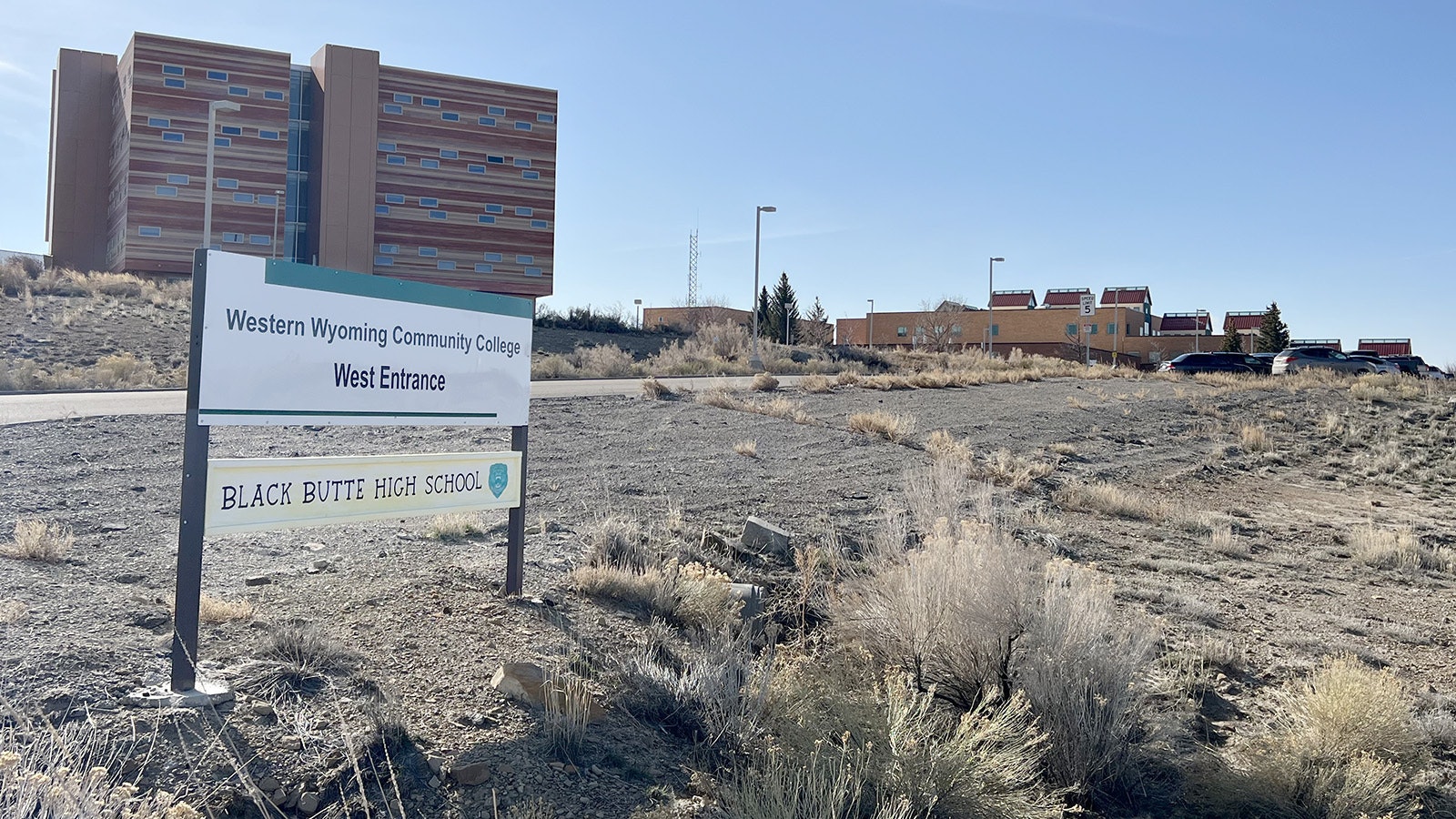
The school district does not want the judge to let the jury review emails from 2022 between former district eighth-grade English teacher Ben Audevart, and Sean and Ashley Willey’s daughter, who was a junior at Black Butte High School during the email exchange.
(All court documents, both from the school district and the Willeys, call the student by female pronouns.)
Trial is set for June 2, in the U.S. District Court for Wyoming.
What The Emails Say
Audevart wrote the Willeys’ daughter via email on Sept. 8, 2022, asking “How have things been my friend?” according to the email copies included in the court file.
The email appears to be a response to an earlier note by the student. The teacher addressed the student by the male name she had then adopted. She later reverted back to her given, female name at her mother’s request, court documents say.
The student responded she was well, though things were crazy with school starting.
The Willeys’ daughter wrote a Sept. 14, 2022, email to Audevart, about a meeting where people discussed a new school policy requiring district staffers to call transgender people by their preferred pronouns.
Audevart wrote back that the policy falls under Title IX of the federal education law, and that that law makes it illegal to discriminate against people on the basis of sexual orientation and gender identity.
Whether Title IX bars gender identity discrimination is not uniformly settled in courts across the nation.
“LGB+ persons in our district have a right to be called by the pronoun and name that they wish,” wrote Audevart, adding, “I am sorry if this issue is causing you pain and difficulty, though. I am here to talk if you need to, or I can help put you in contact with a counselor at the high school as well.”
The student wrote back that she loved the new policy and was stressed because she believed her parents were trying to get the policy “taken away.”
Audevart opined that it would be difficult for the student’s parents to do that.
“Keeping this policy is also important to me, and (human resources staffers) are vehemently in agreement that this policy is important… in my opinion, it will never leave,” wrote Audevart. “That said, I am sorry you are having to live with this and are struggling with it at home. No one should have to deal with that.”
Hit The Escape Key
Audevart asked if the student would like to receive some links to resources that might help.
“I recommend the Trevor Project,” wrote Audevart, including a link to the LGBTQ advocacy and information site, Thetrevorproject.org.
“It’s also worth noting that this website has a function where if you press the escape key 3 times, it opens a new tab,” wrote Audevart. “It’s good in case you are browsing and don’t want someone to know you are on that website and need a quick exit from it.”
Audevart also supplied a link to the Human Rights Campaign’s page on resources for LGBTQ+ youth.
Friend Got Me A Binder
The student wrote another Sept. 15, 2022, email, saying, “but some positive stuff is a really good friend of mine got me a binder… and i finally got a hair cut and i (dyed) my hair.”
A breast binder is a piece of underclothing designed to flatten one’s breasts to lend a more boyish or masculine appearance.
“I have glasses now,” the student added.
Presumably in response to the glasses and hair dye comments, Audevart wrote “Very cool! You will have to send me a picture sometime.”
The student sent a photograph of herself with blue hair.
“I love those glasses, and the blue hair is amazing,” wrote Audevart. “I want you to know I’m extremely proud of you and I am happy that you are being you and moving forward as best you can.”
The student responded with gratitude: “(You’re) absolutely amazing thanks so much.”
“Of course (male name),” wrote Audevart. “You are always welcome to email me if you need anything at all. You are important to me and I want you to be as successful as possible; you deserve to be happy and feel success. I hope you have an amazing weekend and do something ‘good selfish.’”
Argument
In the school district’s motion, its attorneys L. Kathleen Chaney and Eric Hevenor argued that letting those emails go to a trial jury would let the Willeys try their case “through innuendo and inference.”
The evidence would be “confusing and misleading (to) the jury,” the motion adds.
Moreover, says the motion, the nature of Audevart’s emails departed from established school policy, the school district didn’t know about them until after the Willeys’ lawsuit was filed – and Audevart is no longer with the district.
Because the Willeys’ lawsuit challenges the school district for violating their rights “under color of state law,” these emails aren’t relevant evidence, the motion argues.
“Mr. Audevart’s violation of District policy cannot have occurred under the color of state law when (policy) barred his conduct,” the motion says, adding that letting a jury review these emails may give the jurors the impression that the school allowed such exchanges, when it didn’t.
The motion points to the deposition testimony of another, current district employee, who said he would never exchange such emails with a student because it would be “unprofessional and unethical.”
The district’s superintendent declined Thursday to comment to Cowboy State Daily, citing the district policy against commenting on pending litigation.
Former Employers And Their Lawsuits
Audevart declined Thursday to comment to Cowboy State Daily, after the outlet sent Audevart the motion and described the contents of the emails included in the court file.
Audevart’s departure from the district was on “good terms, (with a) good record; and I’m no longer associated with (the district),” said the former employee.
Audevart added: “I don’t want to use my personal time commenting on former employers and their lawsuits.”
Plaintiff’s Motion
Also on Monday, the Willeys’ attorney Ernie Trakas filed his own motion in limine, asking that the judge not include June 2, 2023, “letter of warning” the district issued to Ashley Willey.
Ashley Willey is the student’s mother, the main case plaintiff and a teacher in another school within the district.
Trakas asked the judge also to include any evidence referencing the Willey family’s communications with the Wyoming Department of Family Services.
Such interactions “happened long before they were ever residing in Rock Springs and had nothing to do with transgender (issues),” Trakas told Cowboy State Daily on Thursday.
Beyond that, he declined to comment on the emails or other motion.
The complaint the Willeys filed in this case says their daughter suffered a “trauma” when she was young, and they had been trying to help her through it by taking her to a counselor.
Clair McFarland can be reached at clair@cowboystatedaily.com.