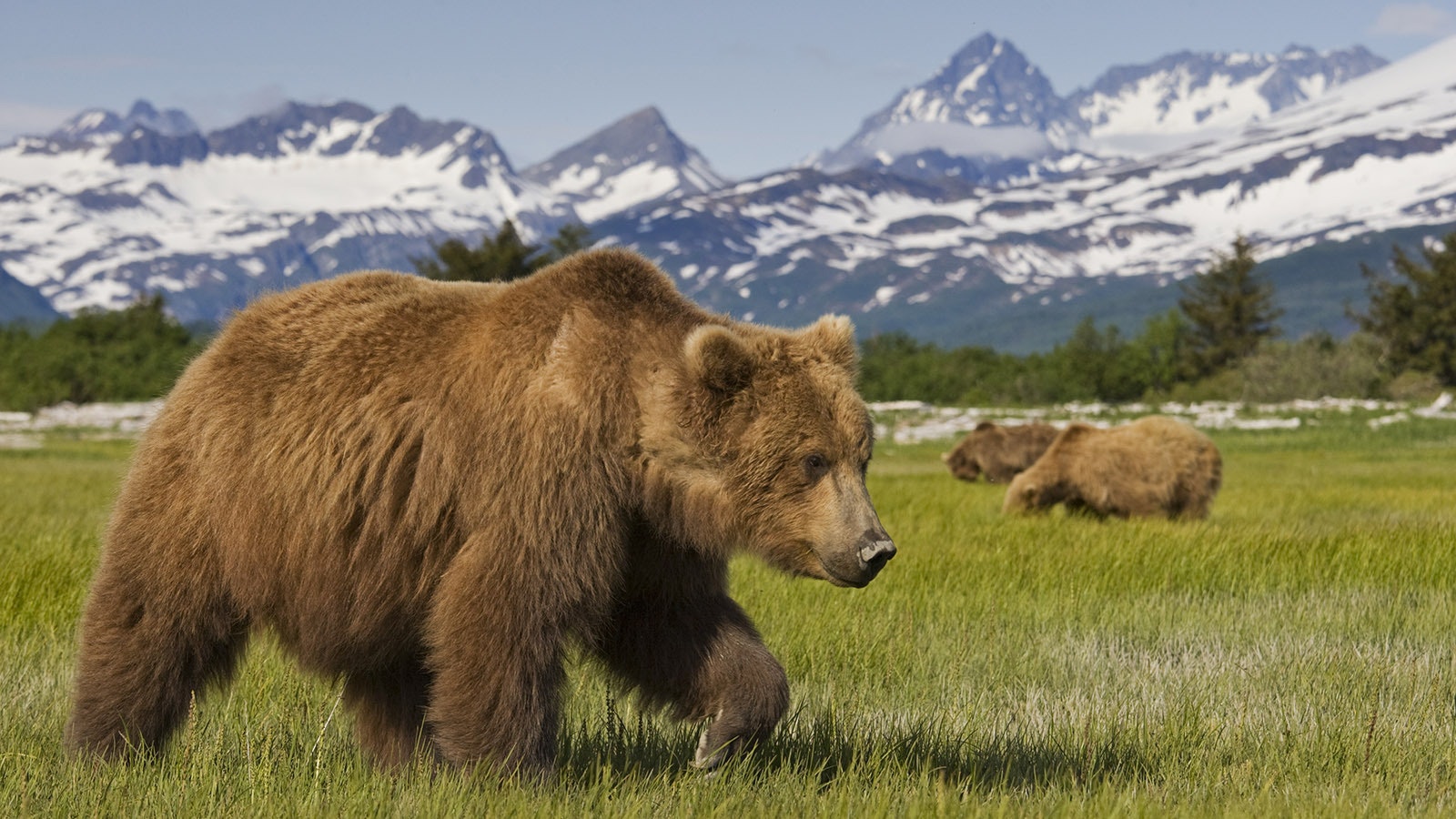
There hasn’t been a verified grizzly bear sighting in California in 101 years, but a coalition of researchers and Native American tribal leaders say the state could handle nearly 1,200 grizzlies, including in places close to Los Angeles.
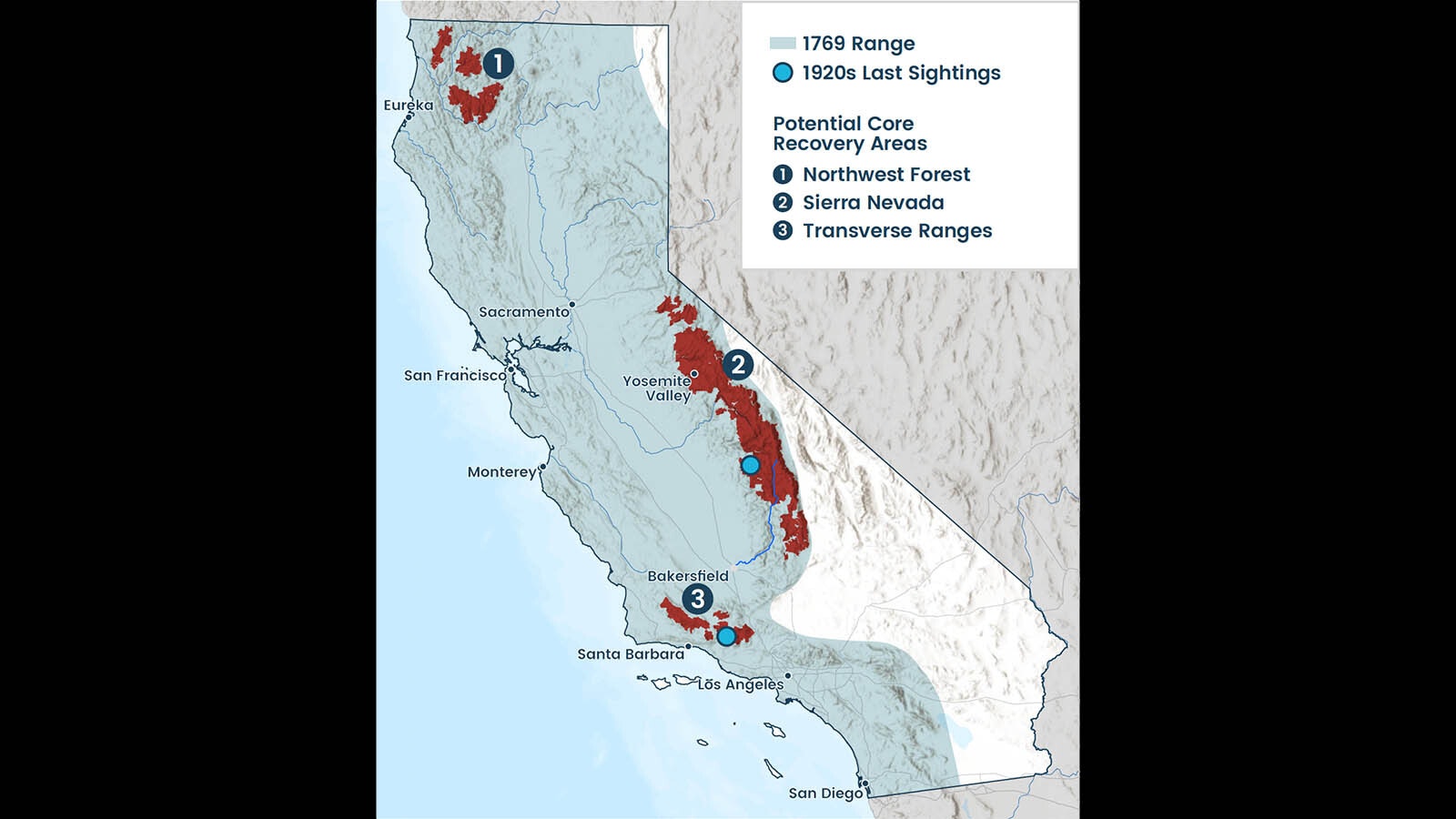
A new feasibility study for California grizzly reintroduction from the California Grizzly Alliance claims that the state could support 1,183 grizzlies.
That could include 115 bears in the Transverse Ranges, north of Los Angeles, according to researchers.
Another 236 could live in California’s Northwest Forest. The largest population, 832 grizzlies, could thrive in the Sierra Nevada Mountain range, near the California-Nevada state line, researchers claim.
Unrealistic Hopes?
California Department of Fish and Wildlife (CDFW) spokesman Peter Tira said that his agency is aware of the study and open to talking about the idea.
But realistically, it will be a long time before California even considers bringing back grizzlies, if ever.
As far as where grizzlies bound for California might come from, there’s a longstanding claim that California grizzlies were a distinct subspecies, and therefore essentially irreplaceable.
But the study’s authors argue that’s not true, and that California’s native grizzlies weren’t significantly different from grizzlies now living throughout the northern Rockies.
The study’s forward notes that grizzlies could be transplanted from anywhere in the northern Rockies region. British Columbia, Canada is named as one possible source for grizzlies.
There’s no mention made in the forward of possibly transplanting grizzlies from Wyoming to California.
California Had Gobs Of Grizzlies
Many have noted the irony of California having a grizzly bear on its state flag, when no grizzlies live there.
But California was once teeming with grizzlies. It’s estimated that at least 10,000 lived there prior to the Gold Rush of 1848.
By way of comparison, there are roughly 3,000 grizzlies in the combined populations of the Greater Yellowstone and Northern Continental Divide ecosystems of Wyoming, Montana and Idaho.
After the gold rush, humans showed no tolerance for grizzlies and started killing them off.
The last known grizzly in southern California was shot in 1916, in the Sunland area of Los Angeles.
The last documented sighting of a grizzly anywhere in California was in Sequoia National Park in the spring of 1924.
‘Open To Engaging In A Conversation About It’
The California Grizzly Alliance has a grand vision for reestablishing grizzlies there. The group argues the big bears are a vital piece of California’s ecosystems that has been missing for too long.
“Rewilding is more than just a conservation strategy; it is the opportunity to restore what has been lost and reclaim our kinship with the natural world,” Kris Tompkins wrote in the study’s forward.
“In this vision, all of us have a role to play. But first, we have to embrace the wildness within ourselves and recognize our interconnectedness with all living beings. As a Californian, I look forward to the day when the grizzly once again roams our state—when the bear is back where it belongs,” she added.
Tira told Cowboy State Daily last year that grizzly reintroduction in California probably isn’t realistic, because conditions have changed so much since the bears lived there.
CDFW’s position remains essentially unchanged, he said on Wednesday.
“California is a vastly different state than when grizzly bears occupied it in significant numbers,” he said. “We have a population of 40 million people.”
The grizzly alliance’s new study had been presented to the California Fish and Game Commission, and “we’re certainly open to engaging in a conversation about it,” he said.
But a grizzly reintroduction program couldn’t get off the ground without action from the Fish and Game Commission the state legislature and the governor’s office.
It would have to begin with an in-depth feasibility study by CDFW, Tira said.
And don’t expect that anytime soon, he said.
“There’s no direction to do that (a CDFW grizzly reintroduction study). There is no budget for it, California is in a budget crisis,” he said.
New California Grizzlies Might Not Survive
A new population of California grizzlies wouldn’t have access to many of the food sources that the past grizzlies ate, Tira said.
In days long gone, whale or seal carcasses would wash up on remote beaches, and grizzlies would gorge on them, he said.
Nowadays, most beaches are frequently crowded, and don’t have carcasses scattered about on them.
Grizzlies in the past also enjoyed plentiful salmon. But salmon populations are currently struggling, Tira said.
The Federal Pacific Fisheries Management Council recently placed a moratorium on commercial salmon fishing in California, for the third year in a row, he said.
And recreational angling for salmon will be allowed for only two days this year, Tira added.
Many native plants and grasses that grizzlies depended upon are gone, he said.
He also noted that California doesn’t have any “truly remote” places left that see little to no human traffic.
And if grizzlies were transplanted into what semi-remote places there are, it’s not likely that they would stay put, Tira said.
“It’s in their nature to roam. There’s no reason to believe they’d stay there (in the transplant zones), he said.
“We would set grizzlies up for unavoidable, inescapable conflict with human beings,” he added.
California Already Has Its Hands Full
What’s more, California is already “struggling” to handle human-wildlife conflicts with other species, Tira said.
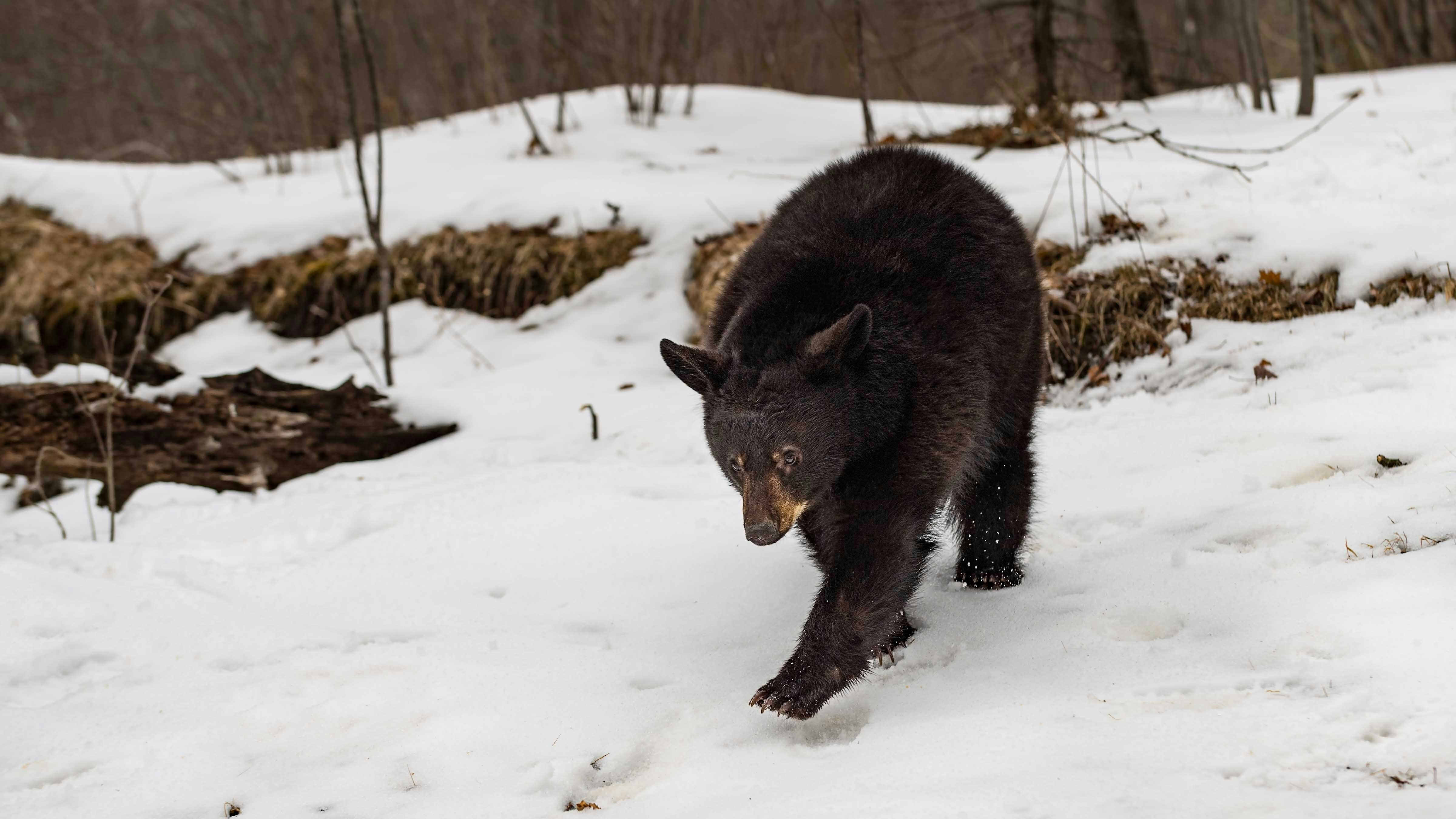
The state has an estimated 60,000 black bears, he said.
There are increasing numbers of mountain lions, and coyotes roam in urban areas.
California also has a growing number of wolves — which started wandering from Oregon and have established resident packs.
With “coyotes in San Francisco and Mountain Lions in Los Angeles,” adding in potential grizzly-human conflicts might be too much, he said.
Mark Heinz can be reached at mark@cowboystatedaily.com.