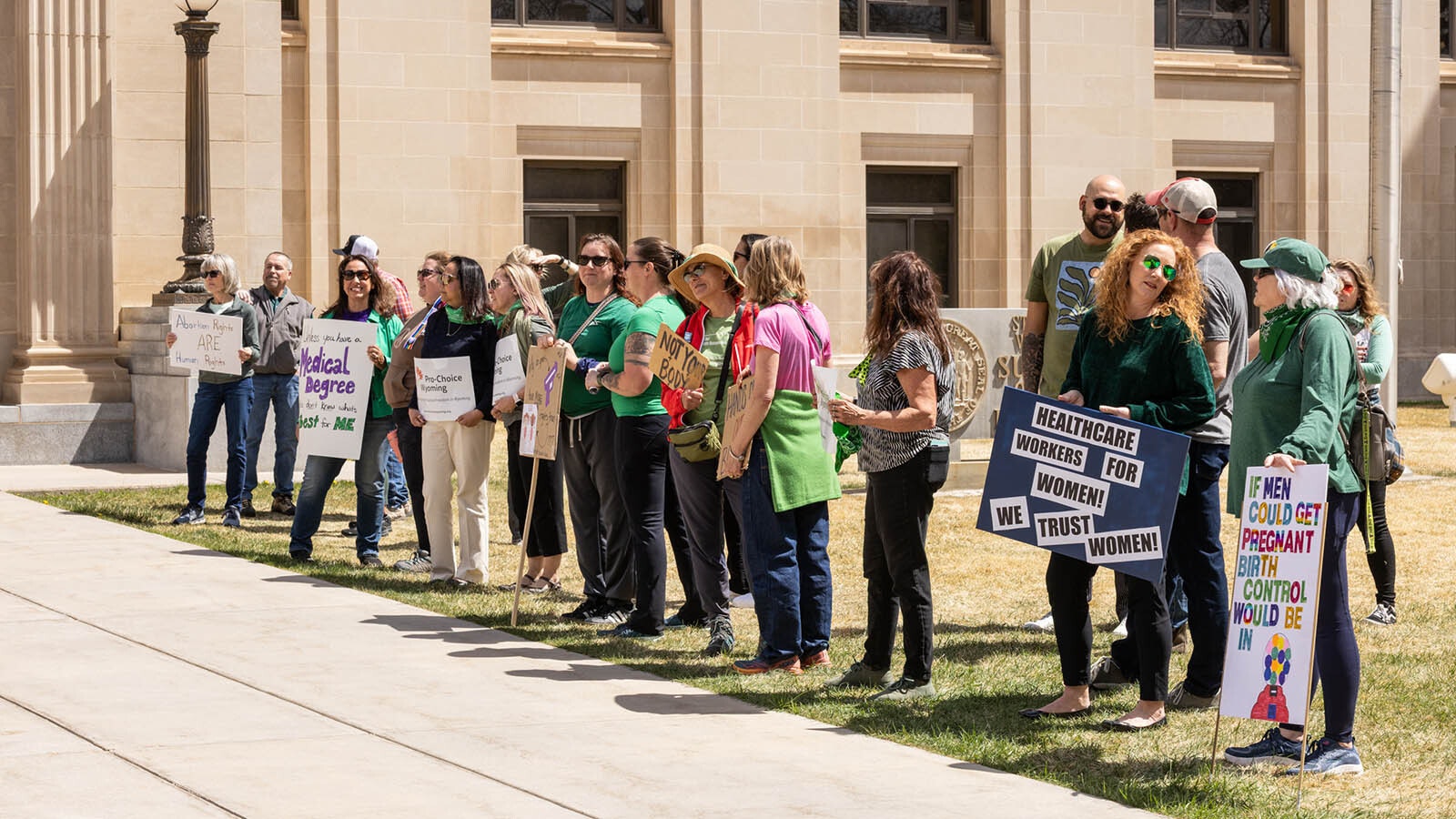
The Wyoming Supreme Court has taken under advisement the question of whether abortion is health care, and whether having abortions is a fundamental right in the state.
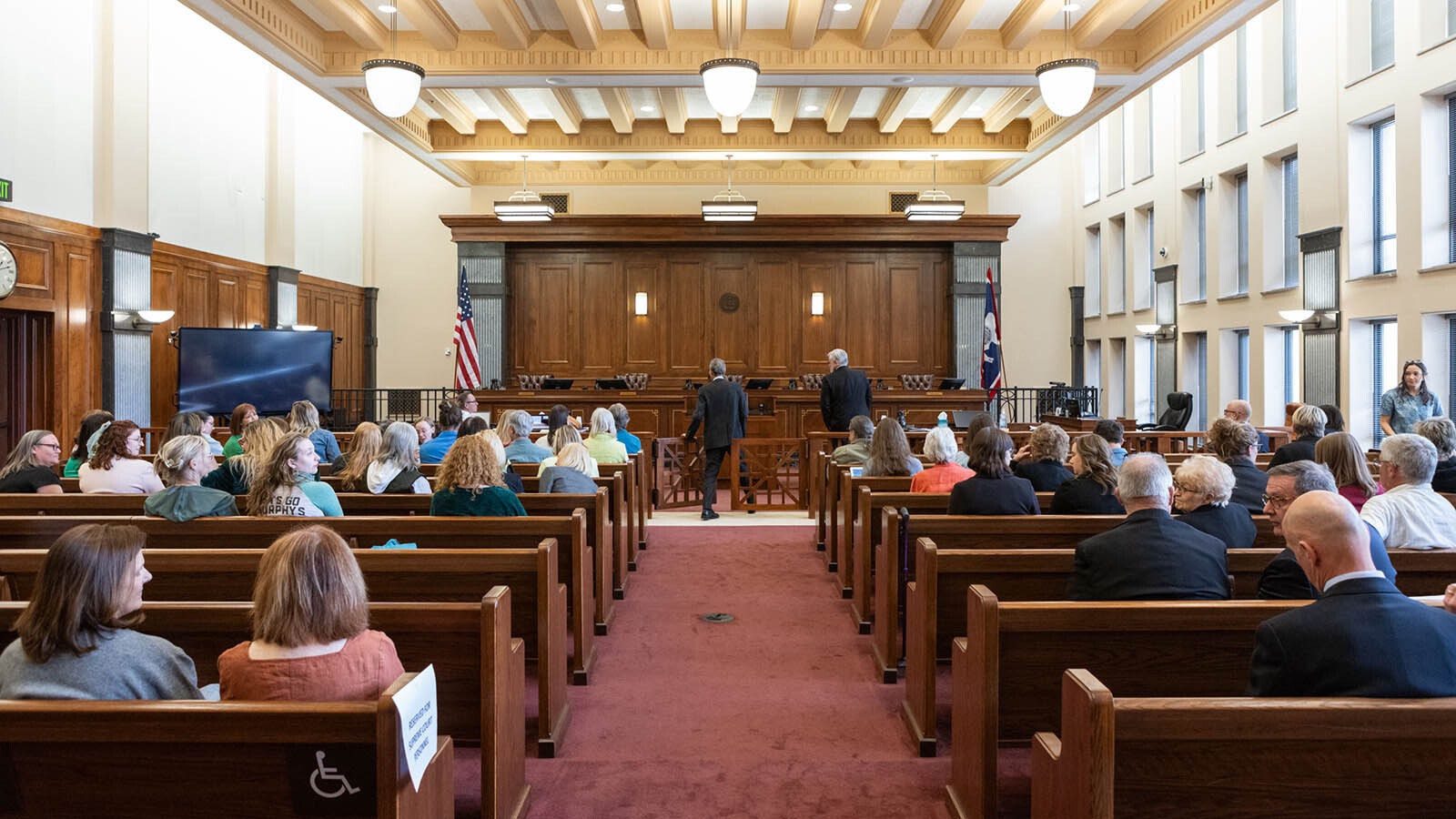
The justices of the state’s highest court during a Tuesday hearing heard lively arguments from Wyoming Deputy Attorney General Jay Jerde, and from multiple attorneys representing an abortion-rights coalition consisting of women, an abortion clinic, a fundraising group and two OB/GYNs.
The arguments revolved around the November decision of Teton County District Court Judge Melissa Owens, who ruled that abortion is health care, and that it is a fundamental right under the Wyoming Constitution, and that it is health care.
Owens blocked two state laws that would ban nearly all abortions if allowed to go into effect.
Wyoming now challenges Owens’ decision and her reasoning.
Though grounded in different language and in the Wyoming Constitution, rather than the U.S. Constitution, the case is analogous to now-overturned 1973 U.S. Supreme Court case Roe vs. Wade because it contemplates whether abortion access is a right.
Who Decides?
Jerde on Tuesday told the high court’s justices that Owens tried to resurrect the fetal viability standard Roe vs. Wade created – and that blocking the bans strips the legislature of its lawful authority to regulate in a poorly-contoured philosophical area.
There’s no consensus among major religions, secular groups, courts and political operatives on when life begins, Justice Kari Gray noted. “Who gets to decide when life begins?”
For policy purposes, answered Jerde, “the legislature gets to decide that, because they’re the most answerable to the people.”
Jerde emphasized that the Wyoming judicial branch is often deferential toward the elected legislature’s policy-making authority. He also said Owens got it wrong when treating abortion as a fundamental right – because the health care amendment to the Wyoming Constitution contains directions for court review that use different language than those associated with fundamental rights.
“The reality of regulating abortion is this: whatever side you choose, you’re defining when life begins – and it has to be a legislative decision,” said Jerde, essentially reasoning that whether the legislature restricted abortion or left it alone, it would be making a call that would violate the consciences of some – but it would be answerable to those choices at elections.
“There’s no basis for what the district court did,” Jerde continued. “She talked about the state (only being able to regulate in this area) after the fetus is viable. That’s straight from Roe… And there’s no evidence the voters of Wyoming sought to enshrine forever Roe v Wade, when they voted (for the health care amendment).”
Wyoming voters in 2012 passed the now-controversial “health care amendment” grounding Owens’ November ruling. At the time, lawmakers and political groups characterized it as a defiant gesture against the Affordable Care Act.
Even Then
Even if abortion were a fundamental right under the Wyoming Constitution, Jerde argued, Wyoming’s bans still are constitutional because the legislature has furnished a “compelling interest” for them and has tailored them narrowly.
Peter Modlin, counsel for the pro-choice group, disagreed not only with that claim, but with the idea that the abortion bans could pass any level of constitutional test.
He said they’re altogether unconstitutional.
Modlin also emphasized U.S. Centers for Disease Control and Prevention statistics, which he said show that abortion is healthier than pregnancy.
Those statistics show a mortality rate for pregnancies that ranges from 50 to 100 times higher than those for abortions, he noted.
“But that’s not the premise, is it?” asked Gray. “(Isn’t the premise) that you have to balance the rights of the unborn with the rights of the woman?”
She pointed to the 2022 U.S. Supreme Court case Dobbs vs. Jackson Women’s Health Organization by which the court overturned Roe. In that case, the high court applied a lower level of court scrutiny to an abortion ban than the one reserved for fundamental rights.
“With all due respect to the U.S. Supreme Court, the decision in Dobbs was incorrect,” said Modlin. “And the evidence in this case, which is undisputed, proves that it was incorrect.”
Modlin said that when doctors call for multi-fetal reduction – which is an abortion to decrease the number of multiples in a pregnancy – it’s to ensure that at least one fetus will survive. He said Wyoming’s laws undermine that quest for the life of the one fetus who may survive due to the procedure, and therefore the bans violate their own stated cause of protecting the unborn.
Pandora’s Box
Justice John G. Fenn had another concern: that overlooking the broad language Jerde says limits the health care amendment and rather, treating it as a fundamental right could open up a “Pandora’s box” of controversial health care rights.
Chief Justice Kate Fox listed a few of these: assisted suicide, experimental cancer treatments, freezing embryos, gender-change related treatments. Fenn referenced the use of medical marijuana.
“It opens a pandora’s box on what is health care and what regulation can be made there,” said Fenn, adding that health care is a heavily regulated area. “This might turn that upside down.”
Modlin said his clients respectfully disagree. He insisted that health care is a fundamental right, adding, “that’s what the constitution says.”
Natural Right
Marci Bramlet, speaking for the pro-choice coalition, said abortion is a natural right, and should be honored as a right most precious to women. She also chided the state for regulating women specifically, saying there’s no analogous regulation on men’s reproductive options.
Justice Kari Gray countered.
“A man is not similarly situated,” said Gray. “Equal protection (challenges) requires similarly situated individuals.”
Bramlet pivoted, saying in either case, the legislature has chosen to encroach into the health realm in favor of birth. If the Wyoming Supreme Court upholds its authority to do that, Bramlet pondered, then what’s to stop it, under a future regime, from blocking an iteration of the legislature that would mandate abortions in some cases?
Bramlet said Wyoming would find itself subject to “no more than … changing political whims.”
These Aren’t Here
Jerde rebutted Bramlet, saying there aren’t cases showing abortion is a natural right, or that family composition choices are a natural right. Wyoming’s constitution also doesn’t enumerate a privacy right, Jerde noted.
Lastly, he pointed to Wyoming’s history as a pro-life state.
“This state, when not preempted by federal law, has always prohibited abortion,” said Jerde. Pre-Roe abortion bans had exceptions for the life of the mother. And Wyoming’s bans now under high-court review contain even more exceptions, he said. “It’s entirely consistent with the values of this state.”
Clair McFarland can be reached at clair@cowboystatedaily.com.