The Fremont County Commission has chosen its longtime juvenile case manager to be the new top prosecutor in one of Wyoming’s most crime-riddled counties.
All five commissioners voted for Micah Wyatt during a Tuesday meeting, after three interviews in the contested replacement race for Fremont County attorney.
“I am overwhelmed to learn I gained the faith of the full commission, and hope to earn the faith of Fremont County and its people in this position,” Wyatt told Cowboy State Daily after the unanimous vote.
The position became vacant after its former elected leader, Patrick LeBrun, left earlier this month to take a deputy prosecutor position in Natrona County.
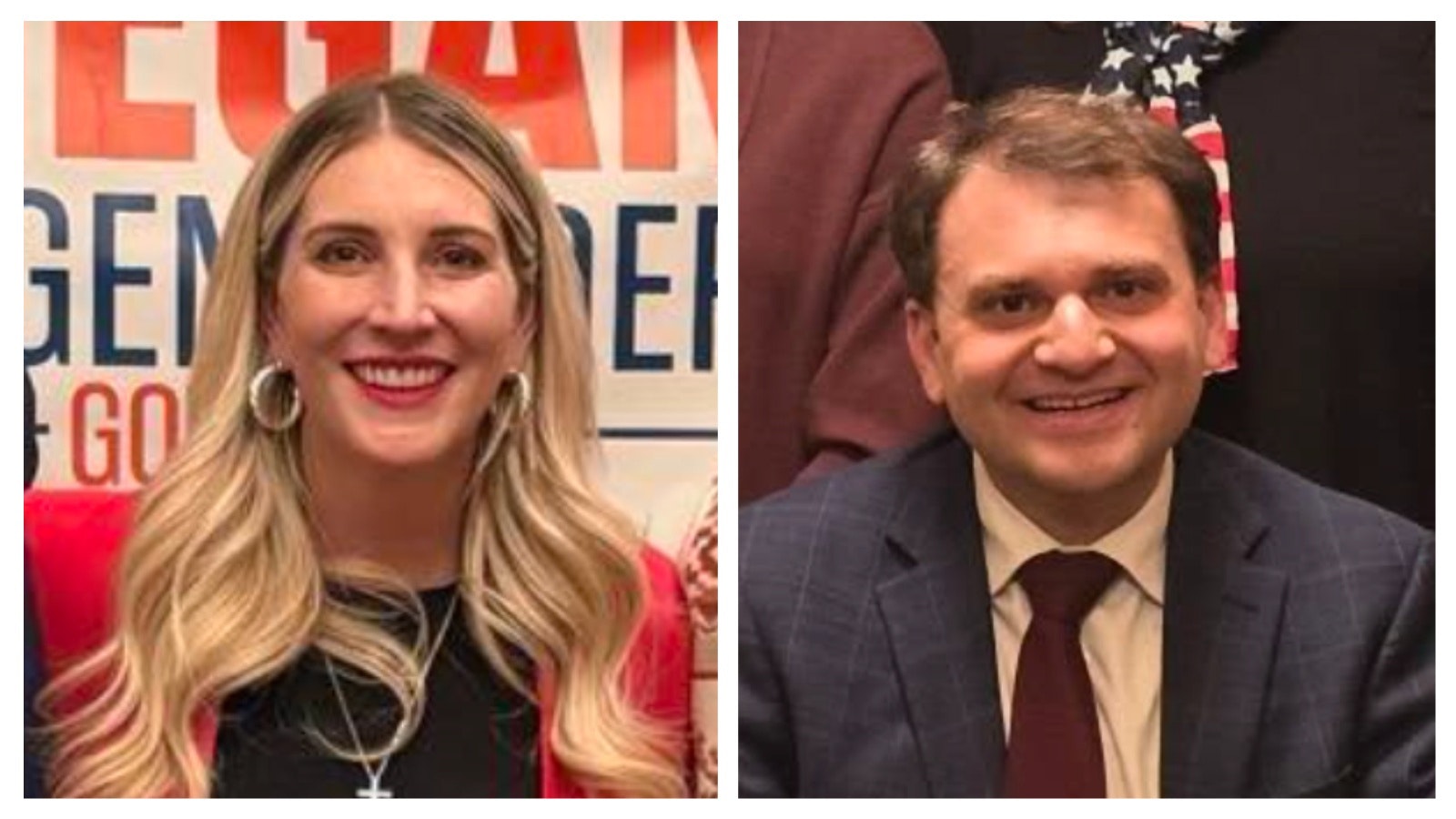
The Fremont County Republican Central Committee on Saturday forwarded three nominees to the commission: Wyatt, private Green River-based attorney Jason Gay, and Hot Springs County Deputy Attorney Kelly Owen.
All three gave lively interviews before the commissioners Tuesday.
Commission Vice-Chair Mike Jones asked each of them how a prosecutor could lower crime rates in Fremont County.
And every candidate, in his or her own interview, laughed.
Owen and Gay both said connecting with the community and building trust and good faith in law enforcement and the prosecutor’s office would be key.
But, added Owen, “Well you know … none of us were given a magic wand upon graduation from law school.”
Gay remarked similarly on the difficulty of lowering crime in Fremont County.
The county’s largest municipal agency, Riverton Police Department, is often an outlier in both crime and violent crime rates per capita among Wyoming agencies, and Fremont County tends to keep on pace with the state’s larger counties for homicides.
Wyatt said the answer starts not with the prosecutor’s office, but with the home. It’s beyond the power of government to fix everyone’s home lives, and that would require more “social engineering” than anyone could condone, he said.
But as much as government is able, said Wyatt, it should “promote families and … get people to take responsibility for their families, and their children.”
In the prosecutor’s office specifically, the answer is to fit appropriate consequences with each crime, he said.
‘Absolutely’ Running
Jones asked each candidate if he or she would run for the elected position in two years.
Wyatt was the most emphatic about that.
“Absolutely,” he said, adding that while working for LeBrun, he’d envisioned running around 2036 – which is about the time the now 53-year-old LeBrun would reach retirement age.
But now, with the chance to run the office, “I’m a solid yes” for 2026, said Wyatt.
Gay’s answer to the election question was, “I would expect so, yes.”
Jones countered that the commissioners had concerns about Gay’s resume, which details multiple impressive jobs but shows him switching jobs, in many cases, about every two years.
Gay said life, family and the U.S. military gave him circumstances that were beyond his control, and that he would have liked to stay in the military even longer had he not been medically retired.
In response to the election question, Owen said, “You have to, right? Moving is not easy. At least it’s not on me.”
Plea Agreements
Fremont County Commission Chair Larry Allen told all three candidates that local residents are concerned about plea agreements being doled out to criminal defendants, and he asked how they’d remedy that.
All three candidates’ answers took the form of important education campaigns on how the criminal justice system works.
Gay and Owen both noted that without plea agreements, the courts would collapse, both financially and by causing constitutional, “speedy trial” right problems. The courts could never take every case to trial.
Wyatt spoke somewhat to that as well, saying there are some cases where it would be a disservice to the county coffers to go to trial when a trial conviction and sentencing would have about the same outcome as a plea agreement. He said the county attorney’s office works hard to include crime victims in the plea negotiation process.
Owen emphasized how hard trials can be on victims and witnesses, as well.
Your Conscience
Commissioner Ron Fabrizius asked each candidate to describe a time when laws or regulations conflicted with his or her own conscience.
Wyatt said he was once called upon to prosecute a family for medical neglect, for refusing to give certain cancer treatments to their child.
He struggled with that because he himself has overcome a bout of cancer through a dietary and exercise regime, when he couldn’t afford treatment, he said.
But Wyatt asked the court to dismiss that case. He declined to confirm to Cowboy State Daily which case it was, but it bears similarities to a case in which the boy went on to enter remission while on a diet of unique staples such as zebra fish.
Owen said she struggled with a judge’s suppression of a trapping violation case she fielded while prosecuting in Platte County. It was hard for her to see a bobcat left in a trap for four months (when the traps must be checked every 48 hours) so that its body was unrecognizable when found — but she also disputed the judge’s ruling that evidence from the traps wasn’t valid for the case under the Fourth Amendment. She was geared up to challenge the finding when the defendant died, and the case became moot, she said.
Gay said he took issue with a now-famous corner crossing case in Carbon County being treated as a criminal trespassing though, he said, he did not field the prosecution himself while he prosecuted for that office.
Clair McFarland can be reached at clair@cowboystatedaily.com.