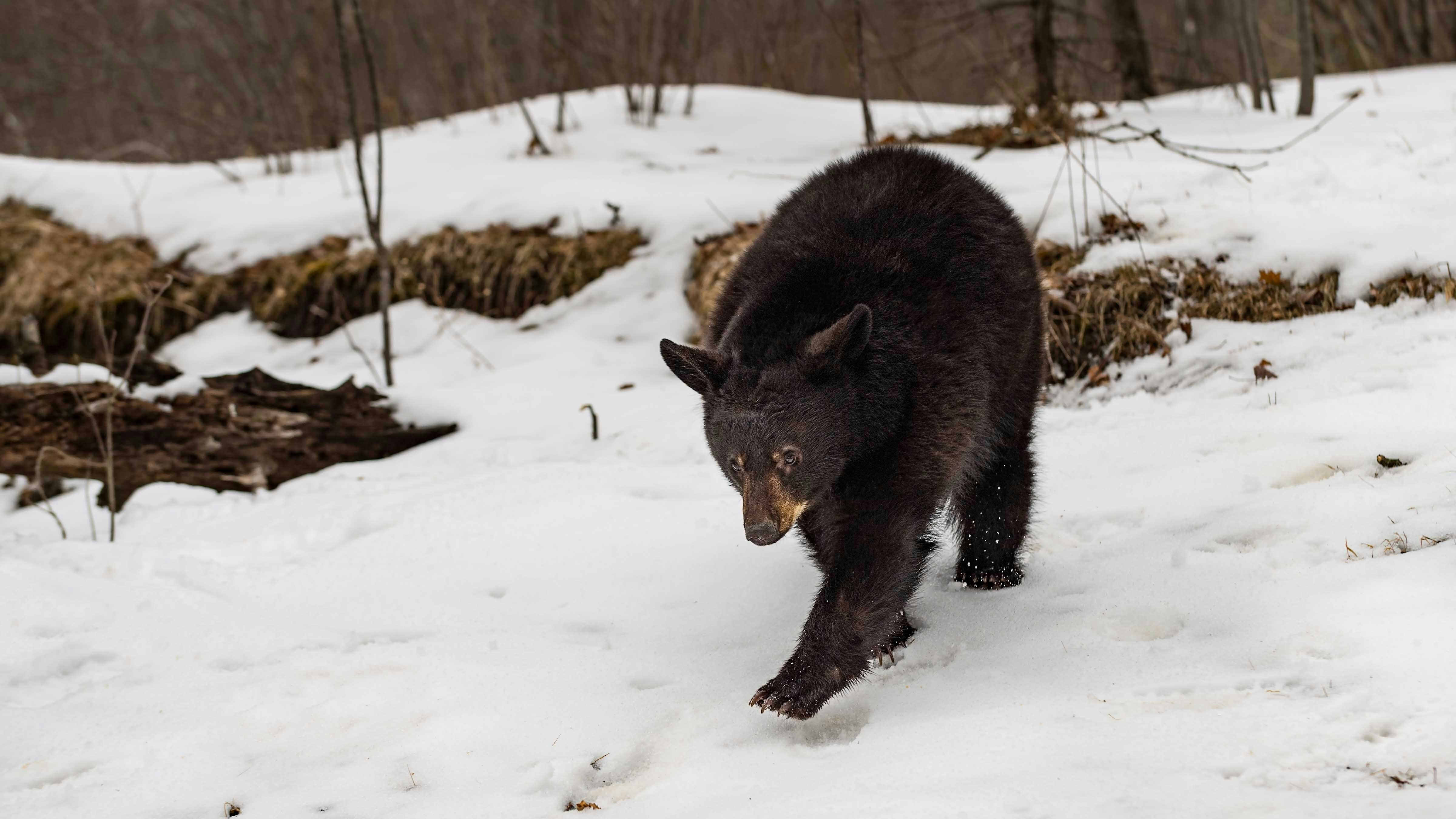
The first officially documented fatal grizzly attack in Yellowstone National Park claimed the life of a government teamster named Frank Welch in 1916.
A road crew responded by booby-trapping a garbage barrel with dynamite to lure the bear thought to be responsible, an elderly male called Old Two Toes.
Then they blasted the grizzly into oblivion.
That’s according to an account in the 1995 book “Death In Yellowstone” by Lee H. Whittlesey, which documents the history of lethal accidents, misadventures and misfortunes in the park.
The tale of Old Two Toes’ explosive demise illustrates the stark differences between bear management then versus today, retired law enforcement ranger Greg Jackson told Cowboy State Daily.
“Just from a 100-years-plus later perspective, the way we think about it, it’s so ridiculous, it’s funny,” said Jackson, the former deputy chief of the National Park Service division of law enforcement, security and emergency services. He now runs NPS Park Ranger News.
“How they thought that was a good idea (dynamiting the bear), I don’t know,” he added.
Fatal Attack On Welch
There are accounts of fatal grizzly attacks in Yellowstone before Welch’s death, but his was the first officially documented case, according to Whittlesey’s book.
Also according to the book’s account, prior to the fatal encounter with Welch, there were reports of Old Two Toes attacking and injuring people near Fishing Bridge in Yellowstone.
At the time, it was thought that the bear became aggressive toward people out of desperation, because he was old and in poor condition with worn teeth.
Welsh, 61, was hauling a wagon full of hay and oats near Sylvan Pass. On the night of Sept. 7-8, 1916, he and two laborers camped near Ten Mile Spring, at Turbid Lake.
Welch and one of the laborers were sleeping underneath the wagon, while the other laborer slept on top of it.
At about 1 a.m., they were attacked by a grizzly thought to be Old Two Toes.
The other two men took refuge atop the wagon and tried to ward the bear off by throwing bedding and a lunch box at it.
Welch also tried to scramble atop the wagon but was caught and attacked three times by the bear, according to the other men’s accounts.
The third time, he suffered ghastly wounds, including broken ribs, huge gashes and cuts to his shoulders, arms and legs, and a punctured lung.
Welch was taken to Fort Yellowstone, where he died at 8:10 p.m. on Sept. 11, 1916.
‘Broke Every Bone In His Body’
A government road crew decided it was time to rid the park of Old Two Toes, after the bear was spotted back at the wagon, eating hay.
So, they set a trap for the grizzly.
They spread garbage out in front of an overturned barrel and put a dynamite charge inside the barrel. The dynamite was rigged with an electric detonator so it could be set off at a precise moment.
“… and when the bear began to eat, they blew him up: ‘broke every bone in his body,’” according to an account on page 40 of “Death In Yellowstone.”
Painting Bears
Bears that attack people in national parks are still killed sometimes – but in not such a dramatic fashion as Old Two Toes, retired Forest Service and Park Service ranger Richard Jones told Cowboy State Daily.
His father was a Yellowstone park ranger, and Jones lived in the park while growing up.
He recalled that during his father’s tenure, it was typically black bears that got into trouble for such things as raiding dumpsters and getting aggressive toward people.
His father and other rangers would trap bears and “swab some yellow paint on their shoulders” for identification.
The bears would be hauled off to remote areas of the park and set free.
Yellow-painted bears that came back and started causing trouble again “might get a second chance” before being put down, he said.
He said that on one occasion his father, lacking yellow paint, put red paint on a bear’s shoulders.
“They started getting reports of a wounded bear wandering around the roadside,” he said.
Blowing Up Grizzlies No Longer An Option
In 1916, the National Park Service had only just been formed, and the U.S. Army was still effectively in charge of Yellowstone, Jones said.
That might explain the availability of dynamite, and the willingness to use it, he said.
He recalled hearing about an old-time grizzly named Old Two Toes but said he had never heard the account of the bear being killed with explosives.
In any case, the road crew apparently decided to use what they had to take out Old Two Toes, Jones said.
Nowadays, bears that must be killed are shot, or trapped and given a lethal injection, he said.
From the bears’ perspective, it probably makes no difference, Jones added.
“Whether you shoot it, blow it up or use a needle, that bear is history,” he said.
Jackson agreed.
“From the bear’s standpoint, it’s not a good outcome, no matter what,” he said.
However, “I think the Park Services’ position has evolved since then,” regarding blowing bears up, he added.
Mark Heinz can be reached at mark@cowboystatedaily.com.