Observers watching Yellowstone National Park’s Old Faithful webcam got quite the spectacle on Monday afternoon. A bison herd decided a wandering grizzly got too close for comfort and sent it scurrying through the snow.
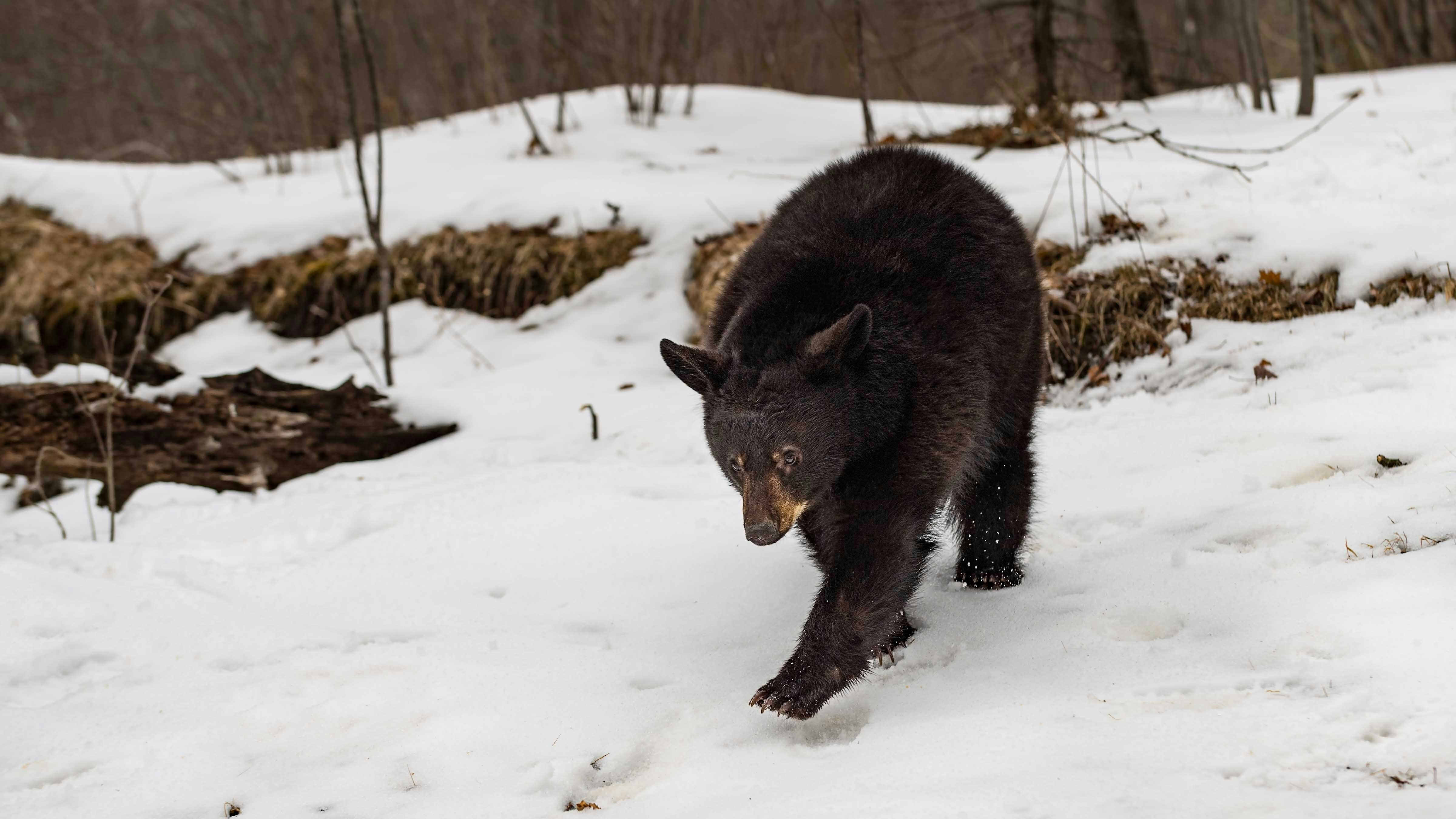
Around 1:15 p.m. Monday, a herd of over 20 bison was grazing on snow-covered grass in the Upper Geyser Basin when a grizzly appeared along the Firehole River. The grizzly kept to itself as it meandered along the riverbank, but it had the full attention of at least one of the bison.
Just when it appeared that the bear and bison would respectfully ignore each other, the entire herd reeled together and charged after the grizzly. Yellowstone’s apex predator took the hint and didn’t stick around, retreating behind a nearby tree line at a full gallop.
“He didn't seem to care much about that herd,” said Wyoming Game and Fish large carnivore specialist Dan Thompson. “I'm sure he sees herds of bison all the time, but I guess the bison felt he wasn't moving along quickly enough, despite his nonchalance, so they gave him a little nudge.”
It was the latest amazing wildlife moment captured on the Old Faithful webcam for its international audience. A recording of the entire incident was posted on the GeyserTimes Dashboard as one of the daylight highlights.
“It made my day,” said webcam watcher Katie La Salle-Lowery, who watched the event happen in real time.
Bison Beats Bear
Grizzlies might be the apex predators of the Greater Yellowstone Ecosystem, but bison are bigger. The iconic animals usually coexist peacefully, even when in close proximity to each other.
“I’ve seen lots of large male grizzlies walk through herds of 50 to 60 bison without incident,” retired federal ecologist and grizzly conservation advocate Chuck Neal. “It depends on the bear’s size, behavior, and psychology, but it’s not an unusual sight to see.”
What’s more unusual is for the bison to turn and charge a grizzly that’s trying to keep a low profile while strolling past or through a herd. But, according to Neal, all it takes is one bison with a chip on its shoulder to start a whole-herd charge.
“One individual cow probably reacted aggressively to the bear’s presence and ran toward it as if she was going to chase it,” he said. “Once she ran in the direction of the bear, the whole herd was going to follow along because they’re repetitious herd animals.”
The grizzly wasn’t acting aggressively, probably hoping to move past the bison quickly and quietly. And it nearly did, until the bison decided its presence was egregious enough to expedite its exodus from the open field.
Neal was confident that the grizzly wasn’t threatening the bison herd. They might be powerful predators, but they know when they’re outclassed.
“Grizzlies do not attack bison herds,” he said. “No grizzly is that stupid.”
Top Red Dogs
Yellowstone’s bison are always aware of any potential predators in their vicinity, but their size and strength in numbers tend to keep them at ease. In the Greater Yellowstone Ecosystem, the hunter is more afraid than the rarely hunted.
Wildlife photographer Jorn Vangoidtsenhoven recalled when he watched an apprehensive female grizzly try to escort herself and her two young cubs across a bison-covered Lamar Valley. The bison used the trek of the traveling grizzlies as a power play.
“She looked really intimidated and a little bit scared to make her way safely through all the bison with her cubs,” he said. “The bison stood together in groups and forced the sow to zigzag her way through them. They watched her the entire time.”
Vangoidtsenhoven said the size disparity between bear and the bison was evident as the grizzly crossed the valley.
“The grizzly looked tiny, even compared to the smaller cow bison,” he said. “The average grizzly in the Greater Yellowstone Ecosystem is between 400 and 500 pounds. A cow bison can weigh over 1,000 pounds, and a bull can weigh up to 2,000 pounds. You can see the sheer difference in size and power when they’re that close to each other.”
Bison Buffet
The first signs of emerging grizzlies were spotted in northern Yellowstone in early March. Male grizzlies, or boars, are the first to emerge and wander the landscape with voracious appetites, eager to recover the calories they lost during hibernation.
Bison are a critical food source for grizzlies and many other predators. The thawed carcasses of bison that perished during the winter are usually the first food sources post-hibernation grizzlies seek out and are a coveted seasonal source of meat at other times of the year.
“Grizzlies have come to expect a certain amount of bison carcasses during the summer,” Neal said. “When the bulls fight among themselves for breeding opportunities, they injure one another and die. Carcasses are consistent and reliable food sources during the summer.”
Grizzlies can attack and kill bison when age, injury, or affliction make them easier targets. A grizzly was filmed successfully killing a lone bison in 2020, but such instances are notably rare.
“They’re opportunistic bison hunters,” Neal said. “Grizzlies do not routinely attack bull bison but will go after yearlings and calves. But they’re not habitual bison predators – they take advantage of opportunities when they present themselves.”
The Bear That Cried Wolf
While grizzlies aren’t habitual predators of bison, the largest land mammal in North America isn’t entirely immune to predators. Neal said Yellowstone’s wolves are becoming better at preying on bison, but only when they have a seasonal advantage.
“A pack of nine to 10 wolves will use the deep snow of winter to simply wear down a bison’s defenses,” he said. “They drive the herds into deeper and deeper snow, where the bison can’t maneuver, and the wolves can attack from all sides because they’re lighter and quicker.”
In February, a pack of wolves sent a bison herd charging out of Hayden Valley and onto the road. A gaggle of tourists observing the hunt had to dodge out of their way quickly.
Neal said wolves are becoming consistently effective bison predators, primarily during the winter. That’s when wolves can exploit the bison’s weaknesses while capitalizing on their strengths. There's easier prey during the rest of the year.
Grizzlies benefit from the increased predation of wolves, often eating the thawed leftovers or bullying packs off fresh carcasses after they’ve let them do the leg work. However, there’s nothing grizzlies can learn from wolves regarding successful bison hunts.
“Bears don’t operate in packs, so they can’t do that,” he said. “Thank goodness for that.”
Andrew Rossi can be reached at arossi@cowboystatedaily.com.