Though often attributed to “Anonymous,” the poem that is the most widely known poem/prayer in Western circles, is “A Cowboy’s Prayer.”
This poem is recited at the beginning of most rodeos and begins, “Oh, Lord, I’ve never lived where churches grow….” It was written by Badger Clark, who became the first poet laureate of South Dakota.
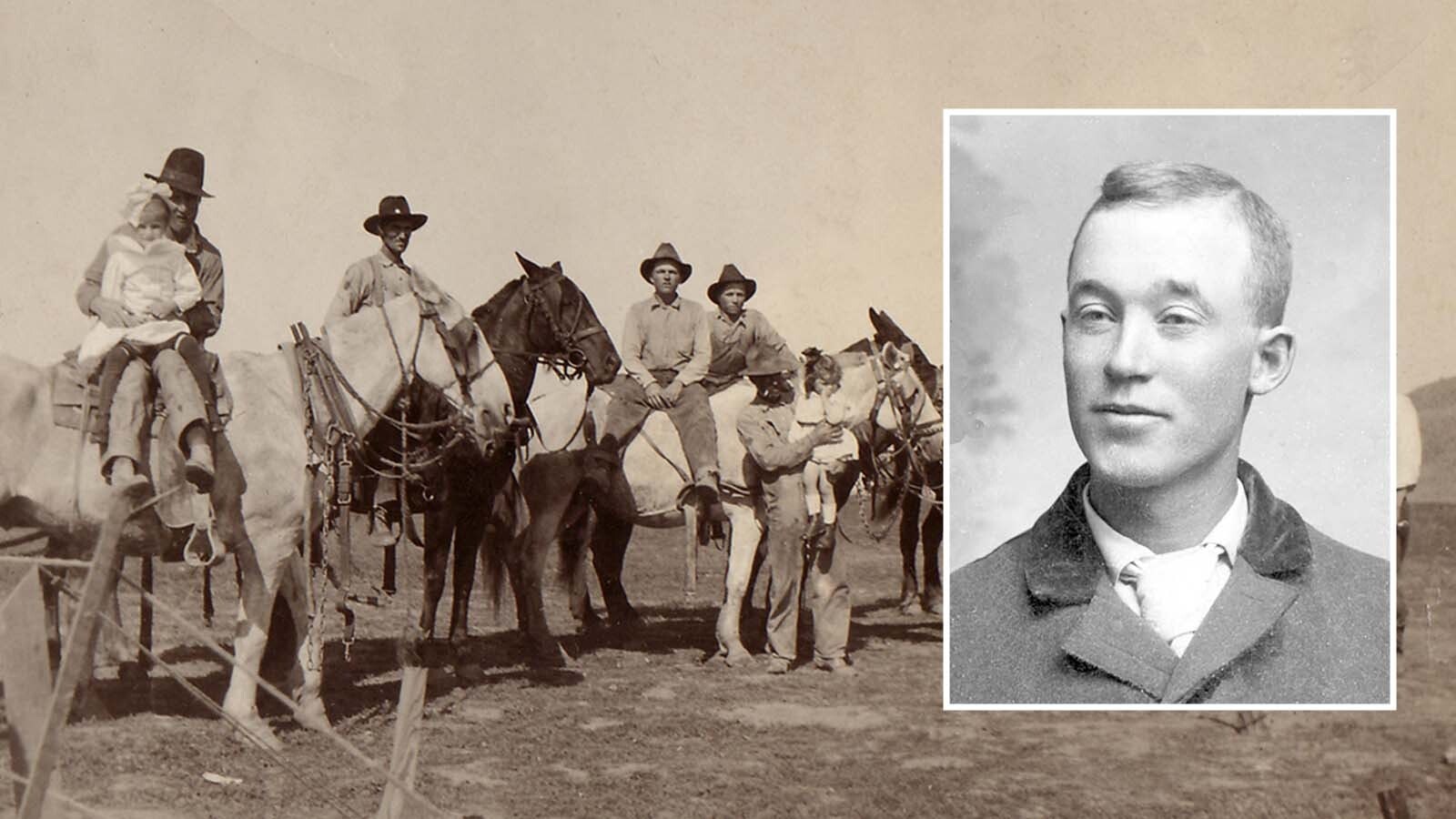
Charles Badger Clark Jr., was born on New Year’s Day in 1883. Named for his father, the younger Clark used Badger, a family name, as his first name.
The Clark family moved to Deadwood in 1898 where his mother died of tuberculosis, a disease that had claimed the life of his brother Frederick four years earlier.
A foray into colonial Cuba in late 1904 led him to familiarity with Spanish, a language he’d later find useful. He spent time in a Cuban jail and once released, he absconded on an American steamship and hightailed it back to the United States.
Badger Clark spent the summer of 1905 with a surveying party in the South Dakota Badlands, where he made little money but his soul was restored in the wide-open spaces.
On his return to Deadwood, he landed a job as a reporter with the Lead Daily Call in Lead (pronounced “leed”), South Dakota. He got engaged to Helen Fowler, a classmate from Deadwood High, though they never married.
T.B. Rises Again
By late fall of 1905, Clark had contracted TB. Caught in the early stages, he was advised to go to the southwest. He made the acquaintance of cowhand E.K. “Spike” Springer, who fixed Clark up with a ranch job and living quarters near Tombstone, Arizona.
He had use of a remote adobe hut, where he lived with dogs, cats, and a passel of chickens. His work consisted of riding a short length of fence line, which occupied only about a day per month. He peppered his writing with Spanish and used the language during occasional travels.
He spent his time recuperating from TB while playing guitar and writing poetry, which he shared with his family. His stepmother submitted one of his poems to Pacific Monthly, which gained Clark a $10 check.
He decided to make his living as a writer.
He wrote in the vernacular and spelled phonetically for emphasis. His descriptive phrases painted word pictures cowmen could appreciate and city folks could visualize.
“Ridin’” was the poem that launched Badger’s career as a poet:
There is some that like the city—
Grass that’s curried smooth and green,
Theaytres and stranglin’ collars,
Wagons run by gasoline—
But for me it’s hawse and saddle
Every day without a change,
And a desert sun a-blazin’
On a hundred miles of range.
Just a-riding’, a-ridin’—
Desert ripplin’ in the sun,
Mountains blue along the skyline—
I don’t envy anyone
When I’m ridin’.
This poem, like many others, was set to music and has been performed by entertainers for decades.
Homecoming
Clark returned to Hot Springs, South Dakota, in 1910 to help care for his ailing father.
Clark became a much sought-after speaker for events ranging from rural junior high and high school graduations to women’s clubs, as he honed his craft.
He never owned a car. To get around he hitched rides, rode the bus, and walked. Once on a lark, on Nov. 16, 1917, he hoofed it to Rapid City, some 60 miles north, in 17 hours.
After his father died in 1921, Clark took up with the Redpath Chautauqua adult education circuit. “I have done a good deal of talking and reading my own verse, traveling from Vermont to Los Angeles and from Oregon to Florida on my own jaw,” he said.
His first book of prose was titled Spike, a humorous look at his time in Arizona, published in 1925. As a fund raiser for the local Lions Club in 1927, Clark wrote When Hot Springs Was a Pup, which cast an entertaining look on early Hot Springs. Most of his other writing was cowboy poetry.
“A Cowboy’s Prayer”
Without doubt his most famous poem is “The Cowboy’s Prayer” which Anna encouraged him to write.
“I had never really heard a cowboy pray,” Badger recalled. “I had heard some of them use some language that had a religious flavor, but generally not in a prayerful spirit. She kept after me however, and so I turned out my most famous work.
Though often attributed to “Anonymous,” it was Badger who wrote the most widely known poem/prayer in Western circles.
It begins:
Oh Lord, I’ve never lived where churches grow.
I love creation better as it stood
That day You finished it so long ago
And looked upon Your work and called it good.
I know that others find You in the light
That’s sifted down through tinted window panes,
And yet I seem to feel You near tonight
In this dim, quiet starlight on the plains.
The Badger Hole
Clark built a log cabin in Custer State Park which he called “The Badger Hole,” his haven for solitude. With no electricity, he used a woodstove and an icebox set into a recess in the floor. He toted water from nearby Galena Creek, chopped his own firewood, and relied on an outhouse.
This Badger Hole remains virtually as Clark left it and is open to the public in summers. Electricity has been added, but nothing else is changed. His boots are lined up next to his bed, just as he left them, and the icebox is still a cubby hole under the kitchen floor.
He died of throat and lung cancer on Sept. 27, 1957. Clark is buried in Evergreen Cemetery in Hot Springs, South Dakota, his hometown.
Many of Clark’s poems have been set to music. Such well-known contemporary artists as Bob Dylan, Judy Collins, Emmylou Harris and Michael Martin Murphey have recorded Badger’s work, notably “Spanish Is the Loving Tongue,” based on the cowboy poet’s 1907 work “A Border Affair.”
Peggy Sanders can be reached at peggy@peggysanders.com