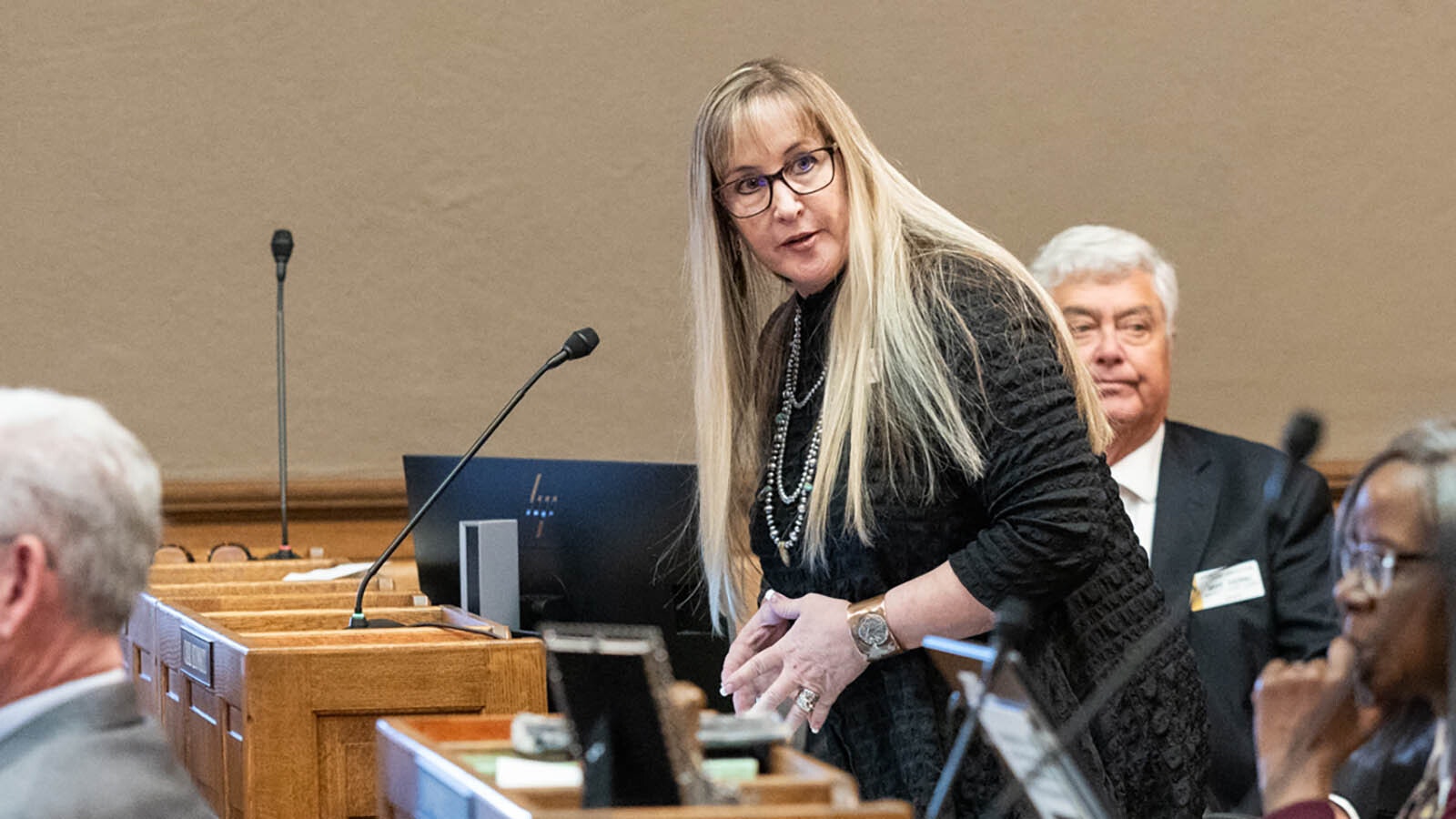
The Wyoming Senate is considering a proposed law change banning diversity, equity and inclusion mandates by the state’s agencies, university and community colleges.
Senate File 103 reached the chamber’s floor Thursday after the Senate Agriculture, State and Public Lands Committee advanced it by a unanimous 5-0 vote that morning.
If it becomes law, the bill will ban all Wyoming agencies and colleges – plus the University of Wyoming – from using any money on diversity, equity and inclusion (DEI) initiatives, generally.
That would include keeping a DEI office or staffers, requiring people to abide by a DEI statement, or hiring or treating employees and other participants different based on innate characteristics like race, sex, or color.
Under the bill, the state’s university and colleges couldn’t require DEI-related courses as part of a student’s degree.
The legislation contains carveouts, exempting activities necessary to satisfy federal or other state laws. That’s an answer to concerns Gov. Mark Gordon posed last year in response to an earlier version of the bill the Legislature posed as a budgetary condition. Gordon vetoed portions of the provision, saying he didn’t want to put UW’s federal grant eligibility at risk.
The bill also specifies that it wouldn’t ban the discussion of historical movements involving racial discrimination, like slavery, American Indian removal, the Holocaust or Japanese-American internment.
“I think that’s really important,” bill sponsor Sen. Cheri Steinmetz, R-Lingle, told the committee Thursday, when speaking of that carveout. “We’re not perfect and we need to be able to talk about that.”
Steinmetz said after the Legislature cut funding for UW’s DEI office last year, lawmakers saw “reorganizing” at the school, and “saw things kind of slid or slide? into other categories,” or re-branded to keep DEI functions.
This bill would be a firmer solution to that, as it would codify an anti-DEI practice rather than having it as a budget caveat, she indicated.
That Didn’t Happen, Says UW
Mike Smith, vice-president of Government Affairs for the University of Wyoming, countered, saying the school didn’t relabel its DEI staffers and sneak them under the radar. Rather, it has been working hard to comply with the Legislature’s will in this area.
“We took that language very seriously – not just the part that survived the veto,” said Smith.
One position the school established that looked like it had a DEI flavor was actually a temporary position geared at pulling the school out of its DEI programming, he added.
“It takes time. And that’s what that position is,” he said.
Smith and leaders from community colleges both voiced concerns about the bill’s broad defunding mechanism, which would control all expenditures – not just state funds. That includes donations, gifts, fees, tuition and “any other” source of money.
“I share the community colleges’ concern with directing what private donors can utilize their dollars for,” said Smith. For years a nonprofit group has hosted a summer camp at UW, geared toward acquainting girls with higher education and opportunities in life, he said.
“It’s been a very successful program,” he continued. “We want to make sure we understand, moving forward, what we have to do, if anything, to those kinds of programs to comply.”
The Statistics
Nathan Winters, executive director of Wyoming Family Alliance, said the bill is needed to reverse a trend of decreasing public trust in higher education.
He cited PEW data saying the percentage of Americans with “very little confidence” in higher education bloomed from 9% in 2015 to 22% in 2023.
UW’s enrollment shrank from more than 13,700 in the fall of 2015 to 10,800 in 2024, Winters added.
“You’re likely going to hear from some people that will try to defend all these things,” said Winters. “The statistics are not with them. But the people of Wyoming are with you if you pass this bill.”
Cookies
Pushback against the bill was mild, however.
The Northern Arapaho Tribe’s Business Council Chairman and in-house attorney both asked for clarification on whether the bill’s references to race and ethnicity include Native American tribal members.
Central Wyoming College President Brad Tyndall also asked for clarification on how the bill would affect his school. CWC is based in Riverton and sits near the Wind River Indian Reservation.
Tyndall said his staffers don’t think of “DEI” as an attack mechanism as so many have characterized it, but as a way of giving everyone “warm cookies” and making them feel welcome.
“For us, we’ll just continue to provide warm cookies to all and create an environment for all those who want to be educated,” said Tyndall.
CWC receives federal funding as a Native-American-serving, non-tribal institution, and it receives private donations as well, he added. It hosts powwows and does outreach for tribal members. It also trains all employees in a three-hour course called “Wind River Basics,” geared at teaching them about the tribal students they serve.
Steinmetz told the committee she would discuss the college leaders’ concerns after the meeting and consider later bill amendments to address those.
Clair McFarland can be reached at clair@cowboystatedaily.com.