Newspapers across the nation carried the newswire story of 145 more Korean War prisoners being freed from Chinese communist camp on Aug. 29, 1953.
An estimated 7,000 U.S. troops had been captured during the war.
“Four hundred Allied prisoners came back to freedom in the 25th day of the Korean prisoner exchange,” the United Press International reported from Panmunjom, Korea, and printed in the Wichita Eagle in Kansas. “Russian-built trucks arrived at the scheduled hour this morning with the day’s first contingent of 50 Americans and 50 ROK (Republic of Korea) soldiers.”
Among the published names that day was Capt. Gene Lam, M.D.
“I will say that people and his kids in particular said, ‘Dad never talked about it,’” his wife June Lam told Cowboy State Daily from her home in Virginia Beach, Virginia. “Well, he looked at me and he said, ‘Why would I want to do that all over again? Why would he want to talk about being a prisoner or being hungry?’”
Wyoming Roots
Gene Lam was born Aug. 4, 1924, in Douglas, Wyoming, and grew up in Glenrock.
Following high school graduation, he attended college at the University of Wyoming for a year before being drafted into the U.S. Army in 1943.
Initially destined to be part of an engineering unit, June Lam said an officer reviewed his paperwork and saw that he had been a pre-med student. He asked the 19-year-old if he wanted to continue those studies.
June Lam met Gene in Nashville, Tennessee, as he was completing his pre-medical studies at Vanderbilt University in a special military program.
They married, and he went on to receive his medical degree from the University of Pittsburg in 1949.
Battalion Surgeon
Following his internship in Fort Lewis, Washington, Lam was sent to Camp Campbell, Kentucky. From there he was sent overseas to Korea as a battalion surgeon.
He was among soldiers in the U.S. Army’s 9th Infantry Regiment, 2nd Division taken captive by the Chinese as they overran American positions during heavy fighting.
The next 34 months were spent as a prisoner of the Chinese Communists in Camp 2 on the Yalu River.
Years later, June learned from her husband that he had been on the battlefield in an ambulance treating soldiers prior to his capture. He also spent three days trying to evade the Chinese before he was finally captured.
“He was officially missing in action for a year,” she said.
Lam’s oldest son, Dr. David Lam of Sitka, Alaska, said he was 7 or 8 years old when his father returned. He has few memories of him from before the war.
“The one thing I really remember was the day that a propaganda photo from the Chinese got published in the local paper,” he said. “There he was playing chess, and it's like 3 in the morning, my mother wakes me up and says, ‘Your dad's alive.’ I said, ‘Oh, that's nice.’ And I went back to sleep.”
When her husband was repatriated, June said she and her children went to the airport in San Antonio, Texas, to greet him. She had their third child just after he was initially sent to Korea.
“I had my kids with me, three of them, and the kids kept watching the plane and watching the plane as people debarked,” she said. “It was nearly the last person who was in uniform, and he got off the plane, and my 3-year-old who had never seen him, never met him … said, ‘Mama, is that my daddy?’
“That gives me the shivers, even to say it now, but that did happen.”
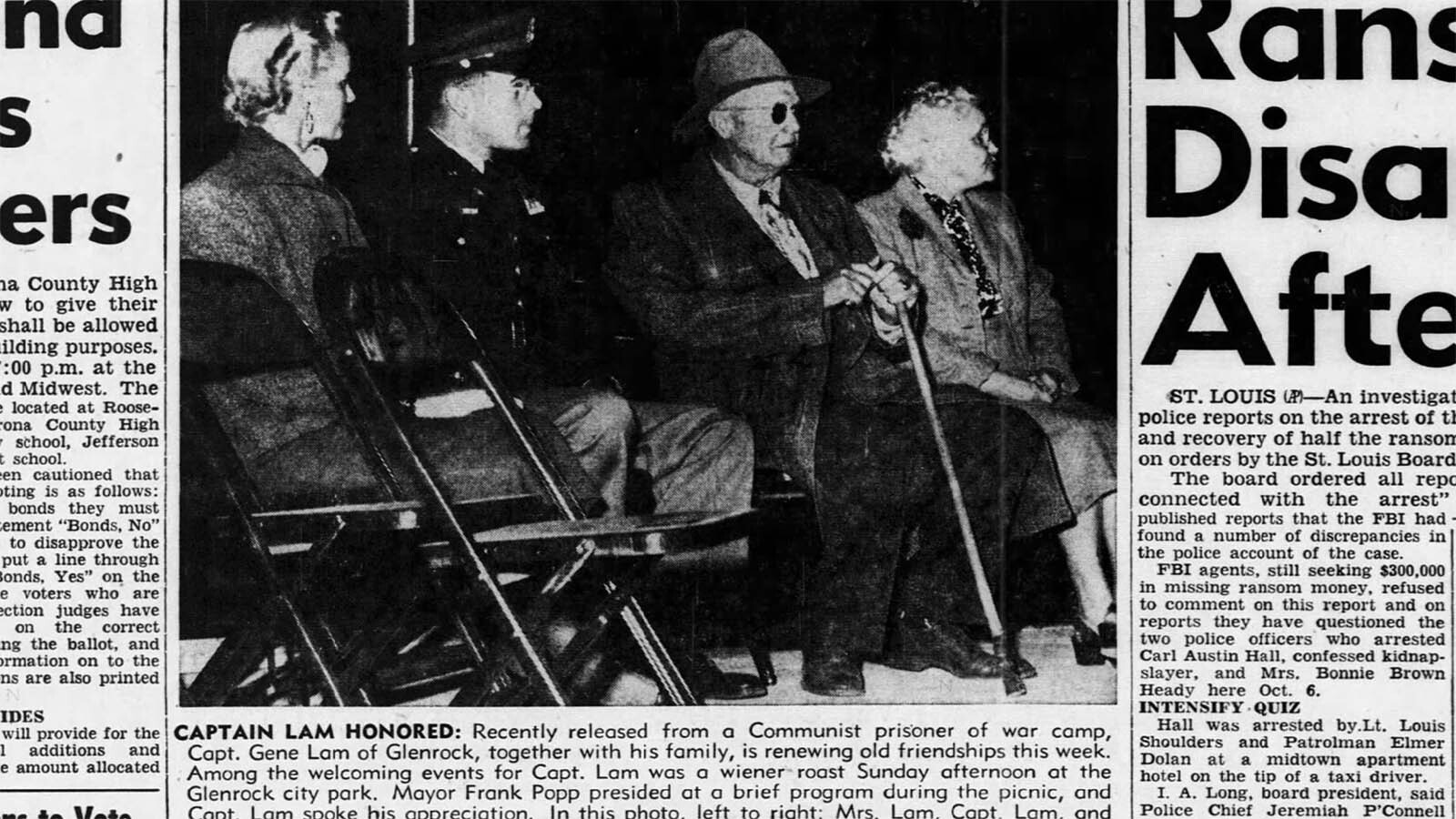
Capt. Gene Lam, M.D., was honored in Glenrock, Wyoming, with a hot dog roast in the park following his return from three years as a captive of the Chinese. The photo here was published in the Casper Tribune-Herald. (Newspapers.com) 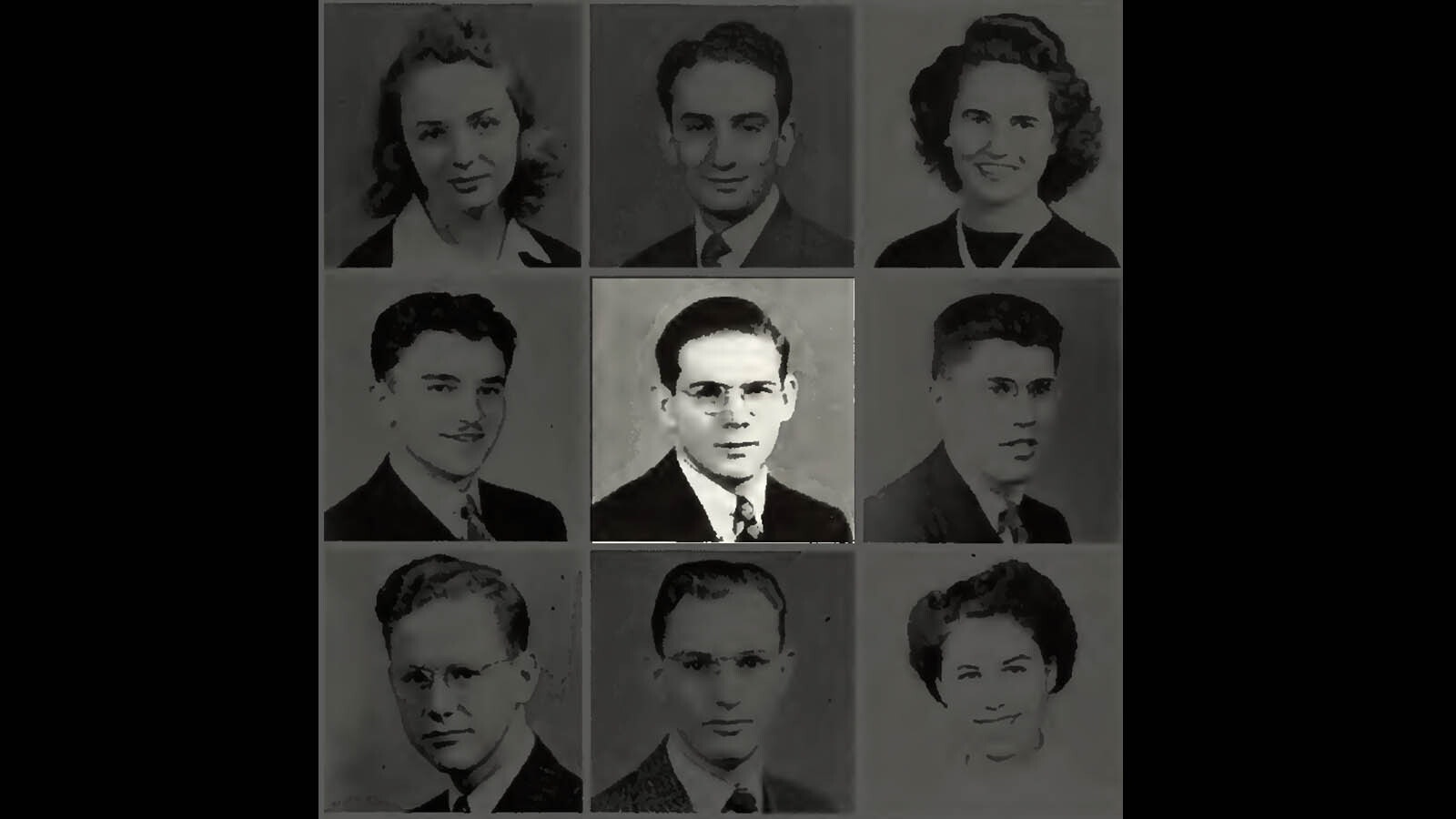
Gene Lam was a freshman at the University of Wyoming in 1943 when he was drafted by the U.S. Army. This is his photo in The Wyo 1943 yearbook. 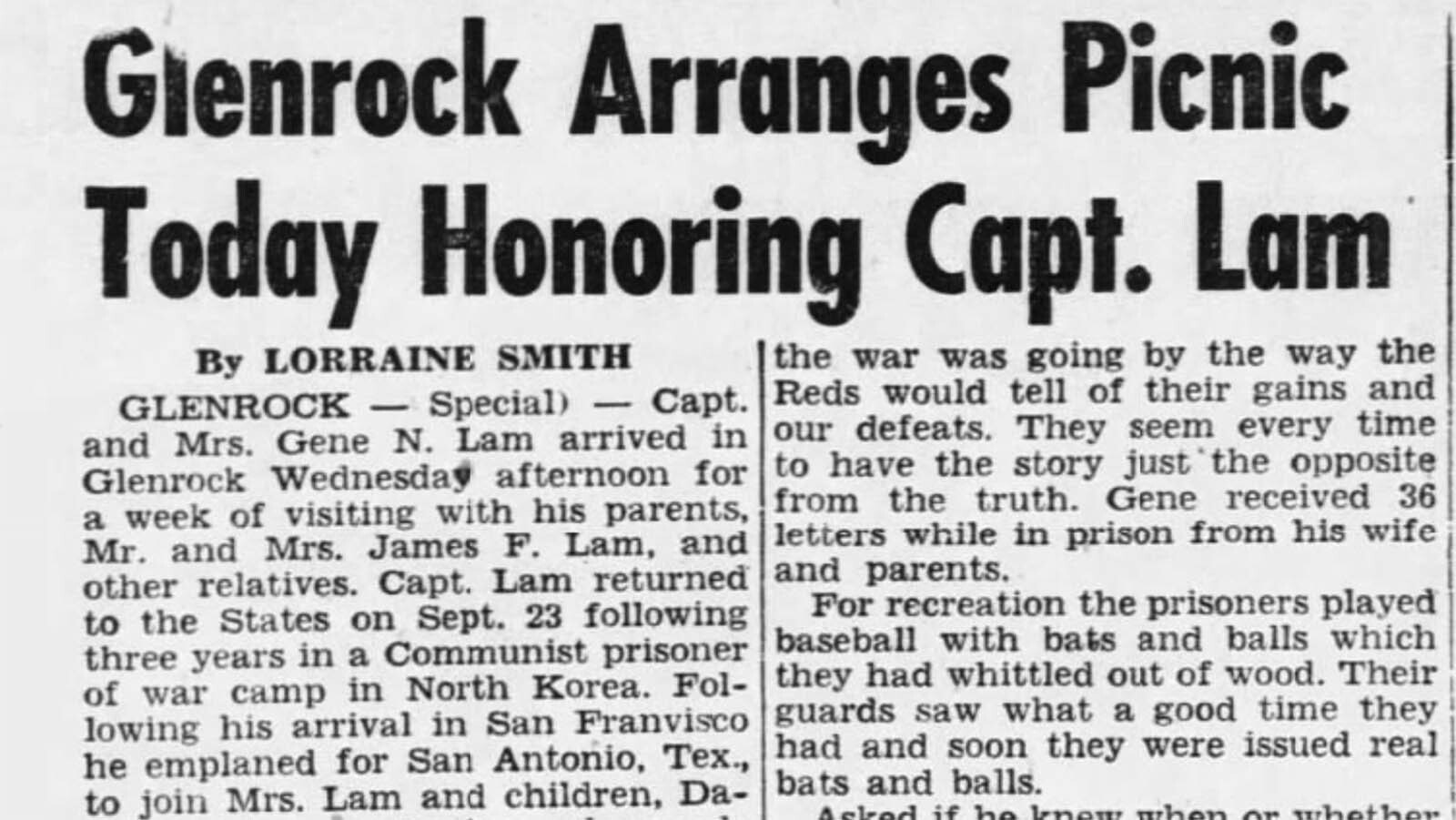
The Casper Tribune-Herald promoted the Glenrock picnic honoring Capt. Gene Lam, M.D., in its Oct. 18, 1953, edition. (Newspapers.com) 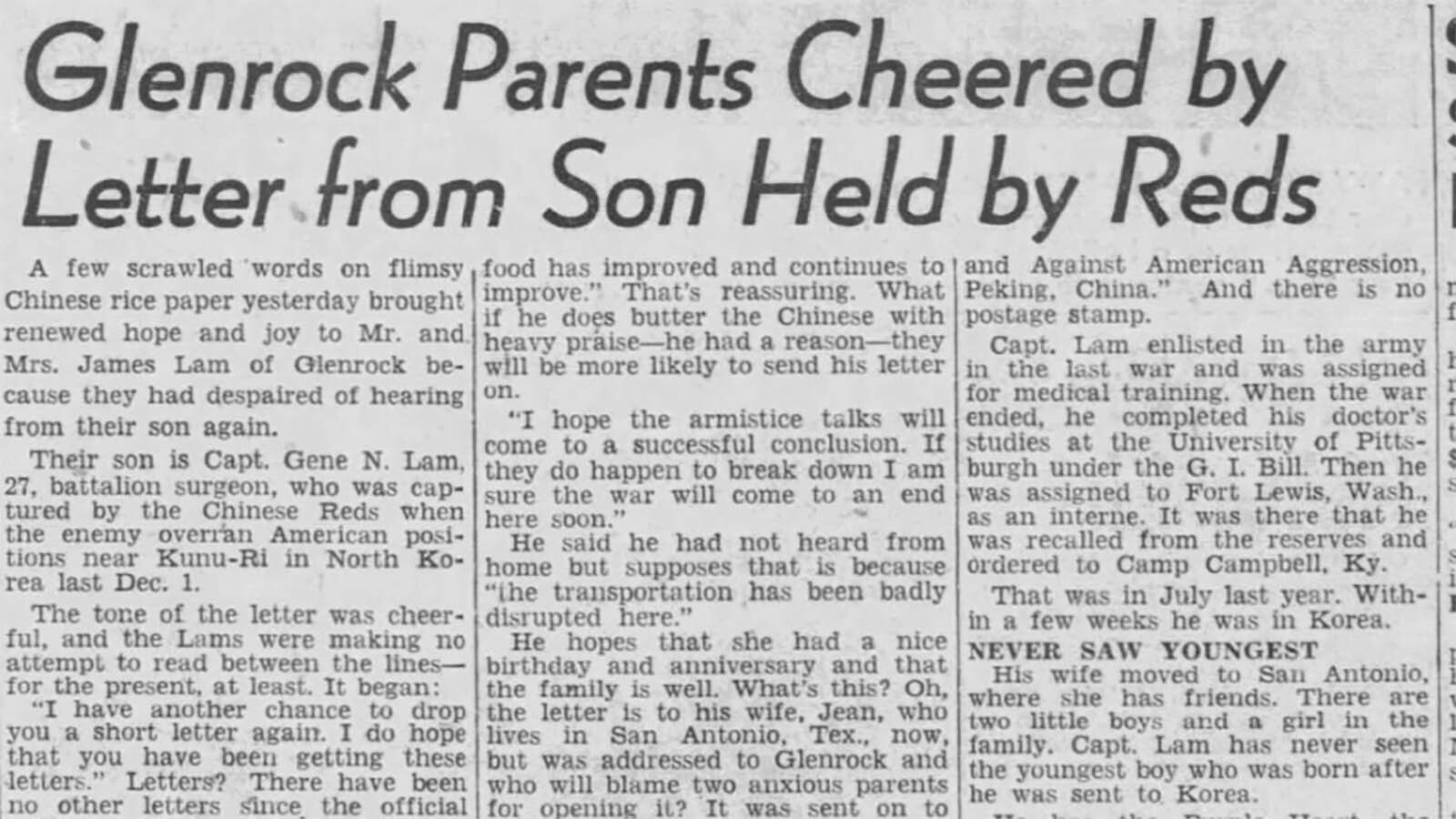
Casper Tribune-Herald – The Glenrock parents of Capt. Gen Lam, M.D., were happy to know their son is alive as reported in the Casper Tribune-Herald on Nov. 19, 1951. (Newspapers.com) 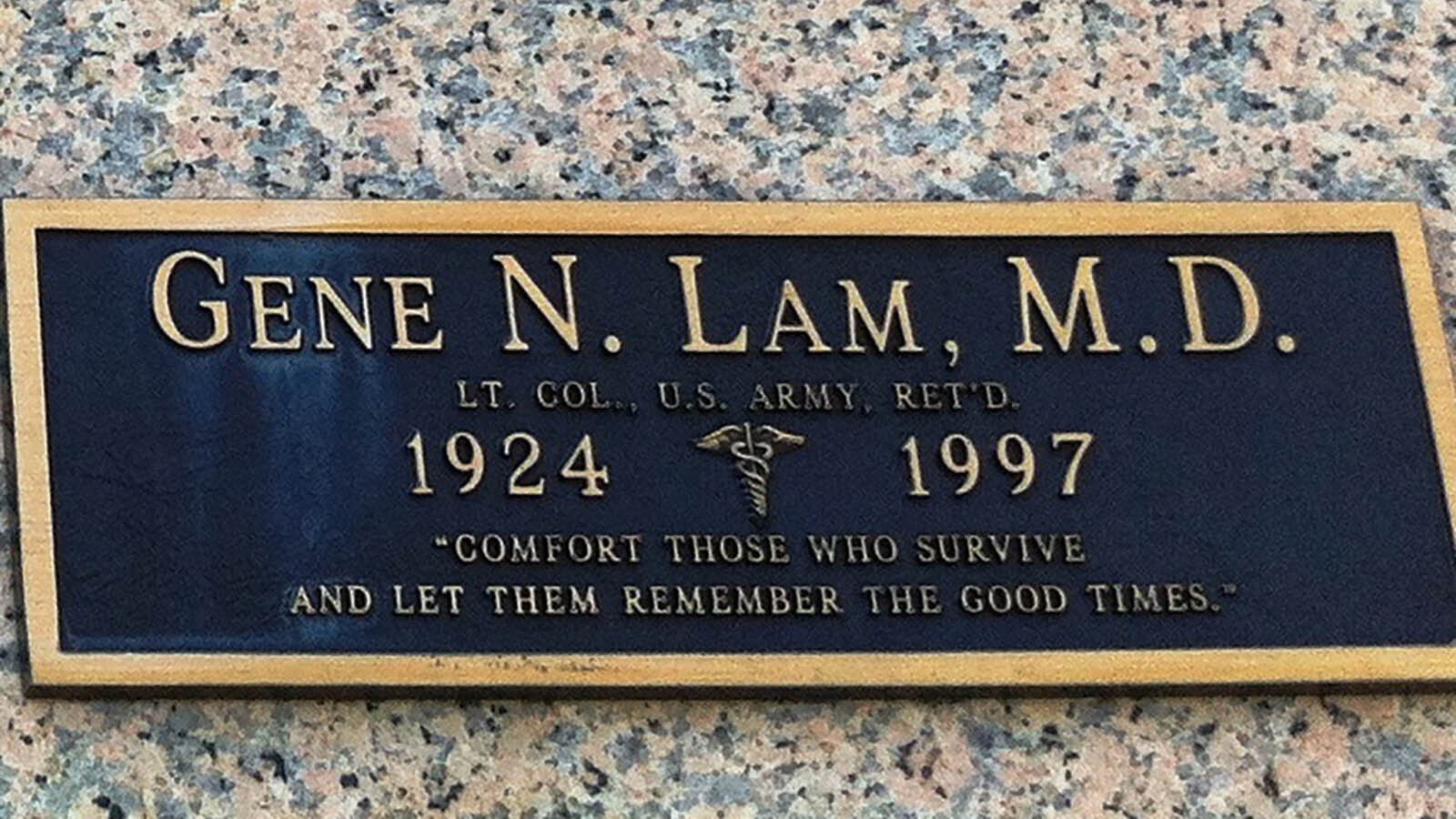
Dr. Gene Lam died on Dec. 10, 1997. He is buried in Virginia Beach, Virginia. (Find a Grave) 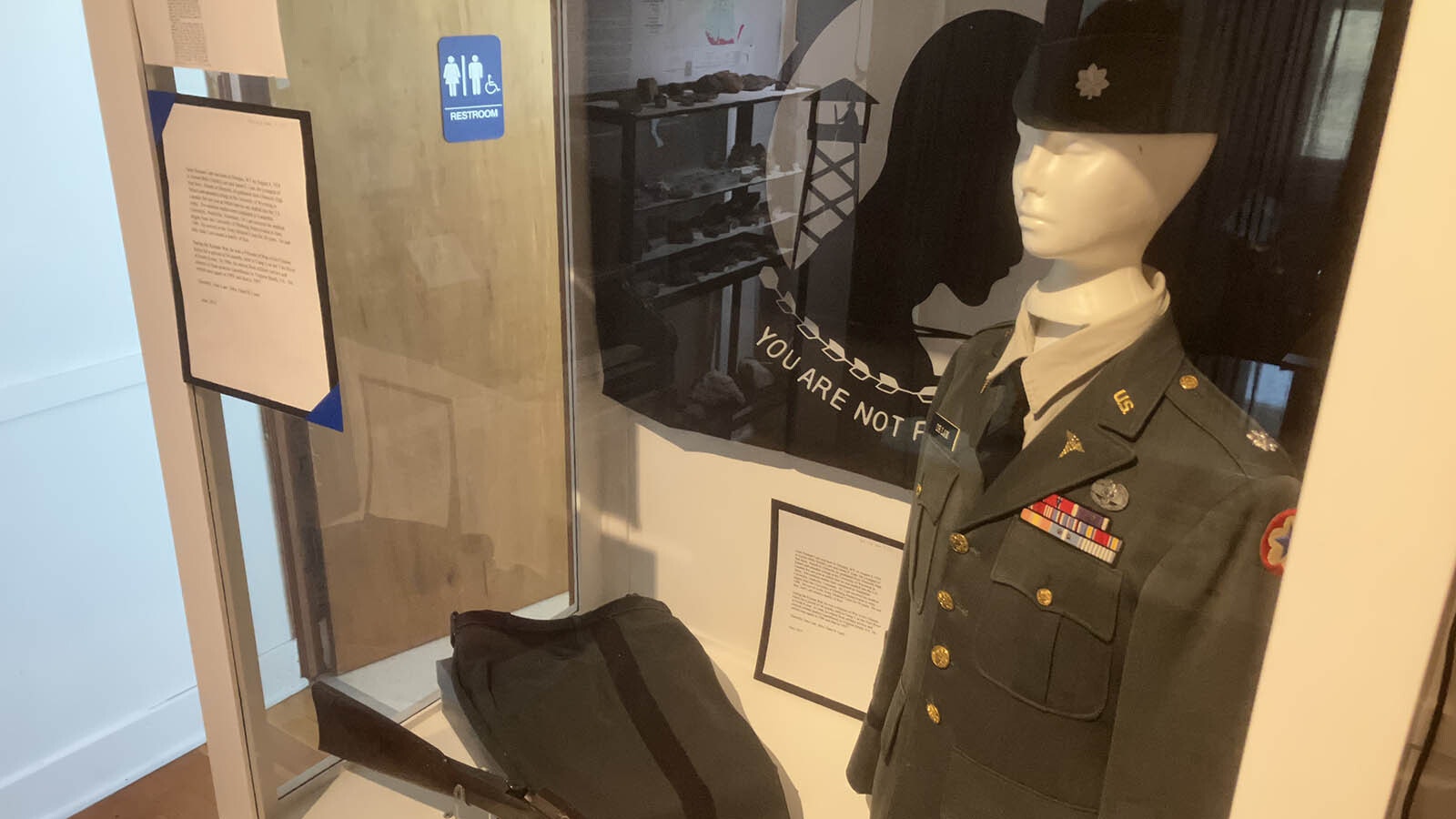
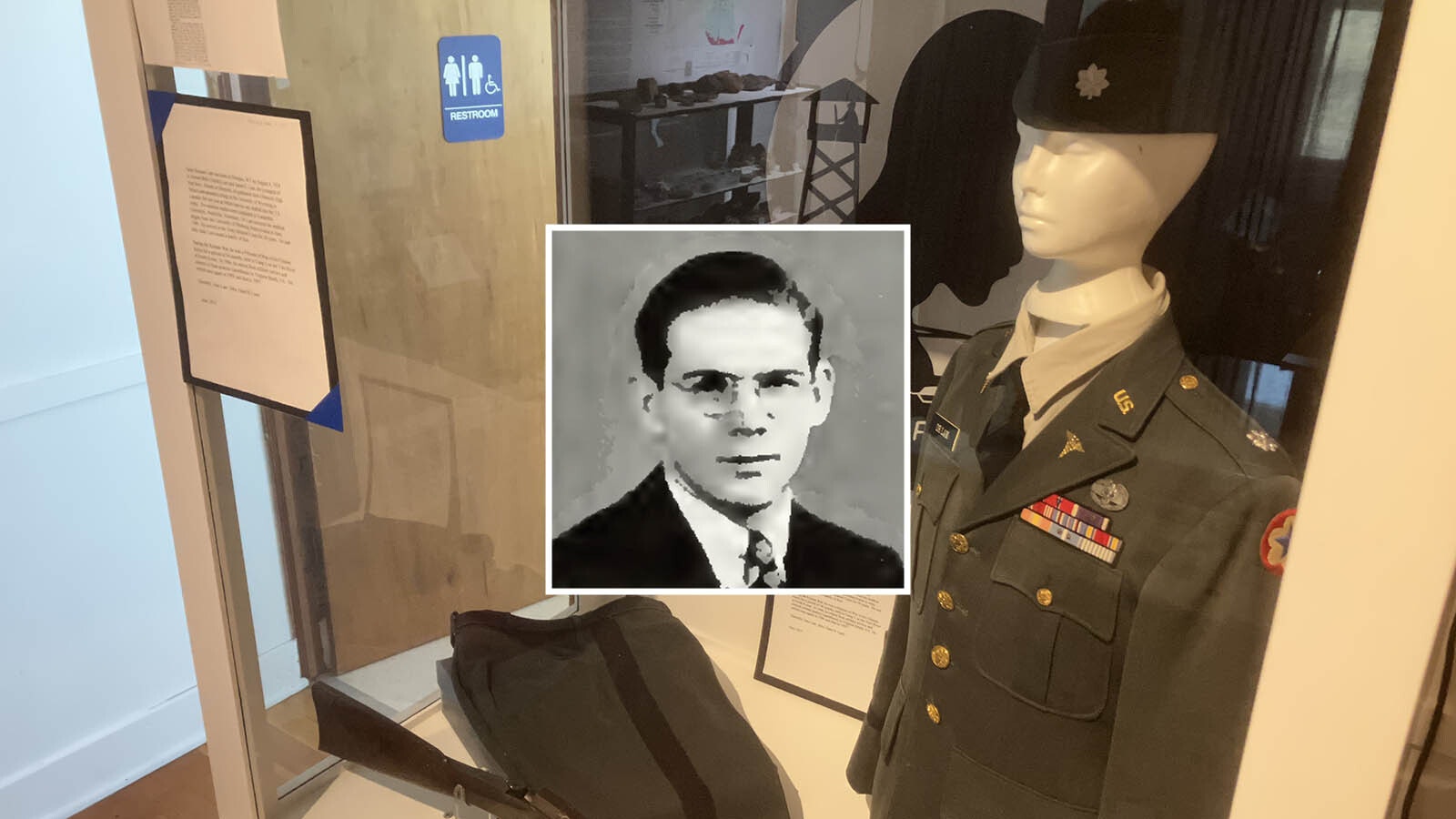
Glenrock’s Deer Creek Museum offers a small display on the Dr. Gene Lam who was a Glenrock native and POW during the Korean War. (Dale Killingbeck, Cowboy State Daily)
‘He Was A Good Man’
David Lam said following his dad’s return, he and his sisters got to know their father. Another son was born after his return.
“I had the highest respect for him. He was a good man, yeah, I mean, he never talked about the war much. Nobody did,” David Lam said. “But other than that, he had a family that he took care of and he liked us all. We liked him, and he still believed in the Army. He went back and spent 20 years with them before he retired.”
While his father did not talk a lot about his war experiences, David Lam said he remembers him sharing about being hungry. One story involved soldiers catching a rat and cooking it and another one involved the Chinese giving prisoners a chicken that they put in a pot of water. His father got the claws.
The first year in the U.S. after his three years in captivity involved recovering his health from vitamin deficiencies and tuberculosis. When he was pronounced fit for duty, Capt. Lam wanted to pursue an obstetrics specialty but the Army said they did not have much need for obstetricians, June Lam said. Instead, they offered him training in anesthesiology.
“He was a good anesthesiologist,” she said.
As one of the only medical officers in the POW camp, he tried to care for the men with him. David Lam said many of them died in the camp. His father secretly recorded their names and serial numbers and brought the information back when he was released.
An article in the Casper Tribune-Herald & Star on Dec. 20, 1953, states that Captain Lam was called to Washington, D.C., to appear before a Senate committee investigating Korean War atrocities.
Neither June Lam or David Lam could confirm that story, but David Lam said his dad was interviewed and spoke with multiple groups and agencies following his release. After his health recovered and he returned to active duty, he said he became a trainer for troops about how to survive if they became a POW.
“He was for probably 10 or 15 years one of the Army’s top trainers,” he said. “He also did a lot of training in, ‘How do you practice medicine when you have nothing to work with?’ The No. 1 Chinese treatment for everything basically was chicken fat soaked in penicillin.
“They would cut a hole in your belly and implant it under the skin and that was supposed to cure everything.”
‘Quiet And Self-Contained’
June Lam said from her perspective, her husband had not changed following his POW years. She characterized him as a “quiet and self-contained” person.
Gene Lam’s obituary Dec. 12, 1997, in the Casper Star-Tribune stated that he was chief of anesthesia at Martin Army Hospital in Fort Benning, Georgia, then served at Tripler General Hospital in Honolulu, Hawaii, and Letterman Army Hospital, at the Presidio in San Francisco. He finished his military career with the rank of lieutenant colonel.
Gene Lam was awarded the Bronze Star Medal with a “V” for valor, the Purple Heart, the Army Commendation Medal, the Prisoner of War Medal and the Combat Medic’s Badge, as well as other service medals and ribbons for service in World War II and Korea.
Following his 20 years of service, Gene Lam retired from the military and opened a private practice in Virginia Beach, Virginia, until his second retirement in 1989. In addition to David Lam, he and his wife June raised Holly Gene Wells, Heather Ellen Morstain and Dana Michael Lam.
As a Wyoming native, David Lam said his dad brought his family back for visits to the state to see his parents from time to time. He remembers hunting rabbits with his dad.
June Lam said she recalled a trip back to Wyoming following his POW experience to see his family. Glenrock had a picnic and other events in his honor.
Glenrock’s Deer Creek Museum has a dedicated display for Lam that includes his uniform and a short synopsis of his ordeal as a prisoner of war.
June said her husband, unlike some other POWs, stayed in the Army because he thought he owed them for their medical care after he returned.
“He never groused. He never fussed about having been captured,” she said.
Gene Lam died Dec. 10, 1997. He is buried in Princess Anne Memorial Park in Virginia Beach, Virginia.
Dale Killingbeck can be reached at dale@cowboystatedaily.com.