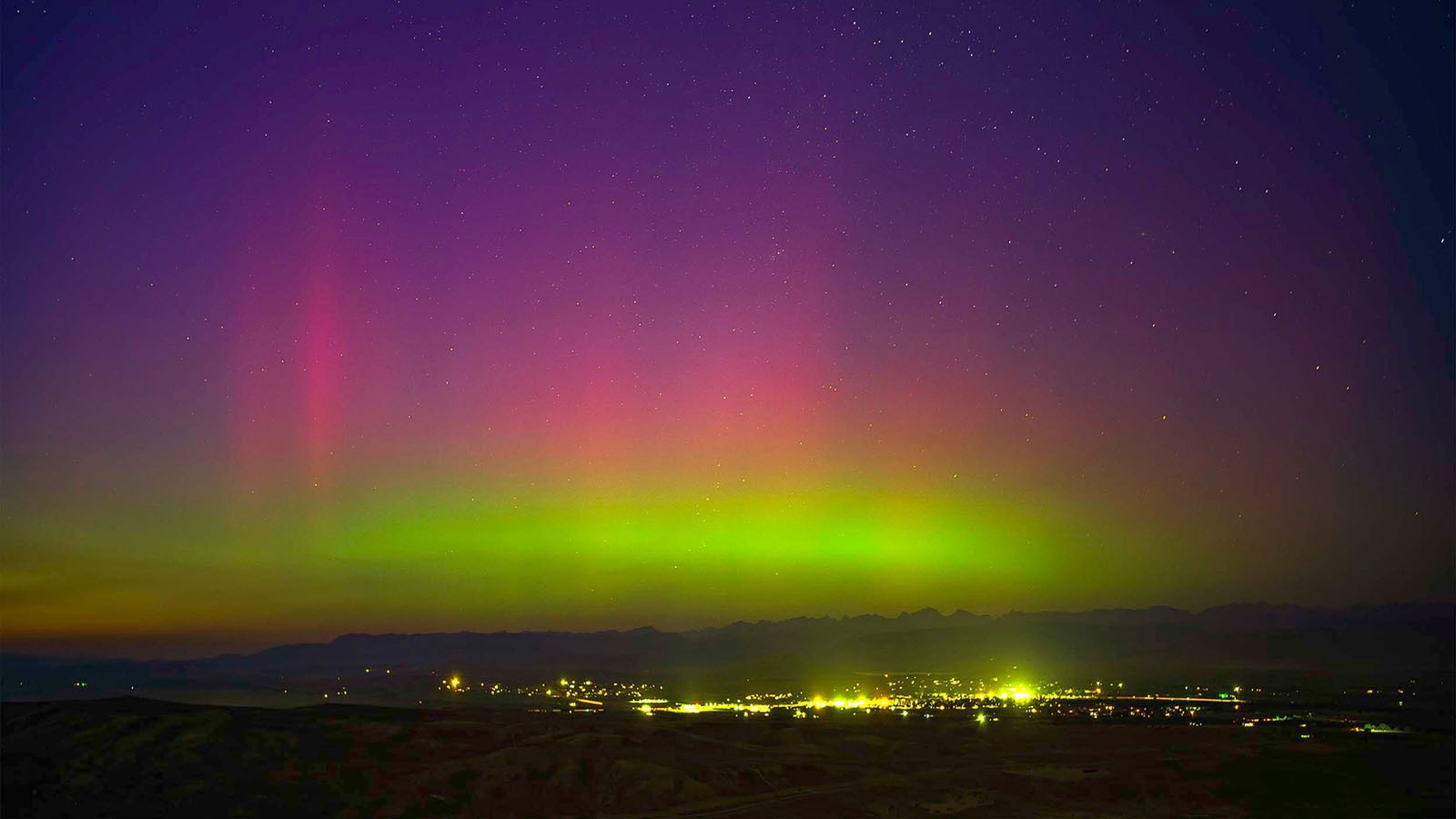
With aurora giving spectacular displays of color and light in Wyoming’s night skies so frequently this year, are we getting bored with them?
Some may be on aurora overload, but not the state’s prominent photographers and weather watchers.
“Never,” said Pinedale photographer Dave Bell about whether there can be too many auroras. That said, “I am a little more selective about getting up at 3 in the morning to see one.”
Bell has taken numerous opportunities to photograph the auroras in the last few months, and he’s never remembered it being this good for auroras in Wyoming.
“I've got aurora pictures that date back to the early 2000s, and there's nothing I've ever seen that compares to what I’ve seen (this year),” he said. “The aurora on Oct. 7 was the best I've ever seen.”
There’s data to back up Bell’s belief about this being a record year for seeing the lights in Wyoming.
It’s because the sun is more active now than it’s been in a decade, and the show will go on for another year, at least.
“This is the best it’s been for at least a generation,” said retired Wyoming State Climatologist Jan Curtis. “And it’ll probably stay active for the next year or two. There's going to be quite a number of opportunities to photograph the Northern Lights.”
Solar Maximum
These auroras are the result of the sun’s 11-year solar cycle, a period when the sun fluctuates between producing high and low amounts of solar flares and sunspots.
There is a maximum period when the sun is covered with sunspots generating massive coronal mass ejections (CMEs) and a minimum period with very few, if any, sunspots.
“The sun goes through periods where it's a bit quieter over an 11-to-22-year cycle and other years where it's a lot more active,” Curtis said. “Everybody should take advantage of the next year or two for potential auroras at our latitude.”
Dozens of CMEs have been hurtling toward Earth as the sun approached its solar maximum, manifesting as auroras across the Northern Hemisphere. Curtis noted that this cycle is more active than the last solar maximum, but hasn’t been the most active in his lifetime.
“We were just coming off a fairly low cycle in solar activity around 20 years ago,” he said. “But in the 1950s and ’60s, the sun was very active, even more so than this year. We're starting to come out of the doldrums of the last solar cycle and are back to normal with respect to what the average solar cycle is like.”
The Otherworldly Curtain
Bell recalled an excursion to the Upper Overlook at the northern end of the Wind River Range to see a particularly intense CME as it reached Earth on Oct. 7. He described an “otherworldly curtain” that appeared in the pitch-dark sky.
“As this curtain descended, northeast-northwest, it began to turn red,” he said. “This was all visible without a camera. That red spread and flickered across this entire curtain. Then, I worked on pictures. I had red, orange, green and blue. I have never seen anything like it before.”
Bell has particularly enjoyed the timing of this year’s auroras since many happened during the "Milky Way season." He has several images of colorful auroras stretching across the visible column of the Milky Way.
These images revealed something about the “northern lights” that Bell had never considered before. They are not always in the north.
“Everybody always calls them the northern lights, and they predominantly occur in the north because that's the direction of the North Pole,” he said. “The night that the curtain descended, it started further to the east than to the north, and the Milky Way was quite a ways east.”
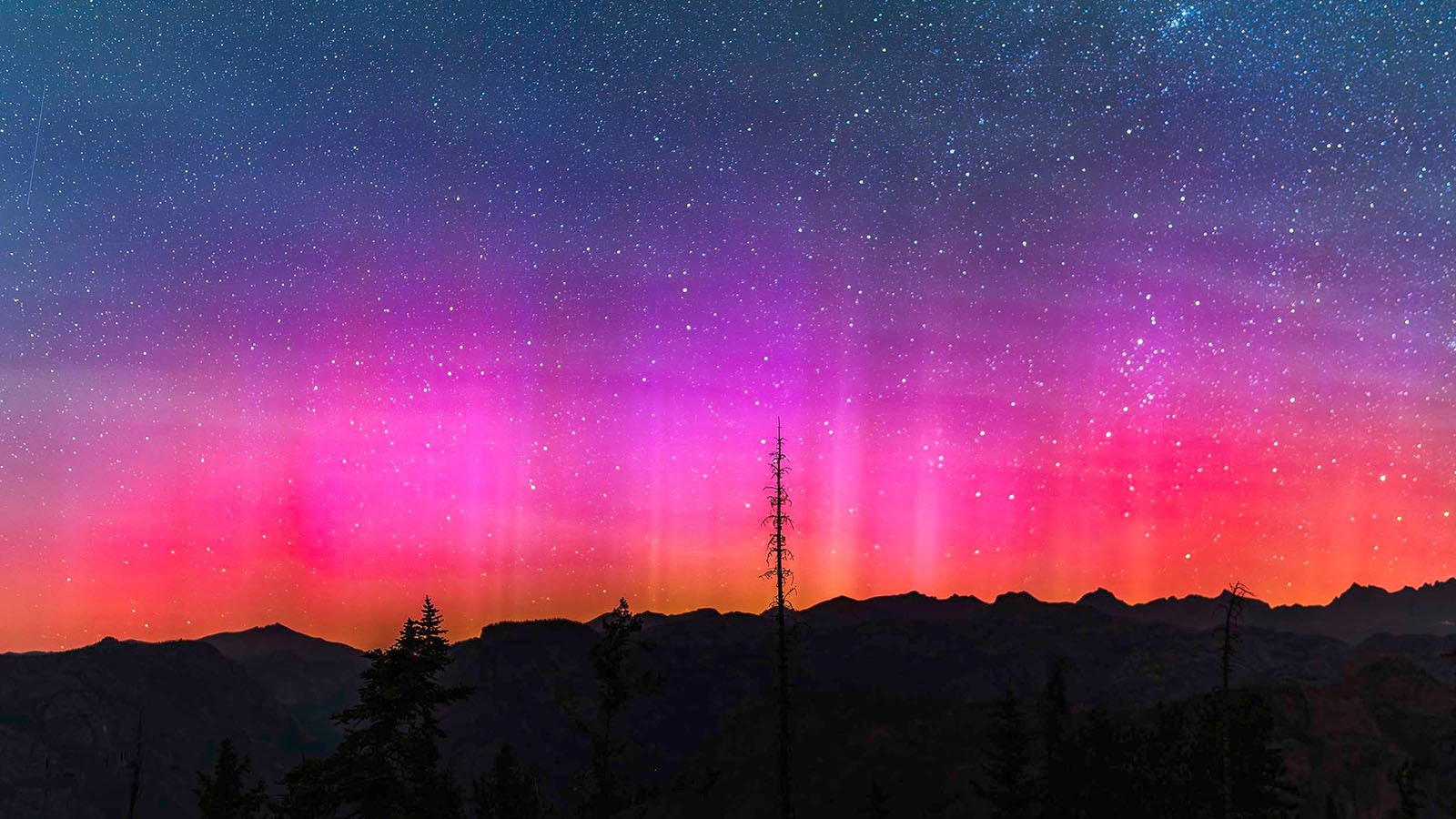
The auroras over Wyoming this year have been stunning and plentiful. And Pinedale photographer Dave Bell loves it. He said there's not aurora overload for him. (Courtesy Dave Bell, Wyoming Mountain Photography) 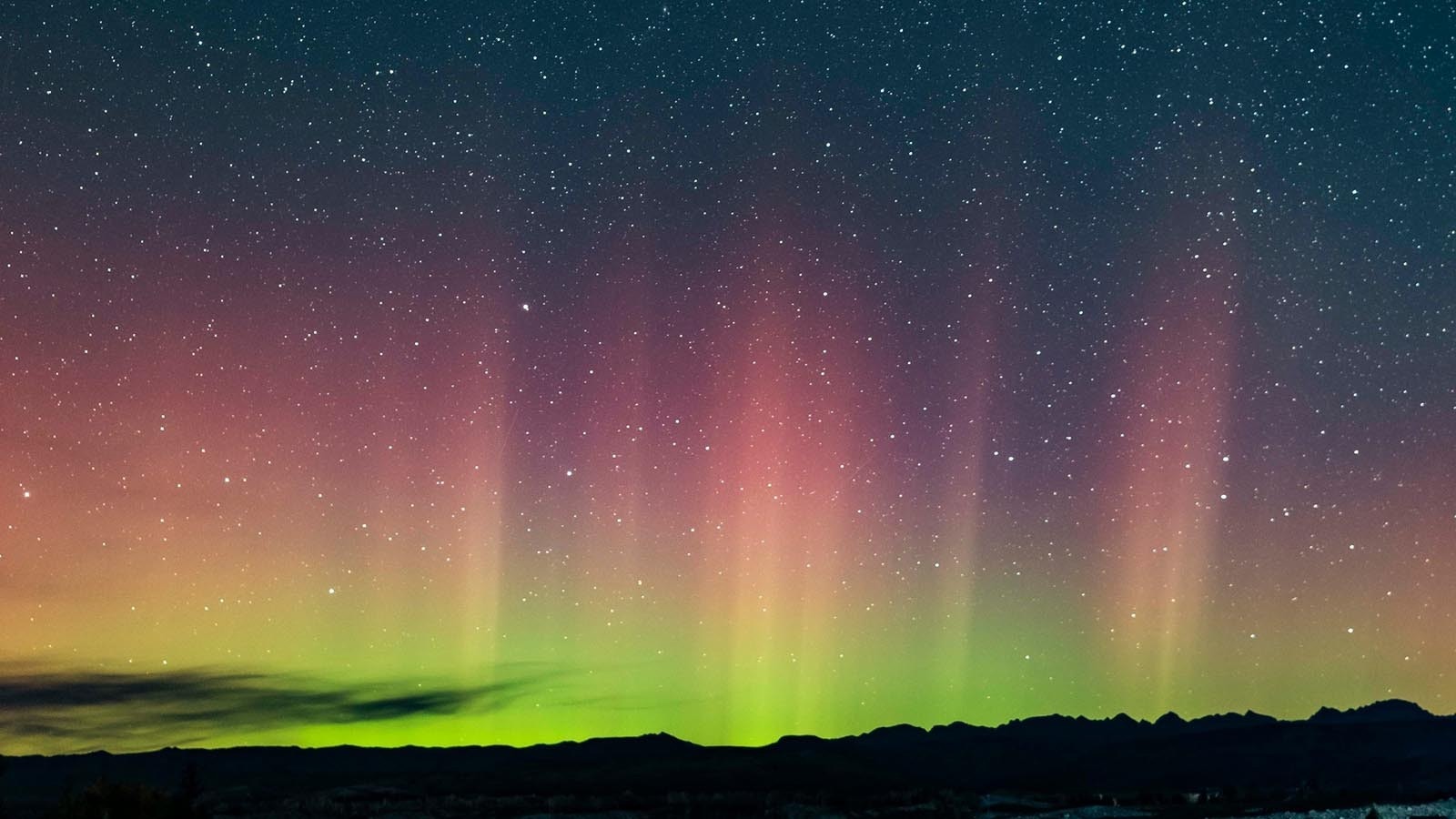
The auroras over Wyoming this year have been stunning and plentiful. And Pinedale photographer Dave Bell loves it. He said there's not aurora overload for him. (Courtesy Dave Bell, Wyoming Mountain Photography) 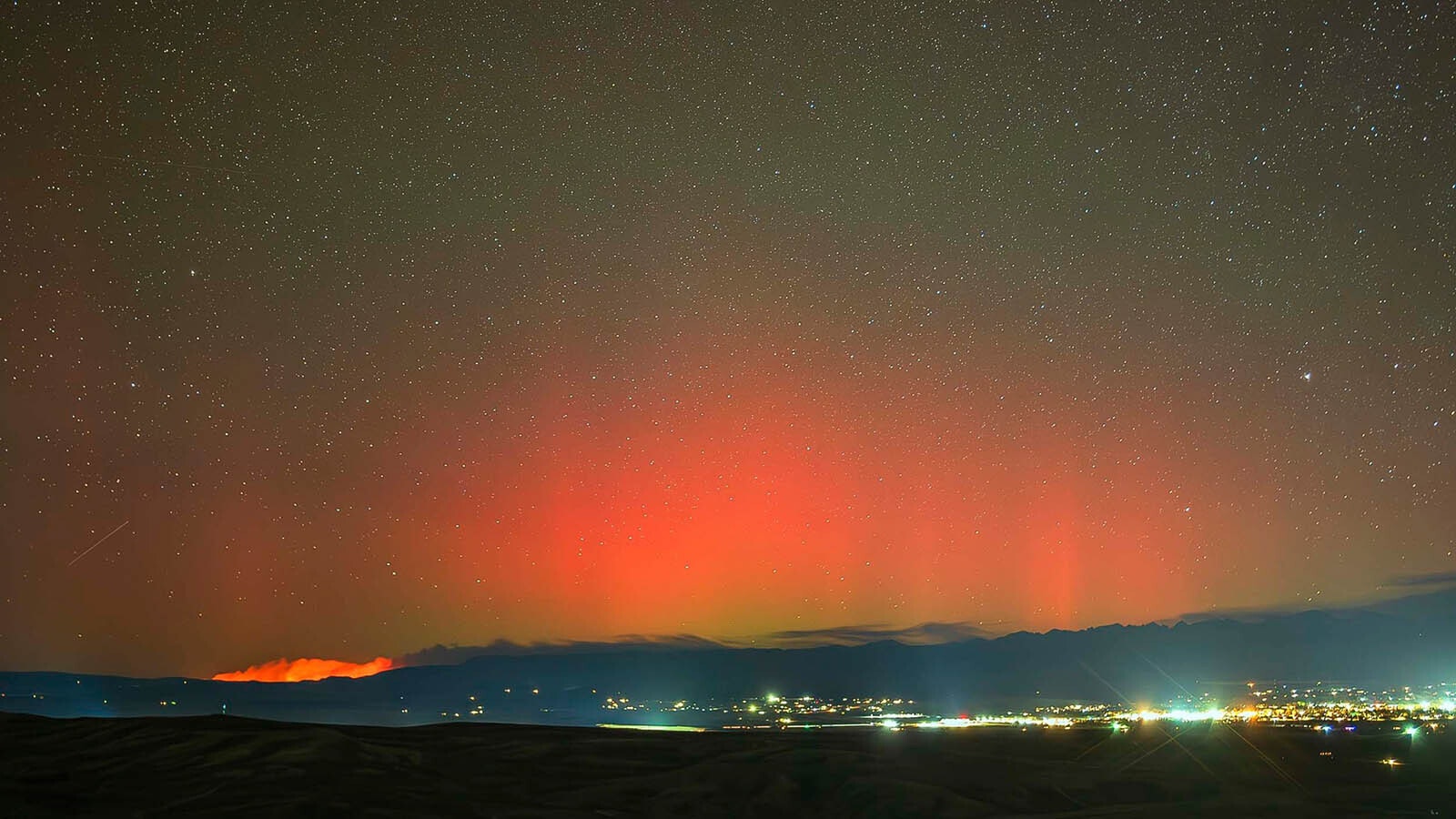
The auroras over Wyoming this year have been stunning and plentiful. And Pinedale photographer Dave Bell loves it. He said there's not aurora overload for him. (Courtesy Dave Bell, Wyoming Mountain Photography)
Doesn’t Last Forever
On Oct.15, NASA, the National Oceanic and Atmospheric Administration, and the International Solar Cycle Prediction Panel announced that the sun had reached its solar maximum period. It’s expected to continue for another year and possibly longer.
Eventually, the sun will reach the opposite end of its 11-year cycle. During solar minimum, auroras are far less frequent even in places where they’re expected.
Curtis recalled a time when he traveled to Alaska to work at the Geophysical Institute at the University of Alaska during a solar minimum. Even that far north, where auroras can seem nearly constant, there wasn’t anything for him to see and photograph.
“It was a solar minimum when I first arrived in the 1990s,” he said. “Even up there, where the Northern Lights are almost daily, I hardly saw any. Then, when we started going to solar maximum by the year 2000, I saw them every night. It was quite impressive.”
When the sun reaches solar minimum, Wyoming’s night skies will be much less colorful. Only powerful auroras reach this far south from the North Pole, so Curtis encourages everyone to enjoy them while they’re here.
“When we go to solar minimum, the likelihood of seeing any auroras, even at the polar latitudes where it's very, very common, is very low,” he said.
Best Yet To Come?
Nevertheless, Curtis believes the best of this solar maximum is yet to come. The peak of the solar maximum doesn’t necessarily mean the peak of auroras.
“Looking at the statistics of solar cycles, the biggest CMEs usually occur a year or two after the solar maximum, and we just passed the peak of the solar maximum,” he said. “That's why I'm optimistic that we will see more and possibly better opportunities for northern lights photography at our latitude.”
That’s good news for Bell and Curtis, both avid astrophotographers. But they can afford to be picky for the moment.
“It's really the time of the night for me,” Bell said. “You can't predict what you're going to get. So if it's 3 in the morning anymore, I'm not sure I will get up unless they're predicting a powerful aurora. I’m probably going to stay in bed, especially now that winter (is setting in). It's getting chilly out there.”
Nevertheless, it’s hard to resist the aurora. As long as they keep coming, Bell, Curtis and many others will make a point to go wherever they can to get the best view.
“If we have a big CME, I'll be there,” Bell said. “I'll be someplace because this year has been the best I’ve ever seen.”
Andrew Rossi can be reached at arossi@cowboystatedaily.com.