Losing her beloved English bull terrier Jester in a beaver trap in February hit Becky Barber of Afton hard. Months later, she still can’t go back to the spot where it happened.
But she decided to channel her sadness and anger over Jester’s death toward something positive – training other dogs to avoid traps in the Wyoming outdoors.
“I decided that, you know, I could be angry, I could be hateful. But before his heart stopped beating, I made a promise to Jester that his death would not be in vain,” Barber told Cowboy State Daily.
In what could very well be a first in his profession, trainer Mike Parmley ran about a half-dozen dogs from the Afton area through a course this week – with the aim of conditioning them to avoid traps.
Parmley runs Rattlesnake Alert dog training, based in Utah.
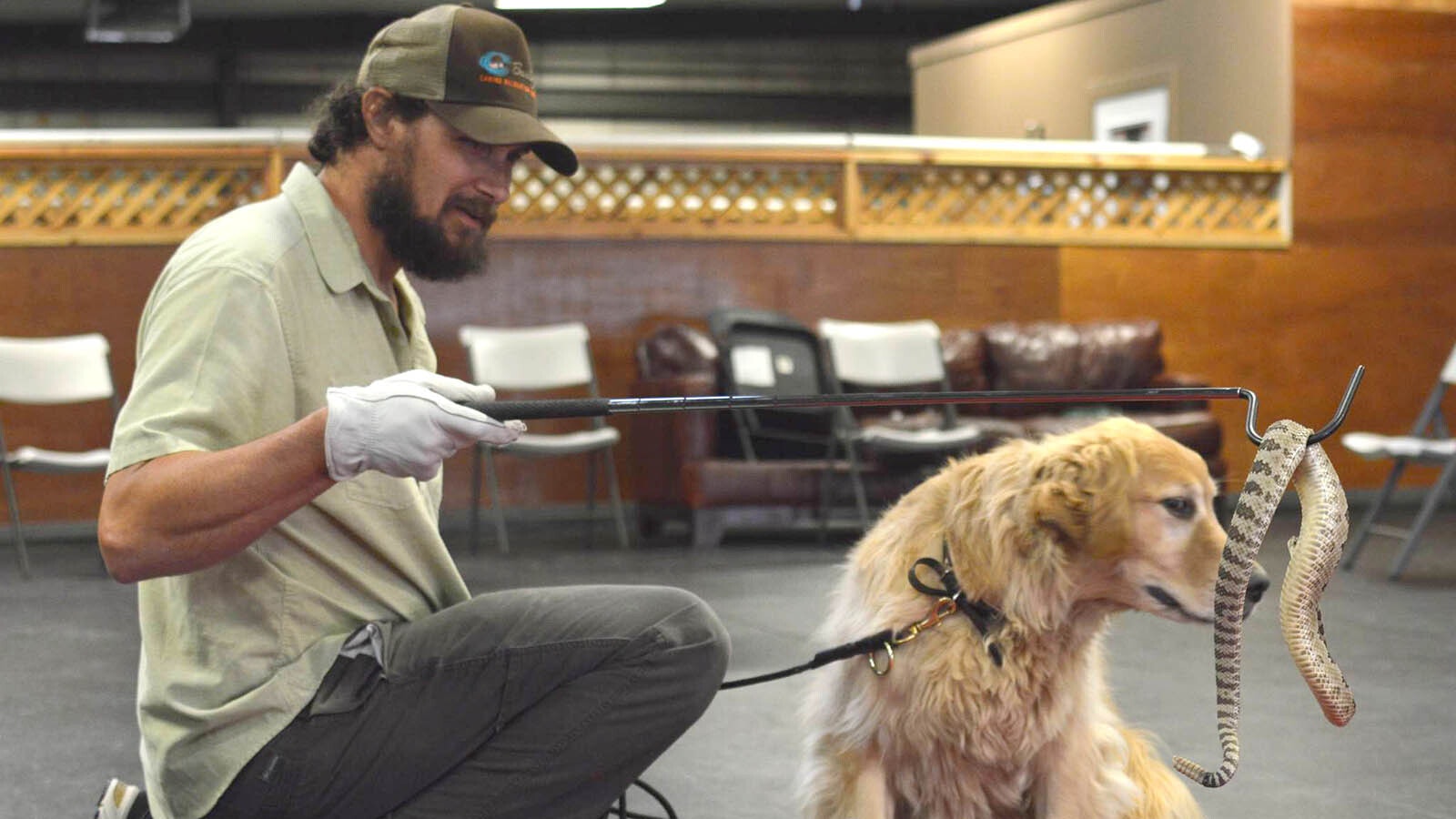
For seven years, he’s taught dogs to have a negative association with the sight, sound and scent of rattlesnakes, and thus avoid them.
And so, inspired by what happened to Jester, why not apply the same methods to teach dogs to steer clear of traps?
Judging by the preliminary results, it looks promising, said Barber. She took her surviving dog, a year-and-a-half old English bull terrier named Kaia, through the course on Sunday.
“She did very well. It’s amazing seeing the results with the dogs, I’m fairly confident this will make a difference,” she said.
‘Jester’s Legacy’
Barber calls the training program part of “Jester’s legacy.”
It all started one terrible day in February.
Barber took Jester, 8, and Kaia for a romp up a road in the Swift Creek drainage near Afton.
The road is plowed during the winter to allow municipal crews access to water supply infrastructure. But it’s closed to public vehicle traffic, so Barber and other townspeople figured it was safe place to take their pets for off-leash walks.
However, Jester got caught in a beaver trap that was placed just off the road, and despite Barber’s efforts to free him, he died in front of her.
The Wyoming Game and Fish Department issued a citation in connection with an incident in Swift Creek Drainage east of Afton, spokeswoman Breanna Ball told Cowboy State Daily at the time. The agency didn’t release the name of the person who was cited, but the incident seems to match up with what happened to Jester.
Barber said she’s continued to take Kaia for walks in different places. She hasn’t mustered the courage to return to the Swift Creek Drainage road.
“It’s still too fresh and too raw for me,” she said. “I believe that the trap (avoidance) training was very successful and that it works. It’s my own trauma that keeps me at bay.”
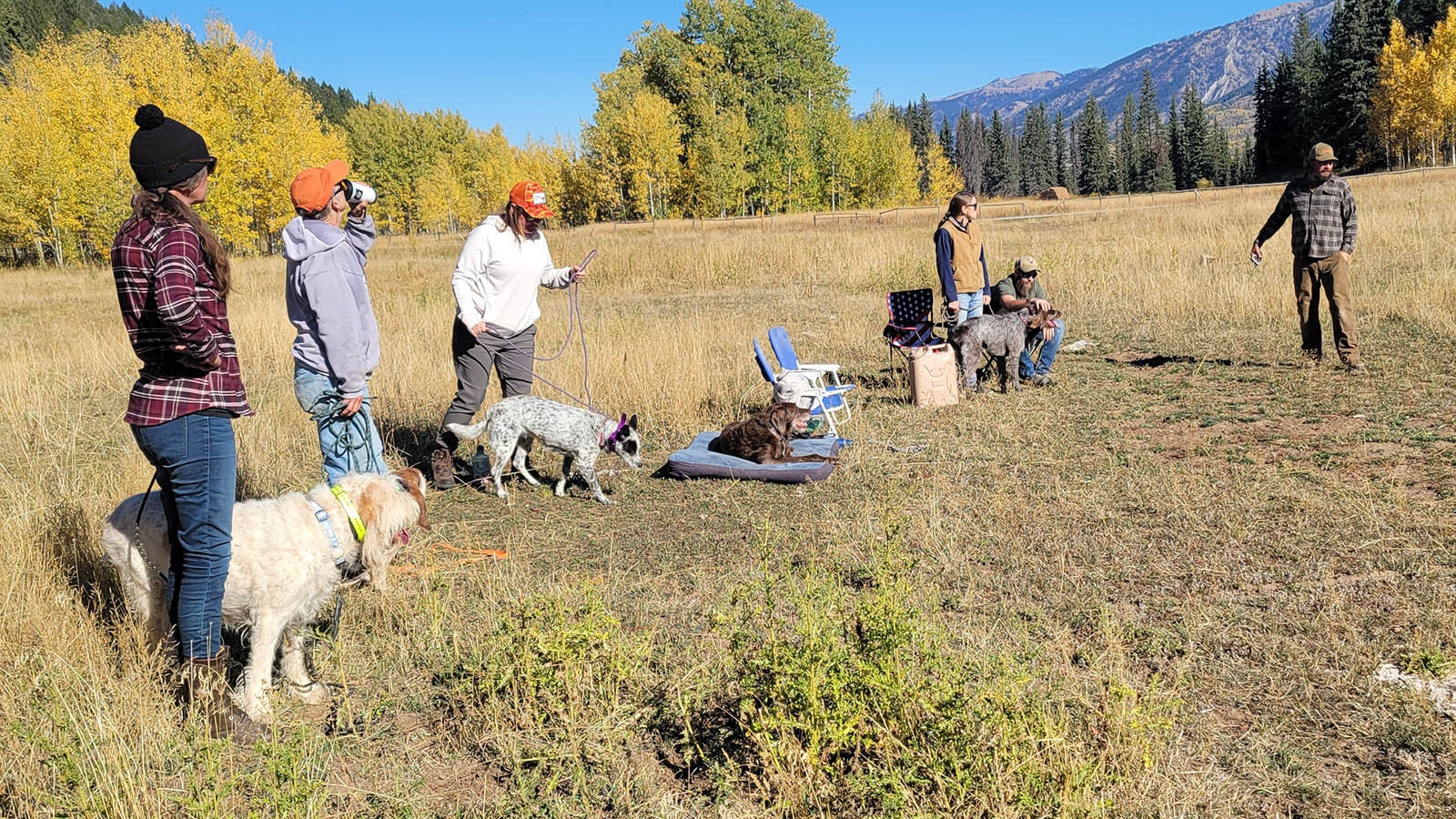
Afton dog owners take their pooches through a training course to teach them to avoid traps, such as a beaver trap that killed Jester, an English bull terrier in February. (Courtesy Mike Parmley, Rattlesnake Alert) 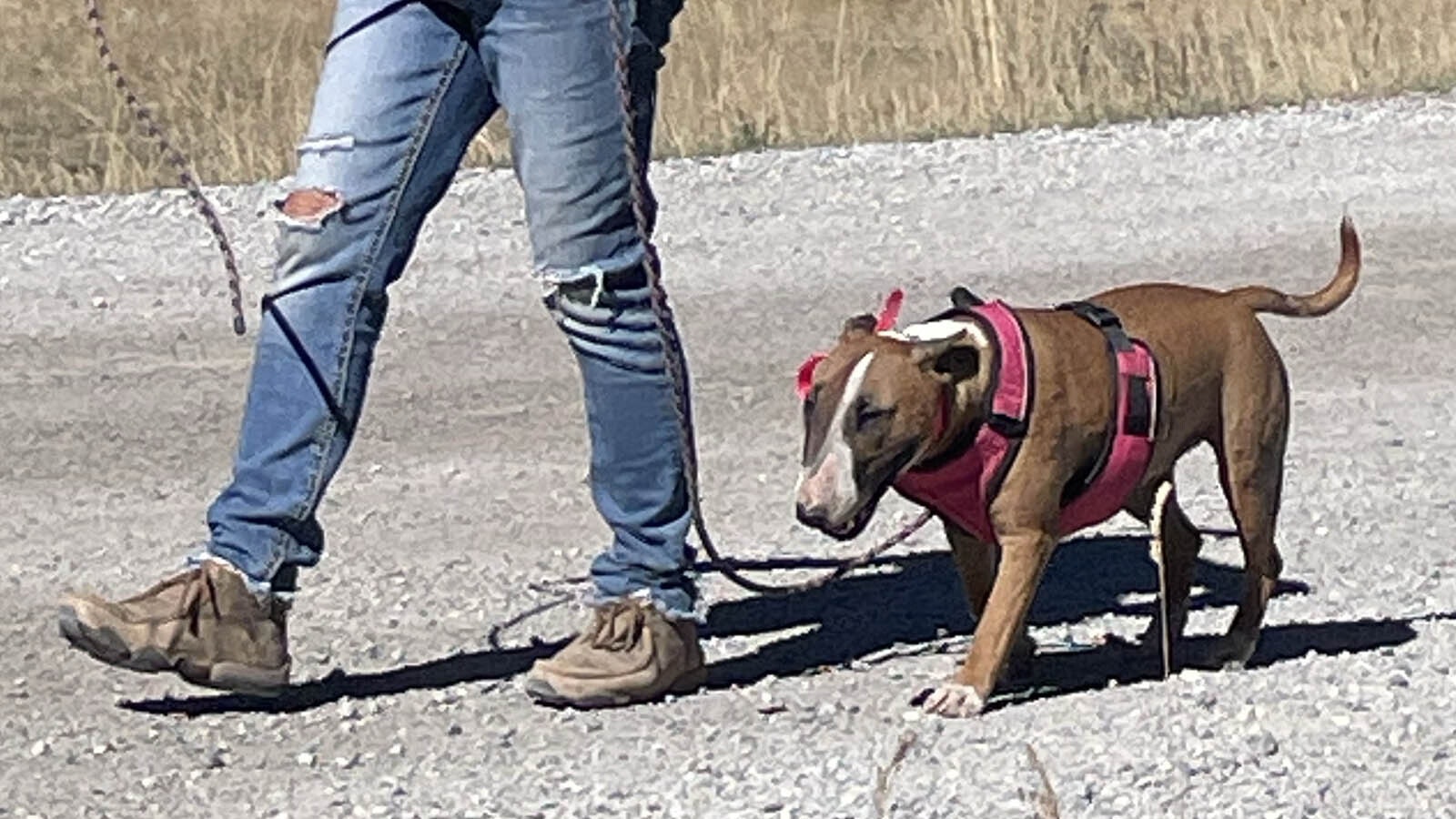
Becky Barber of Afton works with her English Bull terrier Kaia during a training session to teach dogs to avoid traps. Barber’s other bull terrier, Jester, was killed in a beaver trap in February. (Courtesy Mike Parmley, Rattlesnake Alert)
Rattlesnakes Make Good Dog Trainers
Whether teaching dogs to avoid snakes, traps or other hazards, the approach is simple, Parmley said.
For the rattlesnake avoidance training, he uses live snakes, which he keeps in enclosures on his property though a special permit with the Utah Division of Wildlife Resources.
Rattlesnake avoidance training takes place during the warmer months, because the snakes can’t handle cold weather.
At the beginning of each training season, he de-fangs the snakes, so that they can’t bite the dogs and inject them with venom during the training.
The snakes’ fangs grow back, he said.
“They’re kind of like sharks are with their teeth, the snakes have backup fangs that come in,” he said.
He begins by “introducing the dogs” to the snakes, so the dogs get a clear idea of the snakes’ appearance, the sound of their rattles and their scent.
Then he puts the snakes on the ground, and whenever the dogs get to close “I’ll nip them” with an electronic collar.
“People call them ‘shock collars.’ I don’t love the term shock collars. I don’t shock the hell out of the dogs, I just give them a little nip,’” Parmley said.
Merely repeating that exercise with the snake in the same place won’t work, he added.
“What many people don’t realize about dogs is that they’re ‘place specific,’” he said. “That means, whether good or bad, if something happens to them in a certain place, they associate it with that place.”
By moving the snakes around to different locations, the dogs learn to associate the snakes, not the locations, with a bad experience.
The final test is to put the snakes into a mesh bags, with their rattles constricted. That way, the dogs can’t see or hear the snakes – they have to go on scent alone.

Same Negative Association Concept
That approach has been used by trainers to avoid not only venomous snakes, but porcupines and other hazards, Parmley said.
But as far as he knows, nobody else has used that method to get dogs to avoid traps.
Getting dogs to associate the sight of traps with bad experiences was one thing. But since smell is the strongest sense for most dogs, scent association is vital.
Parmley solved that quandary by reaching out to trappers in the Afton area. He quizzed them about the scents they use to bait their traps.
Then, he applied those scents to his training course. It seems to have worked, he said.
Even so, he’d like to come back in the spring and run the dogs through more scent-based tests, to see if the lesson sticks over the long term.
Because trappers’ baits vary by region, training would have to be tweaked by region to include the right scents.
Parmley isn’t sure where it will lead, but he’s hopeful that he can run trap avoidance courses for dogs during the colder months, when it’s too chilly for his rattlesnakes.
“Well see, I don’t know what kind of interest this will get,” he said.
Mark Heinz can be reached at mark@cowboystatedaily.com.