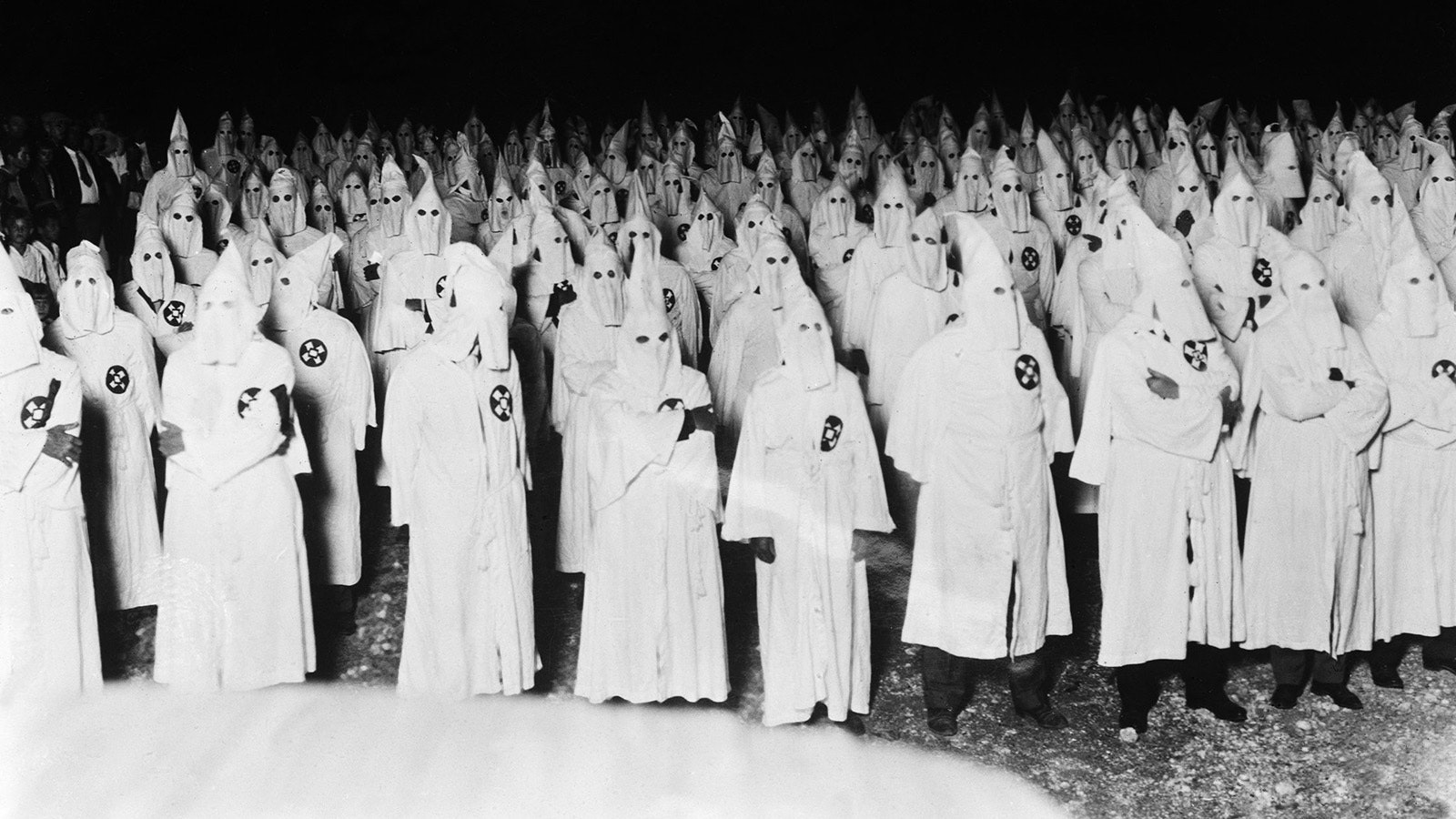
A century ago, the racist reach of the Ku Klux Klan was aggressive in spreading across the United States, rooting itself from the South to North and East to West. The organization even openly advertised in newspapers across the nation to build membership, including in Wyoming.
Protestant whites were welcome. Blacks, Jews and Catholics were not, and were targets for the Klan.
In the 1870s, the first phase of the KKK went underground and was weakened following federal action against it after its initial birth in the reconstruction period after the Civil War. The Klan crawled back into the light helped along by the new movie medium and D.W. Griffith’s silent film drama “The Birth of a Nation” in 1915. The movie, which originally was a 1905 novel and then a play titled “The Clansman,” portrayed the Klan as heroes.
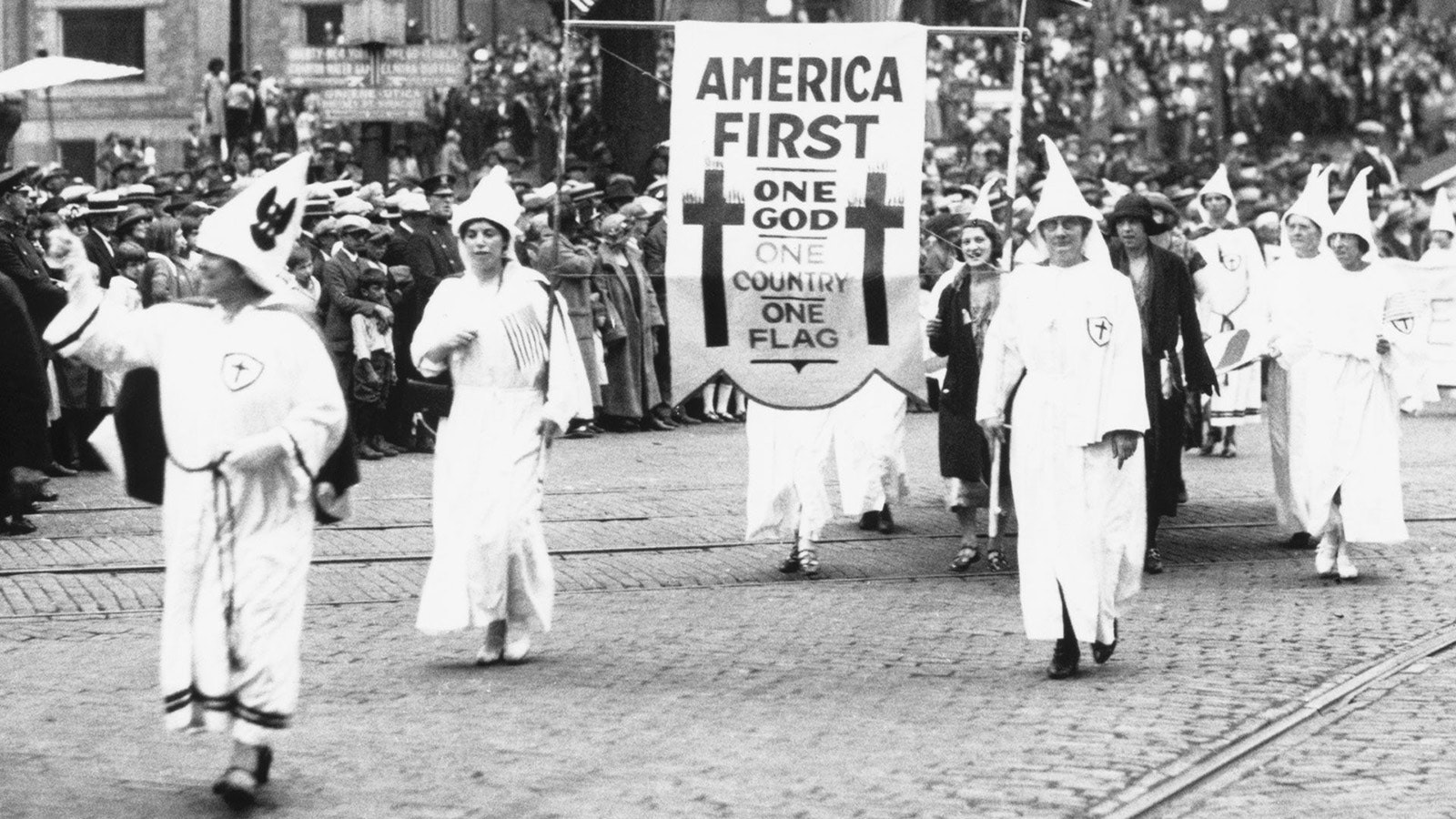
In the movie and the group’s new push for members, the Klan wore white robes and hoods and preached American patriotism. They also burned crosses.
University of Wyoming American Heritage Center archivist Leslie Waggener, who has written two articles on the Klan in the history journal Annals of Wyoming, said she believes the KKK’s infiltration of the Cowboy State mirrored others in the West.
“Wyoming was more of an average state. It was a lot stronger in Colorado, Oregon, Illinois, even more so than the South,” she said. “I would say that in Wyoming it was strongest in Casper … (but) there are hints of it being more powerful in Cheyenne.”
Waggener agrees that the film “Birth of Nation” prepared the soil for the seeds of hate to be sown.
An advertisement for “The Birth of a Nation” appeared in the June 22, 1917, issue of the Powell Tribune. The movie was going to be shown on the Fourth of July at the Alpha Theater, and the ad promised the film would feature the “thrilling rides of the Ku Klux Klan.”
Klan Organizes In Wyoming
The Klan’s reach into the Cowboy State arrived with headlines in 1921.
The Casper Daily Tribune on Sept. 28 used a double-deck large font type to proclaim: “Ku Klux Klan To Operate In Casper” with a sub-headline that read, “Flourishing Chapter of National Order Said to Number 150 and Include Prominent Resident Formed to Carry On General Program; First in Wyoming.”
A few months earlier, the Douglas Budget reported the Klan was in its community as well.
“According to information received from Colonel William J. Simmons of Atlanta, Ga., Imperial Wizard of the Knights of Ku Klux Klan, the work of organizing the Klan in this state has been put under way and representatives of the organization are in Douglas now,” the newspaper reported on June 9, 1921. “The work of organizing the Klan in this territory will be conducted from the central office, or headquarters, which has been established in Denver, the territory to be known as the Northwestern Domain.”
Similar articles ran in The Powell Tribune on June 10, 1921, and the Riverton Review on June 15, 1921.
For Bob David, a Casper historian, businessman and World War I veteran, the Klan represented poison in the community. In his unpublished memoirs at Casper College’s Western History Center, he penned a few pages about his encounters with the organization.
“The Ku Klux Klan became more and more powerful in Casper under the leadership of Dr. Johnson, whom everyone knew to be an abortionist and seller of dope. He was a big, gray-haired man with a gray Van Dyke beard,” David wrote. “The State Kleagle, or head man, was a tall, angular old George Dickson of Douglas, who used to be in the Florence Hardware with dad (his father, Edward David) years before. Now, he ran a hardware store there.”
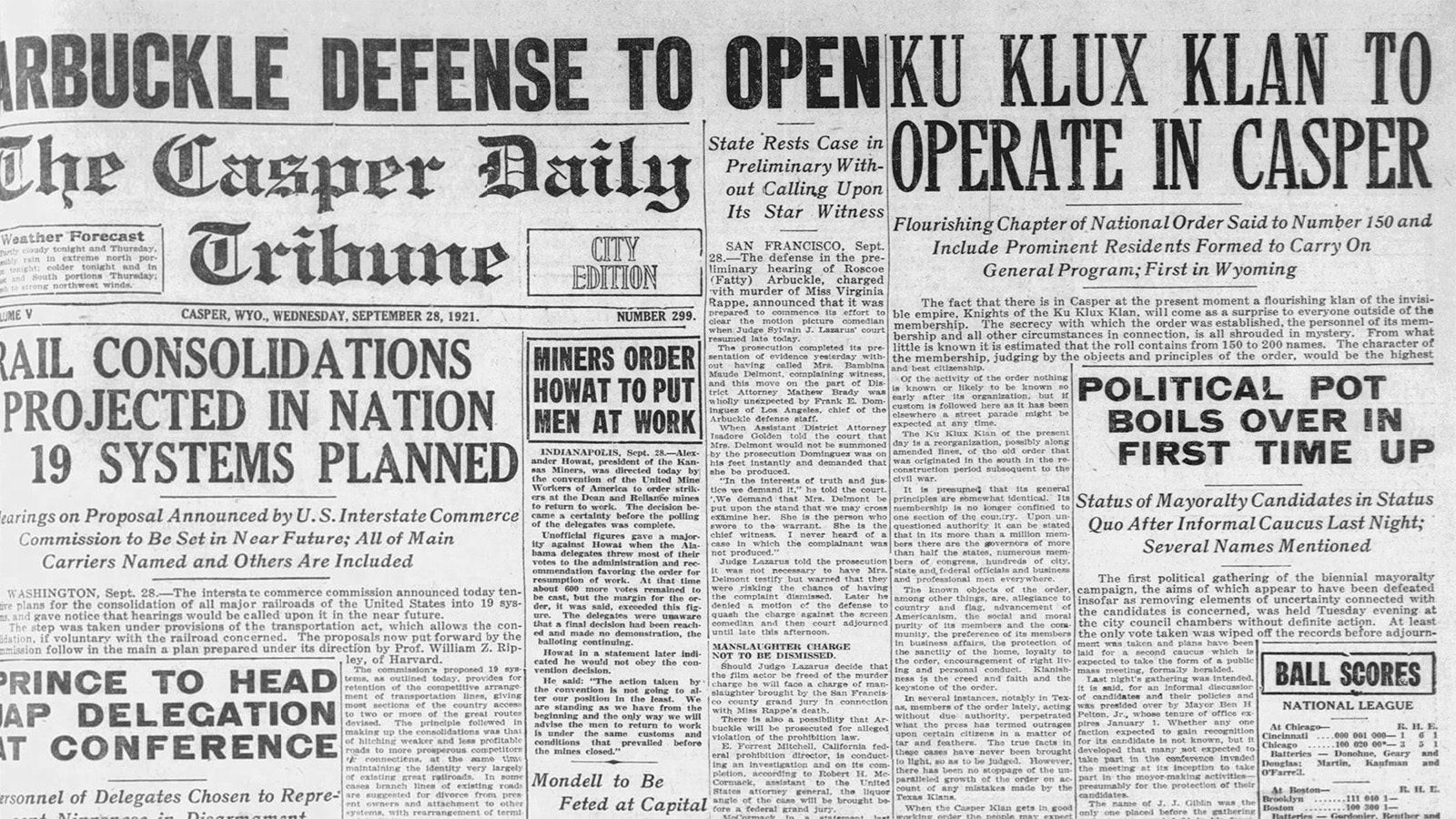
The Ku Klux Klan opening a chapter in Casper was front-page news in the Casper Daily Tribune. 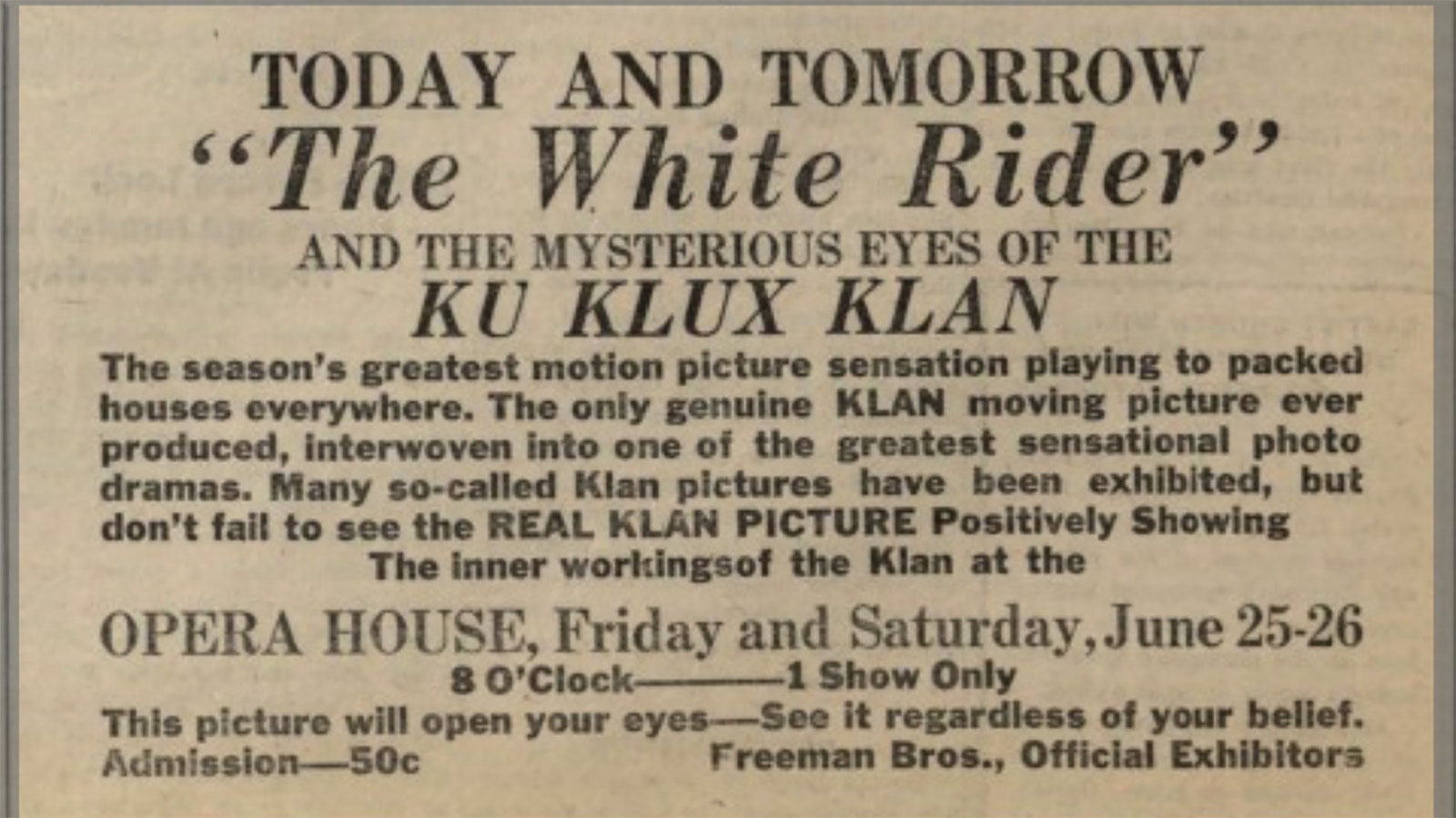
An advertisement in the University of Wyoming’s Branding Iron newspaper on June 23, 1925 advertised a Klan film. 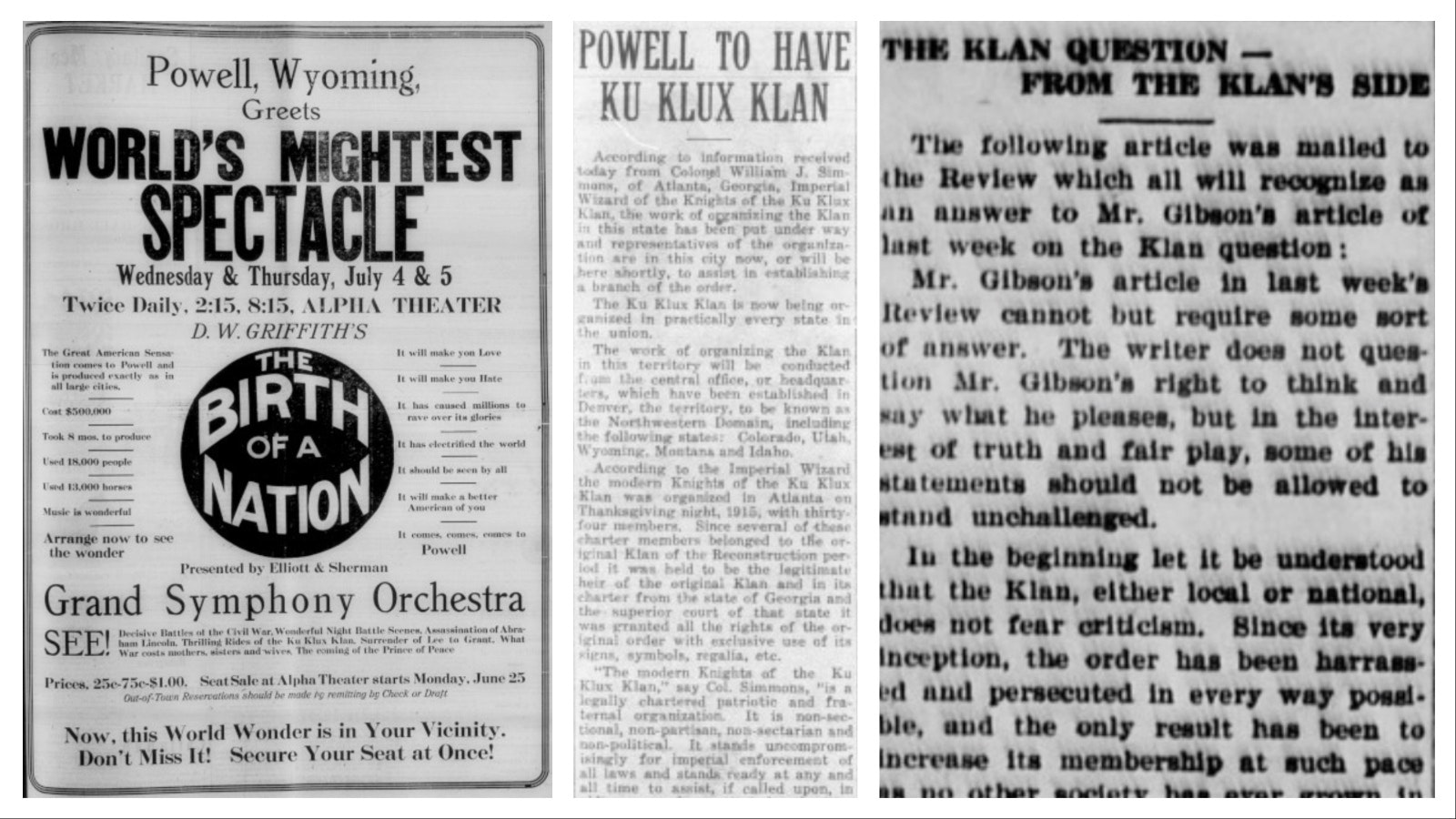
"The Birth of a Nation" was the spark the Ku Klux Klan needed for expansion in the American West in the early 1920s, including all around Wyoming. 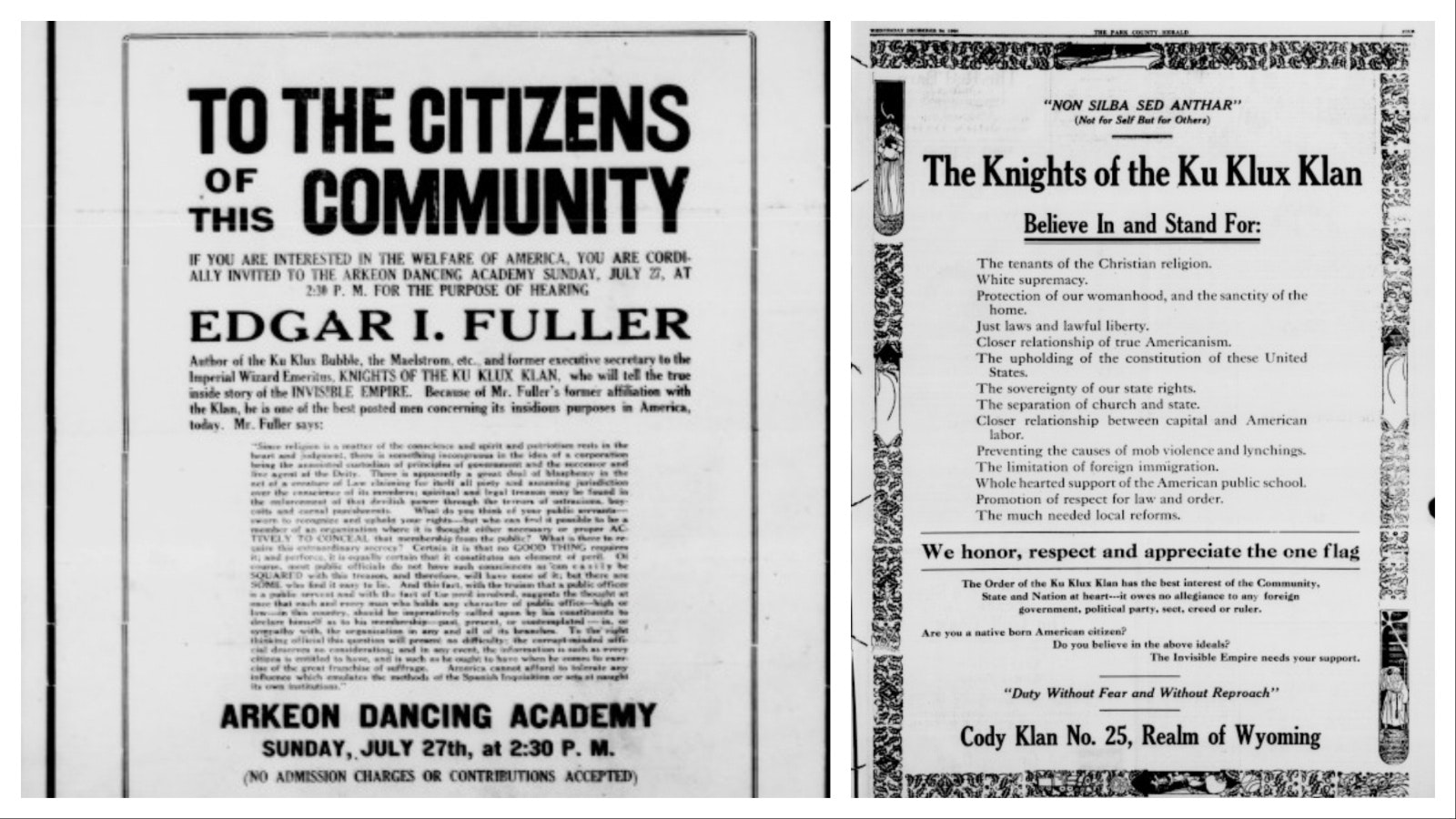
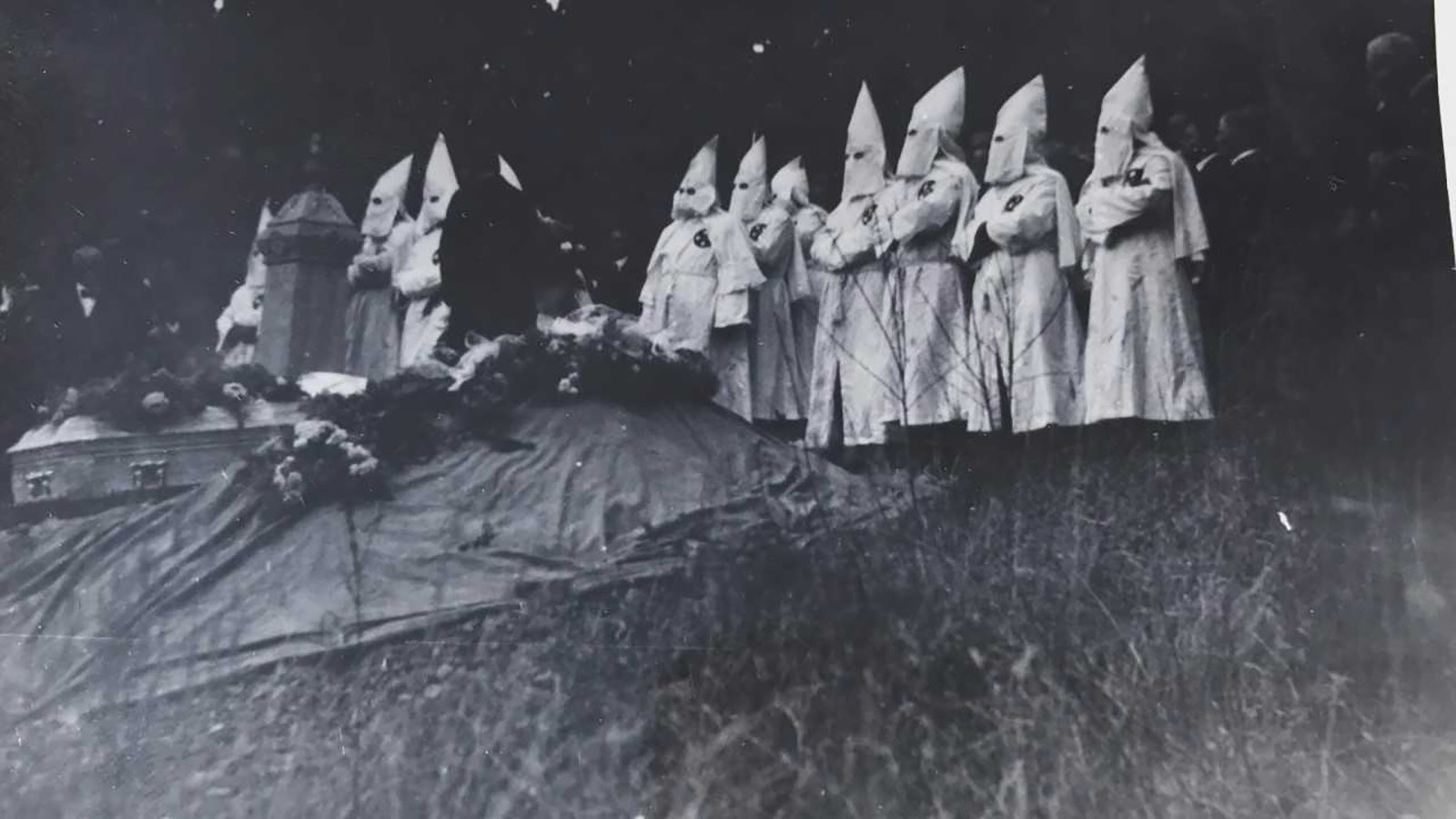
Left: An ad on July 25, 1924, in the Casper Herald promoted a meeting with an anti-Klan speaker. Right: An ad in the Cody Enterprise on Dec. 24, 1925, promoted the local Cody Klan group and its beliefs.
Recruiting Target
David did not date when he started to notice the Klan in Casper, but he wrote that when the organization’s recruiting efforts picked up, he was a target.
“Because I had a lot of influence in the Veterans of Foreign Wars, was a Mason of sorts, and a Protestant, the Ku Klux Klan tried every means they could muster to get me to join them,” he wrote. “Daily, when I got off the bus after work in the evening, one or a half dozen of them met me, to escort me home, to argue and plead with me. Across the street, in a white house next to the apartment house, lived one of their leaders.
“One day, I was standing on his porch when he took a little silver whistle out of his breast pocket and said, ‘Look at this Bob. If I was to blow this whistle once right now, I would have 50 members of the Klan here within two minutes.’”
“I believed him. Klansmen were everywhere,” David wrote.
In Sheridan, the Sheridan Post on Jan. 13, 1922, printed an article from the local Klan chapter explaining that ladies were not allowed in the group. A woman identified as “An American Girl” had written about how she had been thrown out of her home in Colorado by a “fiendish Hun” during World War I.
The Klan explained in its published article to the woman that it existed to protect “our pure womanhood.”
“We assure you that though you may not be a member of the Klan, you are, nevertheless, dwelling within the Realm of the Invisible Empire and safeguarded by its regulations and edicts and protected by its strength,” the Sheridan Knights of the Ku Klux Klan wrote. “We welcome your continued moral assistance as we carry on.”
‘Benefactors’ Go To Church
In the Greybull Tribune on Jan. 5, 1923, there was a story how the Klan interrupted a Sunday night church service in town. Two robed and masked “benefactors” walked to the pulpit and handed the Rev. W. J. Lloyd a “purse with $25” during his farewell service. The pair walked out and sped away in a “high-powered automobile” which had waited outside.
In addition to the money, there was a letter that was quoted in the newspaper in which the Klan applauded the pastor’s work, character, and ministry helping the community. The letter told the pastor the Klan was a law-abiding group who assisted and upheld the law.
“We solicit your acceptance of this little evidence of our respect and acknowledgement of your goodness of deed and character and wish that you might become associated actively with us in our works, at all events we would like your membership,” the newspaper quoted the words of the letter.
It was signed by the “Exalted Cyclops, Greybull Klan No. 8 Realm of Wyoming.”
In Riverton, a citizen named O. N. Gibson wrote in opposition to the Klan and the next week, on Jan. 3, 1923, there was a response in the paper refuting his arguments. The newspaper gave an individual identified as “A Klansman” two columns of type to refute Gibson’s arguments against the organization’s secrecy, methods, and “Americanism.” Gibson had written about the Klan’s mask and robes as tools that would hide identities during lawlessness.
“The Klan is not as strong here as we confidently predict it will be, but it is strong enough today to justify the statement that no masked man in the robe of the Klan could appear in the business section of Riverton without being observed by several men who would know whether or not he was legitimate business,” War Veteran wrote. “The Klan is dedicated to ideals which ever right-thinking citizen of Riverton can endorse. Membership in the Klan is an honor, and the time, please God, is not far distant when a town possessing the Klan will recognize that it has a real power for good — not evil.”

‘Law And Order Theme’
Waggener said the interesting fact about the Klan in Wyoming is that while the national organization railed against Blacks and Catholics, Wyoming did not have many Blacks. So, the organization tried to take a more “law-and-order” approach to gain acceptance.
In her article “KKK Country: How Wyoming Embraced the Ku Klux Klan,” Waggener writes that Casper may have embraced the Klan due to the bars, prostitutes, bootlegging and other illegal activities surrounding the Sandbar District. Two roadhouses were burned down and the Klan was suspected.
But as the decade moved forward, people took public stands against the KKK’s reach.
In the Casper Herald on July 25, 1924, a full-page ad invited the public to come and hear an Edgar I. Fuller, expose the Klan. The ad said Fuller was a former executive secretary to the “Imperial Wizard Emeritus.”
“What do you think of your public servants — sworn to recognize and uphold your rights — but who can find it possible to be a member of an organization where it is thought either necessary or proper to actively conceal that membership from the public … America cannot afford to tolerate any influence which emulates the methods of the Spanish Inquisition or set at naught its own institutions,” the ad stated.
People were invited to go to the Arkeon Dancing Academy in Casper to learn more about why they should oppose the Klan.
Whether Casper’s David went there is not known. But he did go to a Klan meeting and then let his views be expressed. His butcher, a Klan member kept trying to recruit him and one day told David that a national speaker from the Klan would be in Casper. He gave David two tickets to the event.
David and a friend, Dick Copsey, went to the Odd Fellows Hall and were met at the door by a man David knew to be a Natrona County deputy sheriff. The door into the hall was locked, the deputy turned the key to unlock it and they were escorted down to the front.
Barred From Leaving
There at the meeting, the national speaker went on to make statements against Blacks, calling them the “N” word and stating they were without souls.
David wrote that he and his friend got up and tried to leave the meeting but were blocked by the deputy who told them to return to their seats. They did, not wanting to start a fight. The local leader spoke next.
“Then Dr. Johnson got to his feet up on the platform, came forward, and began to orate, looking most of the time at me. He extolled the virtues of the great organization, and all that sort of bunk until again Dick and I had had enough,” David wrote. “With a burst of final determination, we rose together, and strode up the aisle again.”
The deputy barred their way.
David wrote that he drove his shoulder into deputy’s chest sending him back into his chair while his friend turned the key to unlock the door and they both made their exit. The next day David went to the butcher to challenge him for the way they were treated as guests and being forbidden to leave.
The butcher told him it was for his own protection.
“Don’t you know the Catholics had rented a space across from the street from the Odd Fellows, and they were sitting there taking down the names of everyone who came and went from that meeting,” David quoted the butcher. “We had the police chief clear the streets for two blocks before we disbanded last night to protect everyone.”
David wrote that he responded: “The Catholics aren’t half as afraid of you as you are of them.”
Waggener said the Catholics in Casper helped lead the Klan opposition with a priest of St. Anthony’s Catholic Church on one occasion pulling off a Klansman’s hood during a march when Klan paraded outside.
The Chicago-based American Unity League was encouraged by Casper Catholics to come to Casper and infiltrate the Klan chapter. A member did come to the city, infiltrate the Klan and the American Unity League’s publication “Tolerance” printed names of Klan members in the city, she said.
Plan To Stop VFW Takeover
David wrote that the KKK continued to infiltrate the VFW Post despite his best efforts. He eventually called the Catholic VFW members to his house to “try and make plans which would successfully keep them (KKK) out.”
On the following day after the VFW meeting at his home, David wrote he drove down to Douglas to enter the KKK state leader Dickson’s hardware store. He found him alone.
“I went around behind the counter, took him by the front of his shirt and shook him like the big, cowardly washrag he was,” David wrote. He ordered Dickson to keep the Klan out of the VFW.
“You don’t scare anyone with your bedsheets and pillowcases,” David wrote he told the man. “When I fight, I don’t have to hide behind anything. The next time that I have to come down here to see you, I’ll do worse.”
The impact of David’s words is not known, because he stopped writing about the KKK in Casper at that point. But the initial fervor the Klan generated in Wyoming earlier in the decade seemed to lose its luster, at least publicly the last half of the decade.
Waggener said a series of Klan scandals in the nation seemed to significantly damage the Klan in other parts of the country in the mid-1920s. The worst involved the Klan’s Grand Dragon David C. Stephenson, who made national headlines for the kidnapping, rape and murder of a woman in 1925.
Still, Klan activities occurred in the state for the next few years.
“It just seemed like (the Klan) lasted in Wyoming longer, it lasted until the late 1920s and possibly the early 1930s and some of the scandals of the national organizations weren’t making it to Wyoming,” Waggener said.
From Praise To Scandal
In the 1930s, as the KKK fell out of the Wyoming news and the Depression kicked in, accusations that one was a member of Klan became politically charged for any candidate.
When U.S. Supreme Court Justice Hugo Black of Alabama was appointed by President Franklin Delano Roosevelt to U.S. Supreme Court in 1937 a controversy arose about his being lifetime Klan member. Some called for him to be removed. Black admitted he had been a member in the early 1920s, resigned from the Klan, and never rejoined.
Wyoming’s U.S. Senator Harry H. Schwartz of Casper, a Democrat, was among those who came to Black’s defense as reported in the Casper Tribune-Herald on Sept. 19, 1937.
“The renewed attack on Black was inspired by confirmed enemies of the present Democratic administration,” Schwartz said. “Justice Black’s real offense is great ability plus uncompromising determination that the predatory powerful shall not oppress the weak and helpless. None who congratulated him will ever have cause to regret so doing.”
Contact Dale Killingbeck at dale@cowboystatedaily.com
Dale Killingbeck can be reached at dale@cowboystatedaily.com.