
Kolya Sidloski is wide awake.
You can’t find him on social media. You can’t text him. But he does exist, sitting alone at a table for six in a two-story building in Lander, Wyoming, poring over 15 splayed books and gripping a fountain pen. He hasn’t yet noticed that the essay he’s writing by hand has inked his outer right hand and ruined his shirt sleeve.
The 21-year-old is soon entering his senior year at Wyoming Catholic College in Lander. He chose to attend that college in part because it doesn’t allow students to have cellphones for the bulk of their four years there. The dorm rooms don’t have internet, and other kinds of technology are tightly restricted.
“I wanted to find an environment where those, sort of, artificial barriers technology creates are not present,” Sidloski told Cowboy State Daily in an (in-person) interview last week.
Wyoming Catholic College students are allowed to take their cellphones home with them on holiday breaks like Christmas and summer vacation, and check them out for brief periods for banking or medical needs. But otherwise, the phones sit in a locked cupboard – in Tupperware containers named after the different dormitories, which are in turn named after Catholic saints.
It's no trouble for Sidloski, who said he’s never owned a phone.
When he observed his home back in Saskatchewan, Canada, he saw traces of what he describes as technology’s ravages on human connection.
“I’ve definitely seen people who are so absorbed in their technology – whether that be video games or social media – that it renders them incapable of even thinking at a sort of deep level,” said Sidloski. “It builds habits of mind that are not really able to get past the superficial… a very superficial level of existence.”
Part of the problem is with the content on people’s phones. But part of it is with the medium itself, and how persistent it is to intrude upon a person’s inner thought, he said.
Quarantine Girl
It was a harder adjustment for Nyra Ortiz, who’s entering her senior year at the school.
She was stuck inside in a virtual school program during her last two years of high school, subject to the COVID-19 lockdown rules of upstate New York, Ortiz told Cowboy State Daily.
“I spent very much of my junior and senior year online. So that was the way I communicated with people,” she said. “You almost have to learn (socializing) again when you come out here.”
She might have gone through withdrawals if not for the mandatory 21-day backpacking trip all incoming freshmen take the August before they enter Wyoming Catholic College.
Margaret Mary Serchen, who just finished her senior year at the college, elaborated:
“Being in this very, very small (backpacking) community, it forces you to get to know the people around you. You encounter each other and struggle with each other,” said Serchen. “You don’t realize you’re missing your phone because everything is so new.”
The real-life consequences of the choices students make up in the Wind River or Absaroka Mountains for three weeks chase thoughts of one’s online life far from the mind, Serchen added.
“You realize, ‘I’m responsible for the people around me,’” she said. “And, ‘I just made a bad decision and now we have to hike three extra miles in the blazing heat.’”
But that helplessness forces the students to shed the pretentions of control most First-World country dwellers acquire like dead skin, Serchen said. It strips them of their notions of self-sufficiency – just in time for them to enter class.
“You come into the first days of class ready to receive… instead of thinking you already know things and you can impose your own thoughts on the books,” she said.

Margaret Mary Serchen said not having a cellphone for the bulk of four years at Wyoming Catholic College makes her shed her pretensions of self-sufficiency, which helps her learn. (Wyoming Catholic College) 
Marietta Mortensen said Wyoming Catholic College's no-phones policy makes God more imminent. (Wyoming Catholic College) 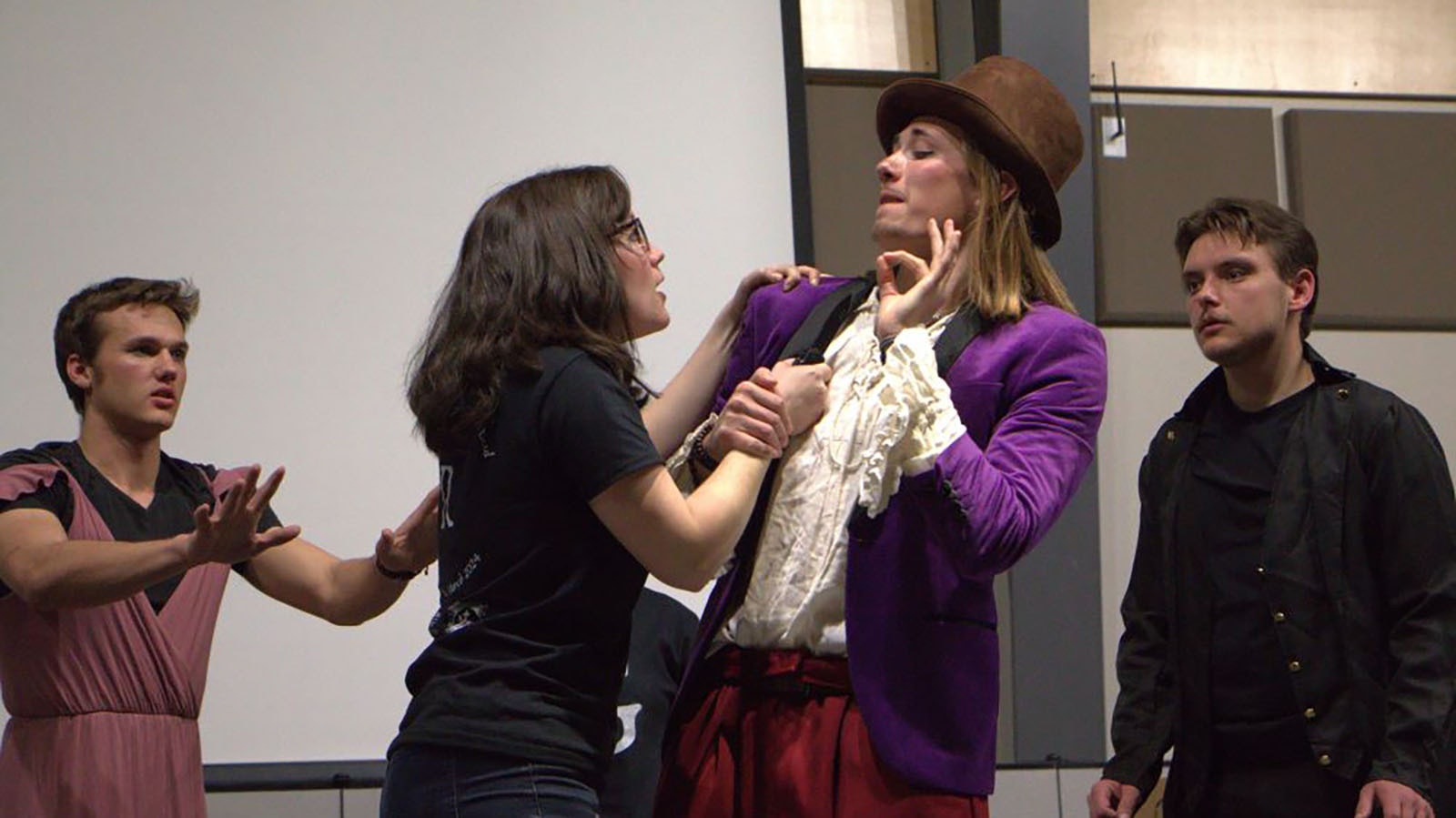
Students like these student players learn almost entirely without cellphones for four years. (Wyoming Catholic College) 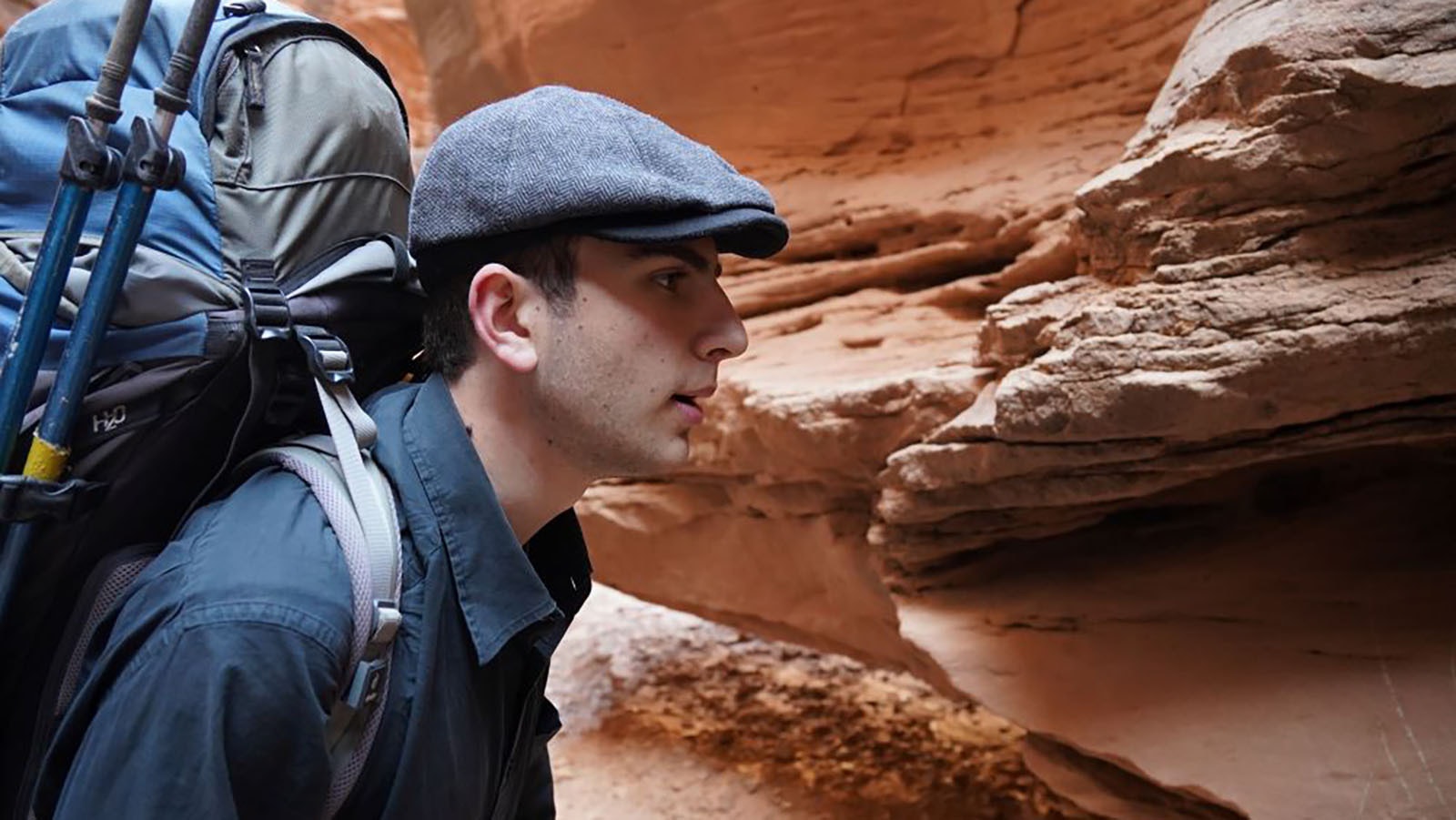
Students like Luca Castronova may be hesitant about Wyoming Community College's no cellphones policy, but soon learn that living without them opens many other worlds of discovery. (Wyoming Catholic College) 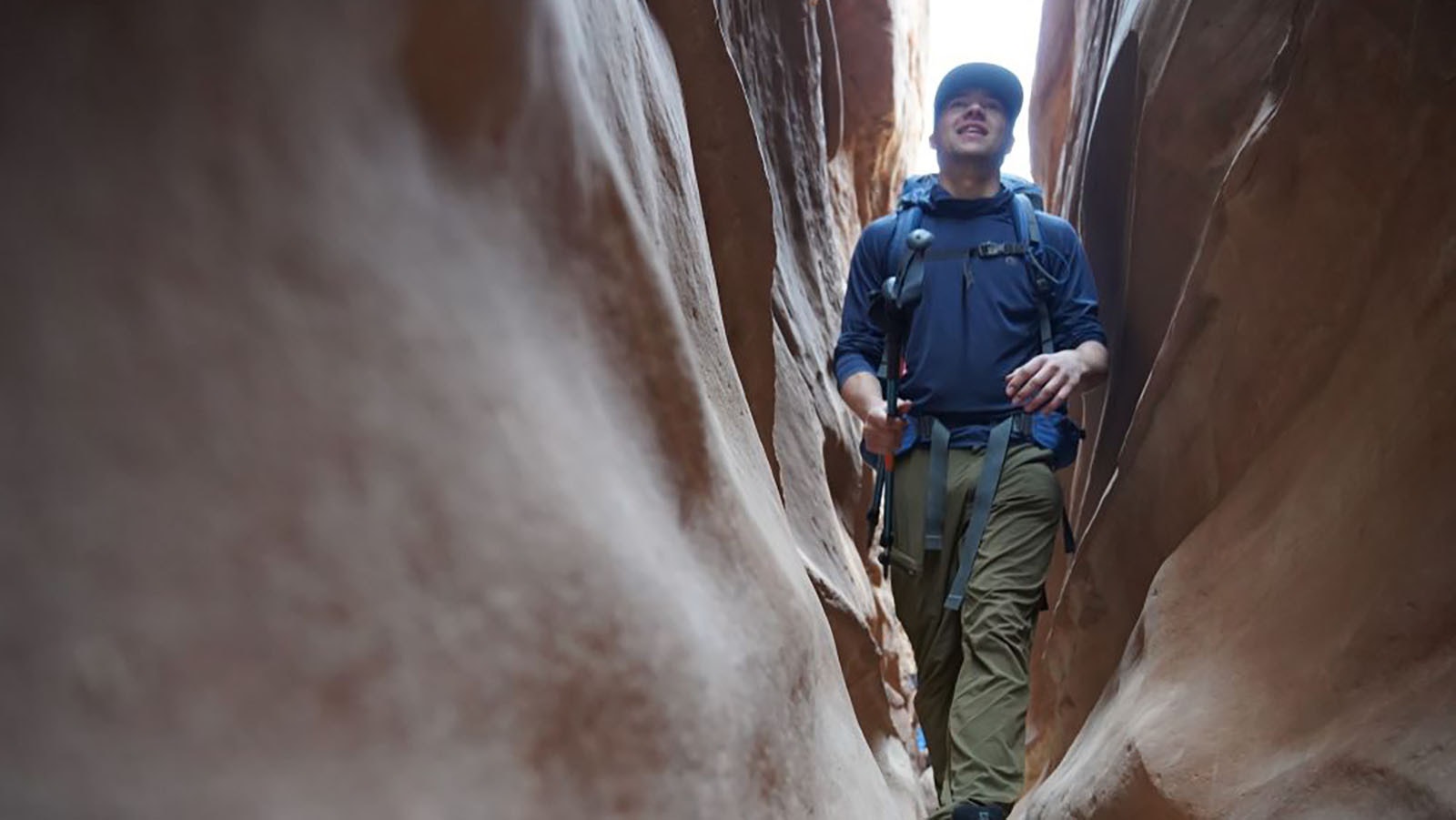
John Walsh said now that he's learned how much more engaging life is without a cellphone in hand, he tries to spark a no-phones trend in his home. (Wyoming Catholic College)
The Sheer Edge Of Quiet
Without the distractions, God becomes imminent, Luca Castronova, an incoming senior, told Cowboy State Daily. The switch to no phones has unleashed a quiet that the students can sense, even through the boisterous parts of dormitory life.
That’s a little daunting, Marietta Mortensen, an incoming senior, added.
“You can’t distract yourself with something else,” Mortensen said. “Everything is more real and more present. God is more real and more present. And the people around you are – and you are to yourself. It’s kind of terrifying.”
While college-age kids across the country will peruse YouTube, TikTok or Twitter when they’re bored, and base their identities upon the veneer of their Instagram accounts, Eddie Collins, who’s approaching his senior year at the college, is stuck with himself.
In a good way.
“(Boredom) either forces you to seek out other people, or be content with your own thoughts,” he said. “I think a lot of people today aren’t OK with just being by themselves.”
Collins said he’s grown to understand himself better, and he also doesn’t care much what others think about him.
The Goods
Like any policy, the phone fast is only as good as the student’s approach to it, recent senior John Walsh said.
“If you treat these four years as - you only look at it as a burden or something imposed on you, then you never get to the point where you’ll see the good in it,” said Walsh.
He visited Europe last summer and while seeing St. Peter’s Basilica in Rome, he watched people hunched over their phones, scrolling through photos they’d just taken of the architectural wonder.
Perhaps, Walsh continued, people believe they can possess all that beauty by storing it in their phones.
But allowing oneself to sit in the moment brings the surprise that, “OK, this is bigger than me,” he said. “It’s not something I can claim as my own and take away.”

The Joyful Ascetic
Scientists have correlated reduced digital technology use with better attention, sleep and emotional intelligence; improved social life and better brain development in children.
Sidloski doesn’t need to read all those studies: He’s living them.
He’s more ascetic with his technology fast than most students. He doesn’t have to write his essays by hand, but he does, and has accidentally sparked a trend among other students.
Denying himself the copy-and-paste, edit-and-rearrange luxury of a word processor forces him to chase the frolic of logic in his head before putting it in writing. He said it deepens his thought processes.
Sidloski sometimes writes his essays in Latin for no other reason than to improve his grasp on the language by which he studies classic texts.
He’s unreachable by email for days at a time, and he doesn’t own a computer of his own.
Society will naturally pursue the course of least resistance, despite observed and historical lessons that beating a harder path brings inherent good, he said.
Sometimes it takes a campus-wide “law” to make people realize that.
Despite the quiet the students report feeling in their own minds, the policy’s effects are, outwardly, loud and lilting: If one student starts singing a song the others know, they all join in. They’ve memorized some 30 poems, and they’ll all bellow one if one of their classmates utters the first line.
Sidloski theorized that, left undistracted, the mind will hunt for truth. And left to the pursuit of truth, a culture will also seek joy.
“I think,” Sidloski said, after one of his careful pauses, “one of the really beautiful things about this culture is that spontaneous overflow of joy, at what we’re doing.”
Clair McFarland can be reached at clair@cowboystatedaily.com.