Sometimes the best things in life turn out to be ridiculously simple.
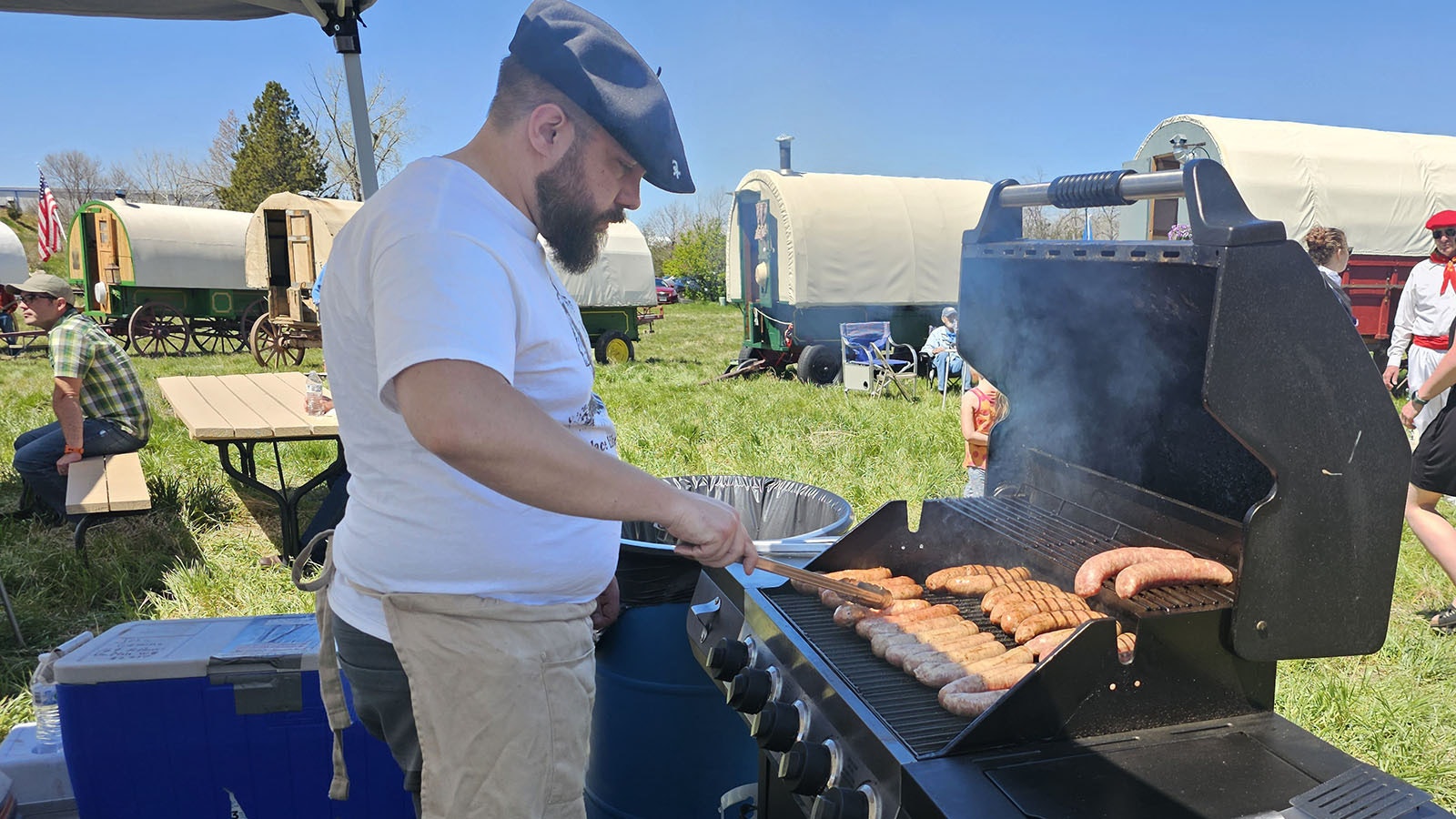
That’s certainly the case with the Lukainka sausages served last weekend at Gillette’s third annual Sheepherders Festival. Outside the festival and some other local fairs, these regional treats aren’t well-known — but they should be.
The sausages have a long history for one Buffalo, Wyoming, family that goes back well over 100 years in what is today French Basque territory in the Greater Pyrenees mountains.
“I’m sure it came from France,” John Camino told Cowboy State Daily. “This was my dad’s recipe, and that’s where he came from. He came over when he was about 20 years old and went to work for his uncle, John Camino, and later on bought his own herd of sheep. We ran sheep for about 50 years.”
The recipe for the Camino family’s sausages is deceptively simple, and John is not secretive about it at all. It’s salt, pepper, some garlic and a pinch of red pepper, all to taste.
“That’s it,” Camino said. “Maybe a little love and TLC.”
Basque Festival Started The Tradition
The country once known as Basque is today split between France and Spain. But even though the country was divided, the culture itself has remained remarkably intact. Today it’s spread to 55 countries around the globe, and a significant population of people identifying as Basque still call Buffalo and Rock Springs, Wyoming, home.
In 1996, Buffalo hosted 4,000 or so Basque visitors for the North American Basque Organizations Summer Festival.
The Camino family Lukainka “was a staple,” John’s son Randy Camino told Cowboy State Daily. “We sold it as a club, and the locals and tourists — everyone loved it.”
With that success, Big Horn Basque Club brought their delicious sausages to the Johnson County Fair and Rodeo, where it is also a tradition, and then eventually to the Living History Days put on annually by the Jim Gatchell Museum.
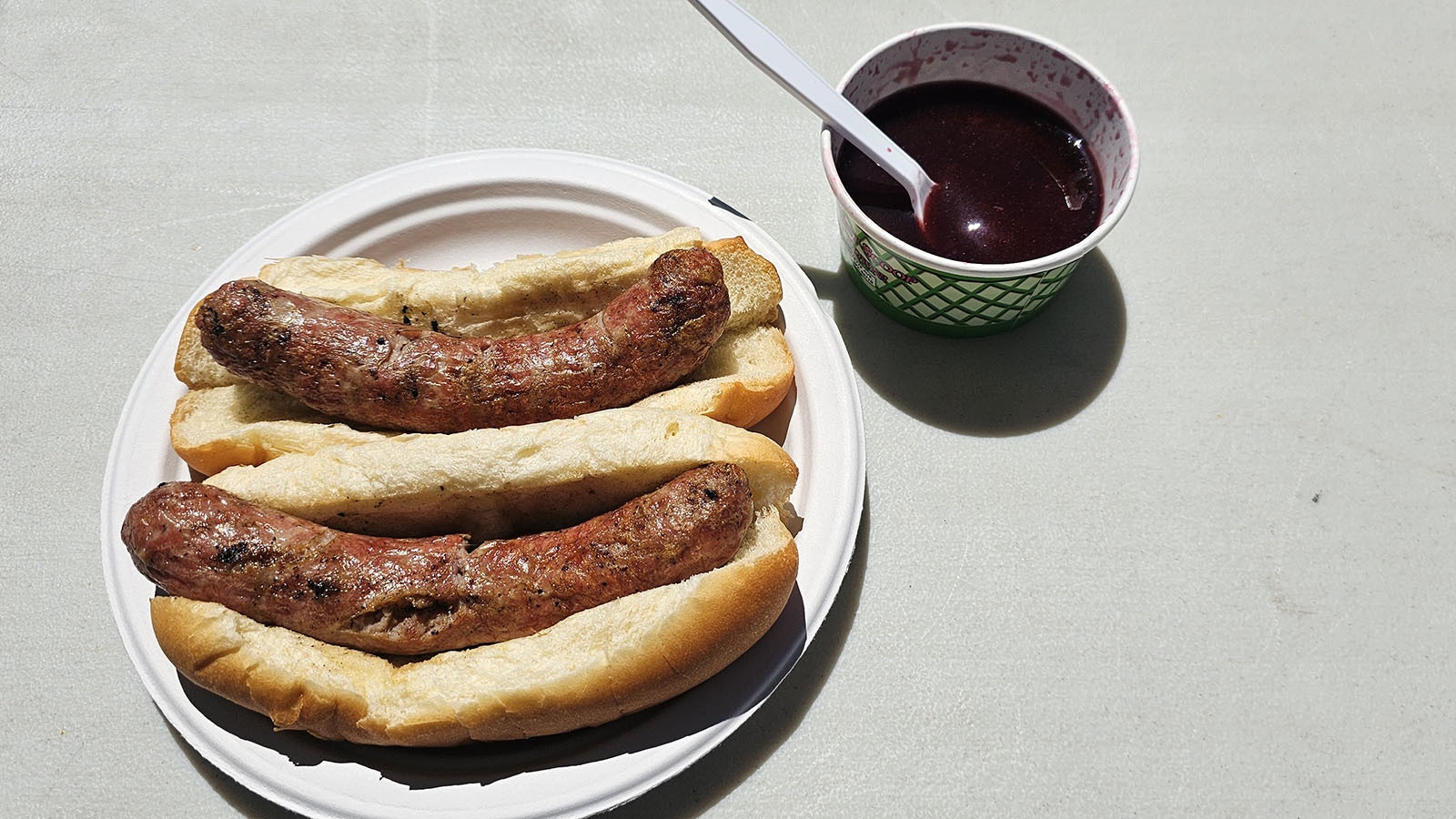
Even plain, the Lukainka, Basque sausages, are quite tasty. Shown here with blackberry sorbet. (Renee Jean, Cowboy State Daily) 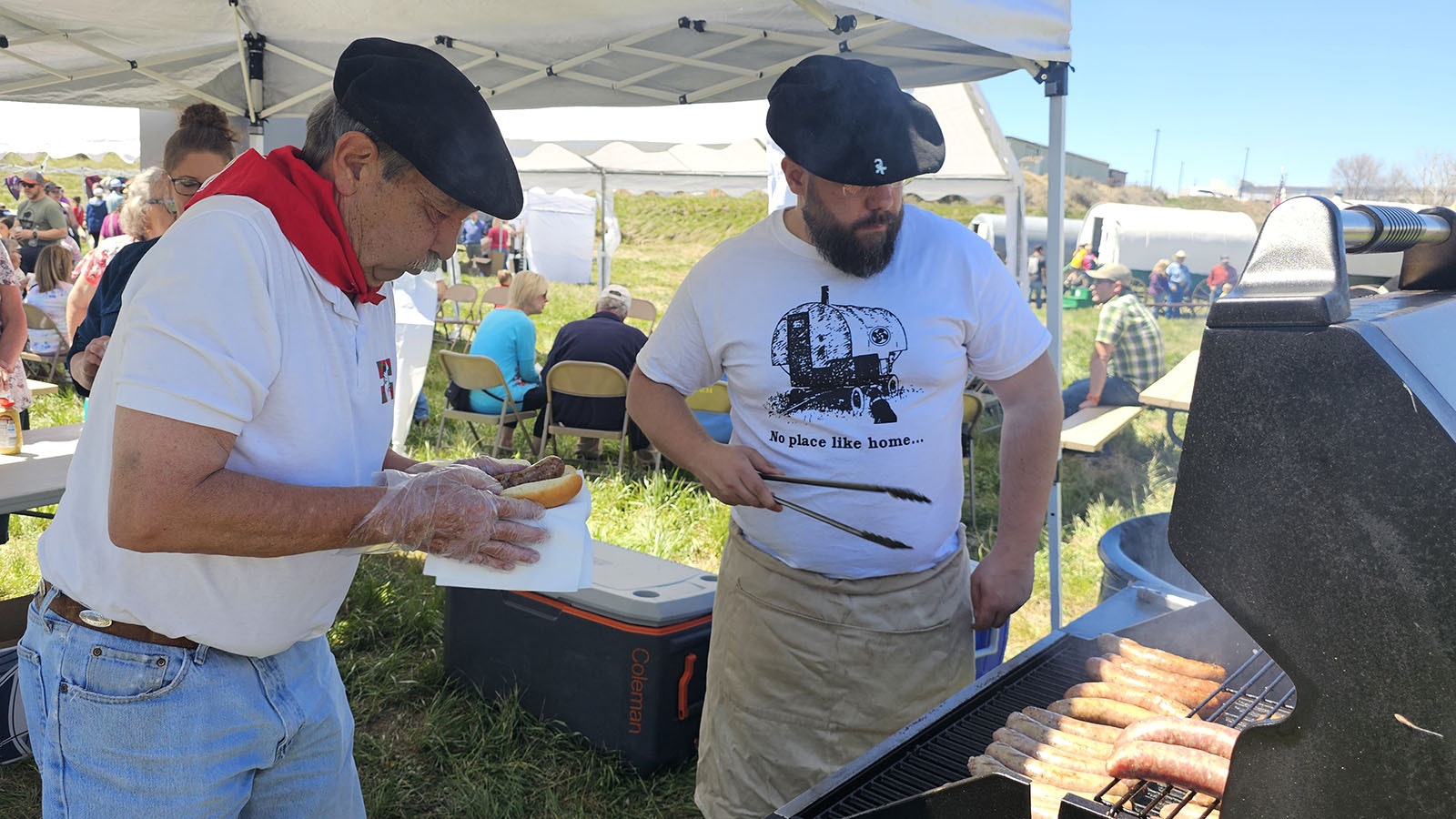
John Camino wraps a Lukainka, Basque sausage, in a napkin during Gillette's third annual Sheepherding Festival. (Renee Jean, Cowboy State Daily) 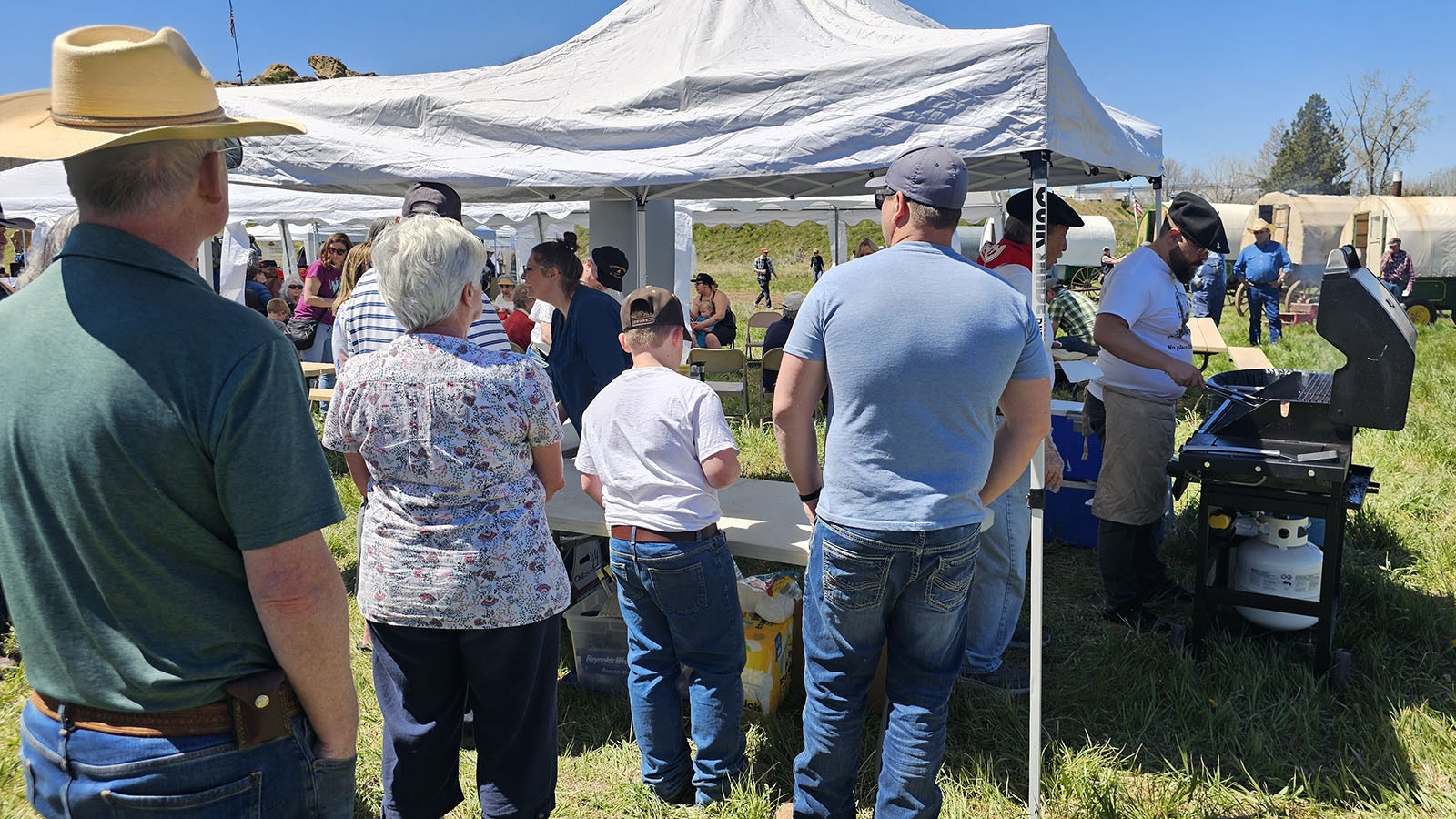
The line quickly grows for tasty Lukainka sausages, cooked by the Basque Big Horn Club. (Renee Jean, Cowboy State Daily) 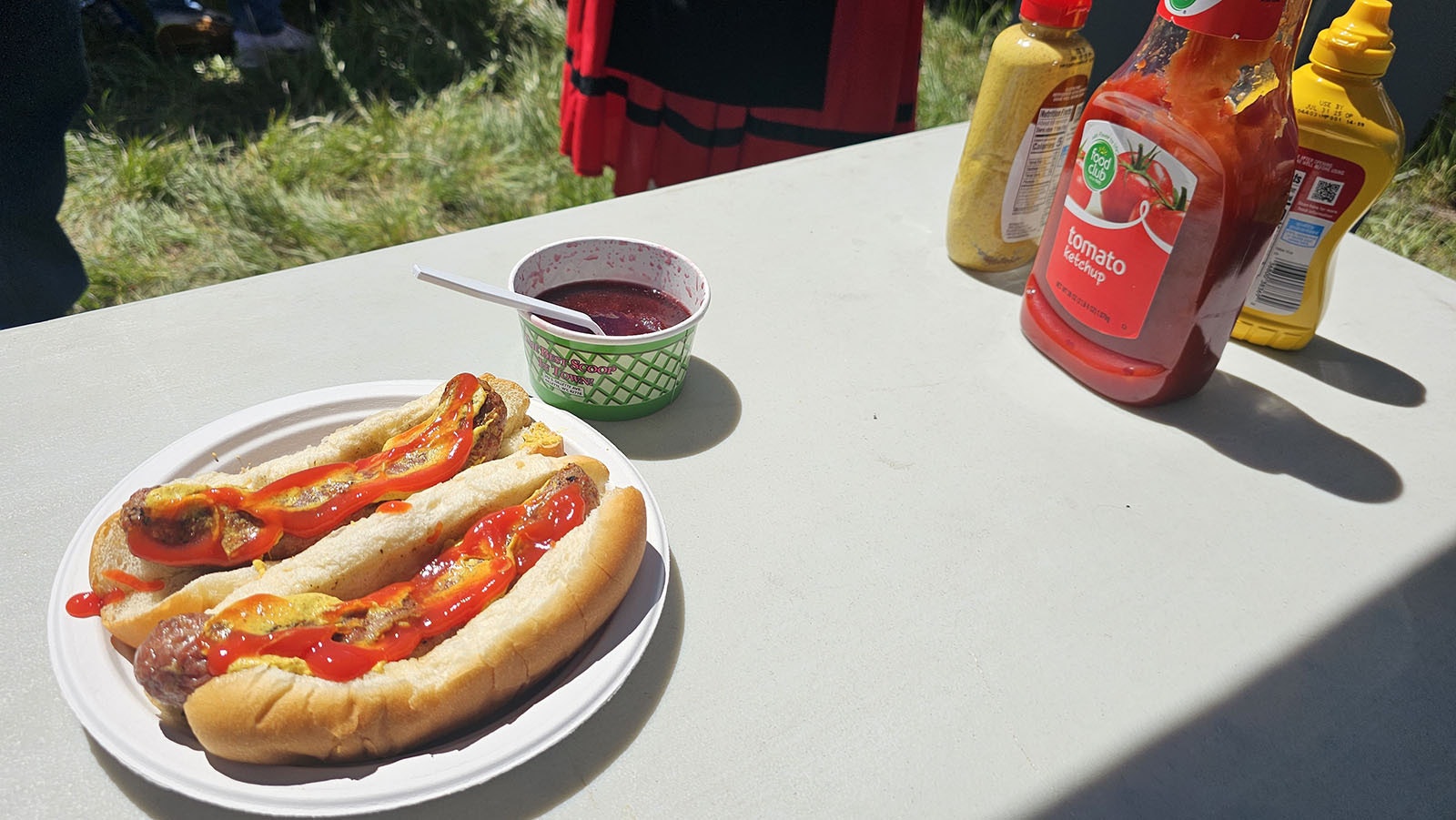
But the flavor is not hurt by spicy brown mustard and ketchup if desired as well. (Renee Jean, Cowboy State Daily) 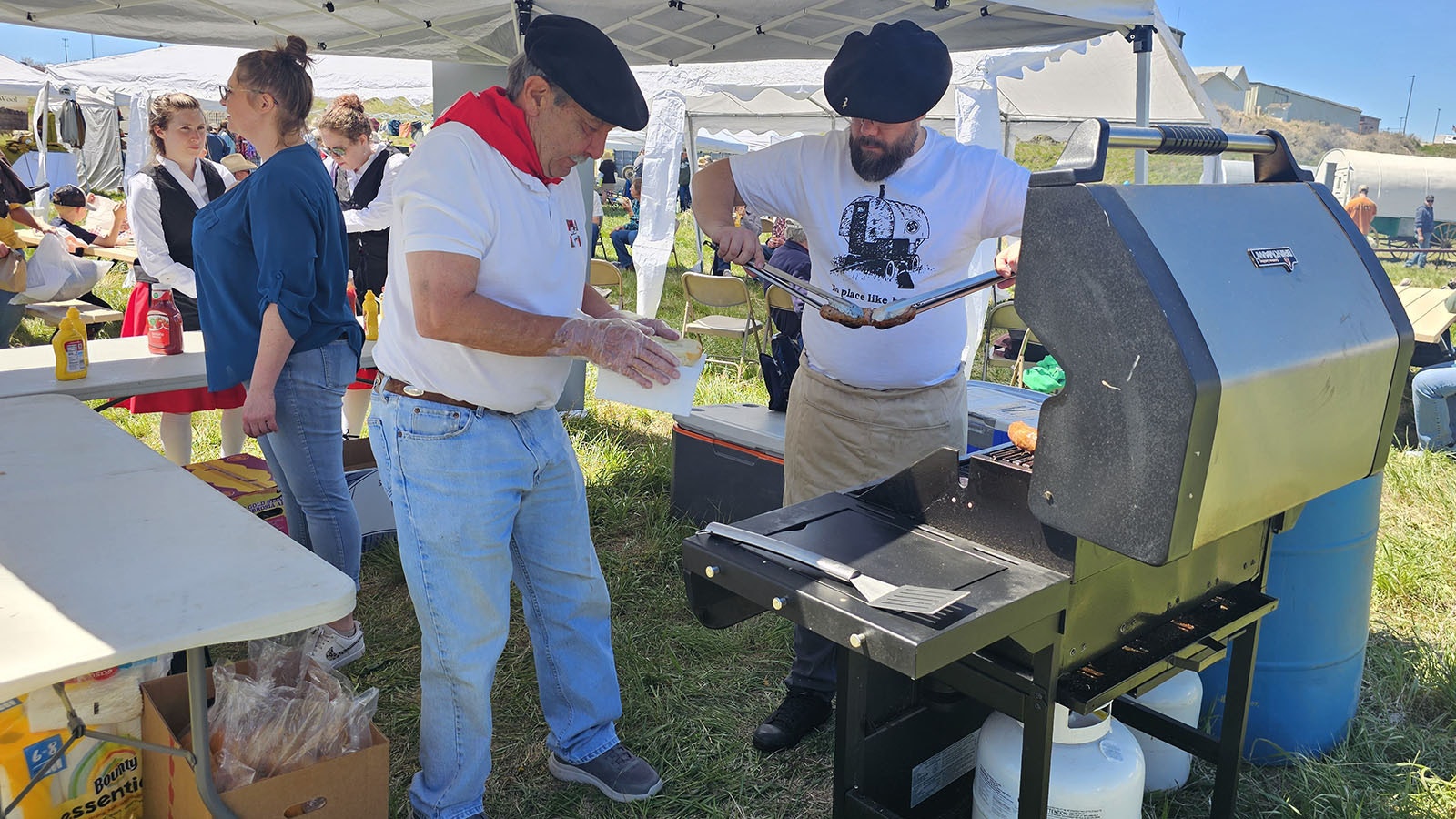
Randy Camino takes a Lukainka sausage from the grill and places it in a bun held by John Camino. The sausages are a fundraiser for the Big Horn Basque Club, working to preserve Basque history in Wyoming. (Renee Jean, Cowboy State Daily)
Mixed By Hand, Maybe Not Always With 'Love'
John Camino recalls learning to make the sausages when he was a boy.
The mixture of sausage meat and spices was kept cold in very large tubs in their basement.
“My job was to mix the sausage meat and spices together,” he said. “Your hands would get so cold you could hardly stand it.”
His mom would take a sample of the sausage after the mixing to fry up and taste test.
“Then she’d say, ‘Oh, we need more pepper’ or ‘Oh, we need more garlic,’” John Camino recalled.
John would kind of groan — he was after all just a kid — and grumble because he knew that meant more mixing the next day.
“It usually took about four days to get it mixed up just right,” he said. “And that’s still the tricky part today, making sure it is well mixed.”
Otherwise, someone will get a sausage that’s a little too spicy, or a little too garlicky, or a little too bland. The key is to mix well, even if the chore may not always be done with love in a young boy’s heart.
Once the sausages reached the right flavor profile, John recalls that they were stuffed into casings and hung for four days in the cool basement space to cure. After that, they were stored in giant crocs under a layer of fat. That’s how things were done in the days before refrigeration.
After refrigeration became a thing, the family bought a freezer for their Lukainka sausages, though they still made them by hand. Always by hand.
The Caminos gave the recipe for the sausages to DJ’s Grocery in Buffalo when they started making them for Big Horn Basque Club. The grocery store sells them day-in, day-out for those who have a hankering outside of festival time.
They also make sausages for the Big Horn Basque Club at various festivals or at fair time. It’s a great fundraiser for their mission of keeping the Basque culture alive in Wyoming.
Proper Condiments
People like to debate the proper condiments for Basque sausages while they’re standing around waiting in what can become a pretty long line.
It’s something to do to pass the time.
Some advocate for pure spicy brown mustard — and only spicy brown mustard. Others prefer ketchup.
If you can’t make up your mind, why not try a mixture of both? It’s equally delicious.
Or eat them plain. There’s really no wrong way to go.
And that’s no doubt why the Big Horn Basque club usually sells out of Lukainka whenever it brings them to an event. The Gillette Sheepherders Festival fairly quickly sold out of the 60 pounds of sausages brought to that event. Big Horn Basque club sold about 800 pounds of the sausages at the 1996 NABO celebration.
While Lukainka sausages at fairs and festivals are typically eaten like a bratwurst and are quite delicious that way, Rachel Camino has a great, 15-minute dinner recipe where they are the star.
She makes it at least once a month, whenever she’s too tired to cook and doesn’t want to order out.
It’s so simple, it’s crazy to call it a recipe, but here it is.
Renée Jean can be reached at renee@cowboystatedaily.com.