A panel of three judges is considering whether the sorority that inducted a transgender member into its Wyoming-based chapter in 2022 could have acted in bad faith, and whether the six women who sued over the move appealed their case too early.
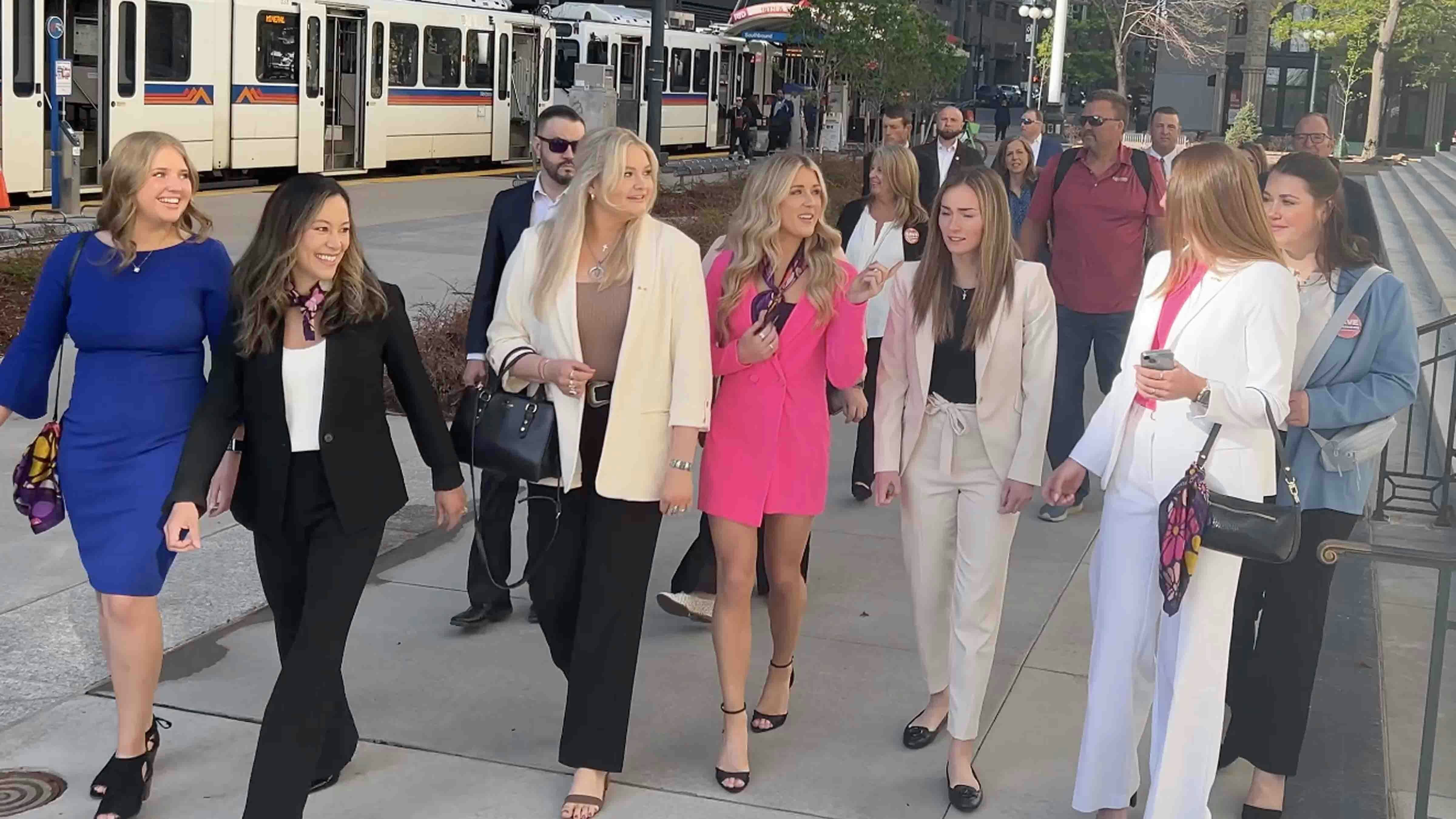
Women's-rights activist Riley Gaines joined six Wyoming women Tuesday for oral argument in the 10th Circuit Court of Appeals in Denver – which encompasses Wyoming – in the case of Westenbroek v. Kappa Kappa Gamma.
The case started in March of 2023, when seven (later six) women sued the sorority, its director, and the transgender member the Laramie, Wyoming, chapter admitted.
The women claimed the sorority’s leadership was harming the organization, its offshoot housing corporation had broken its contract to sorority house residents, and the sorority leaders interfered with that contract. They also invoked a direct cause accusing the defendants of harming them.
U.S. District Court Judge Alan B. Johnson dismissed their claims six months later. He said private organizations can make and interpret their own rules – including the definition of the word “woman.” But he gave some guidance on how the women could change their complaint and re-file it.
The women appealed to the 10th Circuit instead, saying Johnson failed to consider whether Kappa leadership acted in bad faith and betrayed the duty it has to the sorority’s members.
But Can We Hear It?
Because Johnson left the women a possible avenue to plead their case in his court again, appeals-court judges voiced doubts Tuesday, that they should be hearing this case at all.
“If we were to look at… whether or not the district court thought it was a final decision – it seems to me it’s not final,” said 10th Circuit Judge Carolyn McHugh, a Barack Obama nominee who took her seat in 2014.
McHugh was referencing appeals’ court rules banning higher courts from taking on cases that are still pending in lower courts.
“(It’s) considered final when it goes to the merits of the complaint,” said May Mailman, appellate attorney for the six women, indicating Johnson’s order disputed their claims, not just the nature of their application – harming their hopes of re-filing.
Mailman later conceded that the women “could ask” about re-filing.
Natalie McLaughlin, Kappa’s attorney, appeared almost as unwilling as Mailman to say the case could be pending still in the lower court.
She kept saying it was a valid question for the judges to consider – until Senior Judge Michael Roland Murphy – a Bill Clinton nominee to the bench – finally asked her point blank: “Is it your position we do not have jurisdiction?”
“We believe they do not have jurisdiction,” McLaughlin answered.
‘Bad Faith’
Mailman said the case’s argument isn’t so simple as defining the word woman: It’s more about whether the organization had the duty to represent itself honestly to its members.
“Plaintiffs allege directors of Kappa Kappa Gamma unilaterally changed the nature of the organization by adding a category of members… in bad faith,” said Mailman.
In prior court documents, Mailman compared the move to a painter who agrees to paint a home white and instead paints it black.
Mailman pointed to the women’s allegations that the Wyoming Kappa chapter spontaneously changed its new-member voting systems from the accepted anonymous voting application to one that revealed the voters’ identities; and that people in the organization demonstrated bullying, maligning pressure on anyone who would vote against the transgender member.
McHugh indicated that the women didn’t raise their complaints of bad faith directly with the sorority leaders before suing, and not doing so may have obliterated their claim that they’re suing Kappa on its own behalf, to spare it from the actions of bad leaders.
Dictionaries And ‘Women’
McLaughlin and Mailman focused on different aspects of the case during their arguments.
McLaughlin insisted the case is about whether Kappa has a right as a private organization to interpret its own bylaws. She countered Mailman’s bad faith arguments by noting that Ohio law (Kappa is registered in Ohio) carries a presumption that private clubs’ leaders have acted in good faith and are often free from courts’ meddling.
She also insisted that because Kappa’s bylaws don’t actually define the word “woman,” the sorority’s council can draw from the current culture’s myriad definitions of it, when interpreting their induction criteria that members must be women.
McHugh asked a hypothetical: What if the sorority council had decided that cisgender (non-transgender) men were included in the definition of “woman”? Would the council’s actions still be defensible?
McLaughlin said that hypothetical is not before the court, but if it were, the court would have to weigh whether such a call had been both unreasonable and arbitrary.
“But what we’ve done before this court is put forth many sources (saying transgender women are women),” McLaughlin said.
OK, But…
But the women’s argument isn’t that Kappa merely interpreted the word “woman,” but added to it – in a sweeping rule change affecting the group’s purpose of 150 years, said Judge Richard Federico, a President Biden nominee who took his seat last year.
“Even the bylaws say ‘woman,’ period,” said Federico. “(The allegation is) you’re adding language. You’re creating a new category altogether.”
McLaughlin said Kappa’s bylaws give the governing council not only the right, but the duty to interpret club rules.
“An artful announcement of interpretation by a board does not warrant (court) interference,” she said.
Federico hinted that there may be a difference between sorority leaders interpreting rules about members’ grade-point averages and good character – and reinterpreting the word “woman.”
McLaughlin essentially retorted that, really, there isn’t.
“That this interpretation is something they take issue with, they disagree with, does not divest council of their right under Ohio rules to interpret (what a woman is),” she said.
The argument ended with McHugh saying the judges would take the issues under advisement.
Clair McFarland can be reached at clair@cowboystatedaily.com.