Driving by the Campbell County Rockpile Museum after a strawberry festival, Terri Shugars witnessed something she hadn’t expected to see from the road.
“There was this big herd of sheep,” she said. “And I didn’t have any idea what was going on.”
Then she spotted some interesting contraptions that looked almost like Conestoga wagons from a distance — sheep wagons. That’s when it hit her that she was not going to go straight home after all. She was going to have another adventure and go see what the heck was happening at the Rockpile Museum.
The second she opened her car door, she knew she’d made a great — and delicious — decision. The wind blew the smell of Lukainka sausages cooking over to her. It was lunchtime, so that’s the first place she headed.
“I don’t know what those are,” she said, waiting with Cowboy State Daily in the back of what had become a very long line. “But they smell so good!”
The sausages are Basque in origin, a nod to one of five cultures that dominate Wyoming’s sheepherding history. The other cultures are Scottish, Peruvian, American and Mexican.
From the line, Shugars couldn’t help but ogle all the goings on, and it was clear she couldn’t wait to dive right in.
“There’s some really interesting stuff here,” she said with a huge smile, waving her phone around. “With the wagons and the sheep and all the vendors.”
Shugars’ reaction to the festival is exactly what Museum Educator Heather Rodriguez hopes for with Gillette’s annual Sheepherding Festival, now in its third year.
She wants it to become a destination festival, similar to Idaho’s famous Trailing of the Sheep.
“They do this trailing of the sheep there,” she told Cowboy State Daily. “And I was like, ‘Oh, gosh, wouldn’t it be cool if we could do that here?’”
She’d planned to ask Mike Miller, who has the L-W Ranch, affectionately nicknamed Sheep Camp, whether he’d be willing to trail his sheep into the festival.
Not only was he willing, but he volunteered before she could even ask.
That, Rodriguez told Cowboy State Daily, was like a dream. Like it was meant to be.
Tiny Homes Before They Were Trendy
Miller’s sheep may have been what caught Shugars’ eye, but the other show-stealer at the festival are the growing numbers of sheep wagons.
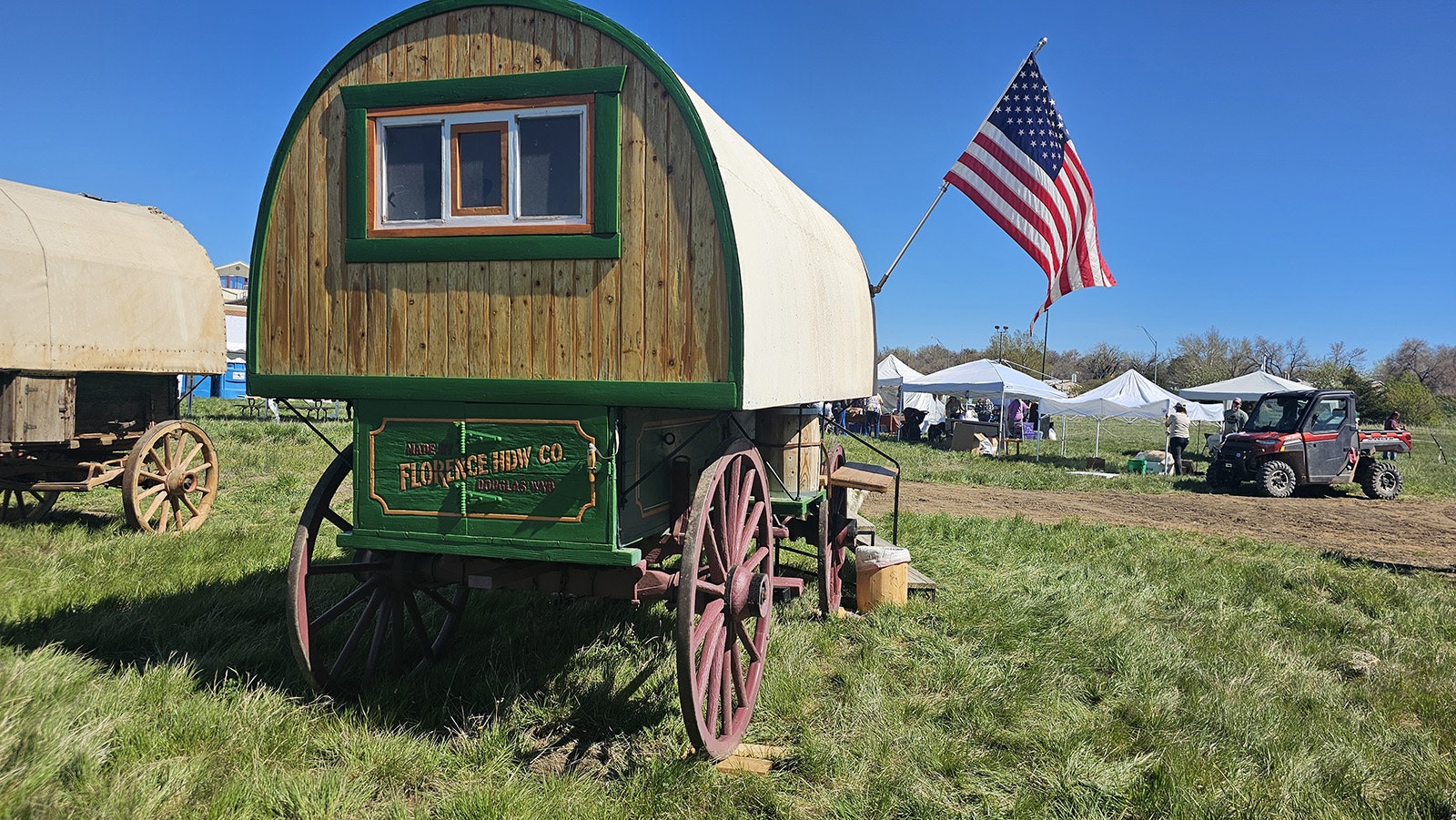
This year’s festival had more than double last year’s number of sheep wagons at nine, ranging from new sheep wagons by a sheep wagon builder out of Buffalo to The Pearl, a sheep wagon from Douglas that’s won ribbons from the Wyoming State Fair.
These were the tiny homes of yore on the prairie, and they’ve had quite a resurgence in popularity.
It’s easy to see why. For a tiny space, they pack a punch with one of the most efficient arrangements possible.
Though there are stylistic differences between makers, typically there’s a bed across the back end of the 6-foot-wide by 12-foot-long wagon, with a little window for ventilation.
Hooks could be hung at either end of the bed to hold a few items, others have little shelves about right for setting up a small picture frame.
There are often drawers on either side of the bed frame. The drawers face out toward the entrance and are about right for holding a set of clean clothes for the next day. The drawer on the other side might hold a bar of soap, washcloth, and toiletries.
A tiny table slides out from the bed, making a perfect spot to sit in the morning on the bench-style seating to drink some coffee. The benches run along both sides of the wagon.
The table’s equally good for dinner at night, and a game of checkers or chess afterward.
In the corners of the entryway, there’s typically a pantry area, with some cupboards to hold dishes and a few staple items on one side, and a wood stove and sink on the other side. The stove can double as a cooking surface and as heat in the winter.
Those are the typical features of a sheep wagon. But endless variety is possible, layered on top of the basics.
“They’re like fingerprints,” Rodriguez said. “All the same idea, but so very, very different.”
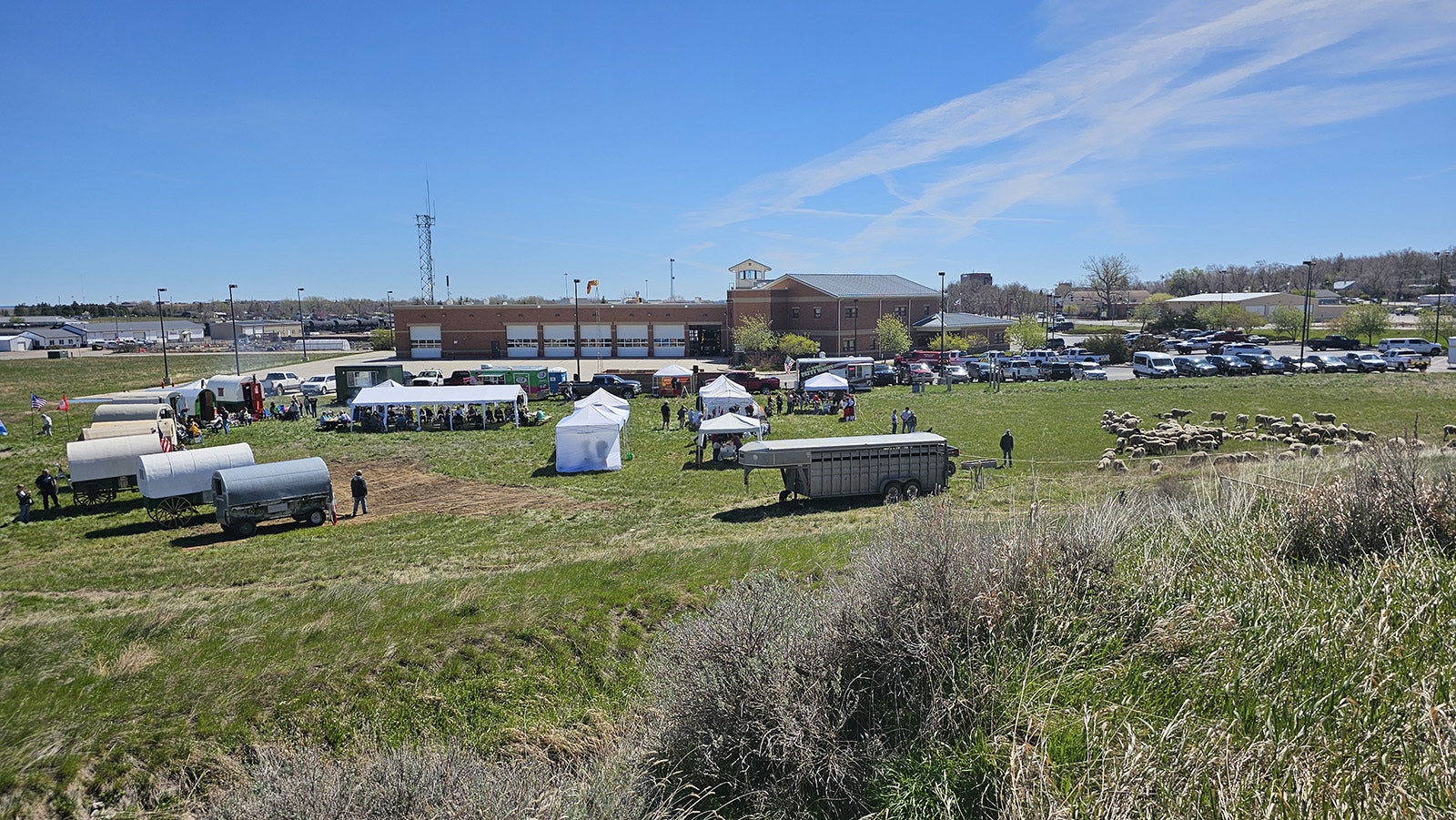
Gillette's third annual Sheepherding Festival included sheep wagons, left, and a herd of sheep, right. In the center, Basque sausages were being served for lunch, and a Basque poet and accordion player were entertaining a crowd. (Renee Jean, Cowboy State Daily) 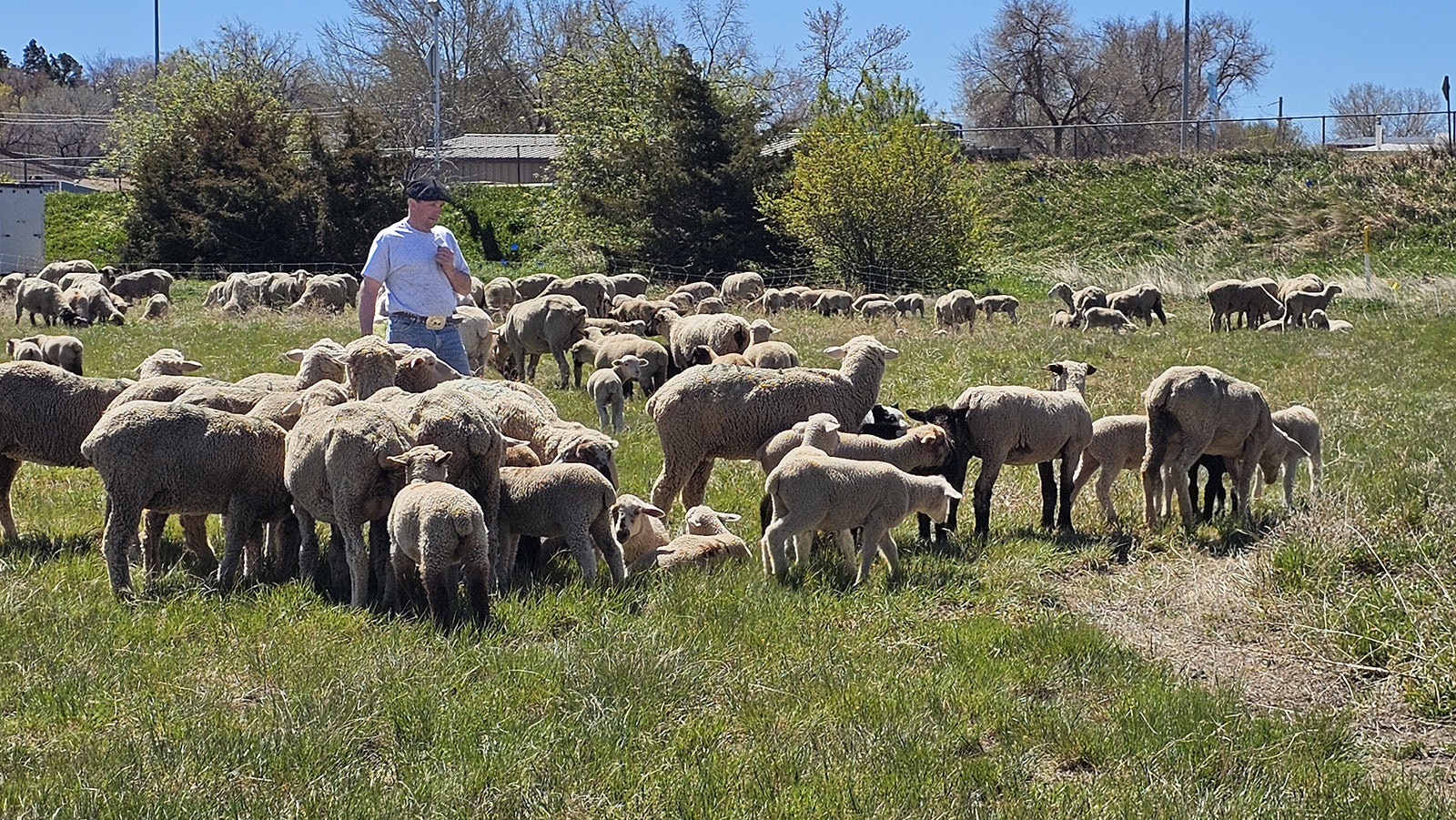
Mike Miller among his sheep at Gillette's third annual Sheepherding Festival. (Renee Jean, Cowboy State Daily) 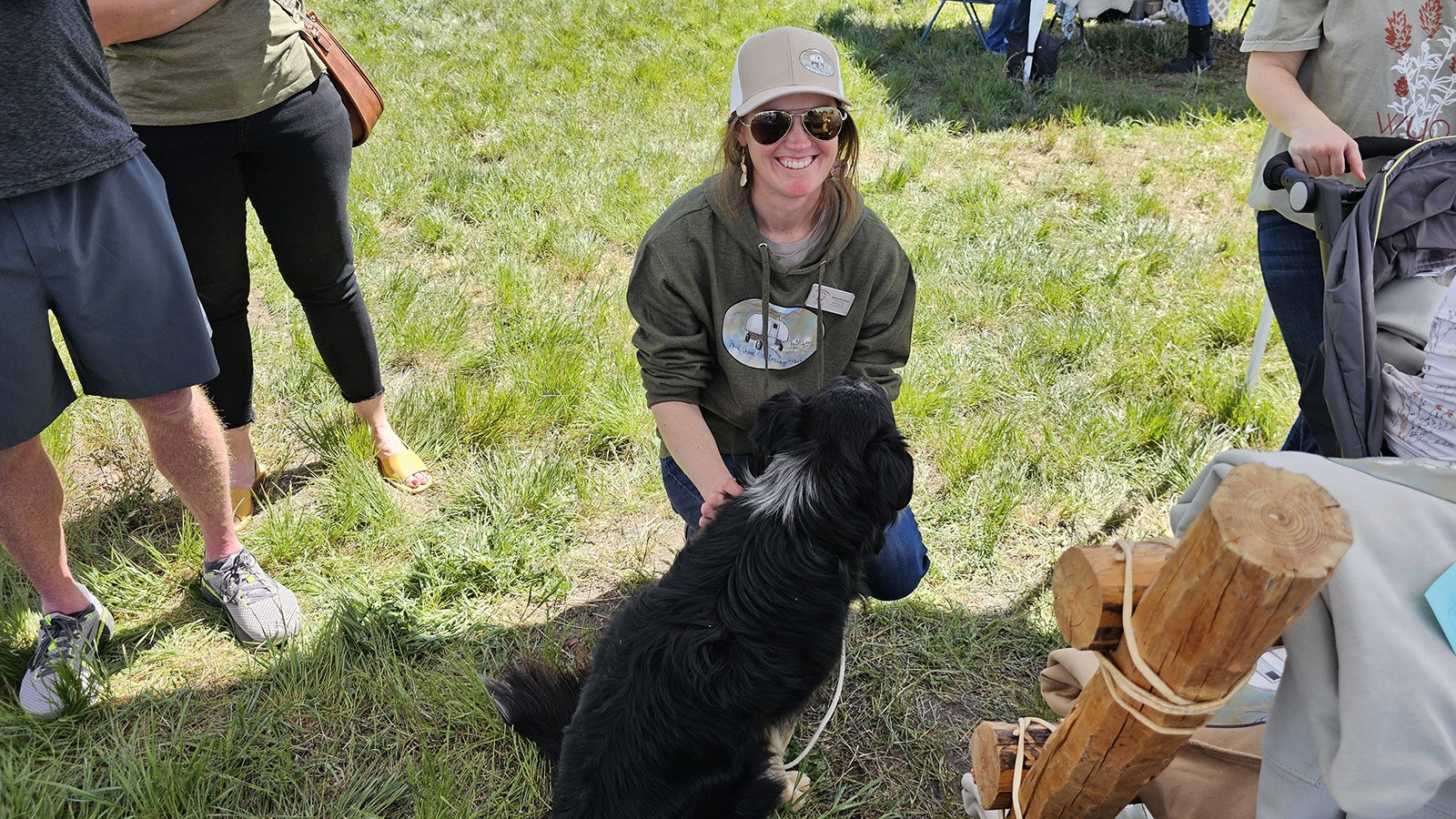
Marie McClaren, of Kemmerer, was among vendors at Gillette's third annual Sheepherding Festival. (Renee Jean, Cowboy State Daily) 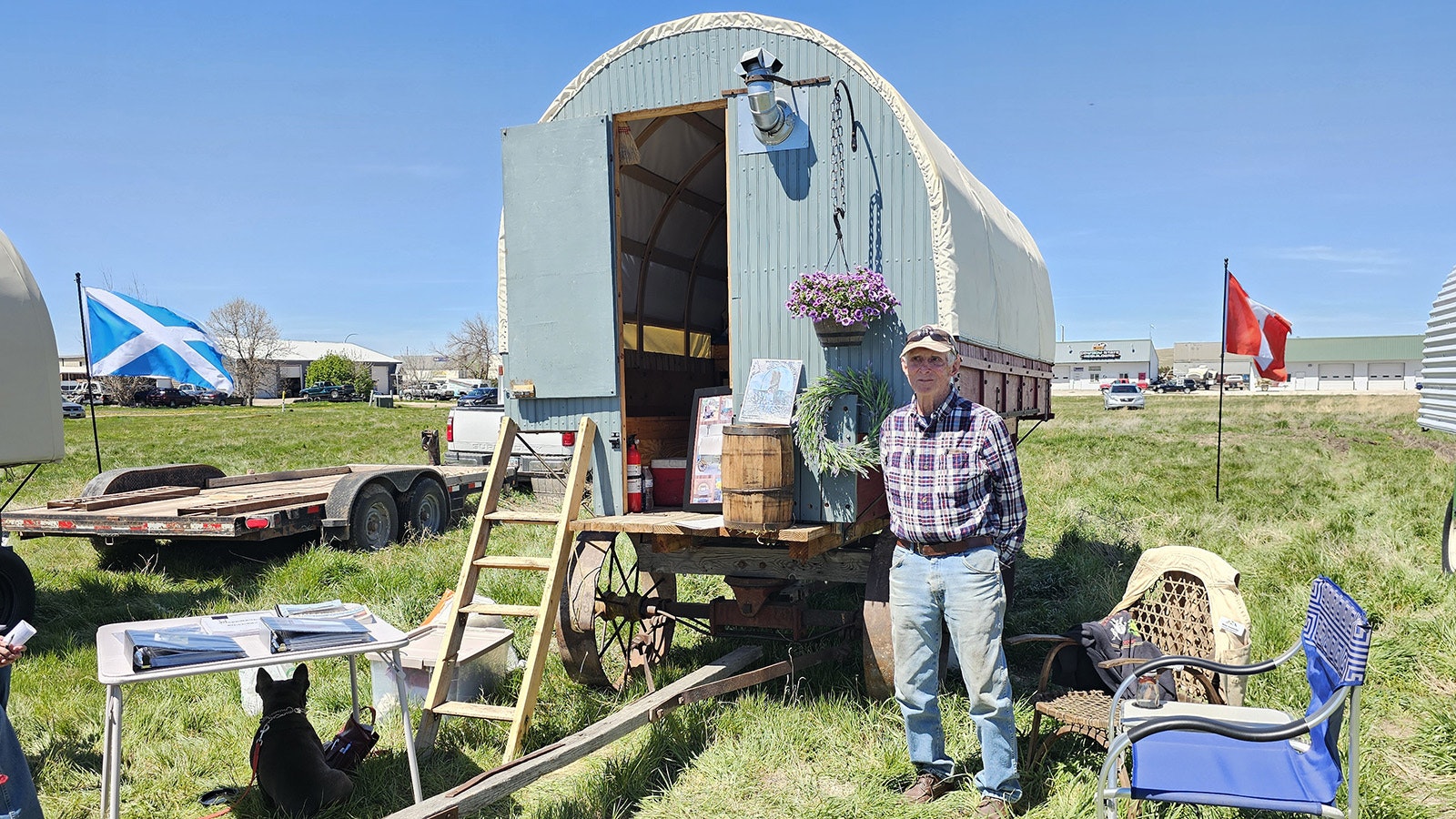
Sheep wagons are a Wyoming invention, and people were showing theirs off at Saturday's festival in Gillette (Renee Jean, Cowboy State Daily) 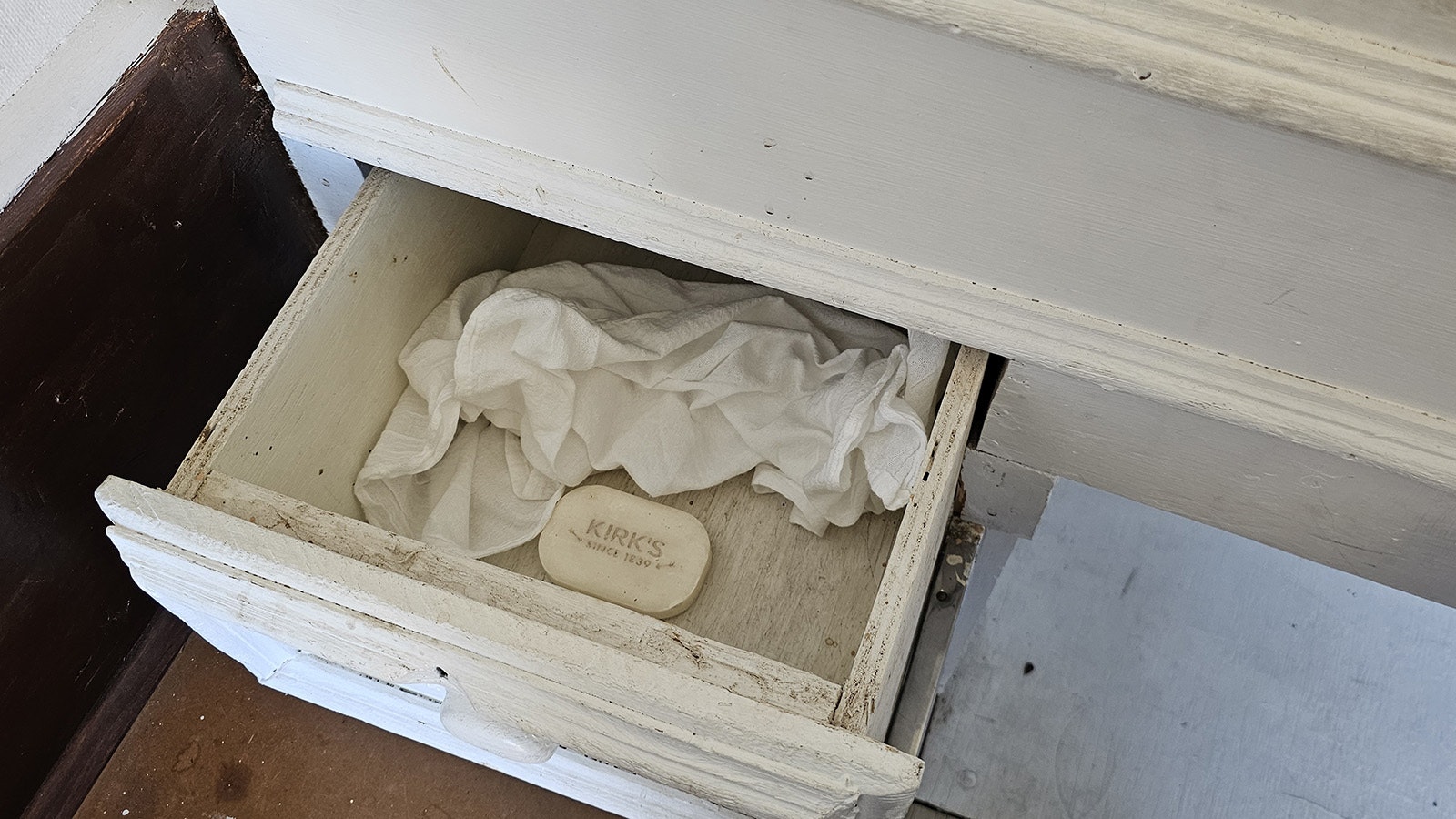
A drawer at the righthand side of the bed in a sheep wagon displayed at Gillette's third annual Sheepherding Festival. It holds soap and a towel. (Renee Jean, Cowboy State Daily) 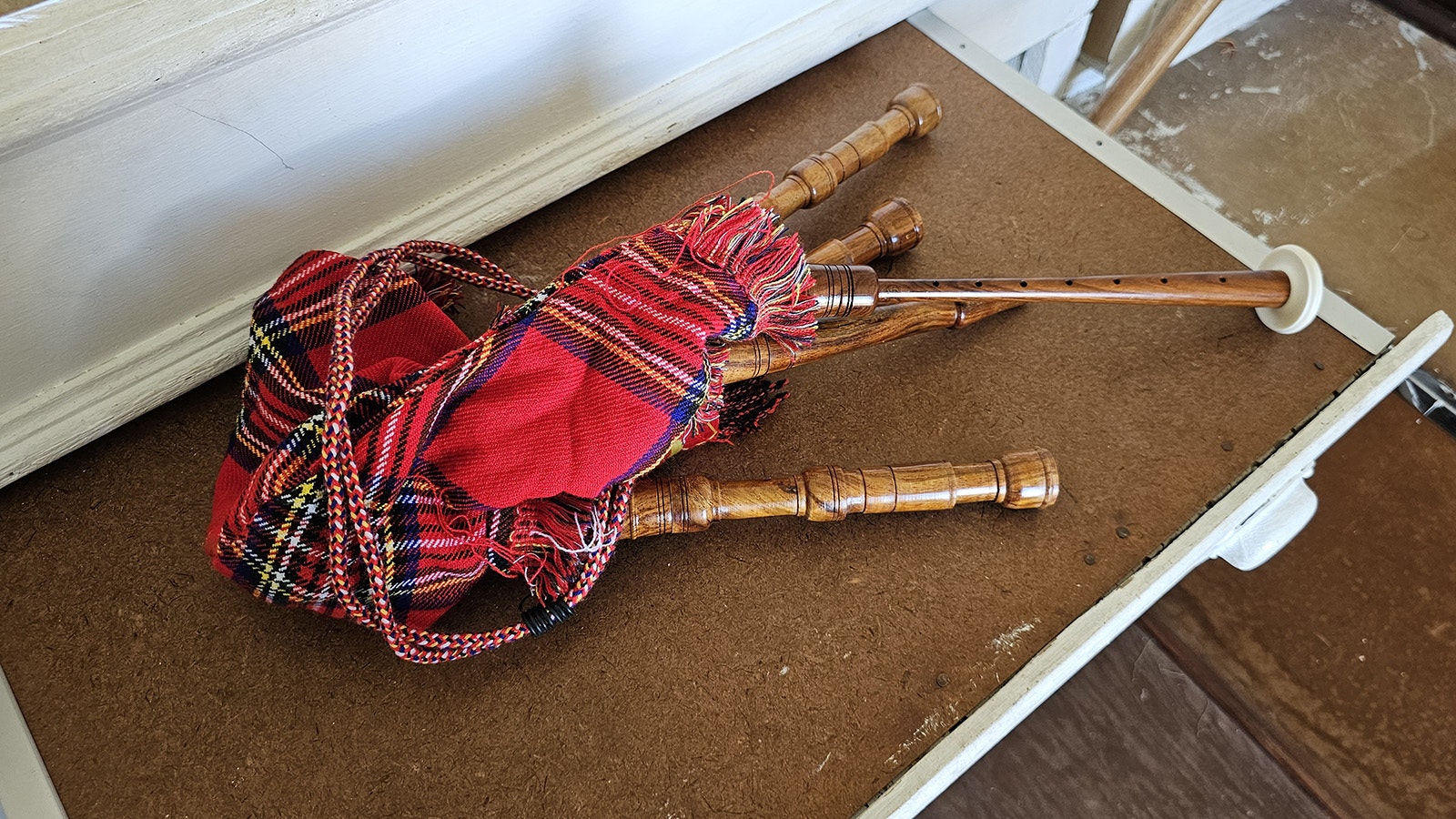
A set of Scottish bagpipes inside a sheep wagon at Gillette's third annual Sheepherding Festival. (Renee Jean, Cowboy State Daily) 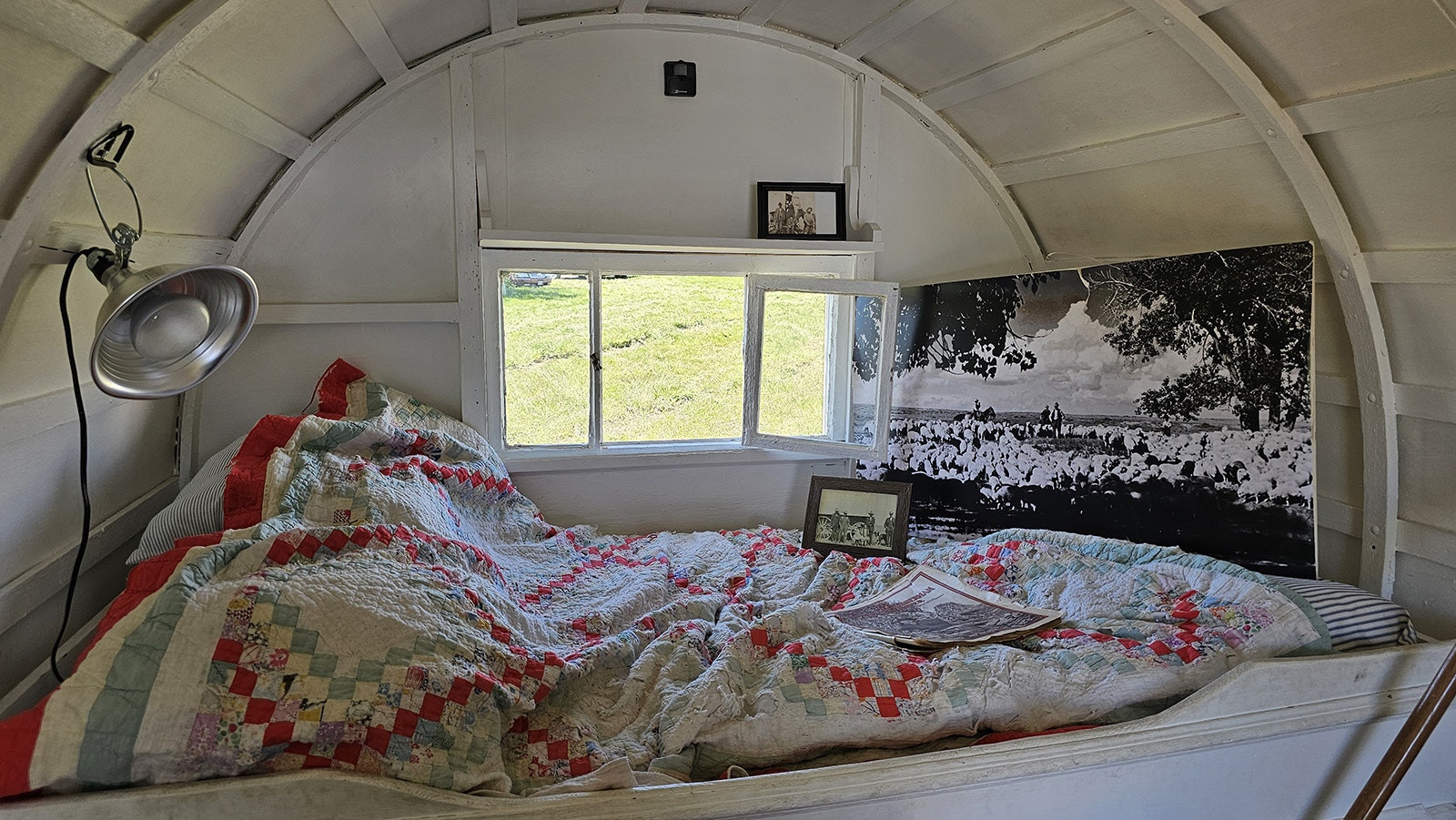
Pictures of the old days in a sheep wagon displayed at Gillette's third annual Sheepherding Festival. (Renee Jean, Cowboy State Daily) 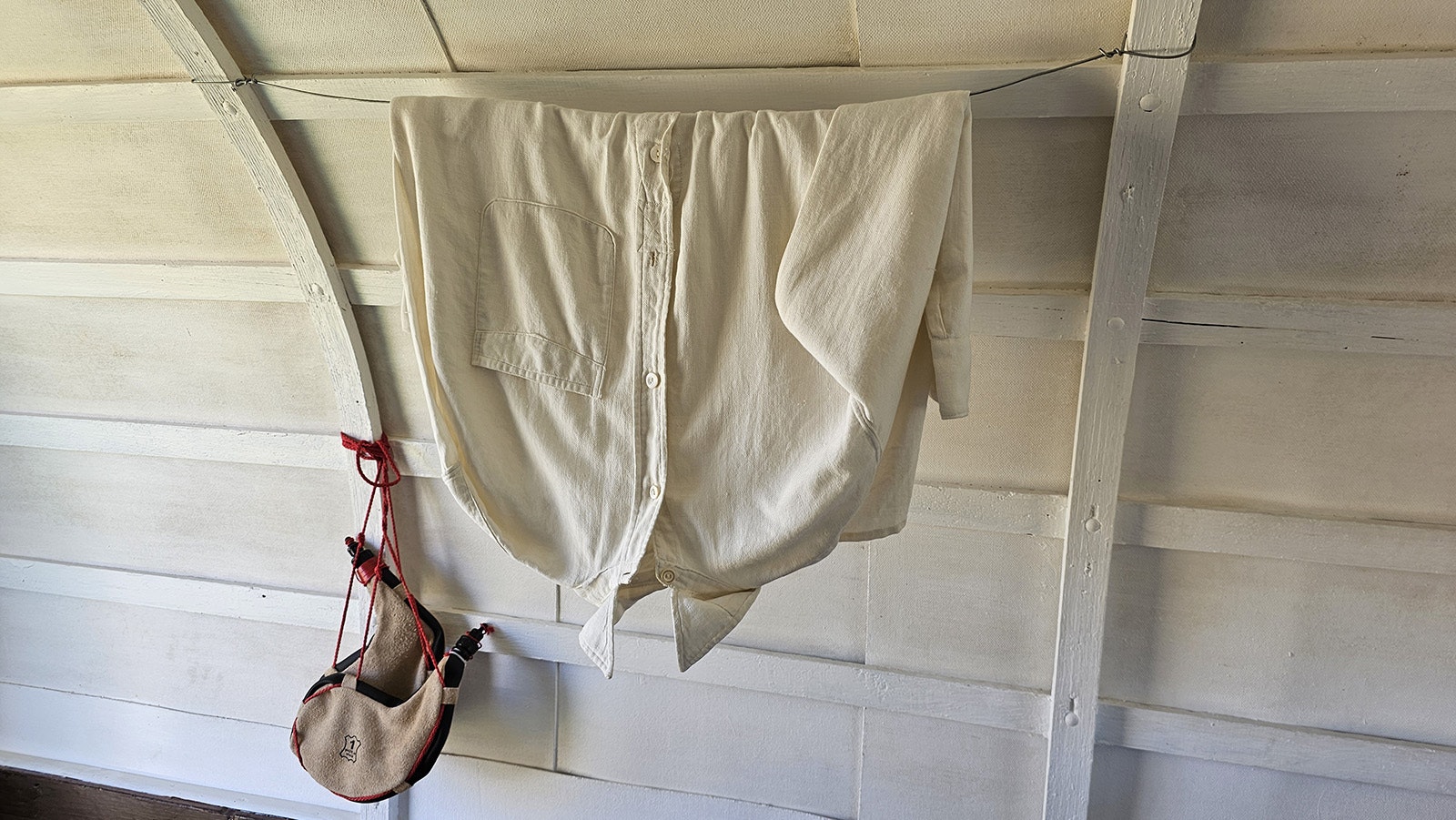
Every bit of space is used, like stringing a wire to hold the next day's shirt. (Renee Jean, Cowboy State Daily) 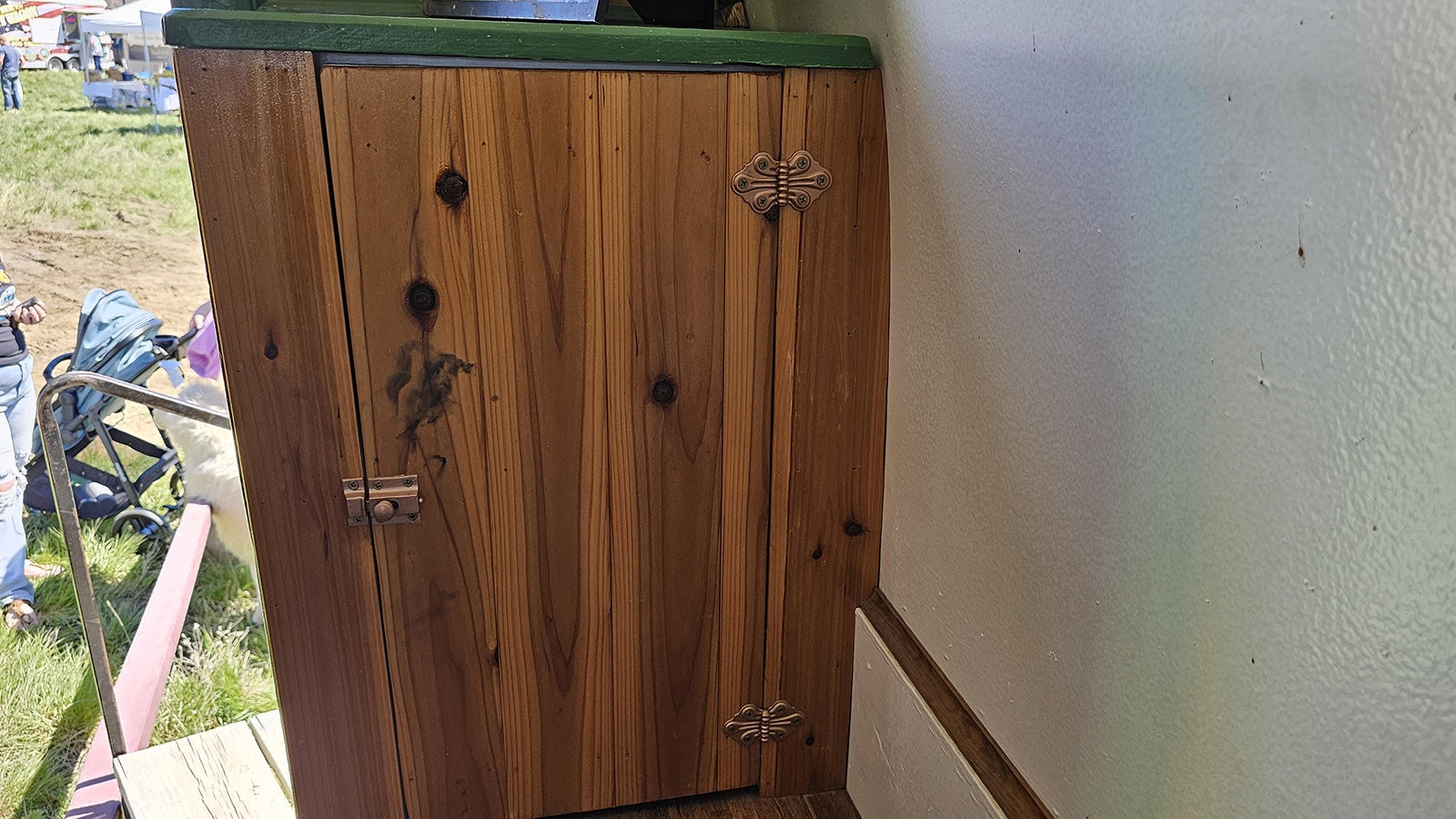
A cupboard inside The Pearl holds pantry items securely for the journey ahead. (Renee Jean, Cowboy State Daily) 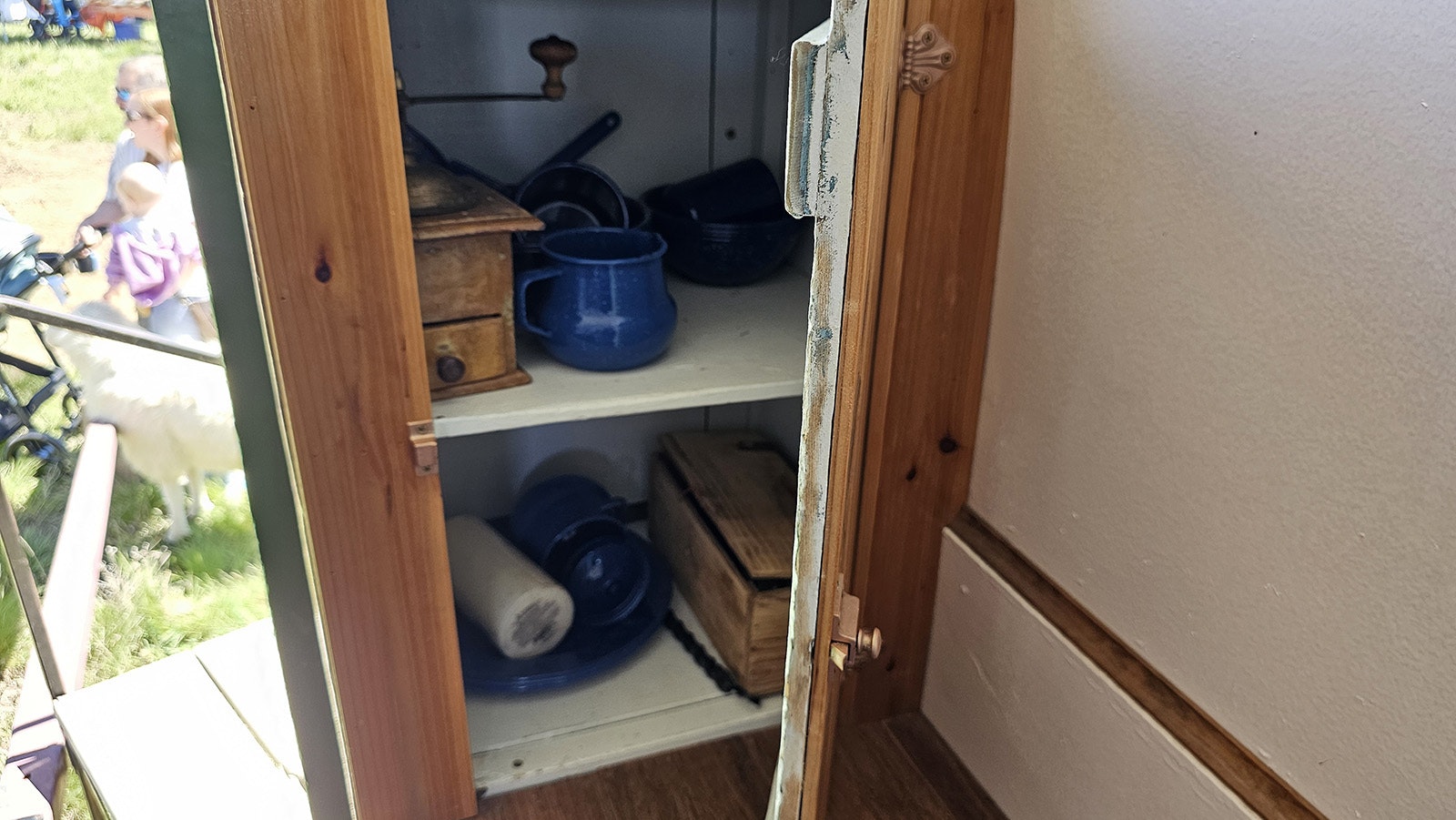
Inside the cupboard on The Pearl, some coffee cups, a coffee grinder, and other dishes. (Renee Jean, Cowboy State Daily) 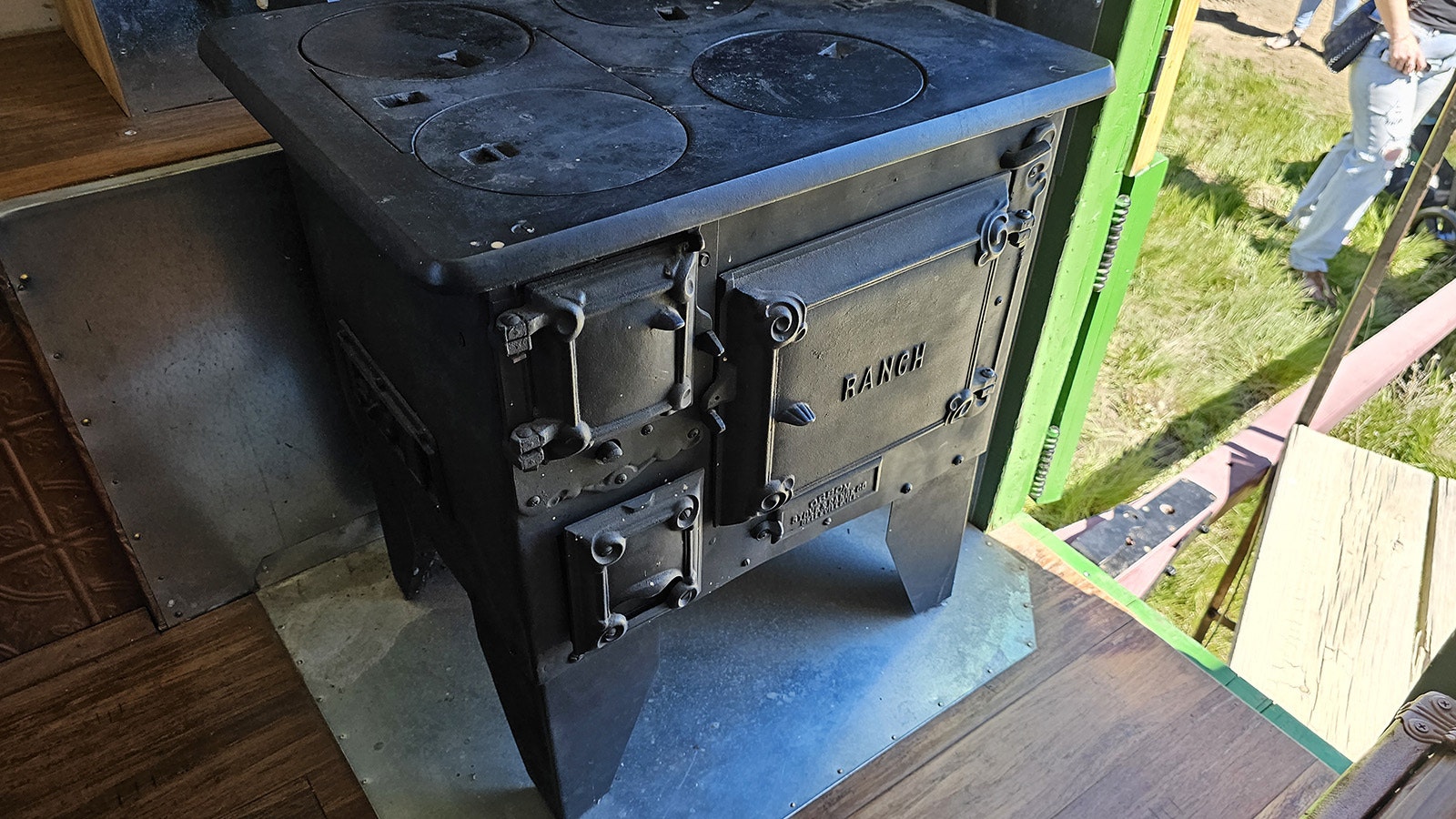
The stove in The Pearl doubles as a heat source and a cooking surface. (Renee Jean, Cowboy State Daily) 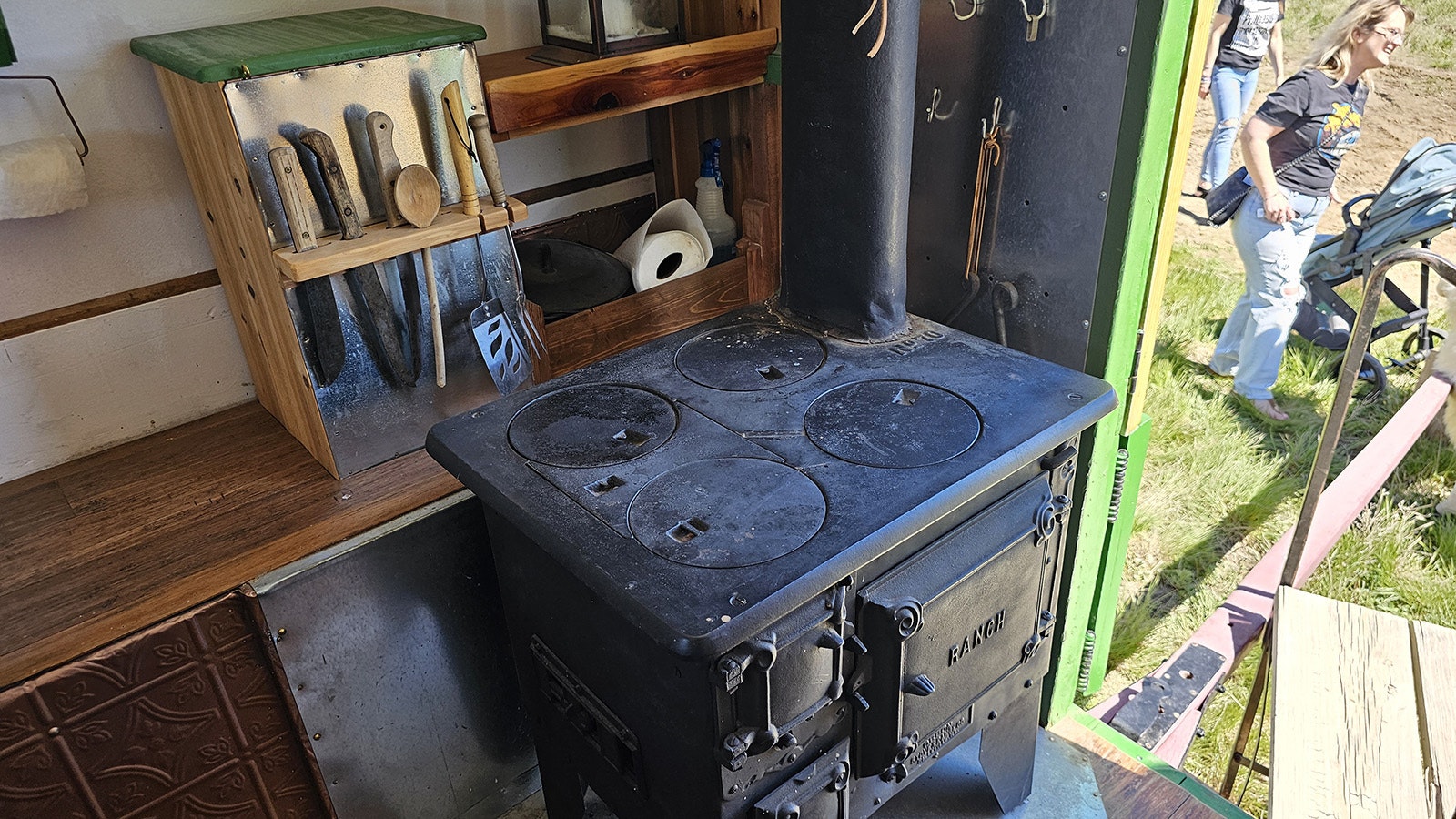
The stove in The Pearl doubles as a heat source and a cooking surface. (Renee Jean, Cowboy State Daily) 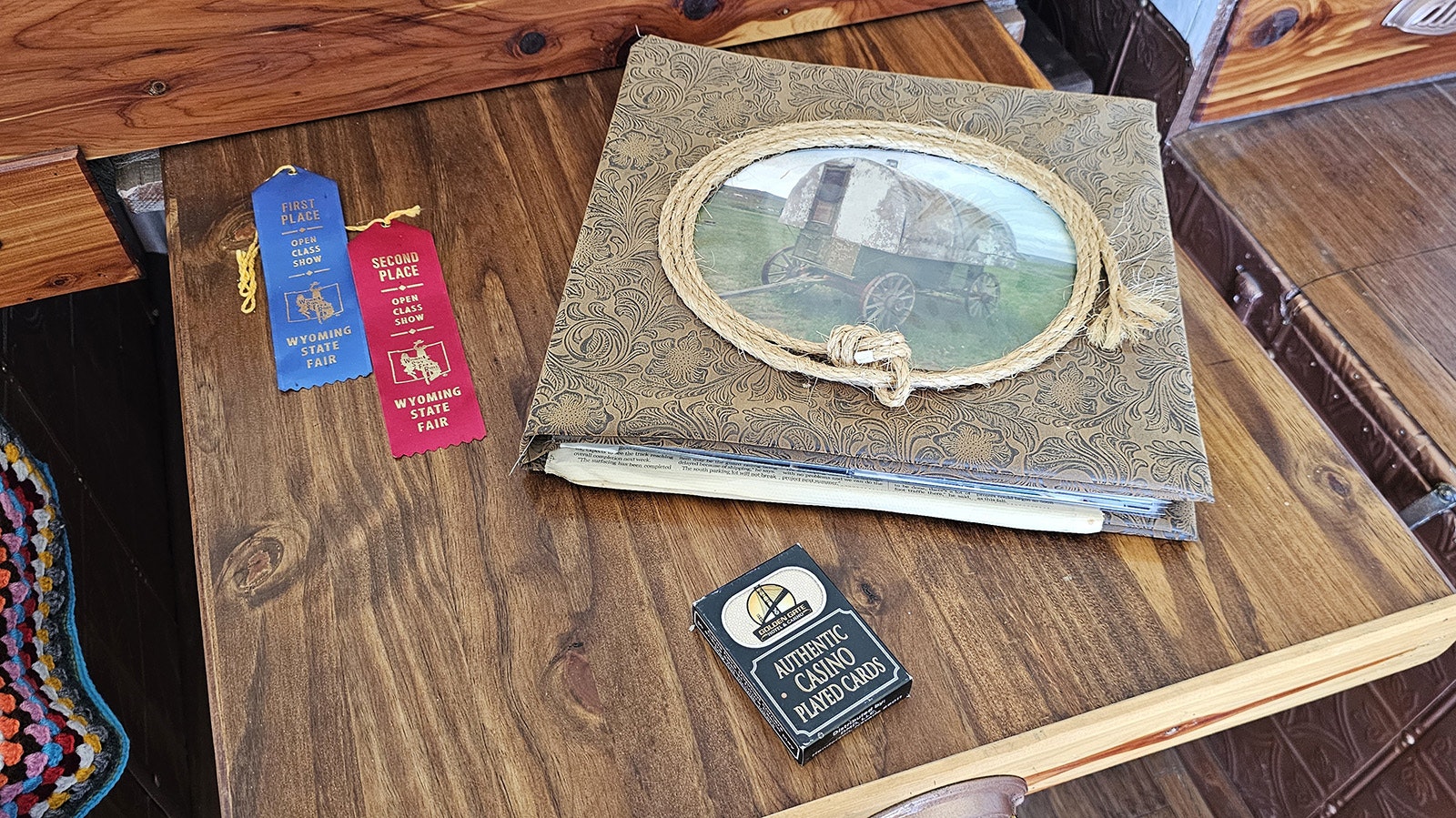
A scrapbook about The Pearl, along with two of its Wyoming State Fair ribbons. (Renee Jean, Cowboy State Daily) 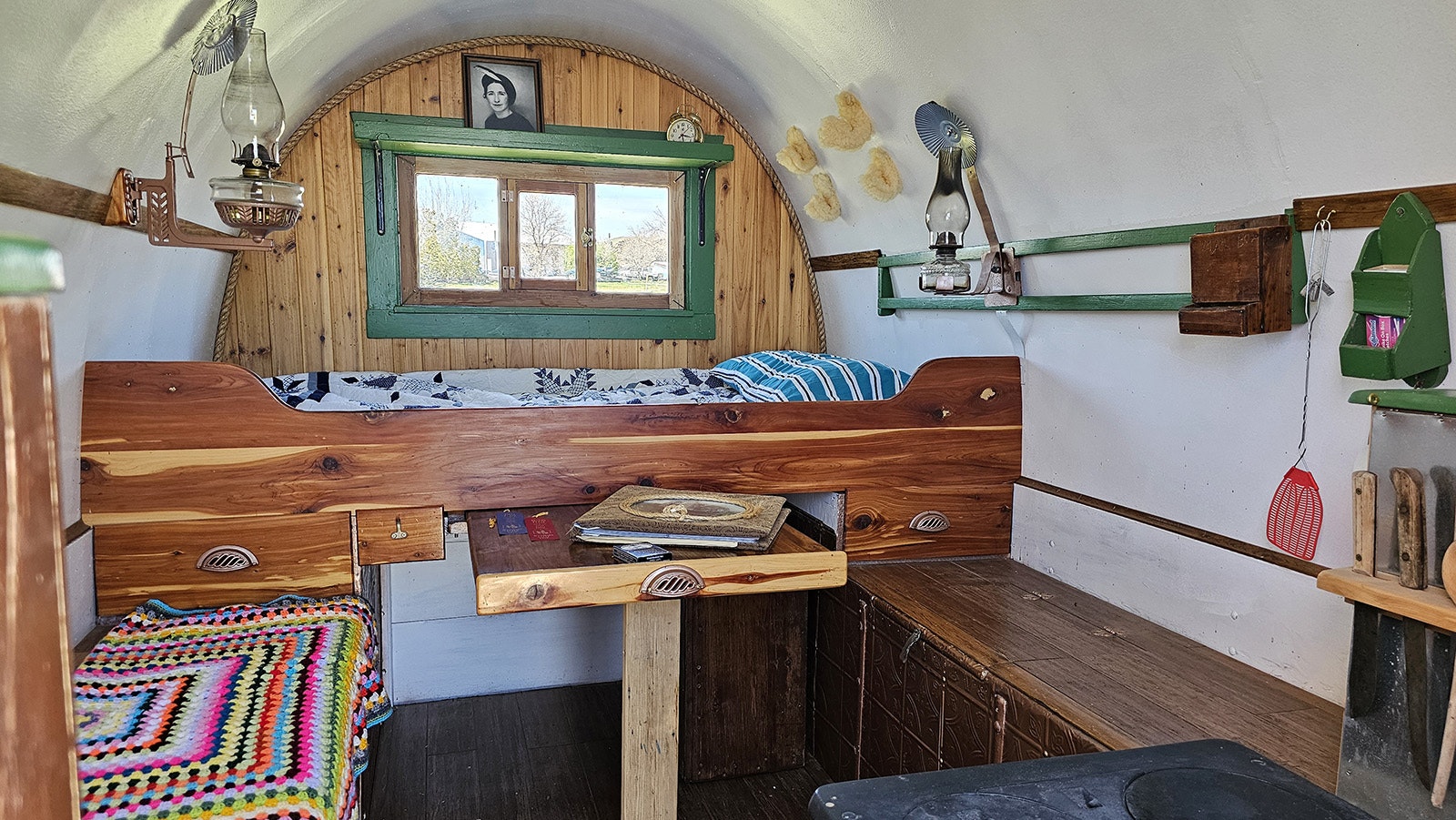
Inside The Pearl, a sheep wagon owned and restored by Doug Mickelson. (Renee Jean, Cowboy State Daily)
They Wrote The Book
Sheep wagons were invented in Wyoming around 1884, though scholars still debate who was first. Some credit James Candlish of Rawlins, while others credit Frank George of Douglas.
One of the scholars involved in that debate was the late Jim O’Rourke, who was helping write a book titled “Sheepwagon Builders,” with Tom Lindmier of Hulett and Richard “Rick” Kaan of Hot Springs, South Dakota. The three all met at one of Steve “Shakey” Shadwick’s sheep wagon festivals at the Wyoming State Far.
Lora and Jim had been collecting sheep wagons since 1987, pulling their first one off the Jack King Ranch in the Henry Mountains of Utah in the 1980s.
Many of their wagons, though, are from Wyoming, and the couple traveled across the state frequently in their quest to preserve sheep wagon history. In fact, Jim O’Rourke was in Wyoming last November at the Hot Springs County Museum in Thermopolis, to see if he could figure out who made the museum’s sheep wagon. A definitive answer wasn’t reached, though Jim saw several signs that pointed to J. Wessel of Worland.
In addition to criss-crossing Wyoming, they’ve covered many other states as well, like Utah, South Dakota, Washington, Idaho and Montana. Lora said they traveled more than 5,000 miles in Wyoming and Utah alone in their search for historic wagons.
This summer, Lora plans to go to the museums in southern Idaho and part of Nevada to continue her husband’s work, cataloguing sheep wagons along the way, and writing up what history is known about each wagon she finds.
A New Sheep Wagon Museum
Lora is also working on setting up a museum in Nebraska that will house the 23 sheep wagons she and her husband spent a lifetime collecting.
“The museums across Wyoming don’t really have the room or the capacity to take this project on,” she said. “So, we decided well, let’s add on to the building we have. And so we did that. A wonderful Amish group built the building, enclosed it all and put a concrete floor down.”
All of the refinished wagons have been put inside the building, so they’re protected from the elements, including an A.C. Rice Hardware and Lumber Co. wagon from Douglas, and a J. E. Schulte and Sons wagon from Casper.
“We are essentially making a museum,” Lora said. “And as we develop it down the road, you know, it’s we’re preserving that history, and we want to make sure that each maker is preserved.”
The last sheep wagon Jim and Lora bought was likely a J. O. Gifford sheep wagon from Worland. It came from Bobby Breaker in Ten Sleep. But the day Jim died he was cutting poplar wood to restore a sheep wagon he’d found in Casper that he thought might be a Madsen.
Donations have been made to help complete publishing of “Sheepwagon Builders,” Lora told Cowboy State Daily, and she hopes it will be a resource for anyone who wants to restore a sheep wagon and retain all of its defining historical characteristics, so that the original fingerprint of history remains.
Contact Renee Jean at renee@cowboystatedaily.com
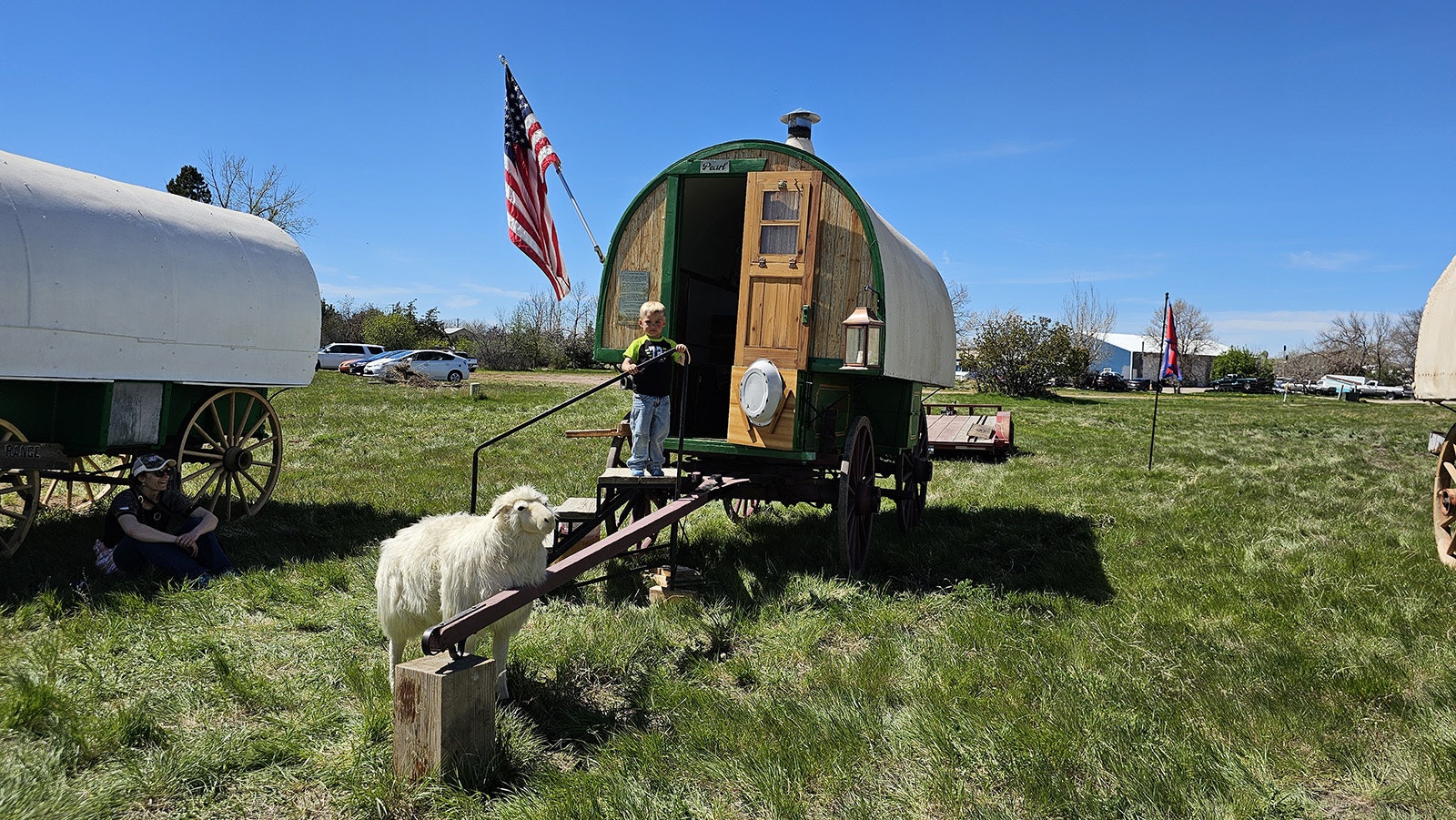
Sage Walker checks out The Pearl, a sheep wagon owned and restored by Doug Mikkelsen, while mom Jenna Walker looks on. The wagon was one of nine on display at Gillette's third annual Sheepwagon festival. (Renee Jean, Cowboy State Daily) 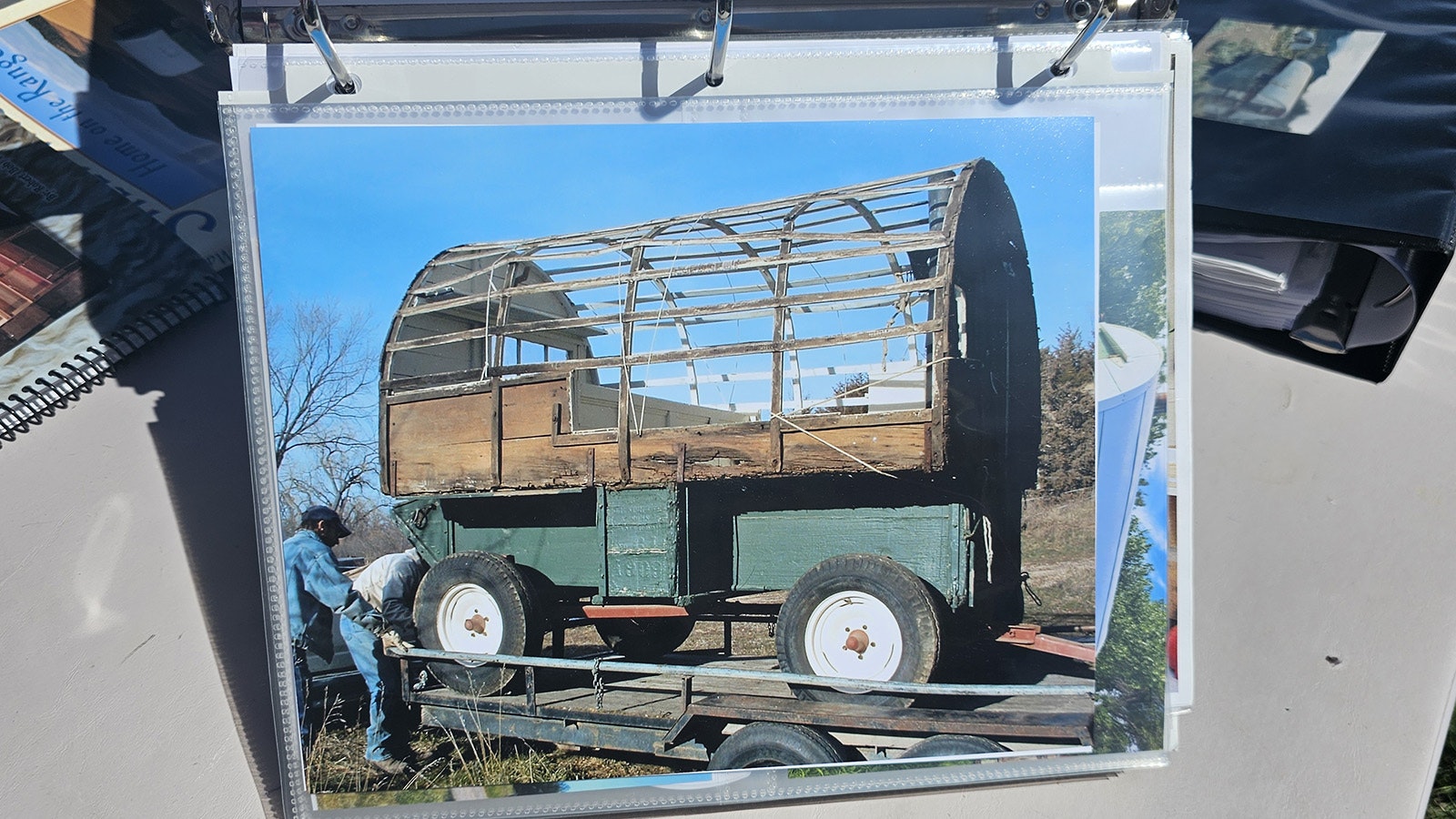
Loading up a sheep wagon that Lora and Jim O'Rourke planned to restore. (Renee Jean, Cowboy State Daily) 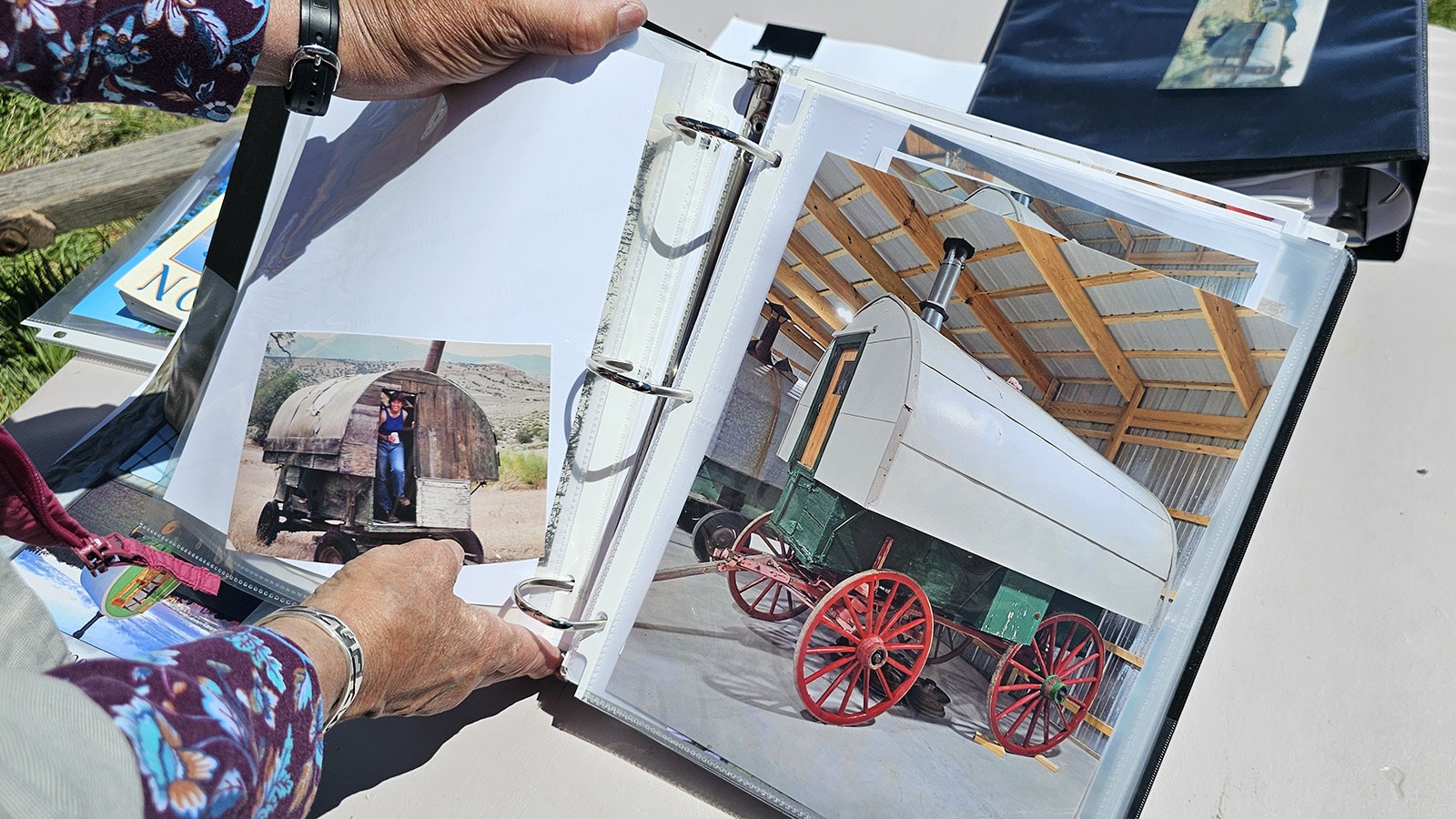
A sheep wagon from Casper that Jim and Lora O'Rourke restored. (Renee Jean, Cowboy State Daily) 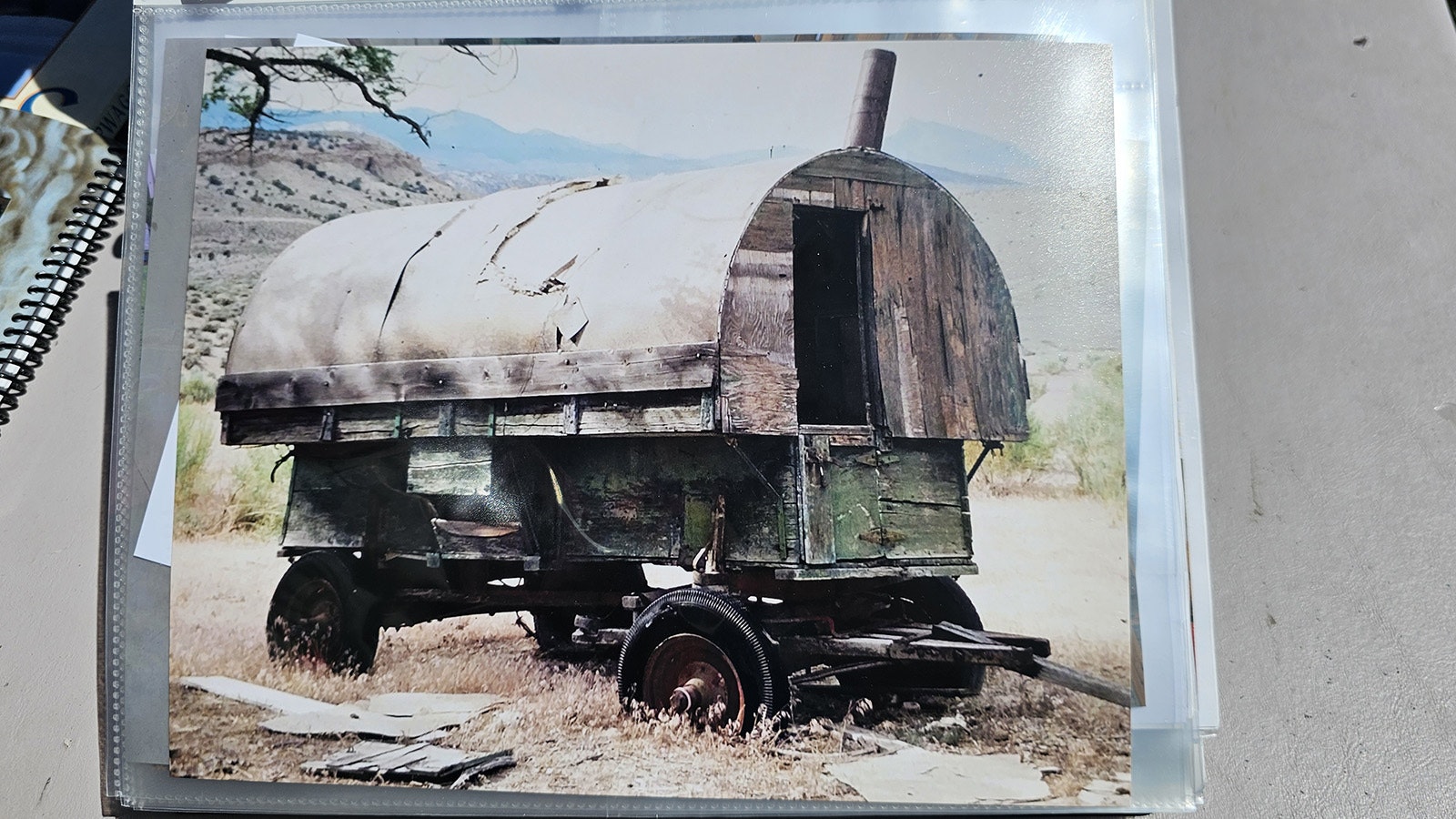
One of the first sheep wagons Lora and Jim O'Rourke worked on restoring. (Renee Jean, Cowboy State Daily) 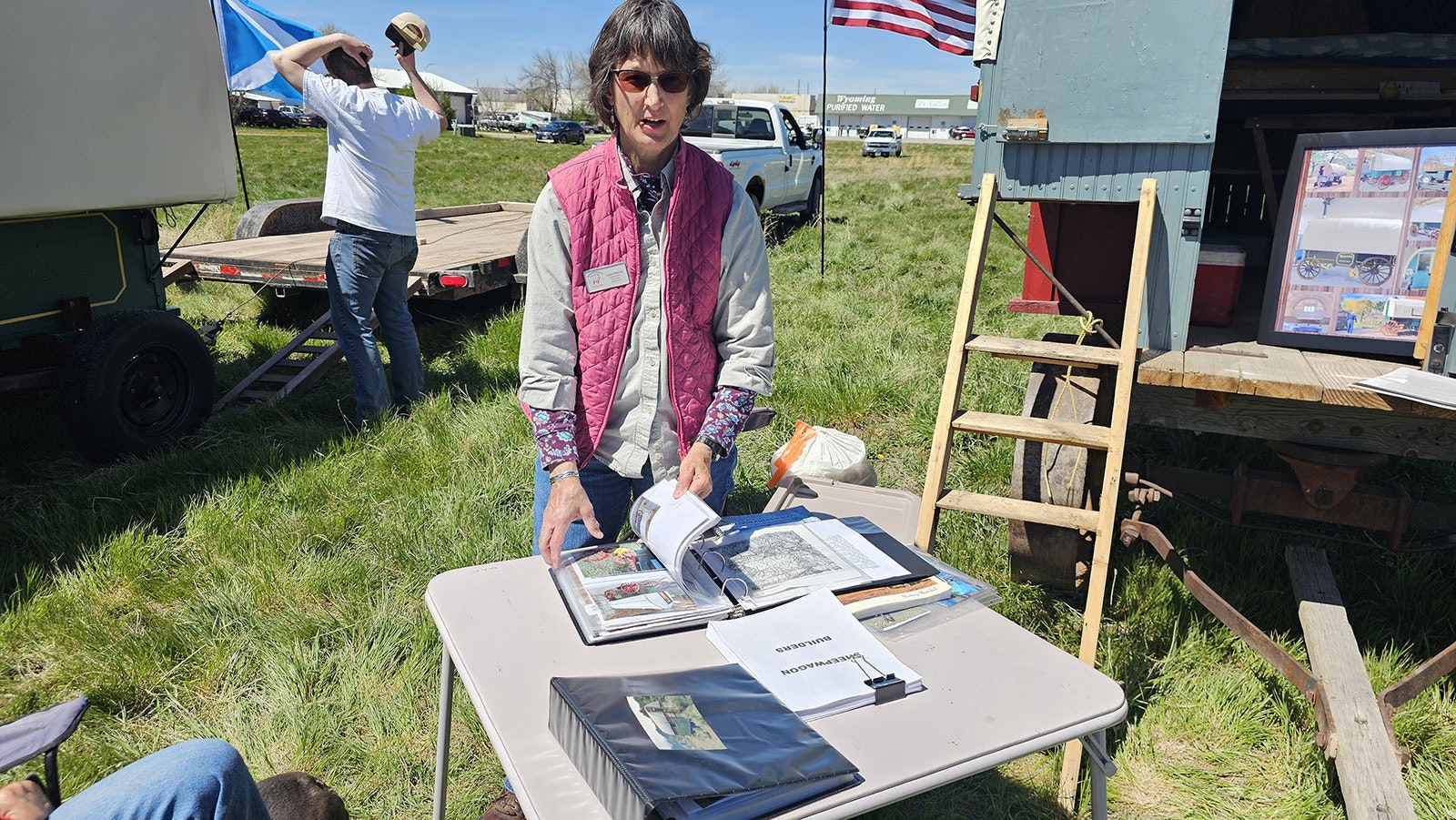
Lora O'Rourke and her husband, the late Jim O'Rourke, spent a lifetime restoring sheep wagons, many of them from Wyoming. She was among those at Gillette's third annual Sheepherder's Festival, to help celebrate sheep wagons and sheepherding history. (Renee Jean, Cowboy State Daily) 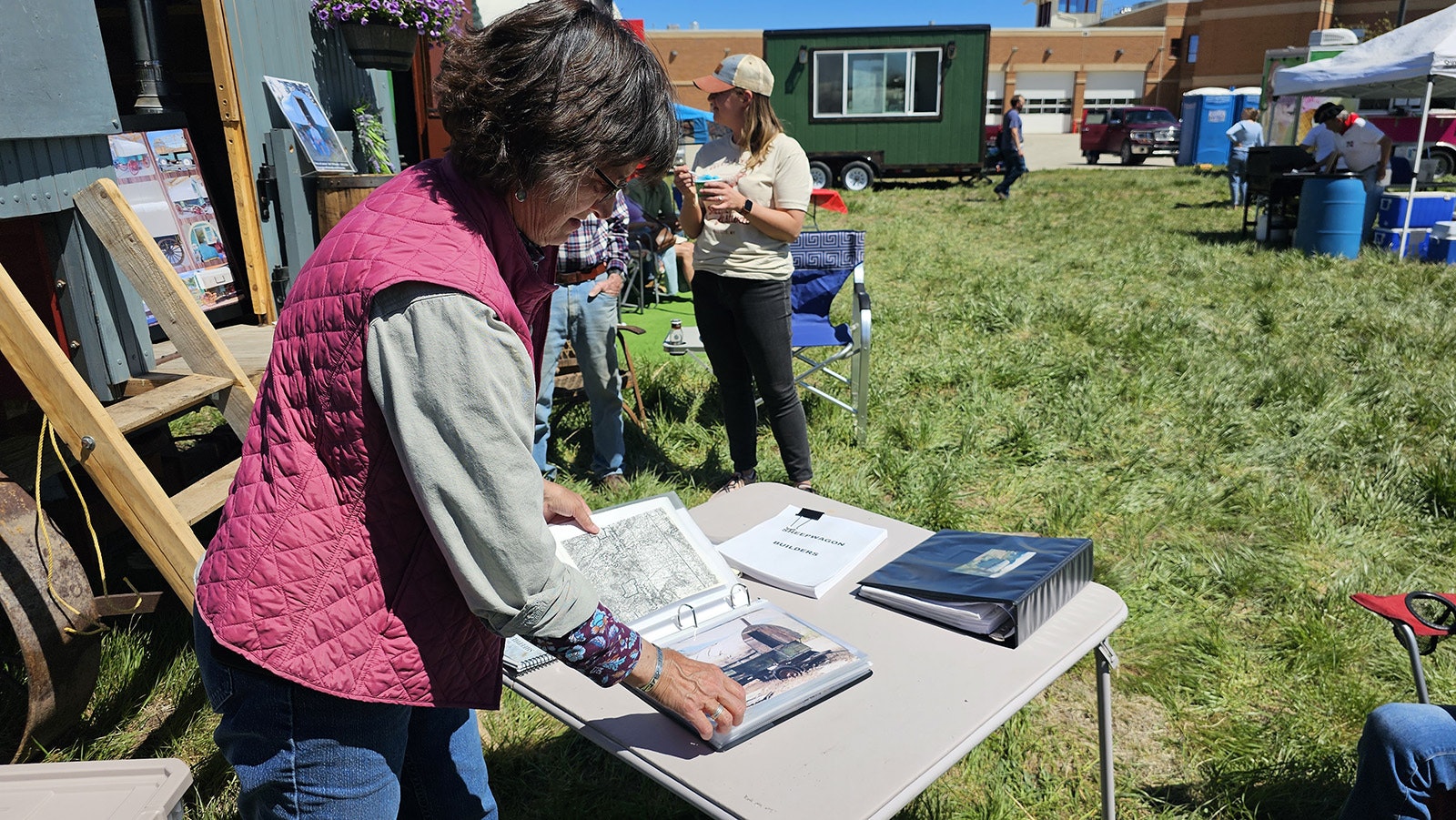
Lora O'Rourke looks through a scrapbook of sheep wagons she and her husband, the late Jim O'Rourke, have restored. Many of the wagons came from Wyoming. The wagons are going to become part of a museum on the O'Rourke's RUJODEN Ranch in Nebraska, two hours from Lusk, Wyoming. (Renee Jean, Cowboy State Daily) Sheep wagons are a Wyoming invention, and people were showing theirs off at Saturday's festival in Gillette (Renee Jean, Cowboy State Daily) 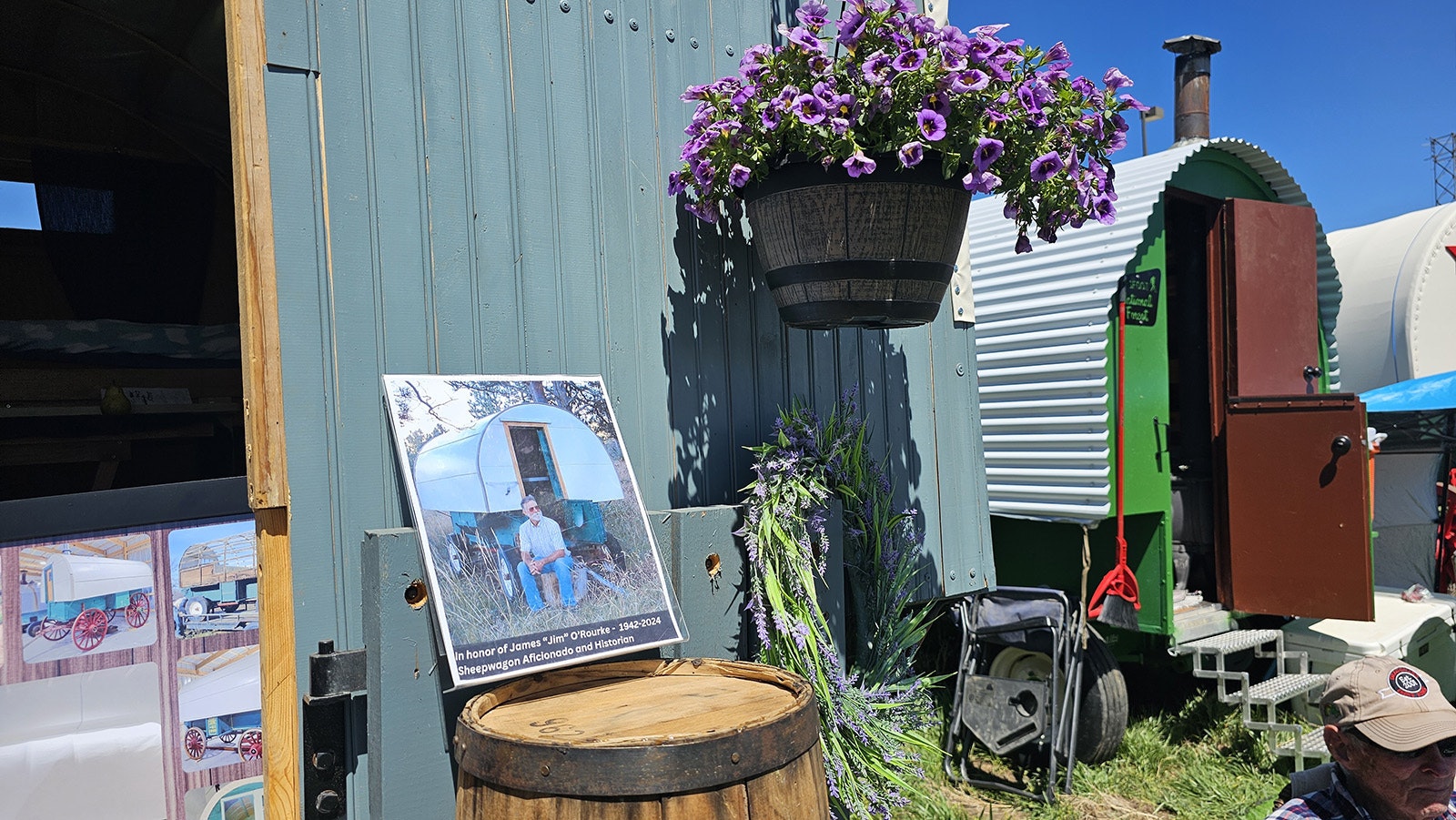
A memorial to Jim O'Rourke was set up at Gillette's third annual Sheepherding Festival. (Renee Jean, Cowboy State Daily) 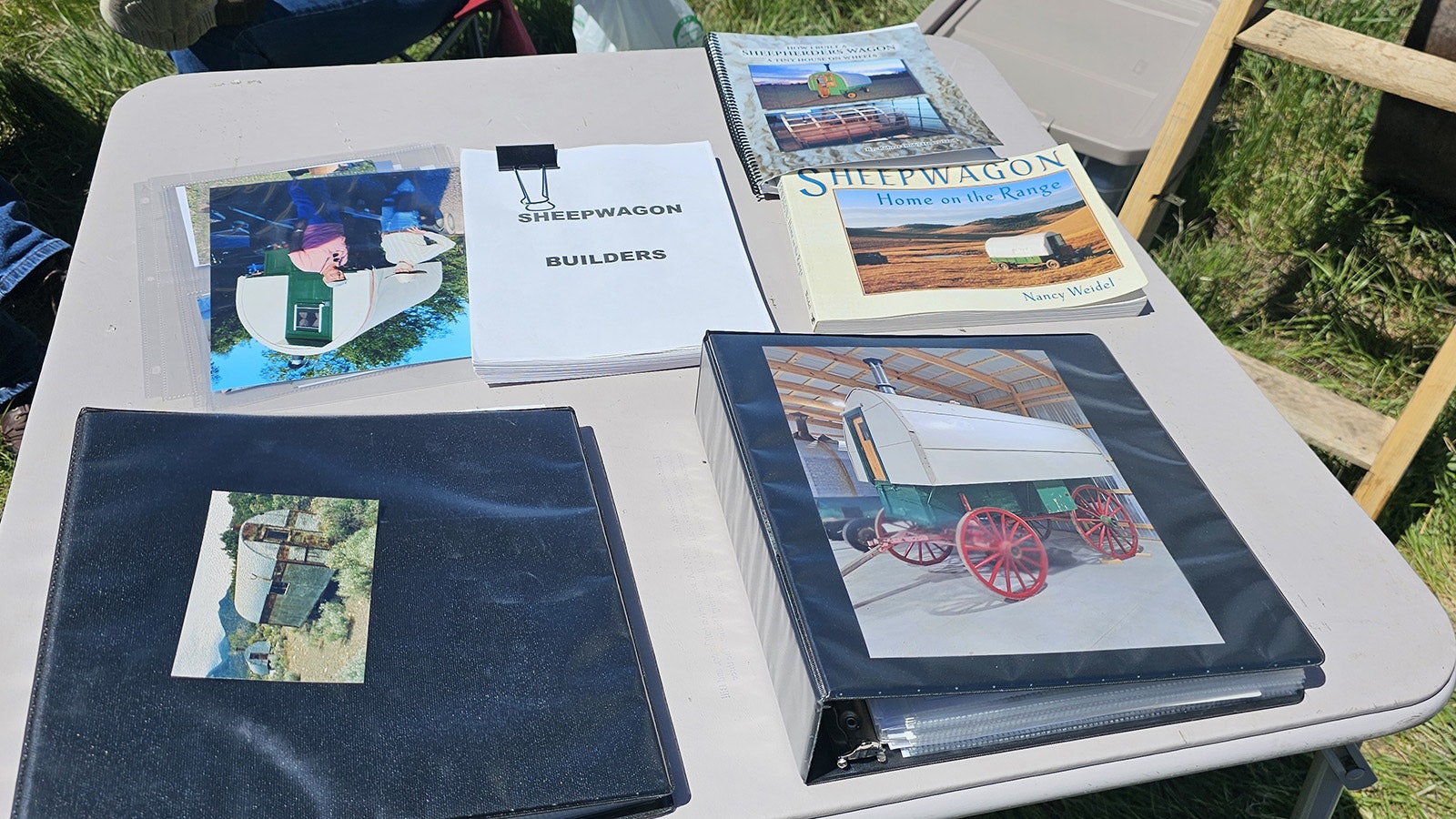
"Sheepwagon Builders," center, is a book in progress about the history of sheepwagons. Lora O'Rourke's husband was working on the book before he died, and she brought it to the festival to share with other sheepwagon enthuiasts. Around it are scrapbooks showing some of the sheepwagons Lora and Jim restored. (Renee Jean, Cowboy State Daily) 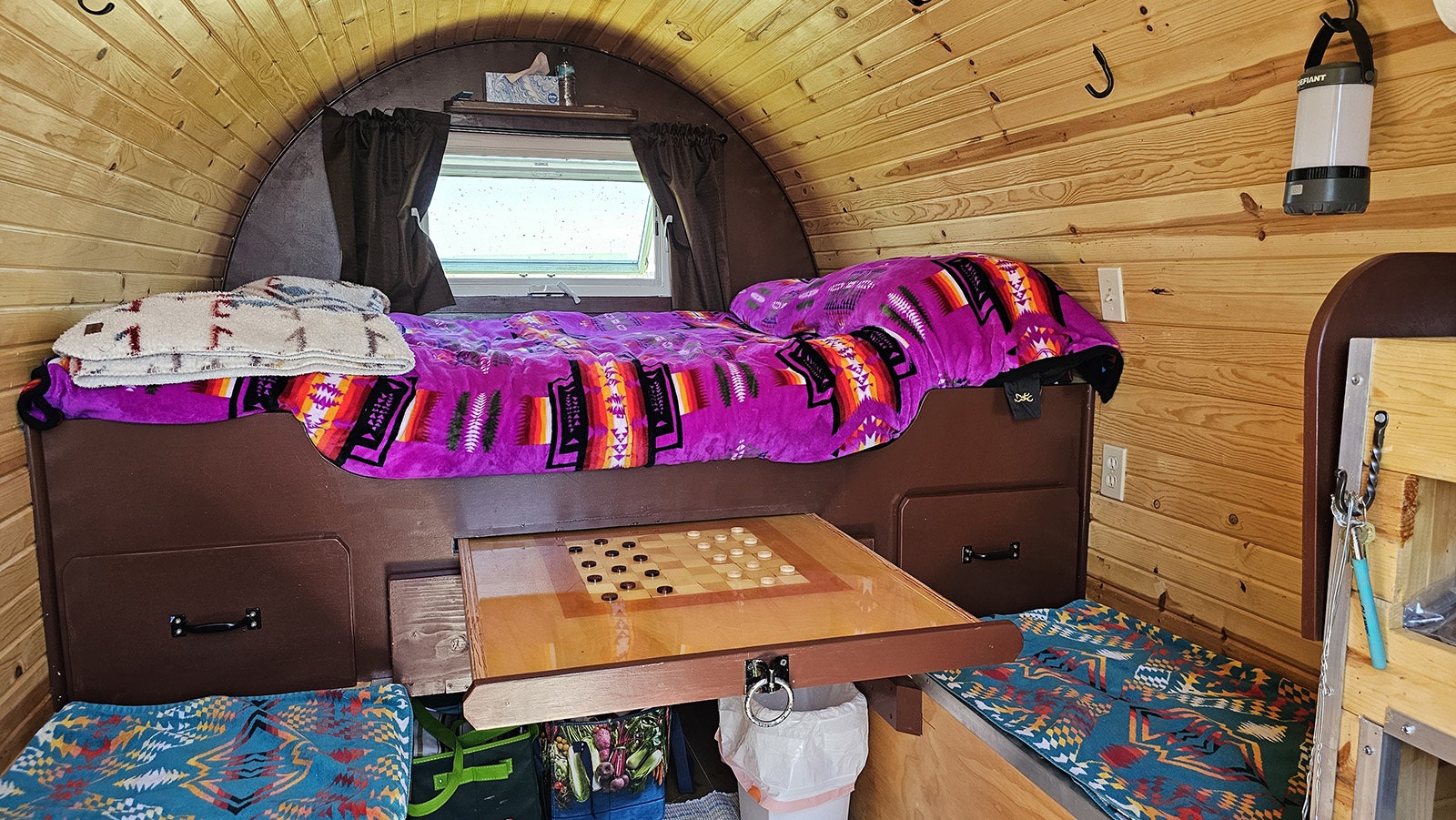
This table that pulls out from under the sheep wagon bed is perfect for a morning coffee, or a game of checkers after dinner. (Renee Jean, Cowboy State Daily) 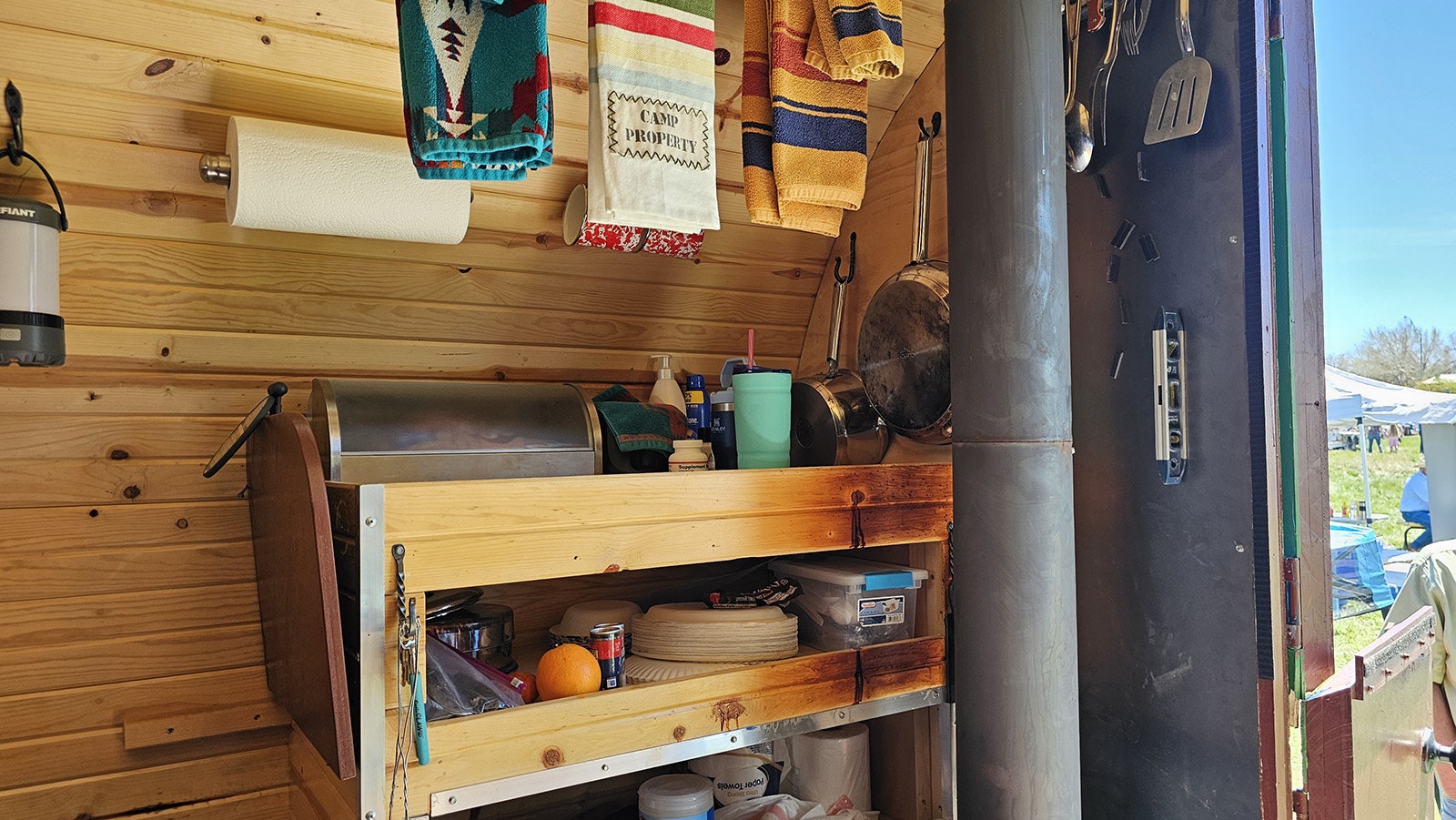
It may be small, but sheep wagons use ever inch of space with efficiancy. (Renee Jean, Cowboy State Daily) 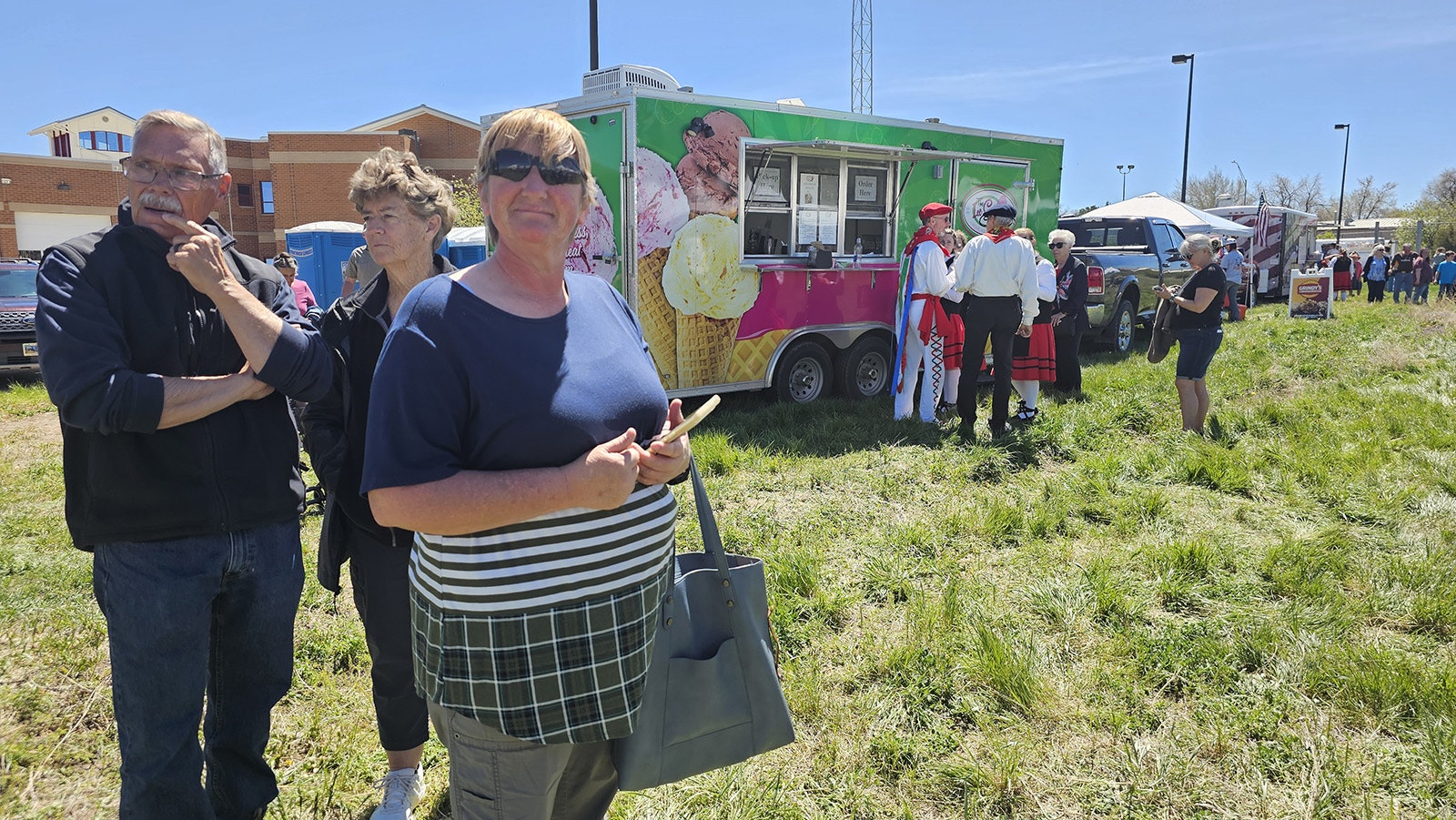
Terri Shugars waits in line to order some Basque sausages for lunch after spotting Gillette's sheepwagon festival from afar. In the background, a pair of Basque dancers are among those waiting in line for ice cream or sorbet from one of the food trucks on site. (Renee Jean, Cowboy State Daily) 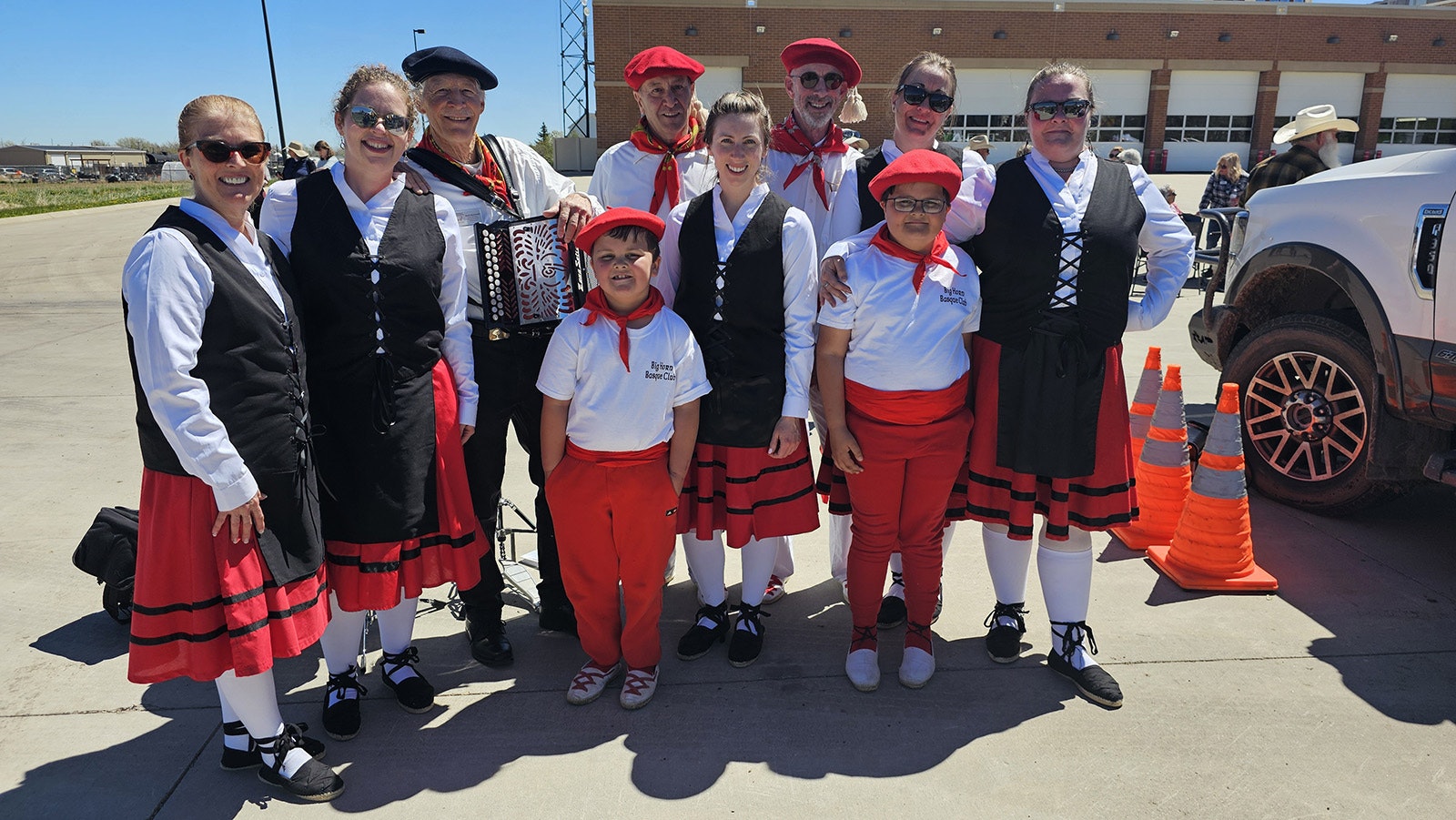
Basque dancers from Buffalo were among those at Gillette's third annual Sheepherding Festival to celebrate their culture and history. (Renee Jean, Cowboy State Daily) 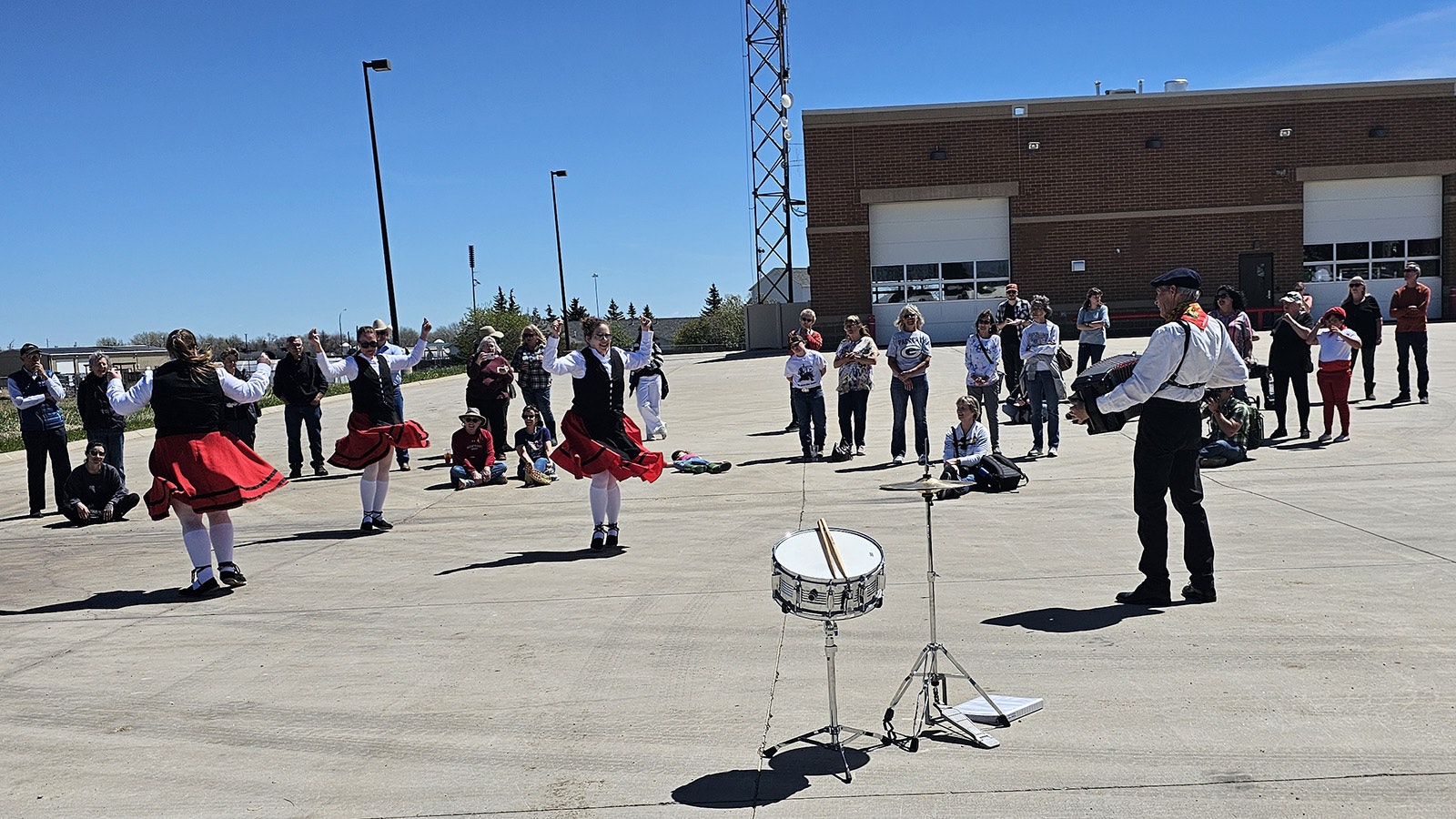
Basque dancers demonstrate their culture with dances to accordion music while at Gillette's third annual Sheepherding Festival. (Renee Jean, Cowboy State Daily) 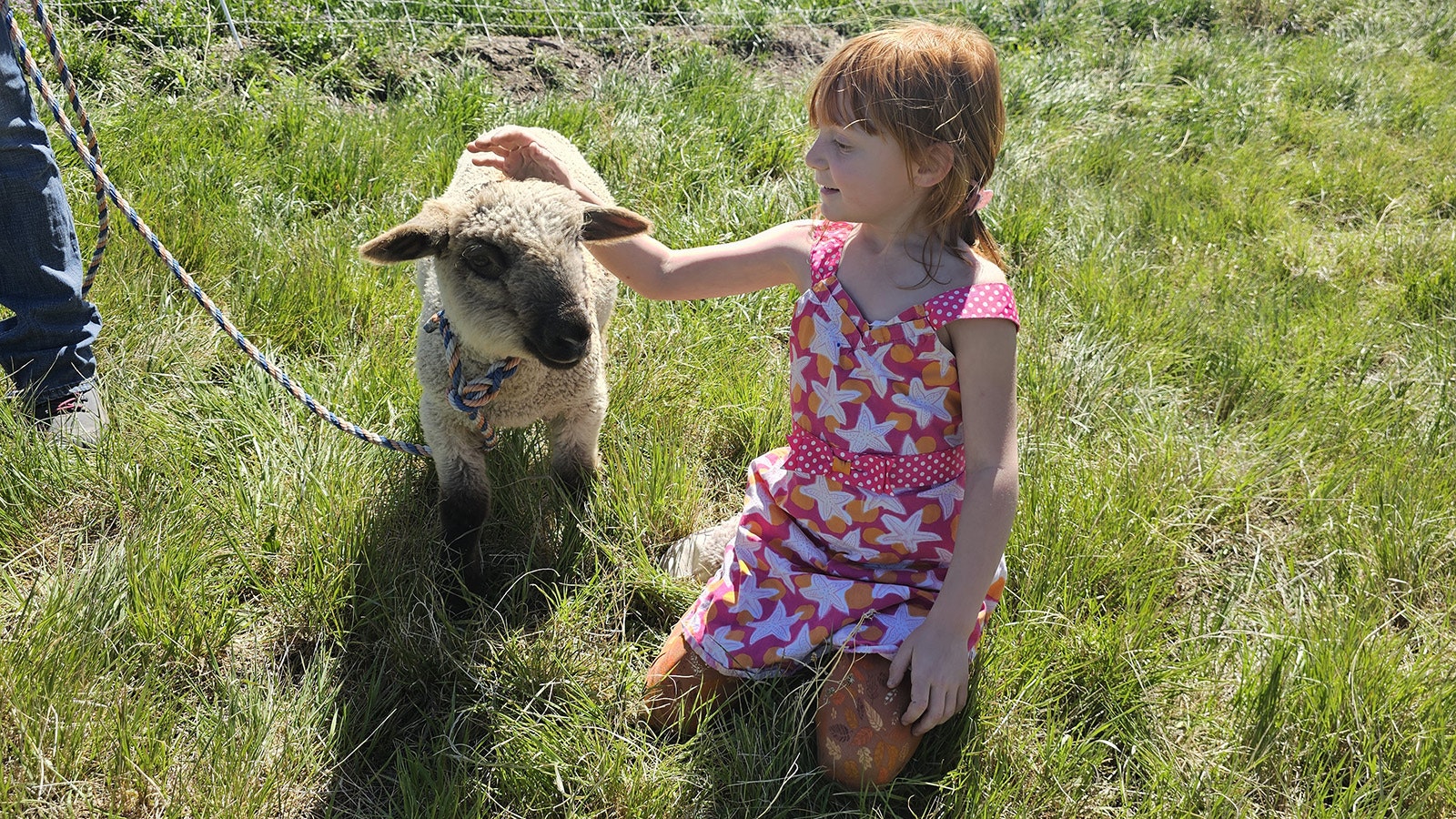
Camille Elfasser pets Pinky the sheep during Gillette's third annual Sheepherding Festival. (Renee Jean, Cowboy State Daily)
Renée Jean can be reached at renee@cowboystatedaily.com.