LARAMIE — Step into Rich Guenzel’s office here, and there will be no doubt about his passion for a particular iconic Wyoming species affectionately known as “speed goats” — but just don’t call them “antelope” in front of him.
The critters are properly called pronghorn, and his office suite is bursting with artwork depicting them.
“When you call them ‘antelope,’ you’re espousing ignorance or misinformation,” he told Cowboy State Daily on Thursday.
He doesn’t take nearly the offense at the more colloquial nickname speed goats.
“I think speed goat is almost a term of endearment,” he said.
But as he sees it, using the term “antelope” to describe the speedy, hardy creatures that roam in huge numbers all across Wyoming’s wide-open spaces detracts from their uniqueness and their special place among the Cowboy State’s wildlife.
Pronghorn aren’t in any way related to true antelope, which live in Africa. They’re unique to North America, and Wyoming is the very heart of their territory.
“There’s no fossil evidence of pronghorn anywhere outside of North America,” said Guenzel, who worked for the Wyoming Game and Fish Department from 1986-2011.
He retired as the agency’s Laramie District wildlife biologist. He studied and monitored wildlife of all kinds, but pronghorn were always his favorite.
“When people ask me what I do know, I tell them I’m a pronghorn specialist,” he said.
Working with the WYldllife Fund, he and his wife Mary recently established a conservation fund exclusively for Wyoming’s pronghorn.
How They Came To Be
At one time, perhaps as recently as 13,000 years ago, there were as many as 13 species in the pronghorn family.
But now, the modern pronghorn are the sole survivors — they have no living close relatives anywhere else on Earth.
With an estimated population of 382,000 pronghorn, and even after massive die-offs during the brutal winter of 2022-2023, Wyoming has more pronghorn than anywhere else.
“Historically, at one time, we had more of them than everybody else combined,” Guenzel said.
Herds of them roam from Canada all the way south to California’s Baja peninsula, and as far east as Minnesota.
The evolutionary history of the critters still isn’t exactly clear, Guenzel said.
Deep in their past, they shared a common ancestry with giraffes, he said. And so, giraffes are their only remaining cousins — albeit distant cousins.
The ancestor species of pronghorn likely arose in central Asia and eventually made their way into North America across the Bering Land Bridge between what are now Russia and Alaska.
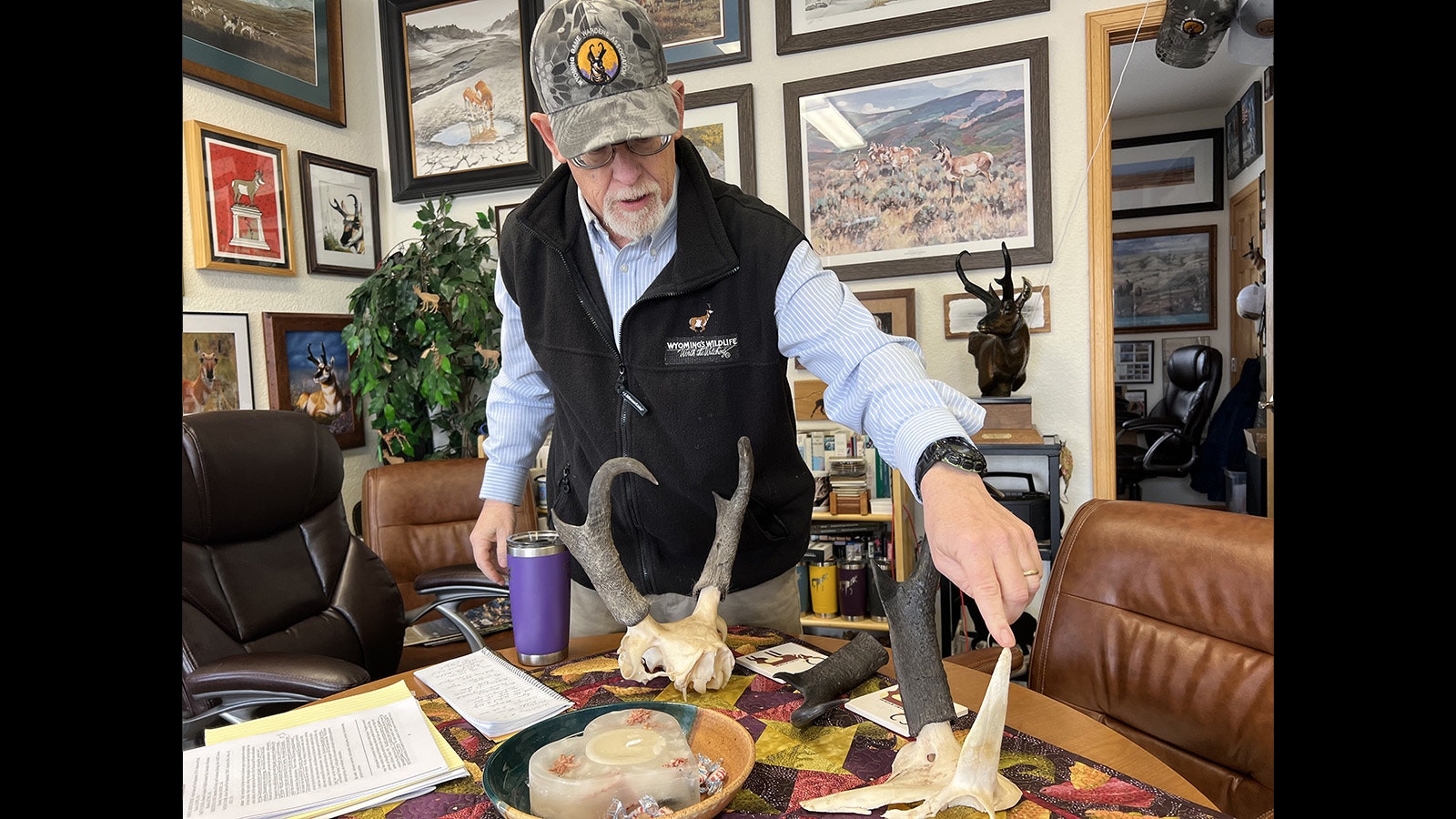
Wildlife Biologist Rich Guenzel explains that antelope have permanent horns, and shed the outer sheath each year. (Mark Heinz, Cowboy State Daily) 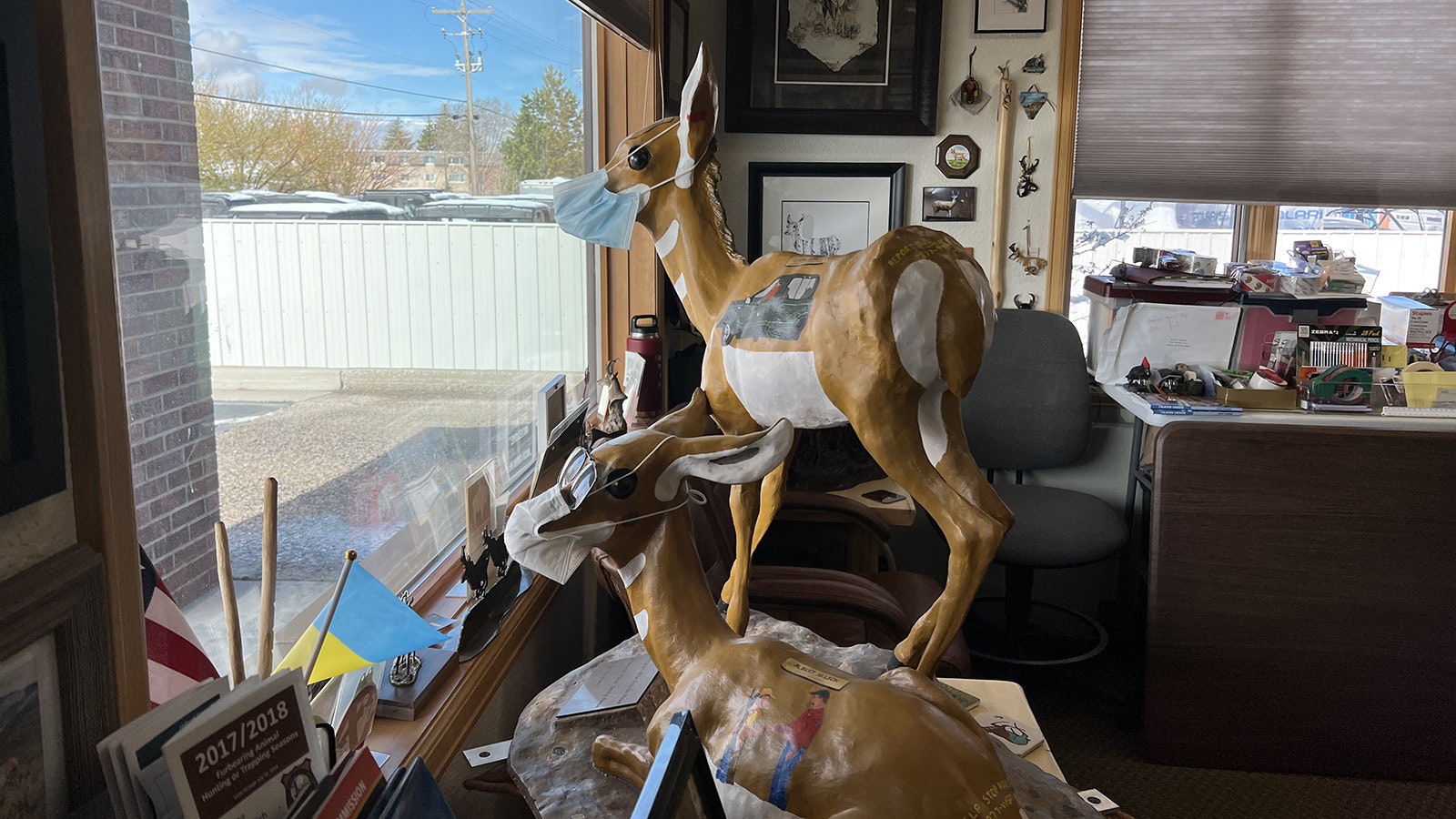
The office of wildlife biologist Rich Guenzel in Laramie has depictions of pronghorn created by artists from all over Wyoming and the West. (Mark Heinz, Cowboy State Daily) 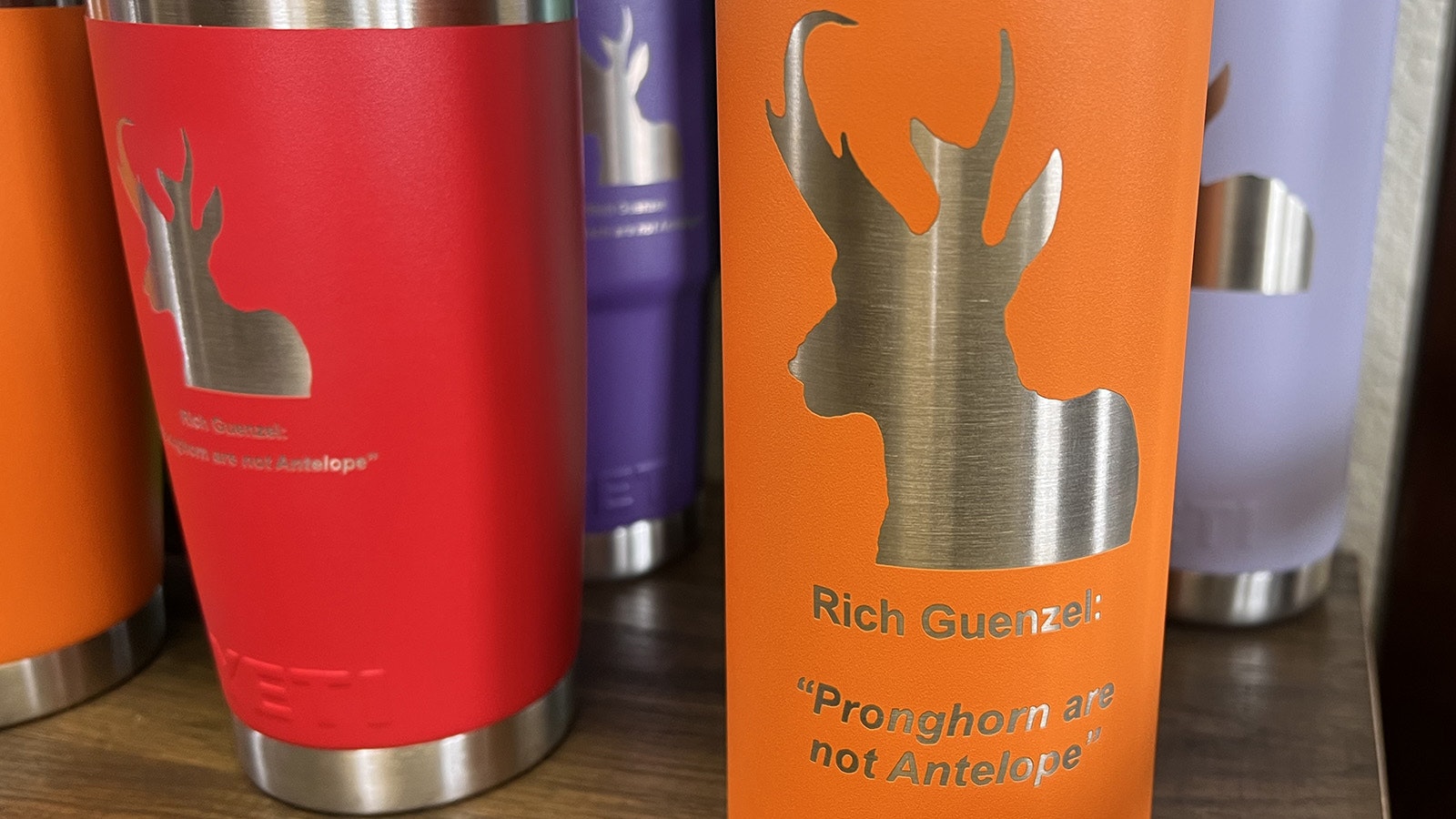
Wildlife Biologist Rich Guenzel of Laramie is adamant that pronghorn be called by their proper name – and had these mugs made to help drive the point home. (Mark Heinz, Cowboy State Daily)
‘Built For Speed’
Legend has it that pronghorns’ vision is as good as a human’s looking through a set of 10-power binoculars.
That’s not exactly true, Guenzel said. They do have an incredibly wide field of vision, and the structure of their eyes allows them to pick up even the tiniest of movements.
“But it’s not like they have built-in zoom lenses or anything like that,” he said.
If vision is their best tool for detecting danger, sheer speed is how they escape it.
“They’re built for speed,” Guenzel said.
Cheetahs are thought to be the fastest land animal. At least over short distances, they’re faster than pronghorn, although that could be up for debate.
What isn’t disputed is that pronghorn can keep up a frantic pace, sometimes 40 mph or more, for miles at a time.
They developed speed as their ultimate defense mechanism because in ancient times, North America had a “cheetah-like” species of big cat that hunted pronghorn, Guenzel said.
“It was probably more along the lines of a long-legged lion,” he said.
Facing Many Dangers
But with those quick cats long since extinct, adult pronghorn can easily outrun any predator in existence.
So, predators must settle for pronghorn fawns. Eagles, coyotes, bobcats and sometimes wolves will snatch fawns whenever they get the chance.
Pronghorn have responded with high reproductive rates, Guenzel said. Does frequently give birth to twins, and sometimes triplets, although usually only one fawn survives.
In addition to being hunted by humans, pronghorn can perish from winterkill or drought, Guenzel said.
“They’re usually pretty healthy,” although rare strains of pneumonia have taken a heavy toll on herds in parts of Wyoming.
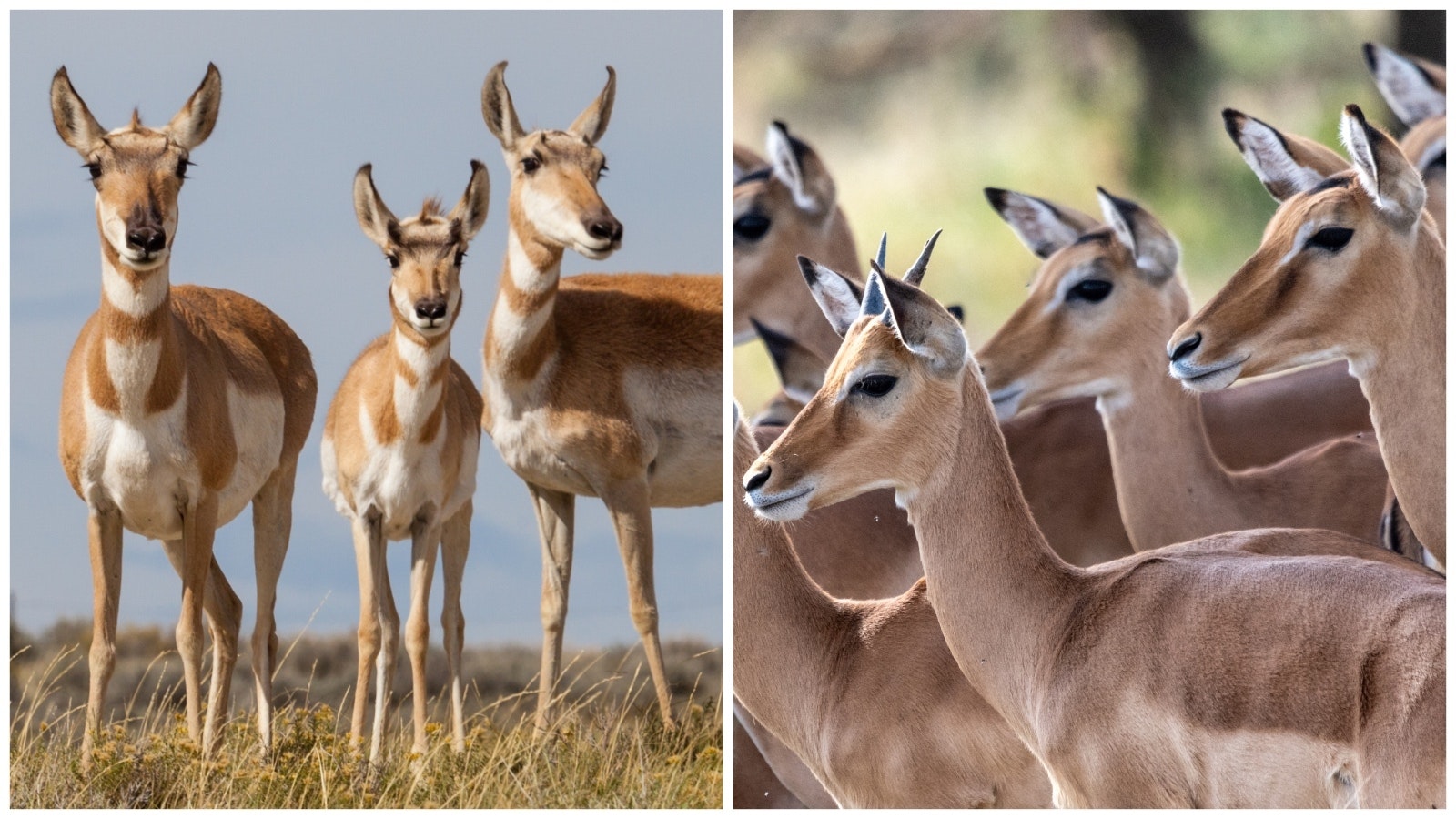
Wyoming pronghorn, left, and antelope in Africa, right. (Getty Images) 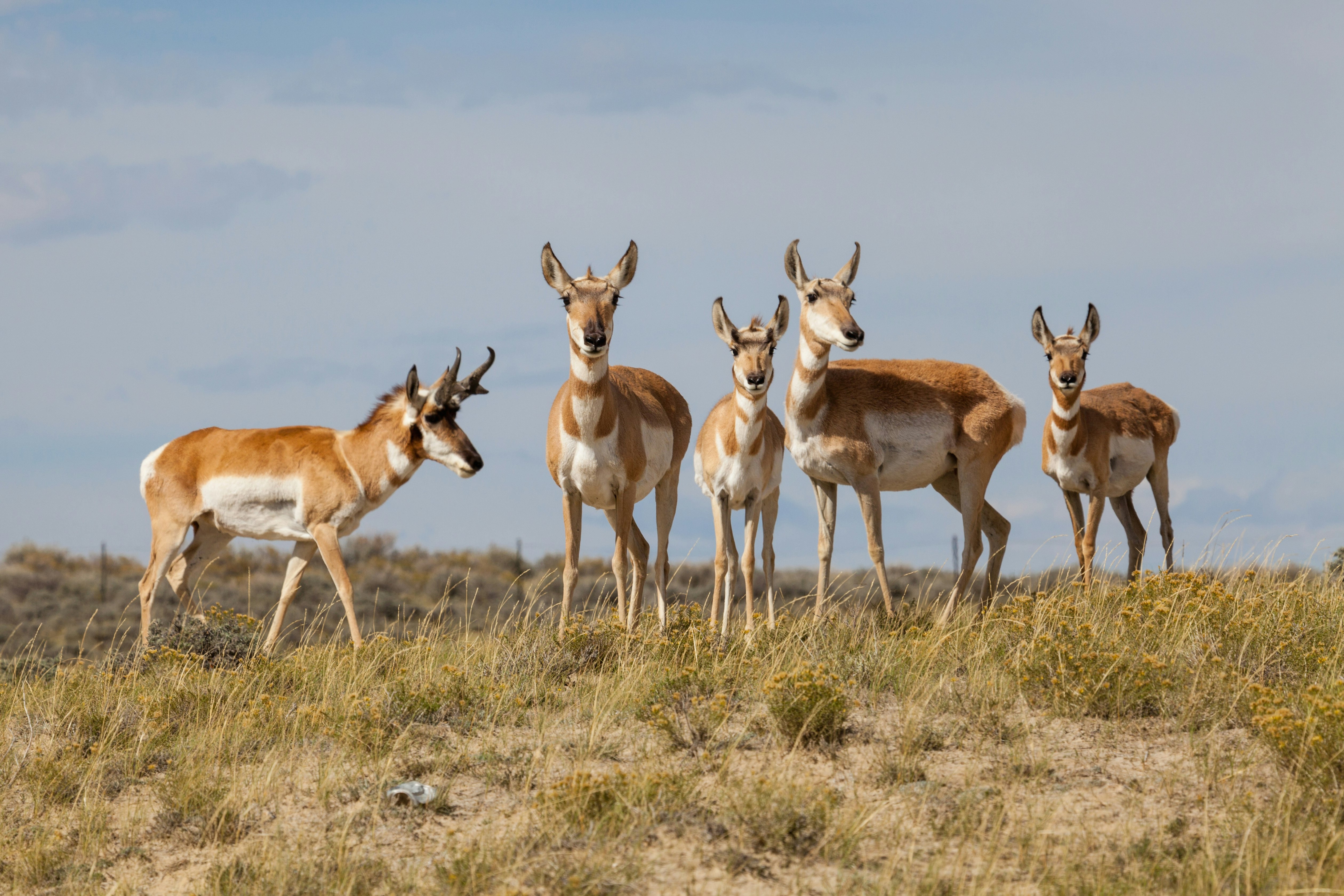
A group of Wyoming pronghorn. (Getty Images) 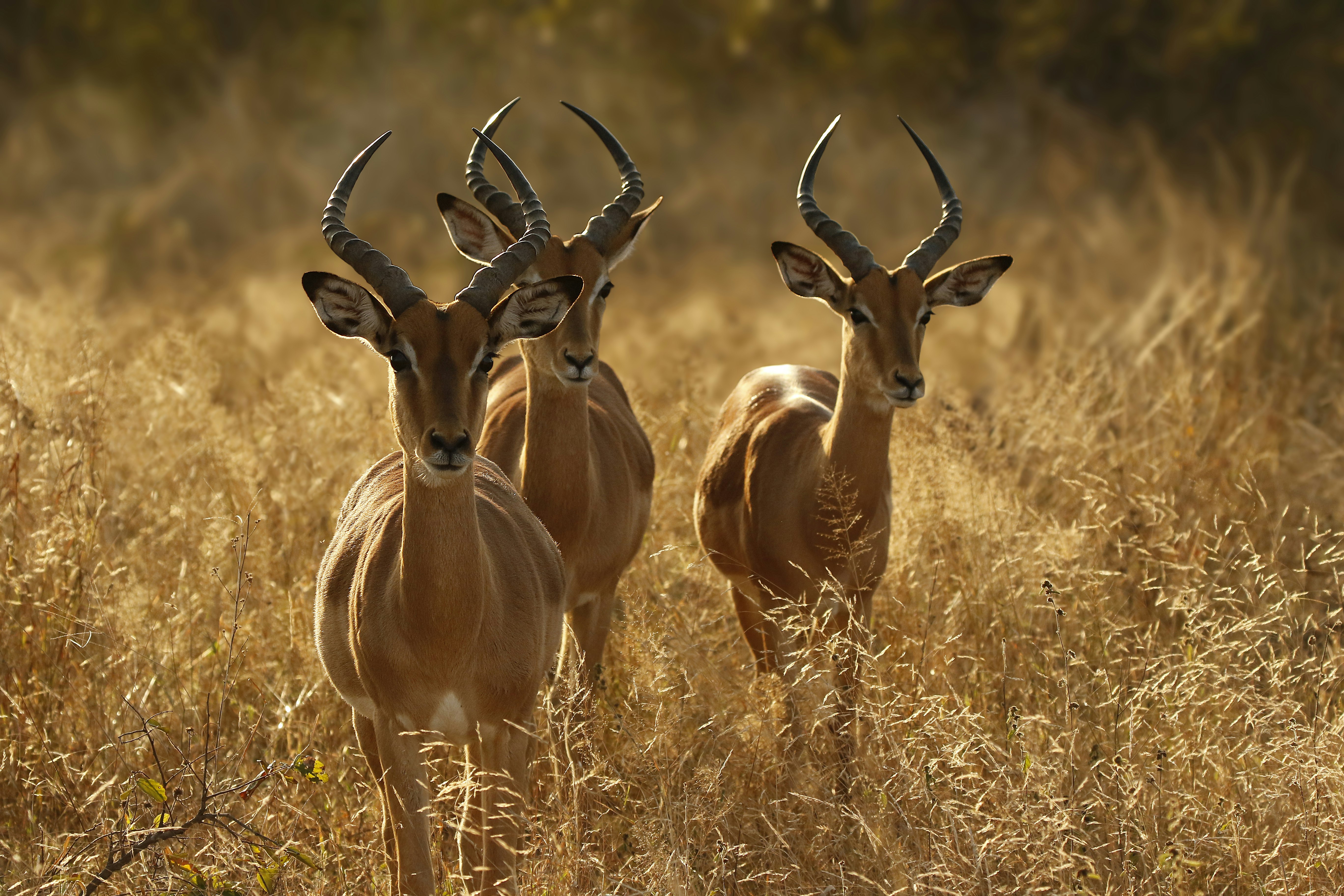
Impalas in Africa are antelope and are totally different from Wyoming's pronghorn. (Getty Images) 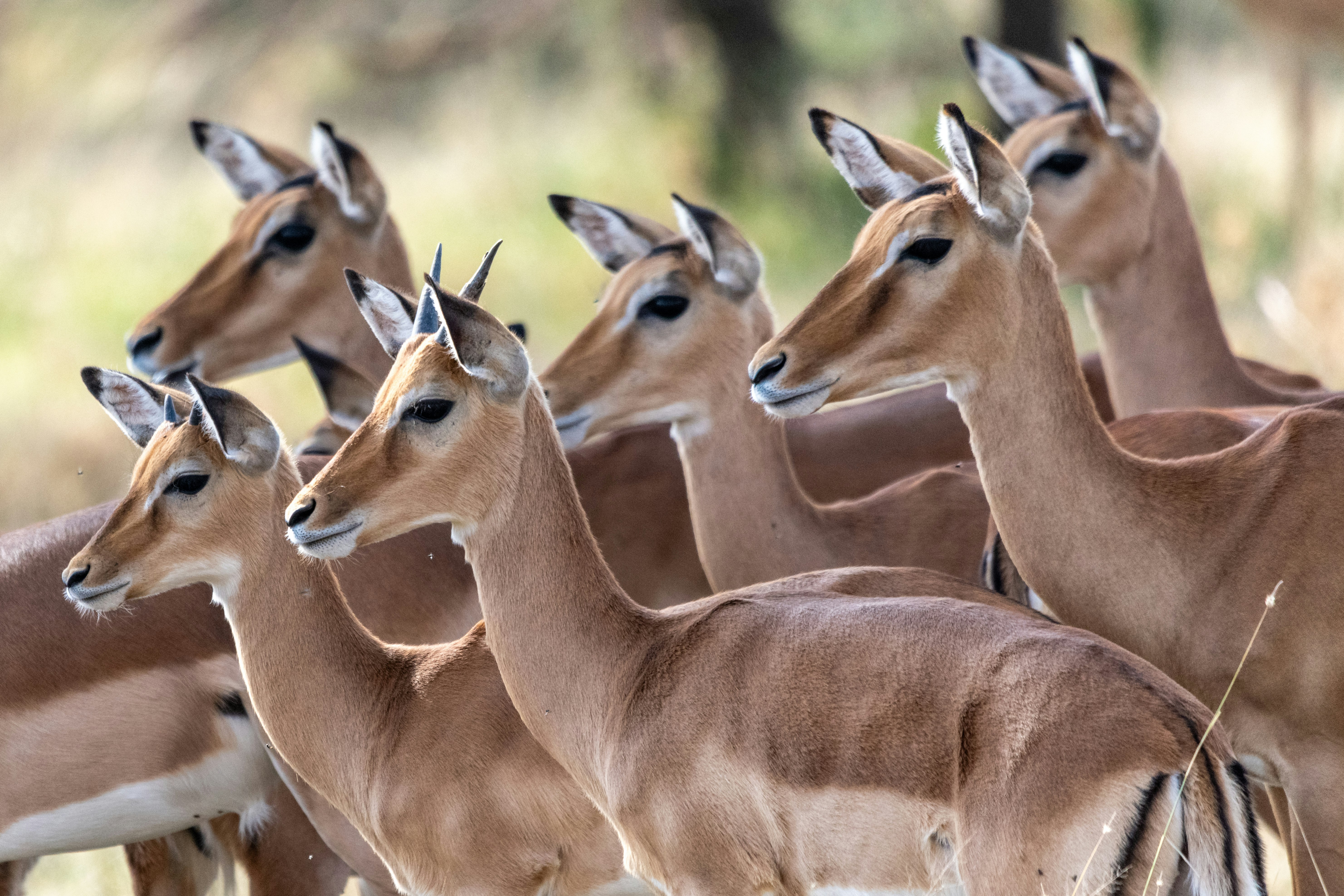
Impalas in Africa are antelope and are totally different from Wyoming's pronghorn. (Getty Images)
Why Does Game And Fish Call Them ‘Antelope?’
Hunting tags and regulation for the species issued by the Wyoming Game and Fish Department refer to the animals as “antelope.”
Guenzel said he’s not exactly sure why that is, because it’s wrong.
Some of the statutes establishing Wyoming’s hunting regulations and the like date back to the 1800s. And that’s back when the term “antelope” for pronghorn really caught on, likely because early European explorers and settlers didn’t know what to call them.
So, people just started calling them antelope because they were at least somewhat familiar with the African species. It’s likely that the term “antelope” was written into the game statues back then and just never have been changed.
And correcting the official Game and Fish language and regulations to “pronghorn” might not be as simple as one might think, Guenzel said. Only the Wyoming Legislature has the authority to officially change the language in statutes.
So, unless the Legislature decides otherwise, pronghorn will continue to be called antelope, at least on hunting tags.
In other contexts, such as in publications, Game and Fish refers to them a pronghorn, he said.
Humans Hurt, And Help
Pronghorn can be vulnerable to human development, Guenzel said. Fences or other man-made barriers can keep them from migrating to where they need to get to in order to survive, particularly during the winter.
However, other development such as water troughs or ponds built by ranchers can benefit pronghorn, he added.
Guenzel hopes the pronghorn fund can go toward preserving the herds’ vital migration routes, such as the “Path of the Pronghorn” running between the Teton area and the Upper Green River Valley.
And he wants the tenacious and speedy masters of Wyoming’s vast sage flats to be fully appreciated.
“From a tourism perspective, you can go into a shop and buy a goofy moose trinket,” he said. “And as much as some people in Wyoming hate wolves, you can buy a T-shirt with a wolf on it. Why don’t we have more things depicting pronghorn?”
Mark Heinz can be reached at mark@cowboystatedaily.com.