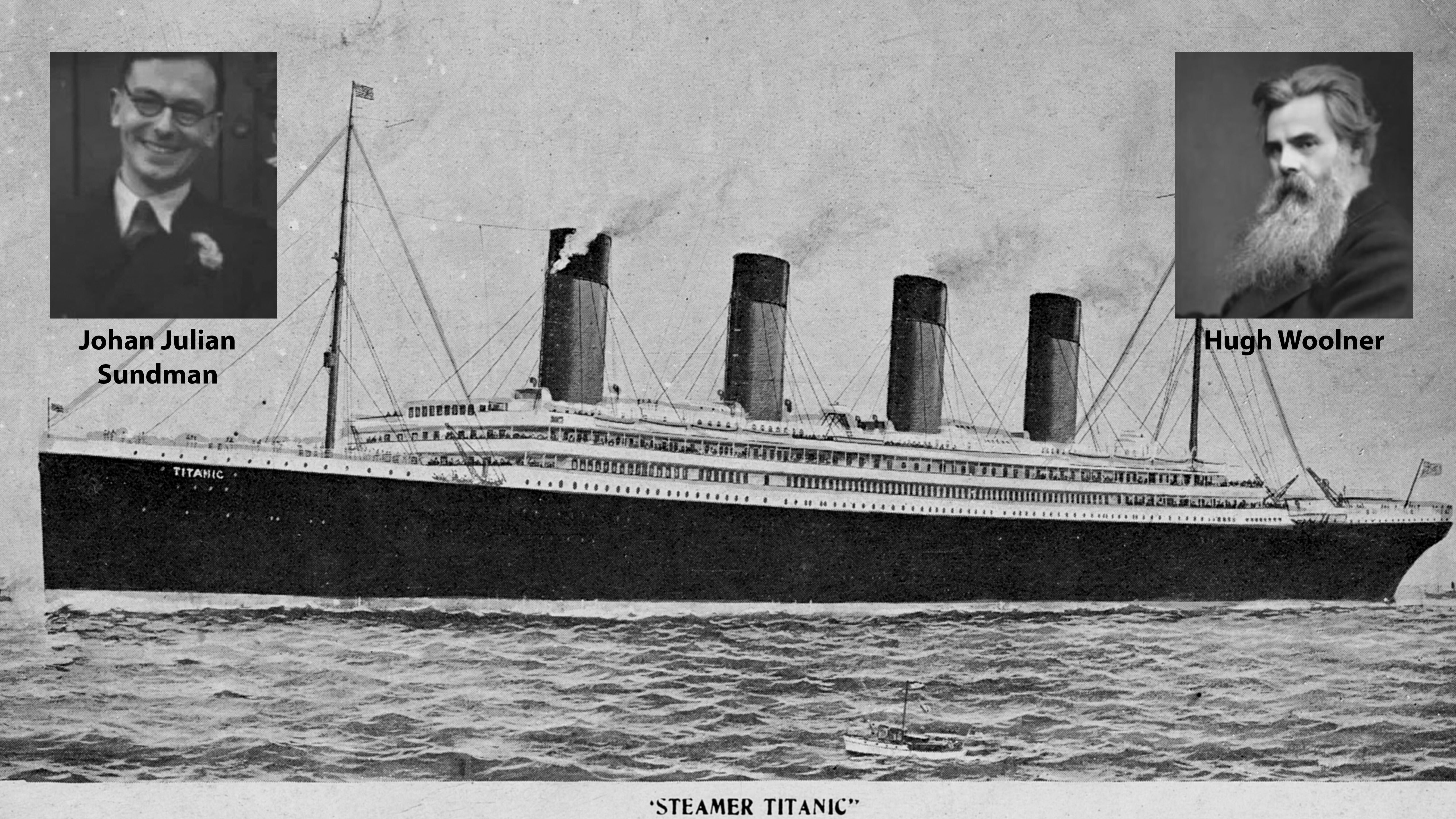
On the luxurious White Star Line’s RMS Titanic churning through the ice floes on the fateful night of April 14, 1912, a London oil company executive was on his way to Casper, Wyoming.
Another passenger, a Finnish man, was planning to visit a friend in Cheyenne.
As the distance between continents in the age of transatlantic voyages and ship-to-ship, ship-to-shore telegraph communications narrowed, the duo represent a Cowboy State link to arguably the most infamous sea disaster in history.
Hugh Woolner, 45, a former stockbroker, was chairman of the National Oil syndicate of London and involved with Western Exploration company drilling northwest of Casper. He was enjoying all the perks of the first-class accommodations on the celebrated ocean liner’s first voyage. His physician advised him to take the ship as a means to avoid getting pneumonia — something he contracted on a previous crossing on a different ship.
“The doctor advised me to take the Titanic this time because it was new, clean and dry, with plenty of light,” he told the Omaha Evening Bee a month after the historic calamity on May 15, 1912.
Headed For Cheyenne
Aboard ship the night of April 14, 1912, in the third-class section, Johan Julian Sundman, 45, of Finland was on his way to Cheyenne to visit a friend, William Putcamp, who lived at 252 Main St. in Wyoming’s capital city.
Sundman was not a stranger to the U.S. He had a son born in New York in the mid-1890s and had lived for a while in Salt Lake City, according to the Encyclopedia Titanica.
On the day the Titanic hit an iceberg, Woolner was in the ship’s café at 11:40 p.m. with a Lt. Hakan Bjorstrom-Steffansson of the Swedish army when they felt a bump as the liner was raked by the iceberg just below its waterline. They didn’t think much of it and went to the smoking room and then up on the deck.
“We thought it had just glided against the iceberg and sprung a small leak,” Woolner told the Omaha Evening Bee. “When up on the deck a steward came up to me with a double handful of chipped ice. It had been chipped from the iceberg and fallen on the deck.
“‘Do you want to feel an iceberg?’ he asked. It was so clear I ate a handful of it,” Woolner said. “I guess I am the only man in the world who tasted the iceberg that wrecked the Titanic.”
Woolner went to check on a lady friend he had met on the boat. As the seriousness of the incident became known, he and Steffansson helped her into a lifeboat and then started helping women and children into other lifeboats. At one point they were loading women near the officers’ quarters.
“There was a step of four or five feet to be made and many of them were afraid to try and cross with the sea seventy feet below,” he told the newspaper. “These we had to pick up and literally throw into the boats.”

Leaping To A Lifeboat
After loading the women, the pair went to the ship’s A Deck and saw the portholes shut and the lights turning red and flickering. He said the ship started to move, and he hurried to the promenade deck to find nobody there.
“I looked up as saw the last boat, a collapsible, being lowered. As it came to a level with us, I saw it was partially vacant. The steamer was listing, so the boat creaked on its davits as it hung 10 feet out from the deck,” Woolner related. “My friend said, ‘Jump.’ I told him to go first, and he did.
“The boat was below me when I jumped and fell clinging to its side. A fellow caught me and pulled me inside. When we got down to the water was the first time we realized the steamer had been so badly damaged.”
Meanwhile, Sundman below deck had been asleep in his berth and woke up to the “crunching noise” against the hull of the ship when the liner hit the iceberg. Most of the other 800 or so people in steerage were also asleep.
“By the time I got on my clothes everyone was alarmed and hastily leaving their berths. In a few minutes, the ship’s officers came into the steerage and ordered everybody aft,” he told the Salt Lake Tribune on April 28, 1912. “There was a struggling mass trying to get up the passageways to the first-class deck.
“By the time I succeeded in reaching the upper deck, several boats had already been launched. I made my way to the rail where a boat was being put off. It was full of people, but I saw no women left on the deck. Someone yelled to me ‘jump.’ The boat was already being lowered. I jumped and fell on my head in the middle of the boat, knocking over two or three of the occupants.”
Sundman estimated there were 40 to 60 people in the boat with about half of them being the ship’s waiters or stokers, and eight women. He crawled over people and grabbed an oar to start rowing away from the doomed ship.
A Crying Child
Back in Woolner’s collapsible boat, he took a little twin boy named Louie, whose parents were lost, and put him under a big fur coat.
“The child kept crying for his parents and (I) had a deuced time keeping that child quiet,” he told the Omaha newspaper.
When the passenger liner Carpathia arrived hours later and rescued Titanic survivors, Sundman recalled his boat was the third one rescued.
Woolner, once in New York, was asked to testify before the U.S. Senate committee investigating the disaster.
The New York Times reported April 29, 1912, that Woolner was queried by senators about the speed of the boat and testified about his encounter with the ship’s captain, Edward Smith, and advising him about a situation on the A Deck of the boat.
He also testified about trying to convince Rosalie Straus, wife of Isidor Straus, a U.S. representative and co-owner of Macy’s Department store, to get in a lifeboat.
“She refused to leave Mr. Straus, though I made two appeals to her,” Woolner said. “The second time I went up to Mr. Straus and said, ‘Surely no one will object to an old gentleman like you getting in the lifeboat,’ and he replied, ‘I will not go before the other men.’”
The Natrona County Tribune in Casper on April 24, 1912, reported that Woolner, whose Western Explorers rig was drilling 7 miles west of the city, was expected to be in the region as part of his trip west.
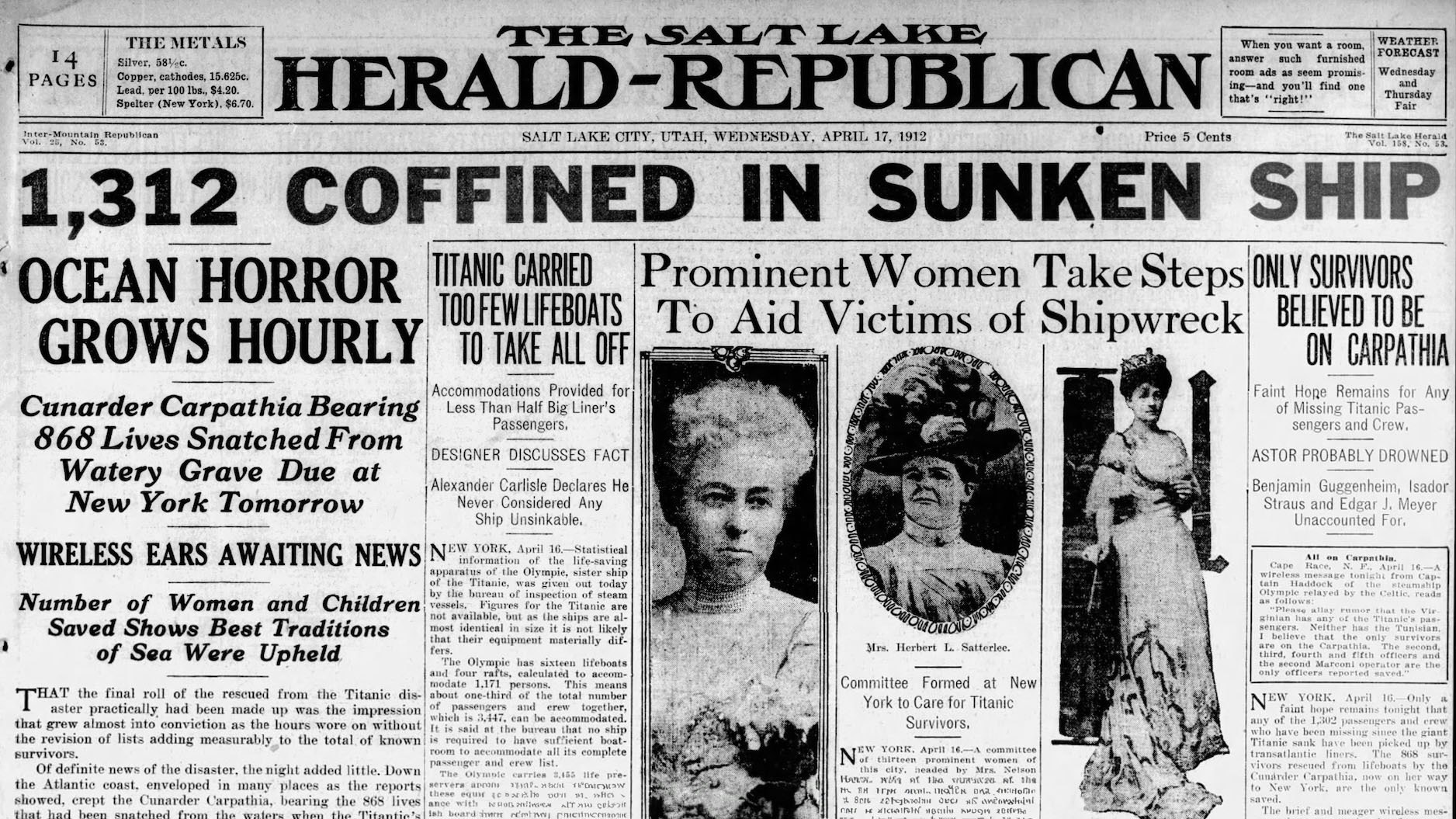
he Salt Lake City Herald-Republican, like hundreds of other newspapers around the nation and world, carried banner headlines about the Titanic sinking. 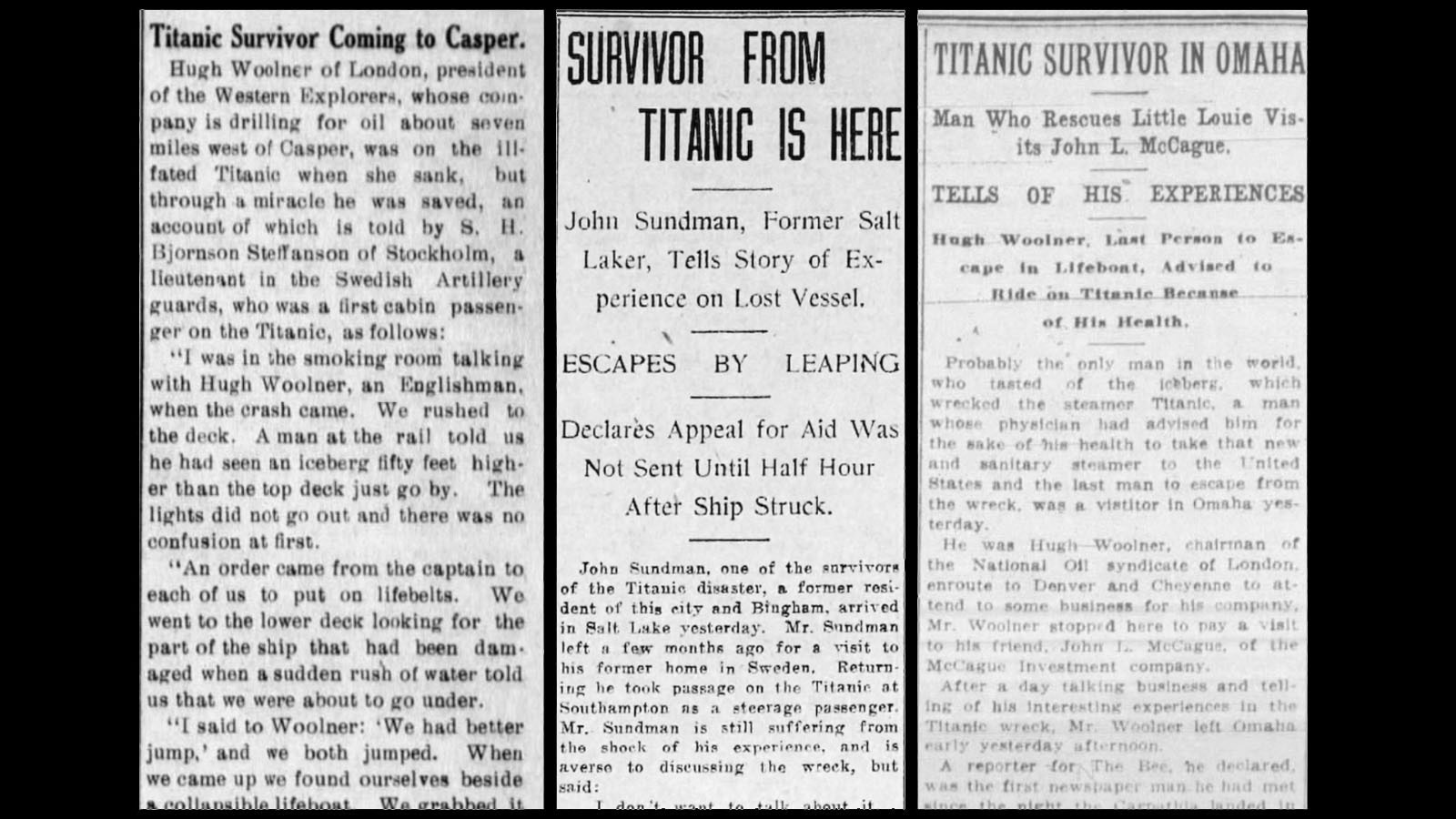
Left, The Natrona County Tribune reported on April 24, 1912 that Titanic survivor Hugh Woolner was headed to Casper to check on his investment; Center, A Finnish man initially headed to Cheyenne to see a friend, told his story of survival to the Salt Lake Tribune on April 8, 1912; Right, London-based Hugh Woolner was headed to Casper on the Titanic when it went down. He shared his story with the Omaha Evening Bee on May 15, 1912. 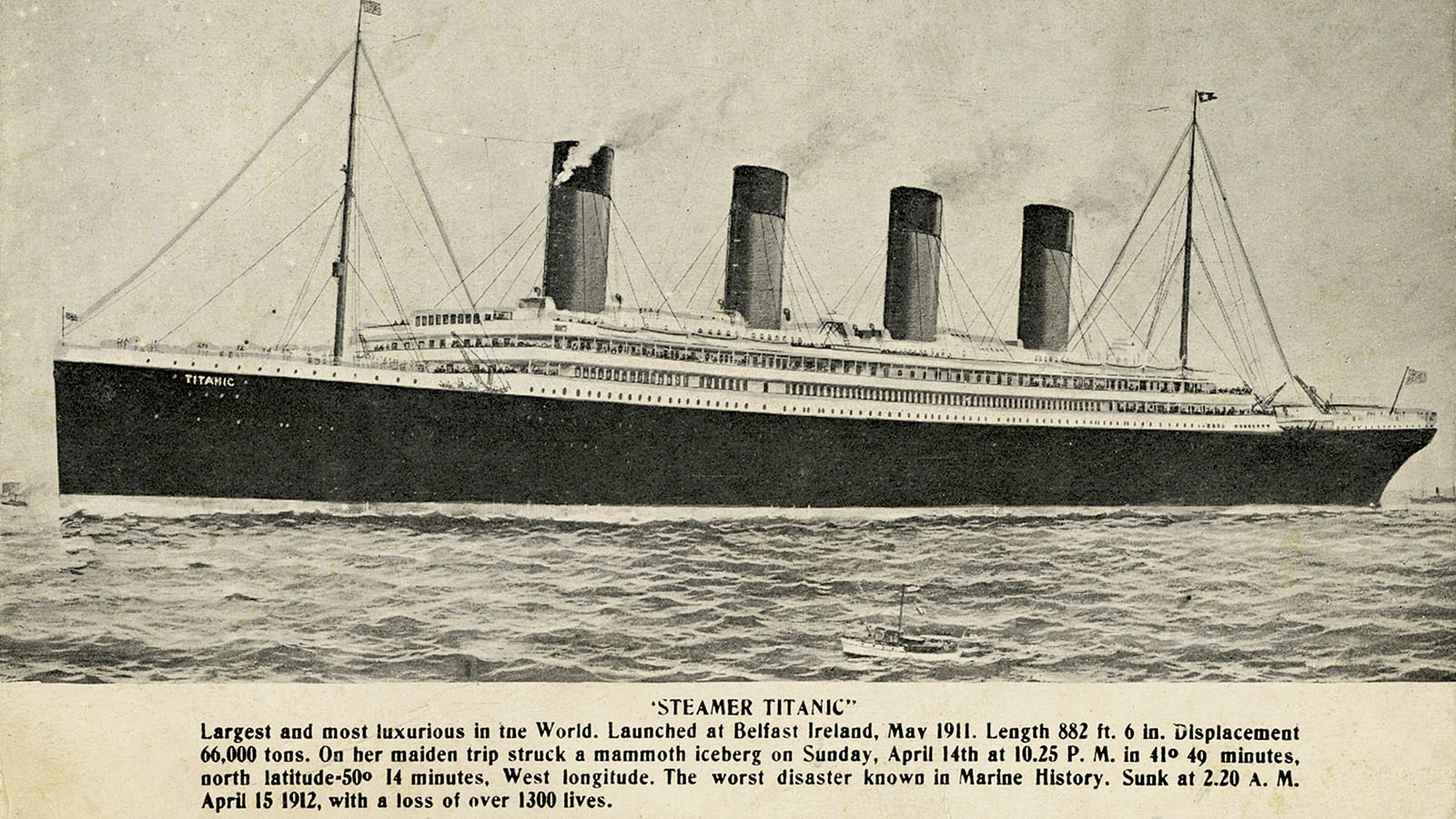
The RMS Titanic. (Culture Club, Bridgeman via Getty Images) 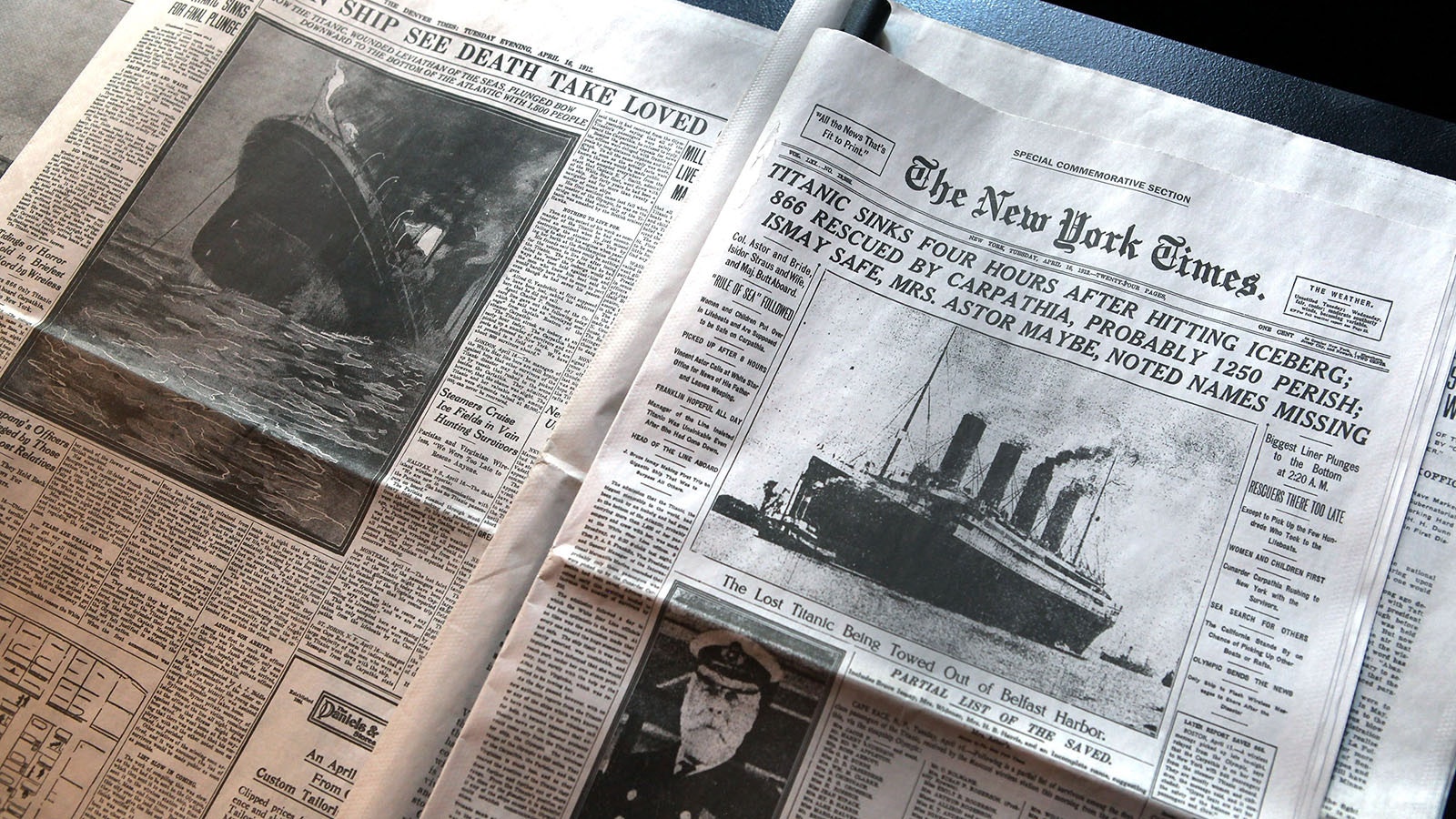
The front page of The New York Times on April 15, 1912, details the sinking of the RMS Titanic at the opening of the "Titanic at 100: Myth and Memory" exhibition on April 10, 2012, in New York City. (John Moore, Getty Images) 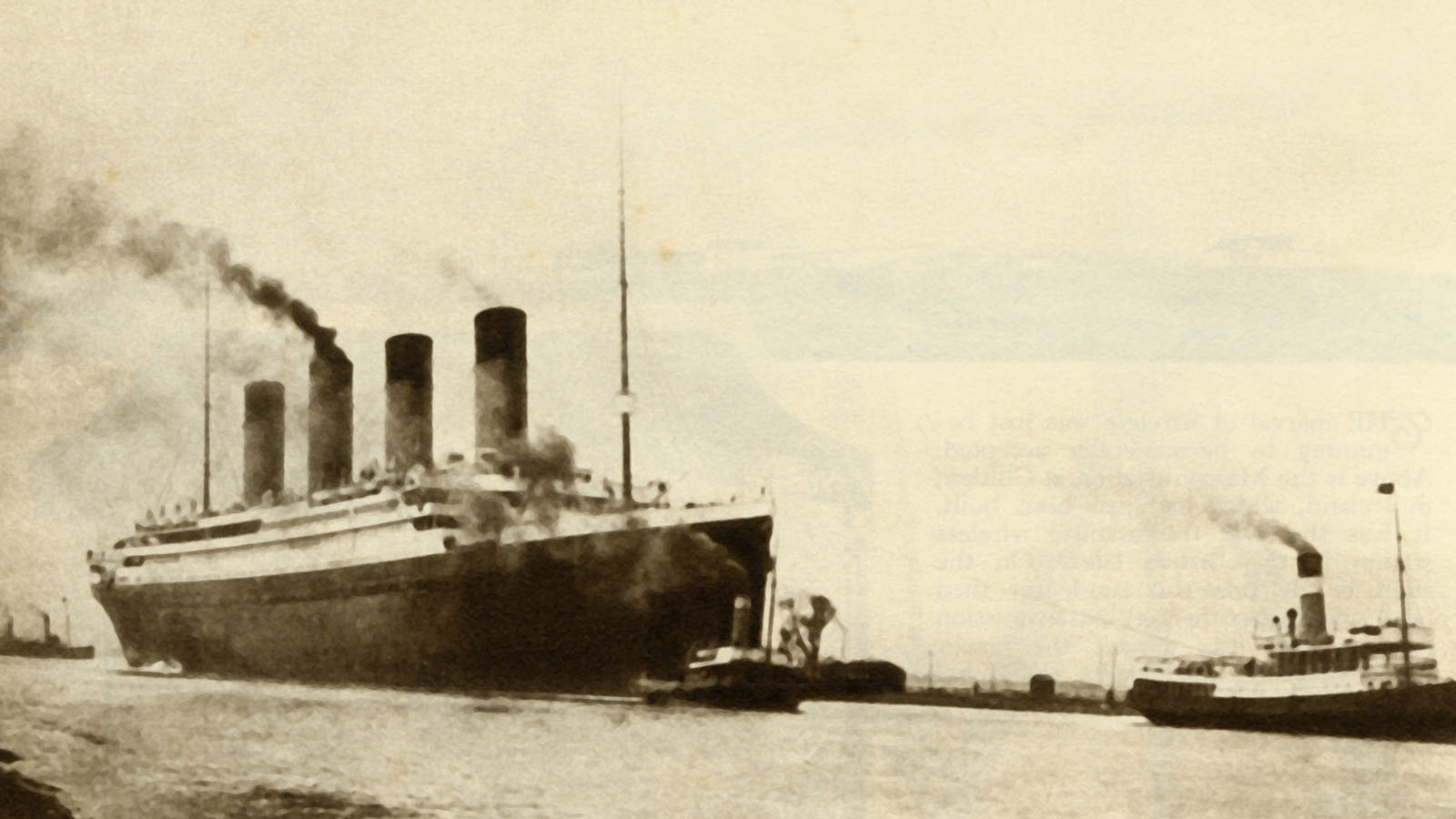
Operated by the White Star Line, Titanic was the largest and most luxurious ocean liner of her time, and thought to be unsinkable. During her maiden voyage, bound for New York, she struck an iceberg in thick fog off Newfoundland on April 14, 1912. (The Print Collector via Getty Images) 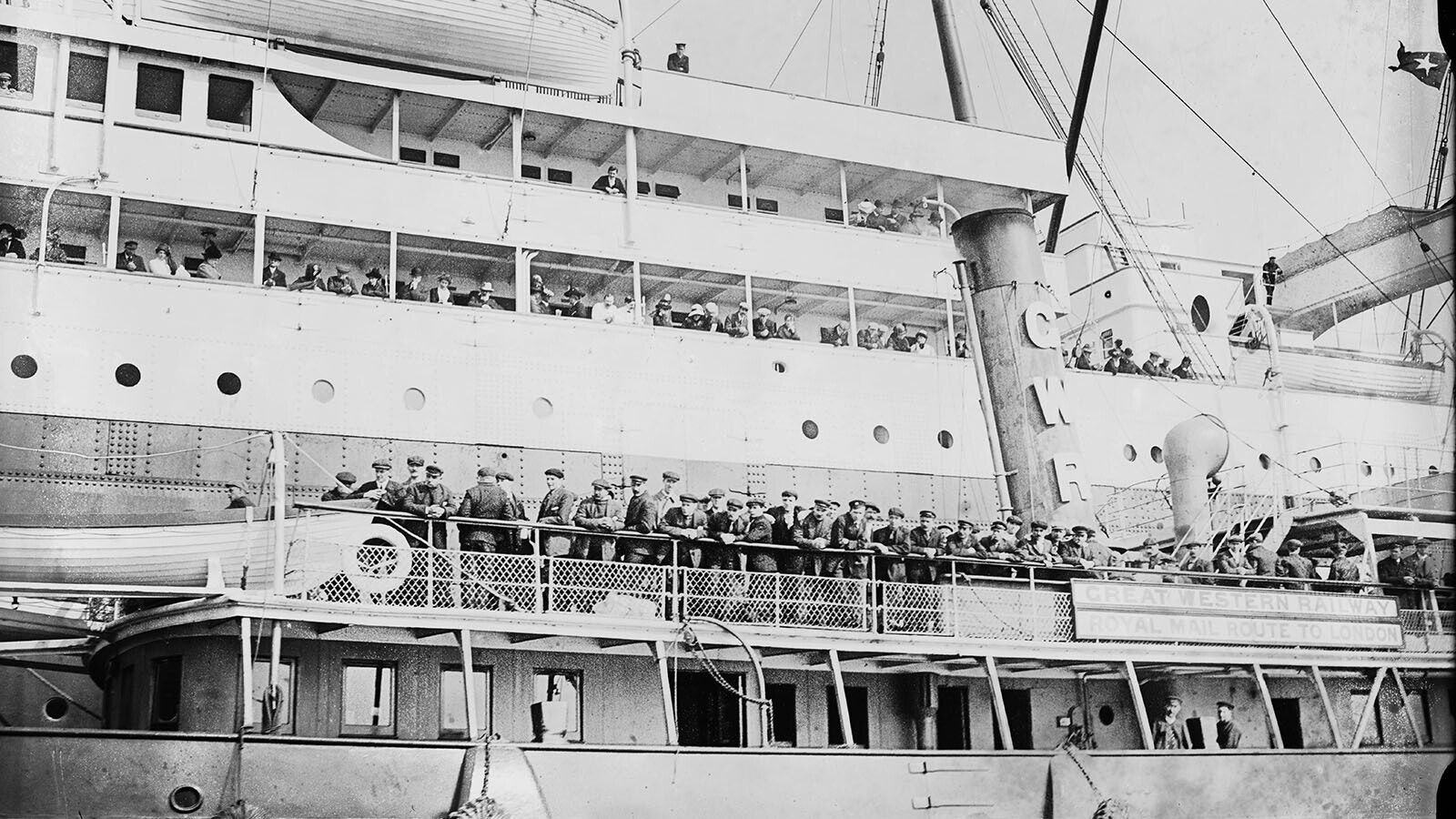
Survivors of the Titanic disaster on April 29, 1912, board a Great Western Railway ferry at Plymouth after arriving in England on the SS Lapland. (Topical Press Agency, Getty Images) 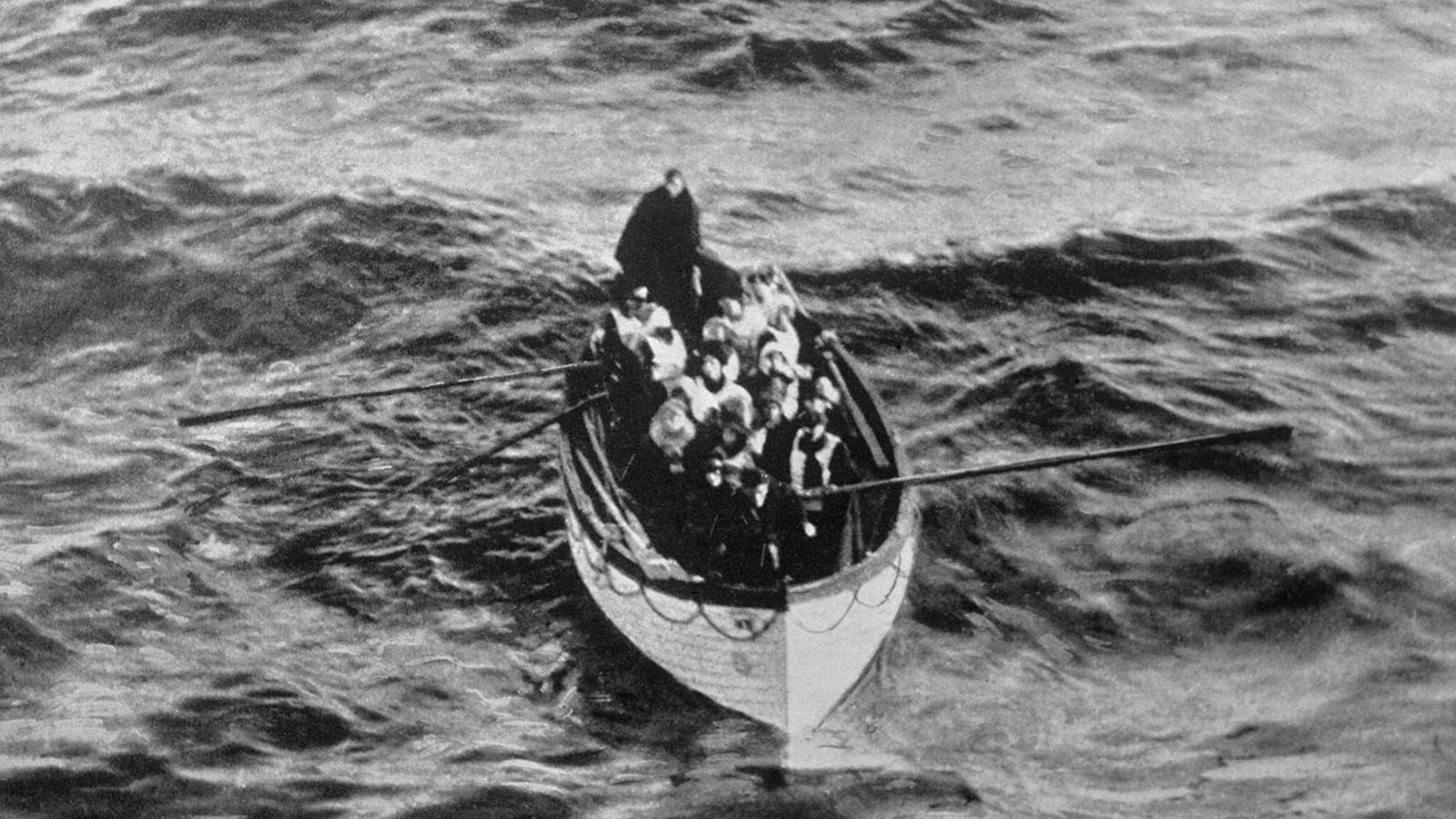
An emergency cutter lifeboat carrying a few survivors from the Titanic, seen floating near the rescue ship Carpathia on the morning of April 15, 1912, hours after the disaster. Titanic did not carry enough lifeboats to save all her passengers, and many of the available boats were launched carrying fewer than their 65-passenger capacity. (Ralph White, Corbis via Getty Images) 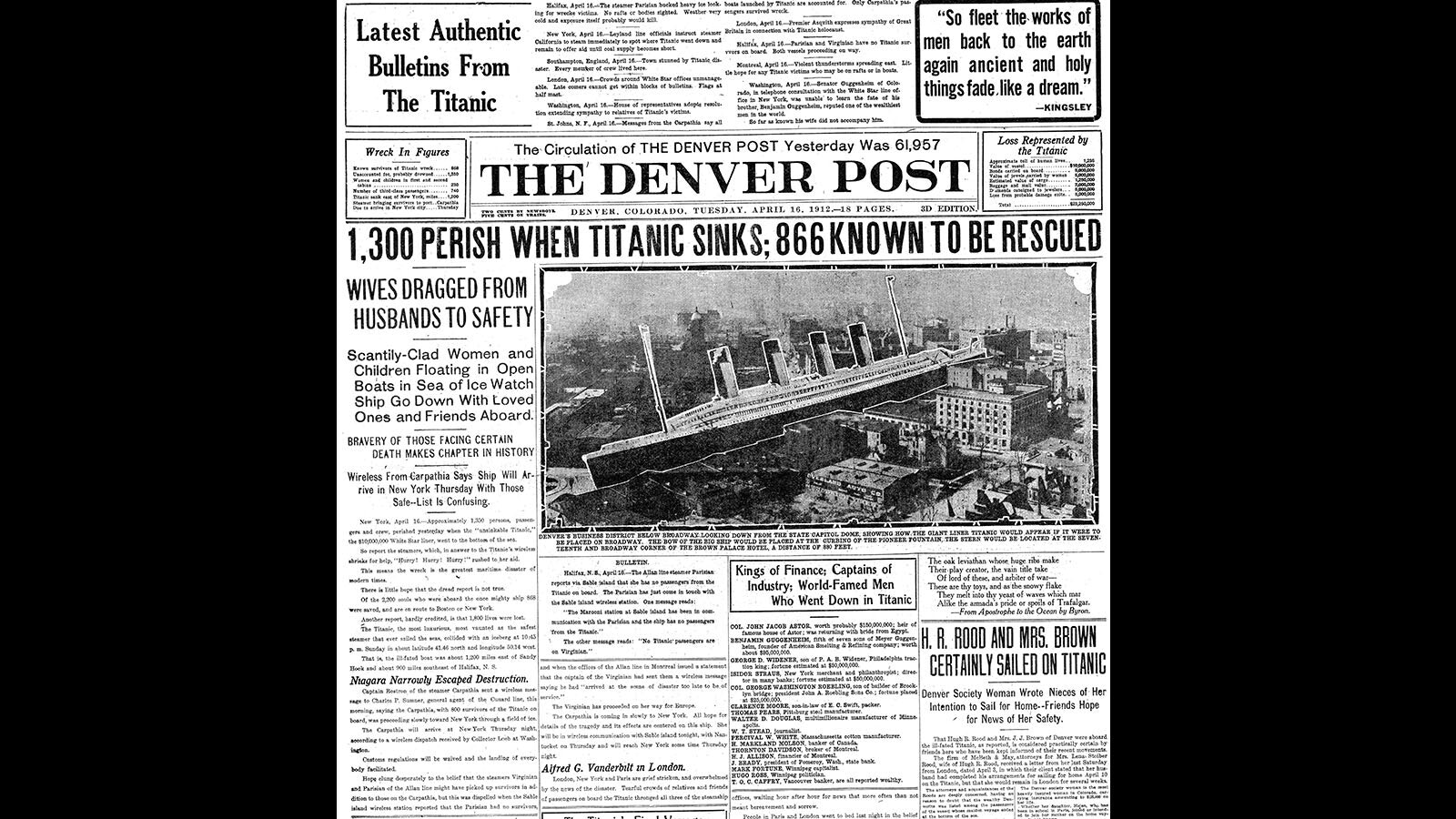
Headline of The Denver Post on the tragedy of the sinking of the RMS Titanic, April 16, 1912. The headline reads "1,300 Perish When Titanic Sinks; 866 Known To Be Rescued." (Interim Archives, Getty Images)
Woolner In Casper
Woolner left Omaha for Casper on May 15, 1912. He arrived in the city the next day to check out the rig and meet with his manager. One account has him returning to England in early June on the Lusitania — another fated ship that was later sunk by Germans during World War 1.
Woolner’s investment in the Western Explorers well would not be in vain.
“Casperites are looking forward to the burning of natural gas in the near future, gas having been discovered in the well of the Western Explorers six miles northwest of town,” the Wyoming Tribune in Cheyenne reported Dec. 9, 1912.
Sundman stayed in the United States for a couple of years, and at one point was in Salt Lake City. Whether he stopped in Cheyenne prior to going to Salt Lake City or ever had a reunion with his friend is not known. He returned to Finland to farm and died Feb. 1, 1920.
The oil investor and widower Woolner would remarry. He died Feb. 13, 1925, during a trip to Budapest, Hungary, having again contracted the pneumonia he was trying to avoid on the Titanic.
Dale Killingbeck can be reached at dale@cowboystatedaily.com.